During September 14–20, Fed policy took a key turn. On September 16, the FOMC voted 12–0 to raise the federal funds target 25 basis points to 3.75%–4.00%. The September Summary of Economic Projections showed confidence in steady expansion and low unemployment, but substantially delayed inflation's return to target and lifted the next two years' rate path. Chair Warsh explicitly avoided setting the pace of further hikes, yet the decision showed that stronger-than-expected fundamentals had given the Fed room to prolong tightening.
Resilient domestic demand creates room to tighten as the Fed focuses on inflation
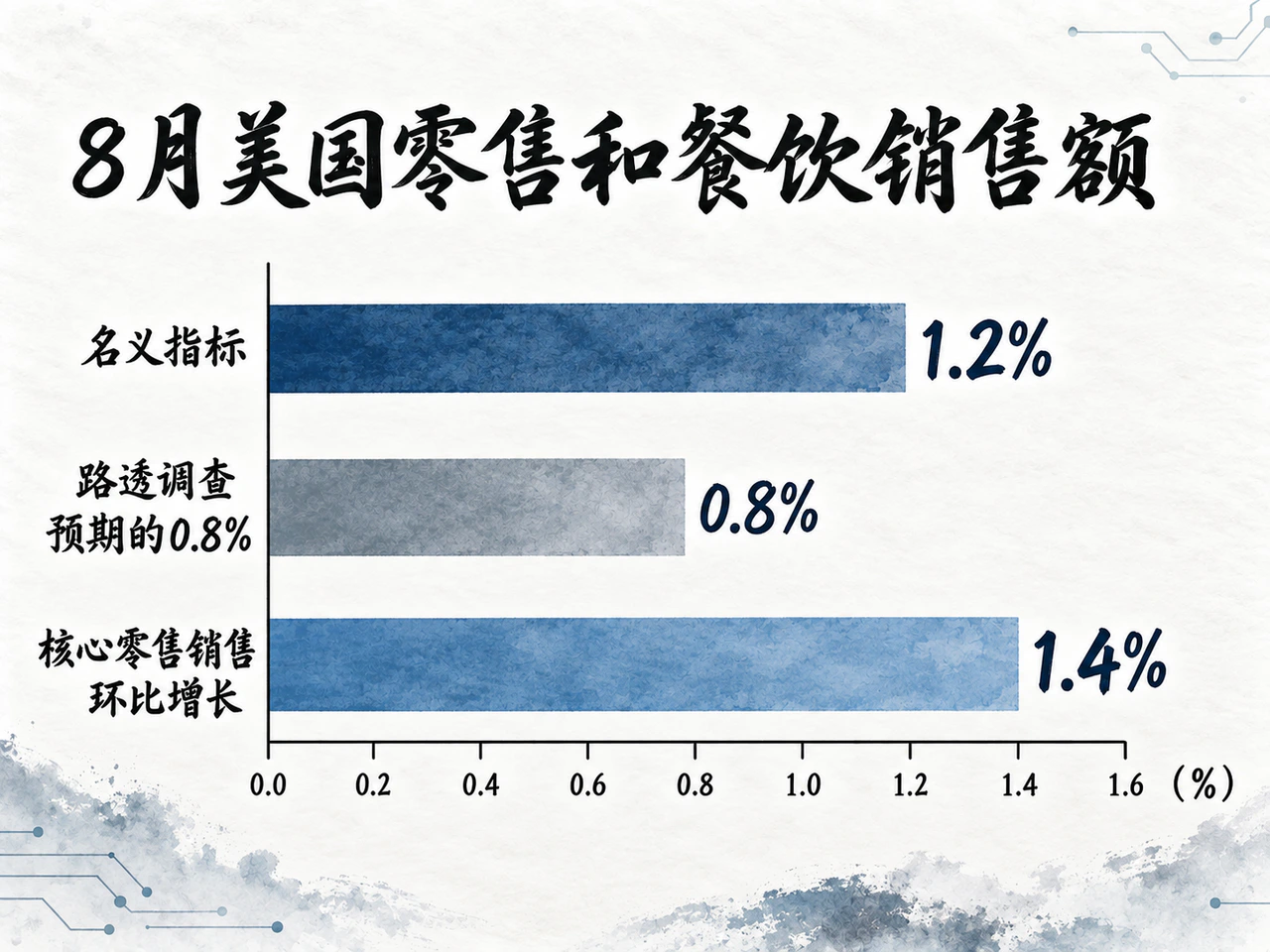
August US retail and food-service sales, released September 16, rose 1.2% month on month, well above the Reuters poll's 0.8%. July was revised from −0.6% to −0.5%. More tellingly, core retail sales excluding autos, gasoline, building materials and food services rose 1.4%, showing that stronger spending was not merely energy-price-driven and real demand had substantial support.
These data reinforced the Fed's assessment of resilient private spending. The statement cited strong capital investment, rapid productivity growth and job creation broadly matching labor supply. Warsh said improved hiring, earnings and capital expenditure allowed the committee to focus mainly on restoring price stability. The September SEP reflected this optimism: median 2026 real GDP growth rose from June's 2.2% to 2.3%, and 2027 from 2.3% to 2.4%; fourth-quarter unemployment forecasts for both years fell from 4.3% to 4.1%.
Spending durability remained a concern. Retail sales are nominal, so unadjusted growth does not establish an equal rise in real purchasing power. BMO economists said energy and food inflation were eroding lower- and middle-income households' purchasing power, with recent spending heavily supported by wealth effects from rising net worth. Strong August retail removed urgency for near-term cuts without eliminating medium- and long-term demand-cooling risks.
Inflation target return delayed to 2029 as dot-plot medians rise sharply
Warsh identified three changes behind the hike: stronger momentum since July, less summer inflation improvement than expected and additional geopolitical pressure. The Fed needed confidence that underlying inflation was returning to target fast enough, and current data had not met that standard.
The September SEP's inflation revisions were notable. Median fourth-quarter 2026 headline PCE inflation rose from 3.6% to 3.7% year on year and core from 3.3% to 3.4%. Fourth-quarter 2027 forecasts were 2.3% and 2.5%, and 2028 forecasts 2.1% and 2.2%. Both were expected to reach the 2.0% target only in fourth-quarter 2029.
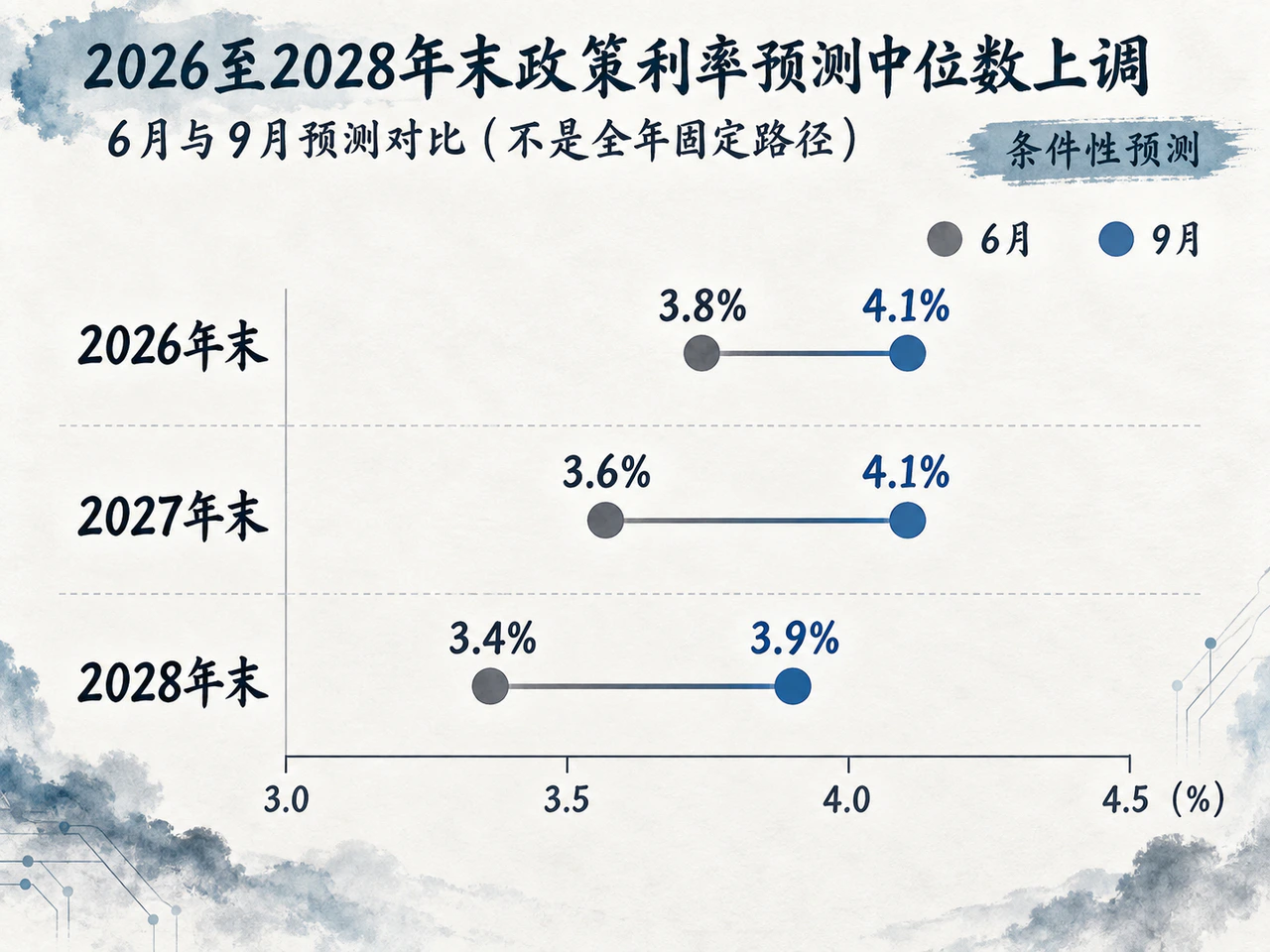
Sticky prices directly lifted the projected rate path. Median year-end federal funds rates rose from June's 3.8% to 4.1% for 2026, 3.6% to 4.1% for 2027 and 3.4% to 3.9% for 2028. The median's corresponding 4.00%–4.25% target range implied room for one further 25-basis-point hike this year, with the 2027 median still at 4.1%. Dots are individual conditional projections under participants' own assumptions, rather than a collective commitment or probability judgment. Warsh submitted no dot and avoided forward guidance on decisions. The median points to higher rates for longer, but actual action remains entirely data-dependent.
Preventing relative-price spillovers and insufficiently tight financial conditions motivate the hike
Warsh's assessment of financial conditions was central to the tightening logic. He said broad conditions were difficult to describe as restrictive, a view widely shared by the committee. Although the policy rate exceeded estimates of long-run neutral, actual credit and financial markets had not restrained the economy sufficiently. The hike was characterized as removing excess accommodation.
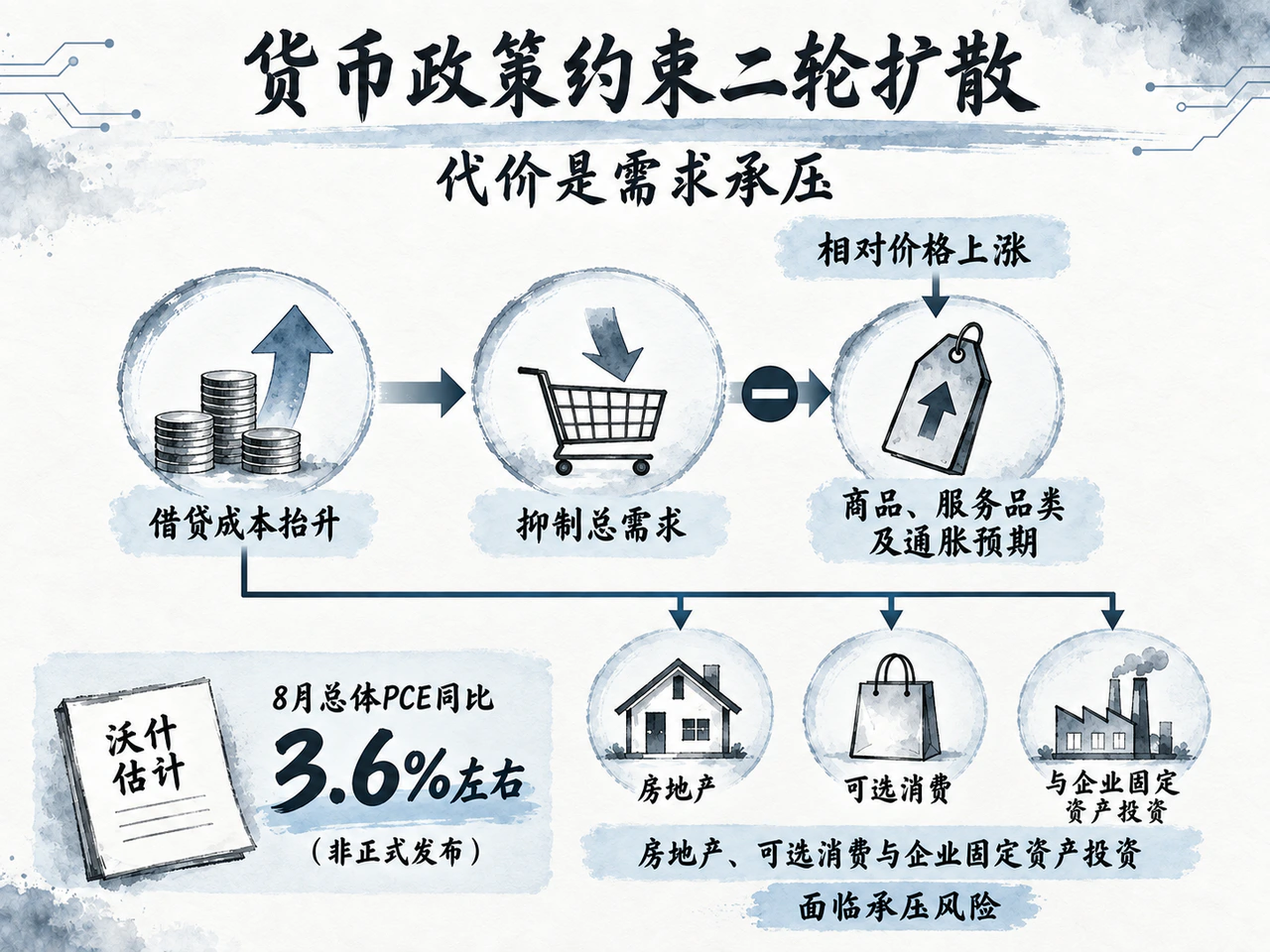
Warsh acknowledged monetary policy could not directly lower specific commodity prices such as oil. Its role was to restrain aggregate demand and prevent relative-price increases from spreading across goods, services and expectations. The potential cost was higher borrowing costs gradually reaching housing, discretionary consumption and corporate fixed investment. Cumulative tightening still needed continual comparison with the economy's capacity to absorb pressure.
Attention turned to August PCE due from the BEA on September 30. Warsh said published CPI and PPI implied headline August PCE inflation of around 3.6% year on year. The third estimate of second-quarter GDP, due the same day, would complete the macro picture. The week established renewed hikes and delayed easing; future frequency and depth still depended on the contest between fourth-quarter disinflation and domestic-demand resilience.


