On September 21, Chicago Fed President Goolsbee spoke at the Official Monetary and Financial Institutions Forum (OMFIF) in London. His central argument was clear: if repeated supply shocks persist, the Fed can no longer count on inflation subsiding by itself. Beyond resilient services inflation and localized demand pressure from AI data-center construction, he brought the discussion to the fundamental trade-off: lasting supply constraints would make some sacrifice of growth and employment necessary to curb inflation.
The Fed had raised the federal funds target range by 25 basis points to 3.75%–4.00% on September 16. Goolsbee did not specify an action for the next meeting, instead explaining the underlying constraints and policy costs of a sustained inflation fight.
Persistent supply shocks weaken the case for waiting; painless disinflation faces a practical test
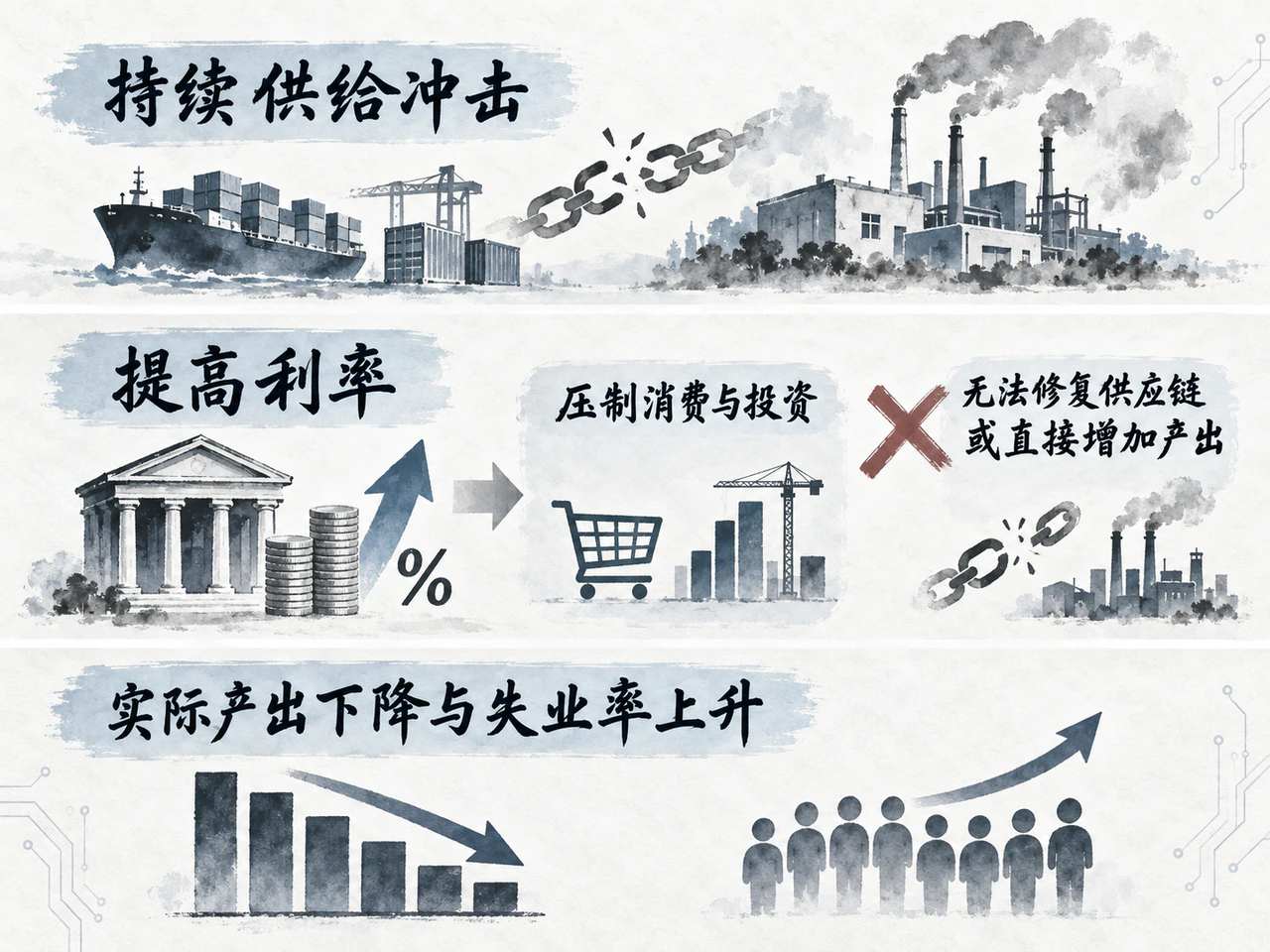
Traditional central-bank analysis usually favors looking through temporary supply shocks because monetary tightening works with a lag. External bottlenecks may resolve on their own before demand restraint takes effect. Goolsbee argued, however, that repeated, prolonged disturbances such as tariffs and energy shocks would make the 2% target harder to reach if policymakers continued doing nothing.
Policy costs in this setting are distinctly asymmetric. Higher rates can restrain consumption and investment but cannot repair supply chains or directly increase output. When supply contraction drives inflation, forcing demand down to match the supply shortfall often directly reduces real output and raises unemployment. AP reported that Goolsbee further told reporters afterward that fighting inflation might inevitably involve economic pain. This contrasted with Chair Warsh's statement the previous week that the inflation target could be achieved without harming the labor market, highlighting potentially different views within the Fed about the cost of disinflation.
Localized strength is not broad overheating; policy choices await key data
On demand, Goolsbee emphasized resilient services inflation and the aggregate-demand spillovers of AI infrastructure construction. He remained cautious about declaring overheating: buoyant technology investment alone did not mean the entire economy was operating beyond capacity. More evidence was needed to distinguish whether demand was overheating.
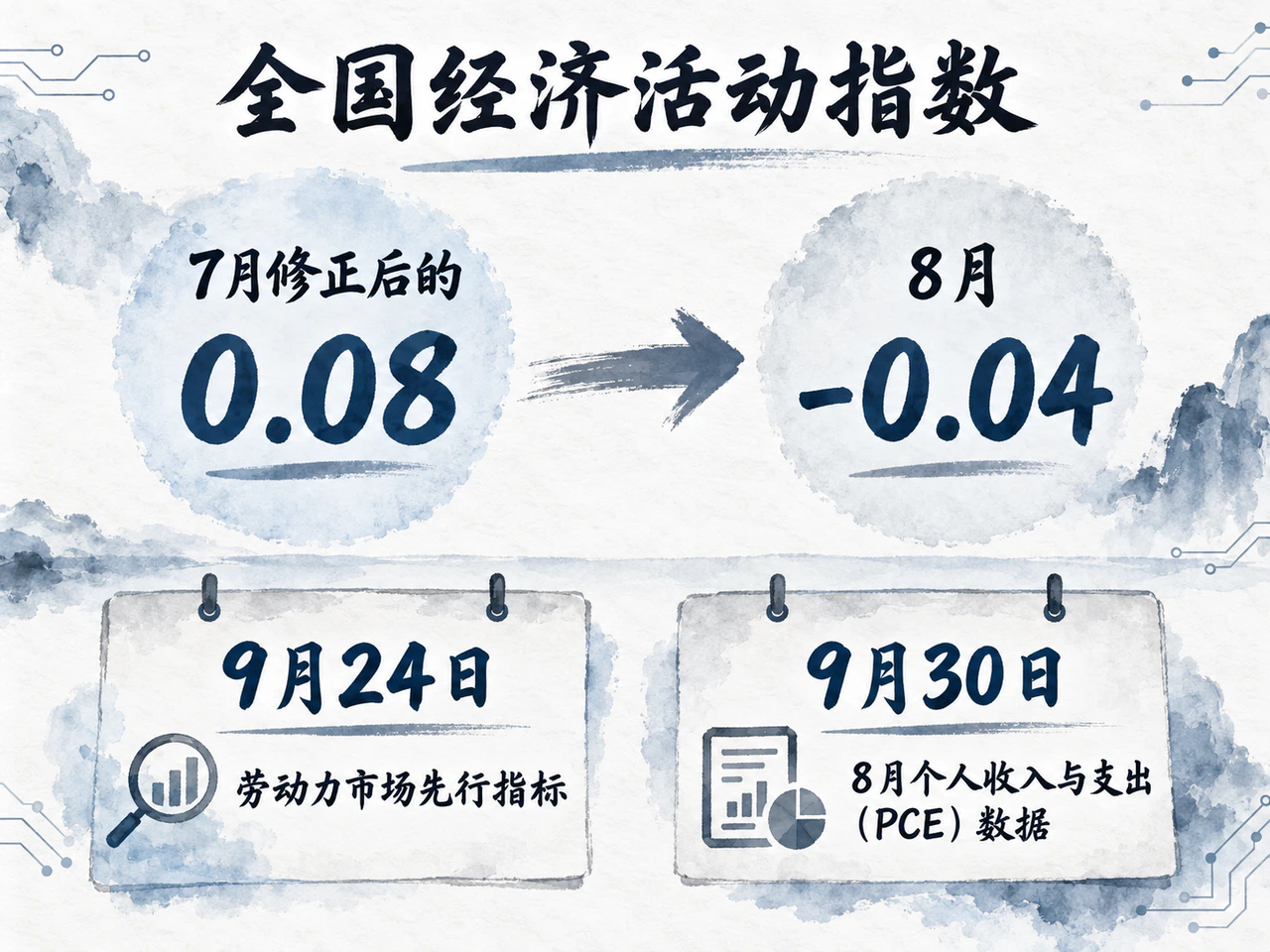
Macroeconomic data released that day supported this structural divergence. Dow Jones data showed the Chicago Fed National Activity Index falling from a revised 0.08 in July to −0.04 in August, indicating slightly below-historical-average growth. Production and sales components weakened, while employment and personal consumption improved modestly. The uneven picture showed that slower aggregate growth could coexist with localized price pressure; the index alone could not establish the degree of supply-demand imbalance.
With rigid supply constraints and divergent demand intertwined, hard data remained decisive. Markets were focused on the Chicago Fed's leading labor-market indicators due September 24 and August personal income and outlays (PCE) on September 30. Stubborn prices alongside weaker employment indicators would bring the growth–inflation trade-off sharply to the fore. Easing supply constraints, orderly demand cooling and steady employment could instead reduce the growth cost of disinflation. Until then, investors should assess evolving fundamentals carefully rather than equate individual officials' risk warnings with future rate decisions.


