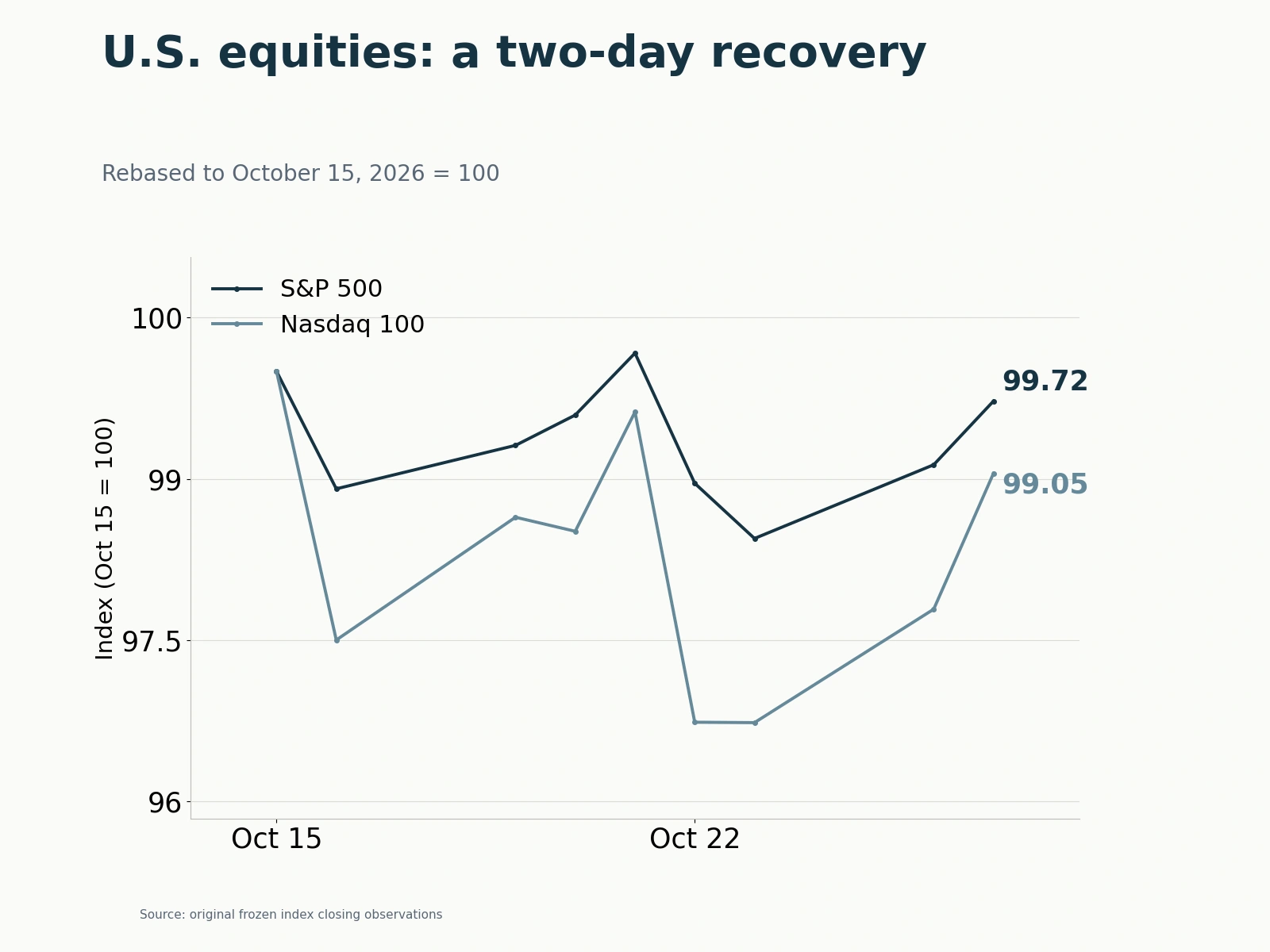
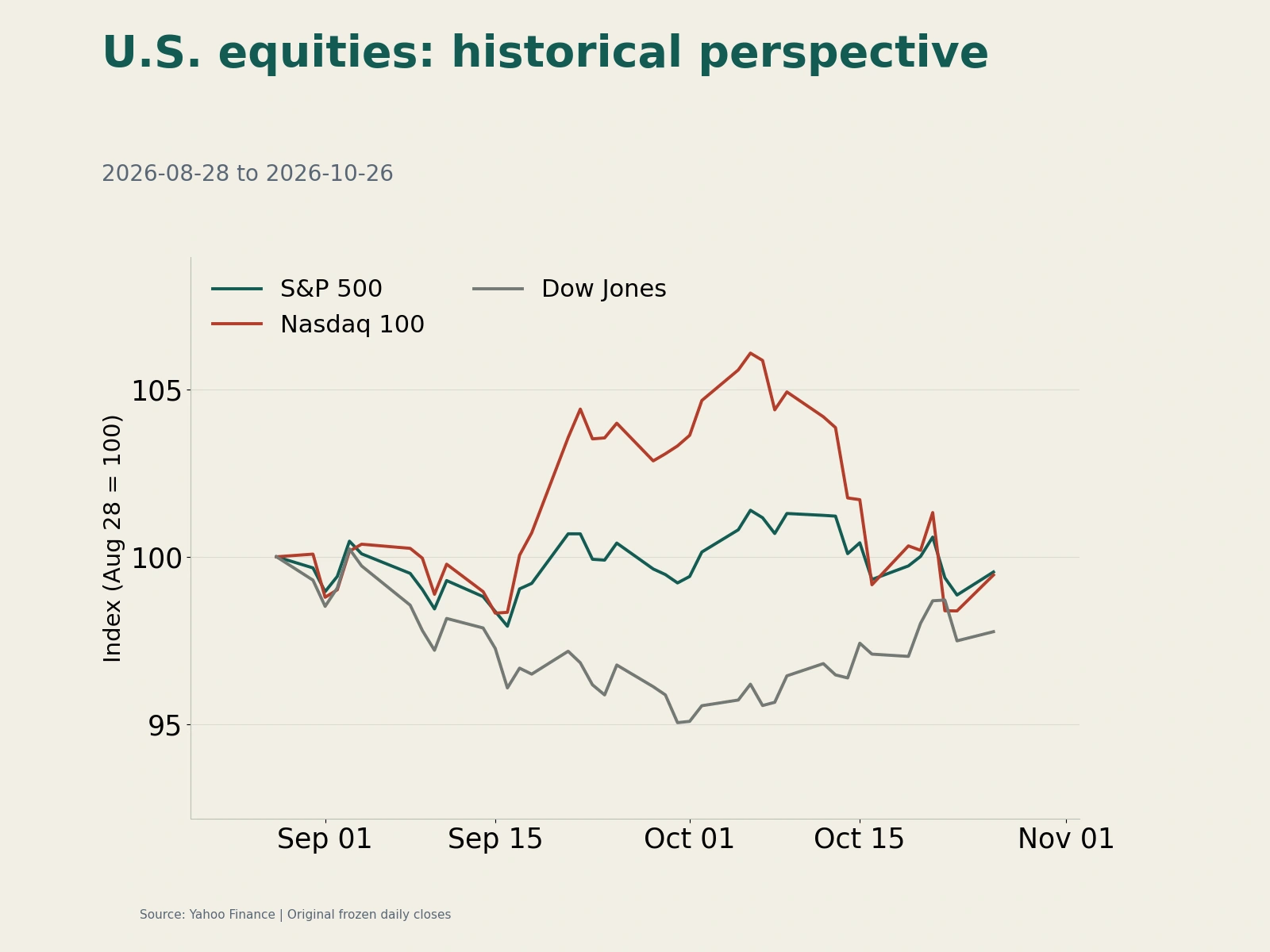
On September 21, 2026, US markets combined a rally in major technology stocks with a recovery in long-term Treasury prices. Expectations of AI applications supported semiconductor supply-chain demand, sharply lower oil eased inflation concerns, and lower intermediate- and long-term real Treasury yields reduced valuation pressure on growth stocks. This was not broad-based easing, however: the two-year yield held at 4.76%, Treasury bill auction discount rates rose, the dollar edged higher and gold fell, showing continued constraints from short-term funding costs and exchange rates.
Structural divergence remained clear. The Nasdaq 100 substantially outperformed small caps, energy shares fell with oil, and consumer-electronics hardware companies remained cautious about shipments. SoftBank launched a bond sale of roughly $10 billion to refinance bridge borrowing for its OpenAI investment, showing AI capital-spending demand extending into credit markets. Lower long-term rates gave equities valuation flexibility, but did not reduce companies' short-term financing costs or actual profitability thresholds.
Treasuries rally on lower long-term real yields; bill auction discount rates rise
The Treasury's daily curve showed overall flattening on September 21. Relative to September 18, the two-year yield was unchanged while yields from five through 30 years fell by 3–5 basis points.
| Maturity | September 21 closing yield | Change from September 18 |
|---|---|---|
| 2-year | 4.76% | 0 basis points |
| 5-year | 4.83% | −3 basis points |
| 10-year | 4.96% | −5 basis points |
| 30-year | 5.29% | −5 basis points |
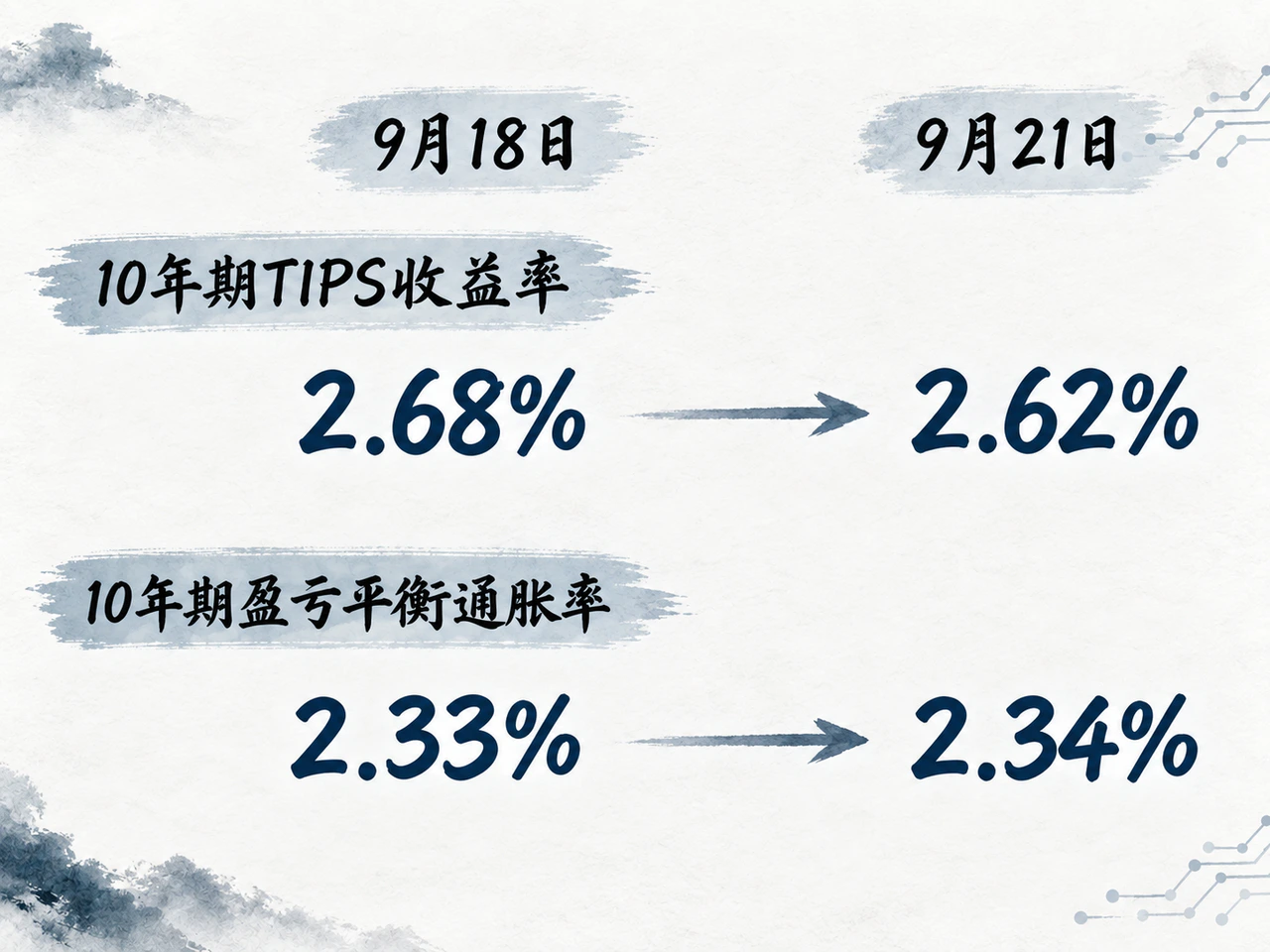
The 10-year/two-year spread narrowed from 25 to 20 basis points. Five-year Treasury Inflation-Protected Securities (TIPS) yields fell from 2.55% to 2.50%, and 10-year TIPS from 2.68% to 2.62%. The 10-year breakeven inflation rate edged up from 2.33% to 2.34%, indicating that lower real yields were the main driver of that day's long-bond rally.
In intraday commentary, Greystone linked the early long-bond rally to expectations of cooler inflation as crude fell, and suggested a 10-year yield approaching 5% could attract allocation buying. Persistently high short-term rates nevertheless showed continued caution about a Fed pivot toward easing.
Treasury auction results showed the bid-to-cover ratio on $92 billion of three-month bills rising from the previous 2.64 to 2.77, while the highest accepted discount rate rose to 4.015%. For $79 billion of six-month bills, bid-to-cover fell from 2.74 to 2.62 and the highest discount rate rose to 4.155%. Higher accepted discount rates signaled increased short-term funding costs; recovering valuations at the long end had not brought short-term borrowing costs down in tandem.
US activity cools modestly; European institutes plan higher forecasts and China's LPRs stay steady
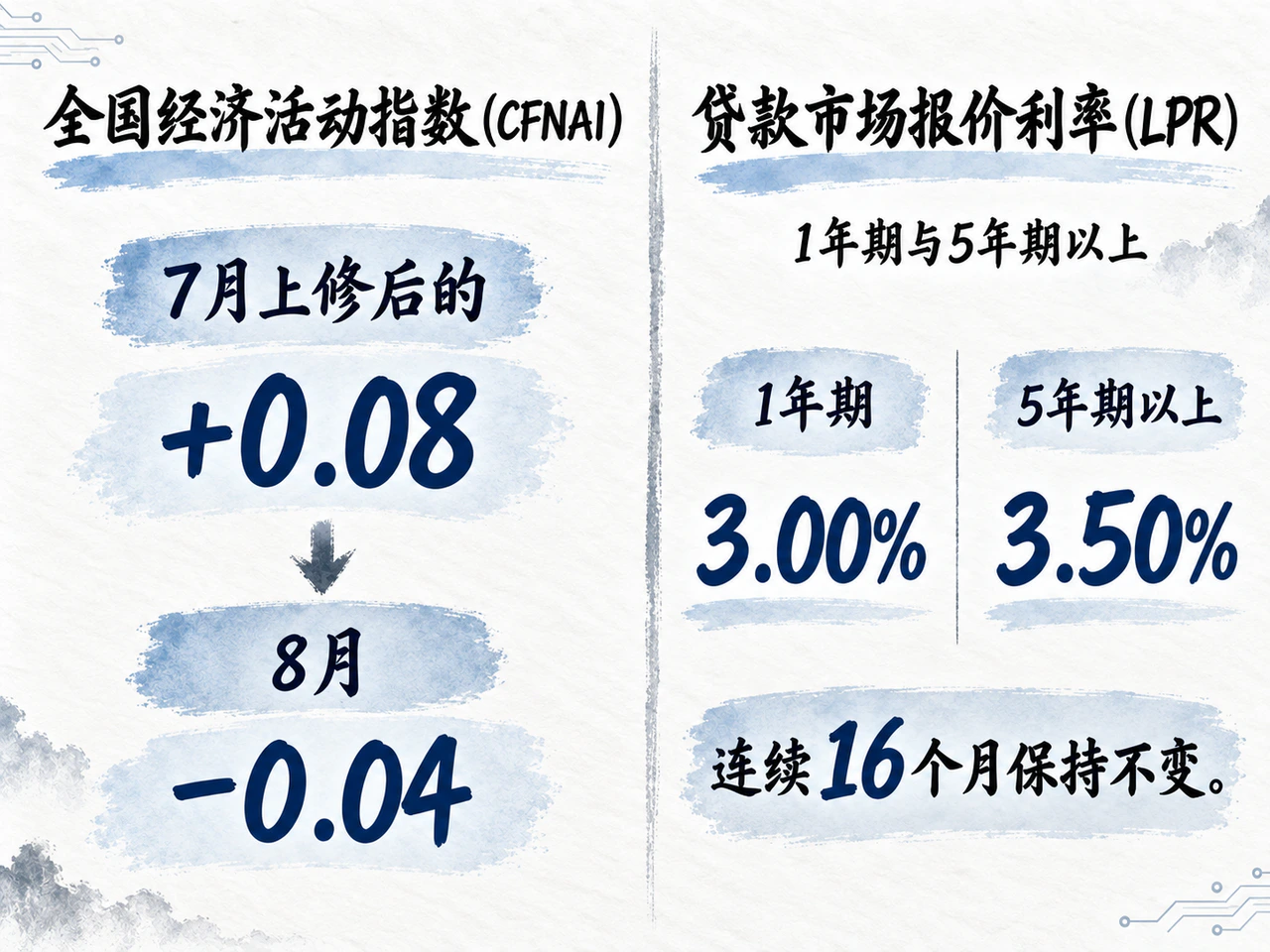
The Chicago Fed's August National Activity Index (CFNAI), released September 21, was −0.04, above the expected −0.08 but below July's upwardly revised +0.08. With zero representing historical trend growth, the reading suggested a moderate slowdown to slightly below trend.
BEA's calendar showed the third estimate of second-quarter GDP and August PCE prices scheduled for September 30. These closely watched releases would be key references for consumption resilience and core inflation.
In Europe, Reuters cited Handelsblatt reporting that leading German economic institutes planned to raise growth forecasts in their joint autumn outlook: 2026 GDP growth from 0.6% to 1.3%, and 2027 from 0.9% to 1.1%. This was a development in think-tank forecasts; the strength of Germany's actual manufacturing recovery still required subsequent official data.
China's loan prime rates, announced September 20, remained at 3.00% for one year and 3.50% for over five years, unchanged for 16 consecutive months. Securities Daily noted that the central bank's seven-day reverse-repo rate remained 1.40% and commercial-bank net interest margins were historically low at 1.41% at the end of the second quarter. Margin pressure and the policy-rate level constrained quotation room. BNP Paribas expected policy rates potentially to remain stable this year, while Golden Credit argued that a subsequent policy-rate cut could guide LPRs lower.
Technology leaders lift US equities; consumer hardware and smaller companies diverge
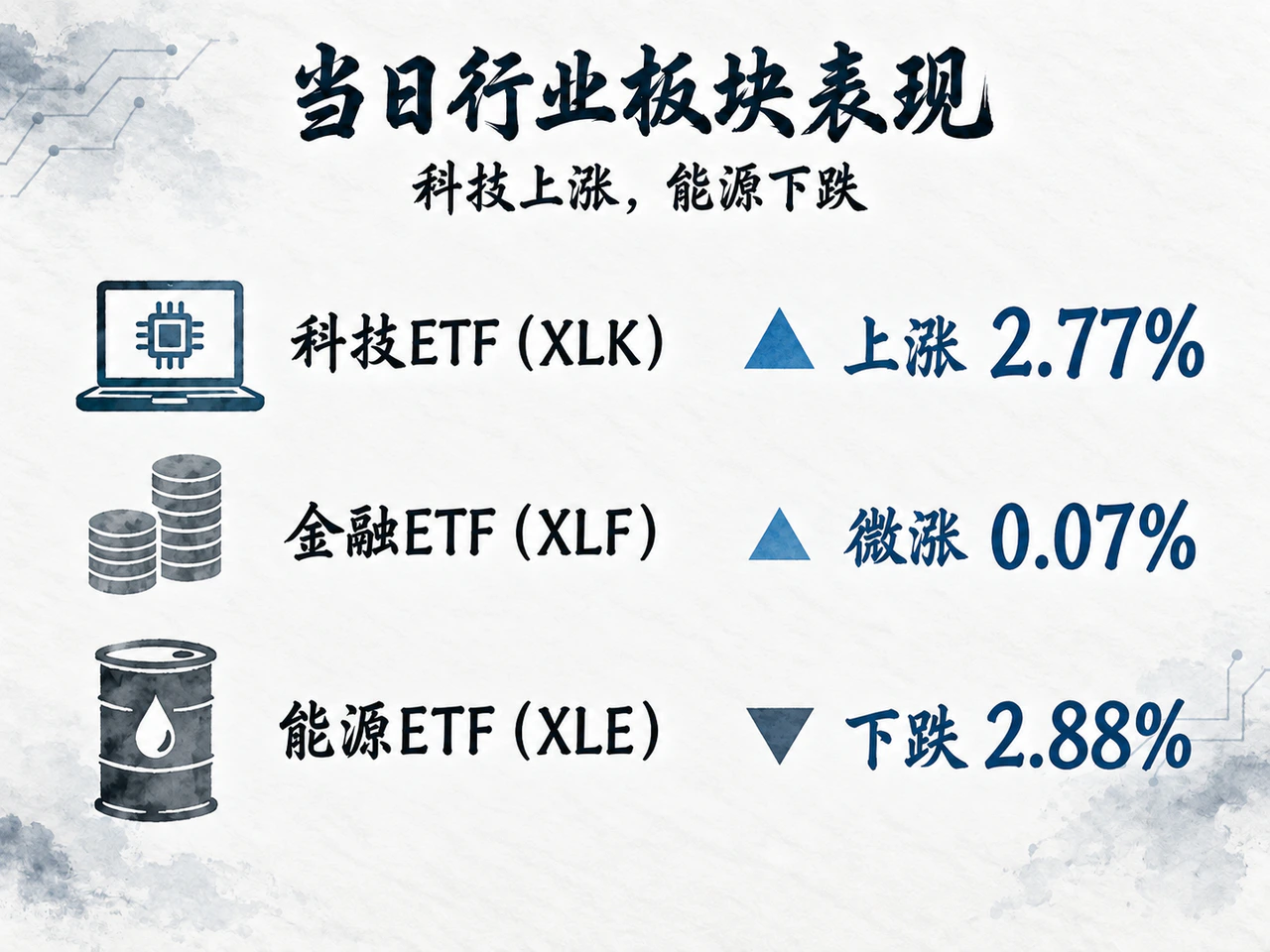
All major US indices closed higher, but sectors diverged sharply. The S&P 500 rose 1.49% to 7,764.70; Nasdaq 100 gained 2.83% to 30,482.35; Dow Jones Industrial Average rose 0.71% to 52,048.83; and Russell 2000 edged up 0.52% to 2,875.36. Technology ETF XLK rose 2.77%, financial ETF XLF just 0.07%, and energy ETF XLE fell 2.88% with oil. VIX edged up from 14.81 to 14.87. The wide performance gaps showed a rally driven mainly by large technology weights, with demand for leading assets not spreading broadly across industries and smaller stocks.
Bloomberg attributed technology strength to early market feedback on Meta's AI Agent products. Meta gained about 11%; AMD rose 9.9% on AI-server demand expectations, taking its market capitalization above $1 trillion; Nvidia gained 2.3%. Wells Fargo raised Meta's target from $640 to $796 while retaining an overweight rating. CFRA kept a $750 target, focusing on AI commercialization and subscription revenue. Investors also watched the Meta Connect event scheduled for September 23–24.
End-market hardware was more cautious. In a September 21 regulatory filing, HP withheld formal fiscal-2027 guidance and preliminarily assumed global PC shipments would decline by a mid-single-digit percentage in 2027. Its shares fell nearly 5% intraday.
Media-sector merger litigation advanced. Paramount reached a settlement, still requiring court approval, with 12 states including California over its Warner Bros. Discovery acquisition. Terms included film-production commitments over five years and at least $1.5 billion in additional domestic investment. Warner Bros. Discovery (WBD) rose 10.79% to $30.80; Paramount fell 2.94% to $9.91 amid production-spending and potential integration burdens.
SoftBank's multibillion-dollar sale refinances investment bridge loans; one high-yield issuer repays at maturity
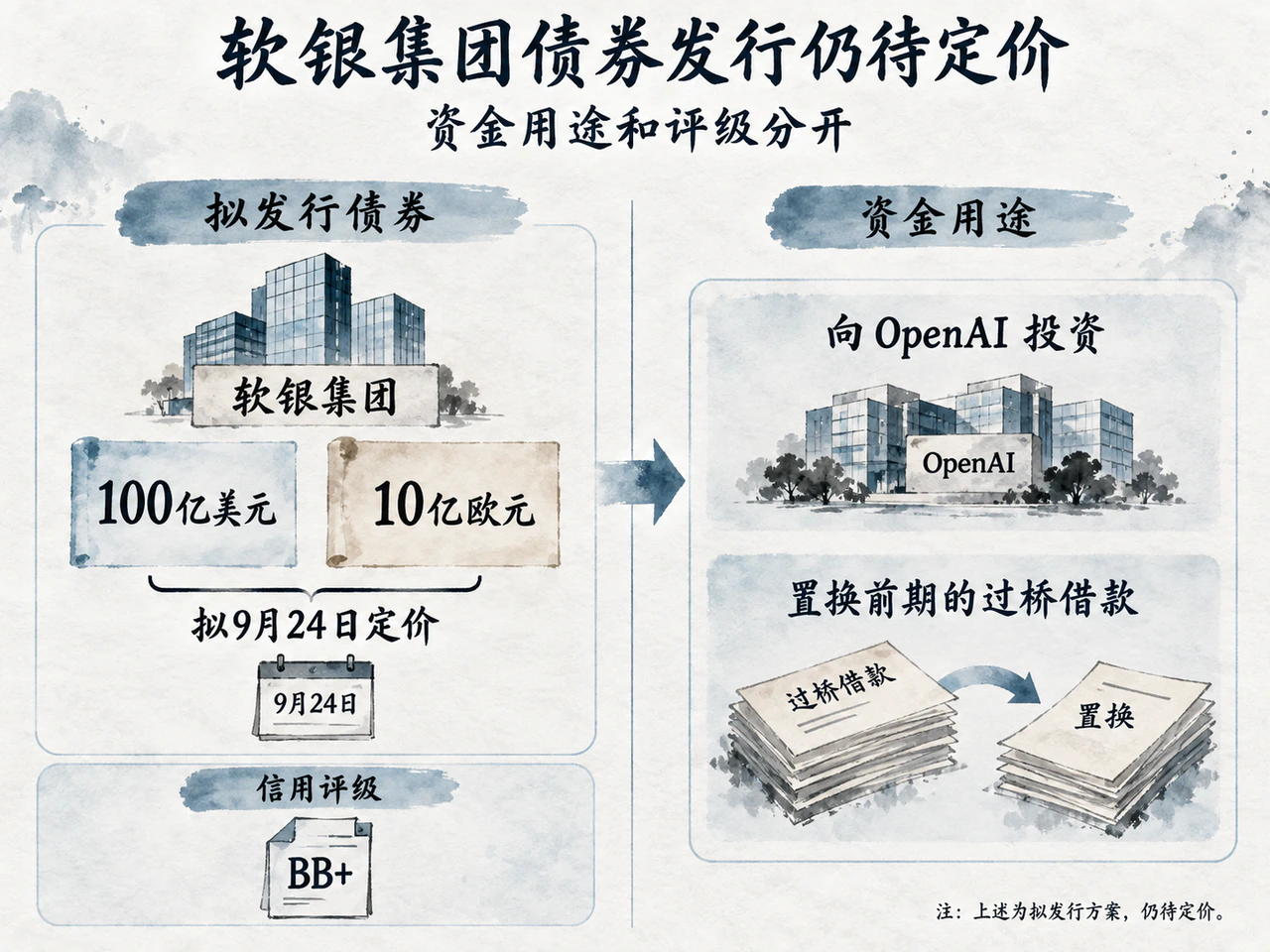
Capital-spending needs in large AI models drove more debt issuance. Reuters reported that SoftBank Group launched $10 billion and €1 billion of senior unsecured bonds on September 21, targeting pricing on September 24. Proceeds were mainly intended for its third $10 billion investment installment in OpenAI and refinancing earlier bridge borrowing. Fitch assigned the proposed notes BB+, noting that despite higher debt from investment commitments, SoftBank retained liquidity buffers and financing access.
In Chinese offshore dollar debt, Securities Daily reported that eHi Car Services had fully repaid on schedule its $300 million, 7.0% senior notes due September 21, resolving that individual maturity risk.
In secondary markets, investment-grade corporate bond ETF LQD and high-yield ETF HYG rose 0.37% and 0.19%, respectively. As large new offerings such as SoftBank's arrived, potential diversion of liquidity from outstanding bonds would merit attention.
Higher Saudi exports lower oil; dollar strength weighs on gold
Oil-supply concerns eased. Reuters, citing tanker tracking and satellite data, reported that Saudi Aramco loaded about 14 million barrels in the Persian Gulf and dispatched 7 supertankers. Saudi crude shipments through Hormuz averaged 2.9 million barrels a day over the preceding 6 days, well above August's 700,000. Higher exports offset disruption fears and, together with US–Iran diplomatic-contact expectations, pressured prices. Although Libya's National Oil Corporation confirmed partial production cuts at Sharara, the broader crude risk premium still declined markedly.
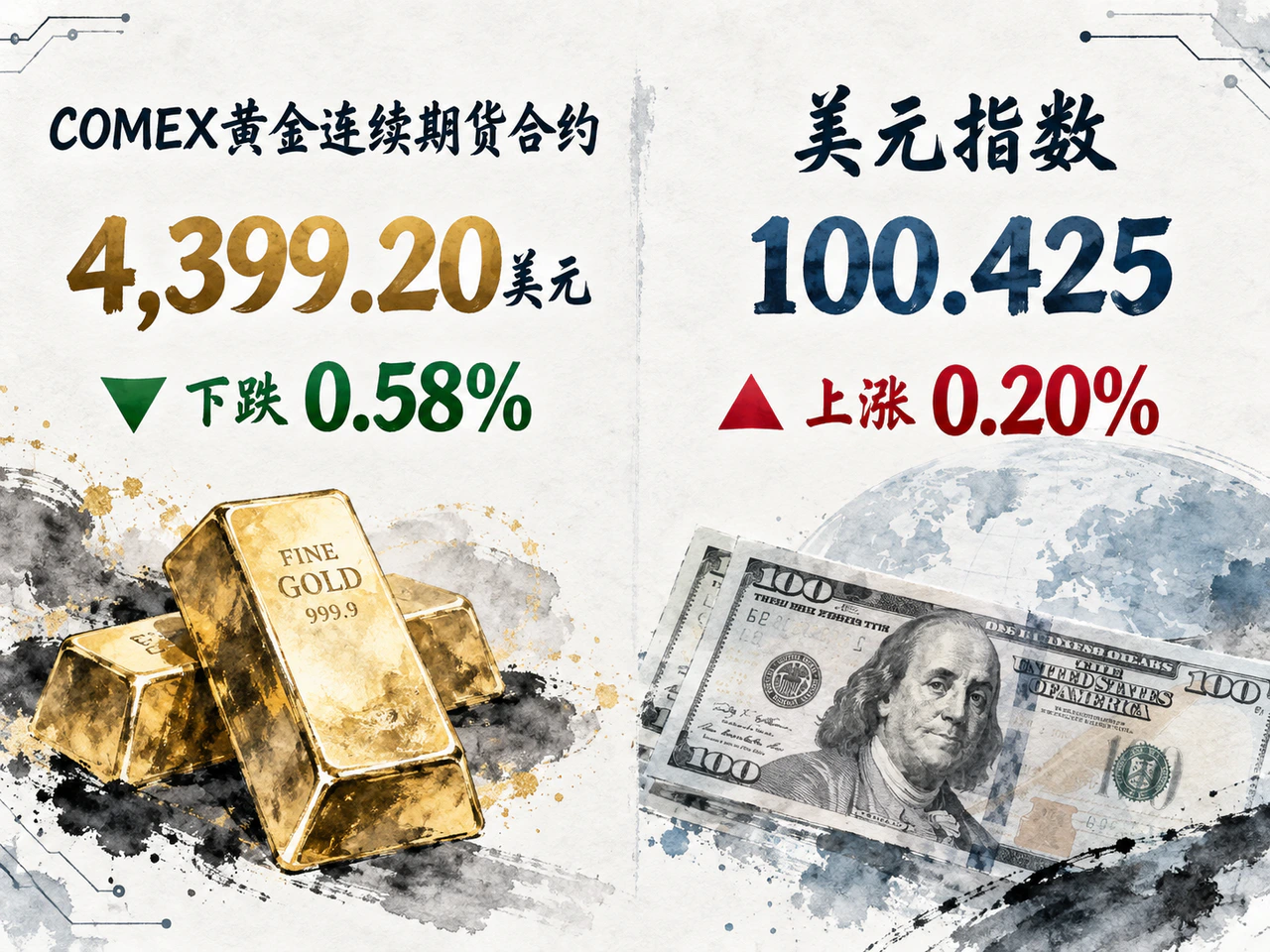
Gold diverged from lower long-term real yields. COMEX continuous gold futures closed at $4,399.20 an ounce, down 0.58%, while the dollar index rose 0.20% to 100.425. Treasury data showed five- and 10-year TIPS yields falling 5 and 6 basis points. Lower real rates theoretically reduced the opportunity cost of non-interest-bearing assets, but gold still fell. American Gold Exchange analyst Jim Wyckoff attributed the pressure chiefly to dollar strength and expectations that Fed policy would remain restrictive for an extended period.
Trade talks offer marginal signals; Asia-Pacific markets watch sentiment transmission
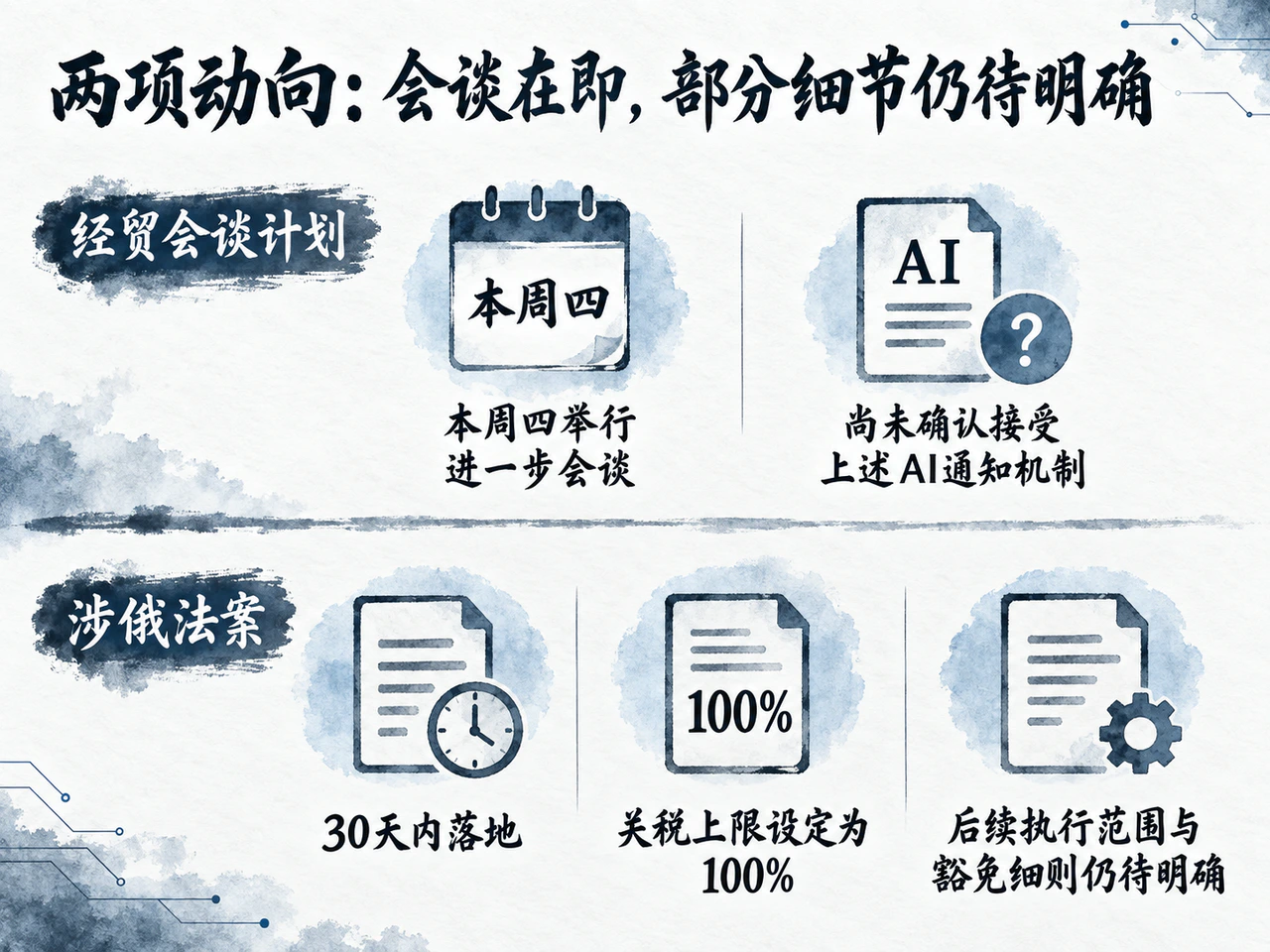
Foreign media reported that US representative Bessent mentioned an AI-safety notification mechanism after weekend talks and said discussions covered extending the trade truce and adjusting tariffs on selected goods, with further talks planned for Thursday. China's public account had not confirmed acceptance of that AI mechanism. A longer trade truce remained a market expectation pending substantive results from further negotiations.
On geopolitical sanctions, the United States signed a new Russia-related sanctions law on September 18. Baker McKenzie's legal analysis said most measures required implementation within 30 days and set a 100% tariff ceiling for major purchasers of Russian energy and violators. Implementation scope and exemptions remained unresolved.
Overnight strength in US technology giants offered a positive sentiment signal for related Asian supply chains. Dollar gains against the yen and won constrained local-currency assets, however. Early September 22 Beijing time, Hong Kong and Korean cash markets were awaiting opening and Japan's cash market was closed for a holiday. The extent of sentiment transmission still required confirmation in subsequent trading.
Overall, the durability of this technology-led valuation recovery depended on AI commercialization, changing supply-chain and geopolitical premiums, and actual implementation of major-economy trade negotiations.