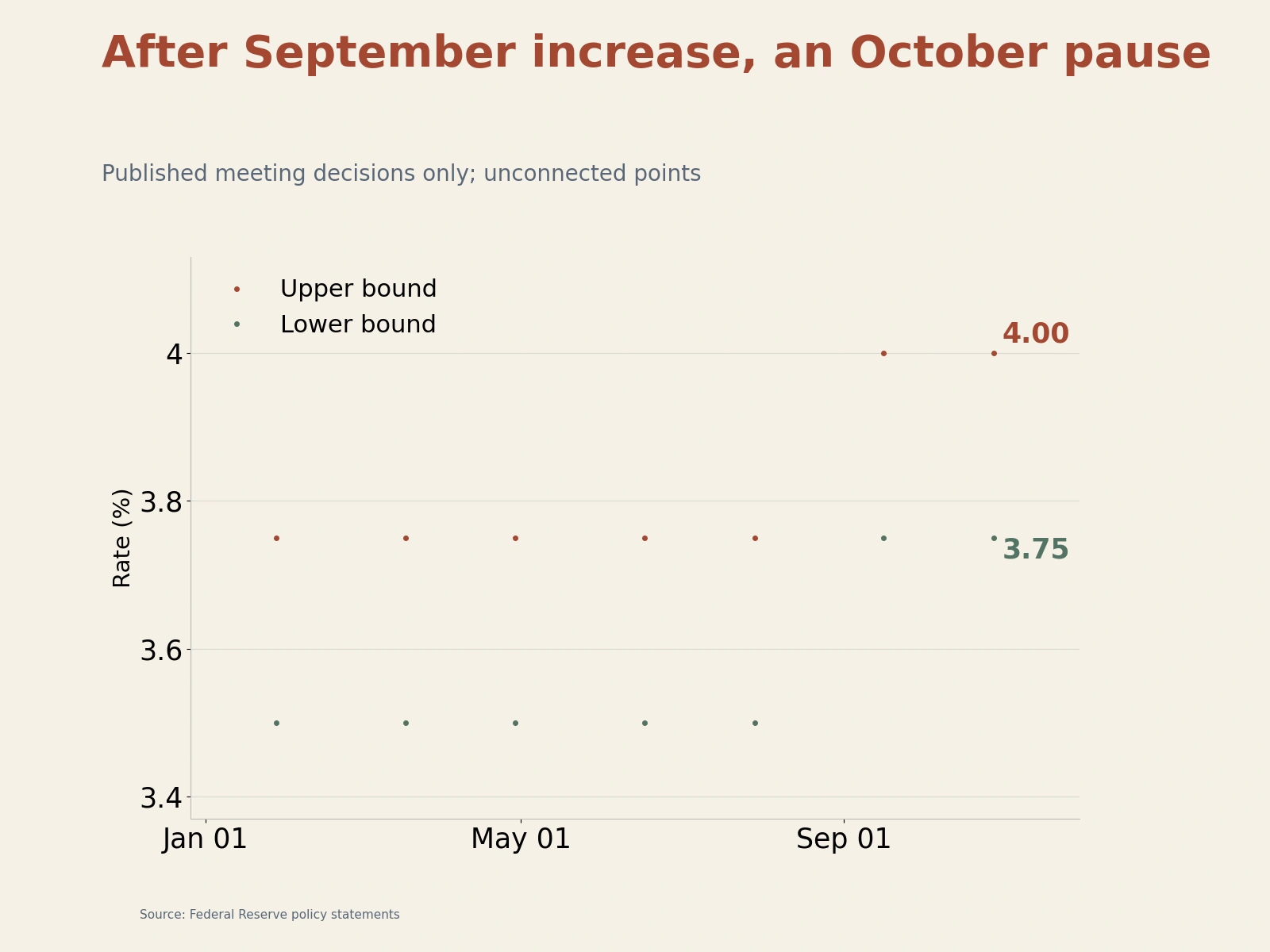
After the Fed raised the federal funds target range by 25 basis points to 3.75%–4.00% on September 16, policymakers remained highly concerned about inflation. Speaking to CFA Society Baltimore on September 22, Richmond Fed President Barkin emphasized that inflation risks still exceeded employment risks. He did not promise further hikes, but rejected the optimistic assumption that inflation would inevitably subside on its own and detailed the evidence needed to assess further tightening.
Entrenched price increases alter transmission; supply recovery alone may not resolve inflation
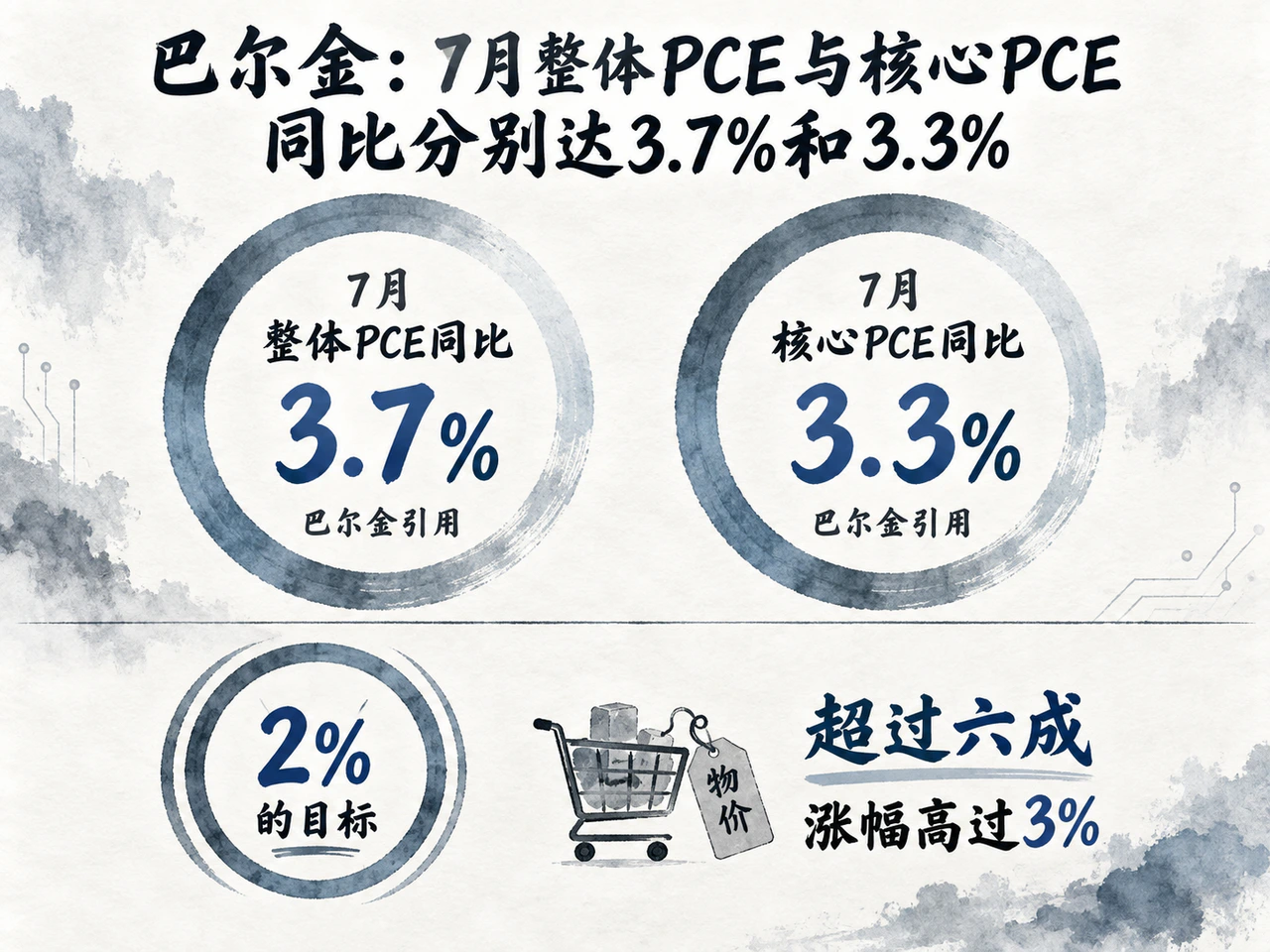
Citing existing data, Barkin noted July headline and core PCE inflation of 3.7% and 3.3% year on year respectively, with more than 60% of detailed PCE basket components rising faster than 3%. These readings underpinned the Fed's restrictive stance.
The more important shift concerned corporate pricing behavior. Barkin warned that inflation drivers were no longer limited to oil and tariffs. Rapid expansion in AI compute investment was creating additional pressure on some hardware and supply-chain segments. Companies, having adjusted prices through the pandemic, had also developed stronger habits of raising prices and were more inclined to pass new costs actively to final customers. Wealthy households' balance sheets and corporate capital spending provided room to absorb those increases.
Once larger price increases become routine, simply waiting for supply to recover can no longer ensure a smooth return to the 2% target.
Employment, by contrast, had not imposed an urgent constraint on the Fed. Barkin cited August unemployment of 4.1% and more than 160,000 additional nonfarm jobs as signs of resilience. He also highlighted structural changes: cautious hiring coincided with slower labor-supply growth, so low unemployment alone did not establish a broad revival in labor demand.
Regional manufacturing orders weaken as renewed cost pressure complicates policy
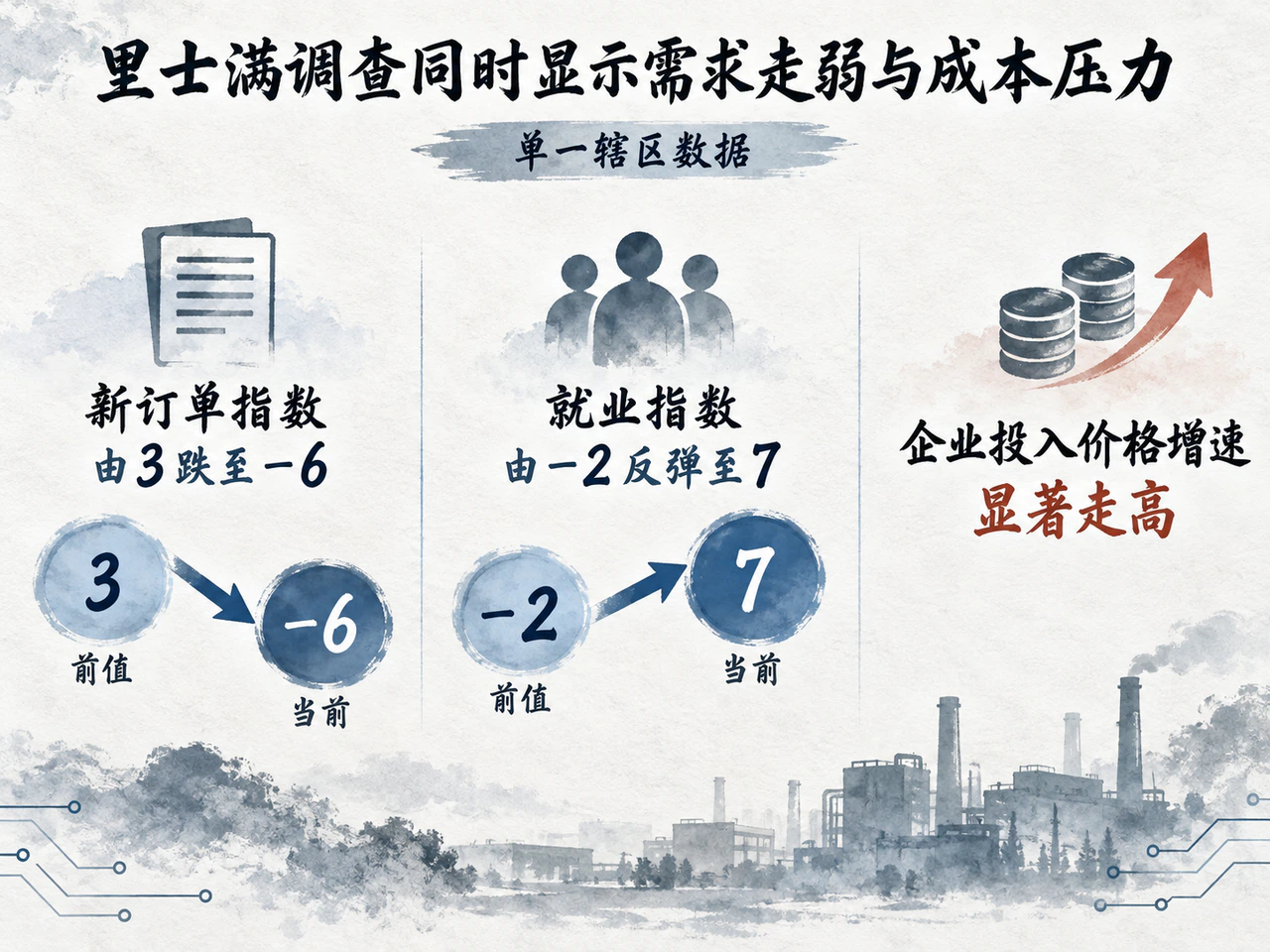
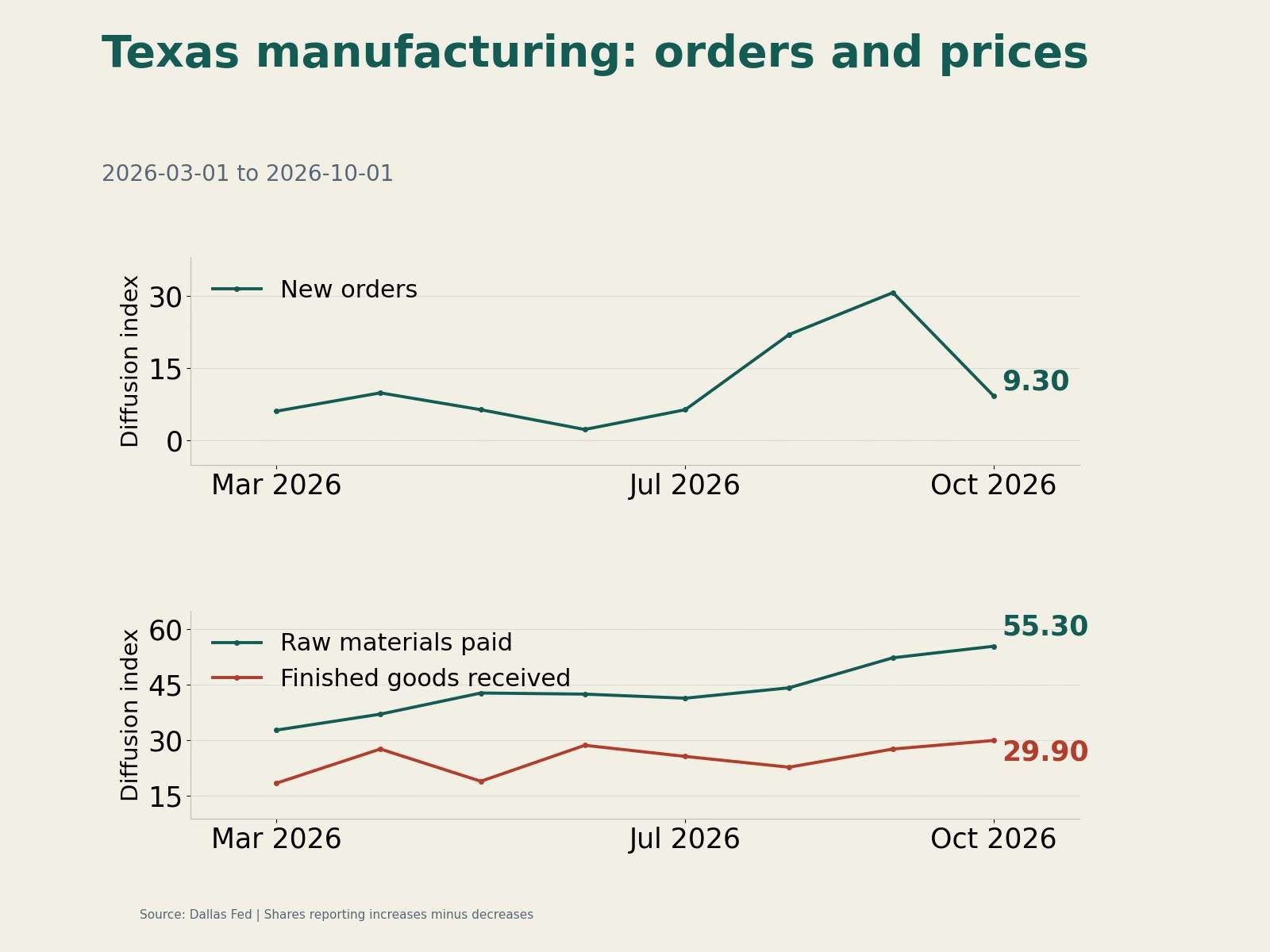
The Richmond Fed's September manufacturing survey released that day corroborated these mismatched pressures. The composite index fell from August's 4 to −2, new orders from 3 to −6, and shipments from 11 to −5, indicating rapid cooling in orders and output. Components diverged, however: employment rebounded from −2 to 7, input-price growth rose significantly, and selling-price growth edged up, although firms still expected both rates to ease over the next year.
The regional survey depicted weaker orders alongside cost pressure. One district's data cannot determine the national aggregate-demand trend, but they expose a key transmission question: whether weaker nominal demand can quickly restrain firms' incentive to raise prices.
Barkin retained both possibilities. Pressure on consumption, cooling investment or material labor-market deterioration would accelerate disinflation. Persistent cost shocks combined with resilient demand might instead require further tightening. The stance was therefore vigilance against inflation, rather than a preset timetable or pace of hikes.
Technical liquidity arrangements are distinct; data will test how much demand cools

The Treasury-market conference held at the New York Fed that day drew a clear distinction between policy tools and stance. Vice Chair Jefferson described progress in modernizing the discount window, noting that more than 60% of borrowing requests were now submitted through an online portal. New York Fed President Williams stressed that reserve supply and policy tools must adapt to structural changes in financial markets. Their purpose was to improve routine liquidity tools that prevent frictions and strengthen policy-rate control, independently of whether monetary policy is tight or loose.
The next policy tests would return to fundamentals. Governor Barr was scheduled to discuss the economic outlook and housing on September 23, while BEA would release August personal income, outlays and PCE inflation on September 30. The former would provide policymakers' latest assessment of rate transmission and housing demand; the latter would test whether price pressure was easing as expected.