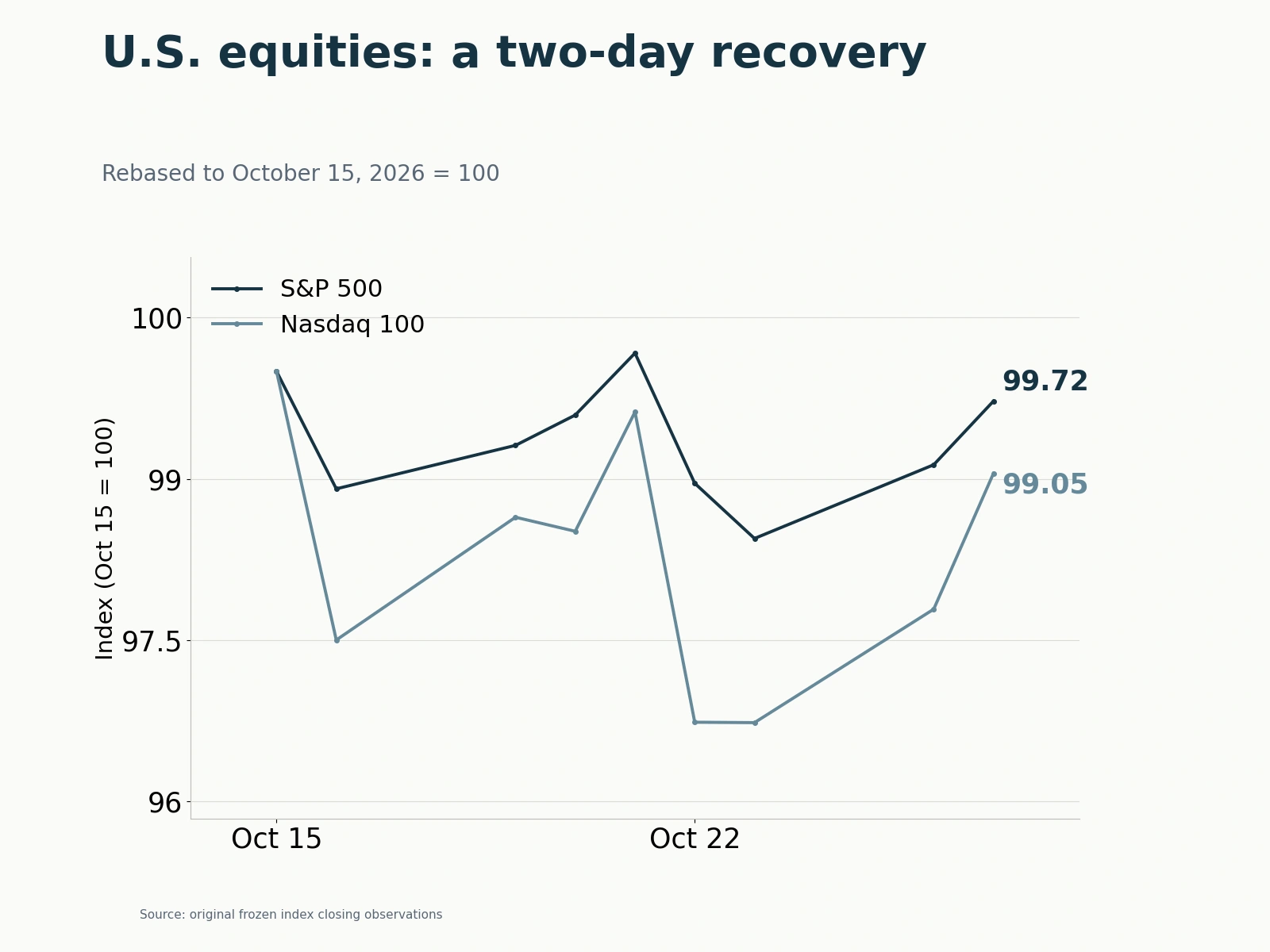
On September 22, 2026, overseas financial markets showed structural divergence and competing expectations. Lower oil and short-term Treasury yields marginally eased strained inflation expectations, but long-term benchmarks and real funding costs stayed firm, with expensive credit continuing to constrain real demand. Major US indices fluctuated narrowly overall while diverging sharply internally. A new AI agent boosted hardware and computing shares but threatened to disintermediate traditional platforms. Potential bond supply from technology giants' substantial capital spending also increased their credit-market spread premiums.
Falling Short Rates Steepen the Curve as Expensive Auctions and Liquidity Discussions Draw Attention
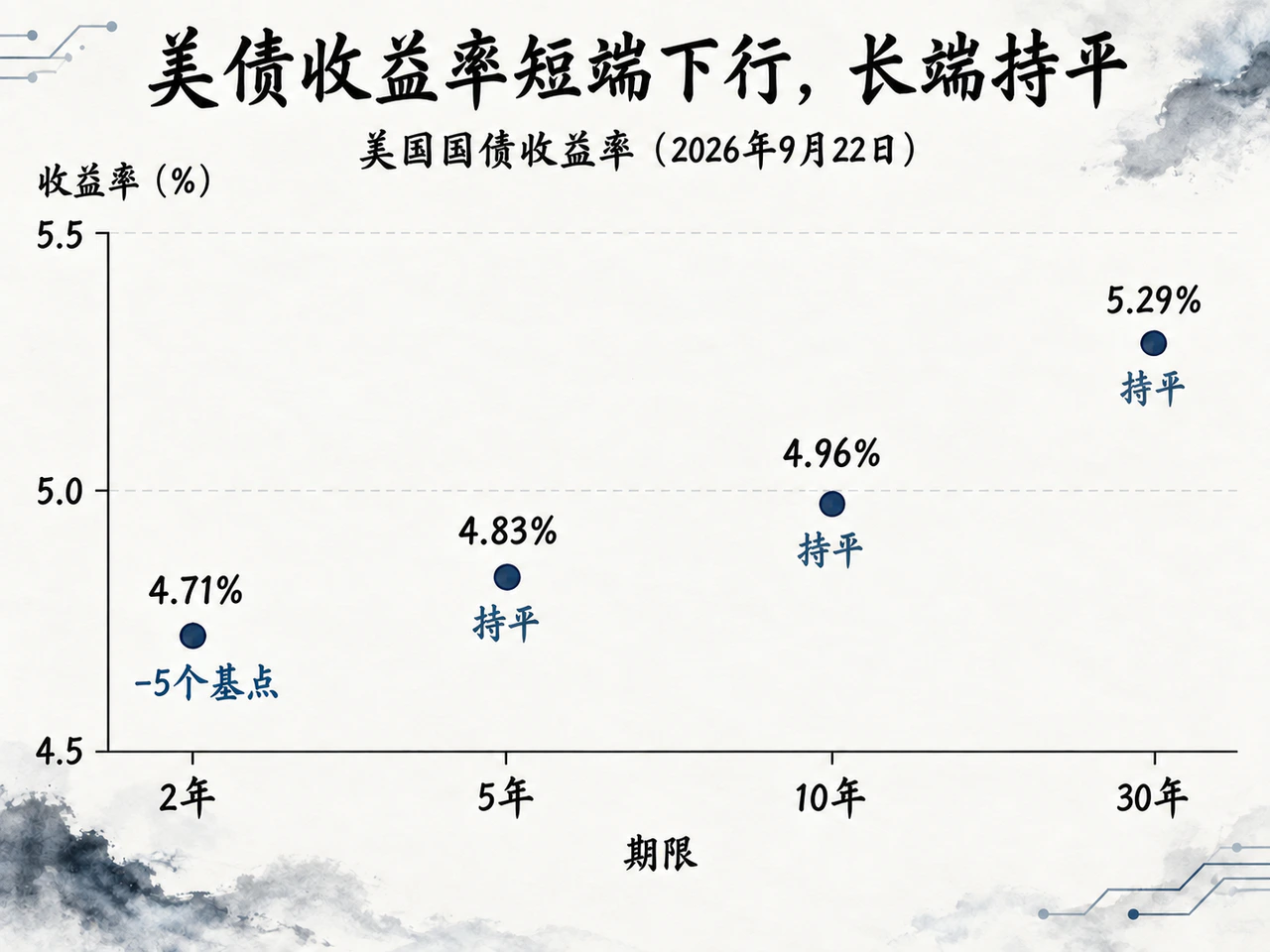
The Treasury curve bull-steepened on September 22, driven by its short end. The Treasury's consistent daily curve showed the 2-year yield down 5 basis points to 4.71%, while the 5-year, 10-year and 30-year stayed unchanged at 4.83%, 4.96% and 5.29%. The 2–10-year spread consequently widened 5 basis points to 25.
| Maturity | September 22 yield | Change from previous trading day |
|---|---|---|
| 2-year | 4.71% | -5 basis points |
| 5-year | 4.83% | Unchanged |
| 10-year | 4.96% | Unchanged |
| 30-year | 5.29% | Unchanged |
Lower short rates did not bring parallel relief in long-term real funding costs. The 10-year TIPS real yield edged up 1 basis point to 2.63%, while the nominal-minus-real breakeven narrowed slightly to 2.33%, consistent with lower oil restraining near- and intermediate-term inflation expectations. Long-term real financing remained expensive.
Primary-market refinancing illustrated fiscal cost pressure. The Treasury's $69 billion 2-year auction cleared at 4.787%, its highest yield since May 2024. After the equity close, Reuters reported that participants at a New York Fed Treasury-market conference discussed placing some idle cash from the nearly $1 trillion Treasury General Account, TGA, into private repo markets to ease interbank liquidity pressure. This remained a discussion proposal, without implementation or near-term operational action.
Manufacturing Orders Contract and Hiring Expectations Weaken as High Rates Reach Corporate Accounts
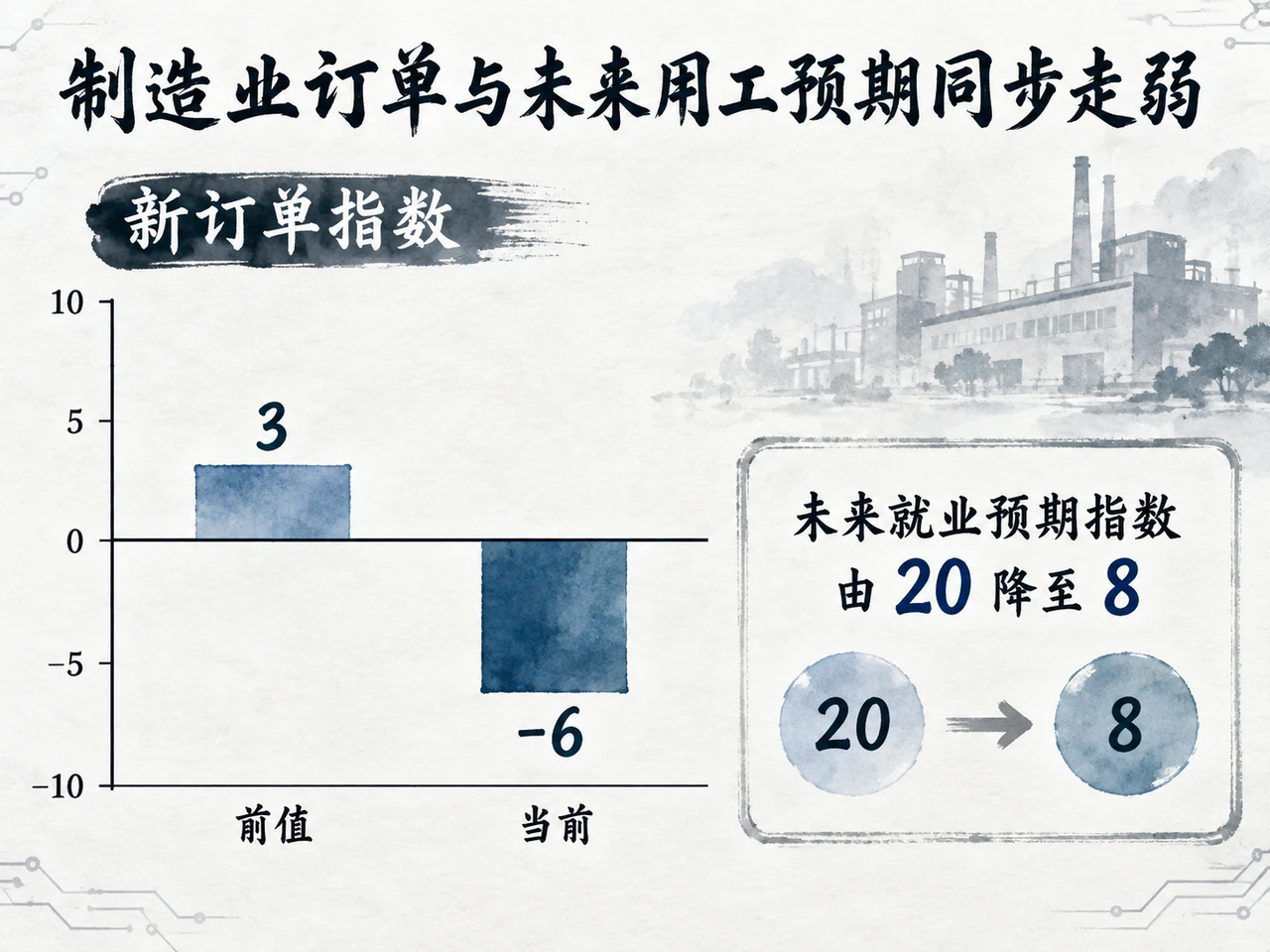
Fundamental data showed pronounced differences across US sectors. The Richmond Fed's September manufacturing index fell from 4 to -2. New orders dropped from 3 to -6 and shipments from 11 to -5, showing pressure on goods demand. Current employment rose from -2 to 7, while input-price growth increased more than selling-price growth. Expected future employment weakened markedly, falling from 20 to 8.
Labor trends influenced policy expectations. ADP's preliminary estimate showed average private gains of 20,000 jobs per week over the four weeks ended September 5, above the comparable prior-week window's 16,750, suggesting slightly steadier early-September hiring demand. Richmond Fed President Barkin said more than 60% of 180 PCE categories still had annual inflation above 3%. Inertia in consumption and investment meant inflation risk remained greater than employment-weakness risk. Markets awaited September 23's preliminary S&P Global PMIs and September 30's August core PCE report to test the persistence of cooling core demand.
High rates' restraint on end demand was reaching corporate results. Homebuilder KB Home reported after the close that fiscal third-quarter revenue for the period ended August 31 fell 20% year on year to approximately $1.3 billion. Deliveries dropped 19% and net orders 12%. Management said persistently high mortgage rates severely weakened affordability. Backlog units nevertheless edged up 2%, and full-year guidance was maintained.
Prospects of Partial Supply Relief Weigh on Oil as Gold Resists a Stronger Dollar and Real Rates
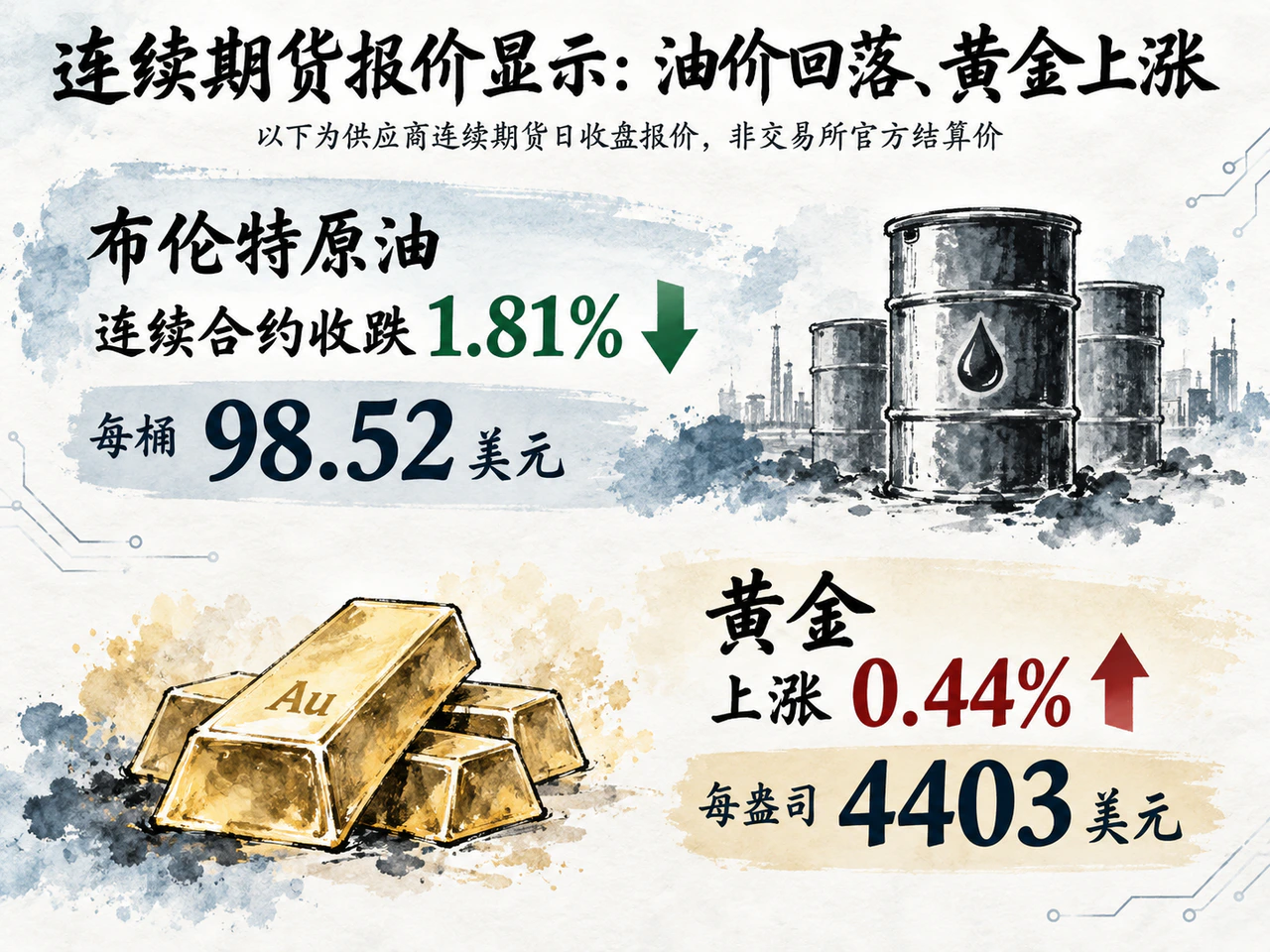
Crude and gold diverged. Changing supply expectations pressured oil lower. Continuous Brent closed down 1.81% at $98.52 a barrel, while continuous WTI was $89.66 near its contract-roll window. Oil and gold quotes here are provider daily continuous-futures closes, not official exchange settlement prices.
Some supply relief emerged. Saudi Arabia's East–West pipeline restarted, with sources suggesting crude loadings at Red Sea port Yanbu might resume. Iran conditionally offered to secure Hormuz passage, but arrangements were not implemented and shipping risk remained. A valve closure reduced Libya's Sharara production by around 200,000 barrels a day, offsetting some additions. Ukraine expressed willingness to discuss an energy ceasefire if Russia stopped attacking its energy system. Potential new US sanctions on Russian oil and gas buyers remained at the threat stage. These supply and geopolitical exchanges temporarily narrowed risk premiums.
Gold showed considerable resilience. The provider's continuous-futures daily close rose 0.44% to $4,403 an ounce, rather than an exchange settlement. The dollar index edged up 0.11% to 100.541 and the 10-year real Treasury yield rose to 2.63%. Gold finished higher after morning pressure despite these small increases in the dollar and real yields.
AI Assistant Divides Computing Stocks From Traditional Platforms as Debt Expectations Lift Credit Spreads
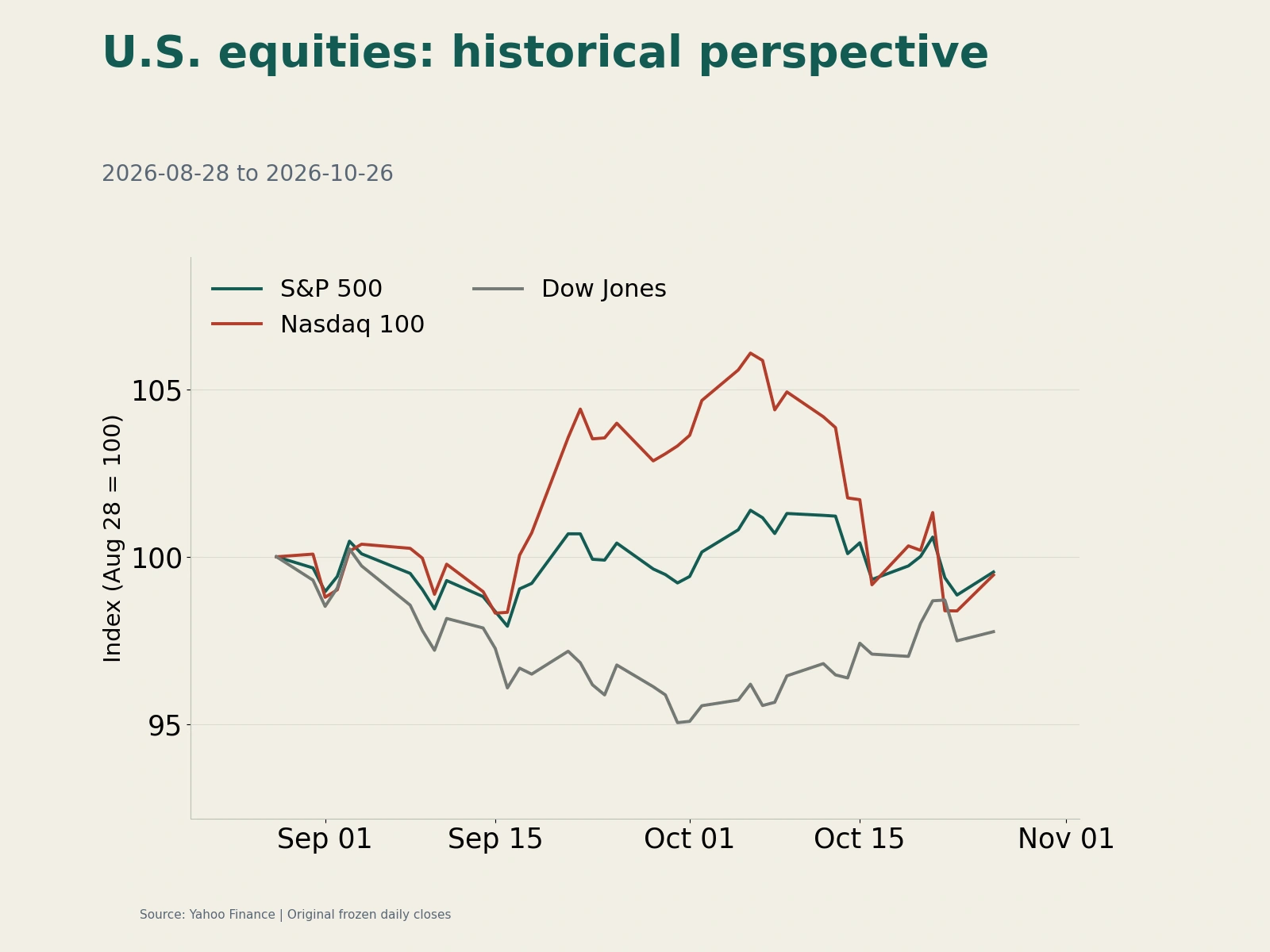
US indices traded narrowly overall. The S&P 500 slipped 0.06 point to 7,764.64; technology lifted the Nasdaq 100 by 0.82% to 30,732.40; the Dow fell 0.36% to 51,863.69; and the Russell 2000 rose 0.51%. VIX fell 0.66 point to 14.21. The technology-sector ETF gained 0.73%, while financial and energy ETFs lost 1.97% and 1.09%.
Meta's Muse AI assistant, with autonomous interactive-agent capabilities, was the main technology catalyst. Its ability to handle email and transactions across platforms for users strengthened expectations of long-term underlying computing demand. An intraday report at 14:27 US Eastern time showed Micron up 3.9% and Sandisk up 7.2%. This end-to-end execution also raised fears that traditional consumer and booking intermediaries would be bypassed. Expedia fell 4.0% intraday and Charles Schwab 5.5%. Large e-commerce platforms had begun technical restrictions on such assistants accessing transactions, reflecting AI expansion's disruption to existing ecosystems and traffic gateways.
Financial stocks were broadly pressured, with JPMorgan falling 3.4% and dragging the sector lower. Even with a steeper curve, expectations of persistently high rates left banks facing rising deposit-repricing costs and weak credit demand. AutoZone and recreational-vehicle company Thor Industries reported solid earnings and rose 3.3% and 5.5%, respectively, though both management teams still cited macroeconomic demand pressure in their industries.
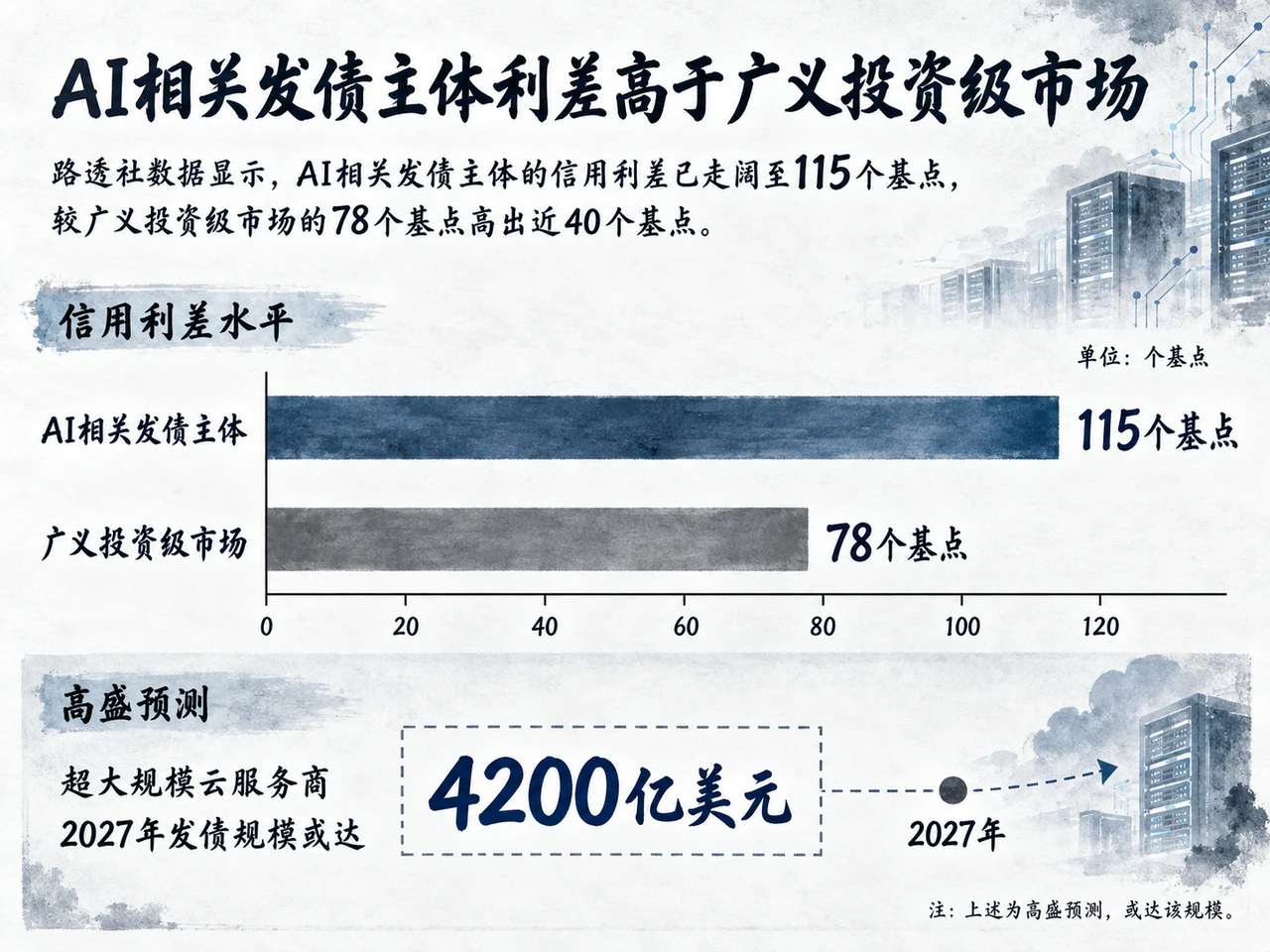
Credit divergence was more pronounced. Massive AI-infrastructure spending was changing technology giants' balance sheets. Reuters data put AI issuers' spreads around 115 basis points, nearly 40 above the broad investment-grade market's 78. Goldman Sachs forecast hyperscaler issuance of $420 billion in 2027, up 60% from 2026. BlackRock and Apollo differed over whether this supply represented temporary imbalance or a reassessment of repayment risk from higher leverage.
Computing Plans Feed Through Supply Chains as Global Automakers Focus on Tariff Negotiations
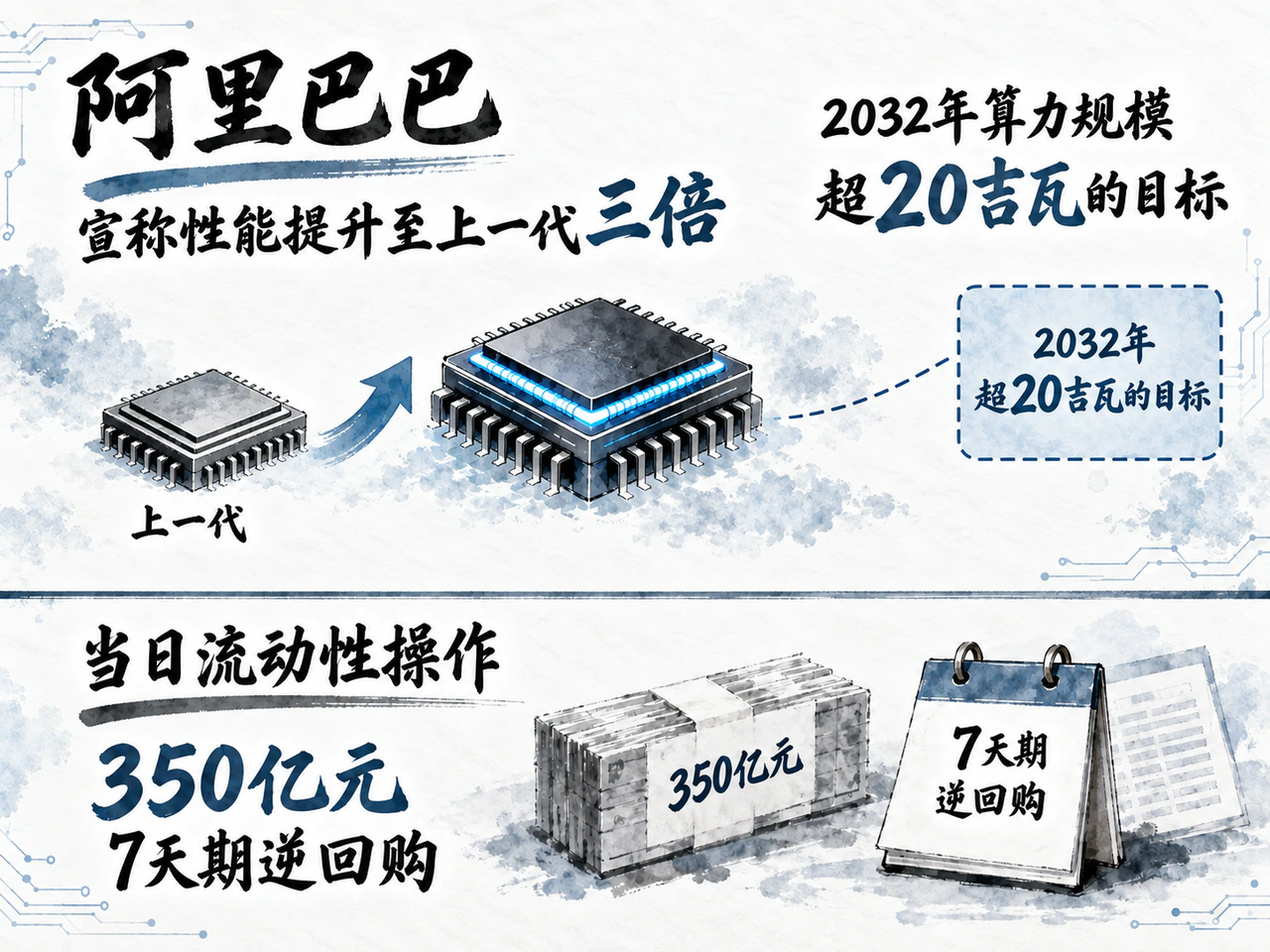
In Asia-Pacific, technology supply chains and trade policy were central. Alibaba introduced its Zhenwu V900 chip, claiming three times its predecessor's performance, and targeted more than 20 gigawatts of computing capacity by 2032. That goal could generate orders through Japanese and Korean semiconductor-equipment and memory supply chains, but delivery depends on bottlenecks such as advanced manufacturing capacity. Hong Kong-listed platforms likewise faced possible AI substitution of intermediary services.
For liquidity and currency conditions, the PBOC conducted RMB 35 billion of 7-day reverse repos that day. Offshore, with the US 10-year still near 5%, Asian dollar-bond issuers faced refinancing constraints from high benchmarks. A few basis points of easing at the short end did little to relieve rolling outstanding debt.
Reshaping trade rules continued testing multinational manufacturers. Regarding further EU tariffs, price agreements and possible expansion to more vehicle types, BMW management supported voluntary price undertakings rather than escalating tariff barriers. BMW makes electric Minis in China for export back to Europe, so tariff changes directly affect its global supply chains and production-cost allocation. Trade bargaining had become deeply embedded in companies' operational considerations.
Overall, lower oil and slightly lower short Treasury yields provided marginal relief. Firmly elevated long-term benchmarks, signs of pressure on real demand and technology capex's credit-supply burden nevertheless remained concrete valuation constraints.