On September 23, 2026, U.S. business activity accelerated alongside rising costs, while an oil rebound added to rate-hike concerns. The 2- and 10-year Treasury yields reached 4.85% and 5.11%, major U.S. equity indices broadly fell, the dollar strengthened and gold came under pressure. Expansion supports business revenue, but markets focused on the possibility that simultaneous demand and price strength could keep rates high longer.
Asset performance still differed as rates rose. Intermediate Treasury yields increased most, energy shares followed oil higher, and technology stocks continued to diverge around earnings and products. Financing needs did not disappear: SoftBank completed a large bond sale, while Asian markets placed greater emphasis on liquidity assurance and financing-currency choices.
U.S. orders and costs rise together, lifting expectations of rate increases
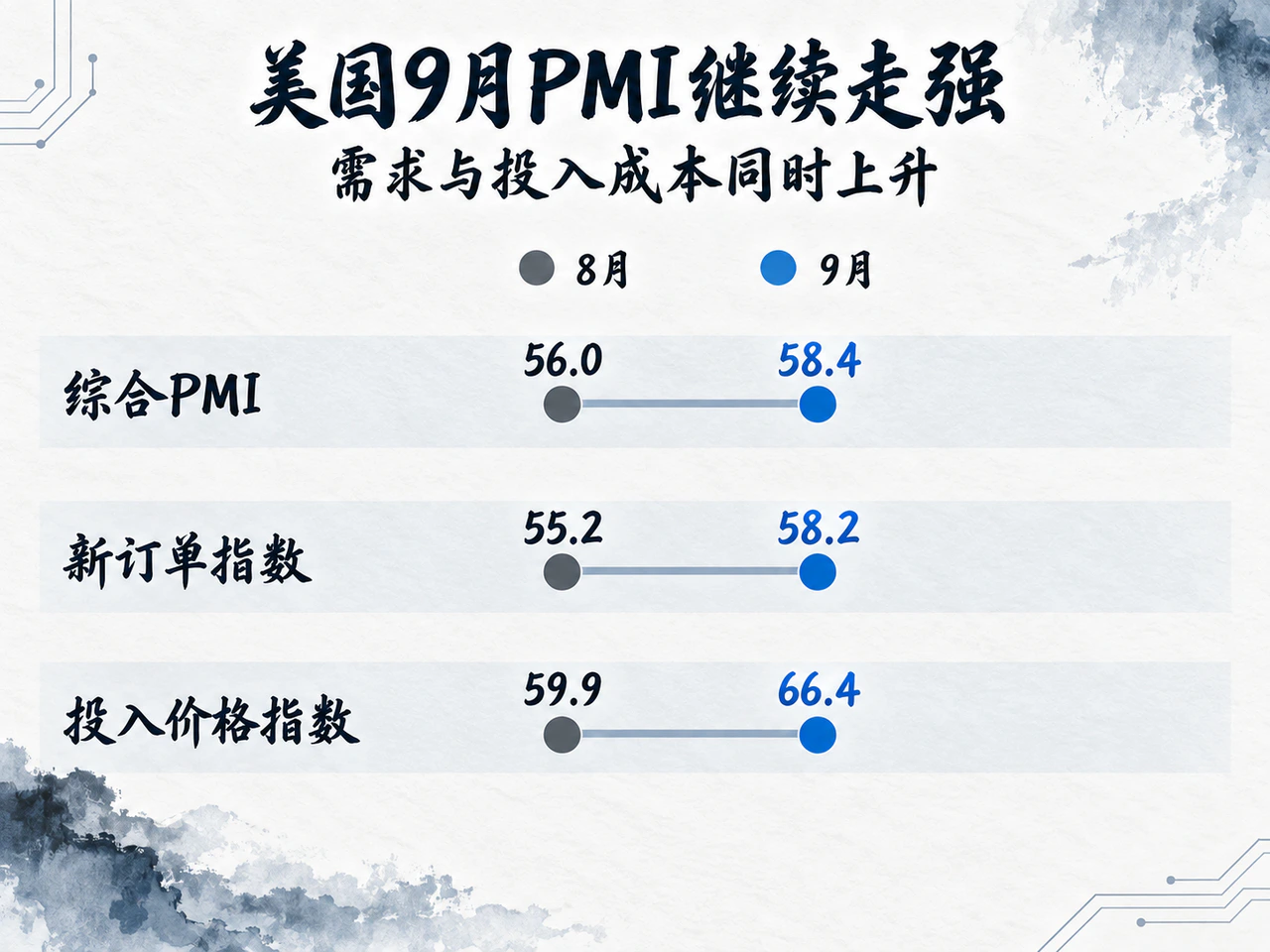
S&P Global's preliminary September U.S. composite PMI rose from August's 56.0 to 58.4, the highest since July 2021. New orders increased from 55.2 to 58.2 and input prices from 59.9 to 66.4, the latter's highest since October 2022. Expanding demand came with greater cost pressure.
Reuters reported rising orders in both manufacturing and services, backlogs at their highest since May 2022, and supplier delays at their most widespread since July 2022. Companies hired to clear backlogs but found suitable staff harder to find. Rising orders, delivery bottlenecks and hiring difficulties showed that cost pressures extended beyond energy.
S&P Global chief business economist Chris Williamson estimated annualized U.S. growth around 5%. This was based on historical survey-GDP relationships, not official quarterly growth. Nevertheless, stronger orders, hiring and backlogs made it harder to believe earlier tightening was enough. CNBC cited intraday CME data showing the expected probability of another 25-basis-point October increase rising from the previous day's 55% to 66.4%.
Business strength did not extend throughout the economy. ING noted a stark divergence between strong business surveys and depressed Michigan consumer confidence. The Mortgage Bankers Association reported on September 23 that the average 30-year fixed mortgage rate rose to 7.12% the preceding week, its highest in over two years, adding to housing burdens. August personal income and outlays due September 30, particularly real consumption and core PCE, would test resilient demand and price pressure.
The 5-year Treasury yield leads gains as auction demand weakens
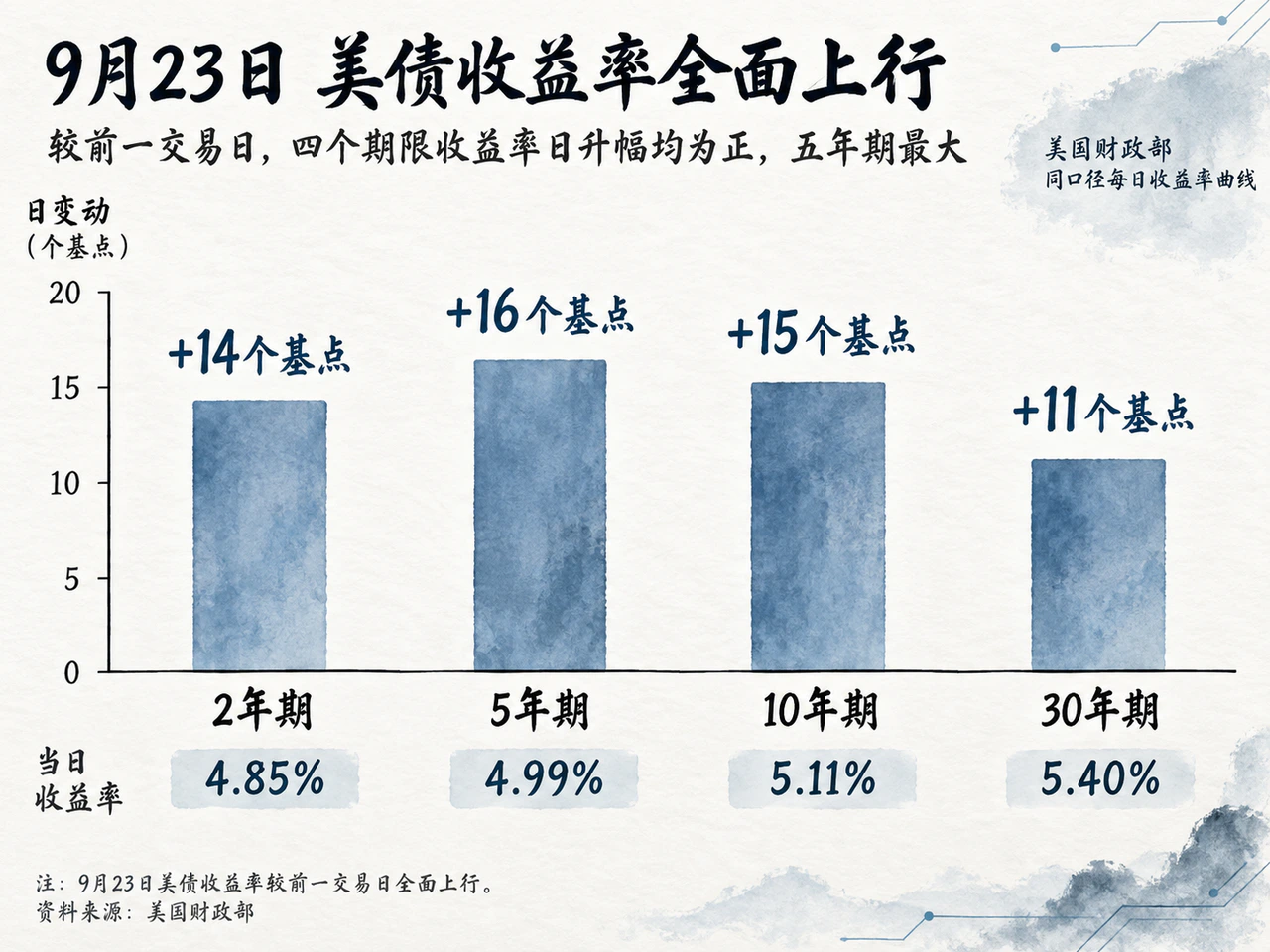
On the Treasury's consistently measured daily curve, September 23 yields rose across maturities from the previous session:
| Maturity | September 23 yield | Change from previous session |
|---|---|---|
| 2-year | 4.85% | +14 basis points |
| 5-year | 4.99% | +16 basis points |
| 10-year | 5.11% | +15 basis points |
| 30-year | 5.40% | +11 basis points |
The higher 2-year yield reflected an upward revision to near-term policy expectations, while the 10-year rise lifted the benchmark for longer financing and asset valuations. Adjustment was strongest in intermediate maturities, led by the 5-year. The 10-year/2-year spread widened only from 25 to 26 basis points, while the 30-year/5-year spread narrowed from 46 to 41.
After morning data lifted yields, the afternoon auction added selling pressure. Dow Jones reported that the $70 billion 5-year Treasury sale cleared at 5.033%, about 3.1 basis points above the 5.002% when-issued yield. Bid-to-cover was 2.21, below the six-month average of 2.33. New securities needed higher yields to attract buyers, indicating weak willingness to absorb supply.
Real yields also rose significantly. Treasury data showed the 5-year increasing from 2.51% to 2.65% and the 10-year from 2.63% to 2.76%, up 14 and 13 basis points. Bond losses therefore involved higher real financing costs as well as inflation expectations. These changes alone could not precisely distinguish policy expectations from term premiums.
For dollar-debt issuers, rising benchmarks both depress valuations of existing fixed-rate bonds and raise new borrowing costs. Credit stability still depends on cash flows and refinancing arrangements and cannot be judged solely from falling Treasury prices.
U.S. stocks broadly fall as future corporate demand receives closer scrutiny
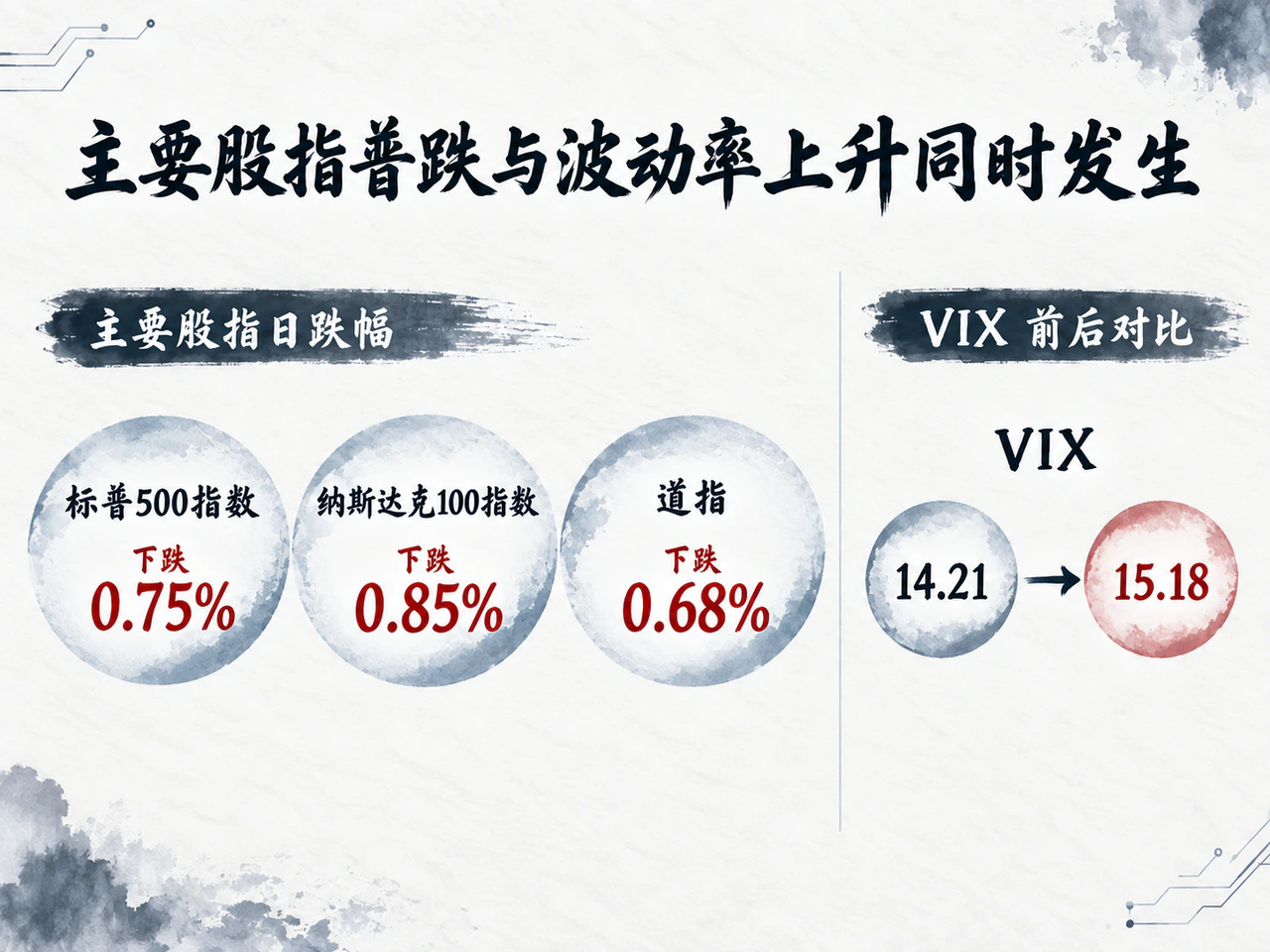
The S&P 500 fell 0.75% to 7,706.03; Nasdaq 100 0.85% to 30,470.29; and Dow 0.68% to 51,511.59. The VIX rose from 14.21 to 15.18. Investor's Business Daily's close report put decliners versus advancers near 3:1 on both Nasdaq and the NYSE, indicating broad selling. Preliminary volumes fell 9% and 3.5%, respectively, from the prior day, so there was no high-volume panic liquidation.
Sectors remained divergent. Energy ETF XLE gained 0.96% with oil, while financial ETF XLF fell 0.47%. Investopedia's closing report put semiconductor ETF SOXX down about 1.5%, memory ETF DRAM nearly 3%, and earlier winners Sandisk and Micron down around 3.5% and 2%. Rate pressure coexisted with profit-taking, and one day's losses did not establish weaker memory demand. Alphabet fell nearly 4%, while Meta gained around 1% ahead of its product event.
Investors focused more on future demand than a single quarter's profit. KB Home beat quarterly profit expectations but fell 3%; orders declined 12% year on year and deliveries 19%, with management saying mortgage rates and affordability had weakened housing since June. Paychex revenue growth slowed from 12% to 6%. Adjusted EPS beat expectations, but the company only maintained, rather than raised, full-year guidance, and shares fell nearly 9%.
After-hours Meta Connect brought new product information. Beginning at 19:00 Eastern time on September 23, the event announced integration of the Muse personal AI agent into smart glasses over coming months, third-generation Ray-Ban Meta pricing from $449, and Meta VR Glasses planned for spring 2027. AI spending was extending into consumer applications and hardware sales, but revenue depended on sales, usage and monetization. As the announcements came after the close, their specifics were not reflected in that day's closing performance.
Oil rebounds as dollar strength and real rates weigh on gold
On a consistent daily closing basis across adjacent sessions, November WTI rose 1.81% to $92.16 a barrel and November Brent 3.86% to $103.08. Their spread widened from $8.73 to $10.92 as Brent strengthened more. AP's closing report said mediated U.S.-Iran talks had produced no concrete result. Supply risks persisted, and rebounding oil added energy-inflation pressure.
Supply also showed signs of relief. Reuters cited three sources saying Saudi Arabia's East-West pipeline to the Red Sea resumed operations on September 22. U.S. commercial crude inventories rose about 3 million barrels to 426.4 million in the week ended September 18, opposite to an expected 641,000-barrel decline, while fuel stocks fell. Rising crude prices were not driven by tighter U.S. crude inventories: recovering supply and geopolitical risks were both influencing prices.
Diesel-export policy uncertainty also eased. OilPrice reported after the U.S. close that White House officials denied preparations for a 90-day export ban. Energy Secretary Wright said nobody was considering a blanket ban and the government was discussing higher domestic supply and voluntary measures. The remarks eased fears of further overseas product tightness but did not directly add global crude production.
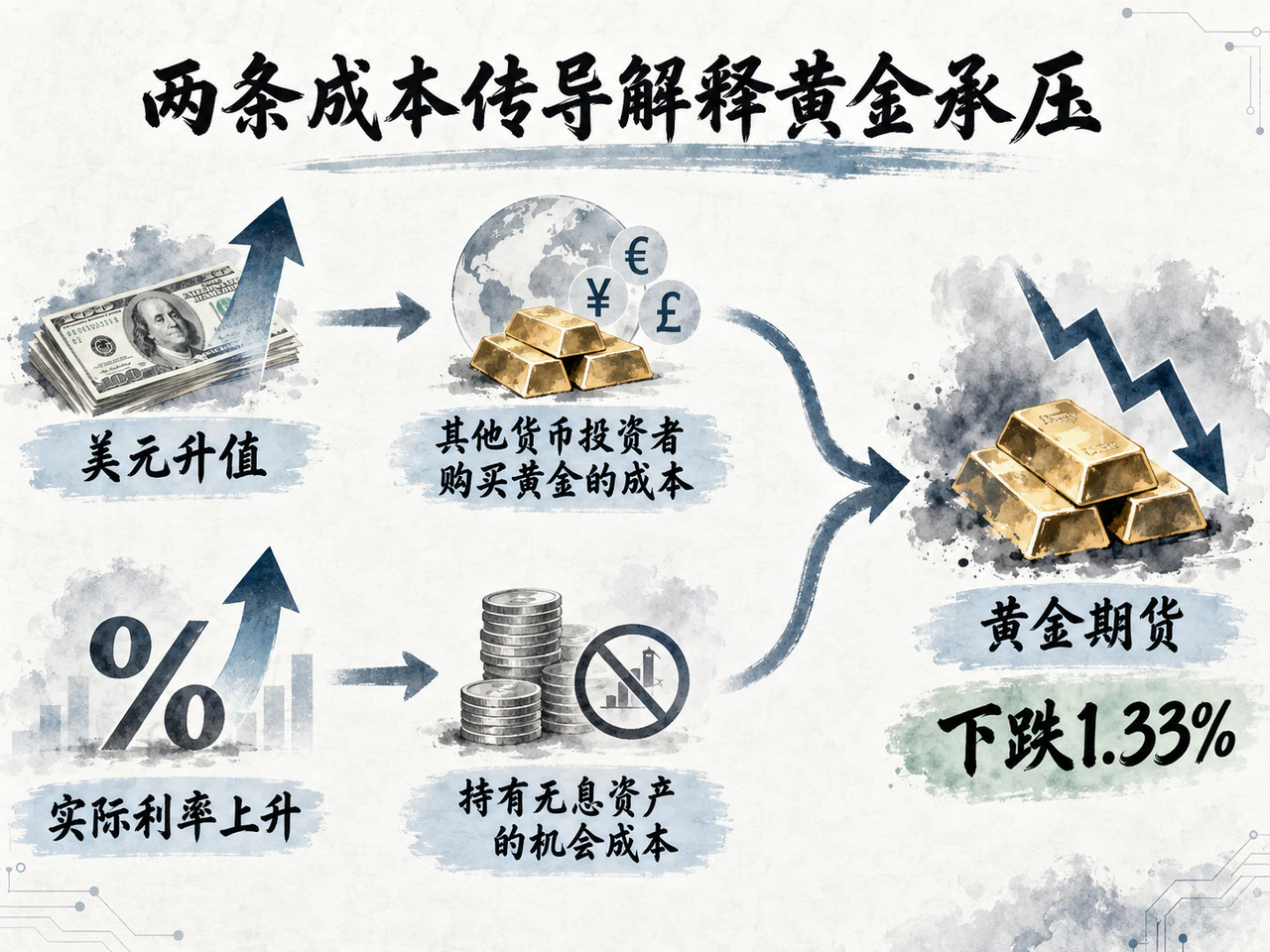
Gold mainly faced tighter financial conditions. Gold continuous futures closed down 1.33% at $4,318.40 an ounce, and the dollar index rose 0.49% to 101.096 late in New York currency trading. Dollar appreciation raised gold's cost for investors using other currencies; higher real rates raised the opportunity cost of holding non-interest-bearing assets. Oil's rise and gold's fall reflected supply risk and rate pressure respectively; safe-haven demand did not lift both together.
Large financing windows remain open as Asia stabilizes funding supply
Large financing deals still closed despite higher rates. Bloomberg's report updated after the U.S. close said SoftBank raised about $11 billion through dollar and euro bonds to advance AI investment. Strong subscriptions helped reduce pricing, but borrowing costs remained broadly above earlier levels. Funds could be raised; whether subsequent returns covered interest and debt service was central to sustained financing.
AI credit already showed maturity divergence. Capital Group's September 23 research said the Bloomberg U.S. Corporate Bond Index spread was 78 basis points at end-August, unchanged from the start of the year. Spreads on hyperscaler and other AI-related issuers' bonds beyond 10 years had widened. This end-August evidence suggested concentrated supply and uncertain investment returns could pressure longer bonds more.
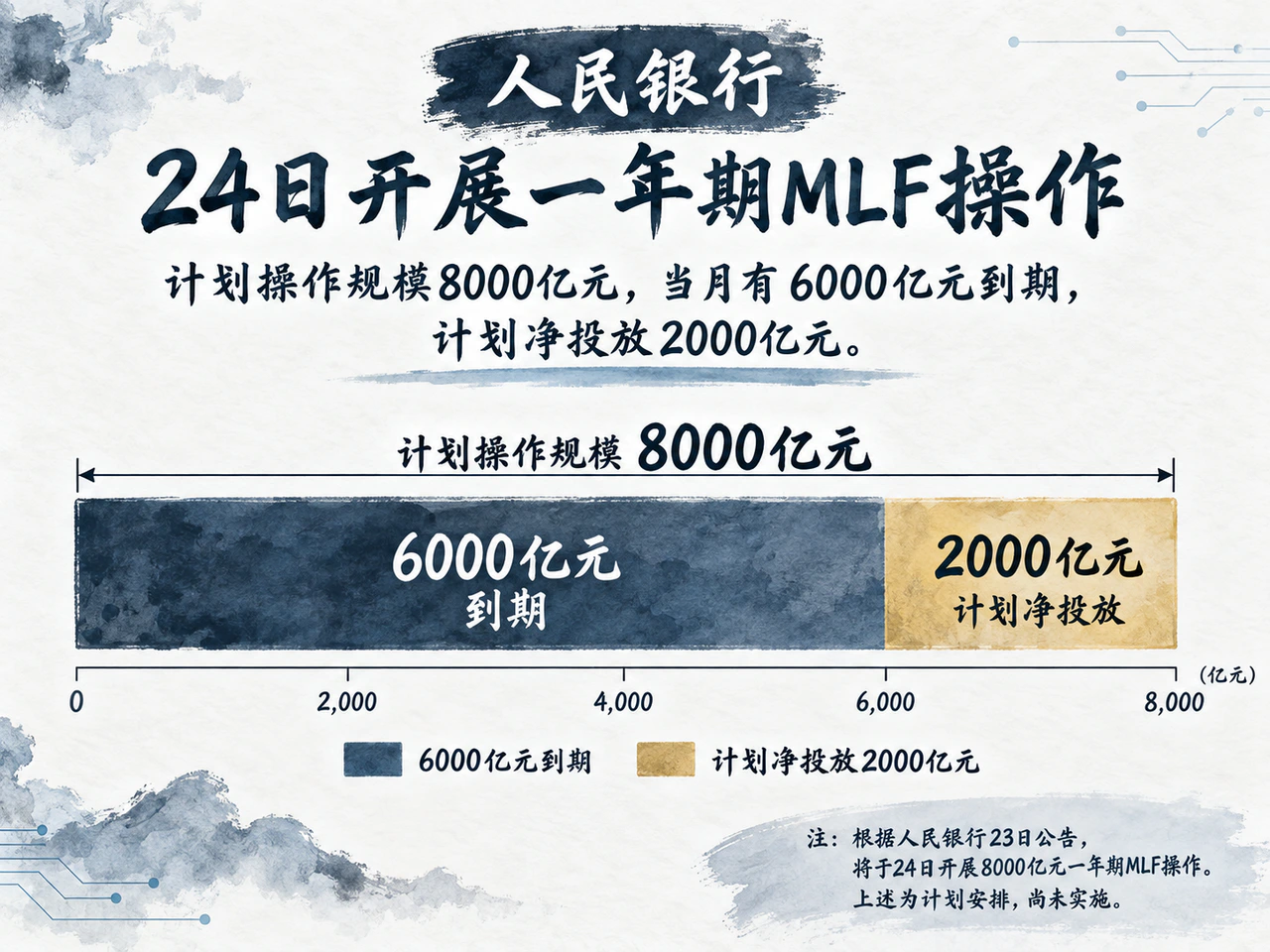
China's policy focus was stabilizing quarter-end and holiday funding. The PBOC announced on September 23 that it would conduct RMB 800 billion of one-year MLF operations on September 24, against RMB 600 billion maturing that month, a planned net injection of RMB 200 billion. It would also conduct fixed-rate, quantity-tender overnight reverse repos from September 28 to October 8, with daily volume no more than RMB 1 trillion.
Oriental Jincheng chief macro analyst Wang Qing said holiday cash withdrawals, month-end assessments and concentrated open-market maturities increased short-term funding needs, with overnight tools helping smooth volatility. A daily cap is not permanent additional liquidity; actual support depends on operation volumes and market needs.
Hong Kong was also expanding financing and liquidity-management options. HKMA directions announced September 23 included longer maturities for government offshore renminbi and Hong Kong-dollar bonds, study of a 7-day offshore-renminbi liquidity tender, and planned offshore-renminbi short-term debt instruments. First-half Hong Kong-dollar issuance by international institutions rose 64% year on year. Rising dollar costs drew attention to other currencies, but advantages depended on currency hedging, swap basis and issuers' revenue currencies.
Asian markets faced different trading calendars next. Japan reopened on September 24 after September 21-23 holidays and needed to absorb accumulated news; South Korea was closed on September 24 for the Mid-Autumn holiday. Higher U.S. yields and falling chip stocks pressured Hong Kong growth valuations and Asian semiconductor sentiment. Meta's expanding consumer applications created potential demand, but additional Asian supply-chain orders still needed confirmation in company operating data.