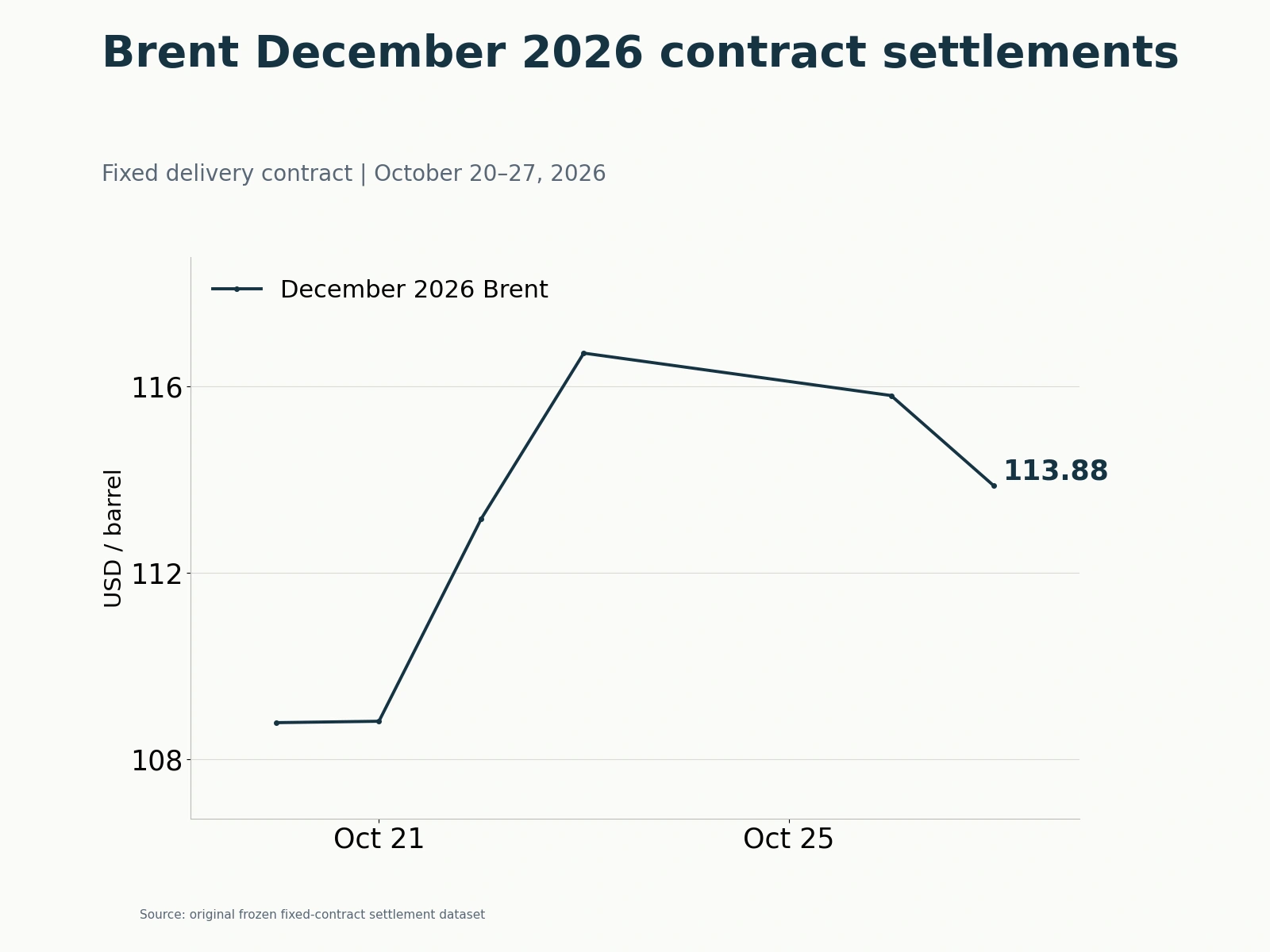
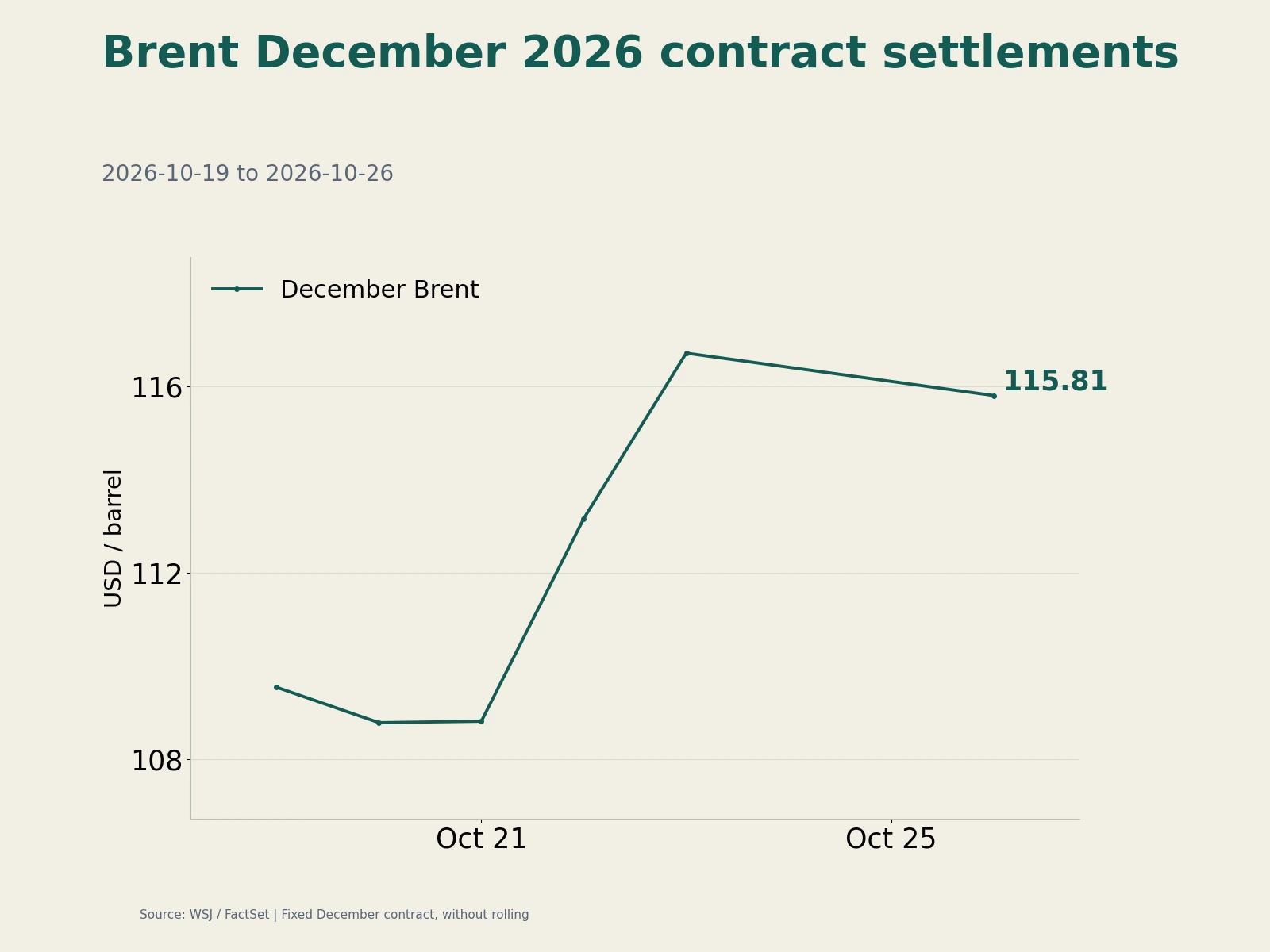
On September 23, oil futures ended five consecutive declines with a sharp rebound and marked regional divergence. November NYMEX WTI settled $1.64 higher, +1.81%, at $92.16 a barrel. November ICE Brent rose $3.83, +3.86%, to $103.08, reclaiming $100. Their same-month gap widened from $8.73 to $10.92, showing a stronger premium for seaborne crude than the U.S. inland benchmark.
Oil rose despite a roughly 0.49% increase in the dollar index and higher Treasury yields, indicating concentrated repricing of physical fundamentals and geopolitical supply-chain risk rather than liquidity or dollar weakness. Saudi East–West pipeline reopening offered marginal supply relief, but a Hormuz ship attack and possible U.S. diesel-export restrictions renewed concern over European products and shipping premiums, the central market tension.
U.S. export-policy expectations cause volatility as European diesel cracks hit records
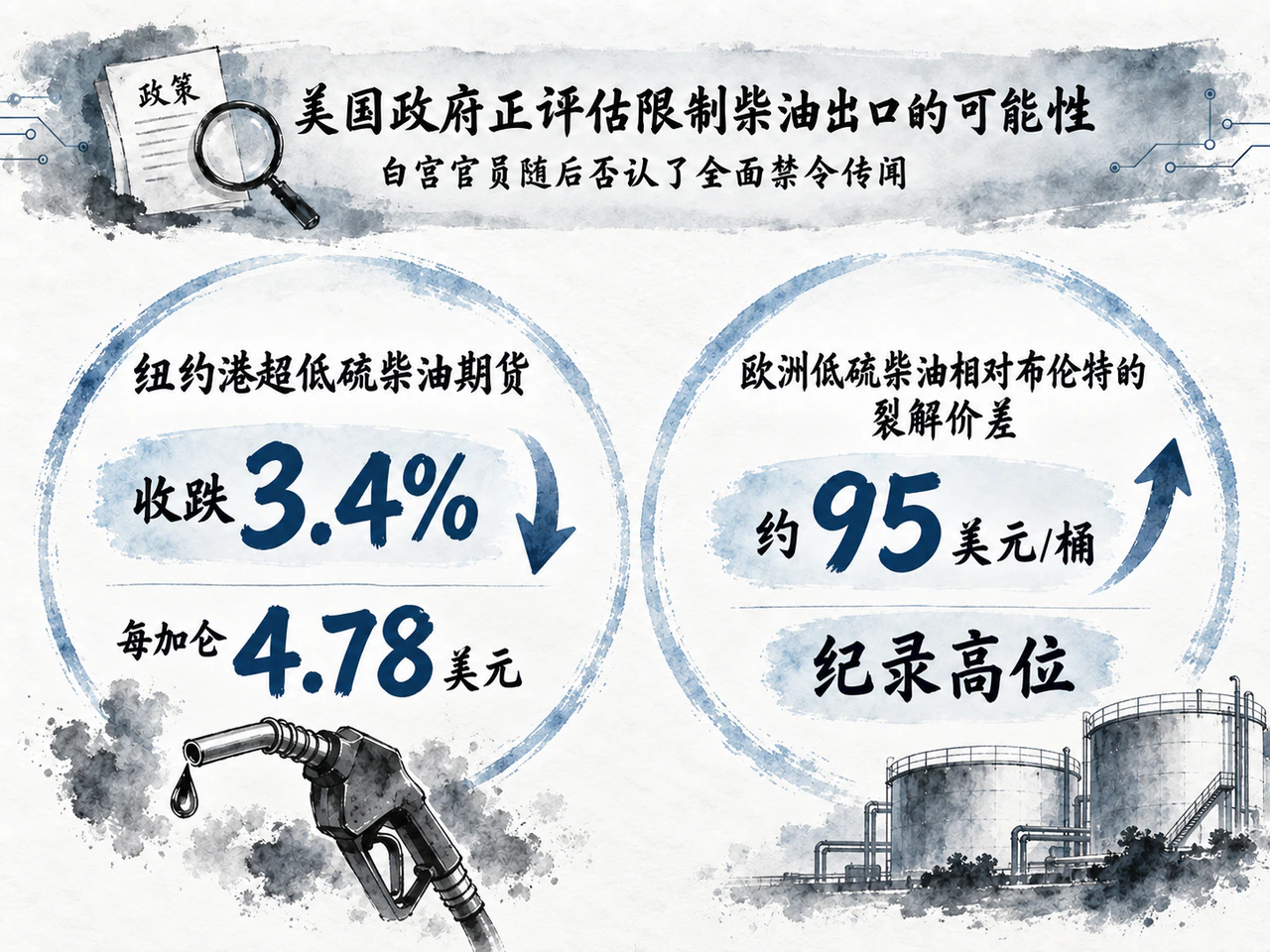
Bloomberg reported Washington was assessing diesel-export restrictions. New York Harbor ultra-low-sulfur diesel futures briefly plunged 7.5% and closed down 3.4% at $4.78 a gallon. White House officials subsequently denied a blanket ban, while Energy Secretary Wright said discussions with refiners sought voluntary reductions in fuel exports. The signal had already triggered sharp regional divergence in derivatives.
The geographic implications were opposite. Restricted exports could temporarily increase U.S. fuel supply and depress domestic derivatives, while import-dependent Europe faced a sharply worse shortage outlook. Reuters reported European low-sulfur diesel cracks over Brent reaching a record approximately $95 a barrel intraday. Severe product scarcity and large refining premiums strengthen refinery runs and crude purchasing, helping Brent outperform WTI. Longer term, if U.S. product tanks filled and forced refinery cuts, the global fuel shortfall could worsen.
Lower refinery utilization accompanies crude builds while product stocks decline
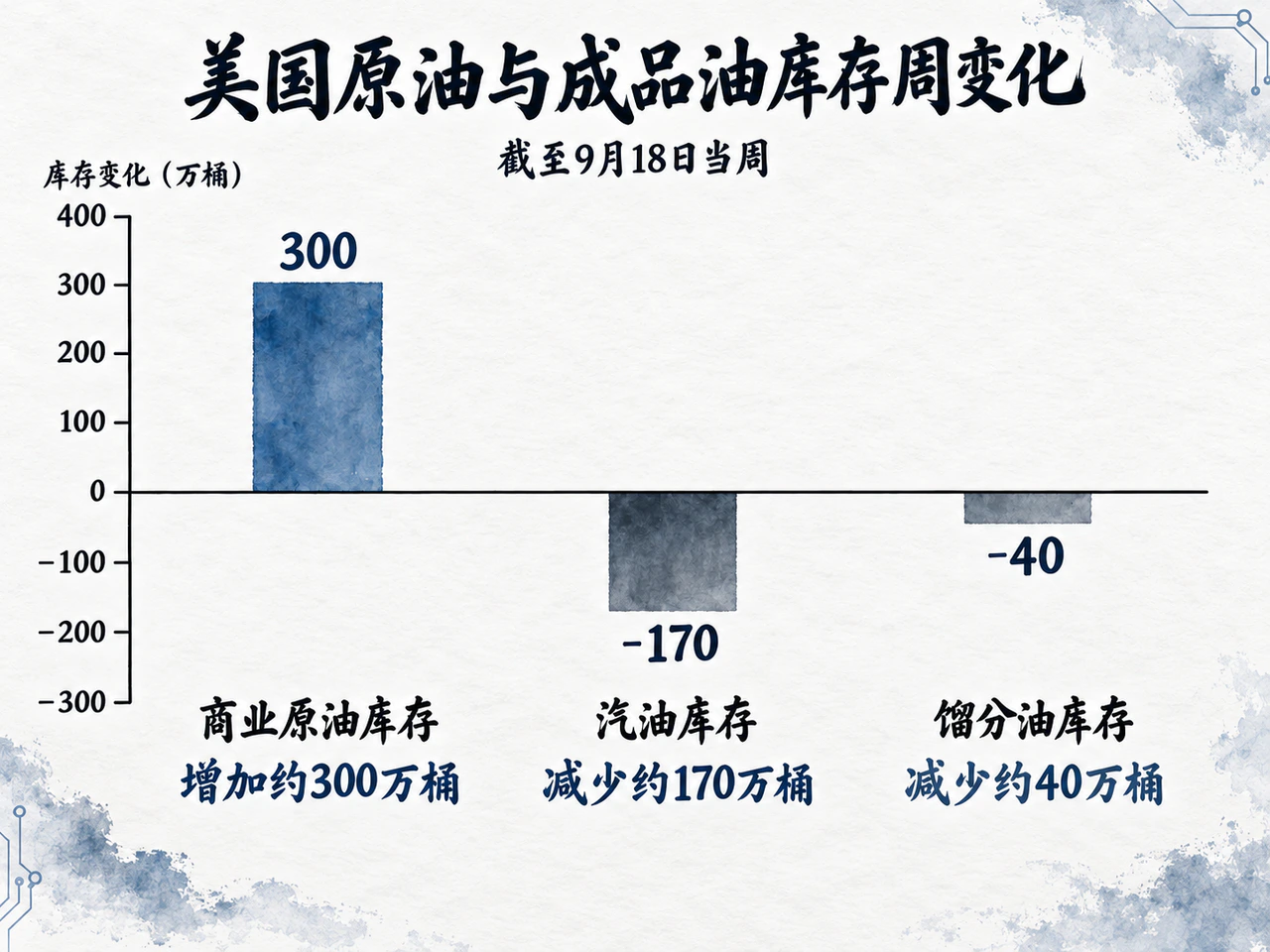
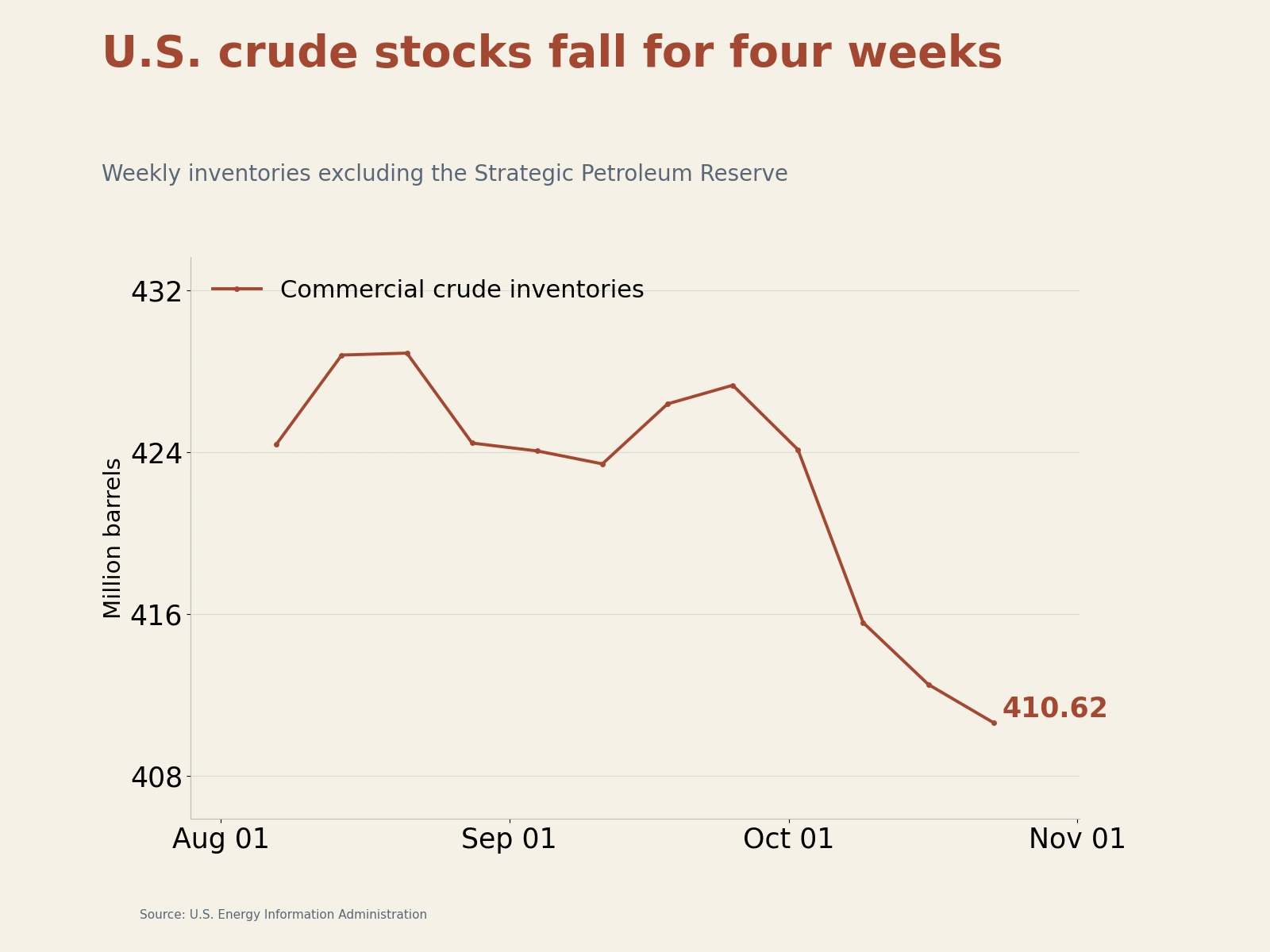
EIA data released September 23 for the week ending September 18 showed commercial crude stocks up about 3 million barrels to 426.4 million and Cushing stocks up about 2.2 million to 23.7 million. Gasoline fell about 1.7 million and distillates about 400,000 barrels. Refinery utilization fell 2.8 percentage points to 94%, and crude runs declined 519,000 barrels a day.
Lower runs of 519,000 barrels a day alongside a 369,000-barrel-a-day increase in net crude imports could jointly support the crude build through reduced processing demand and greater inflows. But one week's stock changes and lower utilization cannot establish logistics disruption or a substantive supply-chain bottleneck, nor independently prove involuntary crude accumulation.
Medium-term diesel tightness remained firm. The IEA's September report showed combined Persian Gulf and Russian diesel and gasoil net exports in August down 1.6 million barrels a day from February. Although it also forecast global oil demand falling 2.5 million barrels a day in 2026, indicating high prices were restraining industry and transport, prompt tightness still strongly supported nearby prices.
Saudi pipeline recovery competes with navigation risks; four short-term indicators matter
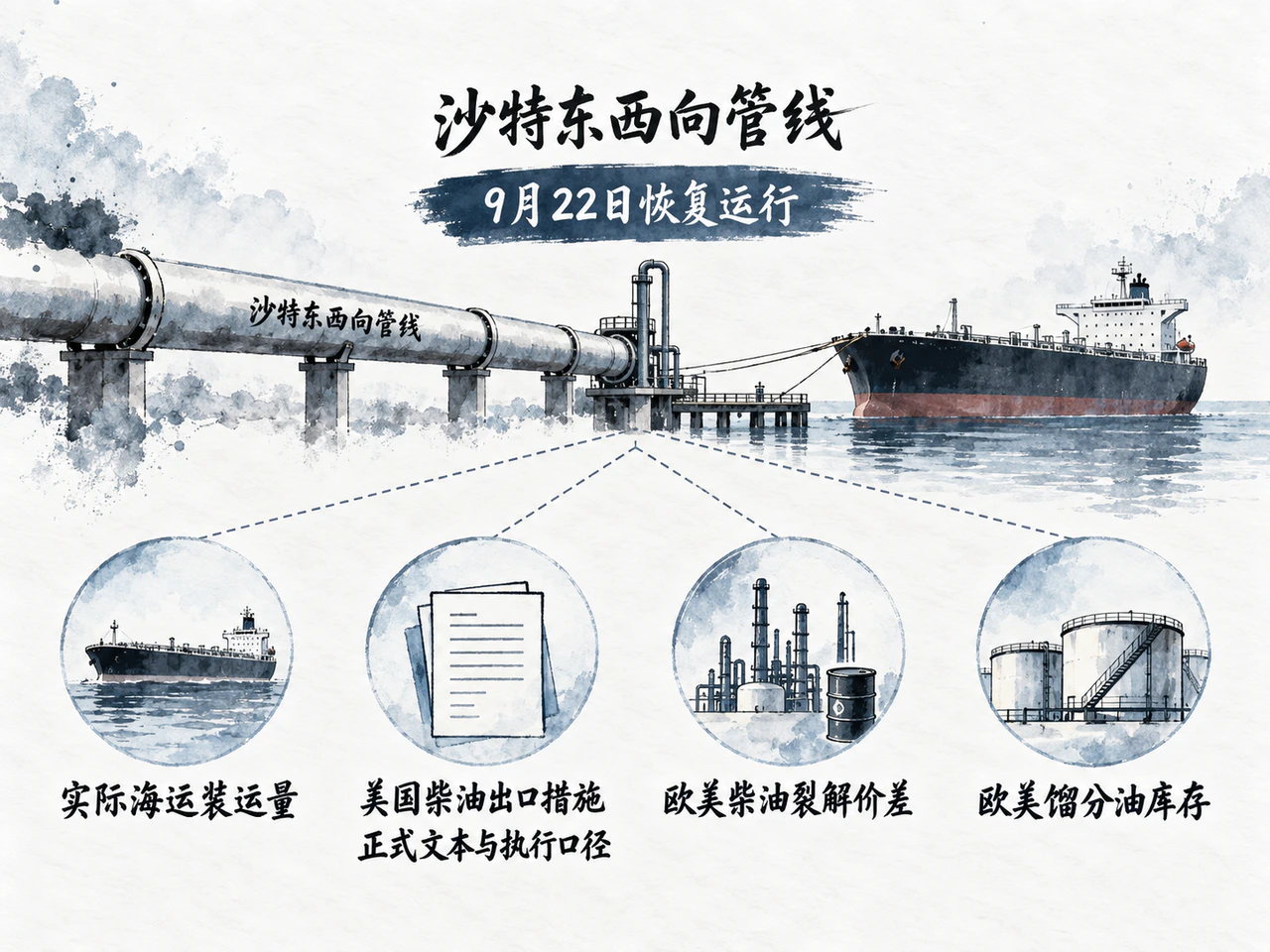
Supply recovery and disruption risk remained in flux. Reuters cited sources saying Saudi Arabia's East–West pipeline resumed September 22, offering Asian refiners more seaborne crude bypassing Hormuz; Bloomberg said larger recovery was targeted for the weekend. Full loading recovery lags a pipeline restart, however, and maritime risk persisted: UKMTO reported the same day a merchant ship attacked in Hormuz, catching fire and losing power. Seven voluntary-adjustment OPEC+ countries had already kept October quotas unchanged, leaving marginal supply dependent on damaged-facility repairs.
Strong backwardation recorded in the IEA's September report indicated tight prompt deliverable crude. Higher Saudi pipeline flows could reduce the premium, but actual U.S. export measures would prolong regional fuel imbalances.
Four indicators would test the rebound: actual seaborne loadings after pipeline reopening; formal U.S. diesel-export policy and implementation; European and U.S. diesel crack direction; and distillate drawdown rates in both regions. More loadings, narrower cracks and recovering fuel stocks would gradually remove the scarcity premium. Continued crude builds alongside product draws would make Brent's overseas risk premium resistant to isolated reopening news.