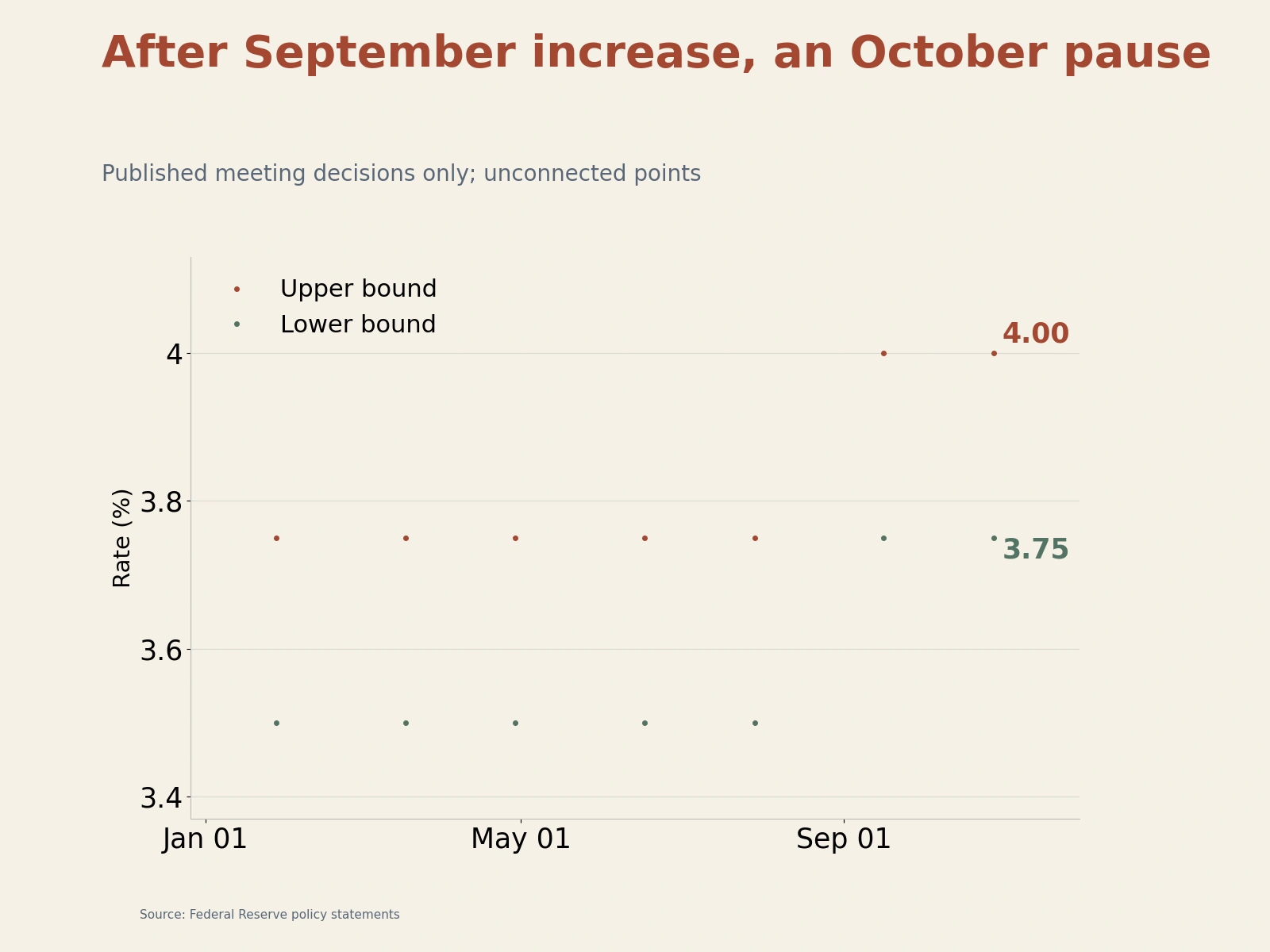
The latest Federal Reserve comments showed that the window for further tightening before year-end remained open. On September 24, New York Fed President John Williams and Philadelphia Fed President Anna Paulson both sent hawkish signals. Initial jobless claims released that day were 197,000, keeping layoffs low and giving the Fed a fundamental cushion to focus on inflation. After a 25-basis-point increase in mid-September to 3.75%–4.00%, however, the timing and size of further action still depended on corroborating key data.
Officials signal further tightening, with the pace still dependent on data
At a National Institute of Economic and Social Research event in London on September 24, Williams said market expectations of one more increase by year-end were reasonable. He also stressed considerable uncertainty over the outlook and the need to assess incoming data, making no explicit commitment to the October meeting.
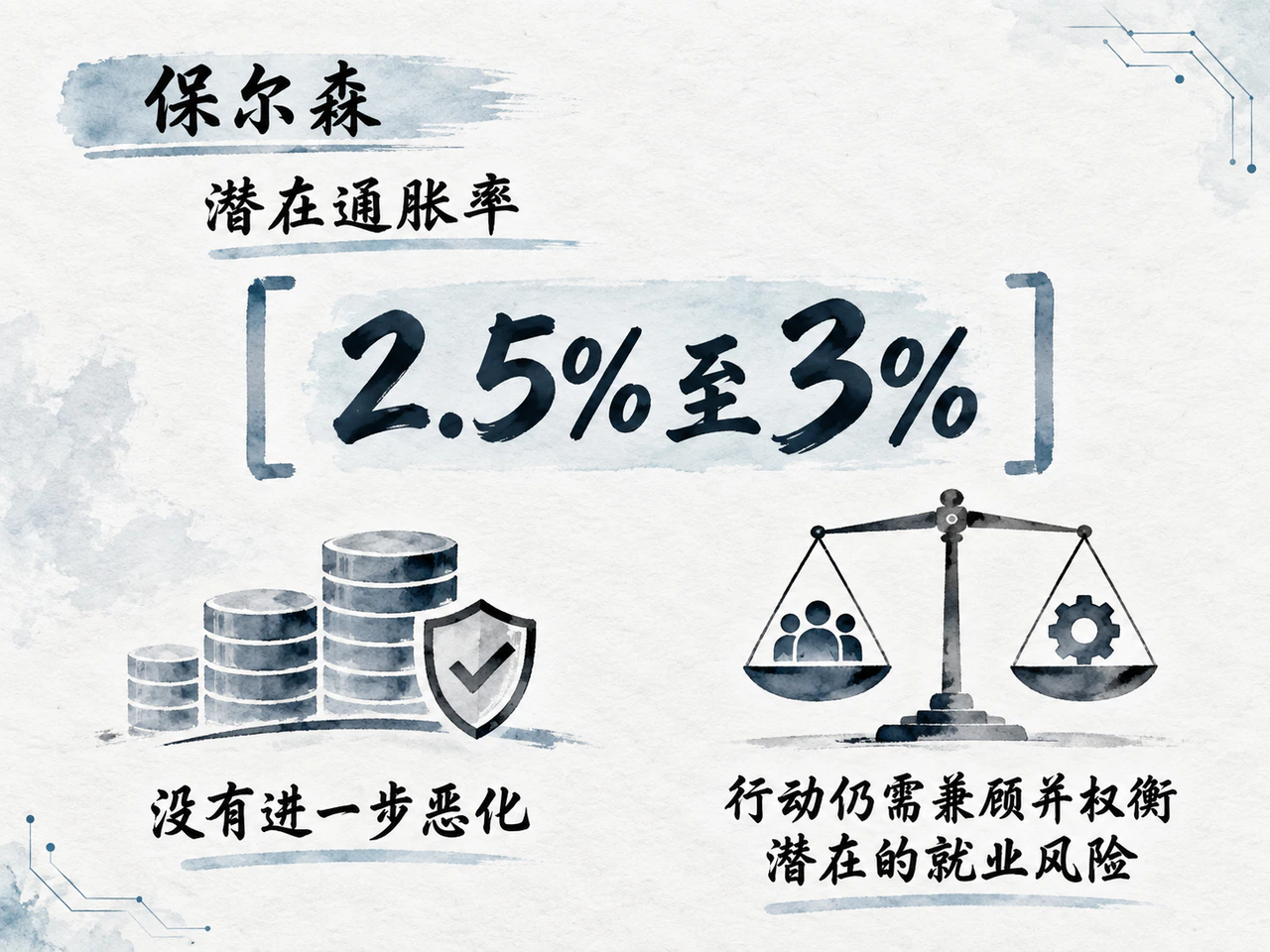
In remarks prepared for a Philadelphia Fed event the same day, Paulson based her case for modest additional tightening on sticky underlying inflation. After removing some temporary disturbances, she said U.S. underlying inflation was still around 2.5%–3%. Its trajectory so far that year was at best “not getting worse,” rather than showing a definite downward turning point.
On demand, Paulson saw resilient private consumption, the AI infrastructure investment boom and a steady labor market jointly reviving some economic momentum. Price pressure could not be attributed solely to an energy-supply shock: resilient domestic demand might prolong the return of inflation to target. She also set a boundary, making clear that rate increases were not a one-way course and that action still had to take potential employment risks into account.
Claims at 197,000 signal low layoffs; the next tests are month-end PCE and payrolls

High-frequency labor indicators provided near-term support for officials' stance. Labor Department data showed initial claims falling by 1,000 to 197,000 in the week ended September 19. The four-week moving average fell by 1,750 to 202,250. Both the weekly observation and smoothed average declined, indicating that corporate layoff pressure had not spread broadly.
Structural labor signals were not wholly aligned. Continuing claims edged up by 2,000 to 1.719 million in the week ended September 12. Initial claims mainly measure new layoffs and cannot alone establish employers' willingness to hire. One week's figures were insufficient to drive another rate increase, but also offered no urgent reason for a near-term shift to easing.
Pricing of the next policy move was entering a concentrated testing period: September 29 JOLTS vacancies would gauge labor demand; the August PCE price index on September 30 would test underlying inflation; and the September payroll report on October 2 would provide a broader picture of employment. Persistent inflation alongside stable employment would strengthen the case for another increase that year. A material cooling of hiring and employment growth would force the Fed to reassess the threshold and pace of tightening.