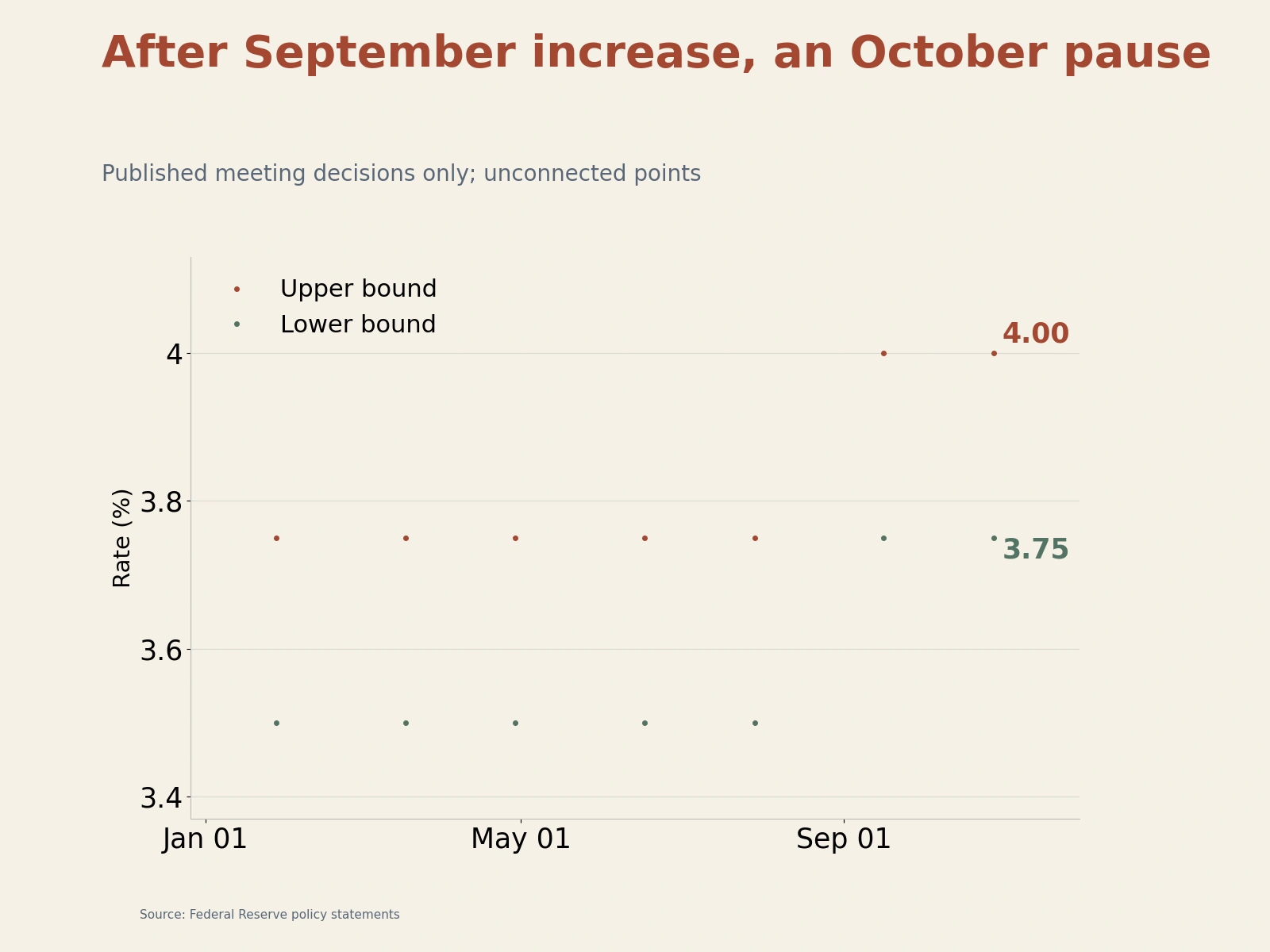
US consumers' assessment of the economic outlook weakened, but concerns over price increases resurfaced. Final University of Michigan data released September 25 showed September sentiment at a four-month low while both one-year and long-term inflation expectations rebounded. Their coexistence indicates that inflation pressure does not automatically disappear with weaker sentiment. After raising the federal funds target 25 basis points to 3.75%–4.00% on September 16, the Fed had greater reason to stabilize expectations, but future rate timing and direction still depended on actual prices and labor-market data.
Michigan inflation expectations rise together; durable-goods buying assessments reflect protection against higher prices
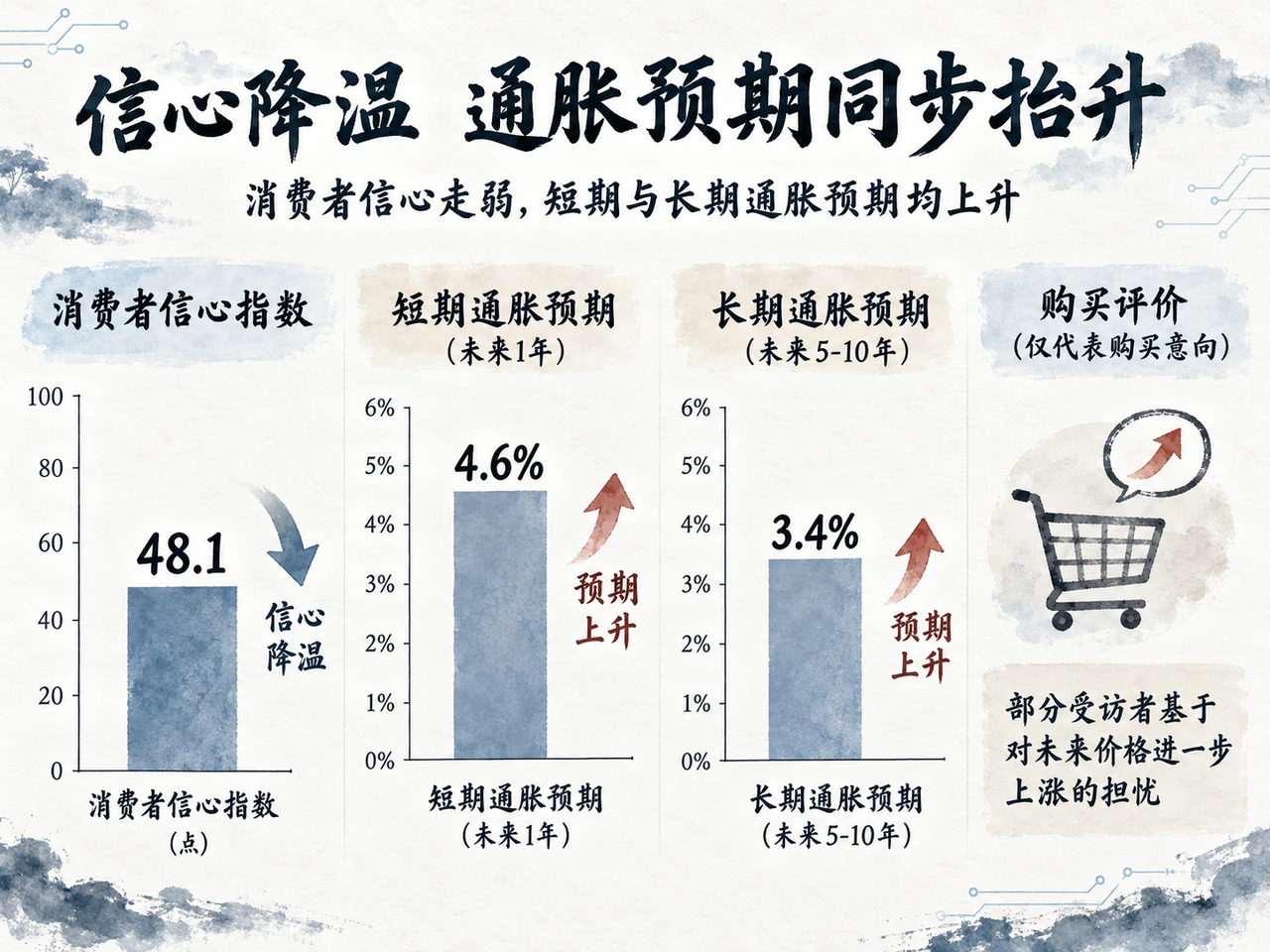
Final September consumer sentiment was 48.1, markedly below August's 51.7. It slightly exceeded the preliminary 47.8 but remained a four-month low. Households' assessments of current finances and their one-year financial outlook each declined about 10% monthly, showing continued pressure from elevated living costs.
The key marginal change was a broad increase in inflation expectations: the one-year measure jumped from 4.0% to 4.6%, its highest since June; long-term expectations edged to 3.4% after three consecutive months at 3.3%. Short-term expectations are often more sensitive to frequent energy and everyday spending changes. The modest long-term rise reminded policymakers to watch for subtle changes in confidence that inflation would return to target. A single 0.1-percentage-point monthly rise does not establish a trend reversal, but the simultaneous rebound shows that assuming weaker sentiment will naturally clear inflation pressure is unsafe.
Assessments of durable-goods buying conditions improved slightly. Survey details showed this did not reflect better household finances. Some respondents feared further price increases and viewed earlier purchases as a relatively reasonable response. It reflected precautionary intentions and timing judgments, without establishing that actual spending had shifted or demand had been pulled forward. Whether the assessment translates into real expenditures still requires hard consumption data.
Rebounding expectations and divergent conditions complicate policy; PCE and payrolls will test the rate path
For the Fed, Michigan's survey captured multiple policy trade-offs. Persistent inflation depressed assessments of household finances, indicating potential restraint on final demand. Rebounding expectations also suggested a greater need for restriction if self-reinforcing inflation persistence developed. Overweighting weak sentiment could underestimate renewed price stickiness; focusing only on expectations could neglect pressure on actual spending at the household level.
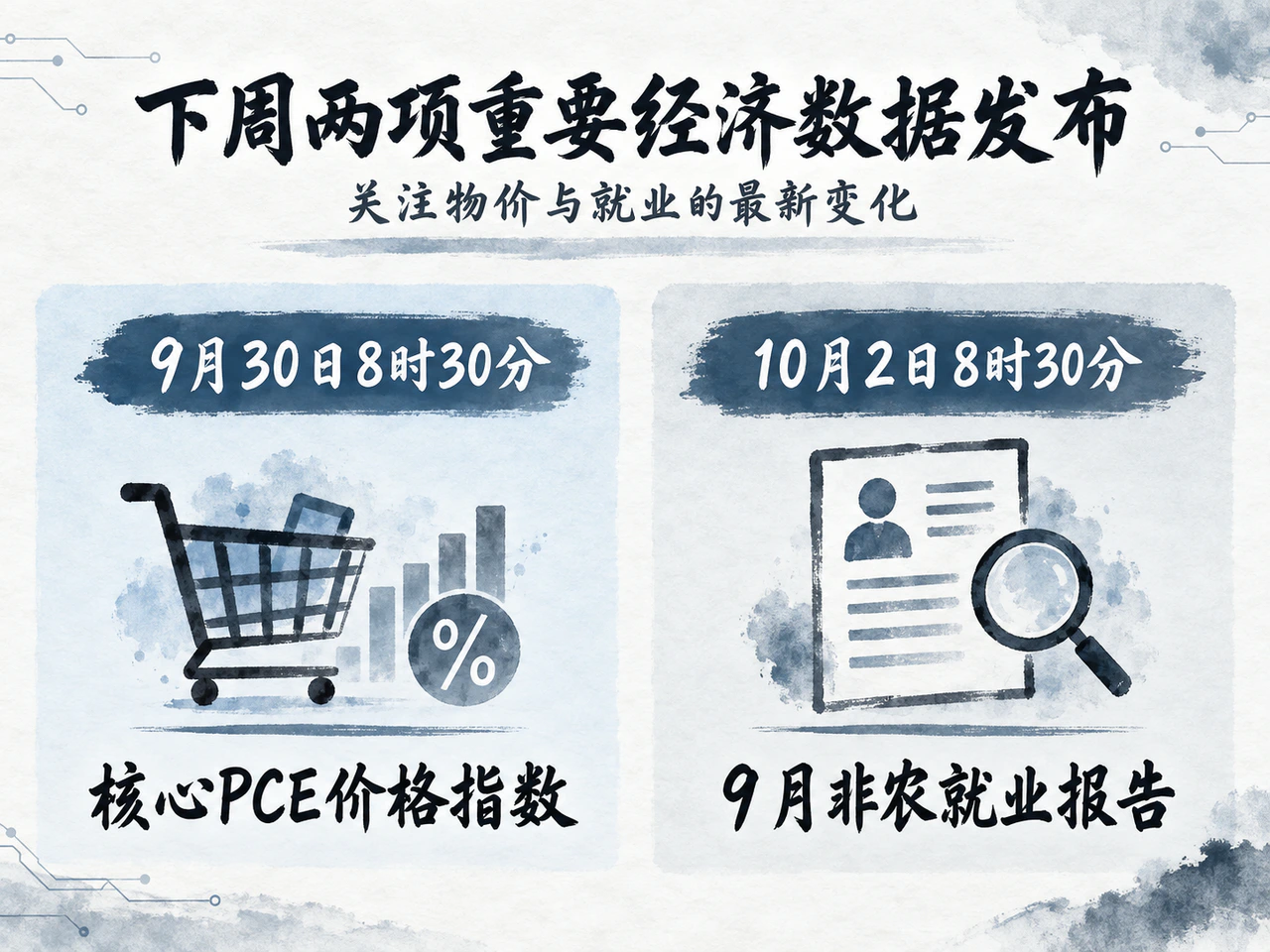
Attention therefore turned to upcoming hard data: August personal income and outlays at 08:30 Eastern time on September 30, followed by September payrolls at 08:30 on October 2. The first report would update core PCE prices and real personal consumption; the second would assess how much employment and wages actually supported aggregate demand.
If hard data show persistently high inflation and resilient jobs and spending, the case for restriction or further tightening may strengthen. If core-price increases narrow materially and labor markets cool smoothly, a longer observation period or slower tightening becomes possible. The September 25 survey increased vigilance toward inflation expectations, but rate-path changes still depend on the rebalancing shown in real-economy hard data.