On September 25, 2026, international crude retreated from recent highs, easing fears of renewed energy inflation. Major US equity indices all rose, the dollar weakened, short Treasury yields fell and COMEX gold futures rebounded. Cross-asset performance was nevertheless structurally divided: long Treasury yields rose against the trend, with the 30-year at 5.49%; the small-cap Russell 2000 edged only slightly higher; and Michigan one-year inflation expectations rebounded to 4.6%. Financing costs, expanding issuance and earnings visibility remained constraints. One day's risk-sentiment recovery did not imply comprehensive financial easing.
Treasury curve steepens as long real yields stay high and issuance expands
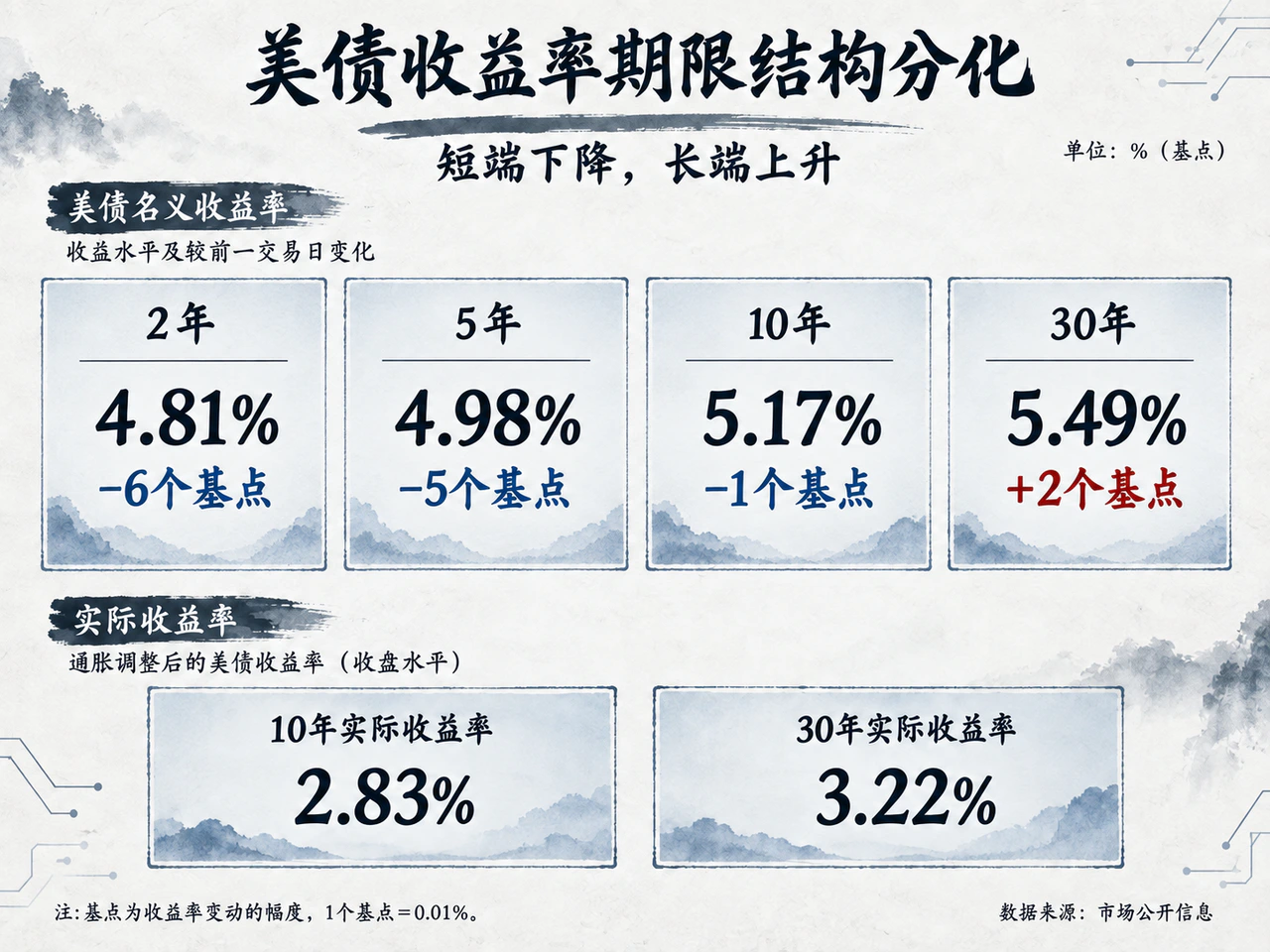
The Treasury's September 25 daily curve steepened markedly. Short and intermediate yields fell: the 2-year closed at 4.81%, down 6 basis points, and the 5-year at 4.98%, down 5. With oil retreating, the 10-year eased from an intraday high of 5.2297% to 5.17%, down just 1 basis point. The 30-year rose 2 basis points to 5.49%. The 10-year/2-year spread widened from 31 to 36 basis points.
| Maturity | September 24 | September 25 | Daily change |
|---|---|---|---|
| 2-year | 4.87% | 4.81% | −6 basis points |
| 5-year | 5.03% | 4.98% | −5 basis points |
| 10-year | 5.18% | 5.17% | −1 basis point |
| 30-year | 5.47% | 5.49% | +2 basis points |
Long-end moves reflected deeper structural constraints. Treasury data showed the 10-year TIPS real yield falling 2 basis points to 2.83%, while the 30-year real yield rose 1 basis point to 3.22%, leaving long-term real funding costs elevated. BMO rates strategy head Ian Lyngen cited doubts over a complete normalization of global energy supply. Expanding Treasury and high-grade corporate issuance also absorbed liquidity. JPMorgan Private Bank noted that the week's 5-year Treasury bid-to-cover fell to 2.21, its lowest since December 2018. Standard Chartered estimated 2026 US investment-grade issuance linked to AI infrastructure was approaching $220 billion.
Heavy financing needs spilled into credit. On the preceding session, the 24th, the ICE BofA US High Yield option-adjusted spread widened 7 basis points to 280. Standard Chartered argued that earnings and balance sheets remained resilient and widening reflected concentrated supply more than broad credit deterioration. Issuance structure and access also affected pricing. IFR reported that Tuesday's $300 million Hanwha Q Cells Americas green bond restricted some Hong Kong and mainland Chinese investors in primary allocation. It priced at Treasuries plus 70 basis points and tightened 11 basis points the next day, showing local concessions' close link to investor access and terms.
Higher inflation expectations weigh on consumers; core capital-goods orders show resilient equipment investment
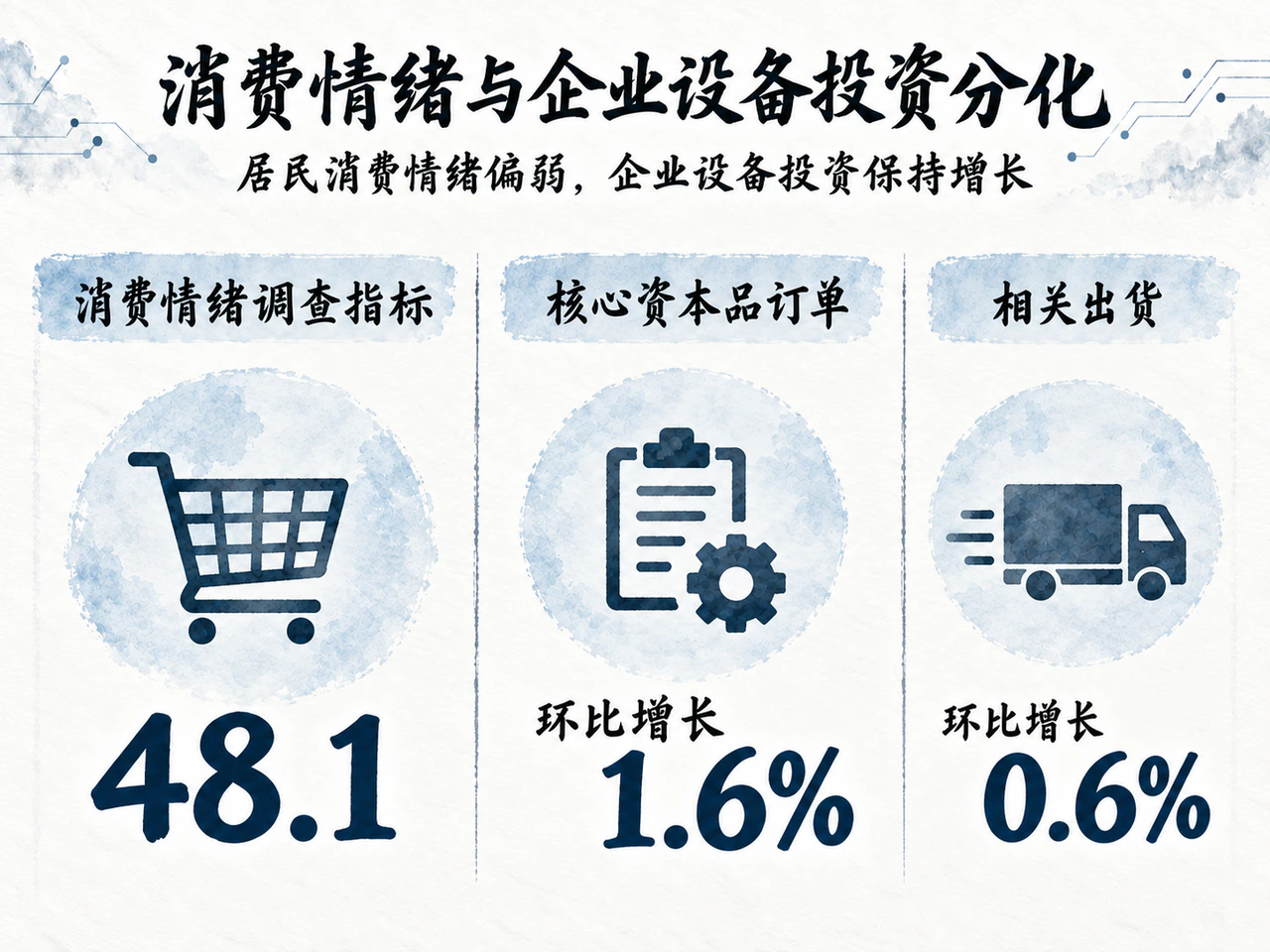
Fundamentals were sharply divided: household sentiment weakened while corporate equipment investment provided stronger-than-expected support.
Final September Michigan sentiment fell from August's 51.7 to 48.1, a four-month low, although above the preliminary 47.8 and expected 47.6. More difficult was the broad rise in inflation expectations amid energy-price volatility: one-year expectations jumped from 4.0% to 4.6%, and long-term expectations edged to 3.4%. Current and one-year household financial assessments worsened about 10% monthly. Slightly better durable-goods buying intentions largely reflected buying ahead of higher prices rather than improved real purchasing power.
By contrast, equipment investment was more resilient than expected. Commerce Department data on the 25th showed August core capital-goods orders, nondefense excluding aircraft, up 1.6% monthly versus a 0.5% forecast. July was revised from flat to +0.6%. August core shipments, directly used in GDP equipment investment, rose 0.6%, versus 1.4% in July. Equipment resilience coexisted with supply-chain demand from AI hardware infrastructure. Attention would next turn to the September 30 release of August personal income and outlays, with core PCE and real consumption testing spending momentum and price persistence.
Diplomacy lowers oil premiums, while backwardation and a gold rebound coexist
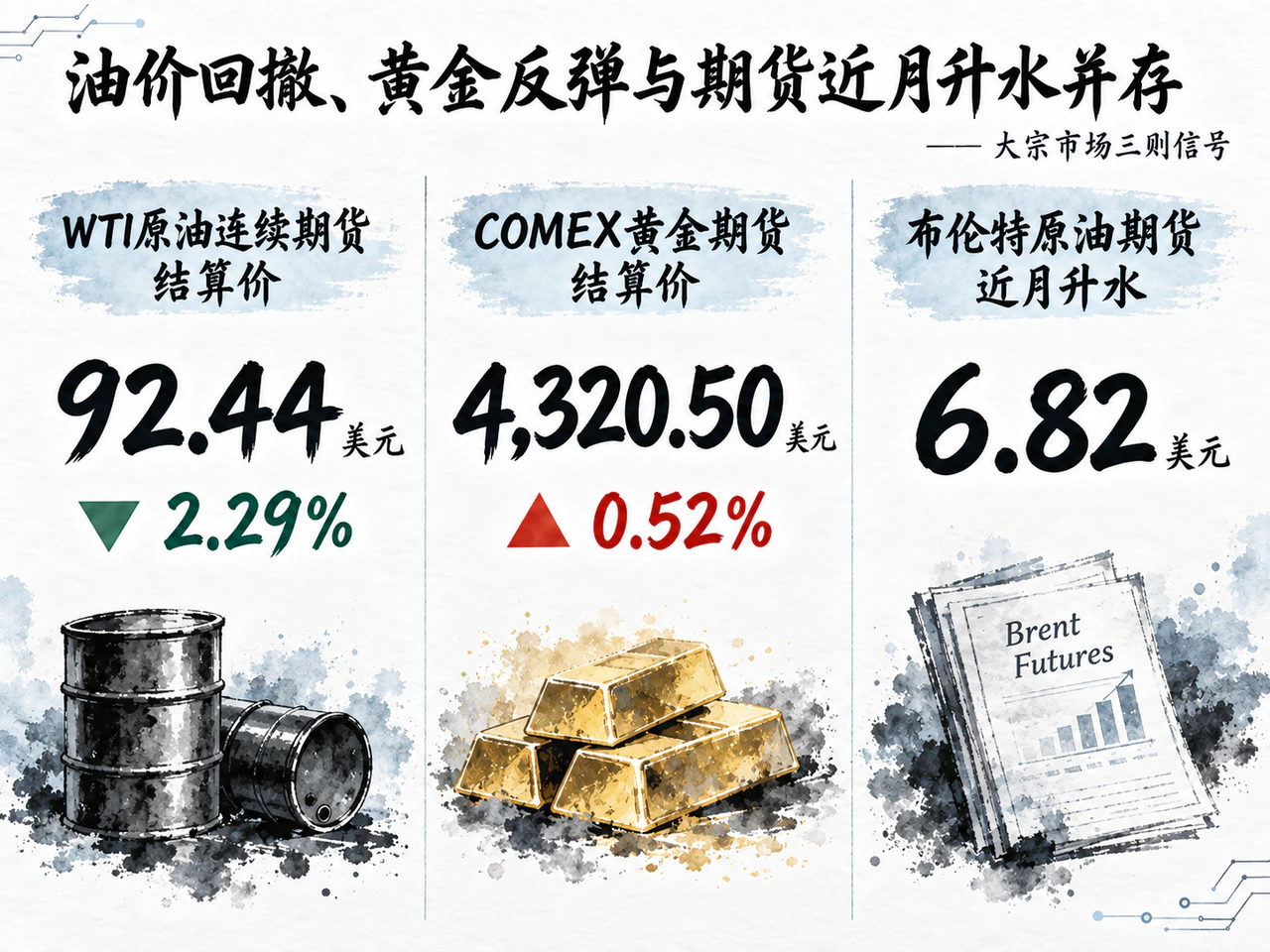
Oil retreated and gold rebounded on the same day. September 25 WTI continuous futures settled at $92.44 a barrel, down $2.17 or 2.29%. COMEX gold settled at $4,320.50 an ounce, up $22.50 or 0.52%. The dollar index fell 0.25% to 101.04.
Diplomatic progress chiefly drove the narrower oil premium. Reuters reported US and Iranian negotiators exploring phased military de-escalation, easing fears of escalating supply disruption, although full Hormuz reopening still required concrete mechanisms. Front-month crude premiums remained substantial: OPIS quotes at 12:35 Eastern time on the 25th put November Brent at $103.54 a barrel, $6.82 above December's $96.72; November WTI at $91.98 was $3.88 above December's $88.10. US diesel-export controls also drew attention. Although the White House denied a planned 90-day ban and President Macron warned of global supply-chain damage, concerns that refinery storage bottlenecks could affect utilization persisted.
COMEX gold benefited chiefly from falling short Treasury yields and the dollar. Tradu analyst Nikos Tzabouras said cooler oil technically supported gold, but high risk-free rates and ultralong yields still raised the opportunity cost of non-interest-bearing assets. Gold reflected both short-term financial relief and medium- to long-term inflation-hedging demand.
Large caps rise on major AI orders; upfront spending mismatches and consumer patterns widen stock dispersion
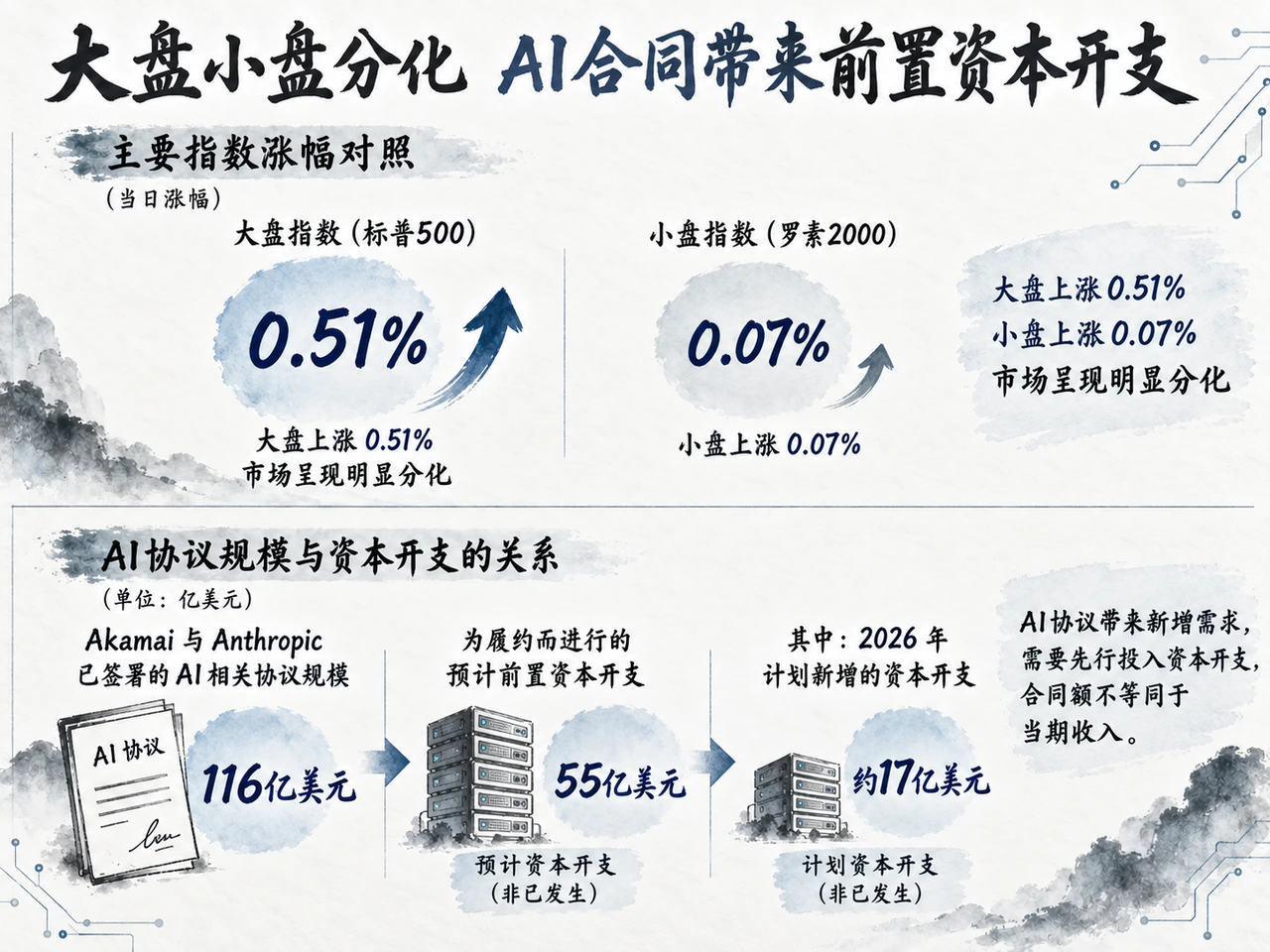
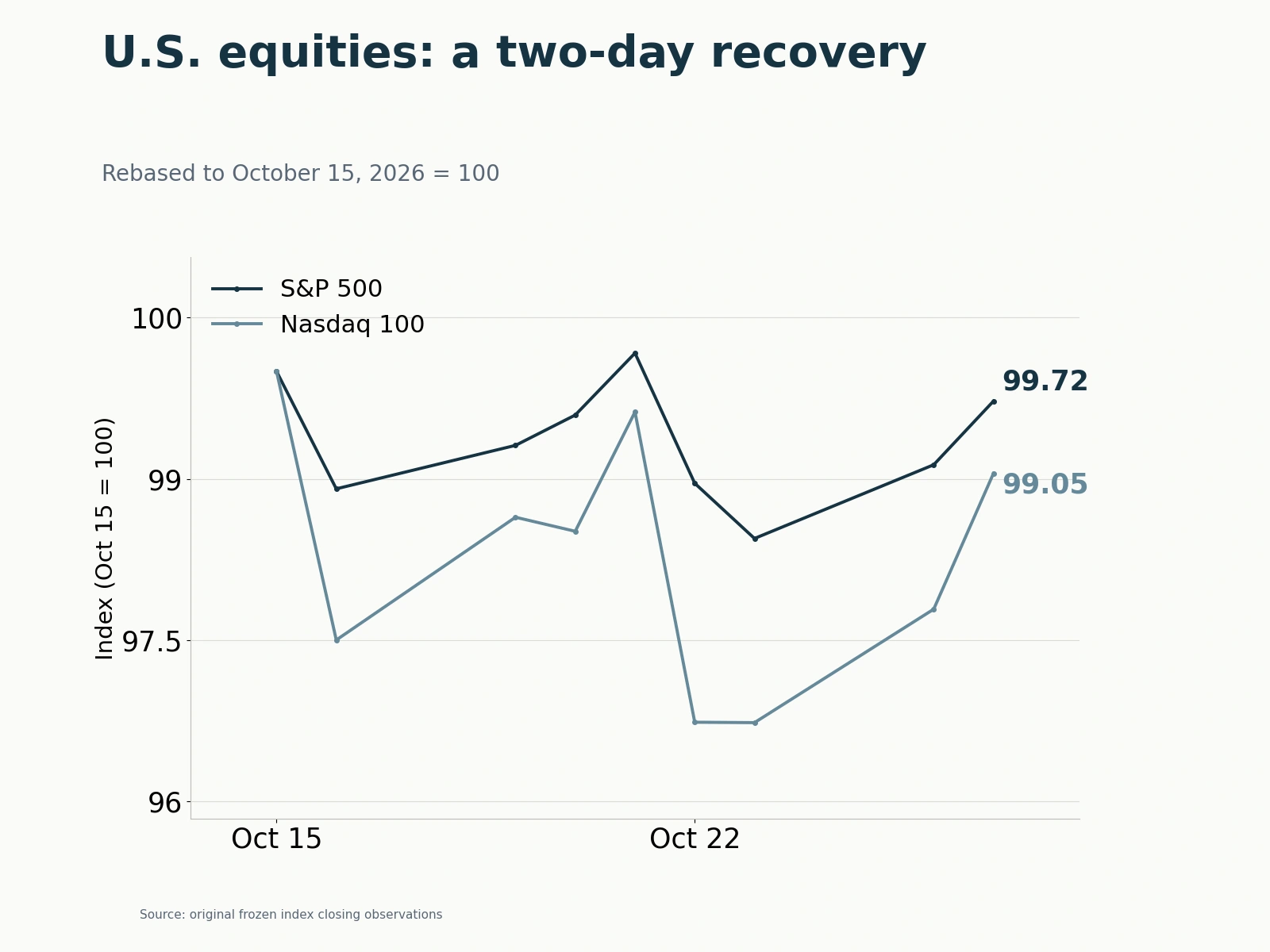
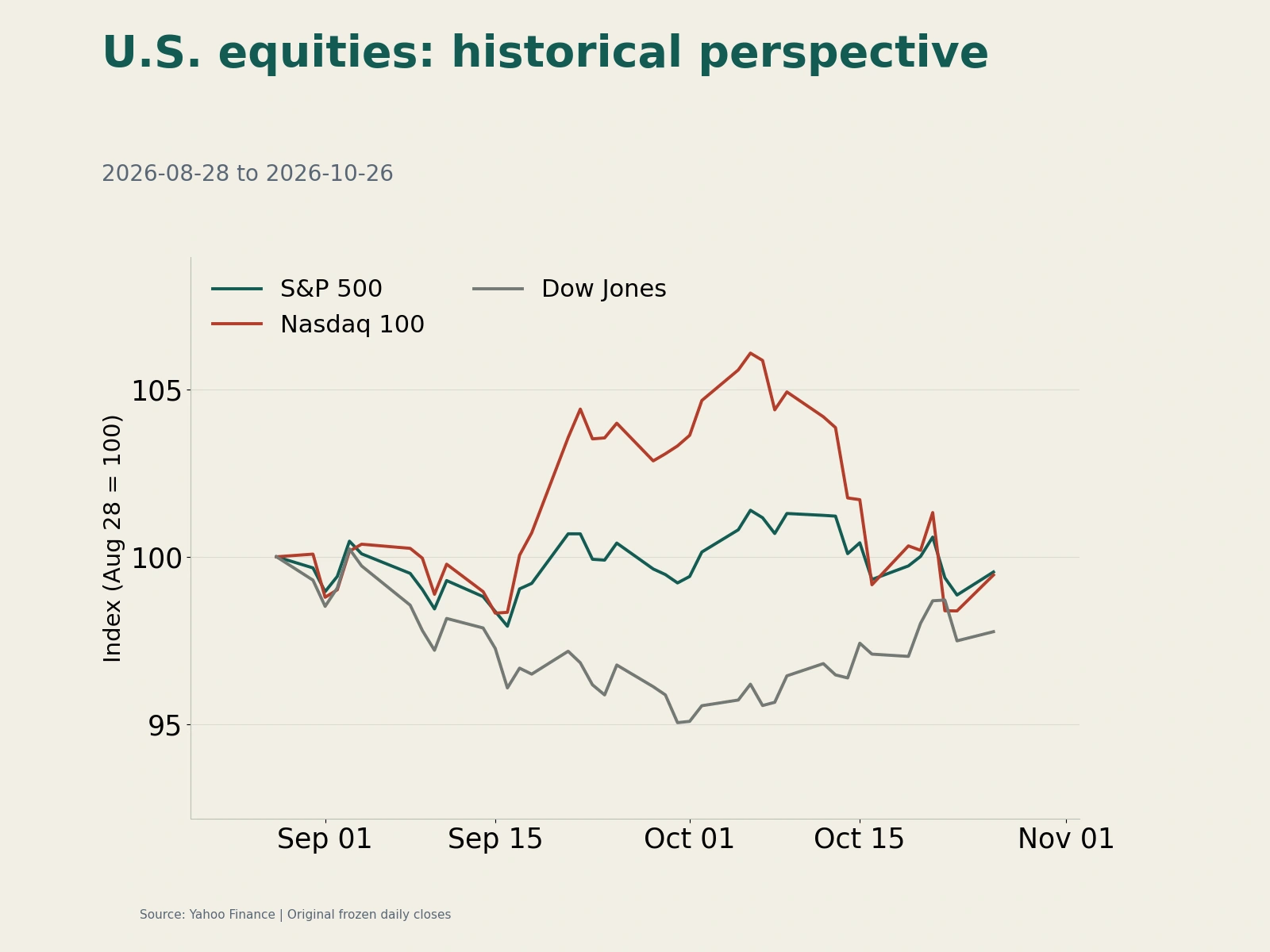
US equities rose Friday, with large caps leading and small caps lagging. The Dow gained 0.93% to 51,828.62, S&P 500 0.51% to 7,743.41 and Nasdaq 100 0.42% to 30,608.13. The Russell 2000, reflecting smaller businesses, rose only 0.07% to 2,837.55. The VIX fell 0.80 point to 14.87.
A major computing-capacity deal drove technology sentiment. After the close on the 24th, Akamai announced a long-term partnership under which Anthropic committed $11.6 billion over seven years for cloud infrastructure and software, chiefly CPU-intensive workloads. Akamai rose 3.2%, indicating AI inference and general computing demand spreading into CPU clusters. But the agreement imposed substantial upfront investment: Akamai expected $5.5 billion in associated capex, including an extra roughly $1.7 billion in 2026 to presecure memory and other key components. It kept existing 2026 revenue guidance unchanged, highlighting the timing mismatch between cash outflows and revenue recognition.
Discretionary and staple consumption showed defensive strength and divergence. Costco's fourth-quarter merchandise net sales rose 11.2% year on year, adjusted comparable sales excluding gasoline and FX rose 6.7%, and diluted EPS reached $6.75, including $0.15 in nonrecurring gains. Shares rose 2.9%, highlighting value retail's countercyclical resilience. Bank of America, by contrast, downgraded Nike to underperform and pushed expected sales recovery to fiscal 2028, warning of channel destocking and eroding brand premiums.
Asia-Pacific equities diverge; corporate geopolitical impairment and post-US-close rating changes emerge
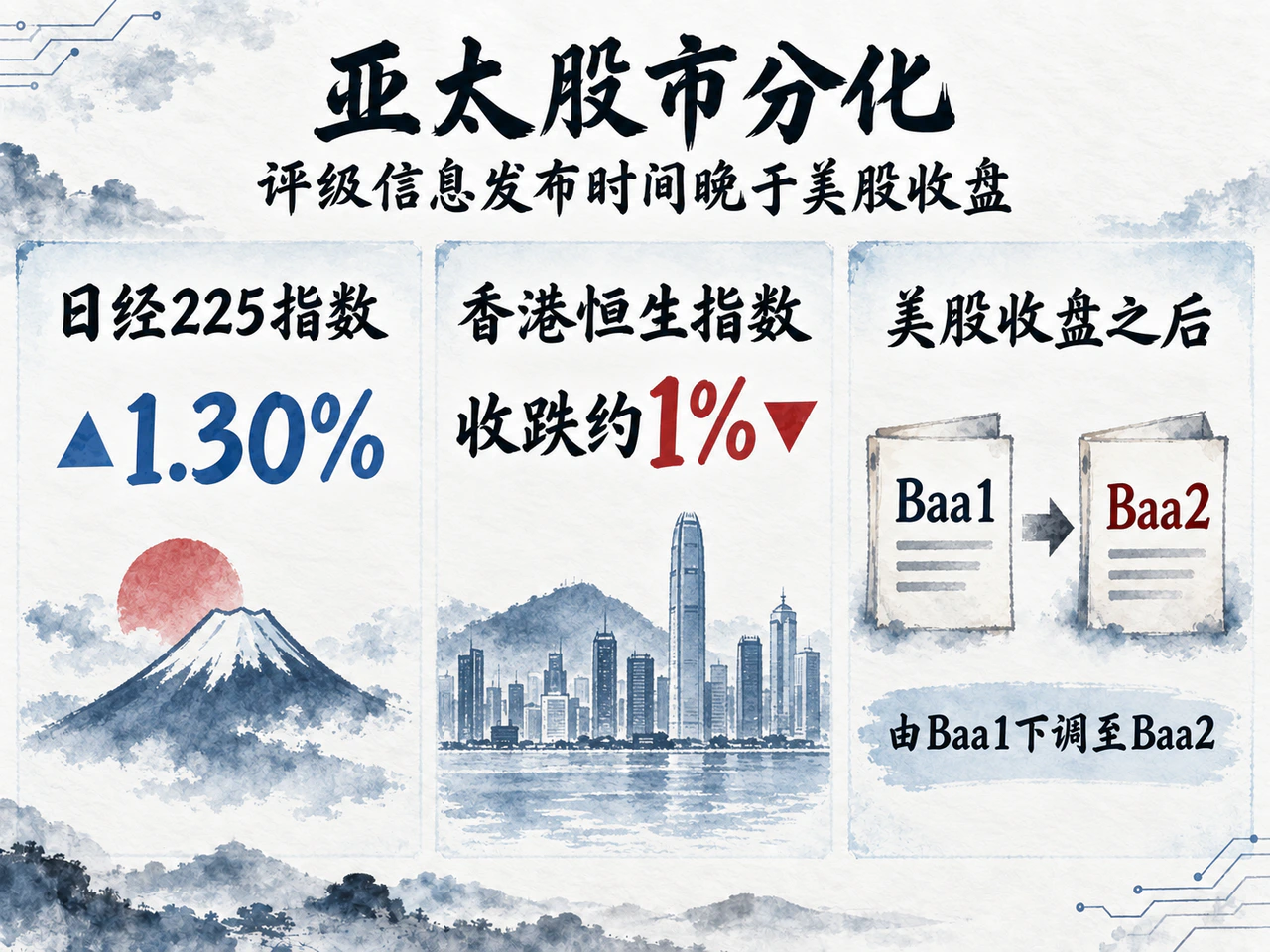
Asia-Pacific markets, closing before Europe and the US, were mixed. The Nikkei 225 rose 1.30% to 66,364.20; Hong Kong's Hang Seng fell about 1%; South Korean markets were closed for a holiday. A weaker dollar supported major Asian currencies: USD/JPY fell 0.68% to 157.185 and USD/KRW fell 0.53% to 1,355.28.
Oracle Japan's June–August revenue rose 13% year on year and operating profit 22.7%, driving an intraday share gain above 7% on the 25th and showing earnings support from digitization and AI. In China, the PBOC Monetary Policy Committee's third-quarter 2026 meeting emphasized countercyclical adjustment, monetary-fiscal coordination and stable-to-lower overall financing costs for the real economy. Markets interpreted the cost-reduction measures, while actual efficacy still depended on sustained recovery in real credit demand.
In corporate and sovereign ratings, ArcelorMittal expected about $1 billion in noncash impairment because repeated missile attacks prevented sustained restart of its Kryvyi Rih plant in Ukraine. Its European shares rose 2.2% intraday at 10:21 UTC. Kepler Cheuvreux and others said stalled capacity was already well anticipated and the impairment did not immediately affect cash flow. After the US close, S&P raised the Czech sovereign outlook from stable to positive while affirming AA-/AA. Moody's downgraded Botswana's long-term issuer rating from Baa1 to Baa2, with a stable outlook, citing weaker diamond-related revenue and fiscal deficits. Because these changes followed the US close, market pricing would require the next week's trading to assess.