After unanimously raising rates 25 basis points on September 16 to a 3.75%–4.00% federal funds target range, Fed policymakers spoke frequently during September 21–27, signaling further tightening more clearly. Debate expanded from whether to keep hiking to the real cost of disinflation: can anchored expectations deliver a soft landing, or must demand be restrained at the expense of growth and jobs? The week's business surveys showed demand recovery intensifying alongside rising costs, shifting internal scrutiny from external oil and tariff shocks toward whether overheating demand is becoming the central source of sticky inflation.
Composite PMI hits its highest since 2021; stronger demand weakens the case for waiting
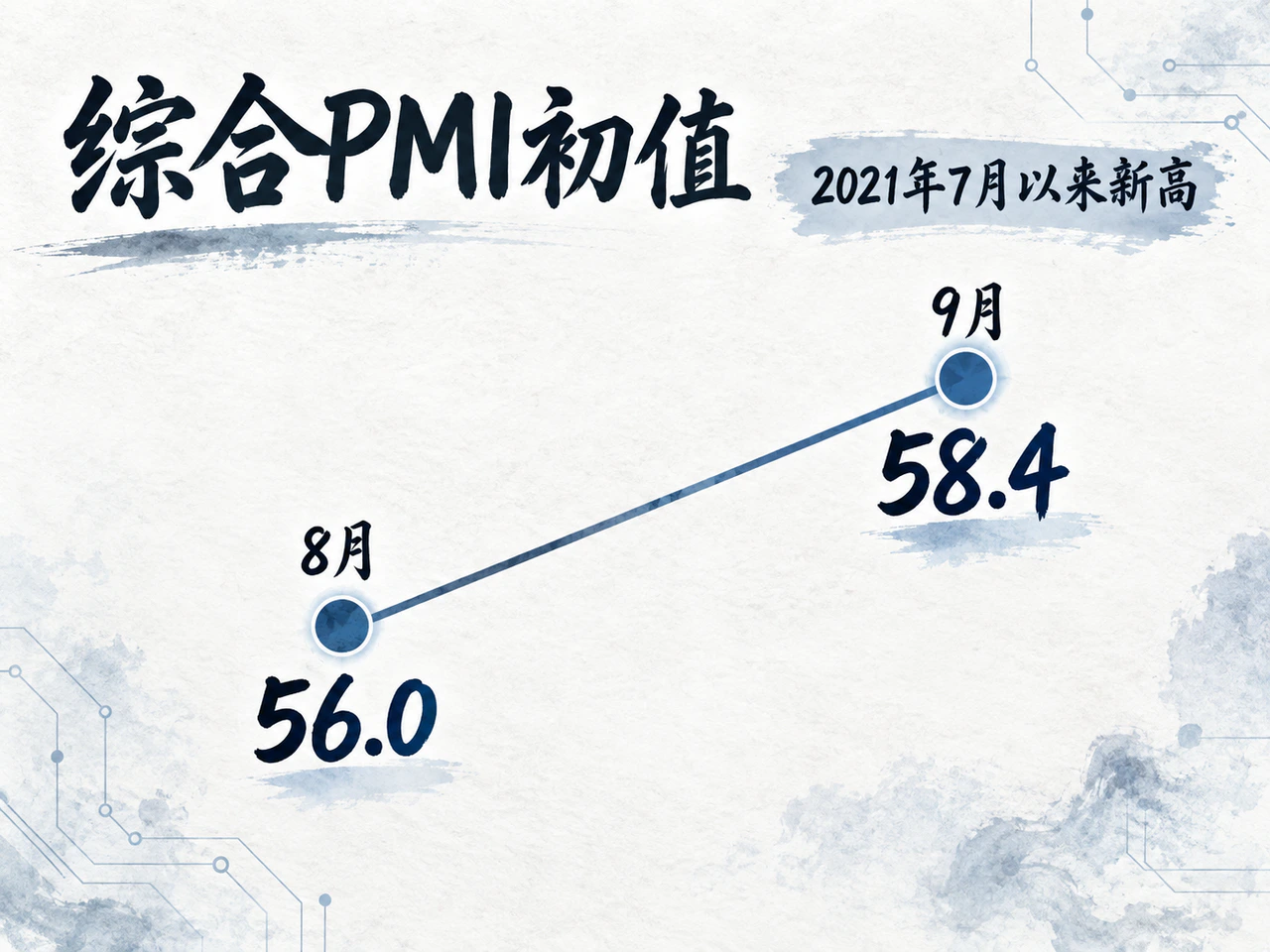
S&P Global's flash US composite PMI released September 23 rose from August's 56.0 to 58.4, its highest since July 2021. New orders rose from 55.2 to 58.2, with manufacturing and services expanding together as backlogs and delivery delays worsened. Crucially, input prices jumped from 59.9 to 66.4, a near-four-year high.
The main policy implication is that price pressures are increasingly intertwined with strong orders and capacity constraints. Firm demand makes cost pass-through easier. Although PMI is a forward-looking survey, the simultaneous strength in orders and input prices clearly signals intensifying demand-driven inflation, materially weakening the rationale for simply waiting for external shocks to fade.
Philadelphia Fed President Anna Paulson gave a fuller assessment at the bank's tenth annual fintech conference September 24. Even stripping out oil and tariff effects expected to fade, she said underlying inflation measures remained in a 2.5%–3% range, with progress toward 2% stalled. Heavy AI infrastructure investment continued raising prices for chips, building materials, electronic components and other supply-chain inputs.
Paulson also emphasized moderate wage growth and little broad corporate appetite for major pay increases: labor costs were not the dominant inflation driver. This is an important policy distinction. Further hikes can be justified by investment expansion and strong goods and service demand without a conventional wage-price spiral.
Williams and Paulson signal tightening without fixing the pace

Paulson said modest further tightening would be appropriate if the economy evolved as expected. In a speech at London's National Institute of Economic and Social Research the same day, New York Fed President John Williams called one more hike this year a reasonable baseline, while retaining flexibility. He stressed September's hike reflected accumulated tightening pressures, rather than a single unexpected monthly release.
Cleveland Fed President Beth Hammack warned in opening remarks at the bank's September 24 inflation conference that inflation risks remained tilted upward: the longer high inflation persisted, the harder and economically costlier it would become to control. She gave no explicit subsequent rate-hike path.
Officials strengthened the logic for further hikes without a mechanical timetable. Reuters reported September 24 that markets priced more tightening than the median Fed projection. This reflected intense concern about sticky inflation rather than an established Fed action schedule.
Labor performance provides room for tightening. Labor Department data September 24 put initial claims at 197,000 in the week ended September 19. The prior week was revised from 196,000 to 198,000; the four-week average was 202,250. Persistently low readings indicate no unusual increase in layoffs. Claims measure only inflows into unemployment, however; temporary stability does not mean the real economy has fully absorbed tightening's delayed effects.
Expectations management or demand restraint: officials differ on disinflation's employment cost

A representative conceptual disagreement emerged. In a September 21 Reuters interview, St. Louis Fed President Alberto Musalem argued that, because labor was not the source of current inflation, achieving the target need not require deliberately suppressing jobs. He emphasized preserving Fed credibility to stabilize businesses' long-term expectations and thereby restrain their pricing behavior.
Chicago Fed President Austan Goolsbee, speaking at London's Official Monetary and Financial Institutions Forum the same day, emphasized unavoidable tightening costs. Monetary policy cannot indefinitely evade persistent adverse supply shocks; its instruments chiefly affect aggregate demand, so lowering inflation necessarily entails some output and employment loss. He highlighted stubborn service inflation and watched whether massive AI data-center investment would spill into broad real-economy demand.
The disagreement concerns transmission and tolerable costs, not the 2% long-run target. Anchored expectations and easing supply constraints could allow modest tightening to moderate prices naturally. But if downstream demand keeps exceeding expectations, guidance alone will struggle to deliver price stability.
Across the week, the case for further tightening strengthened, while hike frequency and size remained dependent on inflation's causes and employment resilience. Attention turns to two tests next week: August personal income, spending and PCE prices on September 30 will test core inflation and consumption, while September payrolls on October 2 will provide comprehensive evidence on hiring, wages and unemployment.


