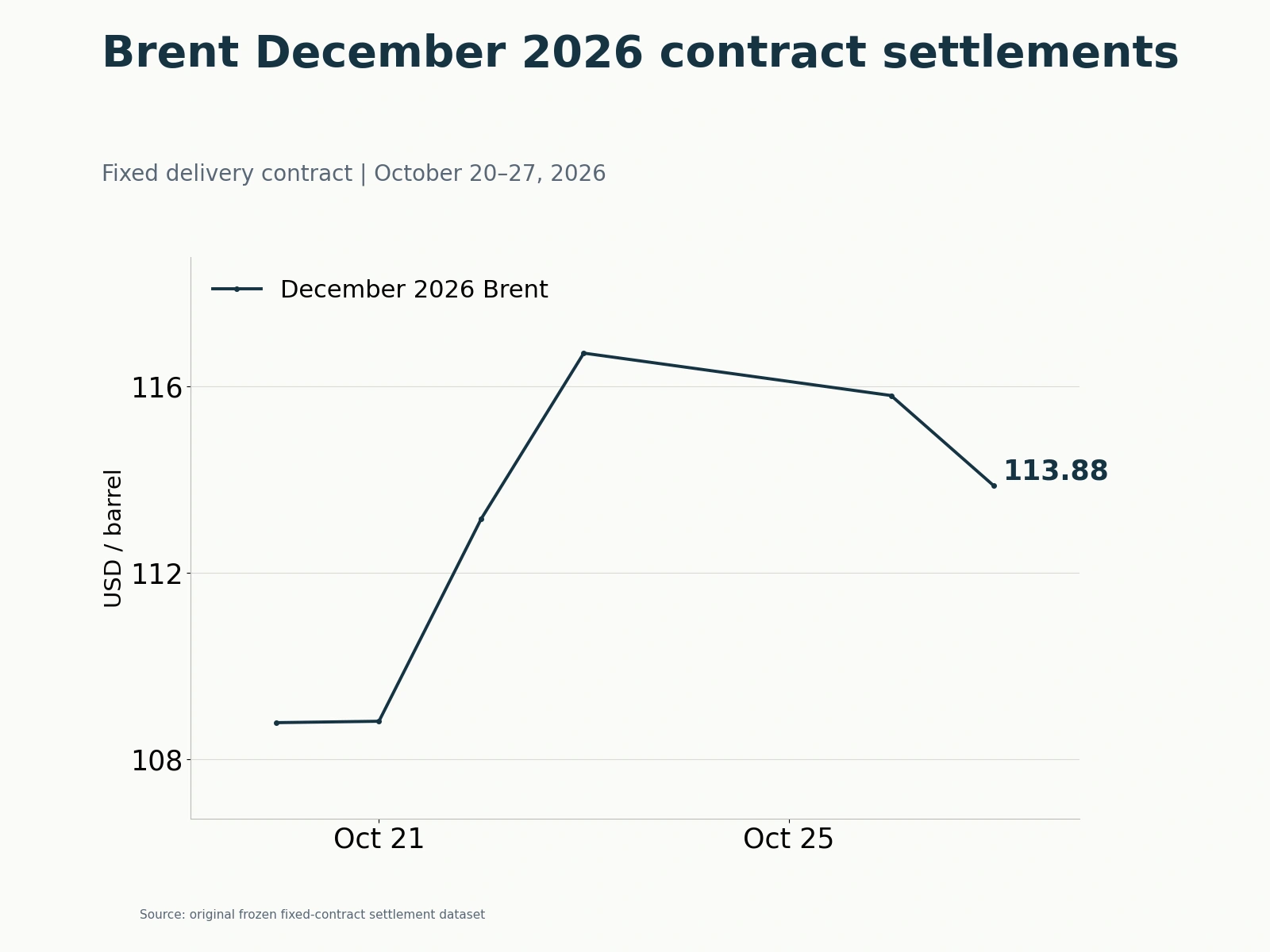
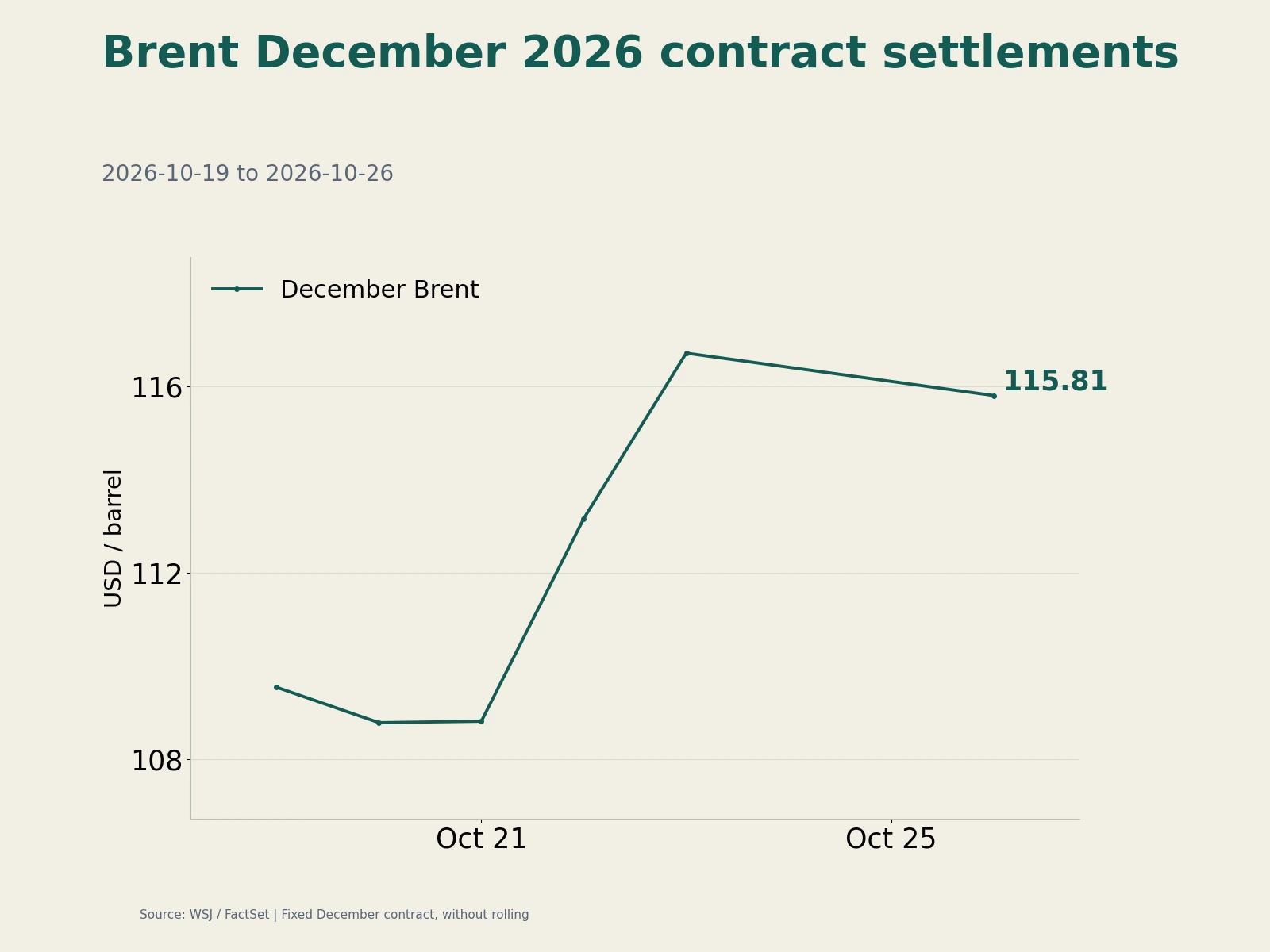
International crude markets diverged sharply during September 21–27. Brent continuous-contract daily closes ended at $104.32 a barrel, up just 0.43% for the week, while WTI closed at $92.41, down 7.87%. The WTI benchmark roll meant that the linked continuous price included a calendar spread, so the decline was not entirely driven by supply-demand fundamentals. The underlying divergence was nevertheless clear: repeated reversals in expectations for Gulf export recovery supported the international benchmark, while U.S. debate over diesel export restrictions created a split between persistently tight overseas spot supply and potentially shrinking American refinery crude purchases.
Hormuz reopening expectations swing repeatedly as geopolitics supports Brent above $104

Improved Gulf crude-transport news initially weighed on prices. Reuters reported on September 22 that Saudi Arabia's East-West pipeline had restarted and Gulf port loadings and Hormuz passage were showing marginal improvement. Iranian officials said the same day that the strait could reopen within seven days if Washington eased military pressure and lifted the port blockade. Greater expectations of supply recovery took November Brent's September 22 settlement to $99.25 a barrel.
Flow through a pipeline did not mean the full export chain was open. Reuters reported on September 24 that although the Saudi East-West pipeline was increasing throughput, tanker loading at Yanbu on the Red Sea had still not resumed. The Saudi-led coalition announced that day that it intercepted six ballistic missiles targeting Taif and Yanbu. Renewed threats to the alternative Red Sea route lifted Brent's September 24 settlement to $106.60.
Friday's reports of talks on phased U.S.-Iranian de-escalation eased some fear again. Preliminary Kpler vessel tracking showed about 33.7 million barrels leaving Hormuz in the week from September 20 through Friday, September 25, broadly maintaining the previous week's flow. That was the period's outward flow, not proof of a full return to normal navigation. Over the week, diplomacy intermittently reduced extreme supply-cutoff premiums, but tanker loading bottlenecks and route security risks continued to place a firm limit on international oil-price declines.
Diesel restrictions threaten refinery cuts; WTI's Brent discount reaches its widest since May

Potential changes to U.S. diesel export policy were central to widening the regional spread. Trump voiced support for an export ban on Tuesday; the White House denied on Wednesday that a ninety-day ban was being drafted. Energy Secretary Chris Wright publicly said a ban would struggle to lower end-user prices, yet Reuters cited informed sources as saying he was privately discussing voluntary diesel export restrictions with refiners. Policy remained under debate and assessment, but markets were already pricing the negative feedback through refining.
The core concern was that blocked diesel exports would quickly accumulate in domestic stocks, fill storage and force lower refinery utilization, reducing purchases of U.S. crude. Wood Mackenzie's scenario analysis suggested that implementing a diesel export ban could force crude-run cuts of more than 2 million barrels a day, around 12% of current processing.
Amid anticipated cuts, Reuters cited LSEG data showing WTI's discount to Brent widening intraday on Thursday to $12.02 a barrel, the deepest since May 6. Such a large domestic discount would normally attract substantial overseas buying, but high transoceanic freight and scarce tanker capacity severely constrained arbitrage. Kpler data showed August U.S. crude exports up only 45,000 barrels a day month on month to 3.72 million, without a major increase alongside the wider spread. The sharply wider discount priced both the risk of a plunge in U.S. refinery utilization and real interregional logistics barriers.
Crude builds do not erase product shortages; watch Gulf logistics and refinery activity
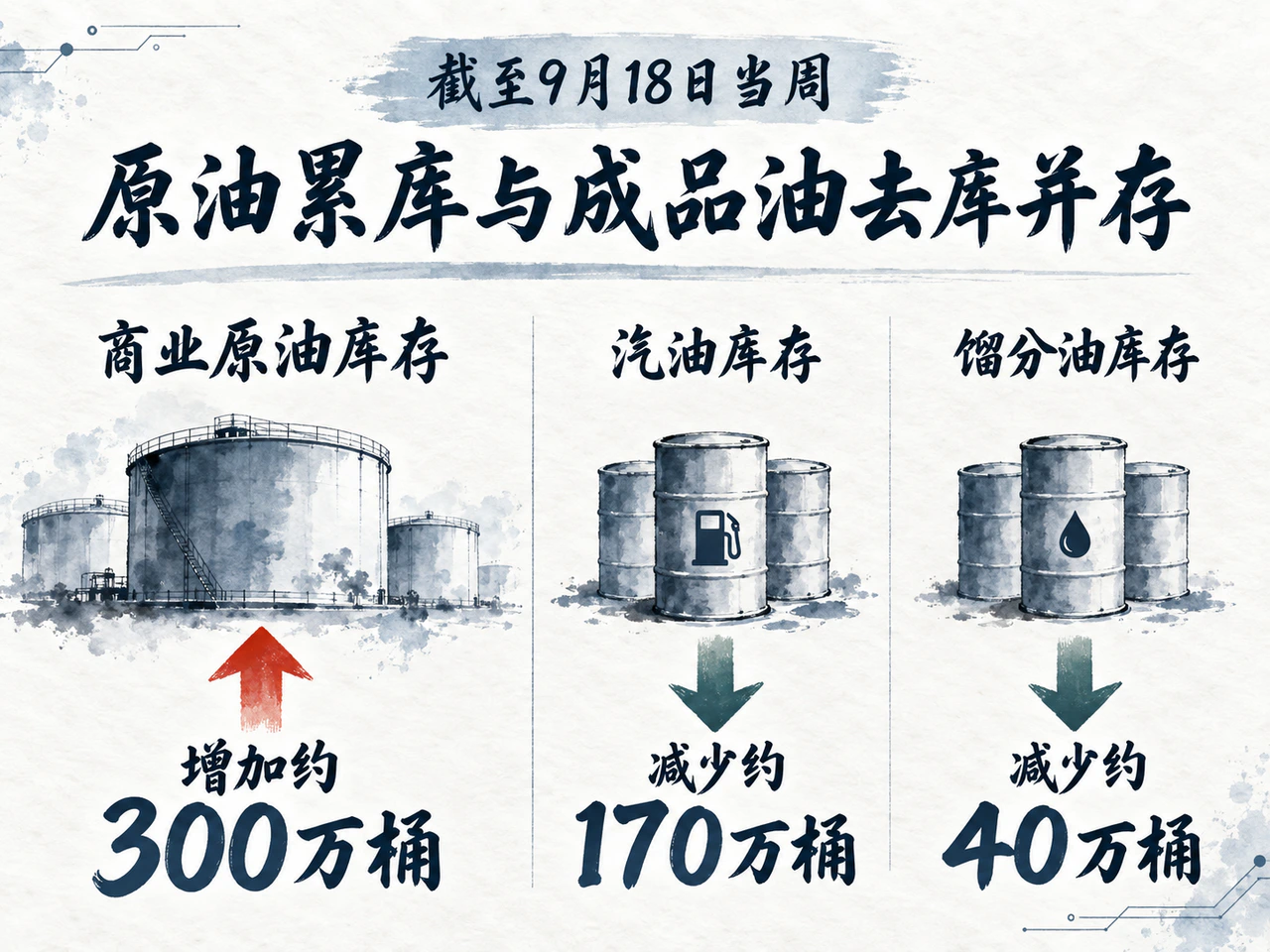
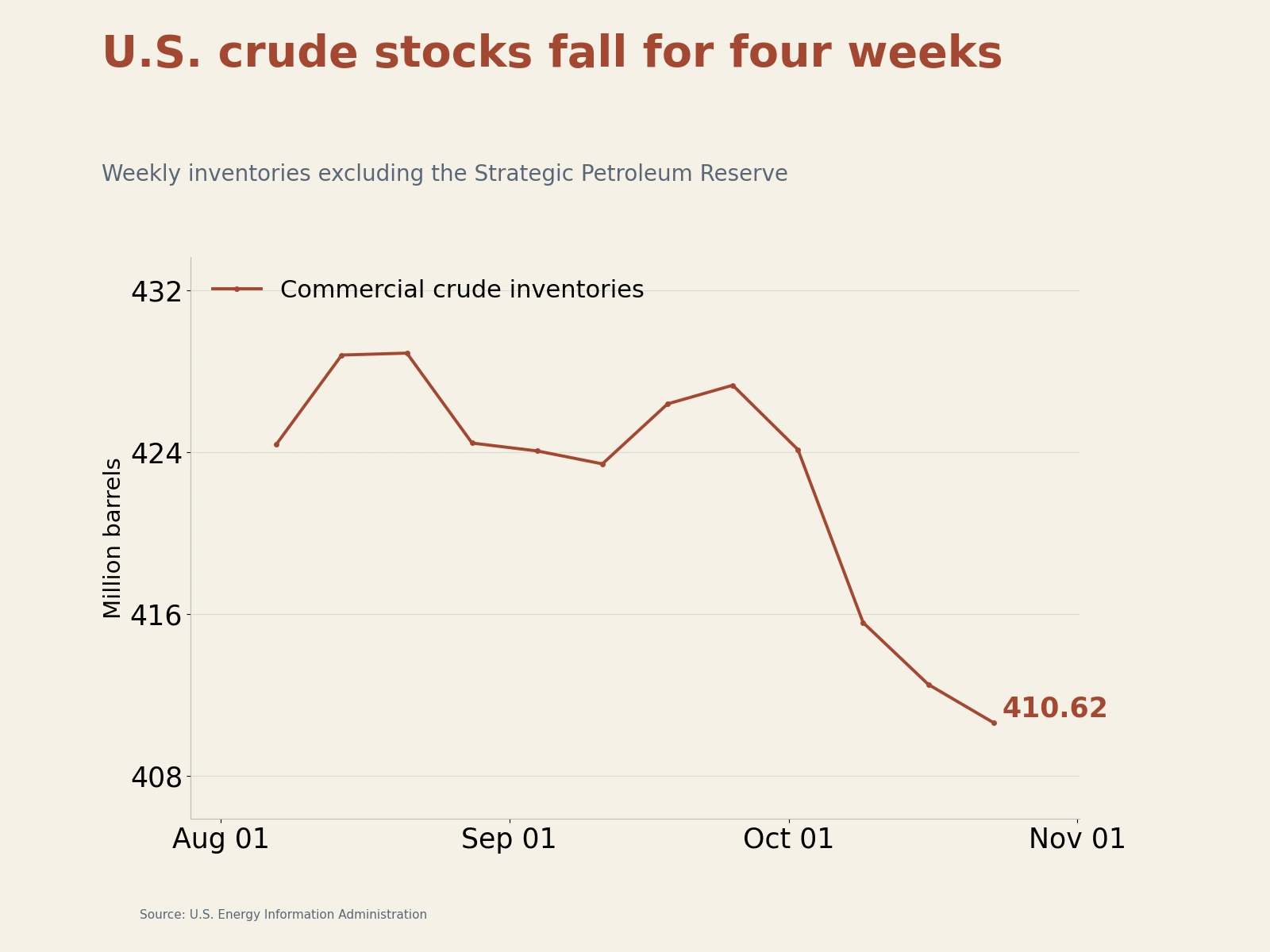
EIA figures released on September 23 confirmed the internal disconnect. In the week through September 18, U.S. commercial crude stocks rose about 3 million barrels to 426.4 million, while gasoline fell about 1.7 million and distillates about 400,000. Simultaneous crude builds and product draws do not establish that downstream fuel supply chains are loosening.
Oilprice, citing EIA figures, said U.S. distillate stocks remained about 12% below the five-year seasonal average. Total U.S. products supplied over the previous four weeks were about 20.6 million barrels a day, up just 0.5% year on year. Fuel fundamentals therefore remained structurally tight, though whether that annual growth implied accelerating overall consumption was uncertain. The dollar index gained 0.75% for the week, raising non-dollar buyers' procurement costs, but its move was far too small to explain the more-than-eight-percentage-point divergence between Brent and WTI.
The outlook for balances and price repair depends on marginal changes in four variables. First, continued recovery in Yanbu tanker loading and unloading and actual Hormuz exports will test whether immediate supply-cutoff premiums can diminish further. Second, whether the United States introduces a complete diesel export ban will determine if Wood Mackenzie's risk of more than 2 million barrels a day of refinery run cuts materializes. Third, the combined evolution of distillate stocks, refinery utilization and product exports will distinguish easing supply bottlenecks from a reversal in demand. Fourth, simultaneous declines in Brent's nearby premium and transoceanic freight would clearly indicate genuine relief in immediate overseas fuel tightness.