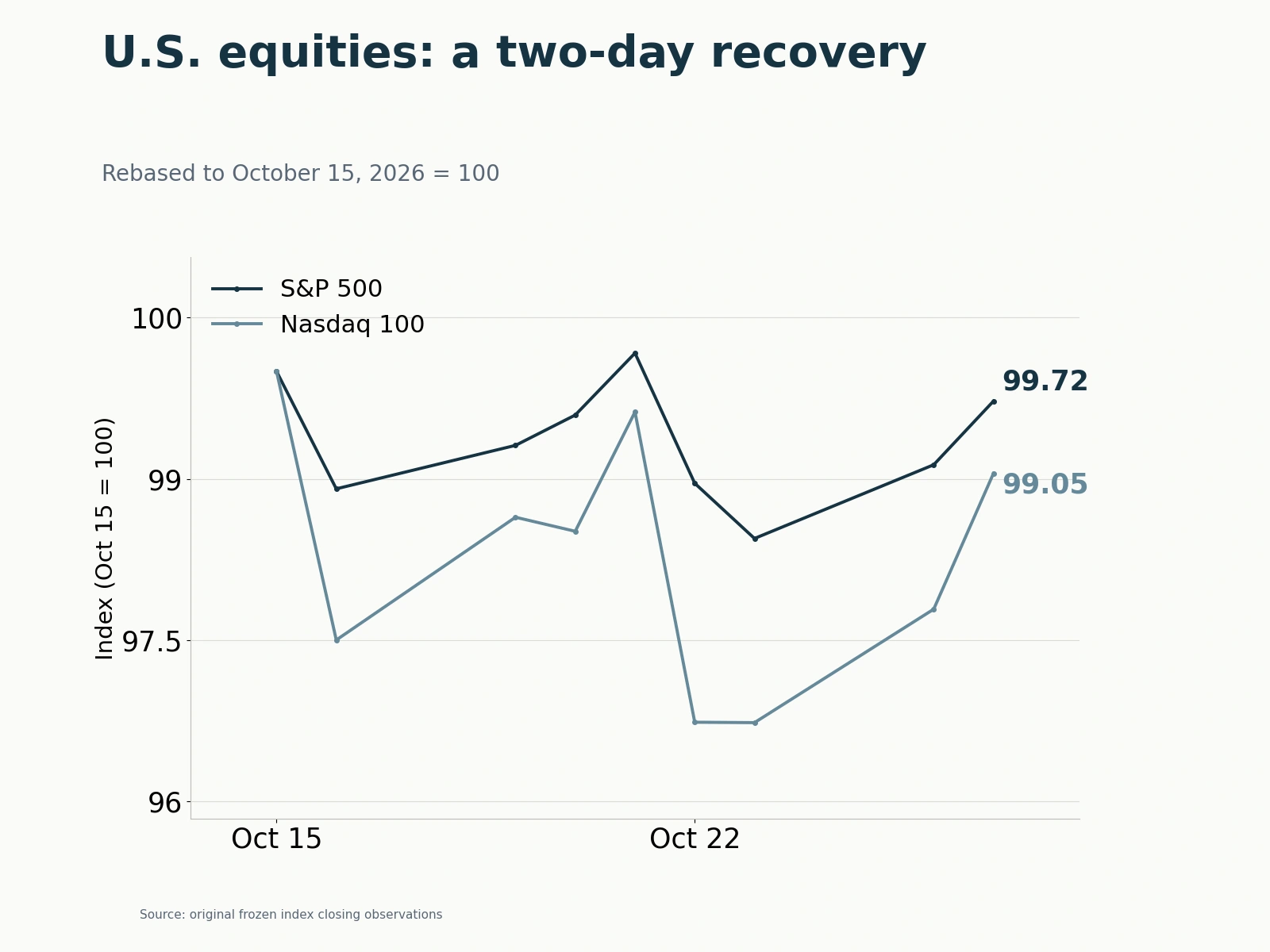
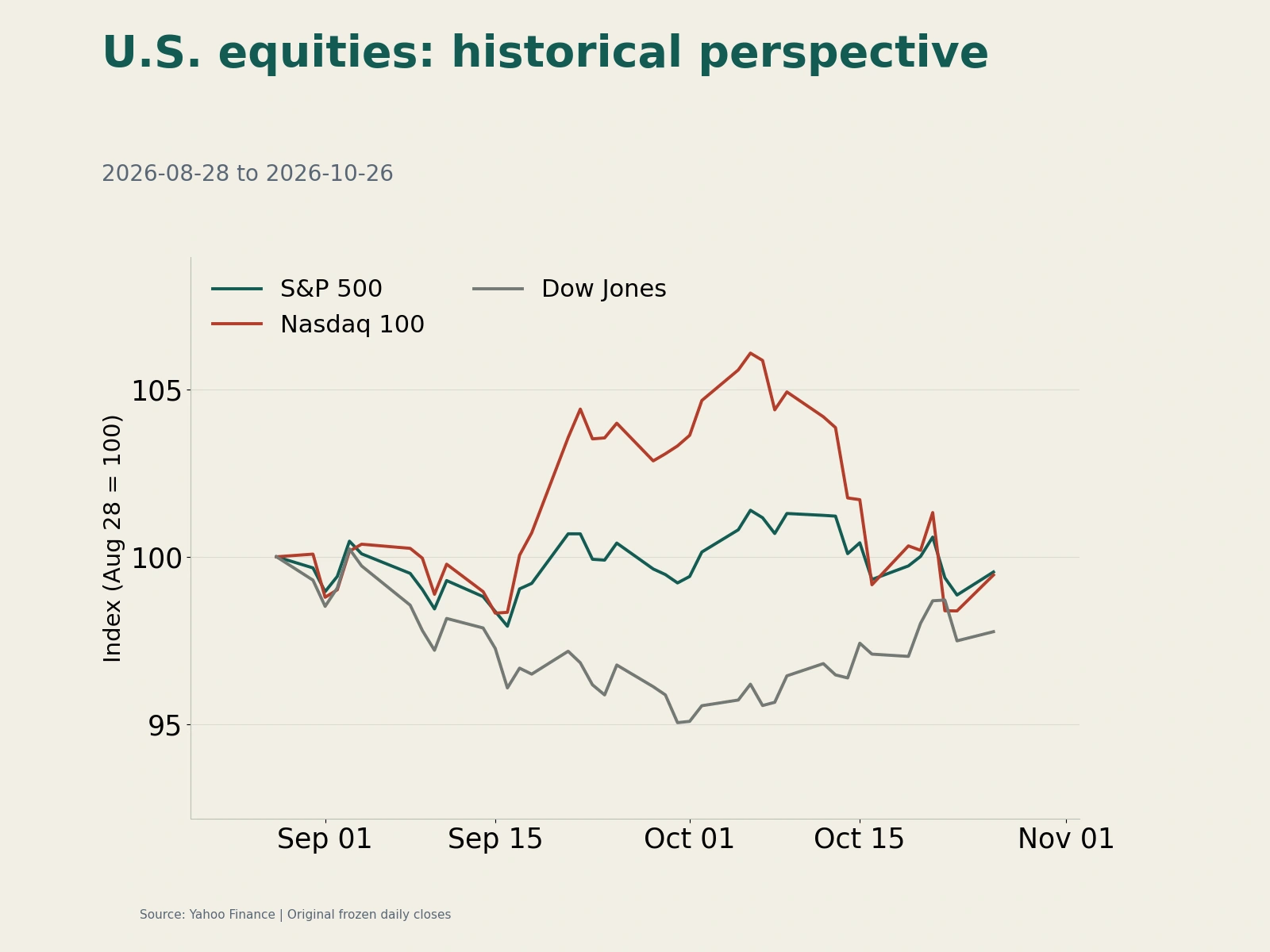
On September 28, 2026, U.S. Treasury yields rose across the curve, with the 2-year reaching 4.92% and the 10-year 5.24%. Higher risk-free rates broadly pressured risk-asset valuations. The three major U.S. equity indices retreated, with the S&P 500 down 0.77% and Nasdaq 100 down 1.08%. Gold continuous futures fell 3.81% to $4,156.70 an ounce on the provider's daily close. Oil jumped more than $4 early before Middle Eastern mediation headlines erased most gains, leaving only small settlement increases. Nvidia's additional $150 billion buyback authorization and U.S.-China tariff concessions covering about $60 billion in two-way nonsensitive goods could not offset expectations of macro tightening and rising financing costs, producing structural divergence across markets.
The 2-year Treasury yield reaches 4.92%; Dallas survey shows production expansion alongside rising costs
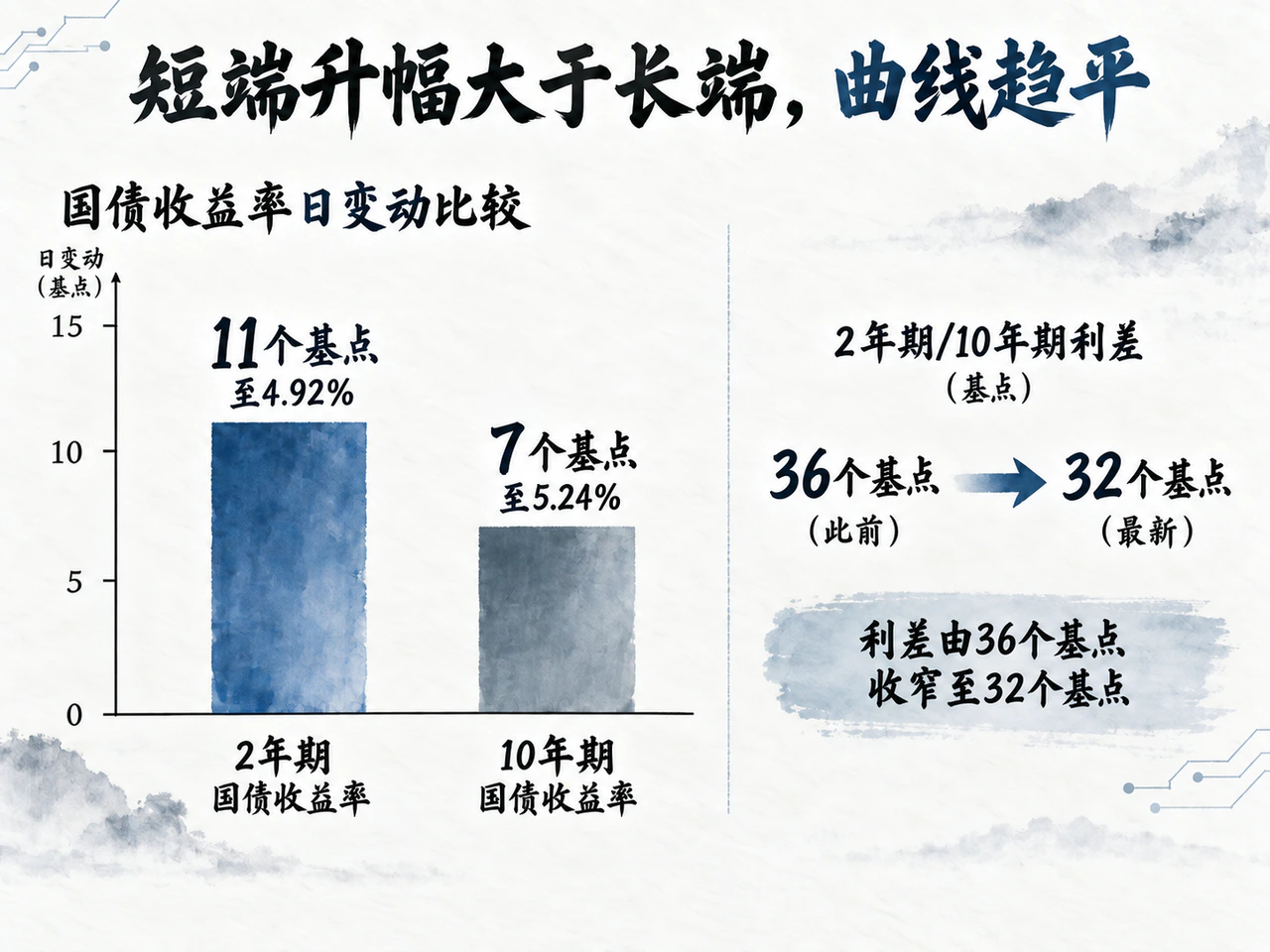
The Treasury's daily curve showed yields rising at every maturity, particularly sharply at the short end. The 2-year rose 11 basis points to 4.92% and the 10-year 7 basis points to 5.24%. Their spread narrowed from 36 to 32 basis points, signaling another hawkish reassessment of the near-term benchmark-rate path.
| Maturity | September 25 yield | September 28 yield | Daily change |
|---|---|---|---|
| 2-year | 4.81% | 4.92% | +11 basis points |
| 5-year | 4.98% | 5.06% | +8 basis points |
| 10-year | 5.17% | 5.24% | +7 basis points |
| 30-year | 5.49% | 5.56% | +7 basis points |
The Dallas Fed's September manufacturing survey released that day showed regional production expanding alongside costs. Production rose from 16.1 to 29.5, new orders from 22.0 to 30.7, and employment from 8.0 to 15.1. General business activity edged down from 11.6 to 9.8, while current production, orders and hiring remained expansionary.
Raw-materials prices rose from 44.1 to 52.2, finished-goods prices from 22.7 to 27.6, and wages and benefits from 21.1 to 27.4. All three price diffusion indices rose, indicating higher input and output prices among respondents. Comments differed: some cited fuel and tariff costs, others customer resistance to final-price increases. The company-outlook index meanwhile fell from 19.2 to 8.7.
Greater Treasury supply and enormous AI infrastructure capital spending further lifted the underlying level of rates. Yahoo Finance said higher yields reflected not only rebounding energy costs but also the absorption of funds by federal issuance and large-scale AI financing. Macquarie strategists warned that a rapid yield surge could shock highly leveraged institutions and credit markets. Penn Mutual's weekly review also showed earlier 5- and 7-year Treasury auctions clearing about 3 and 1 basis points above when-issued levels, respectively, suggesting that longer debt supply needed greater premium compensation to attract sufficient buyers.
Markets remained divided over further Fed tightening. UBS believed swaps might price too much restraint, maintaining a baseline of one December hike. High oil prices lift headline inflation, but erode real household purchasing power and may weaken future demand. Attention centered on two major releases: August U.S. job openings (JOLTS), due September 29 at 22:00 Beijing time, and September nonfarm payrolls, due October 2 at 20:30. Both would test labor-market tightness and wage stickiness.
All three major U.S. indices fall; Nvidia's new $150 billion buyback fails to reverse technology losses
U.S. equities broadly retreated, with large-cap growth and cyclical financials weakening together. The S&P 500 fell 0.77% to 7,683.69; Nasdaq 100 1.08% to 30,276.81; Dow Jones 0.67% to 51,481.51; and small-cap Russell 2000 0.69% to 2,817.91. The VIX edged up from 14.87 to 16.07, showing slightly greater hedging demand without disorderly panic.
Among sector ETFs, financials XLF fell 1.19%, technology XLK 0.89%, and energy XLE edged up 0.10%. Higher long-term rates can theoretically widen bank net interest margins, but concerns over rising deposit costs and cooling real-economy credit demand also weighed on financial-sector valuations.
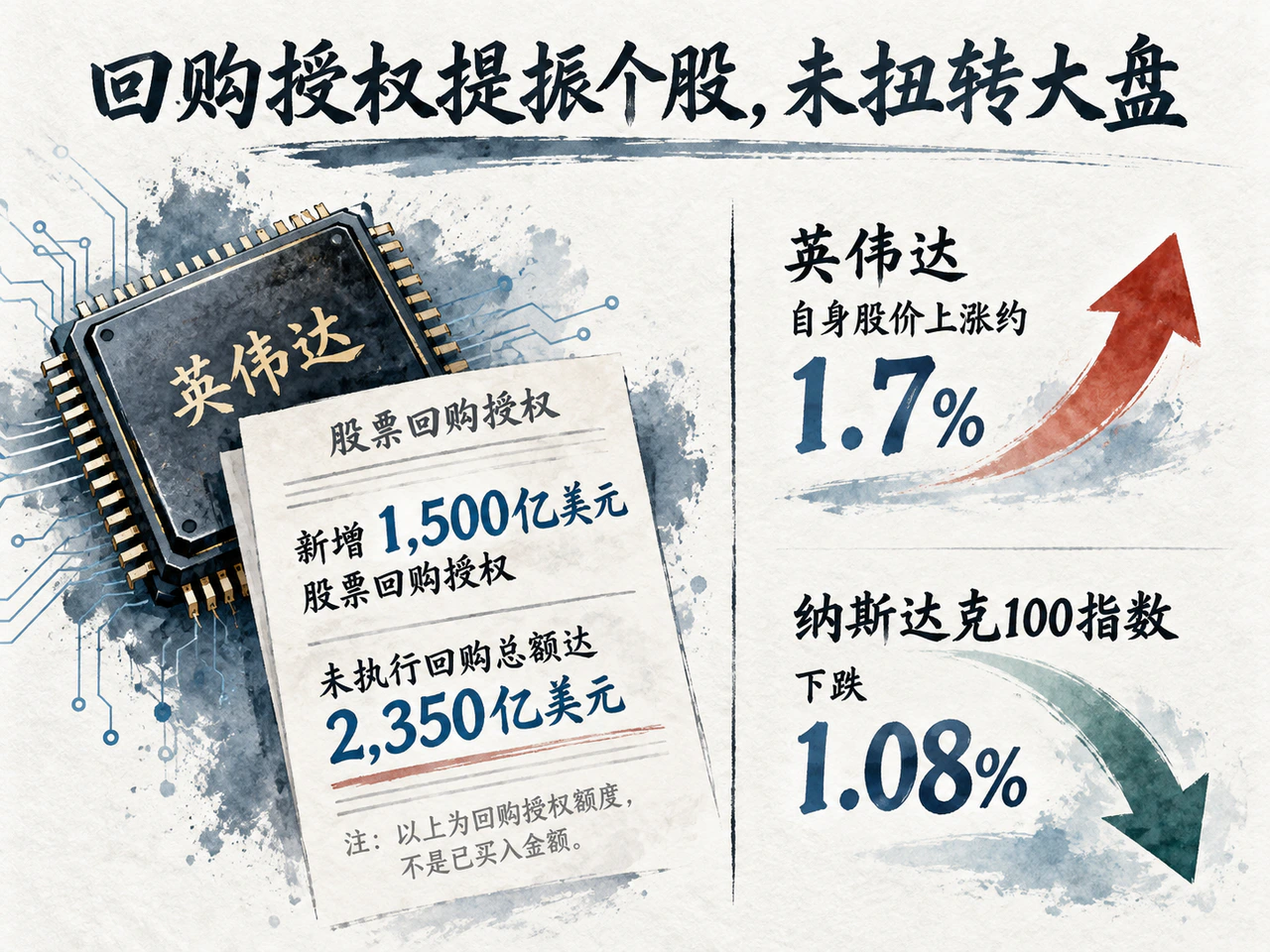
Heavyweights showed clear divergence. Nvidia rose against the trend after announcing an additional $150 billion buyback authorization, taking its unexecuted total to $235 billion, planned for completion by the end of fiscal 2028. Its shares gained about 1.7%. One heavyweight's buyback did not reverse the Nasdaq 100's or broader market's decline.
Among other leaders, Tesla was down 3.2% at 11:50 Eastern time after JPMorgan cut its target and expressed concern about Q3 deliveries. Meta was down 4.3% at 11:50 after gaining roughly 13% during an earlier week.
Wealthspire Advisors analyst Oliver Pursche said that as long as employment and corporate earnings remained healthy, higher yields were unlikely to cause a systemic equity collapse. Rising financing costs had raised the investment hurdle for AI supply chains in a heavy capital-spending phase, but one volatile day did not establish a cyclical turning point. Elsewhere, the Associated Press reported the Nikkei 225 down 0.7% to 65,877.62 and South Korea's Kospi down 2.7%; September 28 reporting put the Hang Seng up 0.5%.
Gold continuous futures close below $4,160 as Middle Eastern mediation headlines cap oil gains
Oil was highly volatile intraday before gains narrowed. Reuters' New York close put Brent futures settlement at $105.28 a barrel, up $0.96, or about 0.9%, and WTI at $92.60, up $0.19, or about 0.2%. Middle Eastern tensions had lifted both more than $4 early, but Qatar-led mediation headlines eased disruption fears and most gains were surrendered. Whether diplomatic contacts produce actual maritime security and sanctions adjustments remained central to future crude risk premiums.
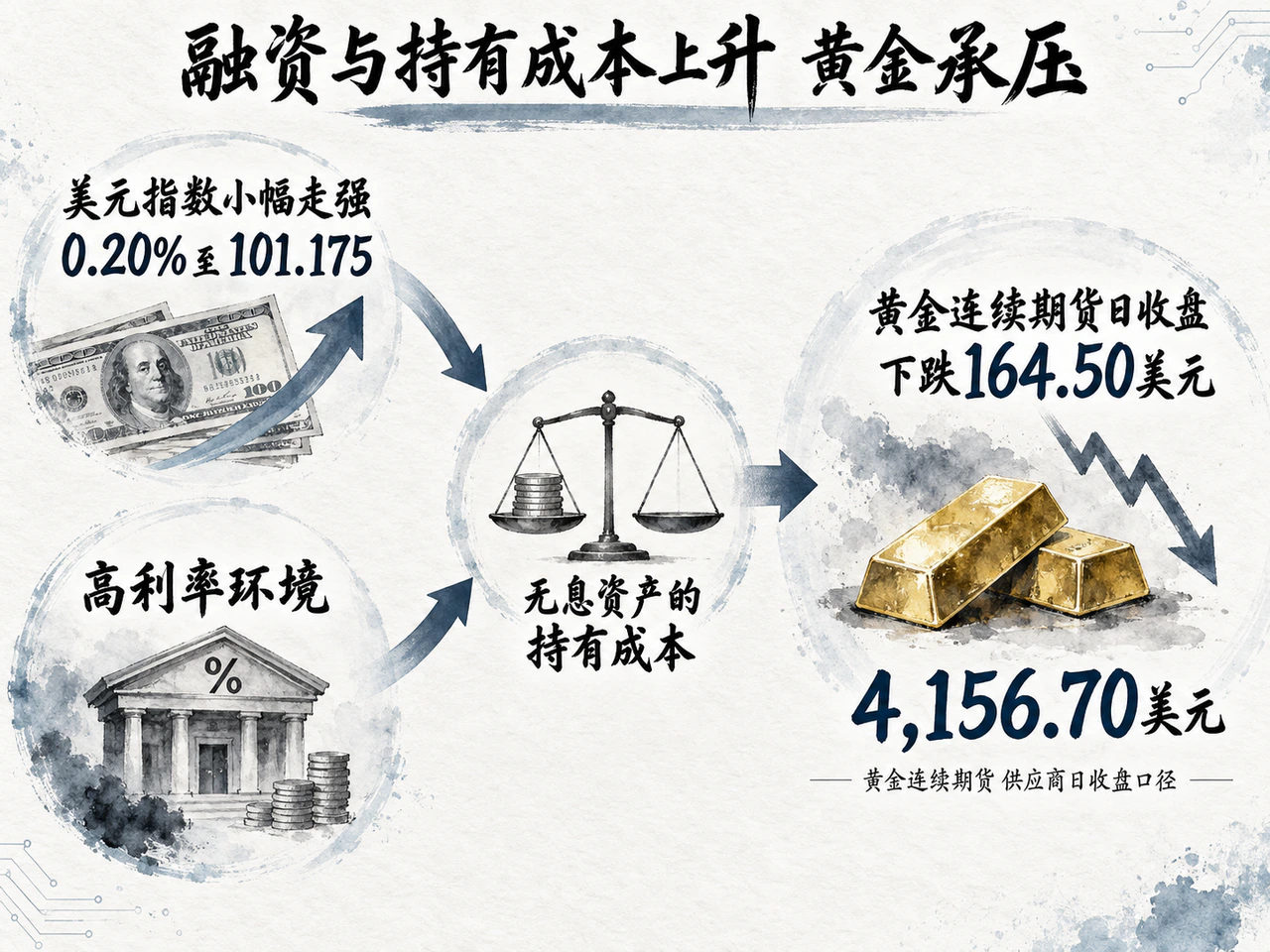
Gold failed to retain a geopolitical safe-haven premium and instead suffered from a stronger dollar and high rates. Provider data showed gold continuous futures falling $164.50, or 3.81%, to $4,156.70 an ounce at the daily close. Reuters recorded spot gold briefly near $4,111 intraday, its lowest since August 5. The dollar index strengthened 0.20% to 101.175, while high rates substantially increased the cost of holding non-interest-bearing assets.
In institutional positioning, the World Gold Council's latest weekly report showed global gold ETFs' first weekly net outflow since mid-July, about 1.6 tonnes, reducing holdings to 4,249 tonnes; COMEX gold futures net longs also declined. StoneX analyst Rhona O'Connell said strategic central-bank purchases and Chinese and Indian festival and wedding seasons could release some suppressed physical demand, but high global rates and net outflows left physical support relatively passive in the near term.
August industrial profits rise 4.2%; central bank injects over RMB 1 trillion through reverse repos for quarter-end liquidity
National Bureau of Statistics data showed profits at industrial enterprises above designated size totaling RMB 5.27198 trillion in January-August 2026, up 15.7% year on year. Revenue grew 6.6%; the revenue profit margin reached 5.66%, up 0.44 percentage points. August profits rose 4.2%, slower than July partly because of a higher year-earlier base. August gross profit, revenue less operating costs, grew 7.5%, accelerating 1.9 percentage points from July and indicating continued recovery in production-sector margins.
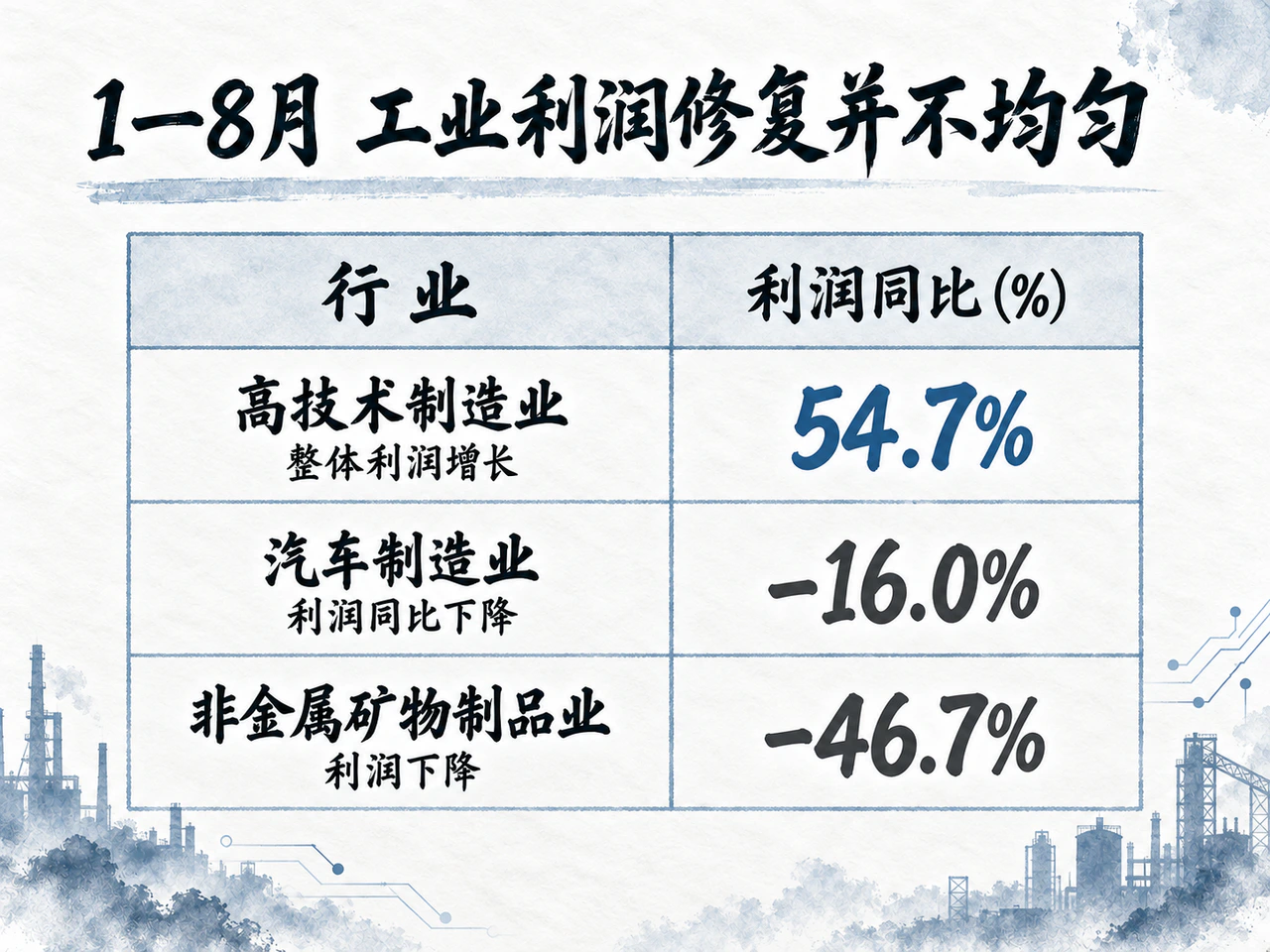
Sector divergence was pronounced. Equipment and high-tech manufacturing provided strong support: January-August profits in computers, communications and other electronic equipment rose 1.1 times, or 110%, while overall high-tech manufacturing profits grew 54.7%. Some traditional industries remained strained: automobile profits fell 16.0% and nonmetallic mineral products 46.7% year on year.
In assets and working capital, industrial accounts receivable reached RMB 29.48 trillion at end-August, up 9.0%. The average collection period lengthened 0.9 days to 72.2 days. Finished-goods inventories were RMB 7.36 trillion, up 11.0%, leaving tangible pressure on turnover and collections.
Facing quarter-end liquidity assessments and National Day holiday prefunding needs, the central bank sharply increased open-market injections. According to 21st Century Business Herald, it conducted RMB 139 billion of 7-day, RMB 661 billion of overnight and RMB 300 billion of 14-day reverse repos, totaling RMB 1.1 trillion. After offsetting RMB 660.3 billion of maturities, it delivered a large net injection; the 7-day rate stayed at 1.40%. Oriental Jincheng analyst Wang Qing said the short-tenor combination precisely offset quarter-end settlement frictions and helped maintain reasonably ample liquidity. Markets next focused on China's September PMI due September 30 at 09:30 Beijing time to track manufacturing conditions and order recovery.
U.S.-China tariff lists cover $60 billion of goods; U.S. lowers CAFE standards and ends credit trading
Bilateral trade policy showed a limited easing. Reuters and AP reported reciprocal tariff-concession lists covering roughly $30 billion of nonsensitive goods on each side, about $60 billion in two-way trade. China's list covered 1,619 U.S. import items and the U.S. list 77 categories of Chinese goods, with more than 90% of categories proposed to return to most-favored-nation rates.
Concessions mainly covered agricultural products, daily personal-care goods, specified medical equipment, toys, festive decorations and other basic consumer products. High-tech and strategic sectors such as chips, power batteries and new-energy vehicles were excluded, as were U.S. soybeans, still subject to an additional 10% tariff. Capital Economics estimated the average U.S. tariff on China would ease from 22% to about 20.5%, still well above the roughly 11% baseline before this administration. Cuts marginally improve light-industry exports and consumer-goods costs, but have limited effects on the overall bilateral macro trade balance.
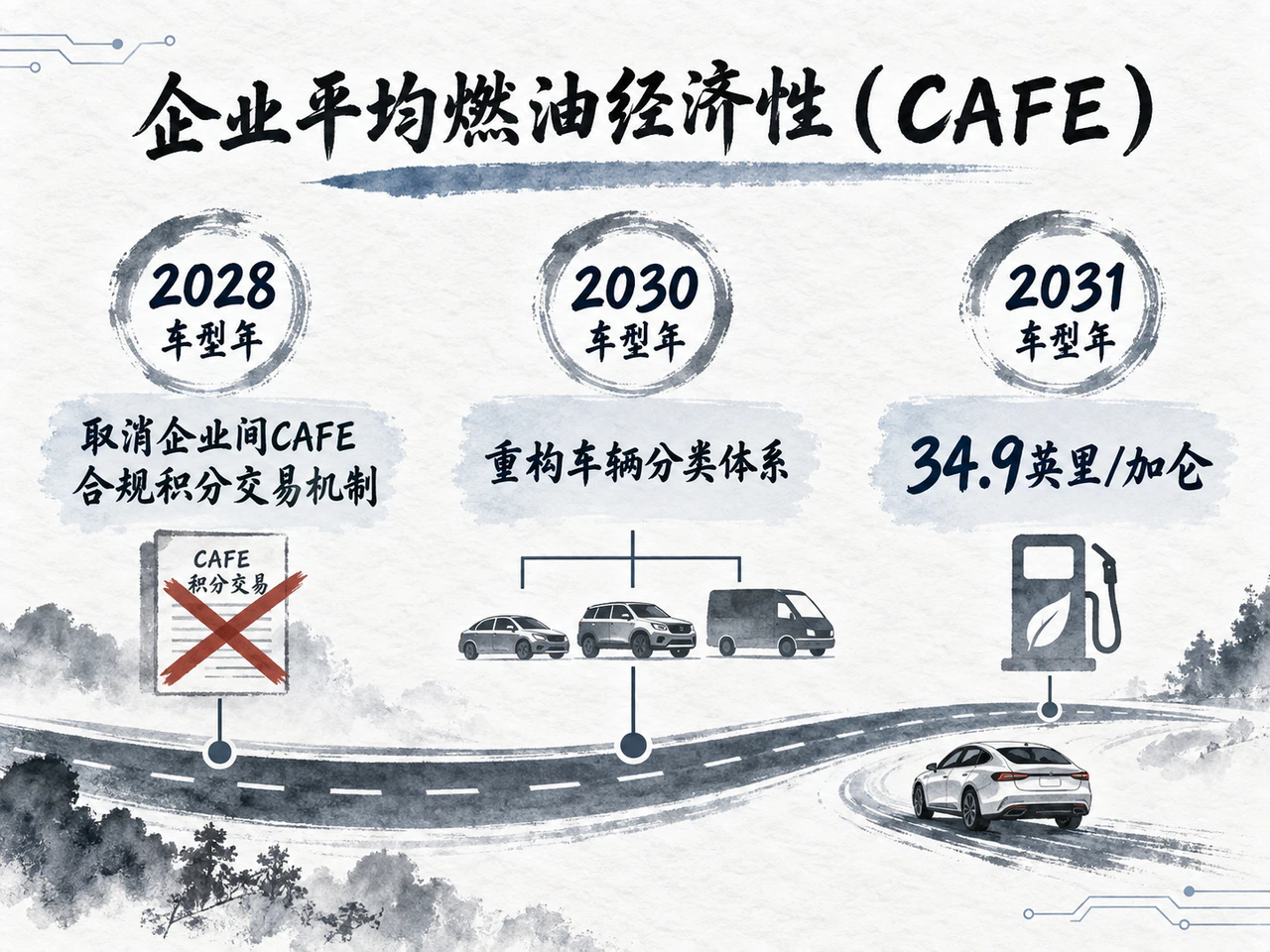
For U.S. vehicle energy rules, the Transportation Department announced a final Corporate Average Fuel Economy (CAFE) rule lowering medium- and long-term compliance thresholds. By model year 2031, average requirements for passenger-car and light-truck fleets were expected to fall to about 34.9 miles per gallon, far below the earlier regulation's anticipated 50.4 mpg.
The rule also ends intercompany CAFE compliance-credit trading from model year 2028 and restructures vehicle classifications in model year 2030. This substantially reduces traditional automakers' CAFE burden but also directly removes a revenue channel from selling compliance credits for some vehicle manufacturers.
High-yield spreads widen to 293 basis points; Hong Kong issues digital green bonds as property firms restructure offshore debt

ICE BofA data showed September 25 investment-grade spreads widening 2 basis points to 81, while high-yield spreads rose 13 basis points to 293, a much larger widening. Treasury benchmarks then rose across the curve on September 28, further raising the overall benchmark for dollar-bond financing costs.
UBS favored medium-duration, highly rated credit relatively in its investment recommendations. BlackRock's weekly review said Asian credit's yield levels were attractive for allocation, but already-tight spreads limited further compression.
Offshore financing developments differed by credit quality. Duration Finance reported that Hong Kong's government successfully issued HKD 5.5 billion and RMB 7.5 billion of digitally native green bonds that day, using high-grade credit to broaden financing channels for innovative digital assets.
Some distressed Chinese developers continued offshore dollar-debt restructuring. After securing the required creditor support, Powerlong Real Estate extended the restructuring support agreement (RSA) deadline to November 30. Redco Group prepared a scheme-creditor meeting under a court order. Extensions and meetings advance the process, but final agreements and cash payments still face complex execution and negotiations amid high overseas rates and challenging industry operations.