Recovering Middle Eastern crude exports capped the oil-price gains caused by a diplomatic stalemate. U.S. discussion of diesel export restrictions further widened the gap between American and international crude prices.
Oil rose sharply intraday on September 28 before surrendering most of its gains. Reuters' closing report put Brent settlement at $105.28 a barrel, up $0.96, or about 0.9%, and WTI at $92.60, up $0.19, or about 0.2%. Both front-month contracts were for November 2026, and their settlement spread widened to $12.68 a barrel.
Repeated setbacks in U.S.-Iran talks meant supply risks were unlikely to disappear soon. Actual shipments were recovering, however, making it difficult to price only deteriorating supply. Uncertainty over diesel export policy added another variable to this divergence: overseas product supplies could tighten while U.S. refinery demand for crude fell.
Middle Eastern exports recover but remain 6 million barrels a day below February

Reuters reported that oil initially rose more than $4 a barrel after Washington rejected Iran's proposal. Gains narrowed after news that Qatari mediators planned separate contacts with the United States and Iran. Informed officials said discussions were expected to focus on a revised version of Iran's earlier seven-day proposal. Talks were still at the planning stage, leaving restoration of normal navigation uncertain.
Compared with negotiation headlines, recovering shipments improved supply more directly. Reuters cited preliminary Kpler data forecasting September crude exports from major Middle Eastern producers at 12.8 million barrels a day, still about 6 million below February's 18.8 million. Saudi exports were expected at 5.4 million barrels daily, substantially above August's roughly 2.45 million. Supply was recovering, but the shortfall remained considerable.
Export recovery came with route changes. After an attack on Saudi Arabia's East-West pipeline, some crude originally destined for export through Yanbu on the Red Sea shifted to Gulf ports. Crude shipments through Hormuz this month were expected at about 7.4 million barrels daily. Partial reopening helped shipments, but concentrated routes, tanker availability and insurance costs could still constrain the pace of supply recovery.
These changes explain the retreat after oil's initial surge. More shipments eased fears of further deterioration, while the unfilled export gap supported nearby prices. Diplomatic news can quickly change risk premiums; a sustained price decline requires continued increases in loadings and arrivals.
Possible diesel export restrictions increase the risk of U.S. refinery run cuts
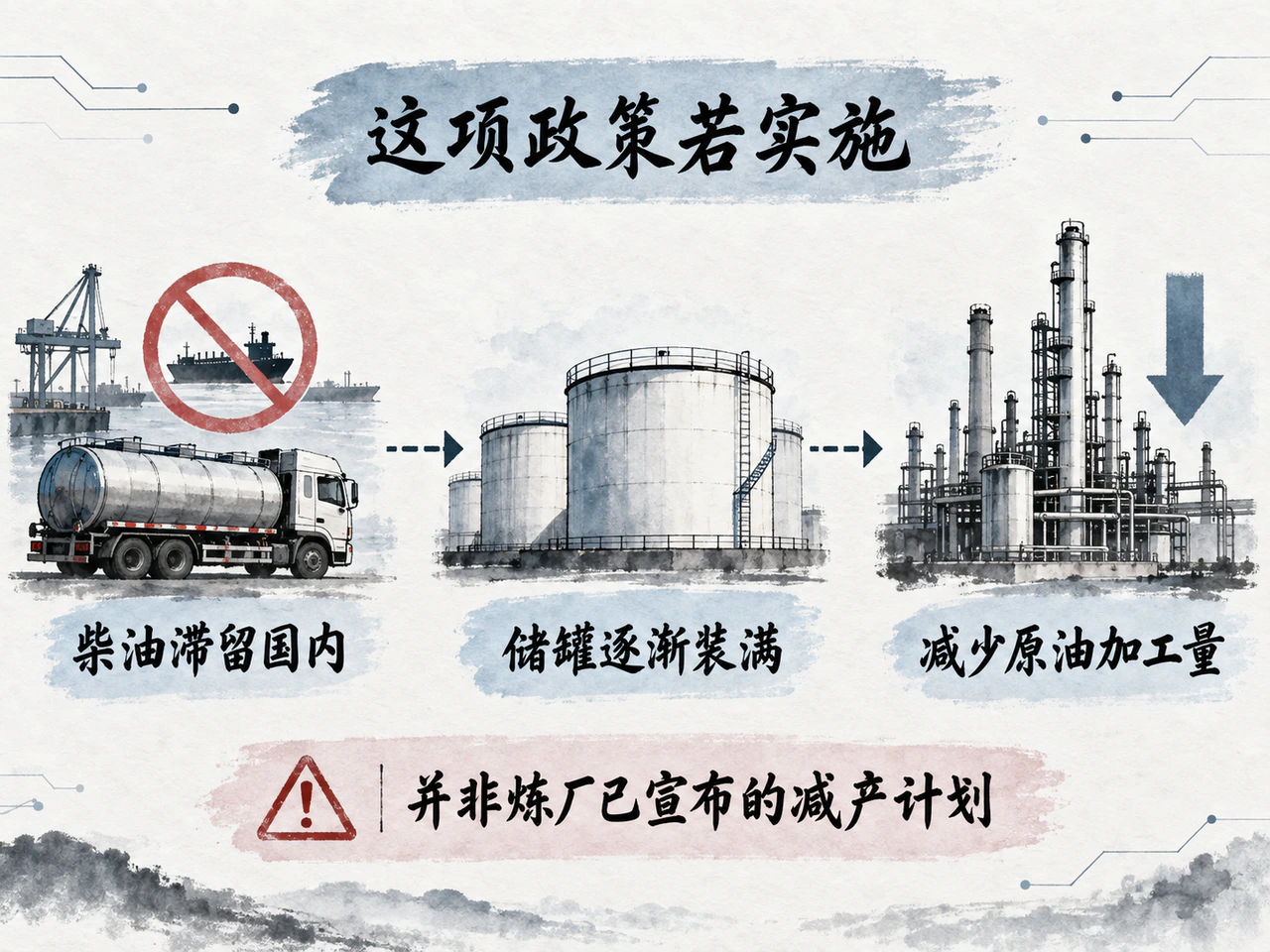
Brent-WTI divergence was also affected by U.S. refining. Discussion of diesel export restrictions raised concern that diesel retained domestically would gradually fill storage tanks, eventually forcing refiners to reduce crude runs. If implemented, the policy could lower U.S. refinery crude demand while worsening overseas diesel shortages.
Wood Mackenzie previously estimated that a complete diesel export ban could eventually force U.S. refiners to cut crude processing by more than 2 million barrels a day, about 12% of the then-current total. This estimate assumed accumulating diesel inventories and limited storage; it was not an announced refinery cut. The White House had previously denied preparing a ninety-day ban, and the energy secretary had questioned a complete ban's effectiveness. Implementation and scope would still determine the actual impact.
Cheaper U.S. crude did not mean exports could quickly close the price gap. Reuters' September 25 report cited shipping firms as saying VLCC freight from the U.S. Gulf Coast to Asia was substantially above pre-conflict levels. Higher freight and insurance erode arbitrage returns, while vessel supply also limits the speed at which U.S. crude can replace Middle Eastern barrels.
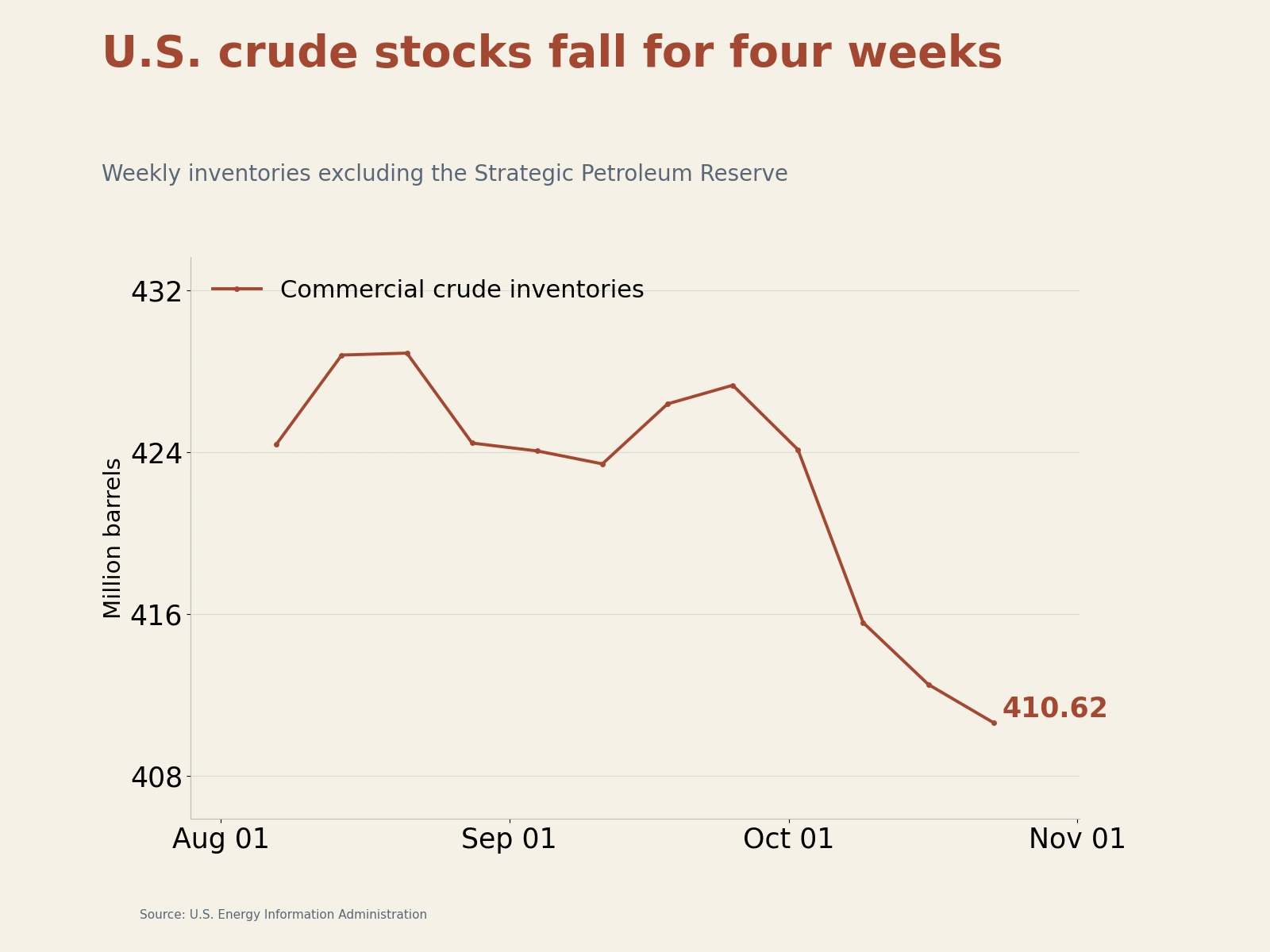
U.S. inventories likewise showed different pressures on crude and products. EIA data for the week through September 18 showed commercial crude stocks up about 3 million barrels to 426.4 million, while gasoline fell about 1.7 million. Tight global supply does not necessarily cause falling U.S. crude stocks. Refining, exports and end demand can all produce divergent crude and product inventories.
Further oil-price declines depend on more shipments and narrower near-month premiums

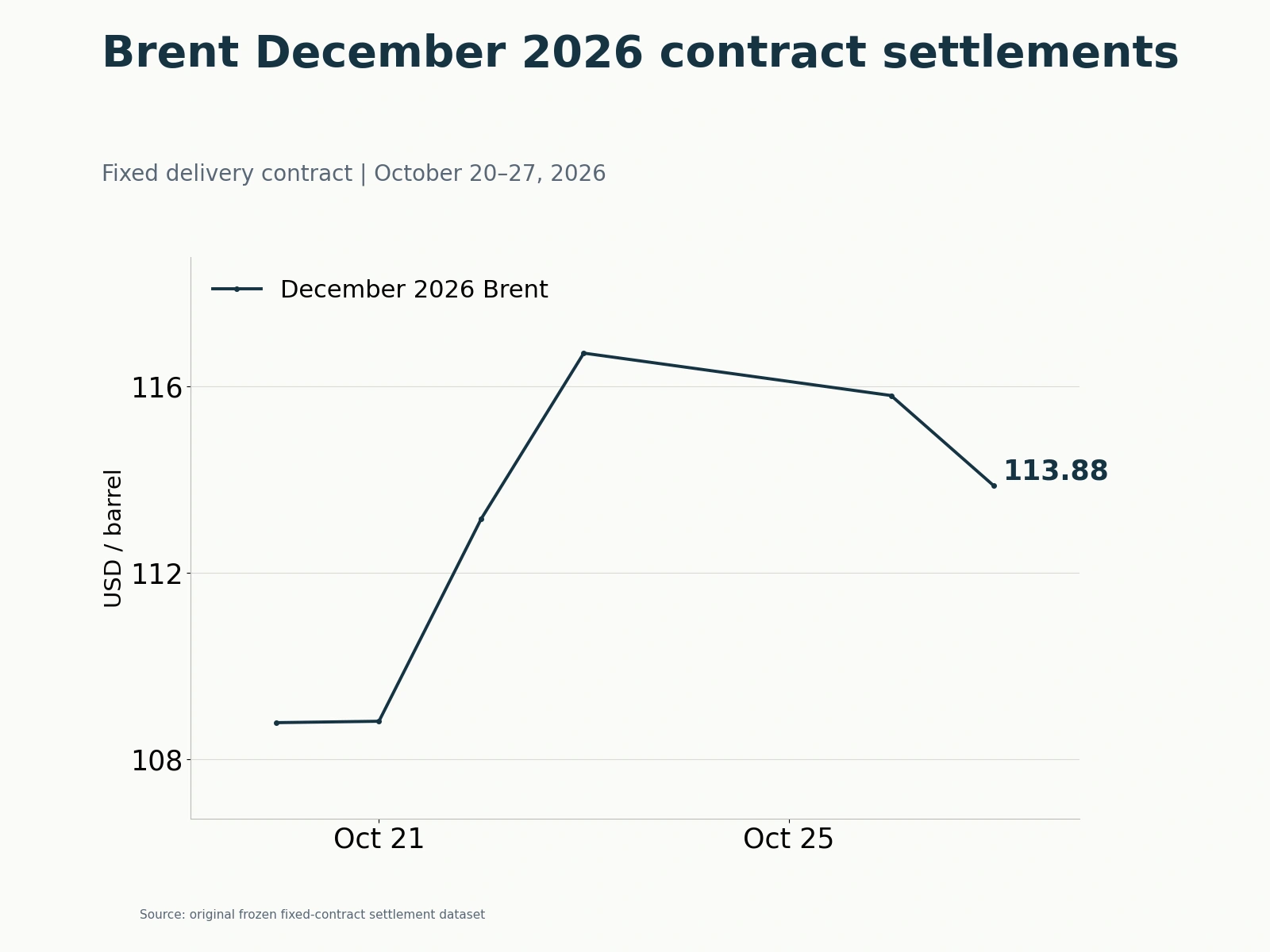
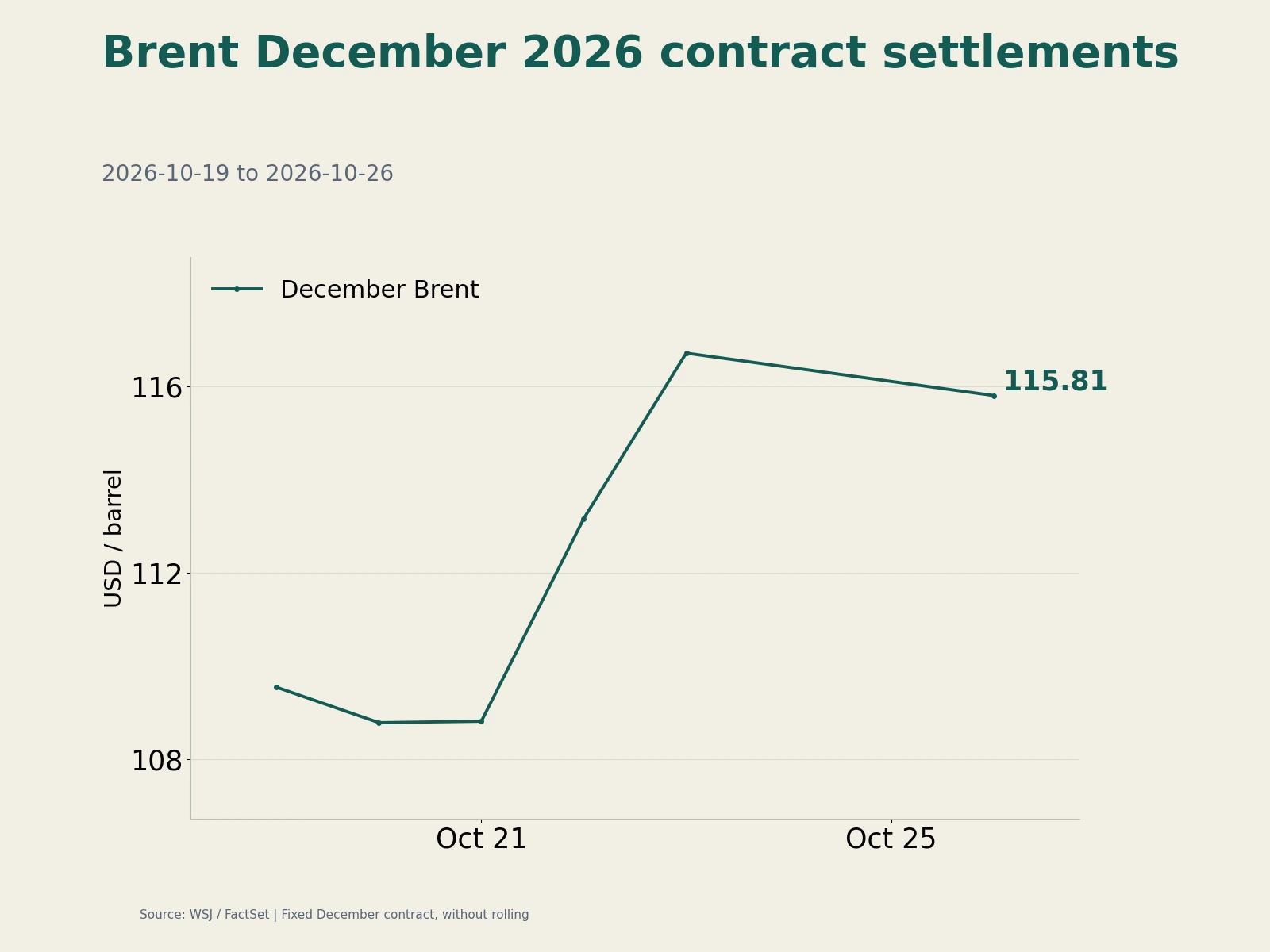
November Brent was approaching expiry, making the roll relevant to price observation. ICE's calendar showed trading would end September 30. Assessing whether immediate supply pressure is easing requires comparing the same contract over time and watching adjacent-month spreads. Recovering shipments together with a narrowing nearby premium over deferred months would better indicate looser immediate supply. A lower quote resulting from the benchmark contract roll alone does not prove improved balances.
A stronger dollar and higher financing costs also constrained oil. Vendor daily closes showed the dollar index up about 0.20% on September 28, with Treasury yields rising. Dollar strength raises procurement costs for non-dollar buyers, while higher financing costs increase inventory carrying costs. The day's central tension nevertheless remained actual supply recovery and uncertain diesel policy.
Four changes require attention: whether Middle Eastern exports and Hormuz shipments keep increasing; whether U.S. diesel export restrictions become formal rules and refinery runs fall accordingly; whether Brent's nearby premium narrows after the roll; and whether crude and product inventories improve together.
Seven OPEC+ countries had previously decided to keep October production requirements at September levels, with the next meeting scheduled for October 4. Even if quotas change, the additional actual exports will still depend on production and transport conditions.
Continued supply recovery and lower transport costs would compress nearby premiums. Renewed export disruption or implementation of U.S. diesel export restrictions could further widen price differences between crude and products, and between American and international markets.