After raising the federal funds target range by 25 basis points to 3.75%–4.00% on September 16, the Fed had not ruled out further tightening. In separate September 29 speeches, New York Fed President Williams and Governor Barr both said additional tightening might be needed under their baseline scenarios. Their emphases differed: Williams saw another hike later this year as potentially appropriate but ample time to observe data now; Barr focused on insufficient certainty that inflation would return to target, without specifying timing. Against a still-restrictive policy tone, that day's data combined weakening consumer confidence with stable employment indicators, underscoring the importance of forthcoming inflation measures for the policy path.
Williams highlights new inflation drivers; Barr focuses on confidence in core prices returning to target

At the University at Buffalo, State University of New York, Williams examined structural differences in price pressure. Inflation drivers were shifting: tariffs' incremental contribution to goods inflation was fading, while Middle East energy and supply-chain disruption and surging AI infrastructure investment were generating fresh cost spillovers. Near-term demand for AI-related goods exceeded supply capacity, with price pressure spreading to other categories; energy-price effects on headline inflation could also prove more persistent than previously estimated. As downside employment risks receded, risks to price stability were increasing.
Williams also cited several reasons for patience: slowing housing-services inflation, no additional inflation impulse from the labor market, broadly stable long-term expectations, and no evidence that localized industry supply shocks had become broad and persistent inflation. He stressed that one more hike this year was his conditional personal baseline, not a predetermined Fed policy plan.
At the Detroit Economic Club that day, Governor Barr focused more directly on inflation constraints. Core PCE had been consistent with the 2% long-run target in only two of the preceding 20 months, he said, making it difficult to conclude that inflation was returning smoothly and promptly to target. With growth and labor-market fundamentals still supported, further tightening might be needed in his baseline, but he offered no forward guidance on a hike's timing or size.
Consumer confidence falls for a third month while JOLTS stays stable; August PCE becomes the policy test
In contrast to officials' tightening bias, demand indicators released that day showed early signs of cooling. The Conference Board's September US consumer confidence index fell to 81.9, its third consecutive monthly decline. The gap between respondents describing jobs as plentiful and those saying jobs were hard to get narrowed to 1.7 percentage points, signaling weaker household perceptions of employment conditions.
That deterioration in expectations had not yet been confirmed in hard labor data. The BLS's August Job Openings and Labor Turnover Survey (JOLTS), released the same day, showed approximately 7.1 million openings, 5.2 million hires and 1.6 million layoffs and discharges. Official descriptions characterized monthly changes in all three as broadly unchanged. There was no clear evidence of rapid near-term labor-market contraction or a tightening spiral of rapidly rising unemployment.
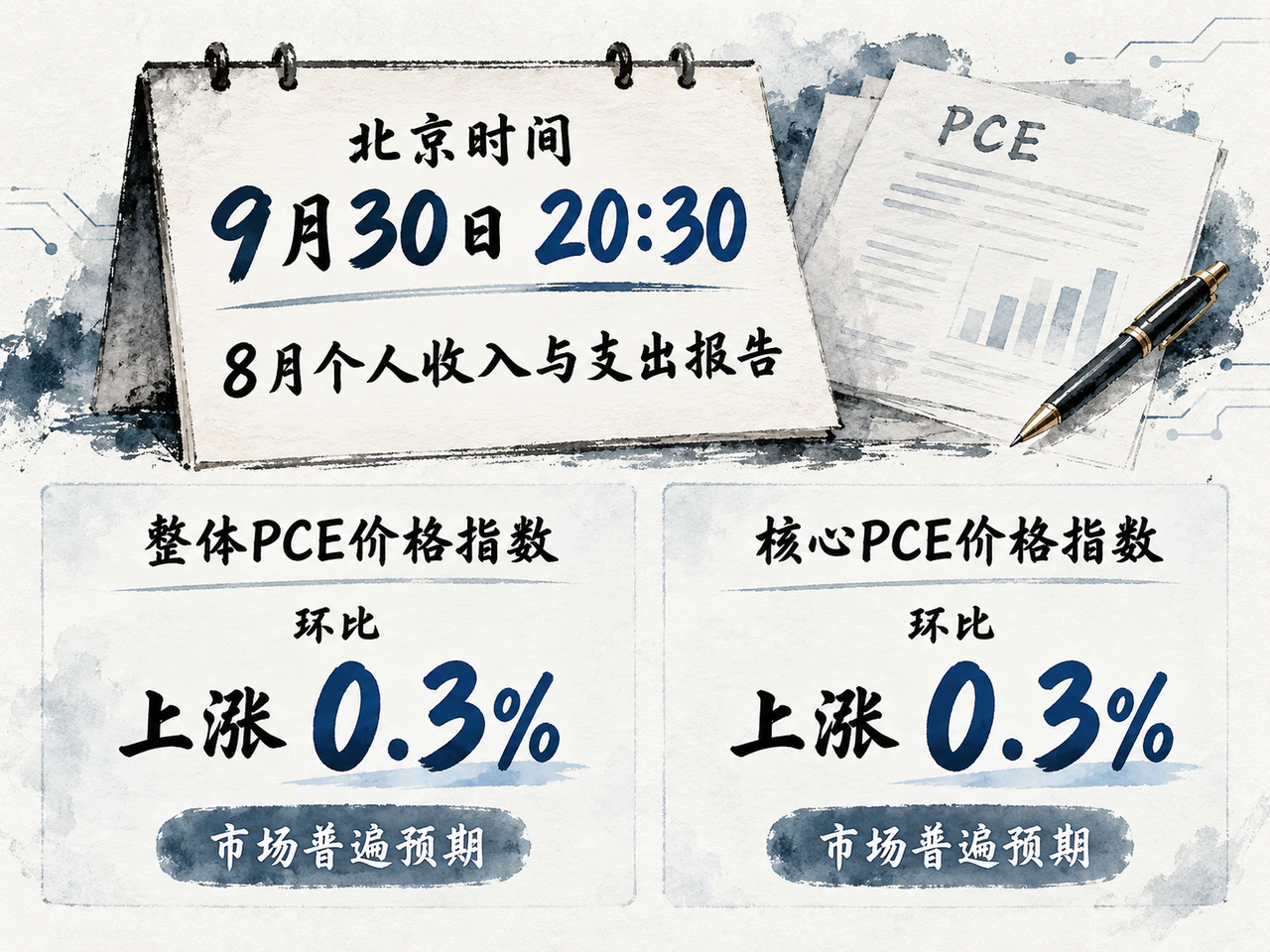
With mixed data, August's personal income and outlays report, scheduled for 20:30 Beijing time on September 30, would be central to testing the policy stance. Markets generally expected both headline and core PCE prices to rise 0.3% month on month. For the Fed, nominal spending in a single month can be distorted by higher energy prices. Core-price persistence after removing energy volatility, and the resilience of real personal consumption under high rates, are more important to deciding whether another hike is needed.
Persistent inflation alongside resilient real demand would increase the likelihood of another hike this year. Clearer weakness in consumption or labor demand would instead make a longer observation period and patience more likely. Both officials made clear that fighting inflation remained the Fed's central objective, but further action still depended on subsequent tests of economic fundamentals.


