After the Fed raised the federal funds target range by 25 basis points to 3.75%–4.00% on September 16, newly released macroeconomic data supplied fresh evidence for its next policy trade-off. The BEA's September 30 release showed August year-on-year PCE inflation below market expectations, temporarily easing the urgency of another consecutive hike at October's meeting. Yet faster monthly price increases, expanding consumption and Governor Cook's hawkish remarks showed practical constraints on a pivot: inflation remained well above target, the economy and labor market had not stalled, and one below-forecast inflation reading was insufficient to support a reversal of the tightening cycle.
August core PCE inflation is 3.0%; monthly inflation rebounds alongside 0.6% real consumption growth
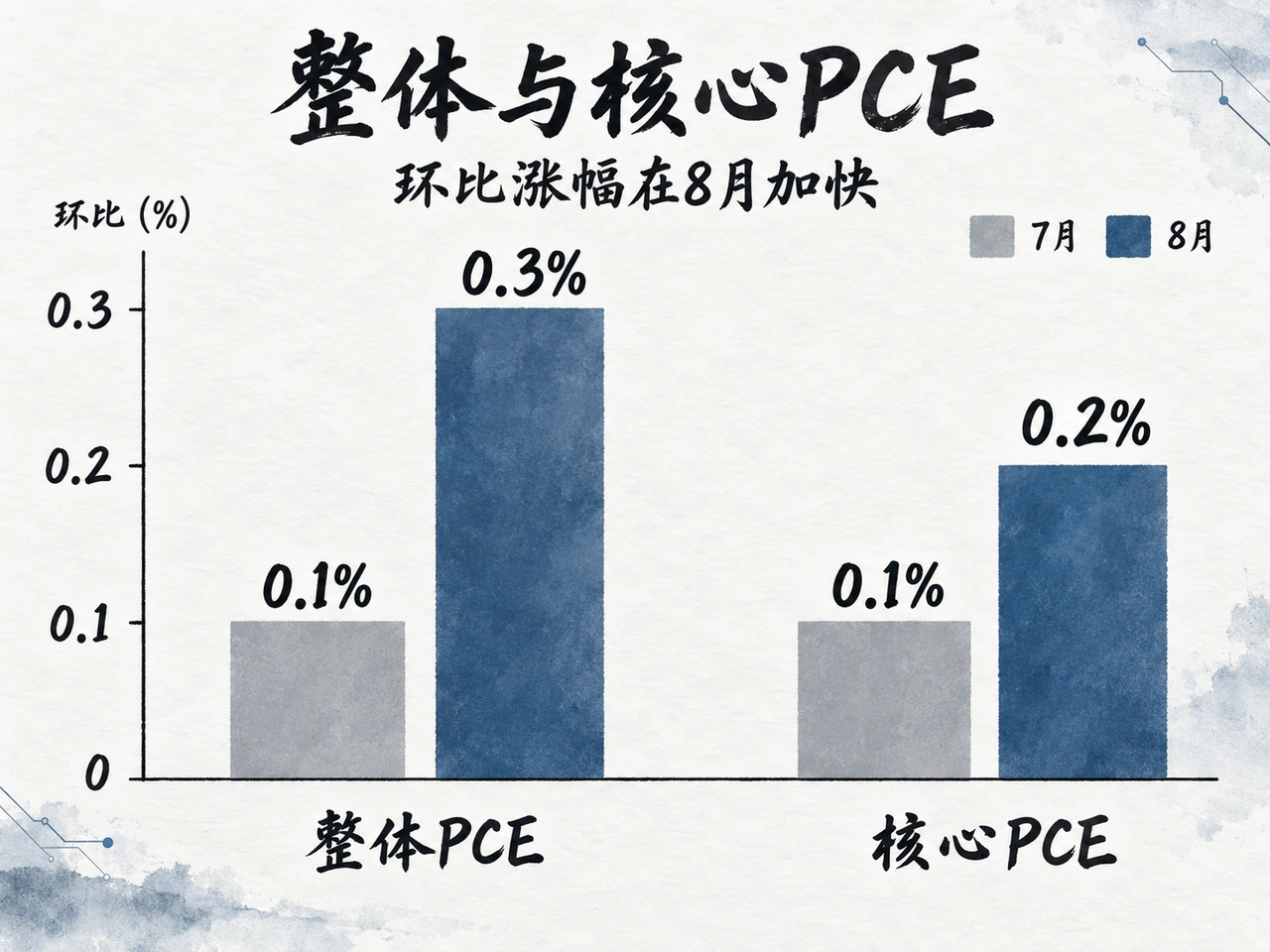
The August PCE report showed below-forecast aggregate inflation but resilient underlying momentum. Headline PCE prices rose 3.4% year on year, below the 3.7% expected in a Reuters poll; core PCE, excluding food and energy, rose 3.0%. Monthly measures accelerated, however: headline and core PCE rose 0.3% and 0.2%, both above July's 0.1%. A lower-than-expected annual reading alongside rebounding monthly inflation showed that disinflation remained uneven and could not be described as a broad disappearance of price pressure.
The release incorporated the annual national-accounts update, revising personal income and expenditure data back to January 2021. Medium-term inflation analysis should use the revised historical baseline, avoiding attribution of technical retrospective statistical adjustments solely to an easing of current price pressure.
Demand also showed no sign of contraction. Nominal personal consumption expenditures rose a strong 0.9% in August, with real consumption still up 0.6% after inflation. Real disposable income was unchanged on the month and the personal saving rate was 4.1%. Strong final consumption eased fears of an abrupt economic slowdown but suggested demand resilience could lengthen the return to target inflation. Stronger spending does not necessarily force a hike, but materially raises the threshold for declaring a pivot on a single moderate inflation release.
Cook reaffirms the inflation fight; October's decision depends on payrolls and September CPI

Policymaker commentary reinforced caution. At 15:25 US Eastern time on September 30, Governor Cook told the Investing in Rural America conference in Asheville, North Carolina that the national labor market was generally solid, unemployment historically low, initial jobless claims low and summer employment growth improving. She emphasized that inflation had exceeded the 2% target for more than five years, reiterated support for September's hike and committed to returning inflation to target while sustaining labor-market strength.
Cook did not directly address that day's August PCE release or make any commitment about October's rate decision. Reading her speech alone as a signal of a hiking pause would go beyond what she said.
Forward-looking employment data released that day also showed no sharp deterioration. Reuters cited ADP's private-sector report showing 90,000 jobs added in September and August revised down to 36,000. The next decisive tests were clear: September's official employment report at 08:30 US Eastern time on October 2 and September CPI on October 14. Stable employment and renewed price pressure would still support further hikes. Only material cooling in official employment alongside confirmation of better inflation would establish the conditions for a longer observation period.


