On October 1, Fed policymakers sent divergent signals about further tightening. Vice Chair Philip Jefferson said he needed more time to assess the next policy adjustment, while Dallas Fed President Logan said benchmark rates still needed at least 50 basis points of increases to become modestly restrictive. Their comments highlighted the deeper policy trade-off: caution over near-term timing does not mean the longer-term anti-inflation cycle has ended.
Jefferson Needs More Time as Three Cost Pressures Test the Anchoring of Inflation Expectations
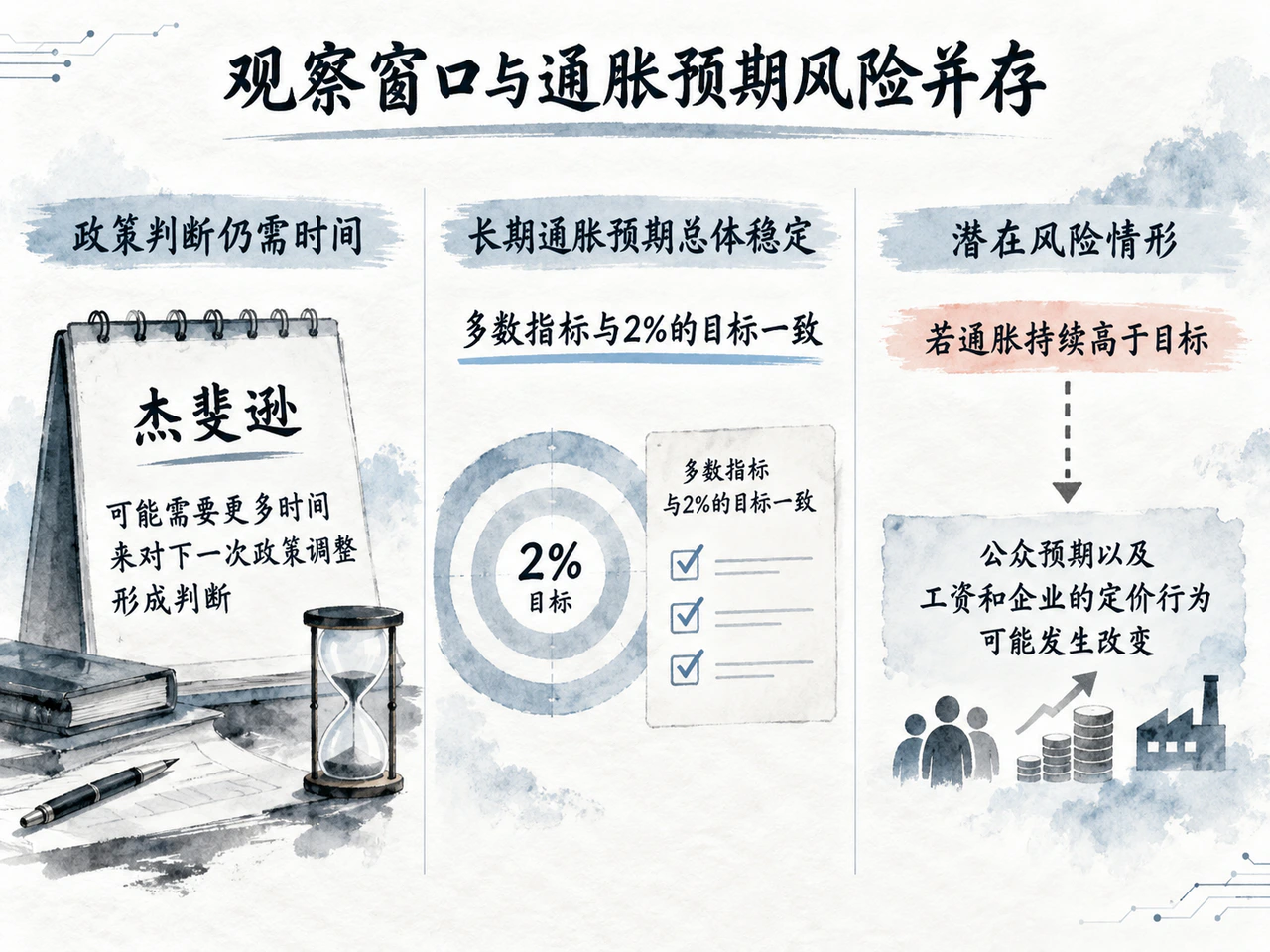
Speaking at the University of Virginia's Darden School of Business, Jefferson framed future decisions around continued monitoring of data trends, the outlook and the balance of risks. The Fed had raised its funds target by 25 basis points to 3.75%–4.00% on September 16. He viewed economic activity and the labor market as broadly solid, with growth and employment risks roughly balanced but inflation upside risks still prominent.
That concern mainly reflected overlapping supply shocks. Jefferson noted that continuing AI investment supported growth but also increased production costs for some goods and services. High energy costs could spread more widely, while trade-policy changes added uncertainty. Even if individual shocks were temporary, overall prices might not fall quickly.
Jefferson said he might need more time to judge the next adjustment. Long-term inflation expectations remained generally stable, with most measures consistent with the 2% target and no clear evidence of price shocks becoming persistent inflation across the board. He nevertheless worried that inflation staying above target could change public expectations, wages and corporate pricing behavior.
Logan Sees at Least 50 Basis Points Still Needed as the 77.9 Manufacturing Price Index Reinforces Tightening
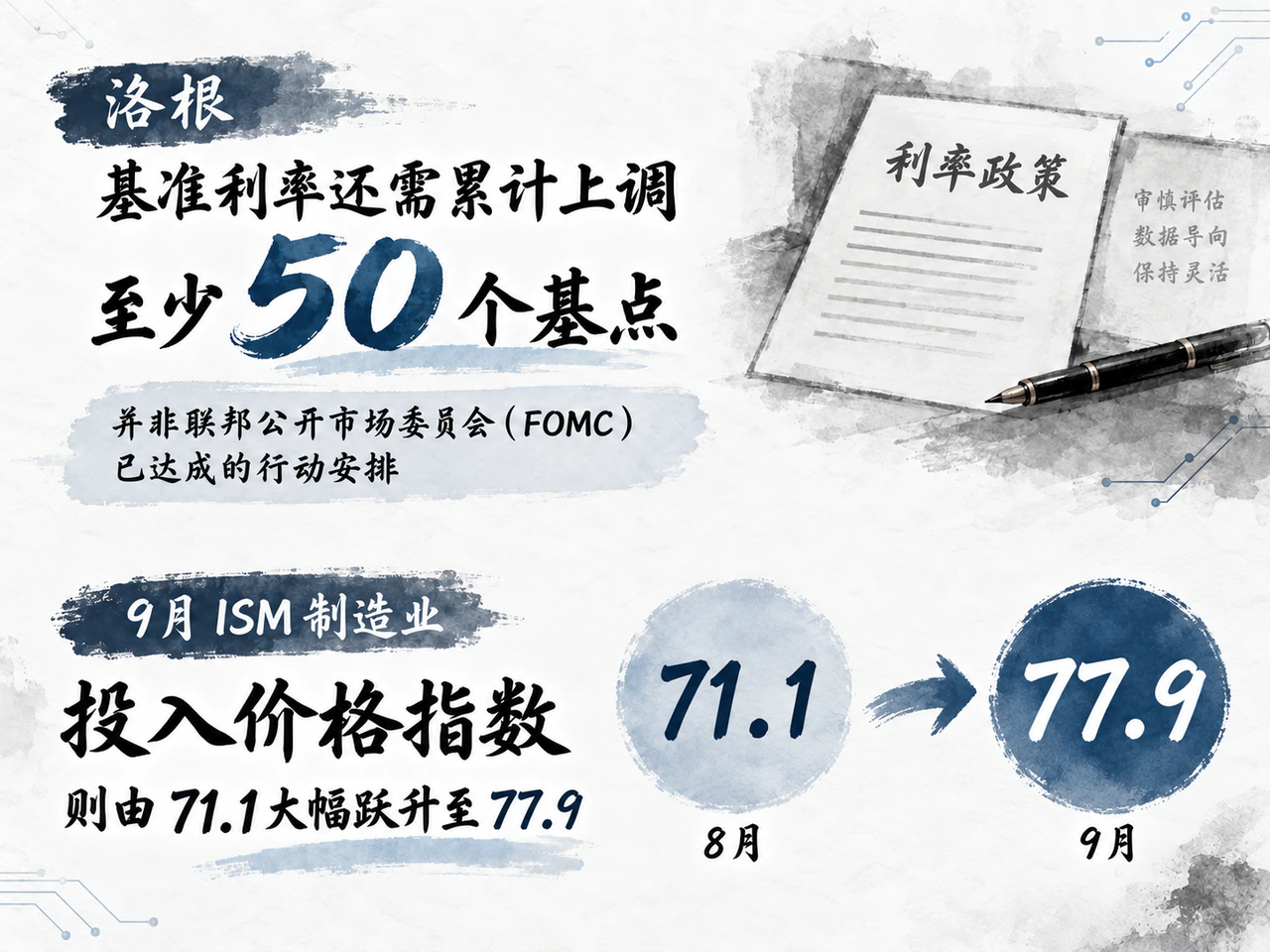
Compared with Jefferson's restraint, Logan delivered a stronger signal to Texas business and community audiences. Reuters reported her describing September's hike as the first step in tightening and estimating that benchmark rates still needed cumulative increases of at least 50 basis points. Even if temporary supply factors faded, she said inflation might struggle to fall materially below 2.5% without further restraint. This was her individual quantitative assessment, rather than an agreed FOMC action plan.
The day's data supported the hawkish argument. September's ISM manufacturing PMI edged down from 54.6 to 54.5, remaining expansionary. New orders rose from 53.7 to 55.3, while the more revealing input-price index jumped from 71.1 to 77.9. A slightly softer headline alongside stronger orders and upstream costs directly weakened the optimistic claim that demand had cooled enough to contain inflation.
Logan also noted an endogenous offset through financial conditions. If higher term premiums lift long-term borrowing costs and tighten conditions independently, less of an increase in the policy rate would be needed. Decisions therefore require not only inflation and employment readings, but a changing assessment of the actual restraint imposed by broad financing conditions.
Markets were focusing on September payrolls due October 2 at 8:30 a.m. US Eastern time, or 20:30 Beijing time that evening. Resilient employment and wages would give the Fed more room to prioritize inflation. Unexpectedly severe deterioration would strengthen the case for a longer observation period.


