International crude markets resumed rising after early volatility on October 1. Recovering Gulf exports and a build in U.S. commercial crude initially pushed prices lower, before tight refined-product supply and geopolitical safe-haven buying supported a rebound. Although crude shipments improved marginally, delivery bottlenecks for downstream products showed little relief. Lower refinery runs, constrained interregional redistribution and weekly product inventory draws jointly supported near-term prices.
CNBC closing data put front-month Brent at $102.31 a barrel, up about 4.4% on the day, and WTI's settlement at $92.87, up about 2.7%. Tight spot refined-product supplies, together with geopolitical uncertainty around crude supply chains, were the main themes driving the session higher.
The contract roll does not distort the rally; spot premiums reflect near-term fuel-delivery constraints
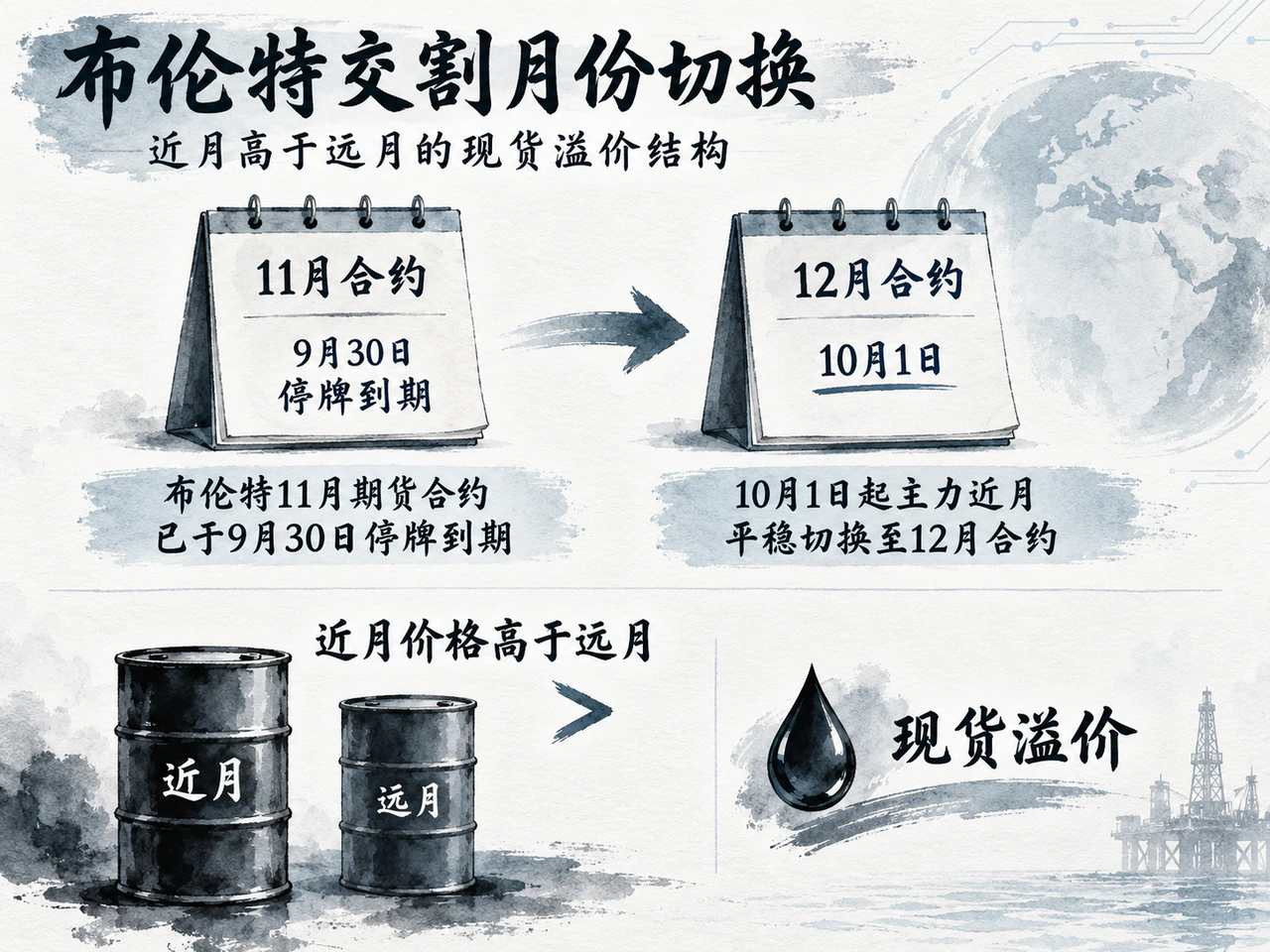
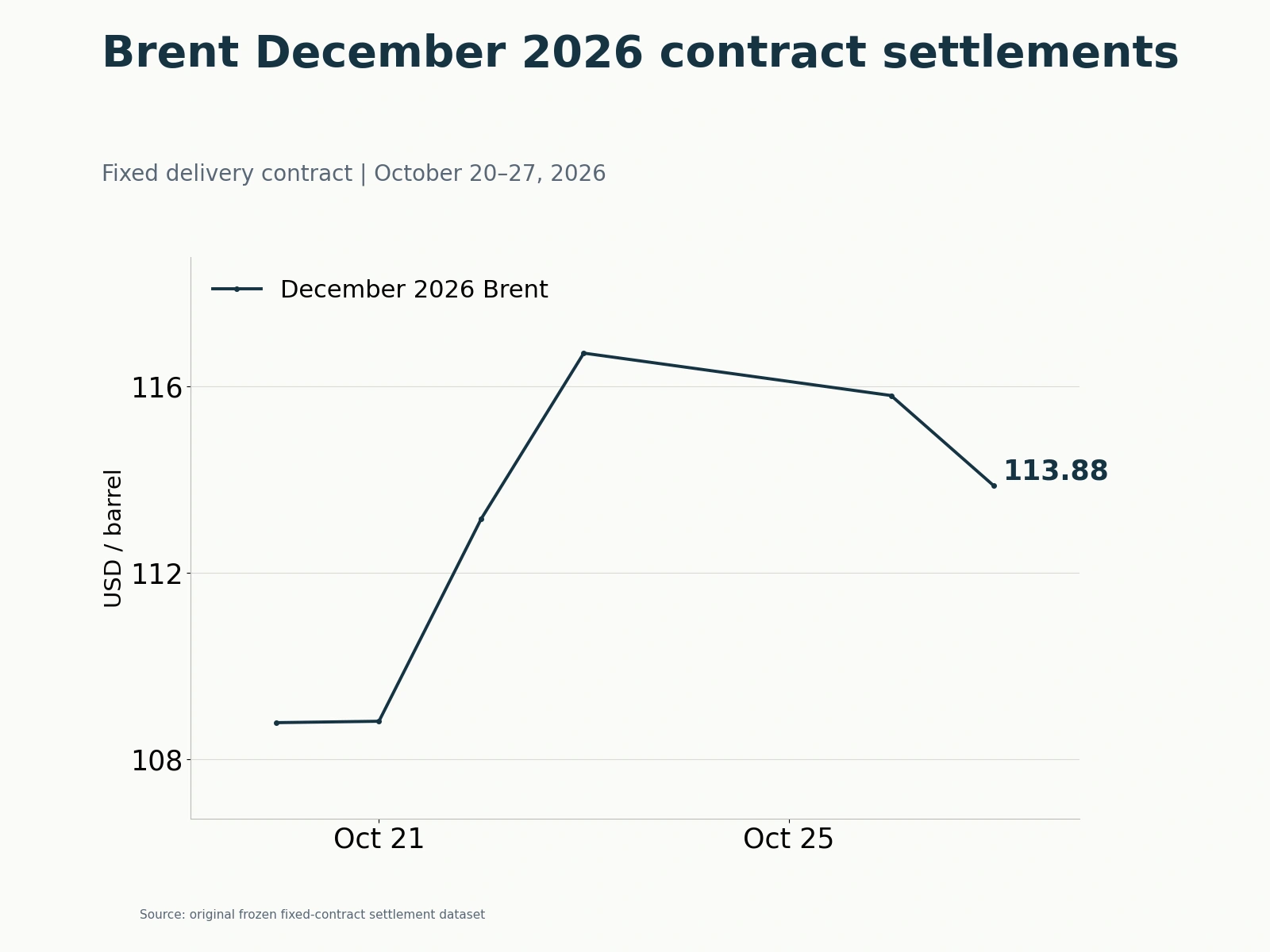
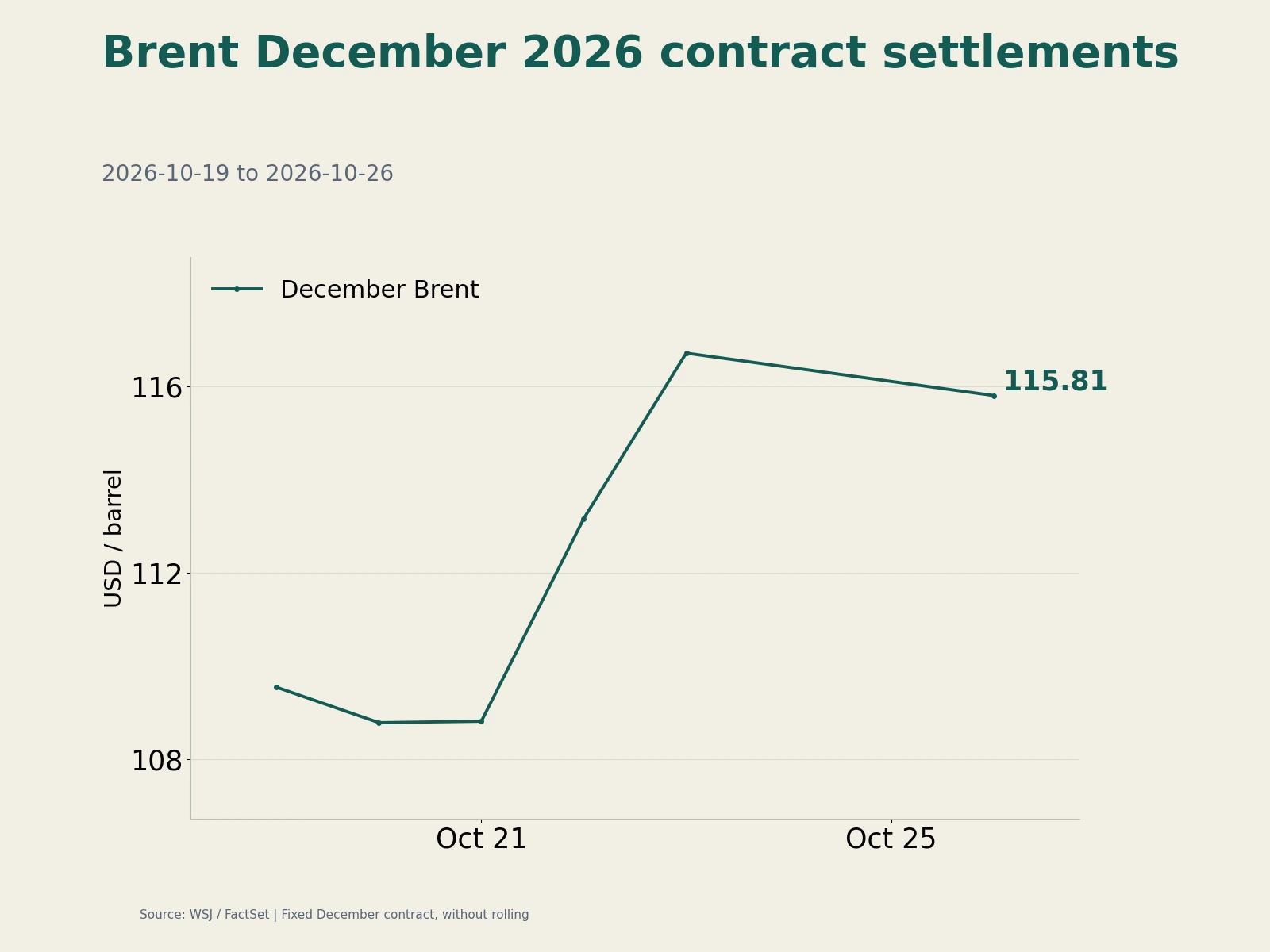
November Brent futures expired and stopped trading on September 30, with the benchmark front month shifting smoothly to December from October 1. Reuters' intraday report put the December contract at $101.20 at 12:47 p.m. Eastern time, up $3.17 from the same contract a day earlier; gains expanded further by the close. At such roll dates, directly comparing the expired November contract with the new December contract can mistake the natural basis between delivery months for a daily decline.
Continuous closing quotes from Yahoo and other sources—Brent at $102.45 and WTI at $93.04—use a different methodology from exchange settlements for specific contracts and should not be directly mixed to measure a single contract's daily change.
In an October 1 analysis of the term structure, industry firm CMB noted that both benchmarks remained in backwardation, with near-month prices above deferred prices. This reflects buyers' greater willingness to pay for immediately available supply. If maritime transport, production and other supply-logistics links gradually normalize, the near-term premium could fall. Until physical delivery actually loosens, however, the downward-sloping structure remains resilient.
Refinery utilization falls to 92.5%; U.S. distillate stocks are 14% below their five-year seasonal average
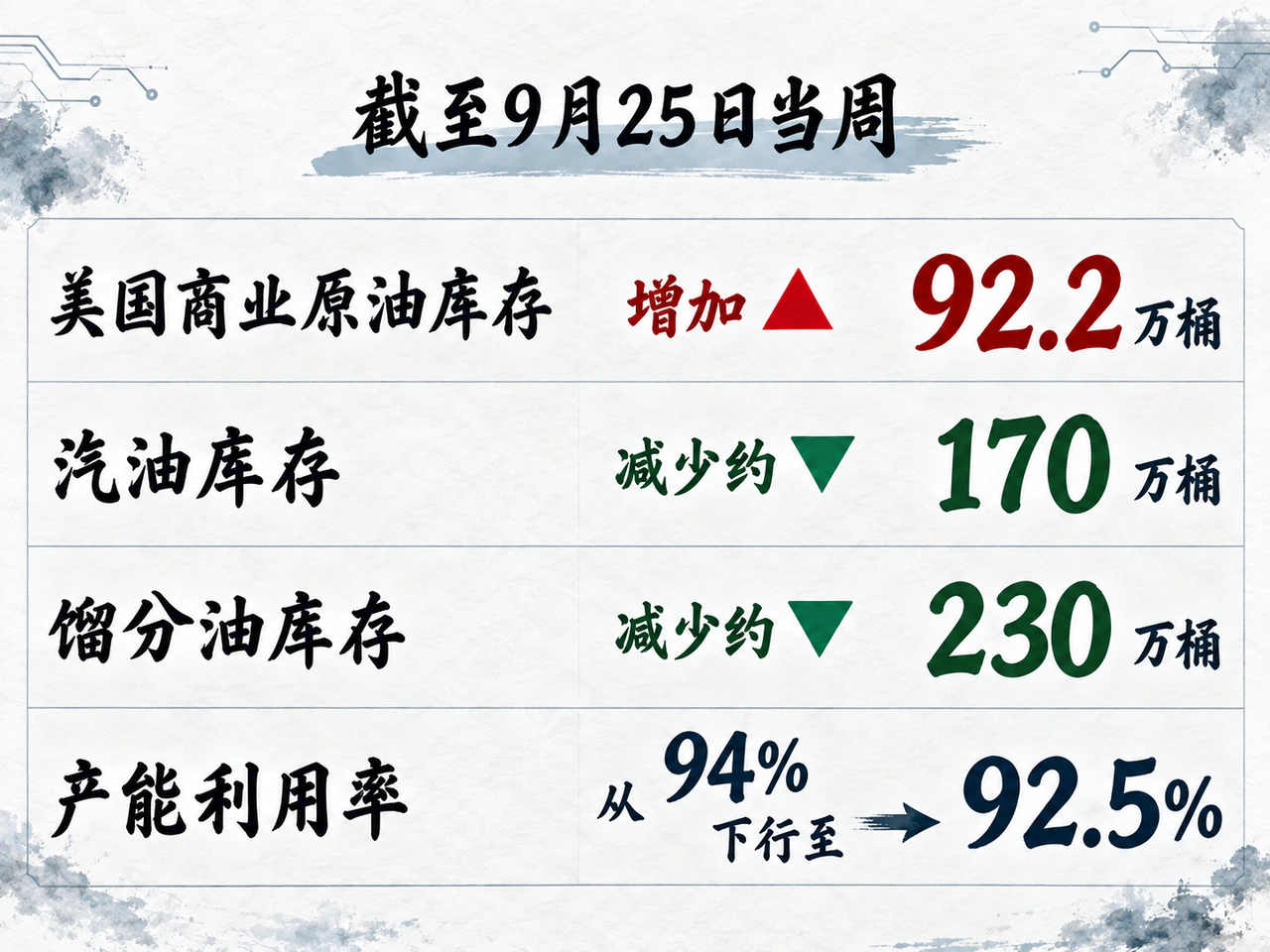
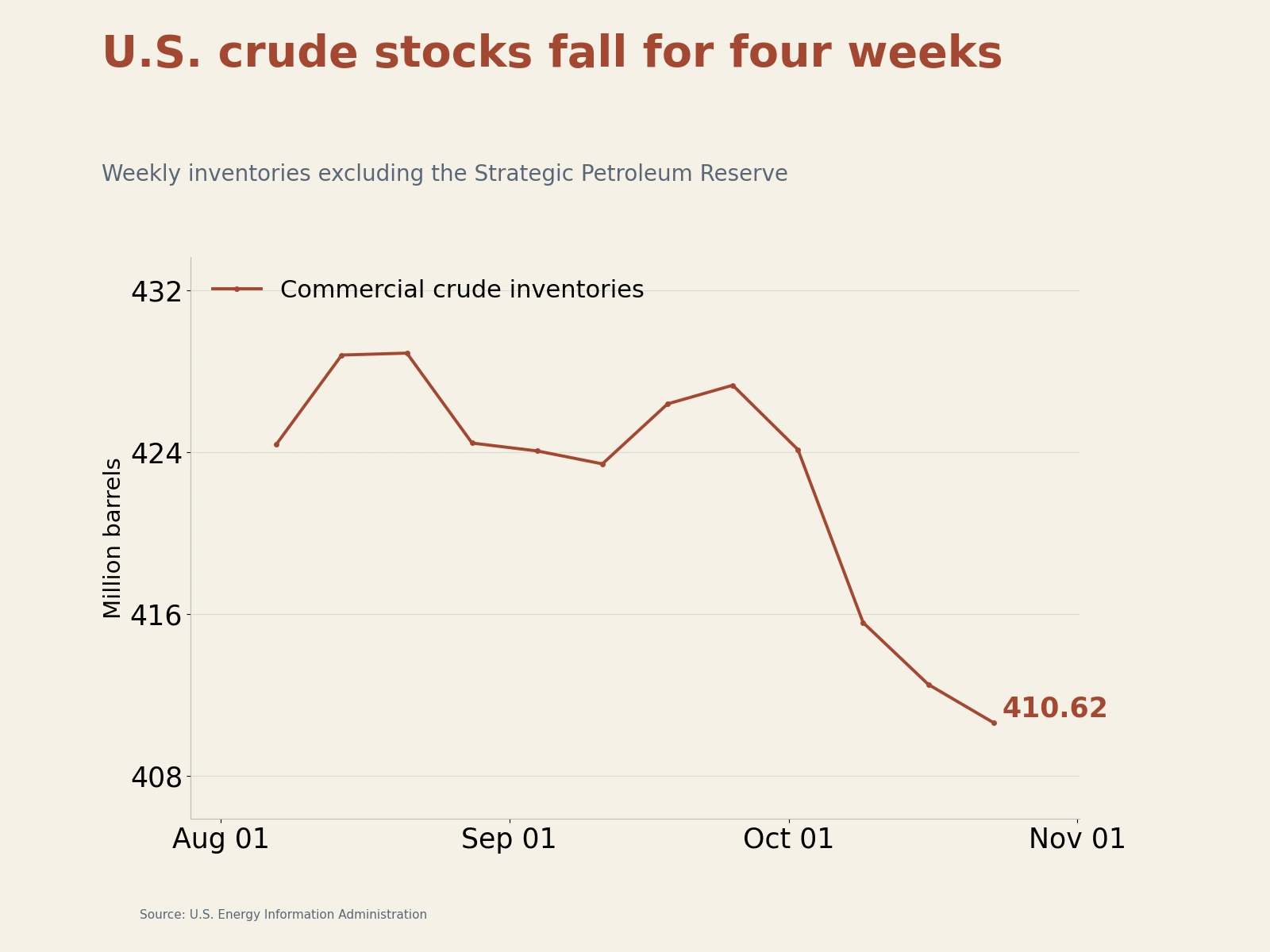
EIA weekly data released on September 30 showed diverging crude and finished-product inventories. In the week through September 25, U.S. commercial crude stocks increased 922,000 barrels to 427.3 million. Gasoline stocks fell about 1.7 million barrels, while distillates, including diesel and heating oil, fell about 2.3 million to 105.2 million. Dow Jones cited figures showing U.S. distillate inventories 14% below their five-year seasonal average.
Crude builds and product draws occurred in the same week. Slower downstream processing helps explain the divergence: refinery crude runs fell 554,000 barrels a day and utilization declined from 94% to 92.5%. Conversion of crude into usable finished fuels slowed. Even with U.S. crude output stable at a high level near 14 million barrels daily, gasoline, diesel and other products still drew stocks that week.
Interregional supply constraints amplified local imbalances. Reuters reported that some Chinese refiners canceled gasoline and jet-fuel export cargoes scheduled to leave in October. Along with Russia's earlier diesel export restrictions, this increased the friction costs for international buyers seeking alternatives. With slower refining and localized supply disruption coexisting, a small increase in raw-material availability did not directly relieve refined-product tightness.
Gulf crude exports recover to average levels; carrier deployment and geopolitics support the near end

Marginal supply repair appeared mainly in upstream transport. Saudi Arabia resumed crude loading at Yanbu. Goldman's latest estimate, including ships with AIS transponders switched off, put total Gulf oil exports the previous week at about 23.3 million barrels a day, broadly matching the 2025 average. Its comprehensive Gulf outbound estimate indicated recovering production and transport. Sustained stability in upstream exports would normally help ease concerns over deferred supply.
Geopolitical risk nevertheless provided substantial near-month protection premiums. Reports on October 1 that the United States was sending a third aircraft carrier to the Middle East increased concern over spillovers from localized conflict and disruption to maritime chokepoints. The dollar index rose about 0.58% that day, which would ordinarily weigh on dollar-priced commodities. Oil's rise despite that move indicated that geopolitical and delivery concerns dominated current pricing.
The next direction depends on four tests and one policy decision. First, can EU discussions over releasing strategic diesel stocks produce actual supply? Second, how much scope is there to adjust cross-border fuel export restrictions? Third, can U.S. refinery restarts after maintenance turn distillate stocks higher? Fourth, can Gulf loadings remain stable and gradually compress calendar spreads? Sunday's OPEC+ production meeting is another central window; Reuters reports suggested November targets would most likely be unchanged. Until refined products rebuild an adequate inventory cushion, recovered total crude exports mainly restrain deferred prices, while tight fuels and geopolitics continue to support the near end.