Bureau of Labor Statistics data released at 8:30 a.m. U.S. Eastern time on October 2 showed a marked slowdown in September nonfarm job growth, substantial downward revisions to the previous two months and softer monthly wage growth. Together these signals significantly reduced the urgency for the Federal Reserve to raise rates again at its next meeting. They strongly support pausing to observe subsequent inflation and labor-market developments. With unemployment and working hours broadly stable, however, the evidence does not yet establish that monetary policy will enter a rate-cutting cycle.
September job gains fall to 29,000; the prior two months are revised down a net 60,000
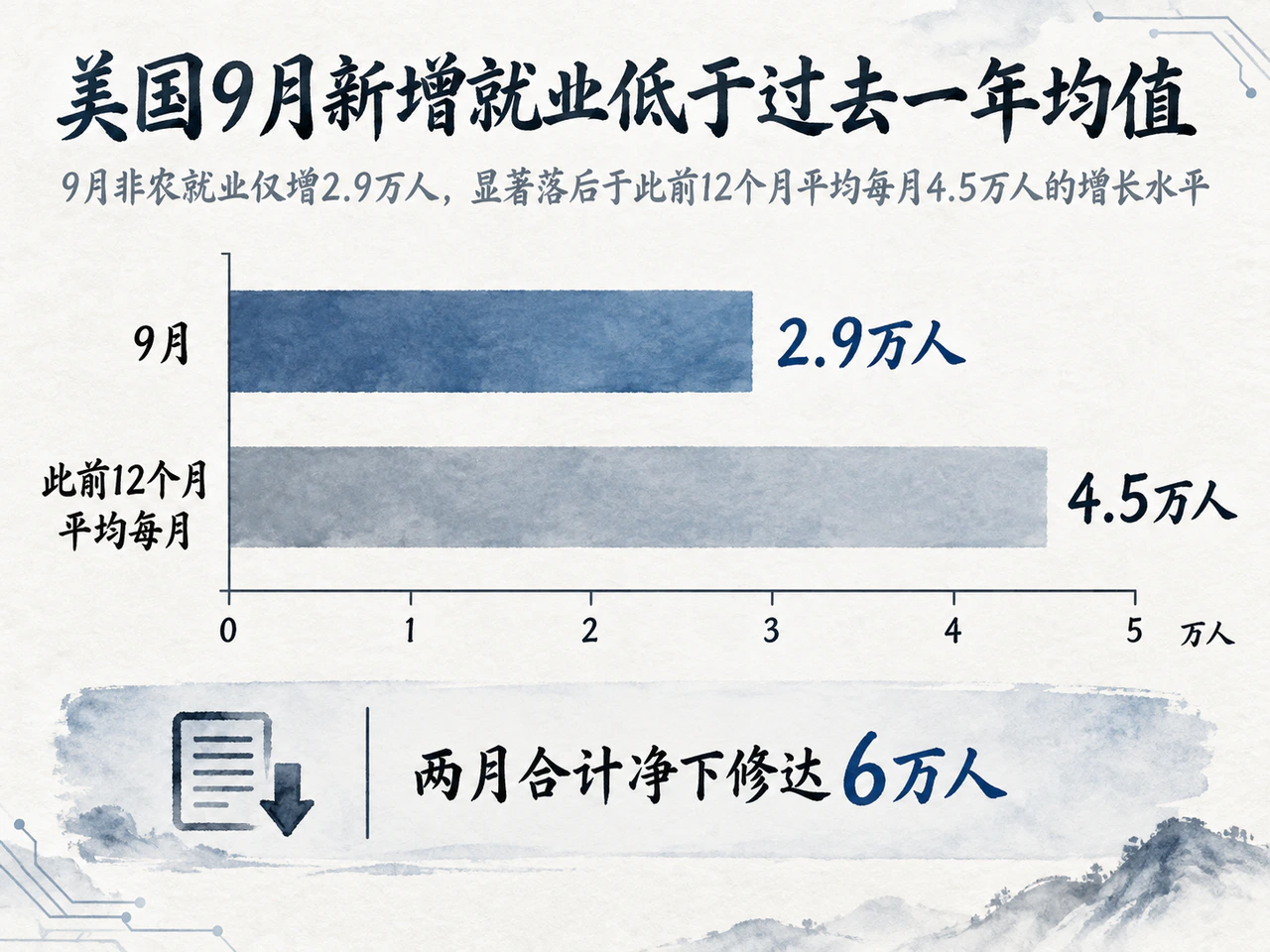
Seasonally adjusted September U.S. nonfarm payrolls rose only 29,000, substantially below the previous 12-month average of 45,000 per month. More telling than one month's reading were sizable historical revisions: July was revised from a gain of 21,000 to a loss of 10,000, and August from 162,000 to 133,000. The combined net downward revision was 60,000.
These successive revisions show that weak hiring was not an isolated September fluctuation. Expansion momentum had already weakened materially in preceding months, and the overall foundation for employment growth was clearly narrowing.
Monthly wage growth slows to 0.1%; cooler labor costs do not remove the inflation constraint
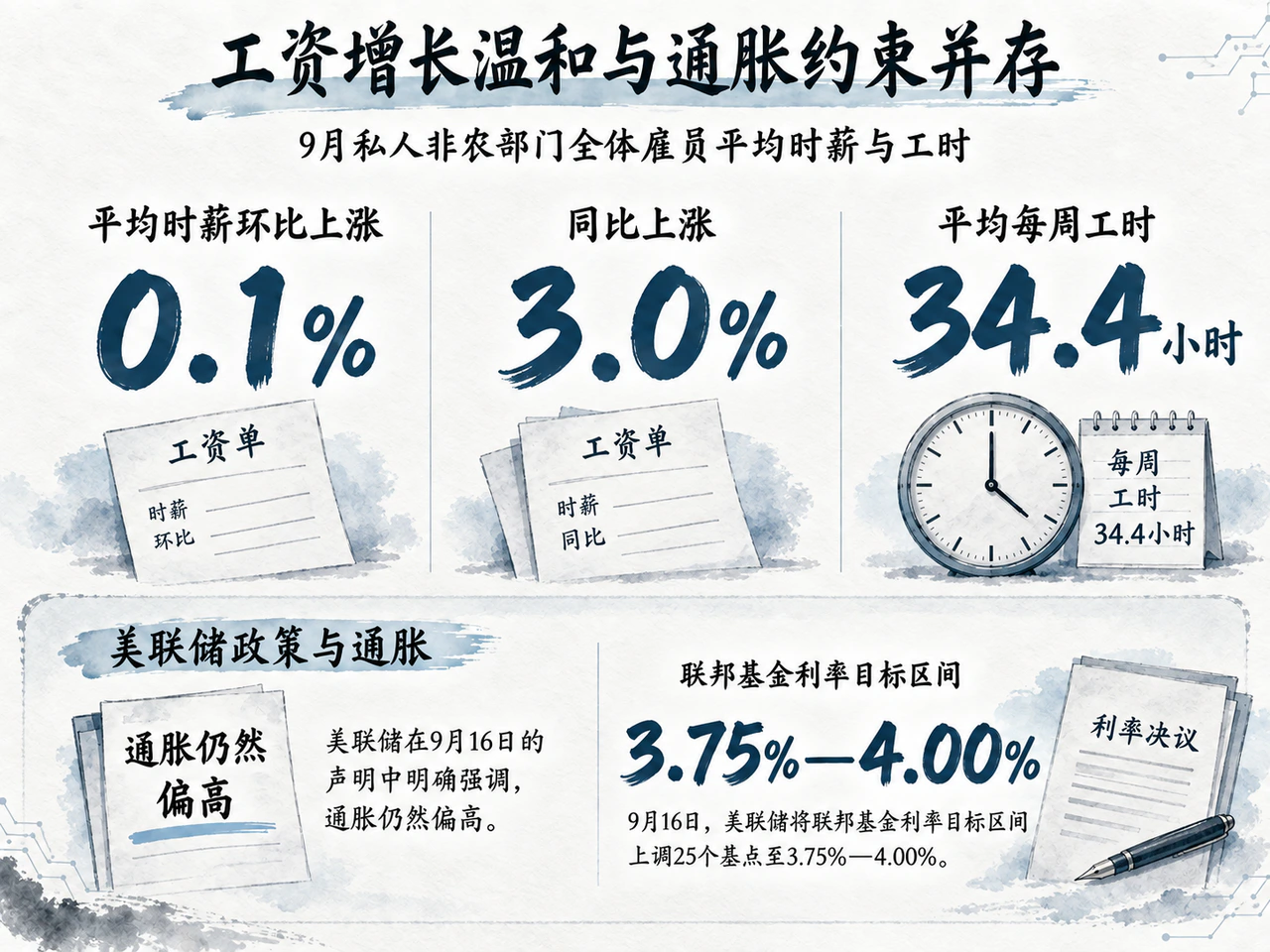
Wages also eased pressure for immediate tightening. Average hourly earnings for all private nonfarm employees rose 0.1% month on month and 3.0% year on year in September, while average weekly hours remained unchanged at 34.4. The moderate monthly wage increase provides objective evidence of gradually easing labor-cost pressure.
Slower wage growth does not mean inflation risk has disappeared. Wages are not the only driver of price increases, and one month cannot establish that core services prices have fully normalized. The Fed remains focused on fighting inflation: on September 16, it raised the federal funds target range by 25 basis points to 3.75%–4.00%, explicitly stating that inflation remained elevated and that tightening was intended to return it to 2% more promptly. The jobs report requires policymakers to balance employment risks more cautiously when considering further increases, but does not by itself resolve whether inflation can decline sustainably.
October hike odds fall to 17%; markets favor delaying the decision
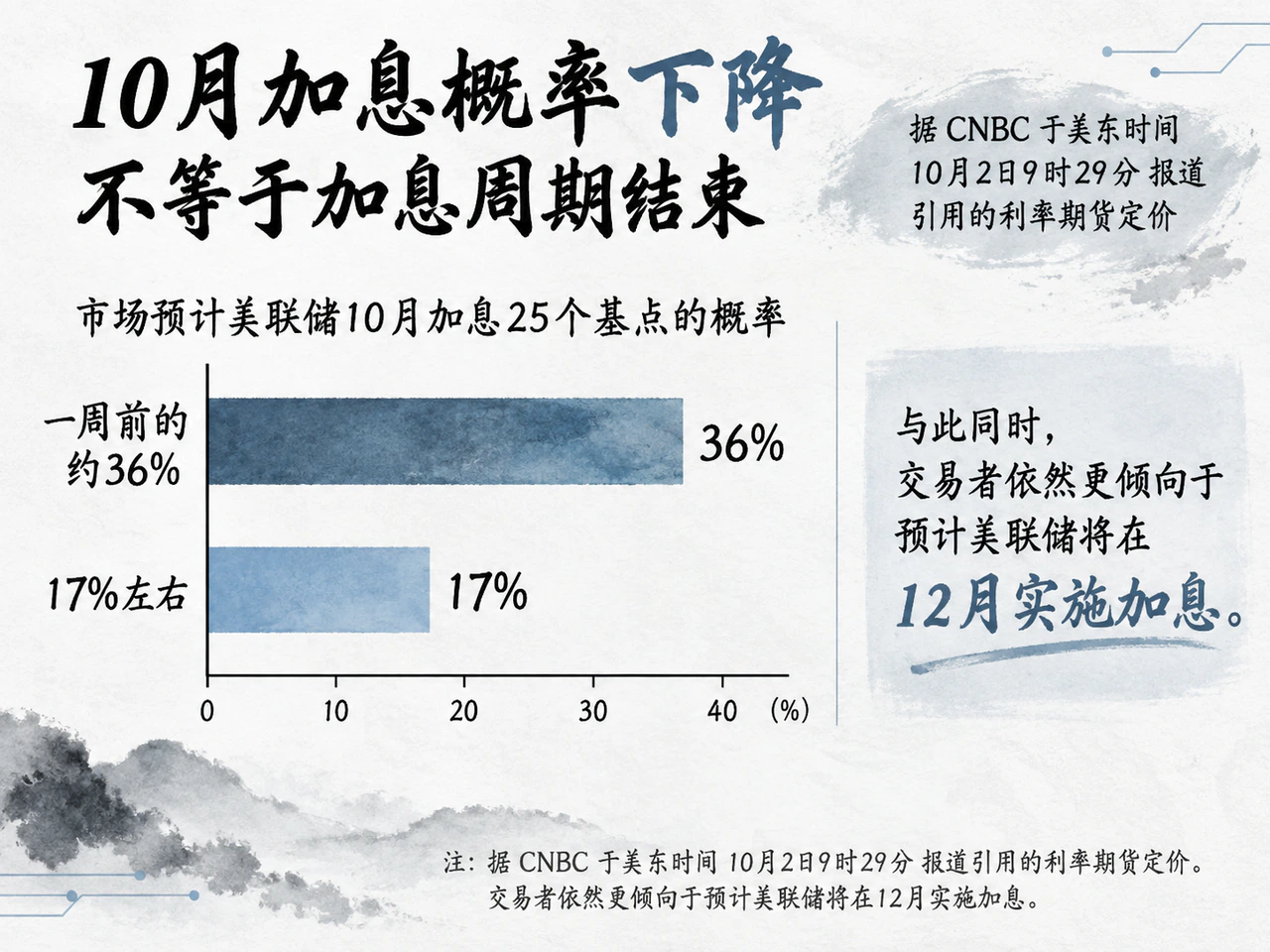
Markets immediately repriced expectations after the employment release. CNBC's October 2 report at 9:29 a.m. Eastern time cited interest-rate futures showing the probability of a 25-basis-point October increase falling from about 36% a week earlier to around 17%. Traders nevertheless continued to favor a December increase.
Vanguard senior economist Adam Schickling told CNBC that the labor market was neither deteriorating sharply nor strengthening significantly, supporting a Fed decision to wait for more data. In pricing terms, the new information more directly weakened the case for immediate October action; it did not establish that the hiking cycle was definitively over.
The report's internal divergence also argues against extreme pessimism. September unemployment edged from August's 4.1% to 4.2%, but has stayed within a narrow 4.1%–4.3% band since March, and average weekly hours showed no decline. Weak hiring coexists with stable existing employment. Pausing increases while watching developments better fits the evidence than immediately declaring a deep recession.
The path depends on minutes, Waller's speech and September CPI
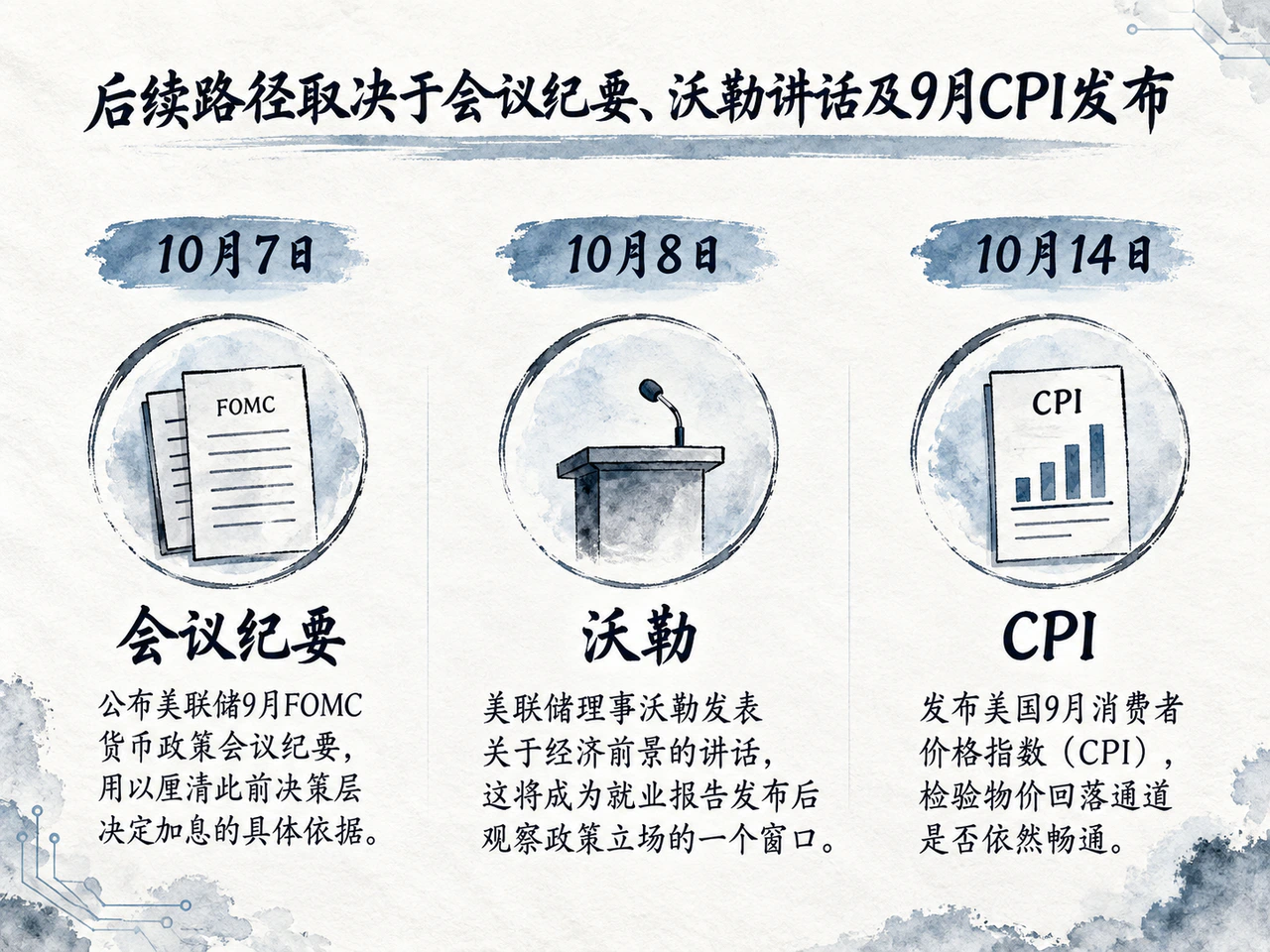
With October hike expectations cooling, the key policy and market focus shifted to the following scheduled events:
- October 7: September FOMC minutes will clarify the specific basis for the previous decision to raise rates;
- October 8: Fed Governor Waller's economic-outlook speech will provide a window into policy thinking after the jobs report;
- October 14: U.S. September CPI will test whether the path toward lower inflation remains intact.
If hiring stays weak and inflation falls faster, the case for a longer pause will strengthen. Conversely, if inflation rebounds and the labor-market foundation remains firm, restarting rate increases before year-end will remain a Fed option.


