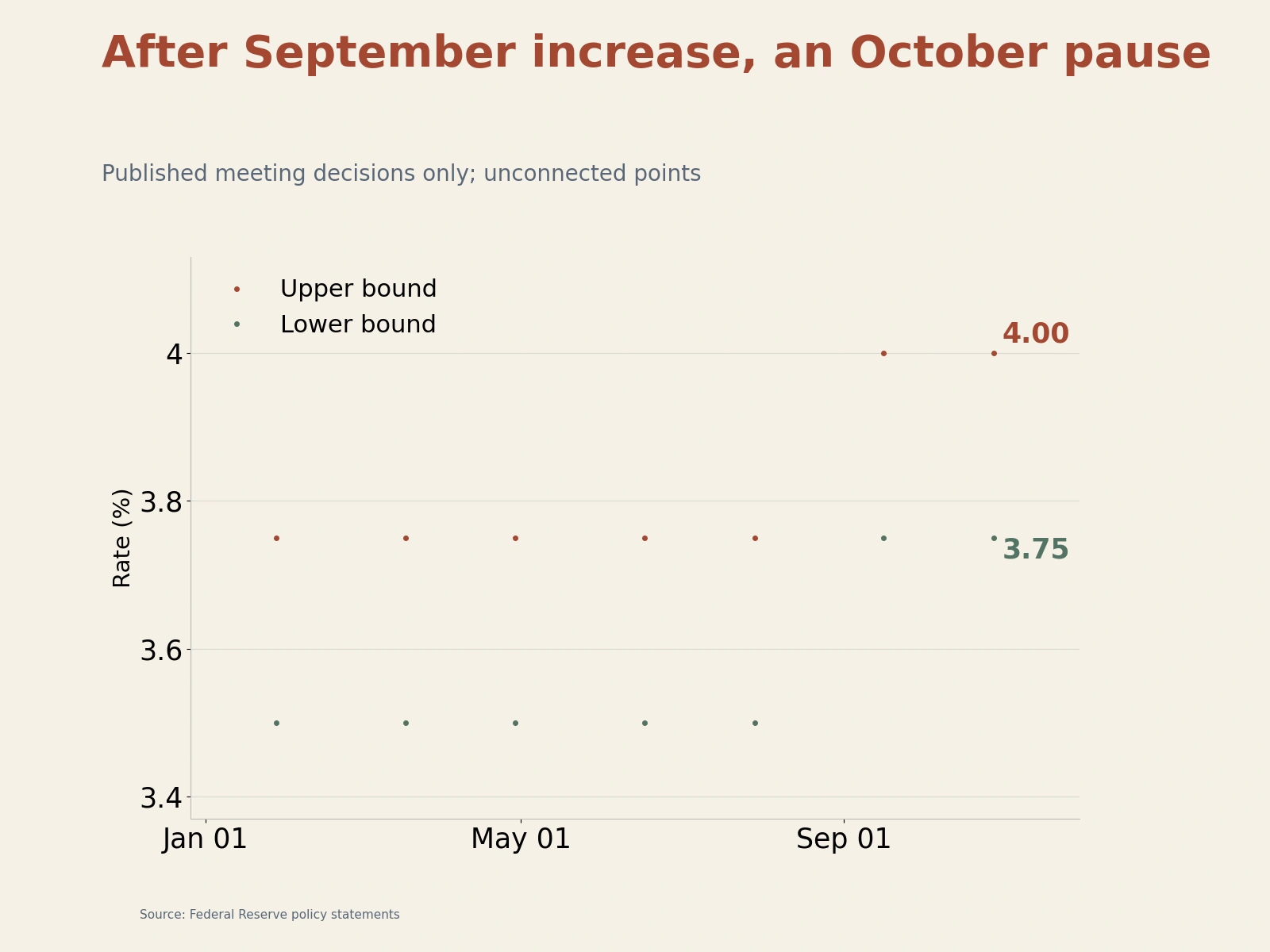
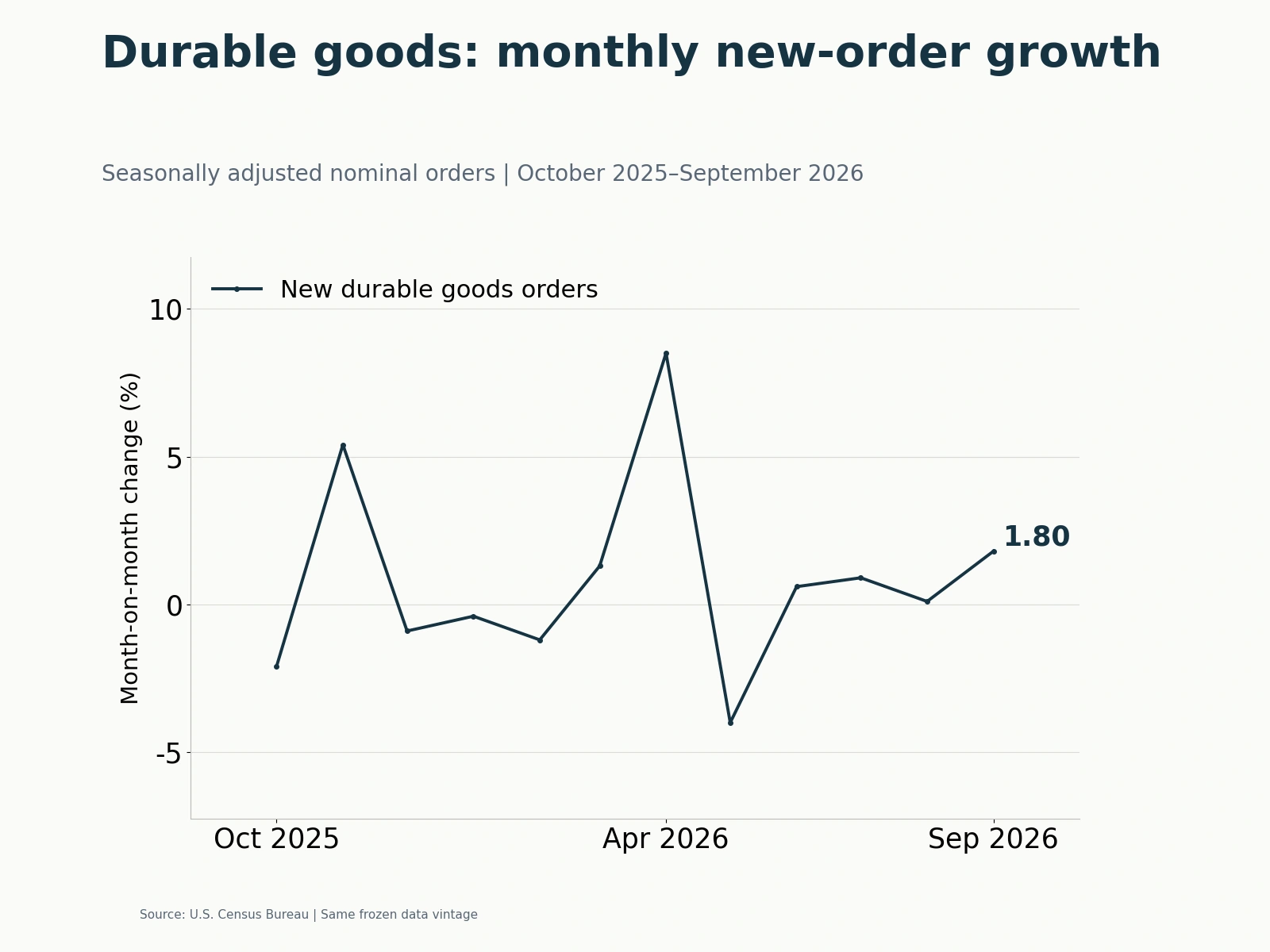
During the week of September 28–October 4, 2026, the central shift in Federal Reserve expectations was a marked cooling in the perceived urgency of another immediate hike in October. On September 16, policymakers had unanimously raised the federal funds target range by 25 basis points to 3.75%–4.00% to bring inflation back to 2% more promptly. This week, discussion quickly focused on the lagged effects of earlier tightening and the scope for observation. New York Fed President Williams and Fed Vice Chair Jefferson both stressed the need for more time to assess conditions. Subsequent moderate core PCE inflation and weak September employment data added support for holding steady. Yet resilient US household consumption and mounting manufacturing input costs left the window open for further tightening later in the year.
Leading officials favor more time to assess policy; another hike this year remains explicitly conditional

A busy week of Fed commentary gradually shifted the tone from successive hikes toward assessing existing policy's effects, although differences over timing persisted.
Speaking at the University at Buffalo, State University of New York, on September 29, New York Fed President Williams said the September hike meant there was no pressing need for immediate further tightening, and the Fed could continue gathering economic information. He reiterated that another increase later in the year might be appropriate if the economy evolved broadly as expected. He emphasized, however, that this was a conditional personal outlook rather than a policy commitment for any specific future meeting.
Williams's case for patience rested on four considerations: signs of slower housing-services inflation; a labor market that was not materially adding to inflation pressure; relatively stable long-term inflation expectations; and no evidence yet that localized shocks from tariffs, energy and artificial-intelligence (AI) capital spending were spreading into broader, persistent inflation. He nevertheless remained alert to risks, particularly a prolonged energy shock and AI infrastructure investment demand exceeding current supply capacity.
Fed Vice Chair Jefferson reinforced this tone at the University of Virginia's Darden School of Business on October 1. He said risks to US growth and employment were broadly balanced, while inflation risks remained tilted upward, requiring more time to assess the future rate path. He stressed that subsequent adjustments would depend strictly on incoming data trends, the overall outlook and the balance of risks. His comments helped make waiting for more data the dominant message of the week's Fed communication.
The hawkish case for tightening had not disappeared. At the Detroit Economic Club on September 29, Fed Governor Barr said he had yet to see a clear trend of inflation returning promptly to 2%, and his baseline suggested policy rates might still need to rise further. Policymakers broadly shared concern that inflation was not fully under control, but differences were emerging over whether another consecutive hike was necessary in October.
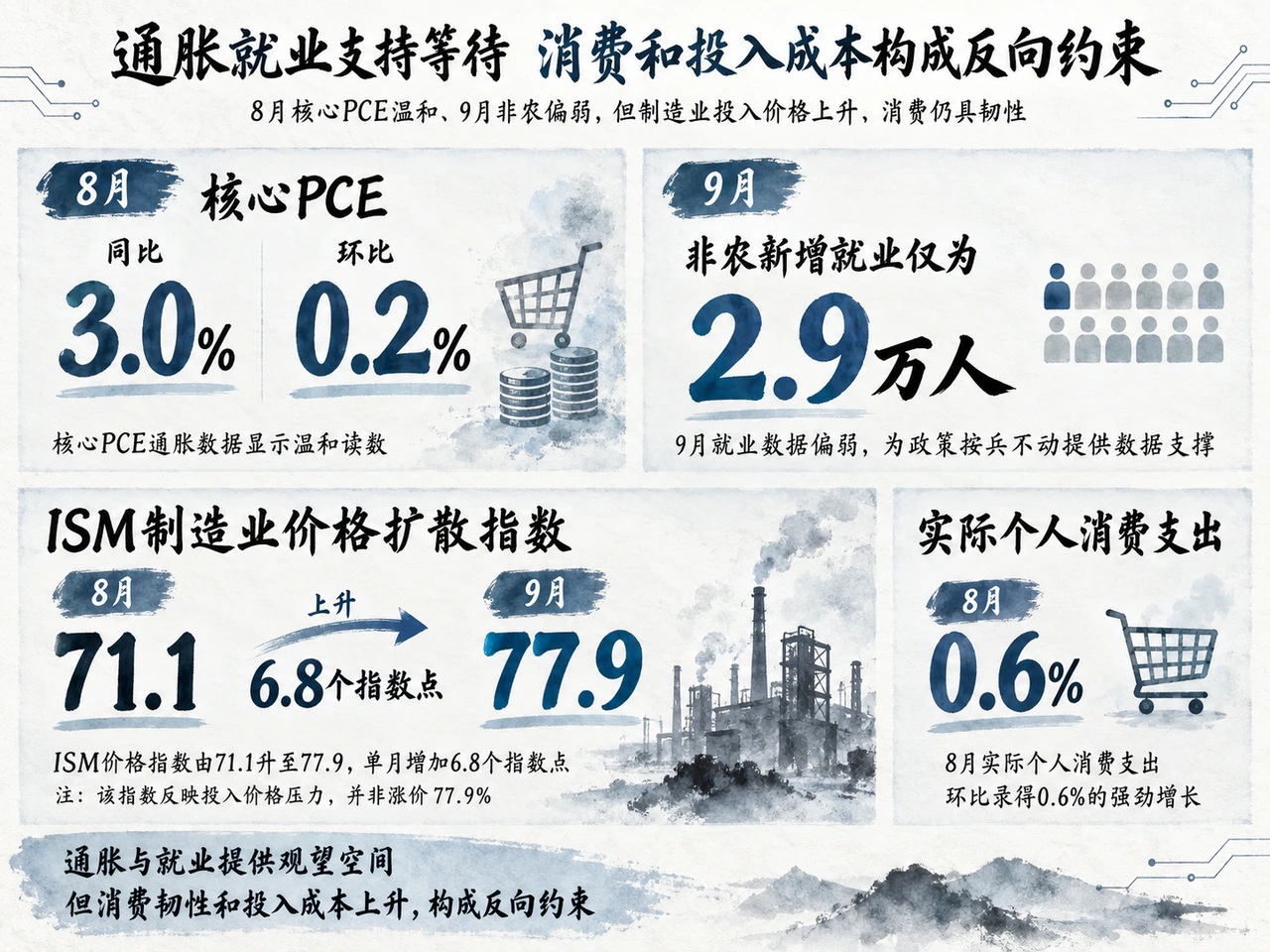
August core PCE inflation is 3.0% and September payrolls rise just 29,000, but manufacturing input prices reach 77.9
The week's macroeconomic releases presented a mixed picture, providing reasons to slow tightening while warning of resilient demand and renewed cost pressures.
On September 30, the Bureau of Economic Analysis released August personal consumption expenditures (PCE) prices. Headline PCE inflation was 3.4% year on year and core inflation, excluding food and energy, was 3.0%. CNBC reported that core inflation was below the consensus 3.3%, substantially easing market anxiety over uncontrolled inflation. The downside surprise did not mean monthly momentum had stalled: after annual revisions covering data from 2021 onward, August headline and core PCE prices rose 0.3% and 0.2% month on month respectively, both faster than July's 0.1%.
More significantly, final consumption demand showed no clear weakening. Real US personal consumption expenditures rose a robust 0.6% in August, while real disposable income was broadly flat and the personal saving rate fell to 4.1%. This divergence showed household consumption continuing to support growth, but also meant the Fed could not conclude that aggregate-demand pressure was sufficiently restrained from a single below-forecast annual inflation reading.
The September payroll report released October 2 directly reduced the urgency of successive hikes. Nonfarm employment rose only 29,000, and the Bureau of Labor Statistics revised July and August payroll additions down by a combined 60,000. Wage growth also slowed: private nonfarm average hourly earnings increased just 0.1% month on month and 3.0% year on year. Weak job creation, large downward revisions and cooling wage inflation jointly weakened the case that an overheated labor market required urgent tightening.
Labor-market cooling was not yet equivalent to broad fundamental deterioration. September unemployment edged up from August's 4.1% to 4.2%, remaining within the narrow 4.1%–4.3% range seen since March. The August JOLTS report released September 29 also showed about 7.1 million job openings and 1.6 million layoffs and discharges, with the layoffs and discharges rate near a historical low of 1.0%. The overall balance of labor supply and demand had changed little. This moderate easing supported holding steady to observe conditions rather than an urgent policy reversal.
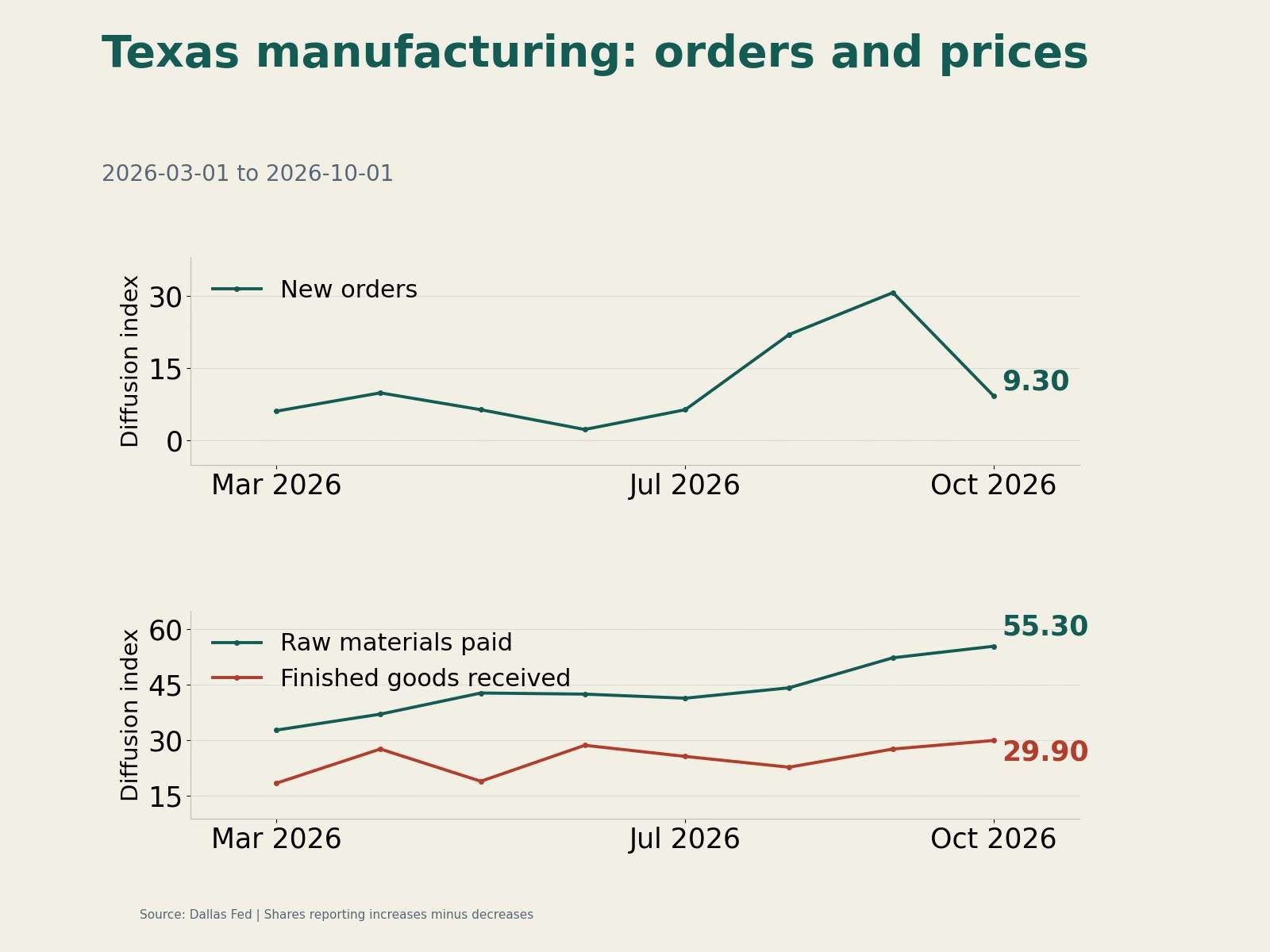
The countervailing inflation pressure came upstream in manufacturing. September's ISM manufacturing purchasing managers' index (PMI), released October 1, registered 54.5, remaining expansionary. More concerning, the ISM prices index jumped from 71.1 to 77.9, a 6.8-index-point increase in one month. This index chiefly measures the direction and breadth of reported increases in raw-material and other input costs. Its rise indicated that manufacturing supply-chain cost pressure was still spreading materially.
Governor Cook's September 28 speech at Oakland Tech Week provided a framework for understanding this external cost pressure. She distinguished two price effects of technological change. Relative-price fluctuations in AI-related industries often resolve as supply chains adjust. But if the AI investment boom creates economy-wide aggregate-demand pressure through energy, construction labor and wealth effects, it can spread into broader consumer goods and services prices. Cook expected AI's disinflationary productivity benefits to be a long-term development that might not offset actual inflation pressure later this year. This also undermined, in theoretical terms, the case for using technological progress alone to justify near-term monetary easing.
October hike pricing falls to 17%; markets await September minutes and CPI to test the inflation path
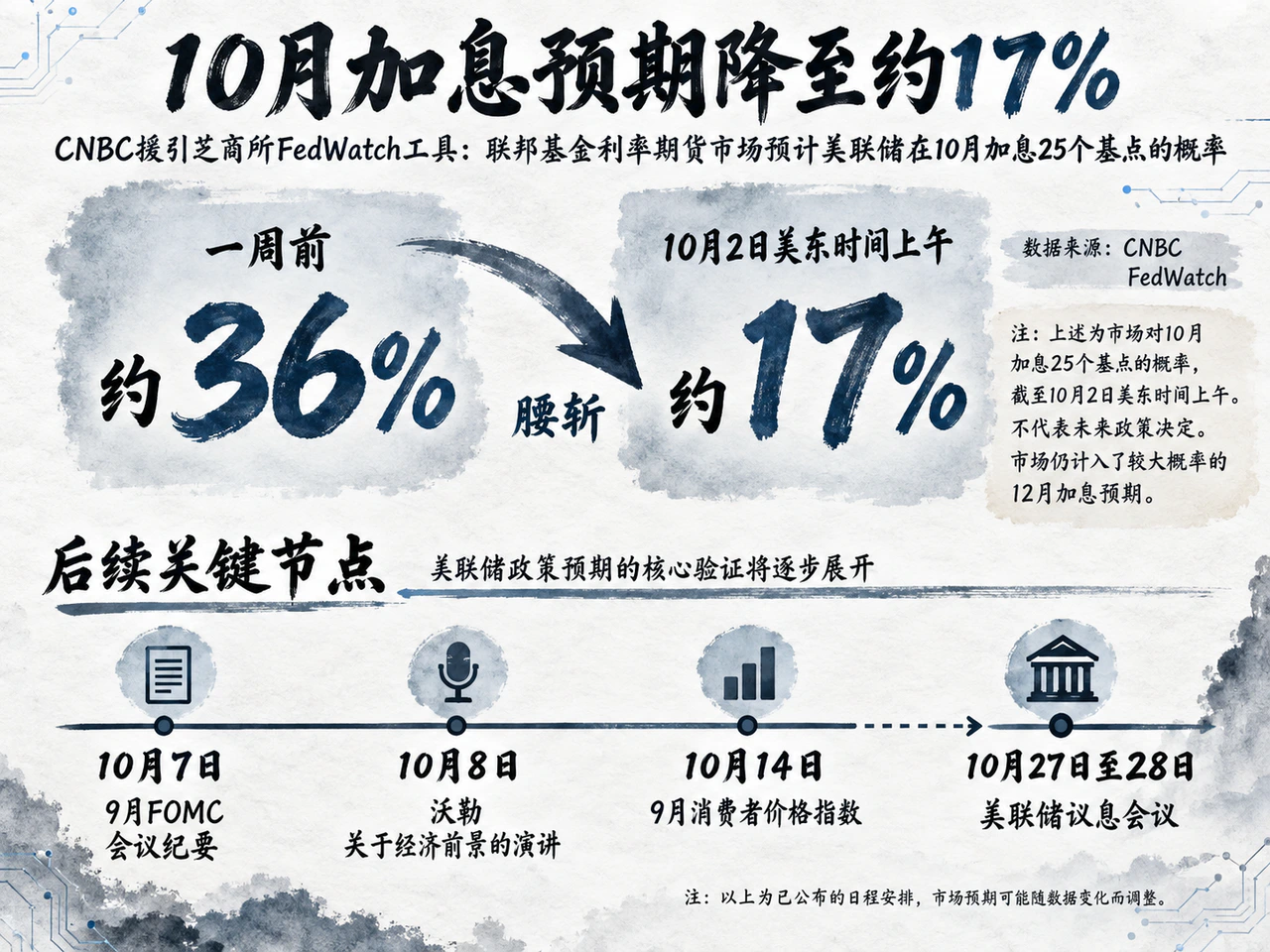
Officials' remarks and data together rapidly reshaped the market's pricing of the rate path. By the morning of October 2 US Eastern time, CNBC, citing CME FedWatch, reported that federal funds futures put the probability of a 25-basis-point October hike at approximately 17%, about half the roughly 36% a week earlier. Markets still assigned a substantial probability to a December hike. The principal revision concerned the timing of the next increase rather than the endpoint of tightening.
Wall Street banks' forecast adjustments were similarly conditional. Reuters reported October 2 that JPMorgan chief US economist Michael Feroli said the marked slowdown in wage growth reduced pressure for urgent October action. The bank's baseline still envisaged another December hike, but this depended entirely on whether subsequent September and October price reports continued to show stubborn core inflation.
The next tests of Fed expectations would unfold in sequence: September FOMC minutes on October 7, Governor Waller's economic-outlook speech on October 8, and September consumer price inflation (CPI) on October 14. The minutes could clarify the conditions behind the previous hike consensus, but were written before this week's key data. Waller's updated remarks and September CPI would therefore be the most important tests of whether the Fed remained firmly in wait-and-see mode. If manufacturing input costs failed to pass through to consumer prices and wages remained restrained, the case for extending the observation window would strengthen. Conversely, if a monthly core-inflation rebound kept broadening, the October 27–28 meeting would retain the flexibility to reopen the hike option.