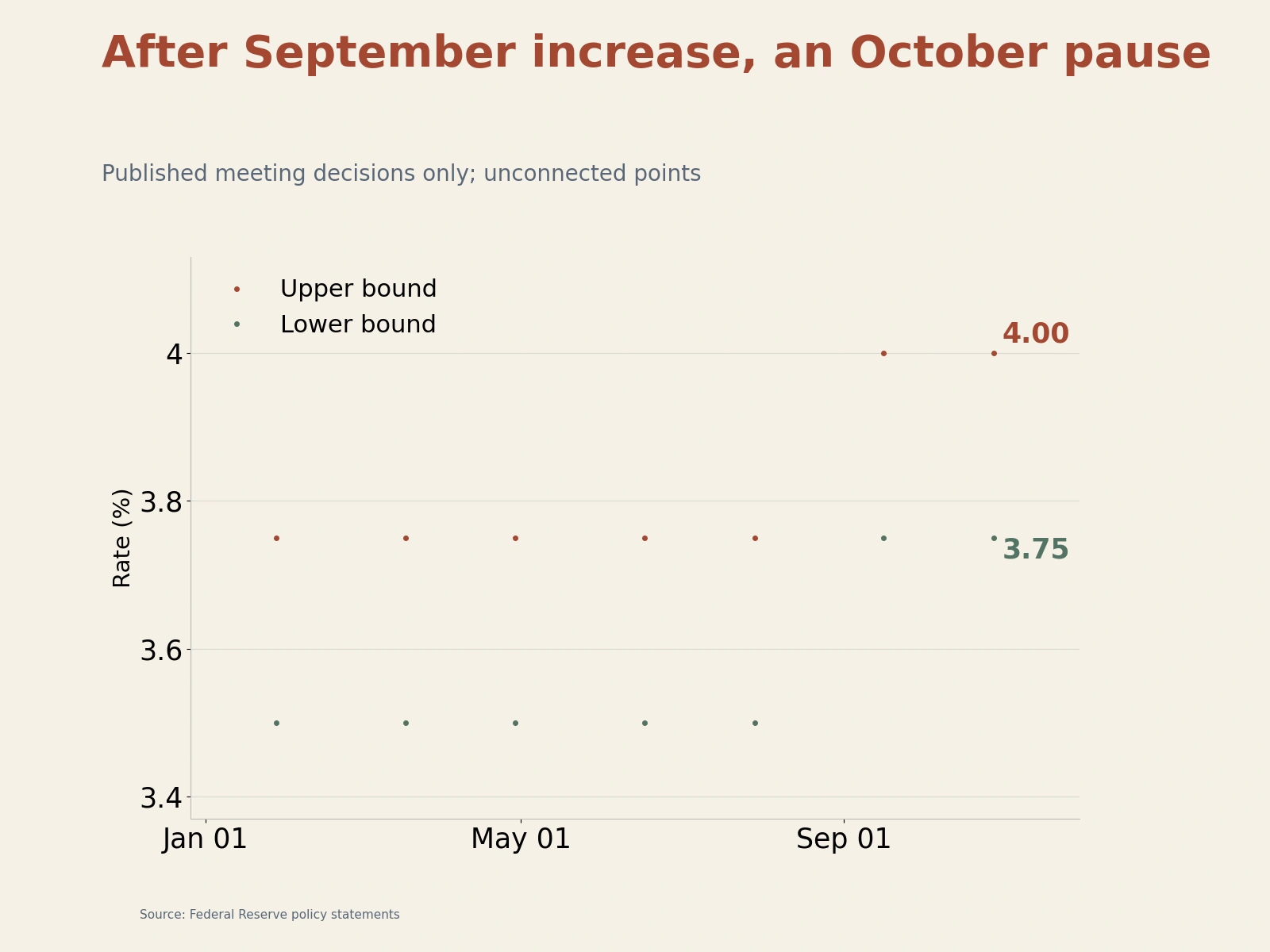
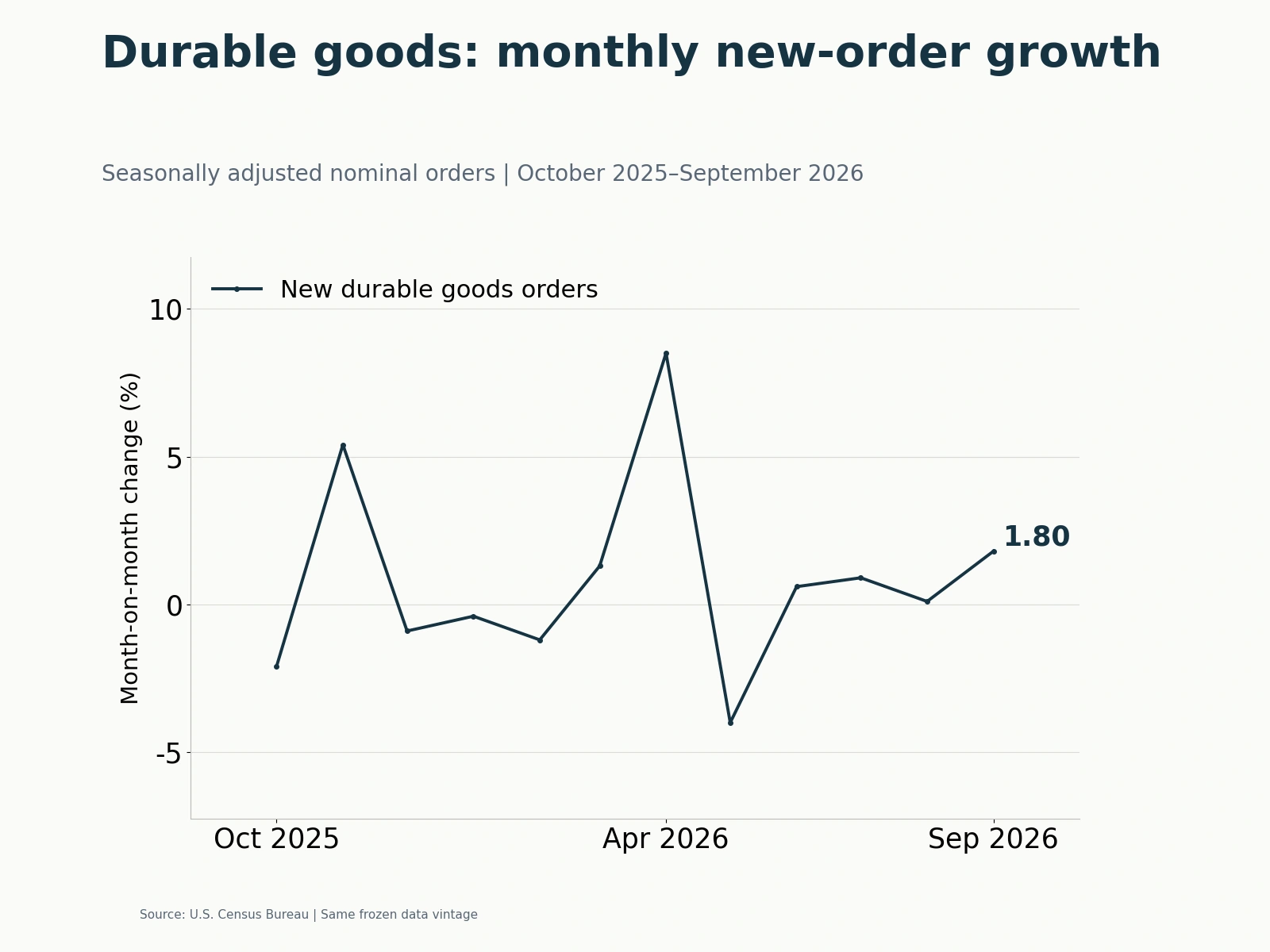
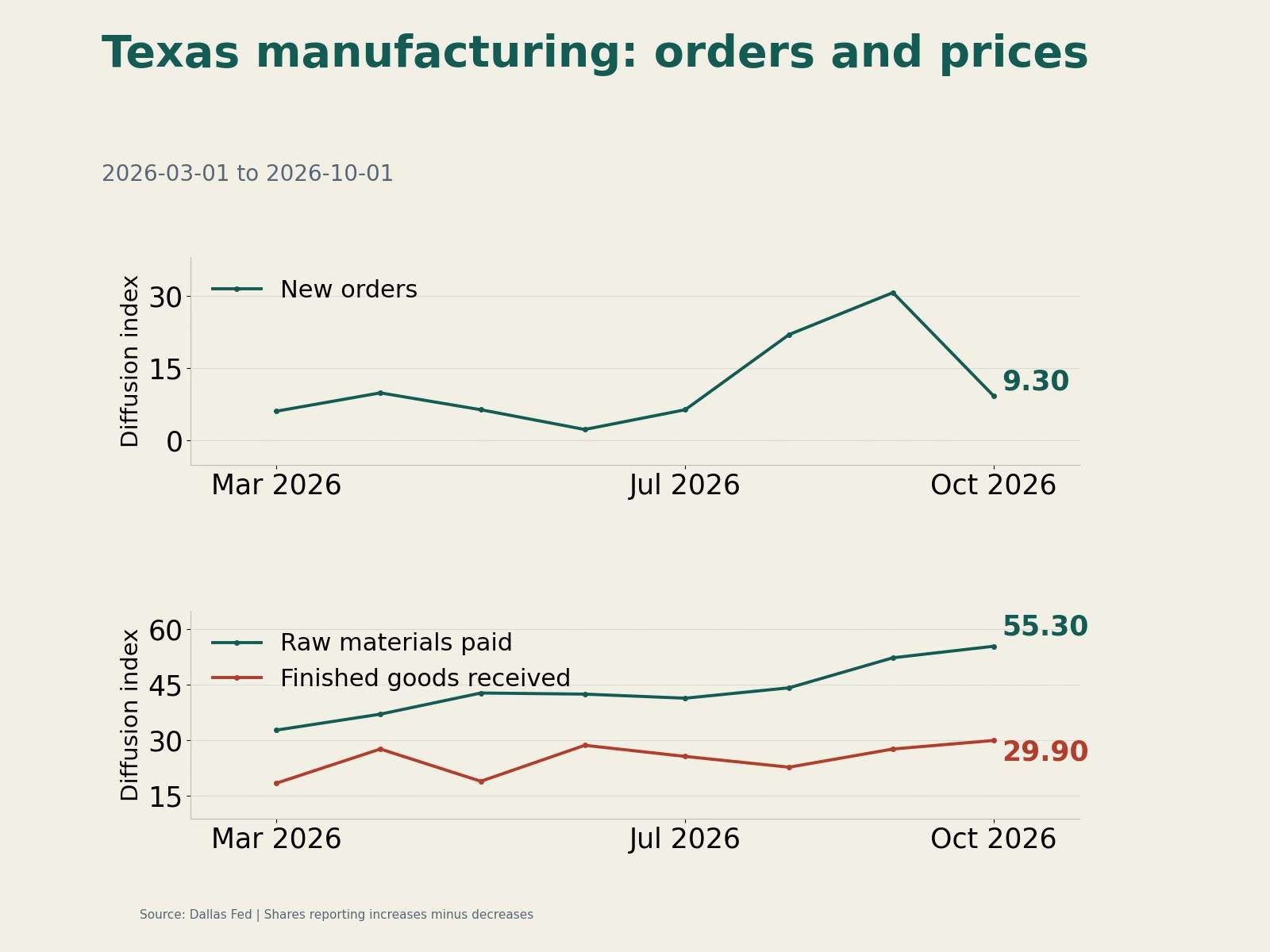
U.S. September services surveys released on October 5 sent divergent signals. The Institute for Supply Management and S&P Global reported different degrees of business strength, but both pointed to rising input-cost pressure. For the Federal Reserve, which had just raised rates 25 basis points on September 16 to a federal funds target range of 3.75%–4.00%, the new data were insufficient to settle the October policy path. They nevertheless materially weakened the premise that growth naturally slowing would be enough to bring inflation down.
ISM activity moderates slightly as employment returns to expansion
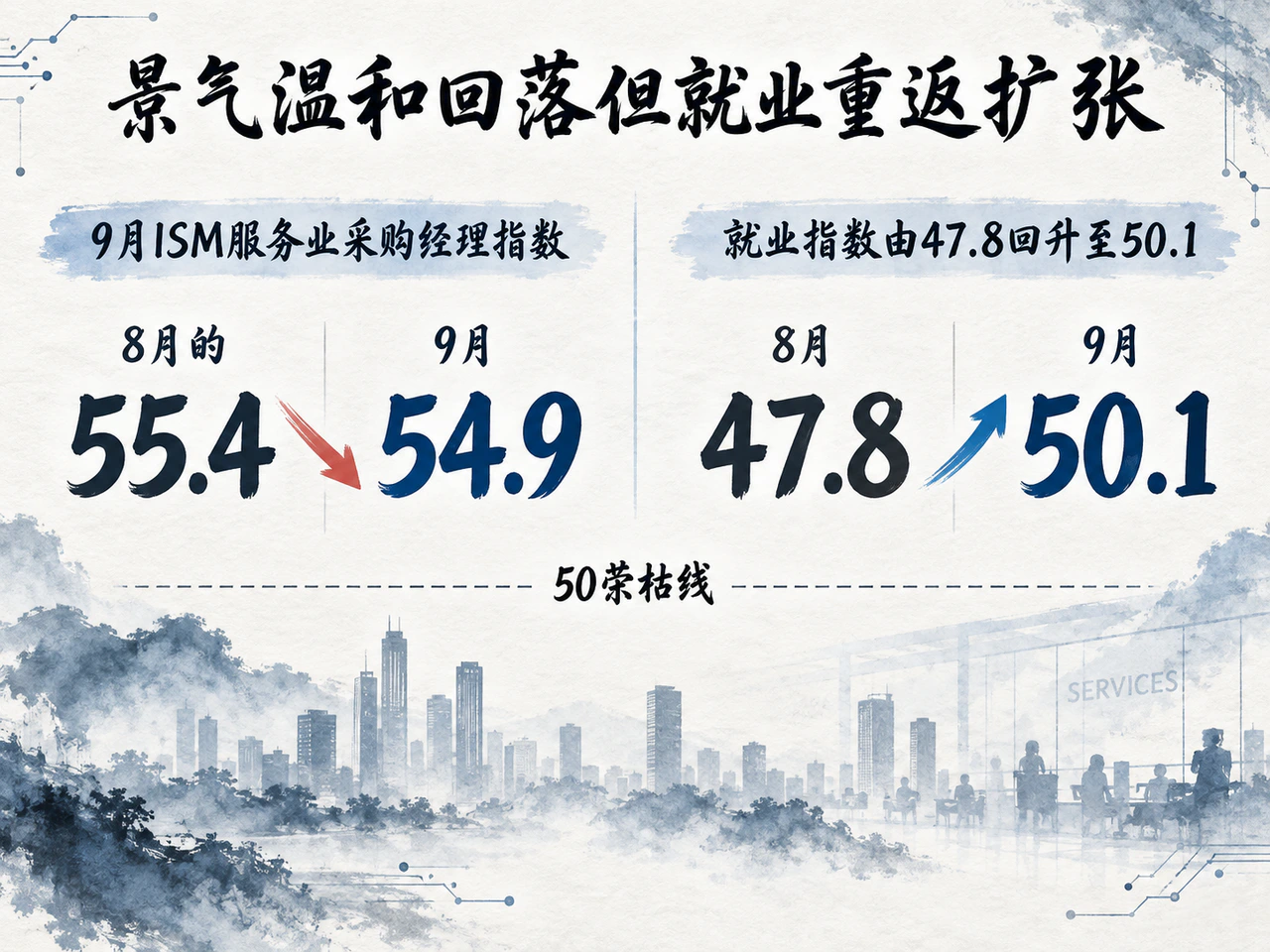
September's ISM services PMI was 54.9, down from 55.4 in August but still in expansion above the 50 threshold. Demand and output growth softened slightly: business activity fell from 61.7 to 56.5 and new orders from 60.9 to 59.8.
Hiring intentions recovered in contrast to slower growth momentum. In September, the employment index rose from 47.8 to 50.1, ending two consecutive months of contraction. This indicates that services demand had not weakened across the board and that hiring was showing initial signs of stabilization.
Prices reach 74.0 as slower supply chains heighten pass-through risk
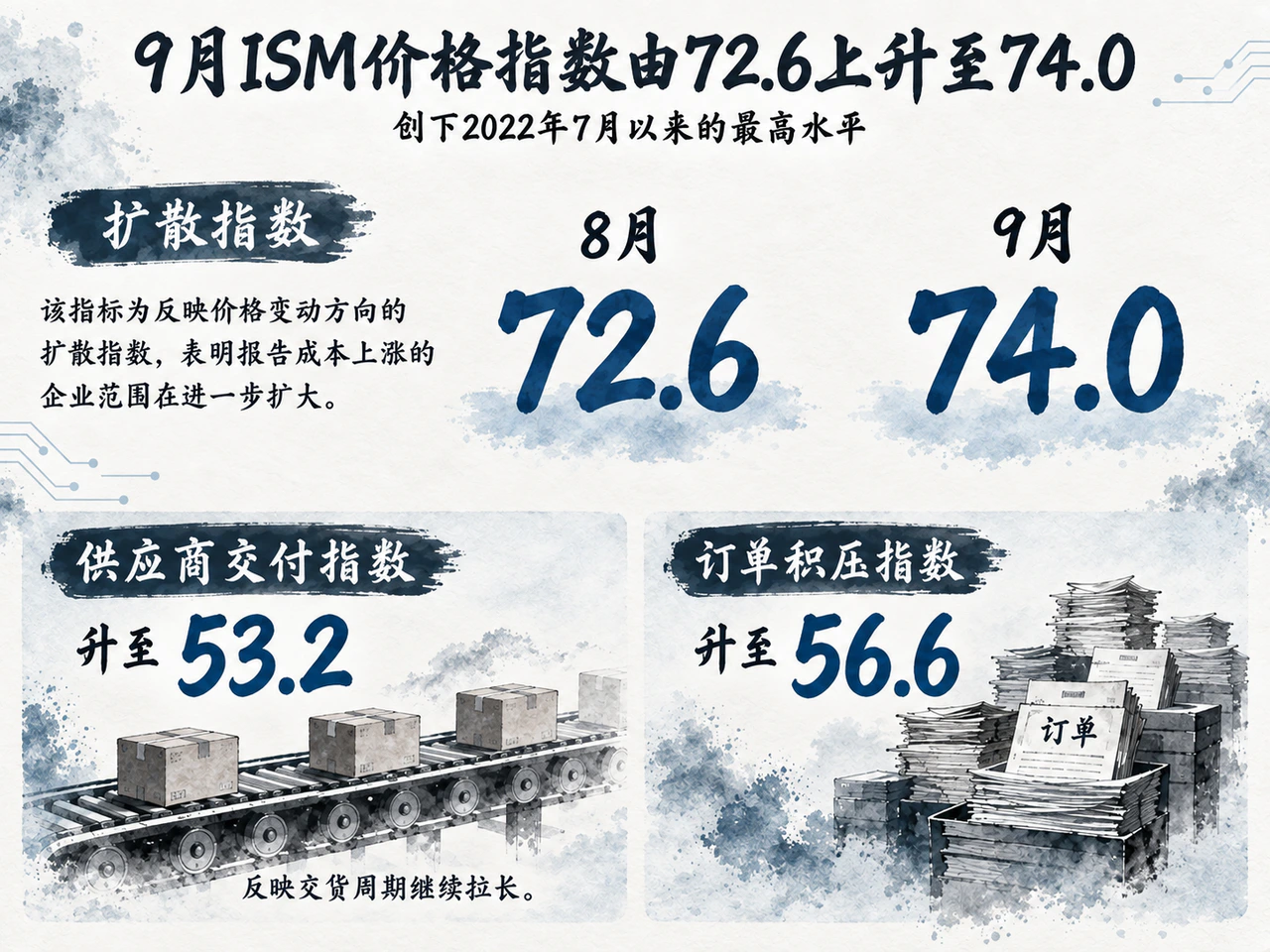
More constraining for policy than the small decline in momentum was the rebound in cost indicators. ISM prices rose from 72.6 to 74.0 in September, the highest since July 2022. This is a diffusion index measuring the direction of price changes, indicating a widening range of companies reporting rising costs.
Related supply-chain indicators tightened simultaneously. Supplier deliveries rose to 53.2, reflecting longer delivery times, and order backlogs to 56.6. Fuel costs were the most frequently mentioned issue in the survey, cited twice as often as any other individual concern. With demand still expanding, constrained deliveries and rising inputs mean the risk of businesses passing costs into selling prices continues to accumulate.
S&P survey shows accelerating activity and corroborates cost pressure
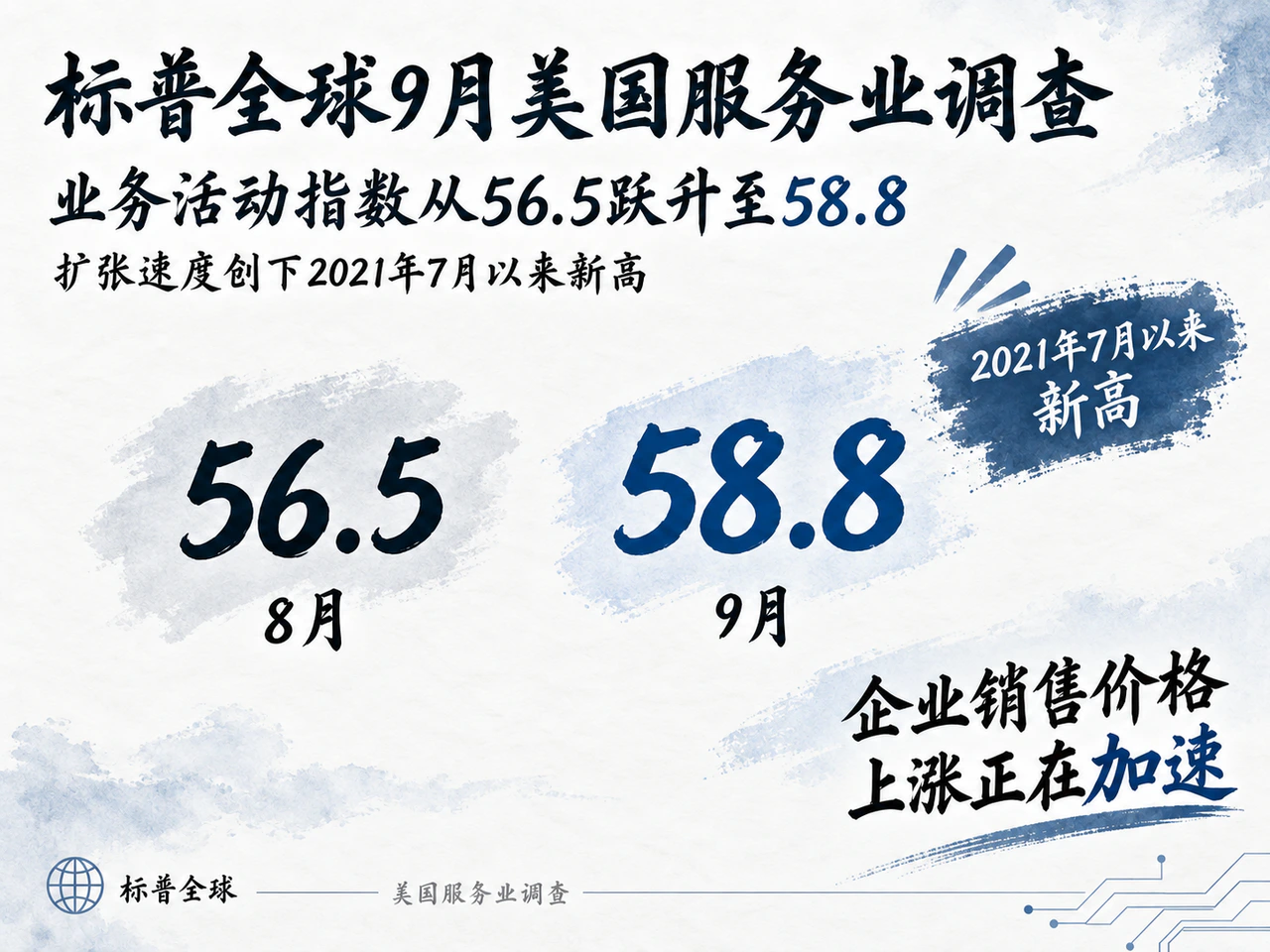
The S&P Global September U.S. services survey released that day showed stronger expansion. Its business activity index jumped from 56.5 to 58.8, the fastest expansion since July 2021. Hiring growth also reached its highest since June 2022.
The surveys differ in sample coverage and methodology and should not be merged directly into a single growth trend. Their cost findings nevertheless corroborate one another. S&P Global also observed accelerating increases in companies' selling prices. Whether cost pressure is spreading broadly has therefore become a concrete issue for subsequent Fed decisions.
Institutions diverge over policy as markets await minutes and employment data

The data's complex signals prompted differing institutional interpretations of the pace of further hikes. Reuters quoted Oxford Economics economist Matthew Martin as saying that rebounding prices, obstructed supply chains and rising backlogs showed inflation pressure still accumulating, while resilient underlying growth could support additional monetary tightening. Dow Jones cited ING's view that recent weak employment signals reduced the likelihood of October tightening, making December a more likely date for the next move. These are institutional assessments of timing, rather than official Fed commitments.
Policy resolve faces a concentrated series of near-term data tests. Minutes of the September rate meeting, due at 14:00 Eastern time on October 7, will clarify the trade-offs behind the earlier hike. Governor Christopher Waller is scheduled to speak on the outlook on October 8, when weekly initial jobless claims will also provide a fresh labor-market signal. Stable employment and further spreading price pressure would materially strengthen the case for another hike. Conversely, continued weakening in labor demand without broad input-cost pass-through would provide stronger grounds for waiting for more data.