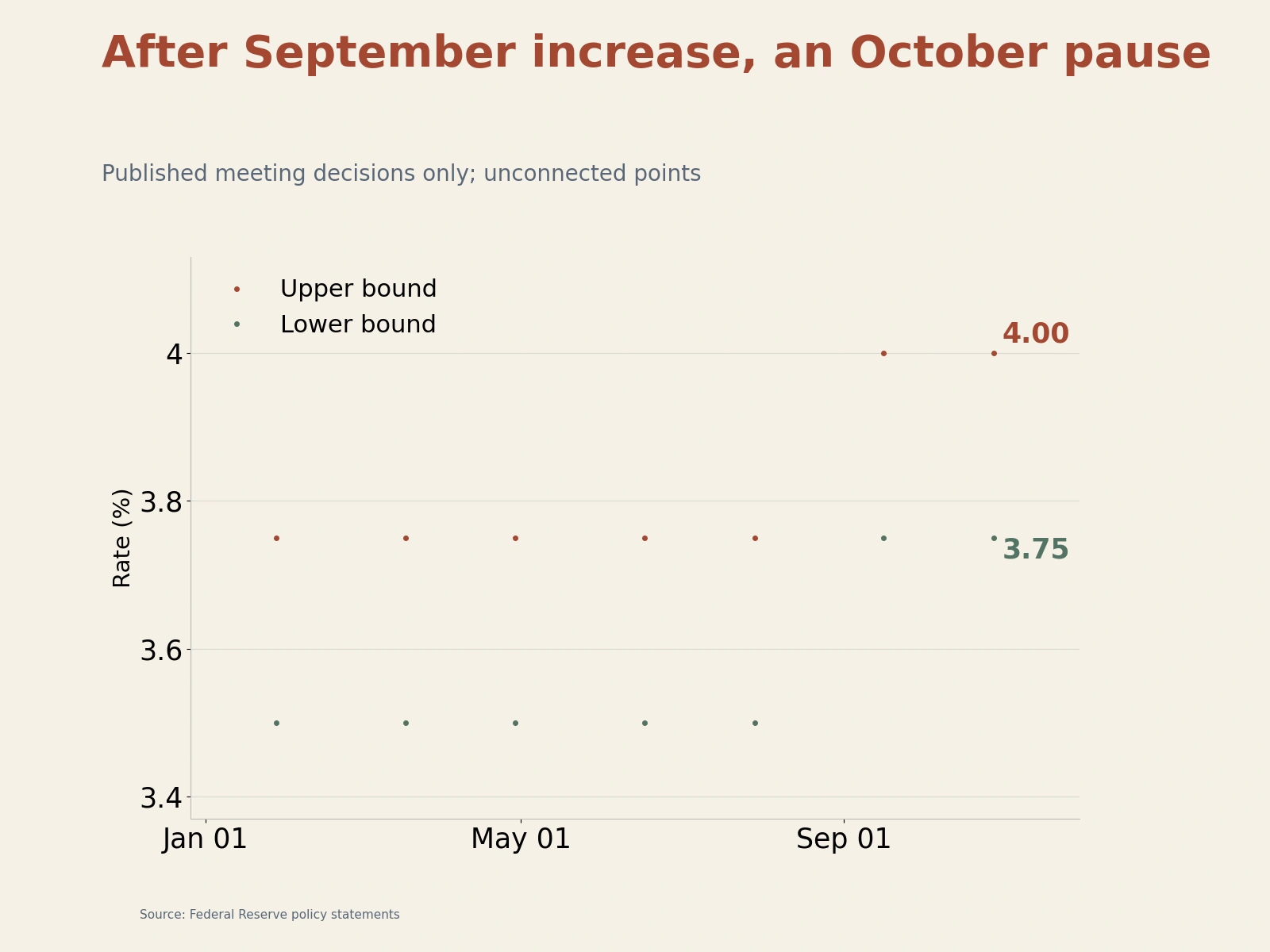
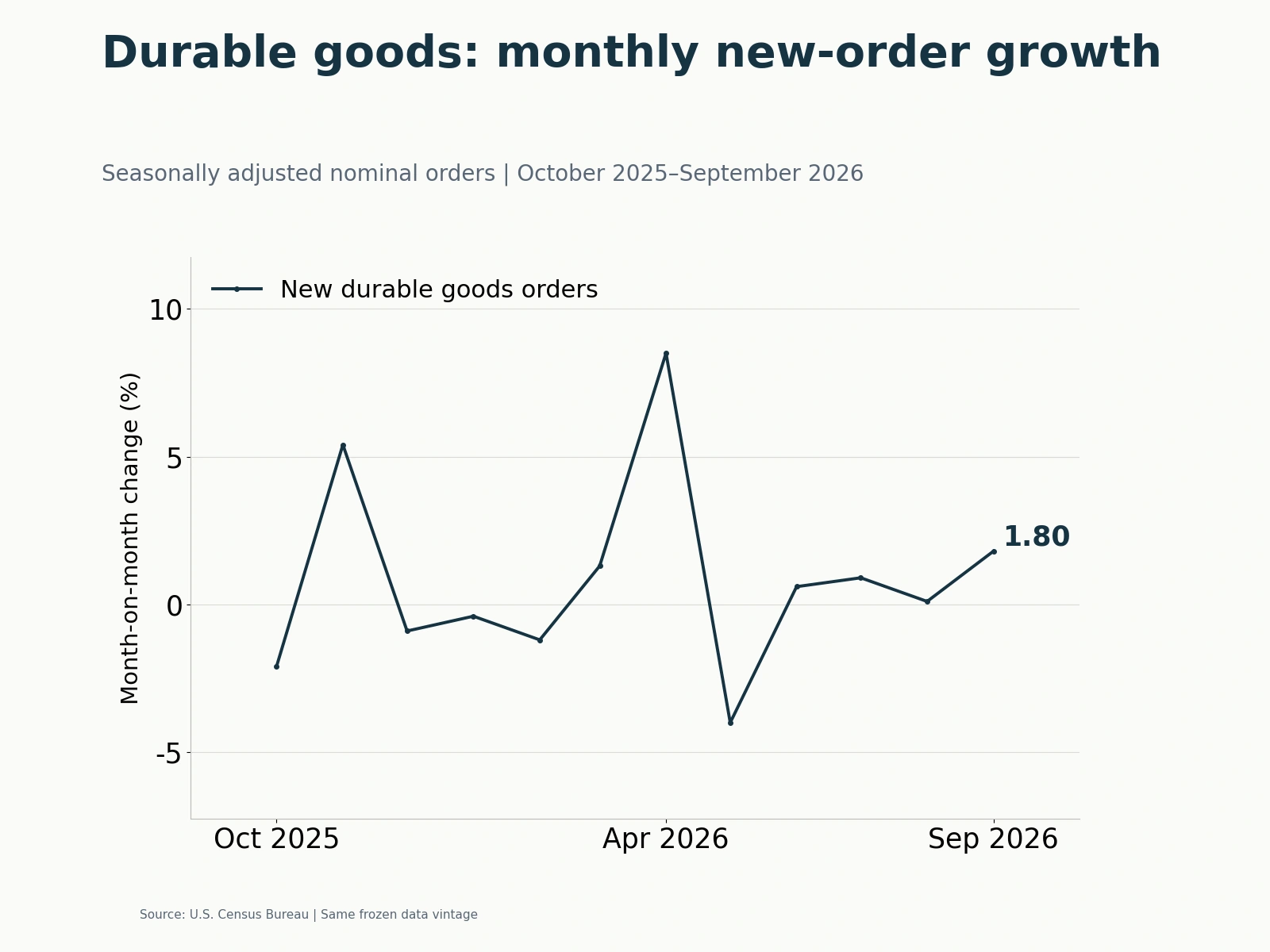
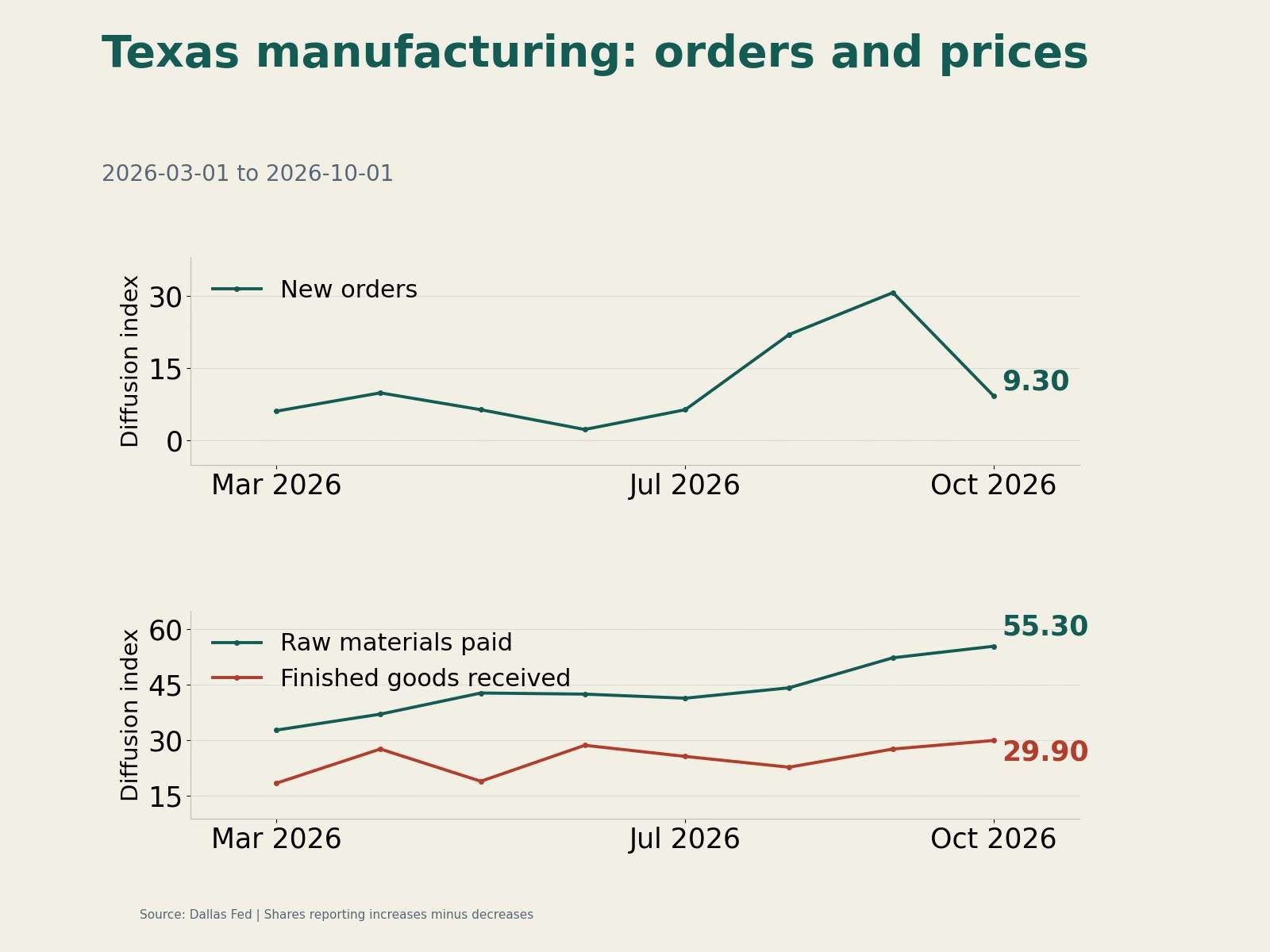
The Federal Reserve's September policy-meeting minutes, released October 7, showed most participants believed one more rate hike might be needed before year-end. A New York Fed survey released the same day showed rising short- and medium-term household inflation expectations, indicating persistent risks from sticky prices. But with post-meeting macroeconomic data showing signs of slowing, markets broadly expected an October hold, separating the bias toward higher rates from a wait-and-see approach to implementation.
September Hike Had Unanimous Support but Different Rationales; Policymakers Made No Commitment to Consecutive Moves
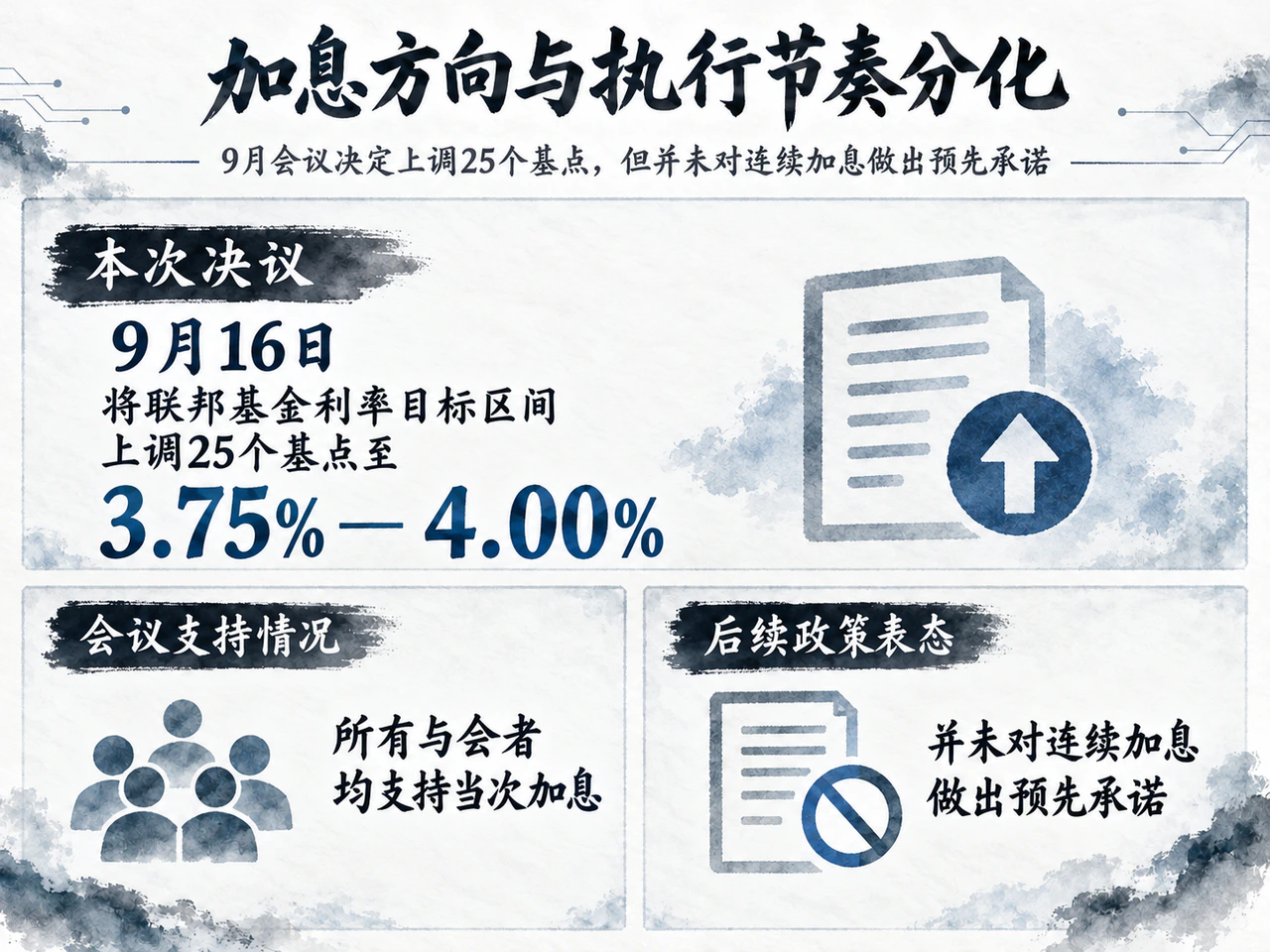
At its September 16 meeting, the Fed raised the federal funds target range 25 basis points to 3.75%–4.00%. The minutes showed all participants supported that increase but differed significantly in their reasoning. Many viewed a higher rate path as insurance against stronger-than-expected demand or external supply shocks. Others believed the baseline economic forecast itself justified an increase.
These differing rationales indicate that agreement on the immediate decision did not extend to a shared pace for future action. Participants explicitly emphasized reassessing the outlook at each subsequent meeting using the latest information, without committing in advance to consecutive hikes.
On inflation risk, the minutes highlighted how localized cost pressures could spread into broader prices. Several participants said the longer energy prices remained high, the greater the risk of cost increases spreading. Some also worried that AI-related infrastructure construction could push aggregate demand beyond supply capacity in the medium term.
One-Year Inflation Expectations Rebound to 3.9% as Credit and Income Growth Slow
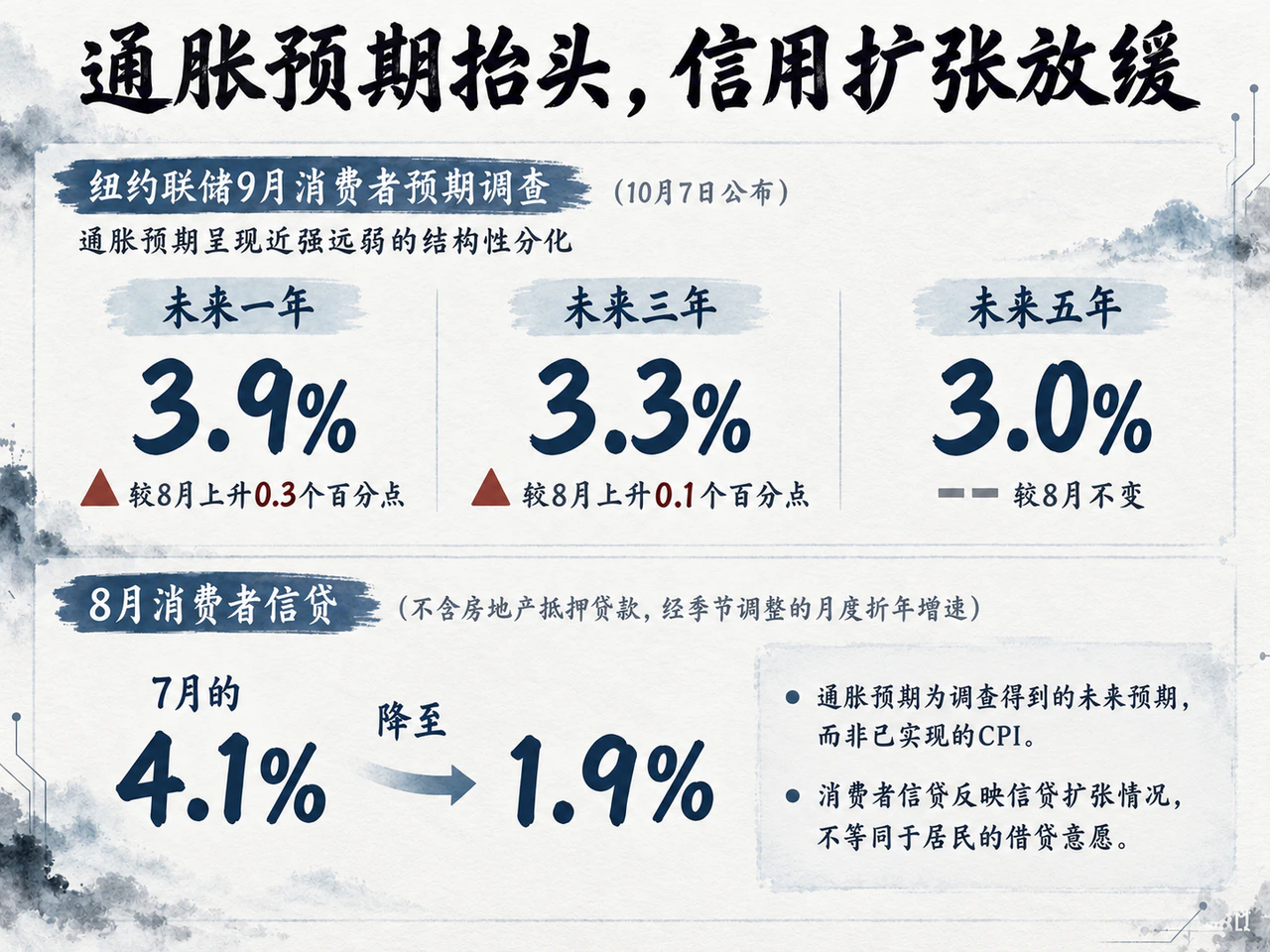
The New York Fed's September Survey of Consumer Expectations, released October 7, showed stronger near-term than longer-term inflation expectations. Median one-year expectations rose 0.3 percentage points from August to 3.9%, the highest since May 2023. Three-year expectations edged up 0.1 points to 3.3%, while five-year expectations held at 3.0%, suggesting medium- and long-term expectations remained broadly anchored.
In contrast to rising near-term price expectations, household purchasing-power prospects and credit expansion narrowed. The same survey showed median expectations for earnings growth over the coming year falling 0.3 percentage points to 2.6%.
August consumer-credit data released by the Fed the same day showed slower credit expansion, providing evidence against an interpretation of continuously strengthening demand. Consumer credit excluding real-estate mortgages grew at a seasonally adjusted annualized monthly rate of 1.9%, down from July's 4.1%. Revolving credit growth turned negative at an annualized -4.2%, indicating slower borrowing expansion.
Post-Meeting Data Weaken the Case for an October Hike; Focus Turns to Inflation and Business Conditions

Because the September minutes reflect information available on September 15–16, their guidance has since been tested by new data. Reuters reported on October 7 that inflation and employment growth released after the meeting were both weaker than expected, and by that morning investors broadly expected the Fed to leave rates unchanged in October. The minutes' continued bias toward a hike this year reflected policy direction rather than fixing October as the timing.
The main near-term observation window centers on key officials' remarks and incoming macroeconomic and business-level evidence. First is Governor Waller's economic outlook speech at the Istanbul Economic Forum on October 8, which will help markets assess officials' latest interpretation of new data. Second are September CPI and the Beige Book, both released October 14.
If September core price pressures continue to ease, the window for the Fed to pause and await more evidence will widen. If price increases instead broaden while demand remains resilient, the policy case for another hike this year will strengthen substantially.