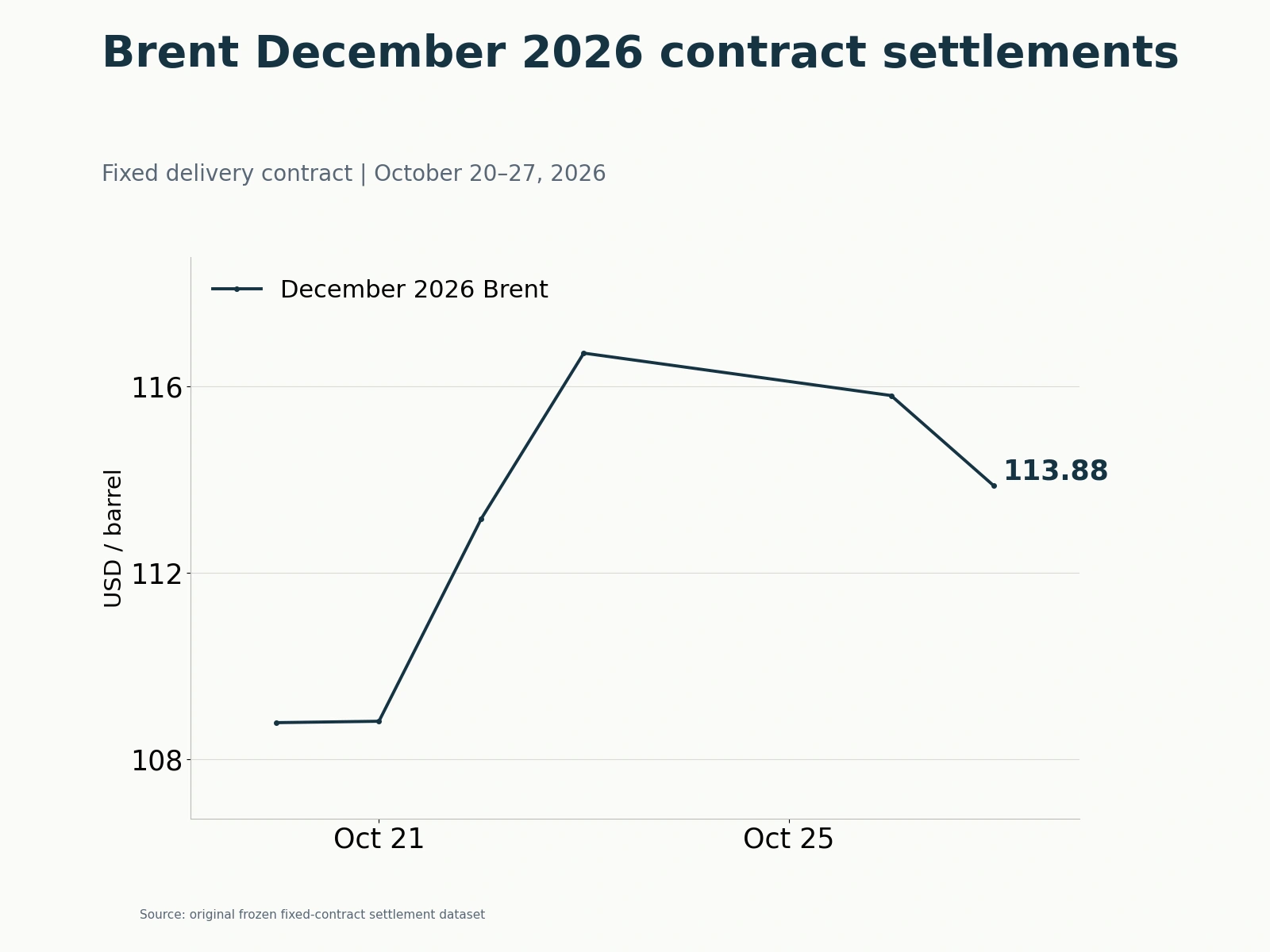
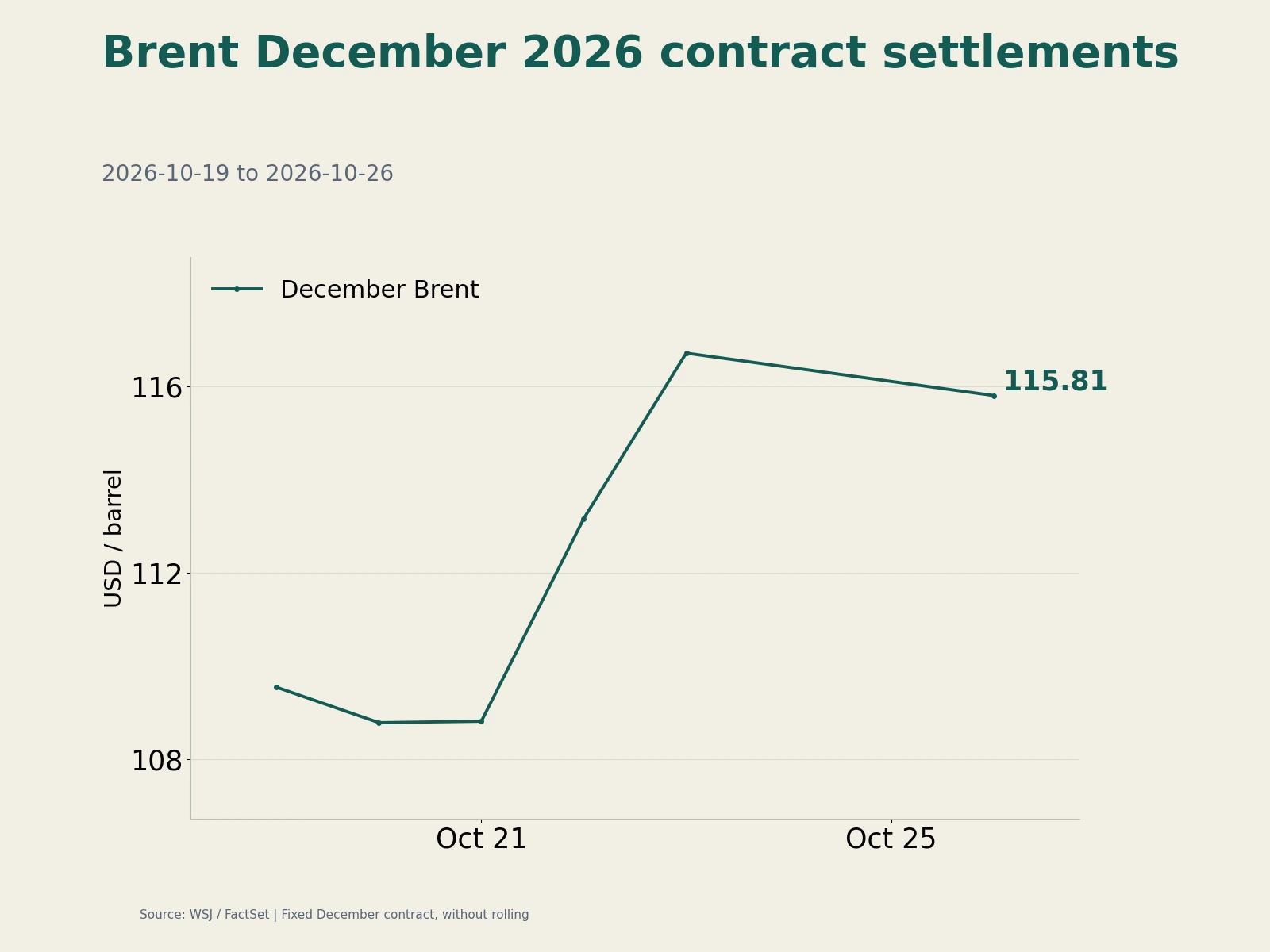
Oil fluctuated before recovering to modest gains on October 9 amid competing forces. Early easing signals from US-Iran talks reduced geopolitical premiums, but widespread hurricane-driven upstream shutdowns in the US Gulf of Mexico quickly supplied firm physical support. Vendor daily continuous-contract closes put WTI at $91.66 a barrel, up $0.17 or 0.19% from October 8, and Brent at $104.43, up $0.15 or 0.14%.
The main specified-month contracts also closed slightly higher. Reuters reported November WTI settling up $0.36 at $91.85 a barrel and December Brent up $0.44 at $104.72. The Wall Street Journal confirmed both gained around 0.4% that day, with weekly increases of 0.8% and 2.4%, respectively.
Geopolitical sentiment cools temporarily as US-Iran signals and fuel-supply prospects ease fears

Diplomatic mediation was the principal downward influence early in trading. Reuters reported Trump calling US-Iran discussions productive and saying he did not intend to attack Iran before the November 3 US midterm elections. Iran's foreign minister subsequently said Tehran was reviewing Washington's response to an Iranian proposal that included reopening Hormuz within seven days. The statements prompted markets to cut near-term disruption risk rapidly and reduced previously priced geopolitical premiums.
Prospective additional product supply also cooled sentiment. China's plan to resume refined-product exports after a brief National Day holiday pause eased concern about regional fuel shortages and further restrained oil's initial upward impulse.
Hard upstream constraints: over 71% of expected Gulf output shut; direct refinery-damage risk declines
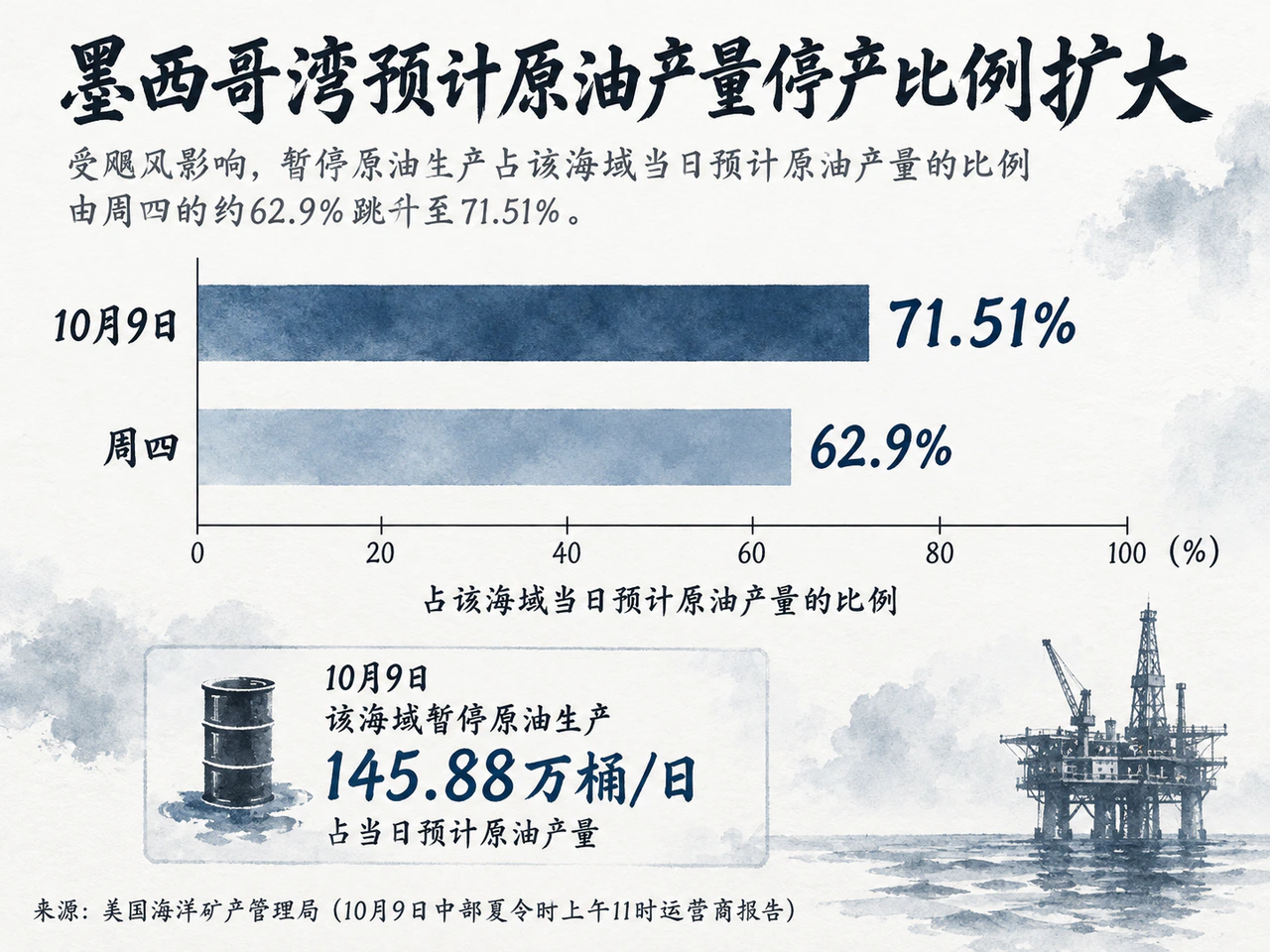
Realized US supply disruption quickly reversed the decline. Operator reports compiled by the US Minerals Management Service as of 11 a.m. Central Daylight Time on October 9 showed hurricane-related Gulf crude shutdowns of 1.4588 million barrels per day. The share of that area's expected daily output jumped from approximately 62.9% on Thursday to 71.51%. Large involuntary upstream interruptions materially constrained replacement crude supply and were the main driver of oil erasing early losses.
In contrast to upstream disruption, downstream refinery exposure was far below earlier estimates. The Wall Street Journal, citing S&P Global Energy data, said refining capacity facing direct impact had fallen from 2.5 million barrels per day expected early in the week to less than 500,000. Upstream shutdowns tighten crude feedstock while much lower direct refinery risk helps preserve processing demand and reduces potential crude builds from concentrated downstream closures. Port shutdowns and logistical delays still lengthen product deliveries, but the combination clearly supports crude overall.
Nearby supply stays tight: $3 backwardation supports prices as later supply repair emerges
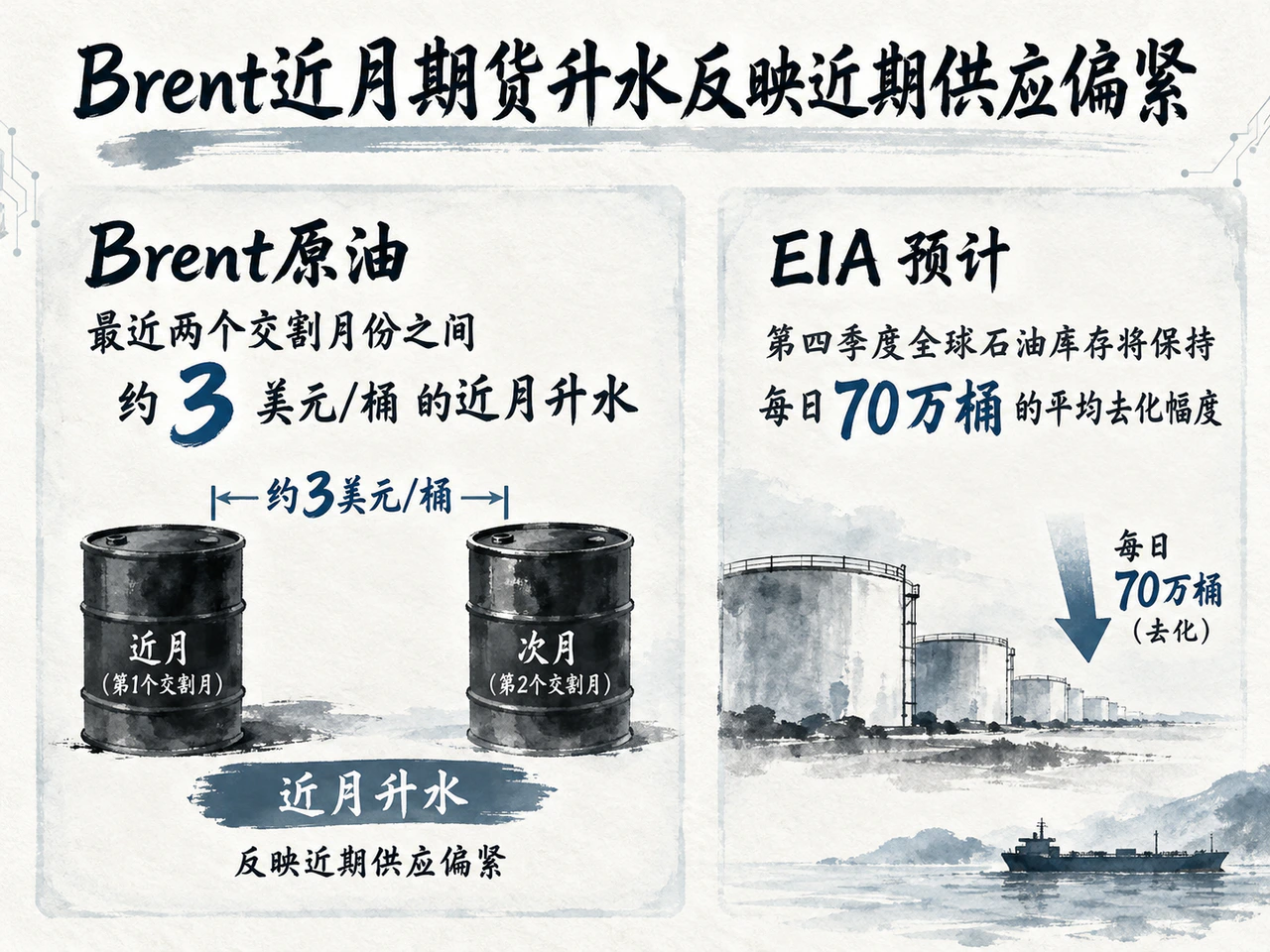
Futures term structure clearly reflects near-term tightness. The Wall Street Journal cited MUFG analysts saying Brent's first two delivery months still carried approximately $3 a barrel of backwardation. This deep nearby premium indicates substantial pricing of immediate shortages. Diplomacy can quickly compress geopolitical premiums, but actual loading, Hormuz transit and arrival logistics remain crucial to resolving physical supply-demand pressure.
Major producers' policies offer no new near-term supply flexibility. Seven core OPEC+ members decided October 4 to leave November targets unchanged. Reuters reported actual Gulf output remaining below quotas, with export constraints leaving some earlier output-increase guidance on paper. Actual quota realization matters more for physical supply than the targets themselves.
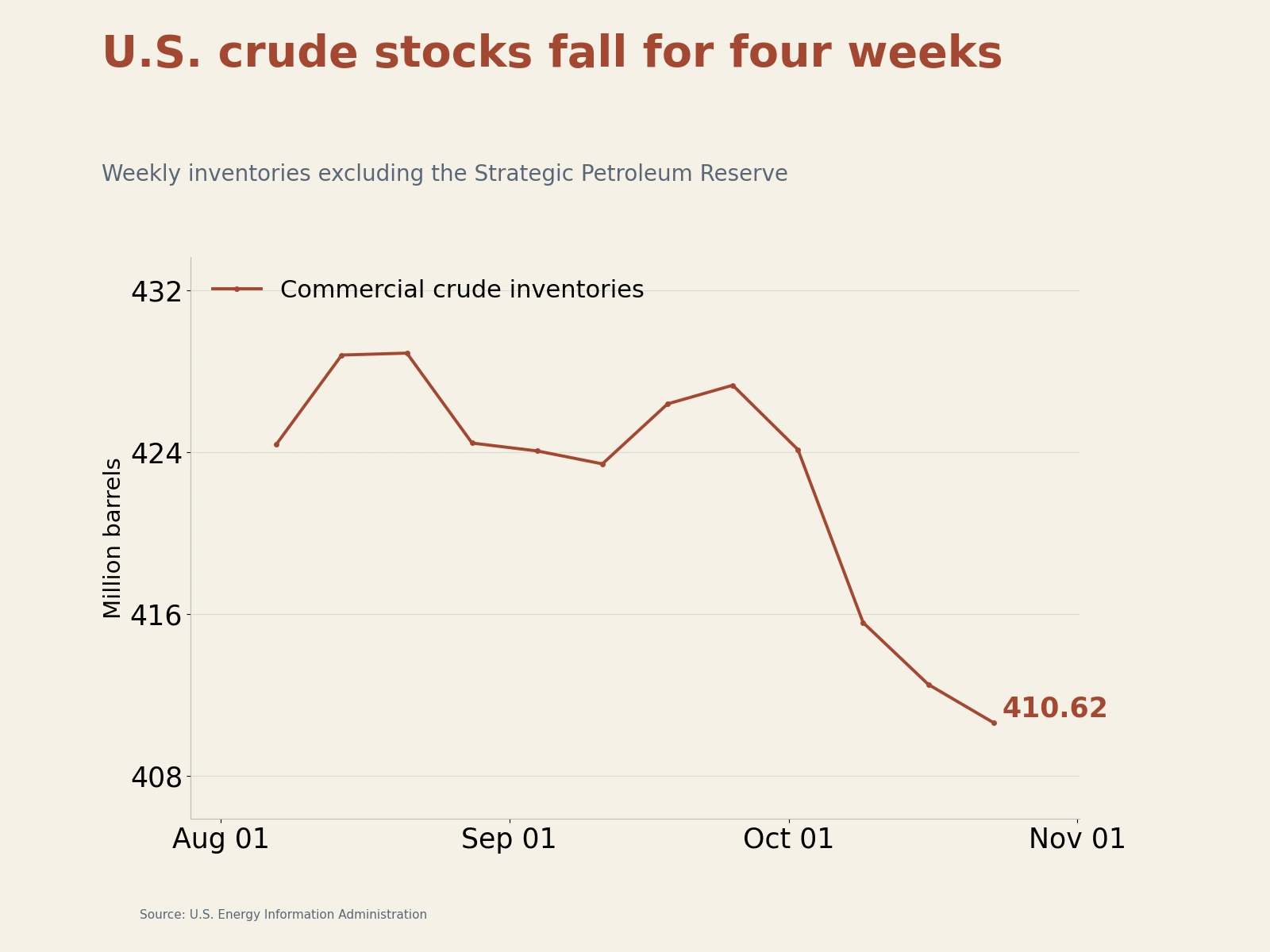
US inventory draws also increase sensitivity to disruption news. EIA data released October 7 showed commercial crude stocks falling 3.2 million barrels to 424.1 million in the week ended October 2, refinery utilization rising to 92.7%, and crude exports increasing 1.2 million barrels per day to 4.77 million. Firm processing demand and stronger exports jointly drove the draw, but gasoline stocks rose 382,000 barrels, reflecting differing product balances.
Further out, expectations of marginal supply repair are forming. In its October outlook, the EIA estimated Middle Eastern crude shutdowns fell from 5.8 million barrels per day in August to 4.8 million in September. Although it still projected fourth-quarter global oil draws averaging 700,000 barrels per day, its baseline of expanded bypass export routes and gradual production recovery put average Brent spot prices falling from $105 this fourth quarter to $87 in next year's second quarter. Immediate physical tightness alongside eventual balance recovery frames the level and duration of elevated oil.
Financial conditions offer mixed forces; four key indicators shape the outlook
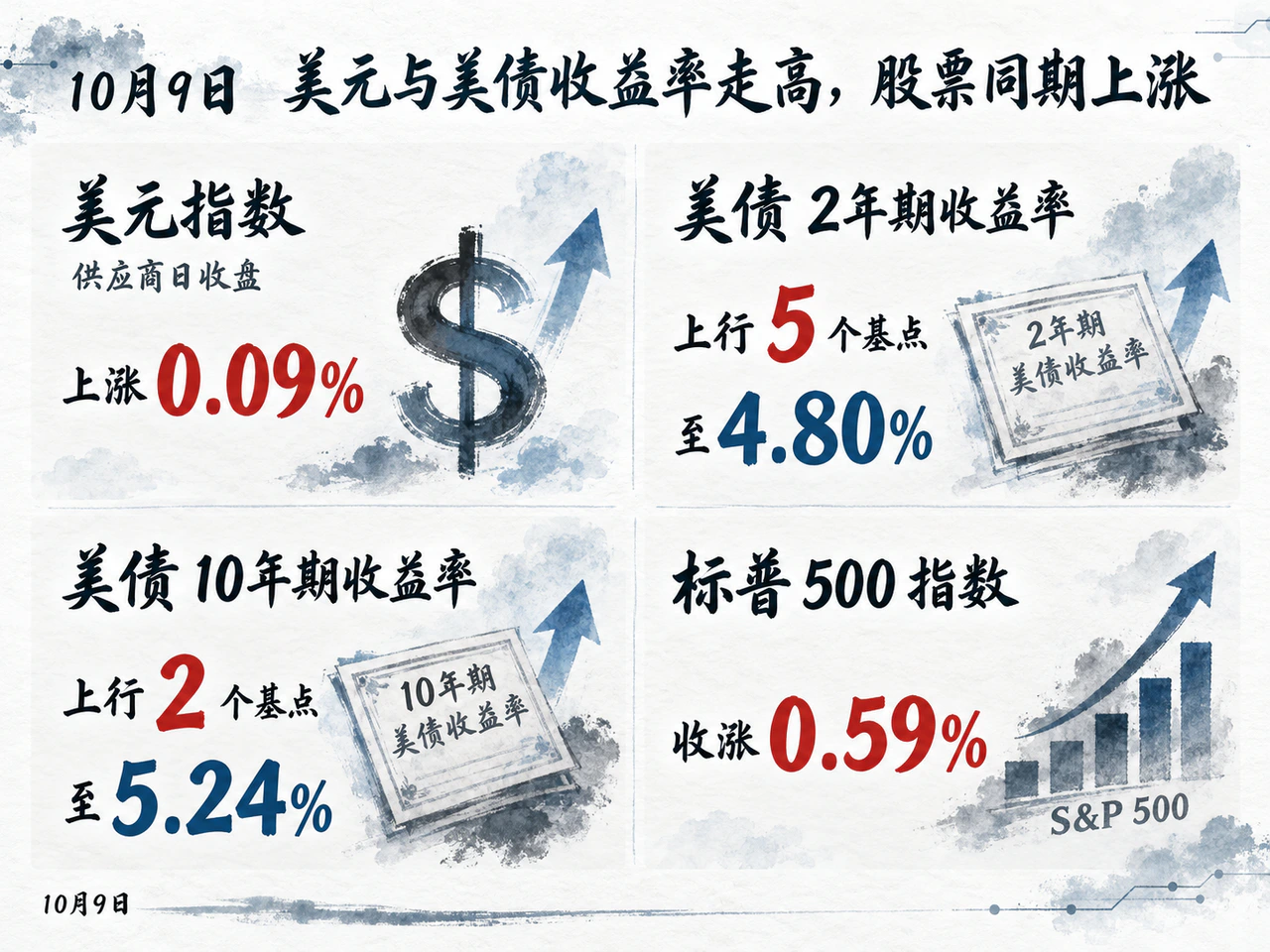
Beyond micro fundamentals, October 9 macro conditions were mixed. The vendor daily dollar-index close rose 0.09%; 2-year and 10-year Treasury yields increased 5 and 2 basis points to 4.80% and 5.24%, while the S&P 500 gained 0.59%. Rising yields and the dollar increased non-US buyers' procurement costs and commercial inventory financing costs, partly offset by stabilizing US equity risk appetite. Macro conditions supplied no one-way impulse; pricing remained anchored in supply interruptions and the pace of recovery.
Four material variables require further observation:
- Gulf offshore platforms' restart progress after inspection. Rapid restoration would weaken hurricane-related upstream supply support.
- Actual Hormuz transit safety, tanker-loading schedules and route freight rates. Near-term supply pressure can materially ease only with clear sea routes and lower elevated freight and insurance costs.
- Whether Brent's nearby premium narrows meaningfully from $3 a barrel, a key measure of immediate tightness.
- The combined path of US crude and product stocks and refinery runs. Continued crude draws with firm processing would sustain physical support; crude builds alongside refinery shutdowns would gradually transmit pressure to products.