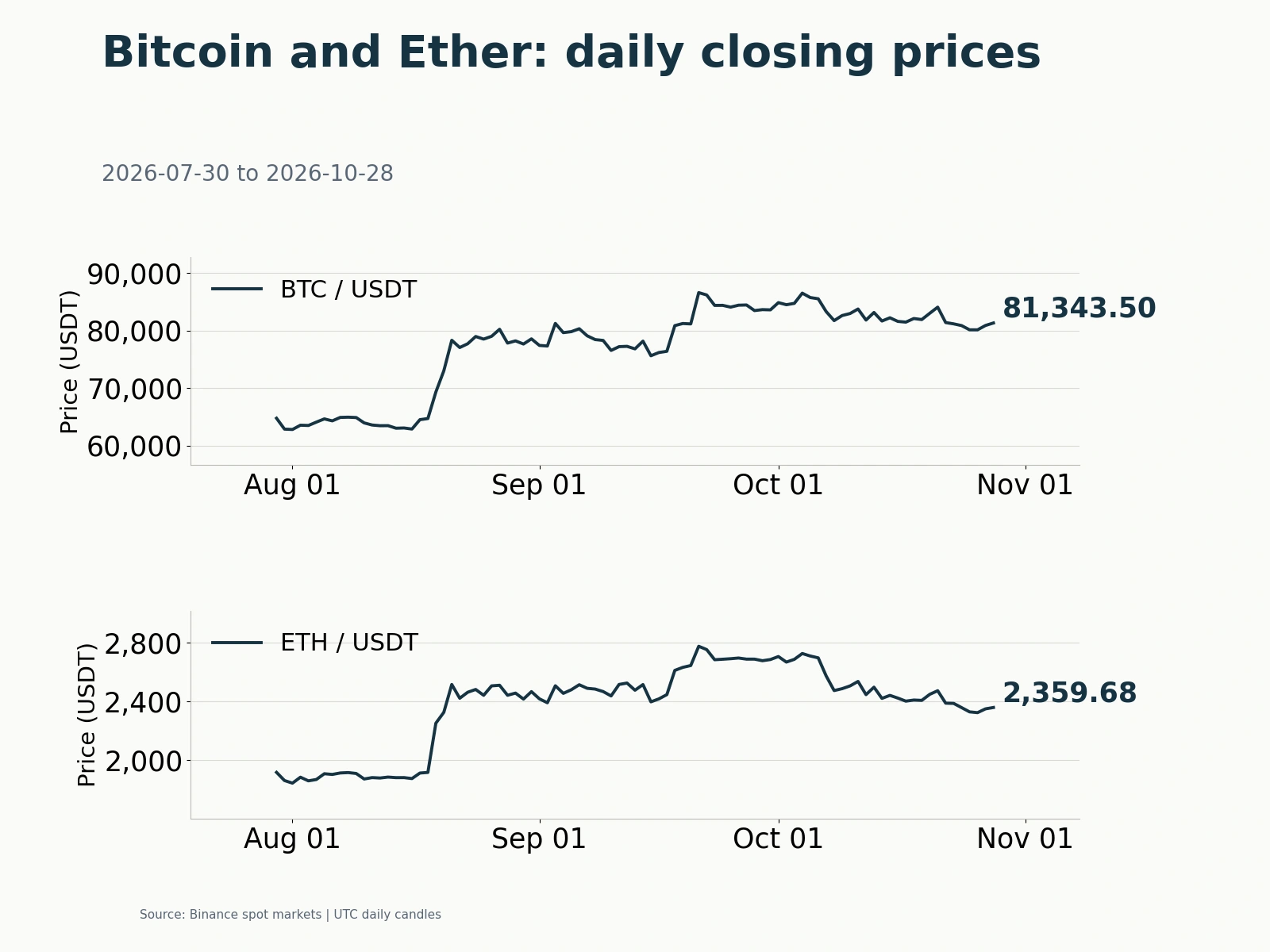
During the week of October 5–11, the crypto market faced the combined pressure of allocation-capital withdrawals and a leveraged-long squeeze. US spot Bitcoin and Ethereum ETFs recorded aggregate net outflows of $1.221 billion over five trading sessions. Although spot prices rebounded later in the week and futures positions gradually stabilized, longs continued to bear financing costs. With on-chain stablecoin supply contracting at the same time, the capacity of spot buying to absorb selling weakened markedly. A market recovery without incremental funding remained fragile.
As of the morning of October 12 Beijing time, fund flows showed structural divergence: spot Bitcoin ETFs still attracted some buying between outflow sessions, while spot Ethereum ETFs faced persistent one-way redemptions, heavily concentrated in leading funds.
Spot ETFs lose $1.221 billion in a week; Ethereum redemptions concentrate as stablecoin supply weakens
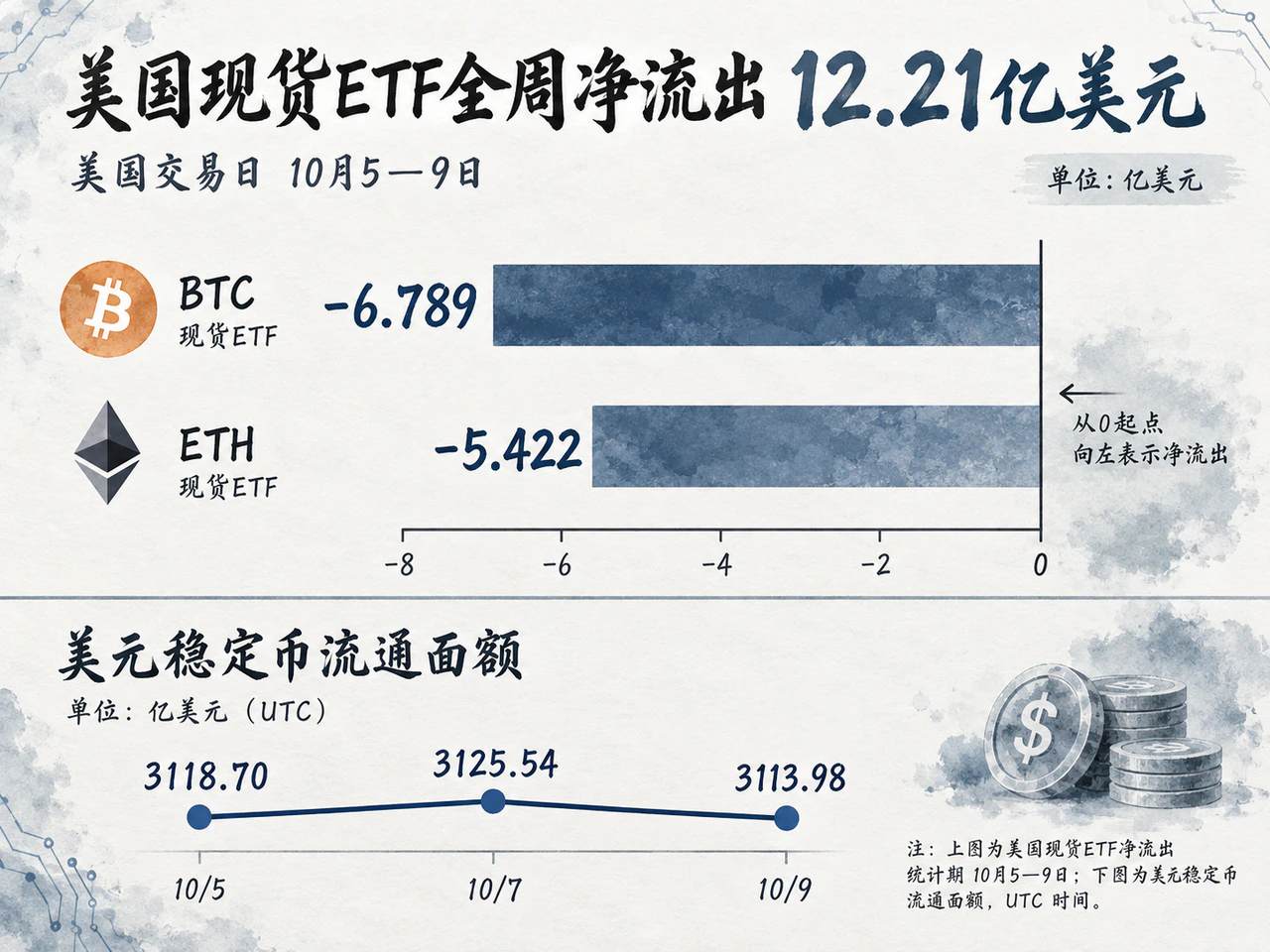
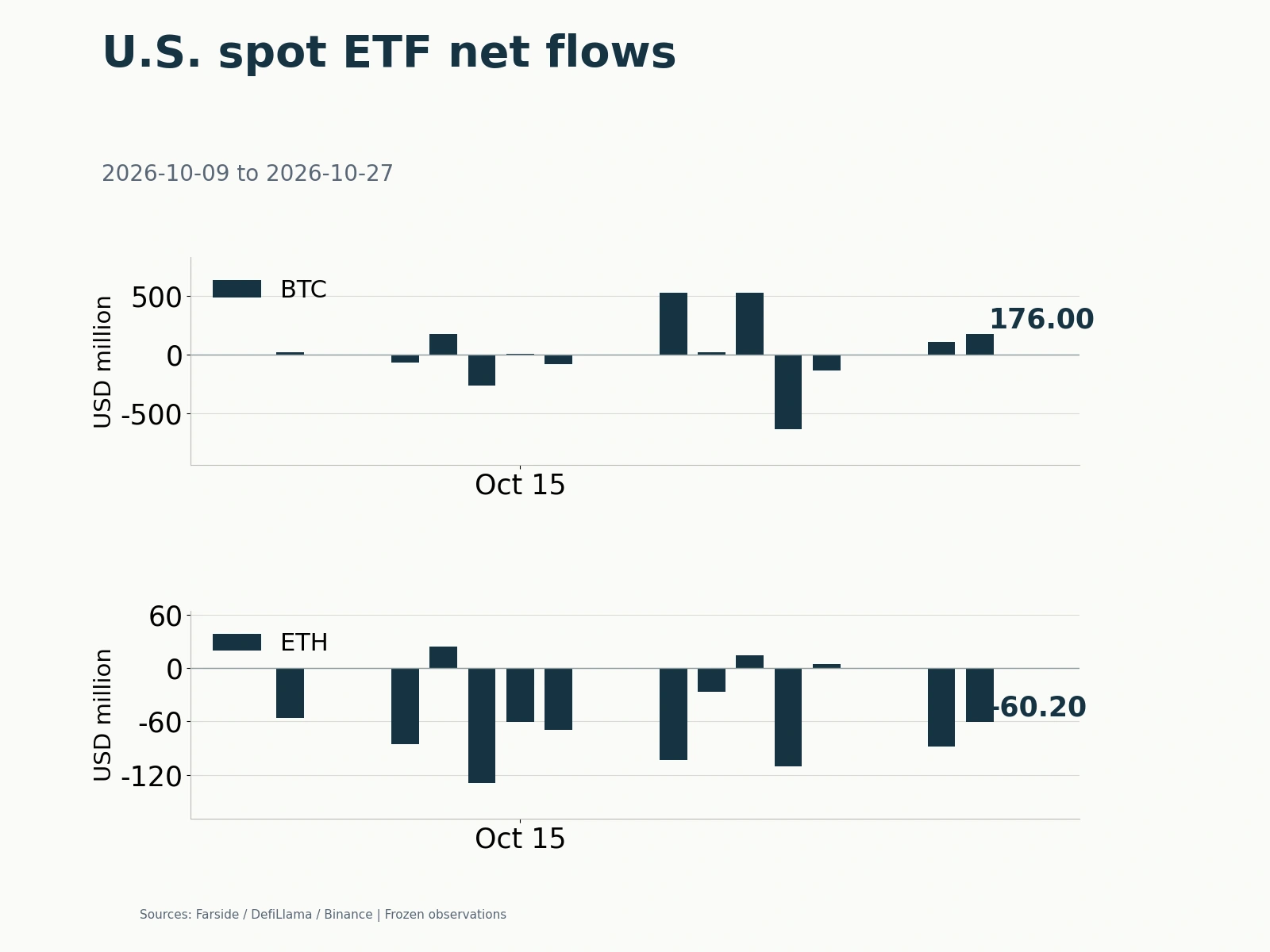
Farside data for the October 5–9 US trading sessions show weekly net outflows of $678.9 million from spot Bitcoin ETFs and $542.2 million from spot Ethereum ETFs. Bitcoin ETFs attracted $118.8 million on Tuesday and $21.1 million on Friday, but large redemptions of $484.9 million on Wednesday and $244.1 million on Thursday completely reversed the buying accumulated during the week.
| US trading day | Bitcoin ETF net flows ($100 million) | Ethereum ETF net flows ($100 million) |
|---|---|---|
| October 5 | -0.898 | -0.508 |
| October 6 | +1.188 | -2.019 |
| October 7 | -4.849 | -1.609 |
| October 8 | -2.441 | -0.725 |
| October 9 | +0.211 | -0.561 |
| Weekly total | -6.789 | -5.422 |
Differences within the product groups were also pronounced. Among Bitcoin products, BlackRock's IBIT attracted only approximately $1.1 million net for the week, effectively flat, while Fidelity's FBTC lost $380.3 million. In Ethereum, BlackRock's ETHA recorded $477.1 million in weekly net outflows, accounting for about 88% of the category's total. Redemption pressure was therefore highly concentrated in specific large funds rather than reflecting indiscriminate selling across all products.
Spot ETF net redemptions reduce funds' spot exposure and transmit through authorized participants and their hedging trades. Friday's small Bitcoin ETF inflow showed that some buying support remained, but was insufficient to close the week's funding gap. Five consecutive sessions of Ethereum outflows pointed to the need for more sustained capital replenishment on the allocation side.
Alongside ETF withdrawals, on-chain dollar liquidity also contracted at the margin. DefiLlama historical data show total dollar-pegged stablecoin circulation rising from $311.870 billion at 00:00 UTC on October 5 to $312.554 billion on October 7, before falling to $311.398 billion on October 9. Circulating face value declined by approximately $473 million net over four days. ETF outflows combined with weaker stablecoin supply substantially narrowed the available liquidity for absorbing additional selling in secondary markets.
More than $1 billion in long liquidations releases leverage pressure, but futures premiums and positive funding leave recovery fragile

Early in the week, derivatives already showed high leveraged-long costs and divergent directional pricing. A Deribit snapshot published by BIT on October 5 put the annualized one-month Bitcoin futures basis at 6.64% and Ethereum's at 2.98%, while Bitcoin's one-month 25-delta options skew was close to zero. Longs were paying a meaningful futures premium, but options were not assigning a stronger implied-volatility premium to the upside.
The sharp midweek decline triggered concentrated deleveraging. CoinDesk reported on October 9 that approximately $1.19 billion had been liquidated across crypto markets over the preceding 24 hours, including more than $1 billion in longs. Ethereum liquidations were approximately $356 million, above Bitcoin's $298 million. Ethereum therefore suffered deeper forced liquidation alongside persistent spot ETF withdrawals, substantially amplifying its funding pressure.
After the violent clearing of positions, vulnerable exposure was reduced, but leveraged-long demand had not disappeared. Citing Coinalyze on October 9, CoinDesk said Bitcoin futures open interest had fallen to $27.1 billion after Thursday's liquidations, down 1.9% over 24 hours, and had broadly stabilized after the liquidations by the time of the report. Funding remained around 5% annualized, while the annualized basis on Deribit's October 30 futures contract was still about 7%.
Stable open interest alongside rebounding prices suggests that a new wave of leverage expansion did not lead the late-week recovery. Yet persistently positive funding and futures premiums show longs still bearing holding costs. Effective stabilization would require a recovery in spot ETF subscriptions and renewed expansion in stablecoin supply. Without incremental spot capital, a rebound sustained by existing leverage alone would remain exposed to substantial volatility and drawdown risk.
Click “Read Original” for the full details.