In the week of October 5–11, the Federal Reserve sent a clear policy signal: persistent-inflation risks continued to support further monetary tightening, while the timing of any hike retained meeting-by-meeting flexibility. September meeting minutes and Governor Waller's latest comments together indicated that one more rate increase would probably be needed by year-end. Meanwhile, services input prices reached their highest level since July 2022, consumer inflation expectations rose for a second consecutive month and high borrowing costs were clearly constraining household durable-goods purchases. With low layoffs providing a cushion, the policy trade-off centered on the breadth of cost pass-through and the pressure on final demand. September CPI, PPI and the Fed's Beige Book, due in mid-October, would be central to assessing the urgency of the next action.
September minutes and Waller set the tone: another hike favored by year-end, with flexible timing
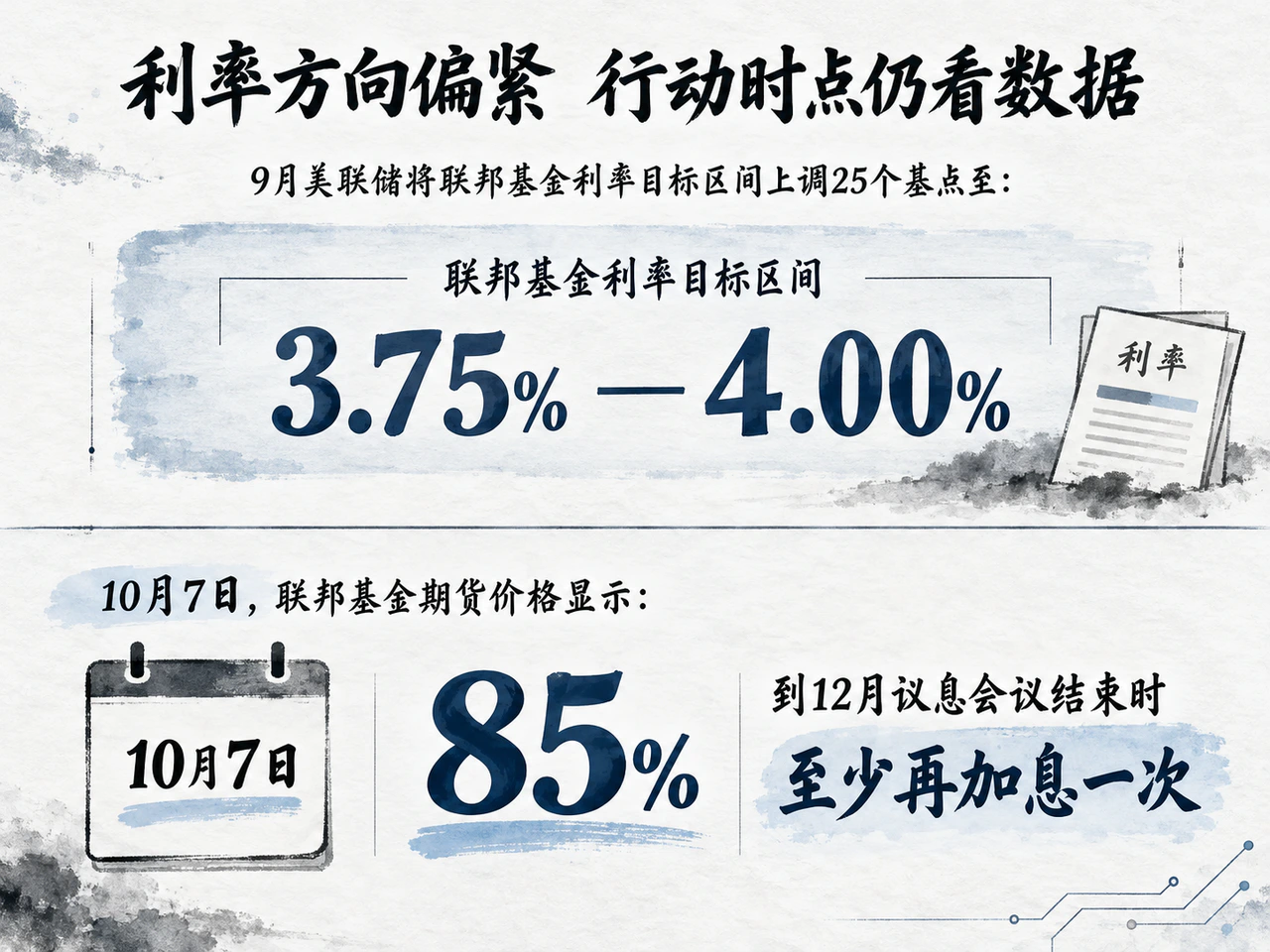
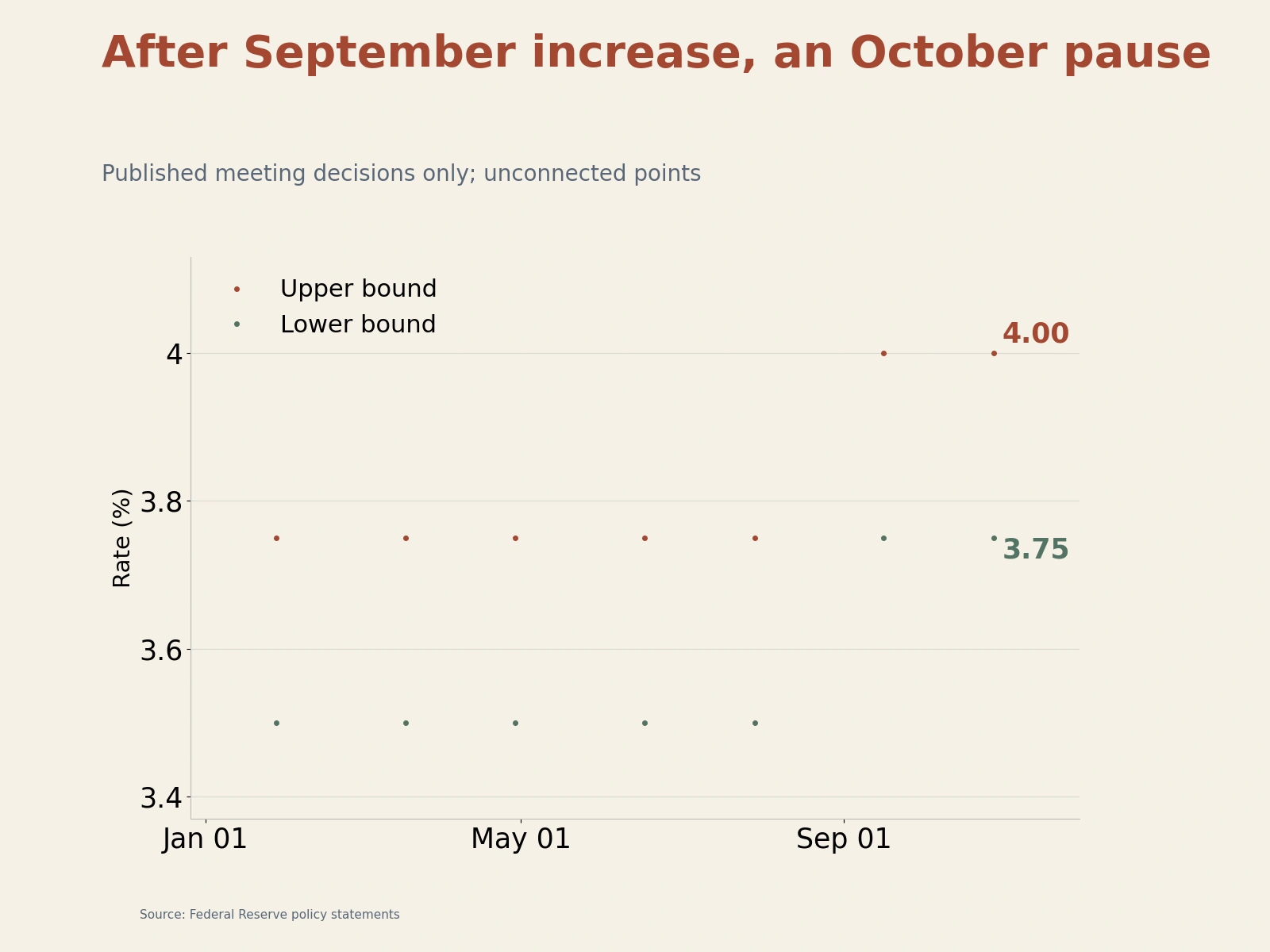
After raising the federal funds target range by 25 basis points to 3.75%–4.00% in September, the Fed published the minutes of that meeting on October 7. Most participants considered another increase likely to be appropriate before year-end, while specific future action remained dependent on new information and the balance of risks.
Inflation persistence was the central reason for the Fed's inclination toward further hikes. The minutes noted that energy costs and AI construction investment were lifting some goods and input prices, while some businesses had gained greater ability to pass through costs. Policymakers worried that prolonged pressure could spread into broader goods prices and wage-setting behavior. Some participants, however, viewed aggregate wage growth as moderate and the labor market as something other than the principal inflation source. The policy balance therefore focused more on supply-chain cost transmission and final demand's capacity to absorb it.
On October 8, Fed Governor Waller spoke at the Istanbul Economic Forum hosted by Turkey's central bank, further confirming a restrictive stance. He said that if macroeconomic data continued to evolve as expected, further Fed rate increases would be needed. Hikes did not have to occur consecutively but should be implemented within a reasonable time. Waller placed the emphasis clearly on inflation control in the inflation-employment trade-off. He stressed that although the latest employment report showed fewer job additions, the labor market remained stable overall. Under a revised methodology, August core PCE prices rose 0.25% month on month and 3.0% year on year, indicating insufficient progress in containing inflation.
Waller cited October 7 federal funds futures prices showing an 85% probability of at least one additional hike by the end of the December meeting. This indicated substantial agreement between markets and Fed policymakers on the direction of rates during the year. Meeting-by-meeting flexibility largely concerned the precise timing and pace of action.
Services prices index reaches 74 as inflation expectations rise and household confidence weakens
The September Institute for Supply Management (ISM) services survey, released October 5, showed continued expansion but a pronounced acceleration in cost pressure. The headline services index was 54.9, versus 55.4 previously. Business activity fell from 61.7 to 56.5 and new orders edged down from 60.9 to 59.8, leaving overall demand and orders resilient. Employment rose from 47.8 to 50.1, returning above the 50 threshold separating expansion from contraction.
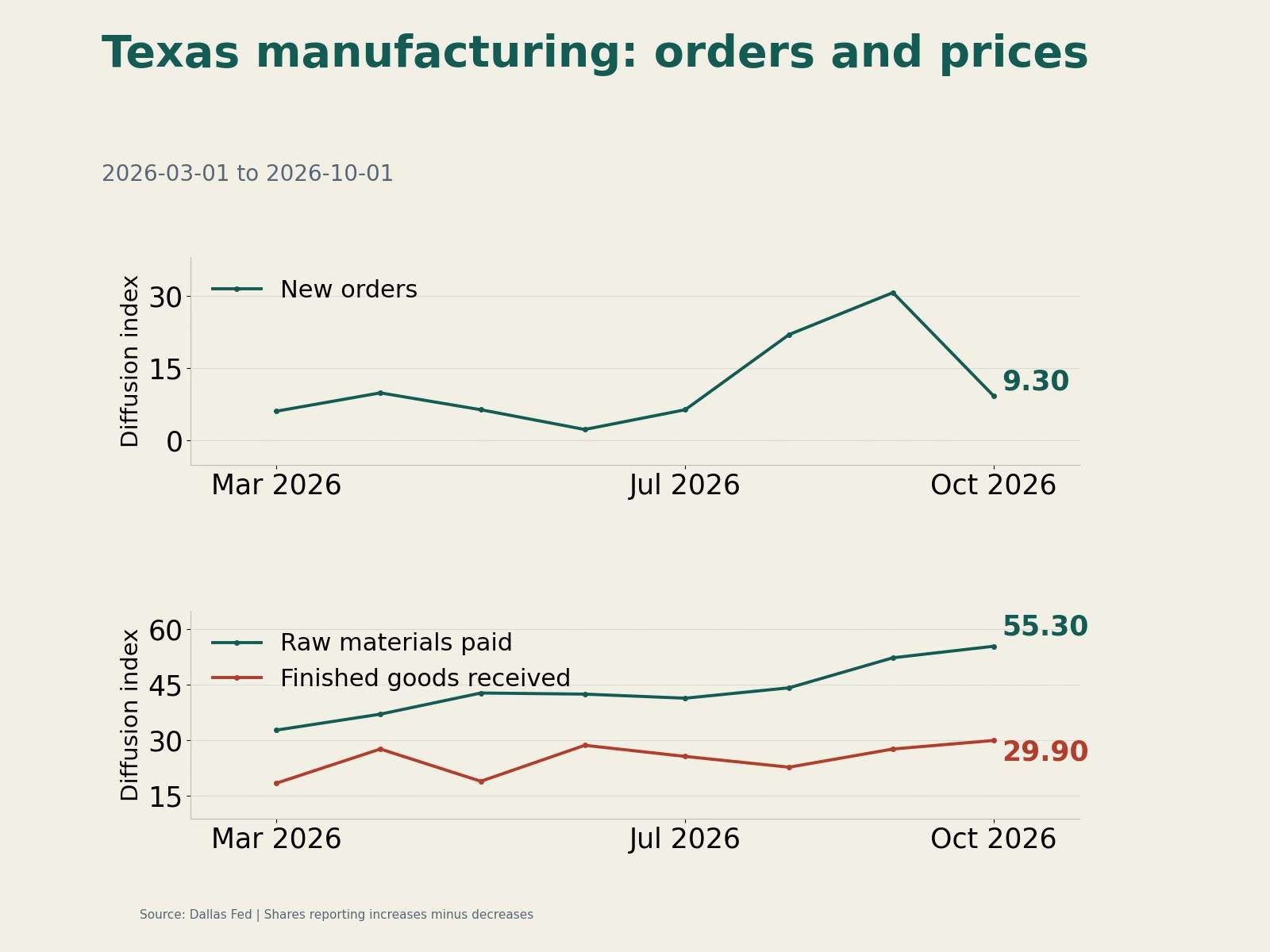
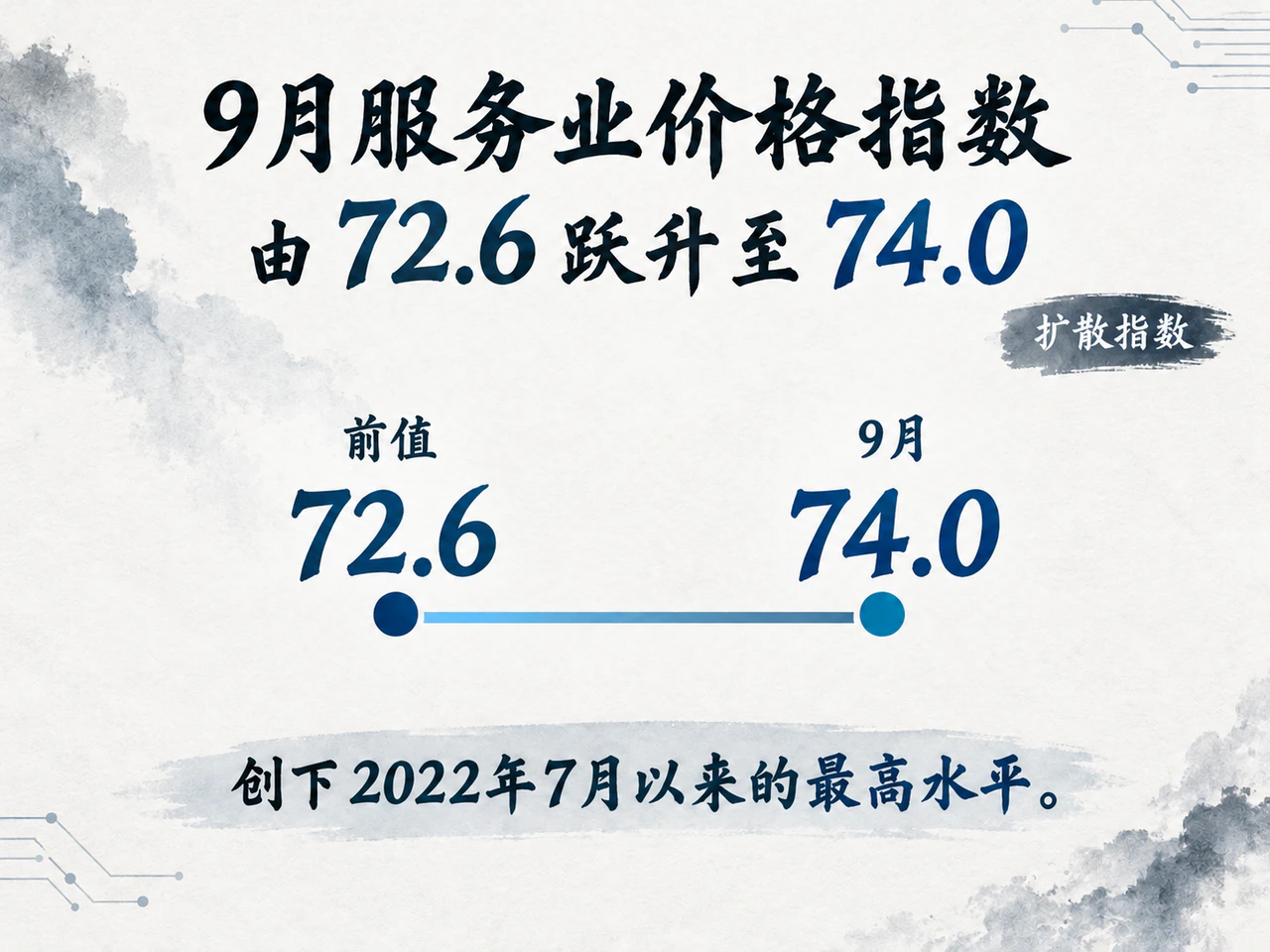
Of greater concern to policymakers was the sharp rise in prices: the September services prices index jumped from 72.6 to 74.0, the highest since July 2022. This diffusion index indicates that input-price increases were becoming more widespread. Respondents generally identified fuel costs as the main driver, while supply-chain constraints lengthened delivery times and increased procurement costs. With final demand resilient and materials and transport costs rising, firms could not fully absorb the increase simply by compressing margins, leaving persistent pressure to pass costs through to customers.
Input-cost pressure was materially squeezing households. The preliminary University of Michigan October consumer survey, released October 9, showed sentiment falling from 48.1 in September to 46.3. Current economic conditions dropped sharply from 50.9 to 44.7, while expectations edged up from 46.3 to 47.3. The survey said persistently high prices and borrowing costs had significantly worsened buying conditions for durables, with especially severe sentiment declines among lower-income households and those with fewer stock holdings.
Inflation expectations also rose again. Preliminary one-year expectations increased from 4.6% to 4.7%, and long-term expectations from 3.4% to 3.5%, both rebounding for a second consecutive month. Household financial pressure restrained willingness to buy durables, increasing the economic cost of further tightening. At the same time, rising inflation expectations reinforced the need for restrictive rates. The Fed therefore had to watch closely both the pace of demand cooling and the lags in price transmission when considering the rate path.
Initial claims fall to 197,000; new inflation data will be central to October's decision
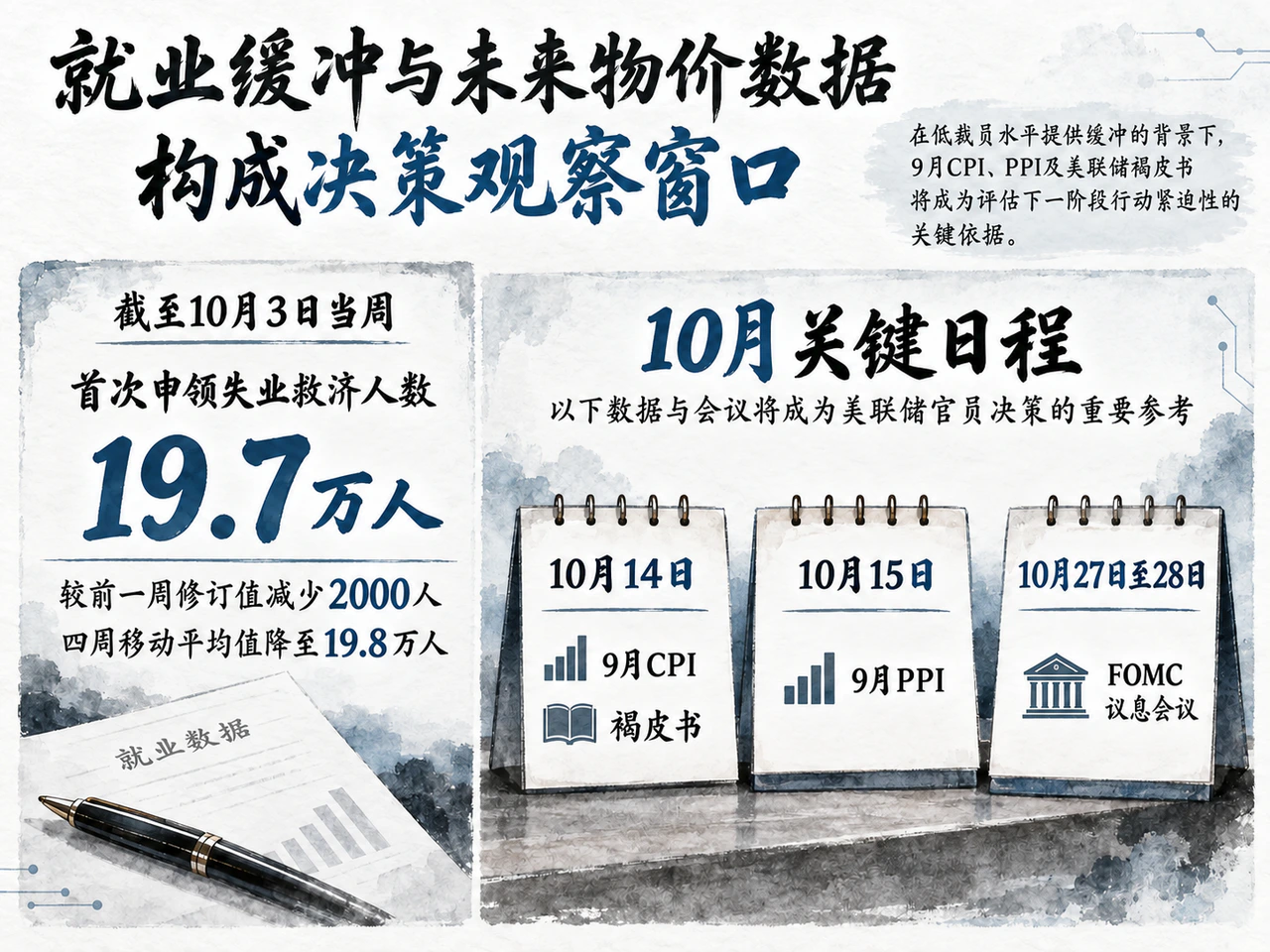
Labor Department claims data released October 8 showed US corporate layoffs remained contained. Seasonally adjusted initial claims were 197,000 in the week ended October 3, down 2,000 from the prior week's revised figure; the four-week moving average fell to 198,000. Continuing claims rose 17,000 to 1.716 million in the week ended September 26. Low initial claims gave policymakers room to focus on inflation control, while the modest rise in continuing claims suggested that unemployed workers' reabsorption into jobs still required monitoring.
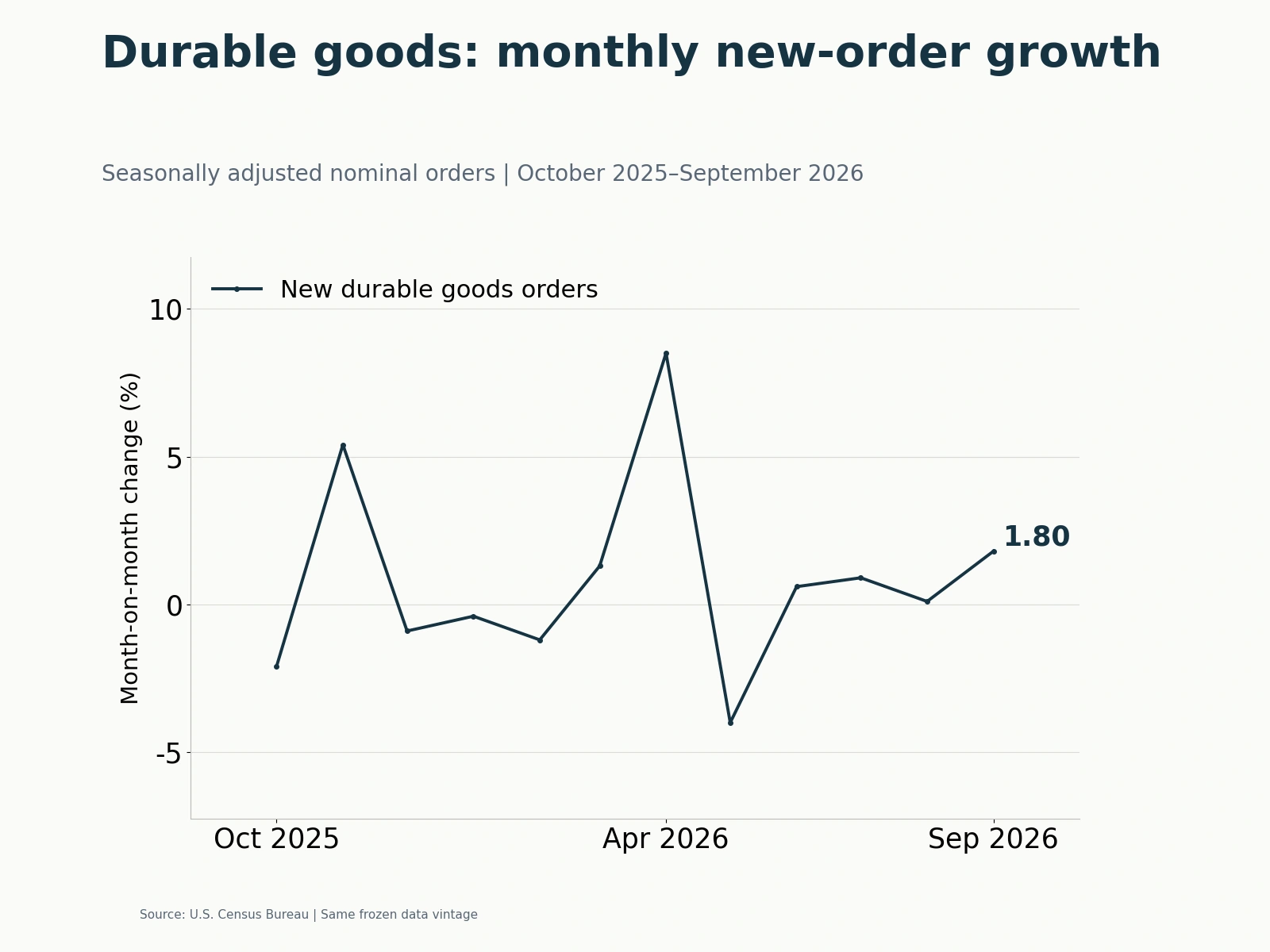
Taken together, the week's information showed resilient demand alongside intensifying cost pass-through and emerging pressure on final buyers. Services orders and low layoffs supported the economy's fundamentals, while households' sensitivity to high prices and borrowing costs showed that restrictive policy was already constraining some durable-goods demand. Substantial subsequent weakening in consumption and employment would reduce the need for consecutive hikes. Continued increases in core prices and inflation expectations would instead raise the cost of waiting.
The coming week provides a crucial test: September CPI and the Fed's Beige Book are scheduled for October 14, followed by September PPI on October 15. These price releases will directly test how deeply services and energy input costs are passing through to consumers. The Beige Book will supply first-hand regional evidence on company pricing strategies, hiring intentions and changing demand. These fundamentals will be policymakers' most important reference before the October 27–28 FOMC meeting and will directly determine the urgency and timing window for the next hike.