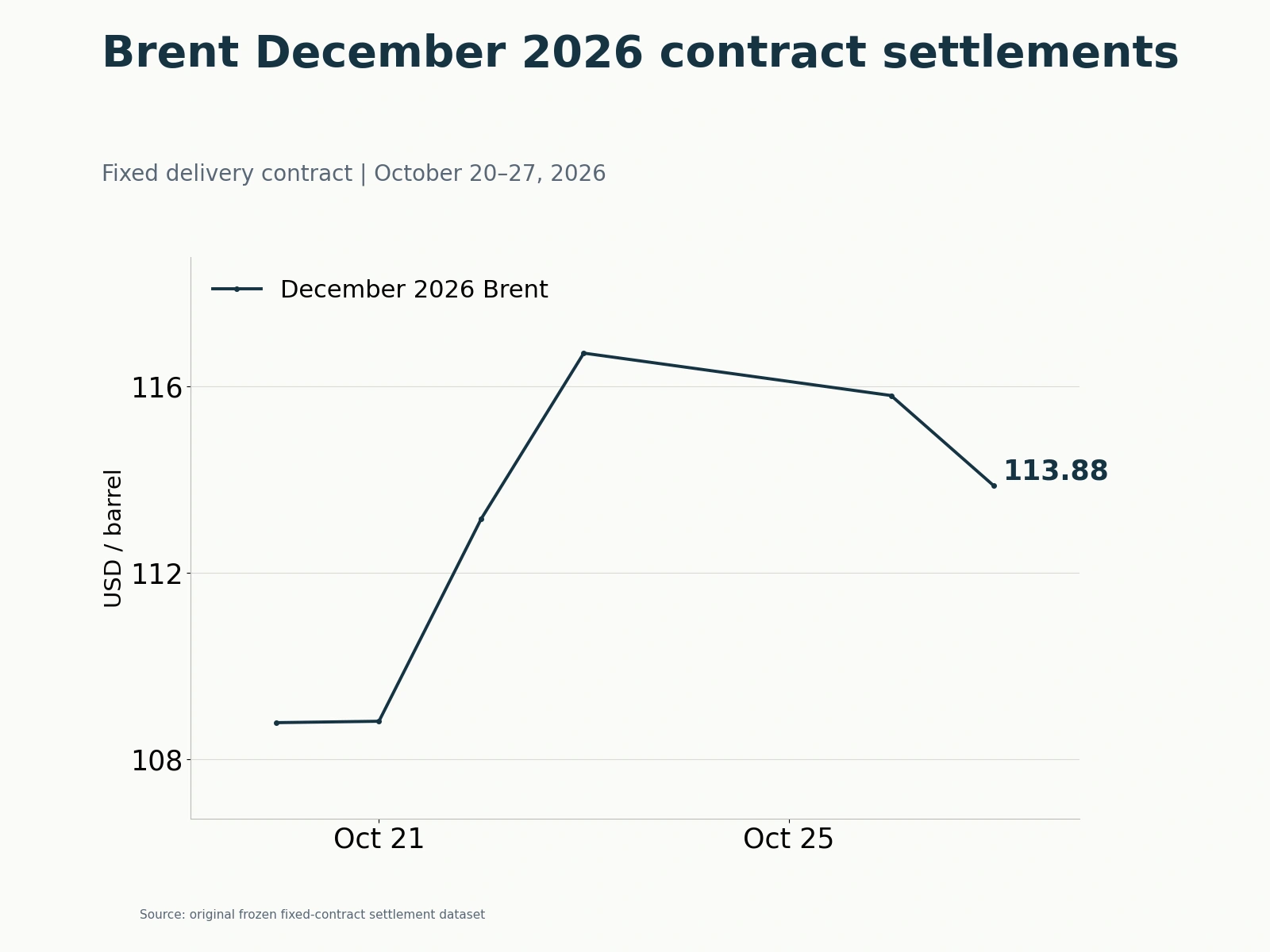
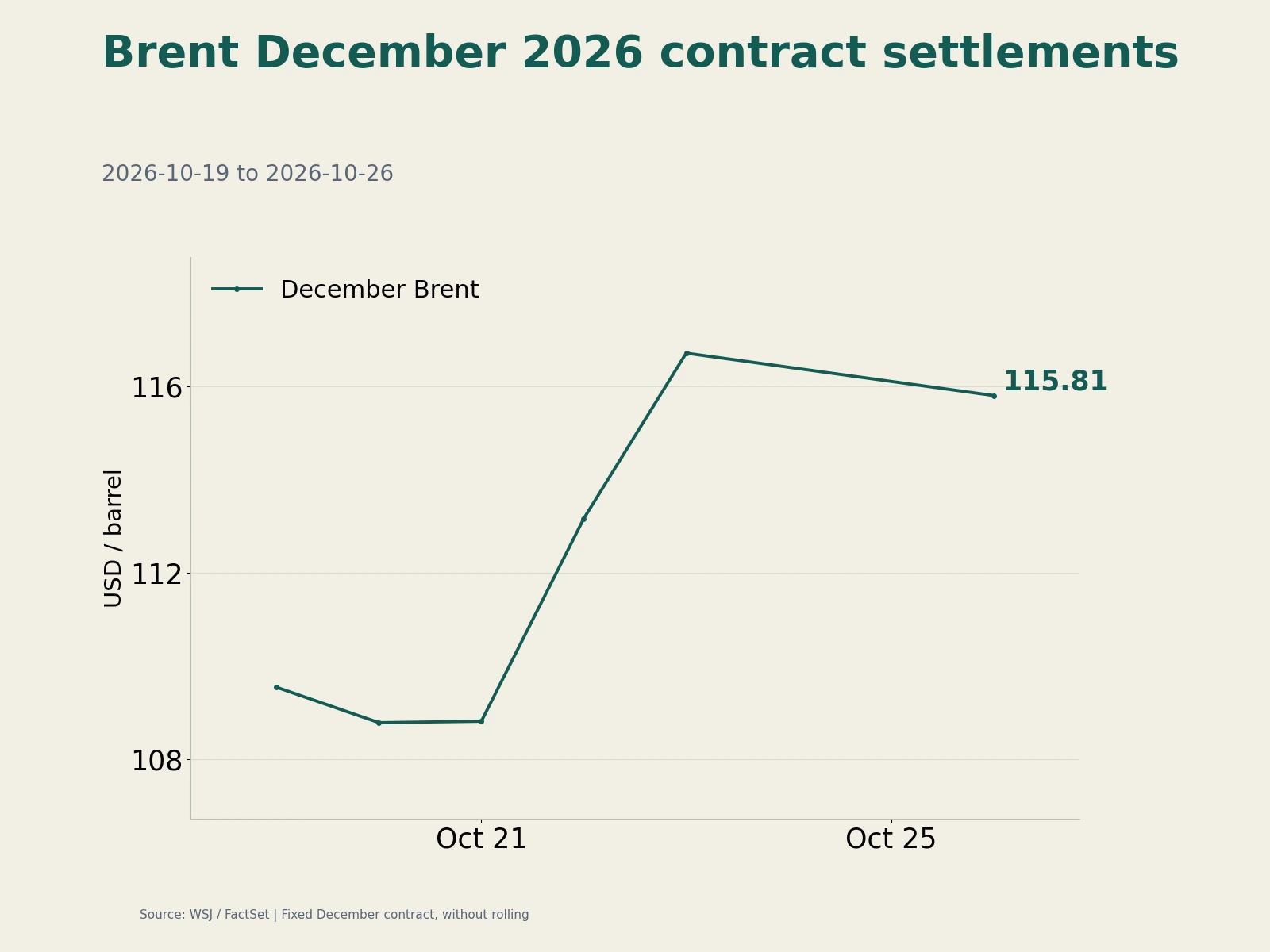
During October 5-11, international crude prices fell early in the week before rebounding strongly midweek. Seaborne-delivery risks and local supply disruptions again dominated pricing, outweighing expectations of a gradual supply recovery. At the October 9 close, December Brent futures settled at $104.72 a barrel, up 2.4% for the week, while November WTI settled at $91.85, up 0.8%. Brent's significantly larger gain directly reflected prompt-premium pressures on the global seaborne crude supply chain. By the morning of October 12, Beijing time, the main tension in physical and derivatives markets remained that, although more Middle Eastern crude was attempting to reenter circulation, delivery security through key waterways and continuously rising logistics costs had yet to stabilize.
Gulf of Mexico shutdowns and Hormuz disruption reverse oil's decline midweek
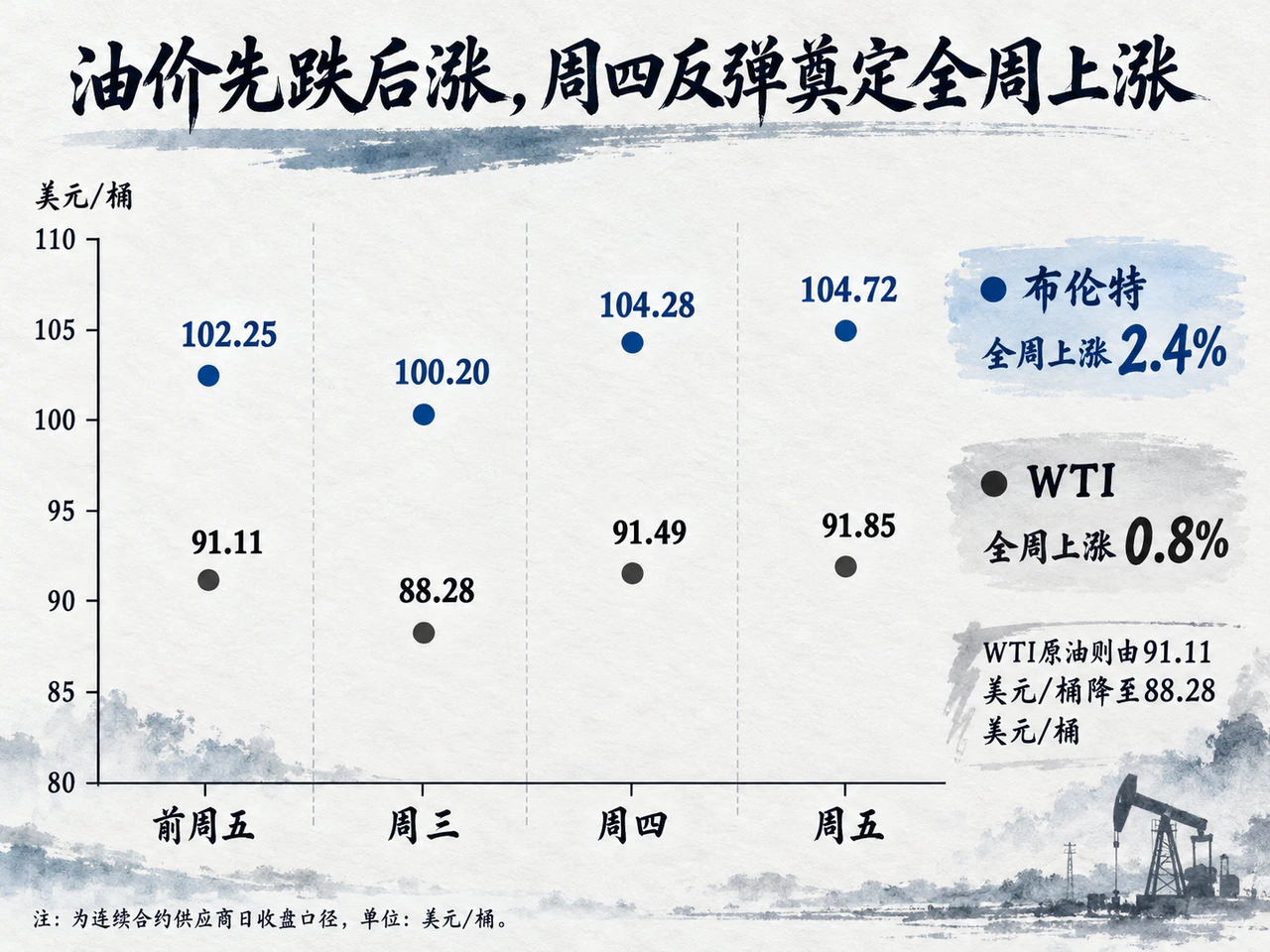
On the continuous-contract provider's daily closing basis, oil weakened overall in the first three sessions. Brent fell from the preceding Friday's $102.25 a barrel to Wednesday's $100.20, while WTI declined from $91.11 to $88.28. Thursday brought the turning point as several supply interruptions combined, lifting Brent sharply to $104.28 and WTI to $91.49 and establishing the weekly gain. Diplomatic headlines briefly pulled prices lower early Friday, but both ultimately closed slightly higher.
Competing influences intensified price volatility during the week. Reuters reported on October 9 that U.S. President Trump said he did not plan to strike Iran before the November midterm elections and that the two sides were holding productive discussions. Although hopes of diplomatic easing depressed prices early Friday, Persian Gulf shipping risks and U.S. offshore shutdowns quickly limited the downside. Citing U.S. authorities, Reuters reported that Hurricane Isaias had shut around 1.3 million barrels a day of Gulf of Mexico crude production by Thursday, equivalent to 62.9% of the region's output at that time.
Shipping disruption was corroborated by physical flows. OilPrice, citing Kpler, said Hormuz crude shipments had fallen 27% from an earlier wartime high to at least 10.1 million barrels a day. The number of commodity vessels passing the strait fell to seven on Tuesday, the lowest daily total since late July. More ship-to-ship (STS) transfers, longer detours and surging insurance costs jointly raised delivery costs. For refinery buyers, a substantial gap remained between crude available on paper and crude that could actually reach the refinery on schedule.
U.S. crude stocks fall 3.2 million barrels as a tight diesel balance supports refinery demand
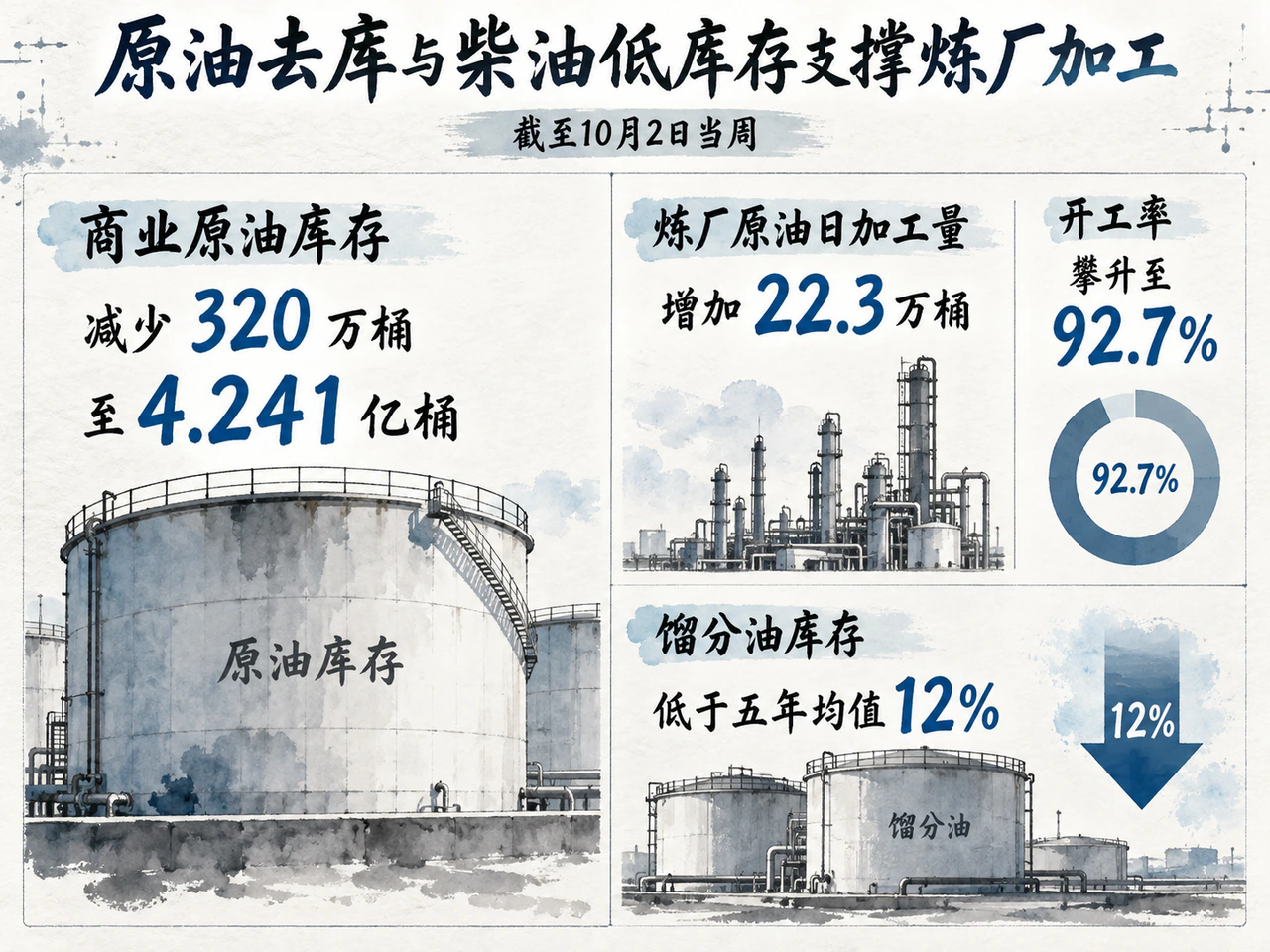
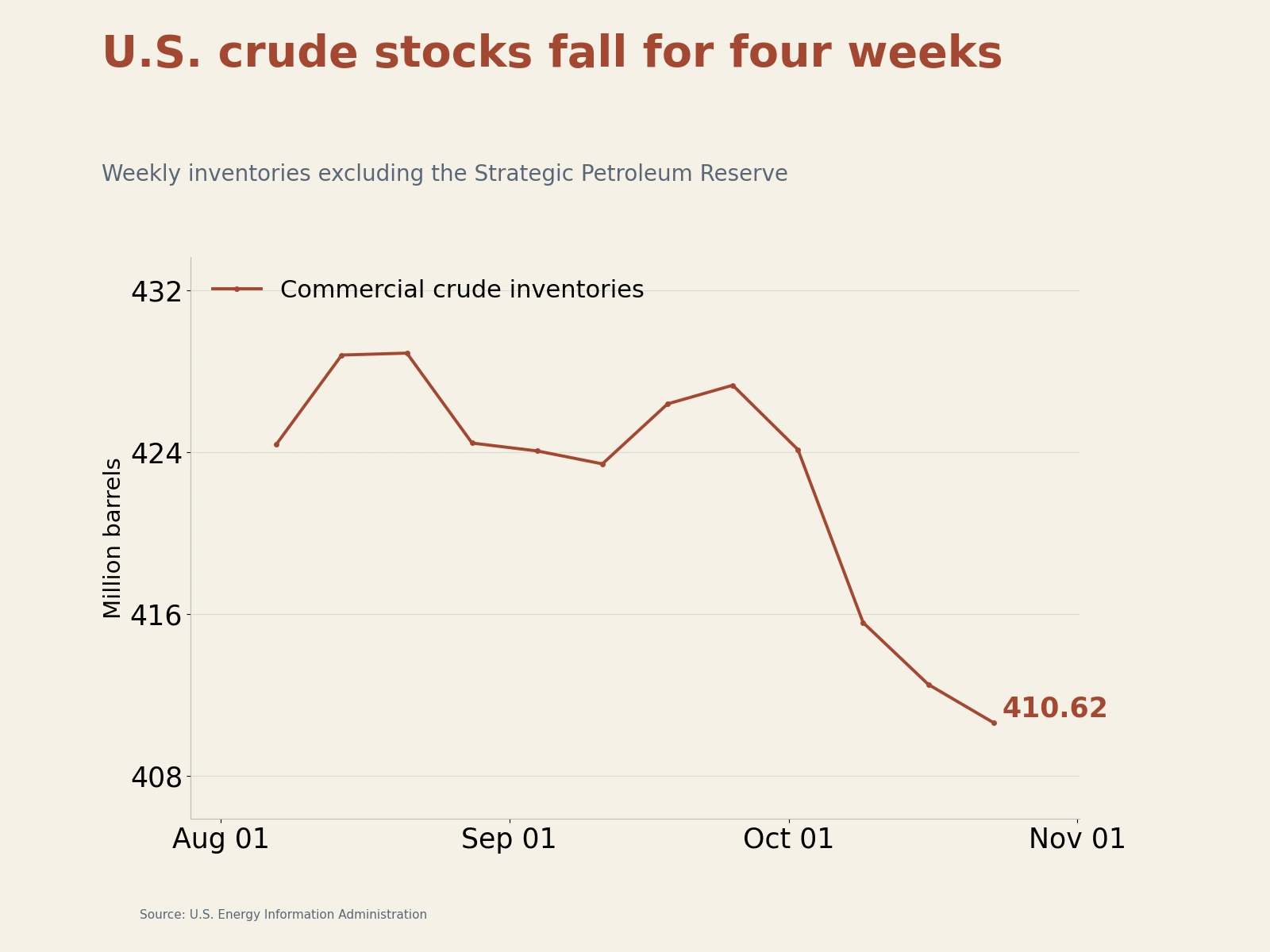
On fundamentals, EIA weekly data released October 7 showed U.S. commercial crude inventories falling by 3.2 million barrels to 424.1 million in the week ended October 2. Refinery crude runs increased by 223,000 barrels a day and utilization climbed to 92.7%. Higher refinery throughput and continuing crude drawdowns provided solid supply-demand support for prices.
Refined products, however, showed clear structural divergence. U.S. gasoline inventories rose 400,000 barrels that week, while distillate stocks were broadly unchanged. Four-week gasoline and distillate product supplied fell 0.3% and 1.6% year on year, respectively. Against historical benchmarks, commercial crude inventories remained 1% above the five-year seasonal average, but distillate stocks were 12% below it. This pattern showed tightness concentrated in middle distillates, primarily diesel, and constrained by bottlenecks in transporting crude and fuel between regions.
The structural diesel shortage stimulated refinery crude purchasing in turn. In its October 6 outlook, the EIA said persistent diesel tightness was boosting refining demand, with U.S. East Coast distillate stocks 32% below their five-year seasonal average in September. Expectations of marginal supply relief also emerged during the week: Reuters reported on October 9, citing sources, that China would resume product exports after a brief National Day holiday slowdown, helping ease the tight global fuel market.
EIA raises Q4 Brent forecast to $105; prompt backwardation reflects inventory drawdown pressure
On the derivatives curve, near contracts continued to trade at a substantial premium to later maturities. Seeking Alpha reported during the week that Brent futures remained in backwardation. This structure closely matched high prompt-delivery risk: with logistical and geopolitical uncertainty, immediately deliverable physical barrels commanded a larger premium, while deferred contracts allowed for improved shipping and fewer shutdowns later.
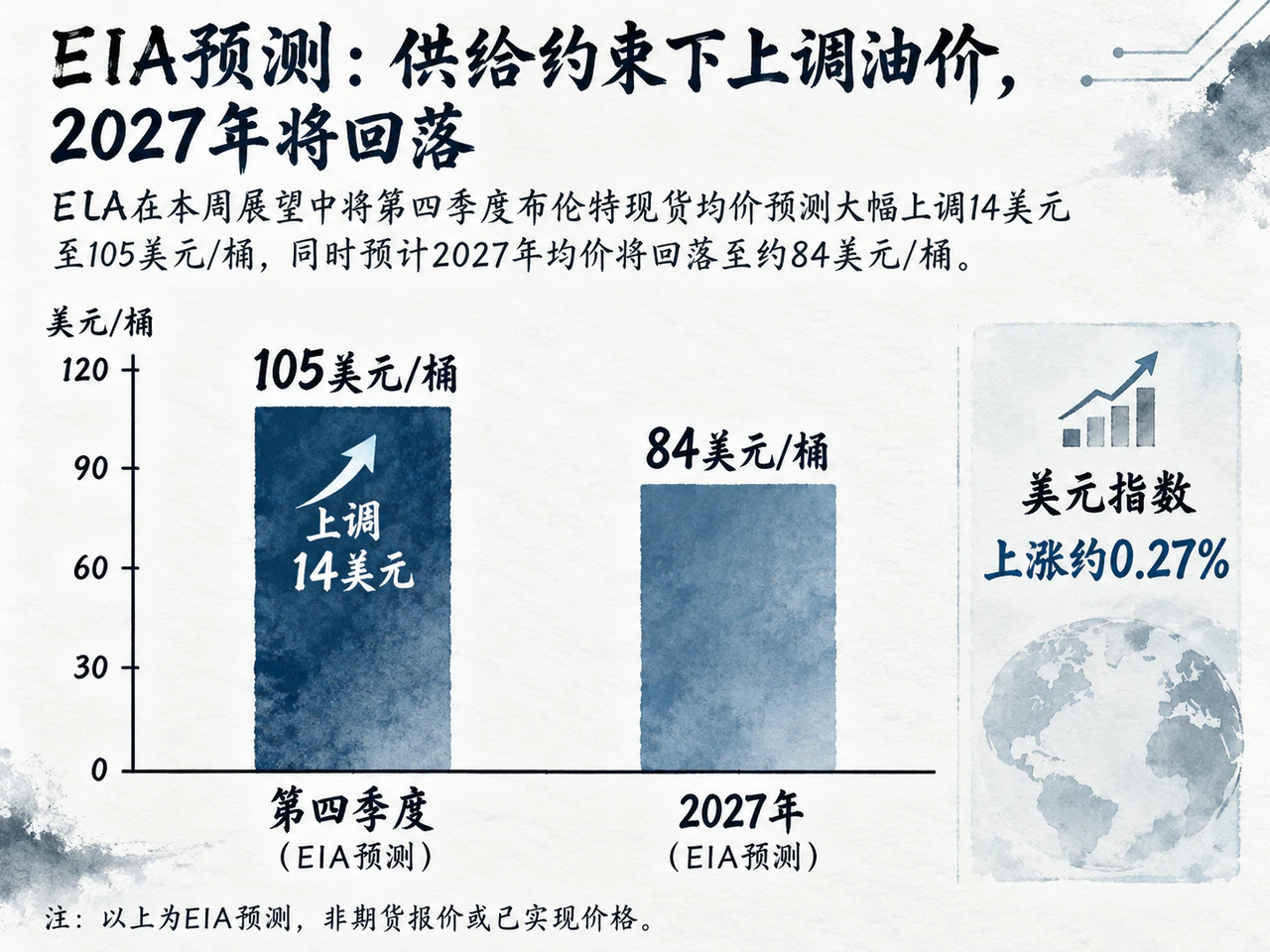
In the outlook issued that week, the EIA raised its fourth-quarter average spot Brent forecast by a substantial $14 to $105 a barrel, while expecting the 2027 average to fall back to about $84. Its central reasoning was that Middle Eastern shut-in output had declined from around 5.8 million barrels a day in August to about 4.8 million in September, as bypass pipelines and STS transfers gradually expanded exports, but roughly 4.5 million barrels a day would remain constrained in the fourth quarter. On the global inventory balance, the EIA estimated average third-quarter oil-stock draws of 1.9 million barrels a day and forecast another 700,000 barrels a day in the fourth quarter. The pace of supply recovery could restrain longer-term prices but was not yet sufficient to rebuild the global inventory buffer quickly.
On supply decisions and macro-financial conditions, seven OPEC+ countries decided on October 4 to maintain September's required production levels in November, leaving current supply changes mainly dependent on actual loadings, shipping and the pace of restarts. Financial conditions also diverged during the week: the dollar index rose about 0.27%, while the 10-year U.S. Treasury yield fell 4 basis points. Oil prices still gained despite the stronger dollar, indicating that physical supply-chain interruptions and prompt-delivery risks dominated current pricing.
Four key developments require close tracking. First, whether Hormuz traffic and freight rates improve together will determine whether transport premiums ease smoothly. Second, the pace of post-storm Gulf of Mexico restarts will determine how long shutdowns disrupt U.S. Gulf crude supply. Third, U.S. distillate inventories and the sustainability of refinery utilization will test how strongly fuel shortages support refinery crude demand. Fourth, sustained Chinese product exports and actual Middle Eastern crude loadings will test whether expected future supply improvements materialize. Repeated shipping interruptions and low fuel stocks would continue to support prompt prices strongly. If vessel flows and restarts improve smoothly together, the premium rebuilt this week would face compression and reversal.