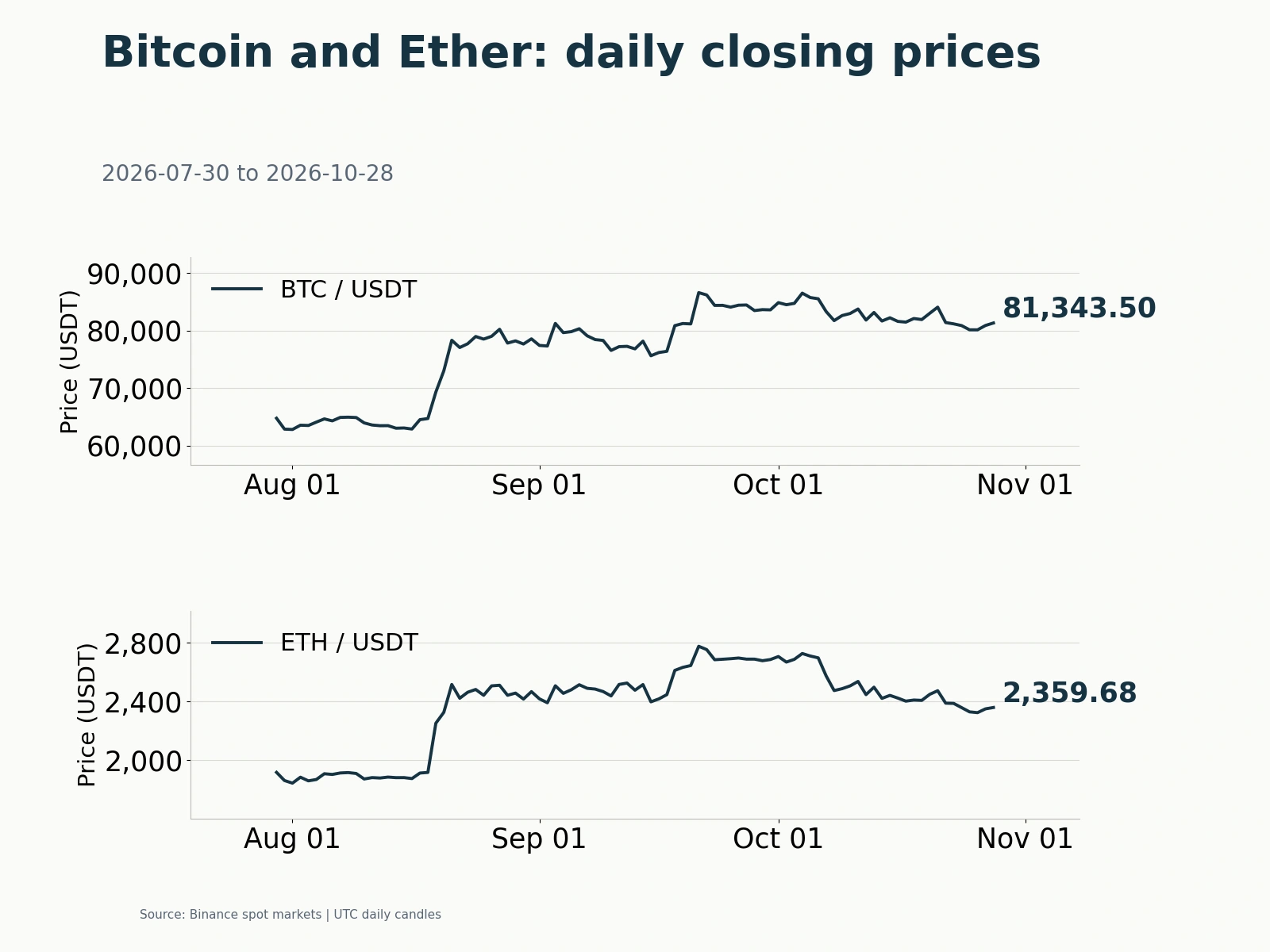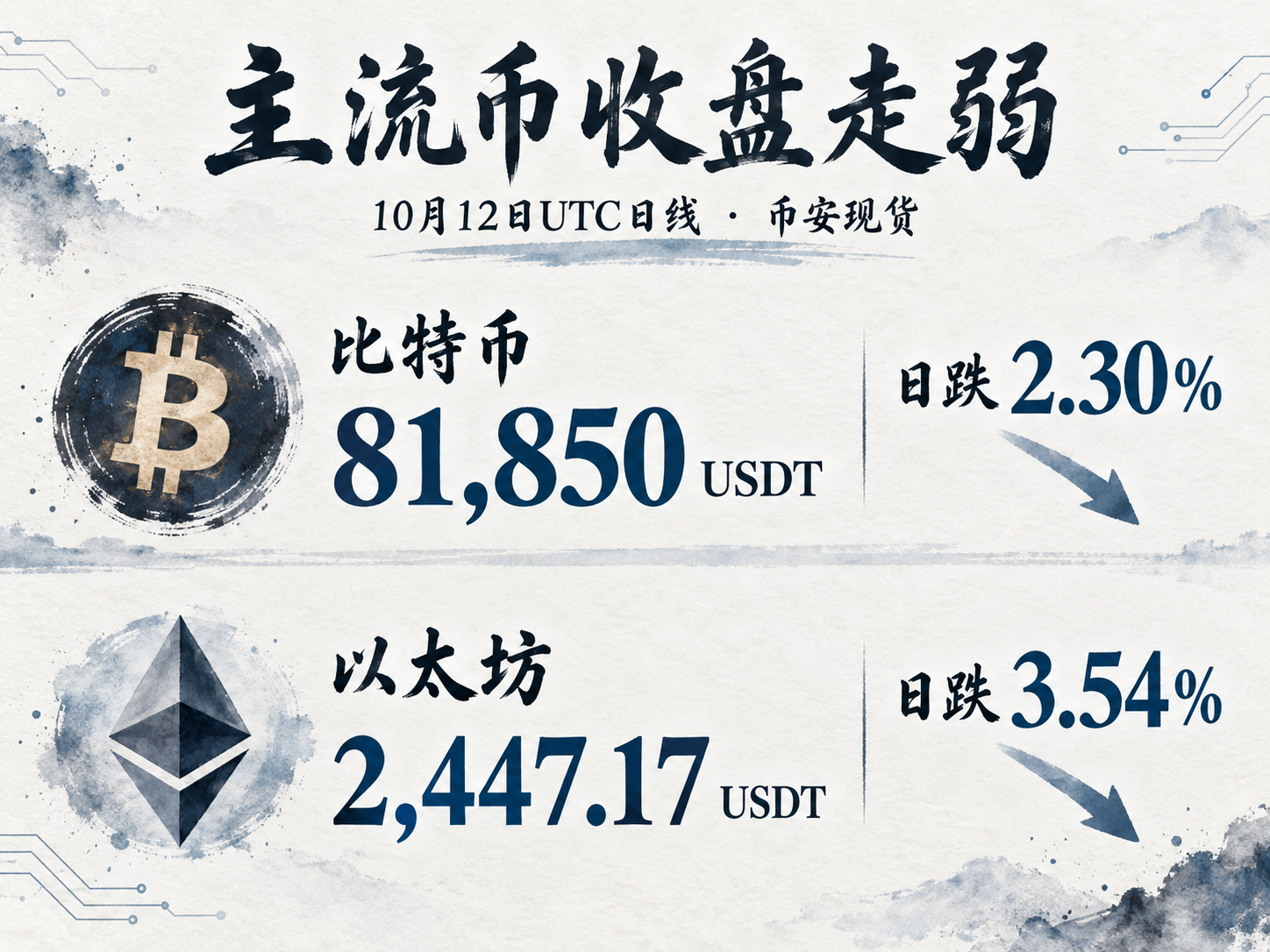
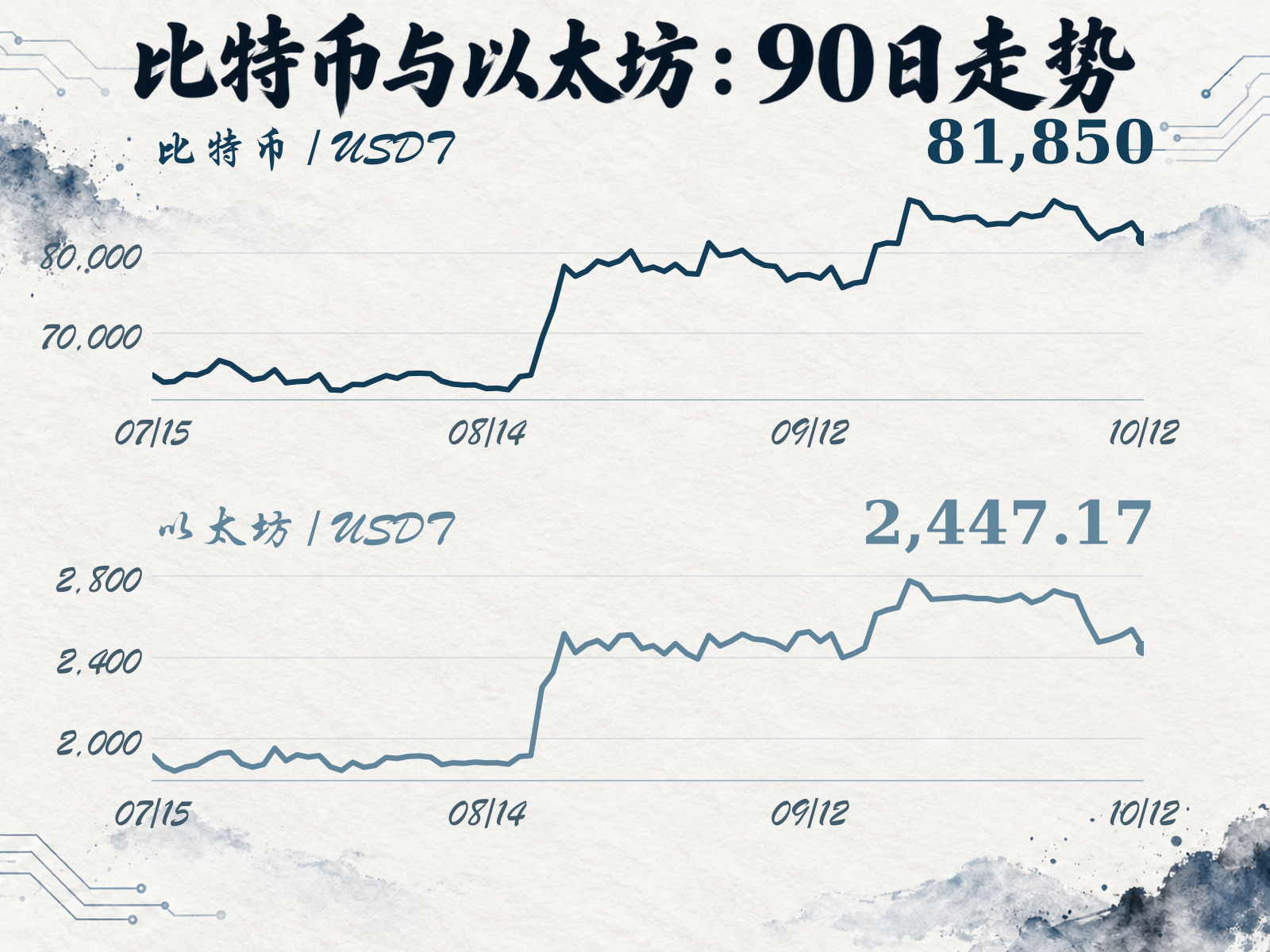
Bitcoin and Ethereum both fell on the new week's first complete trading day, with activity in some smaller tokens failing to stabilize the broader market. On Binance spot USDT prices and a UTC daily-candle basis, at the close at 08:00 Beijing time on October 13 Bitcoin stood at 81,850 USDT, down 2.30% from the previous day, and Ethereum at 2,447.17 USDT, down 3.54%. Institutional accumulation news could not offset selling pressure. Attention shifted to whether buying could continue and whether risk appetite would stabilize before inflation data.
Bitcoin and Ethereum close lower on higher turnover as early rotation fades
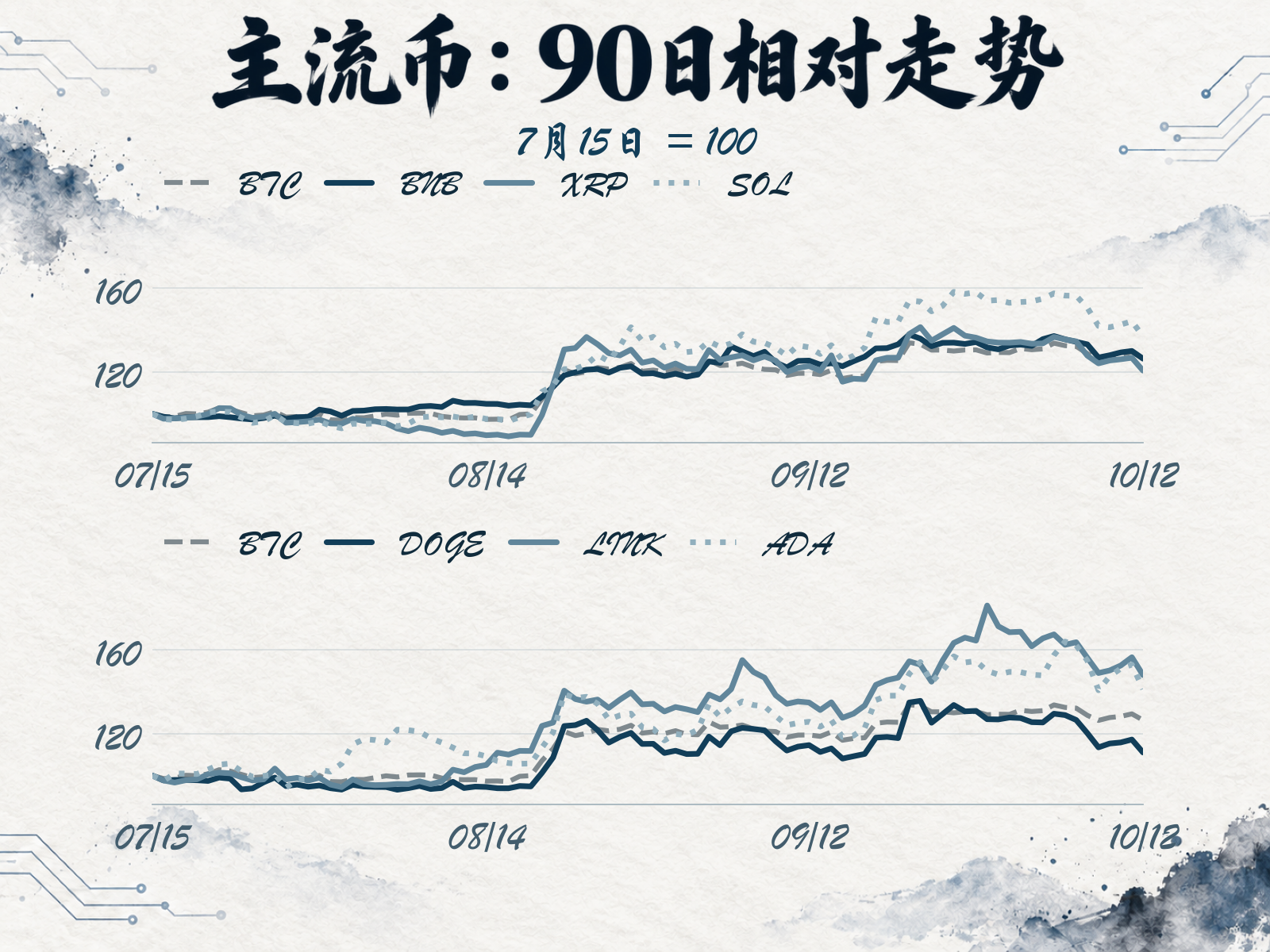
Rotation remained active early in the US Eastern morning on October 12. CoinDesk reported then that its small-cap CoinDesk 80 index had gained around 3% over 24 hours, versus around 1.2% for the large-cap CoinDesk 5. By the end of the complete UTC trading day, however, Bitcoin and Ethereum both closed near their daily lows. Bitcoin reached a high of 84,352 USDT and a low of 81,750.09 USDT, closing only about 100 USDT above the low. Ethereum's high was 2,579.88 USDT and low 2,443 USDT, with its close just 4.17 USDT above the low.
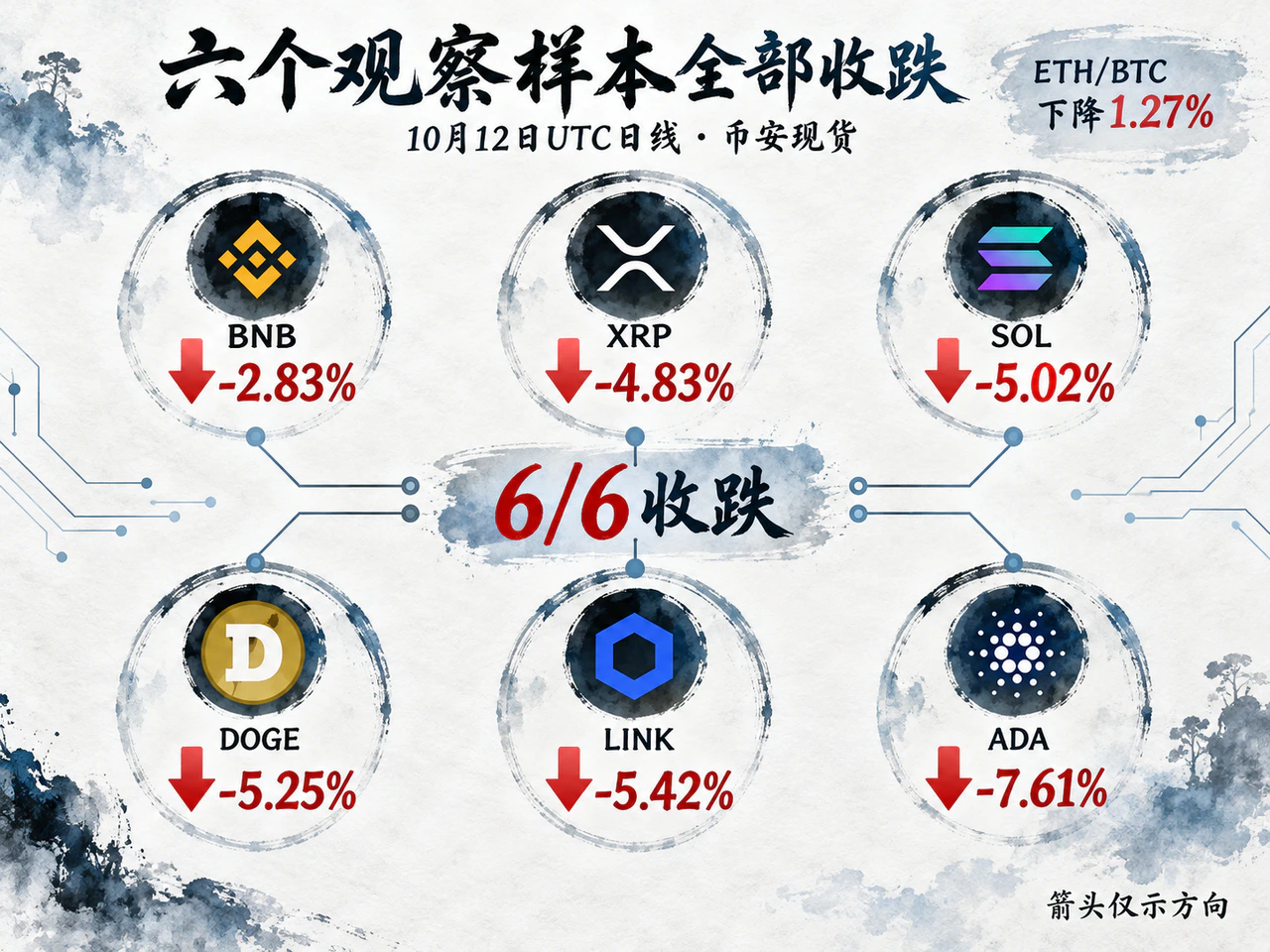
Other major coins fell more sharply. On the same exchange and UTC daily-candle basis, BNB lost 2.83%, XRP 4.83%, SOL 5.02%, DOGE 5.25%, LINK 5.42% and ADA 7.61%. All six tracked assets underperformed Bitcoin. Intraday pursuit of selected themes ultimately failed to reverse the broad retreat in major assets, and willingness to take greater volatility did not last through the close.
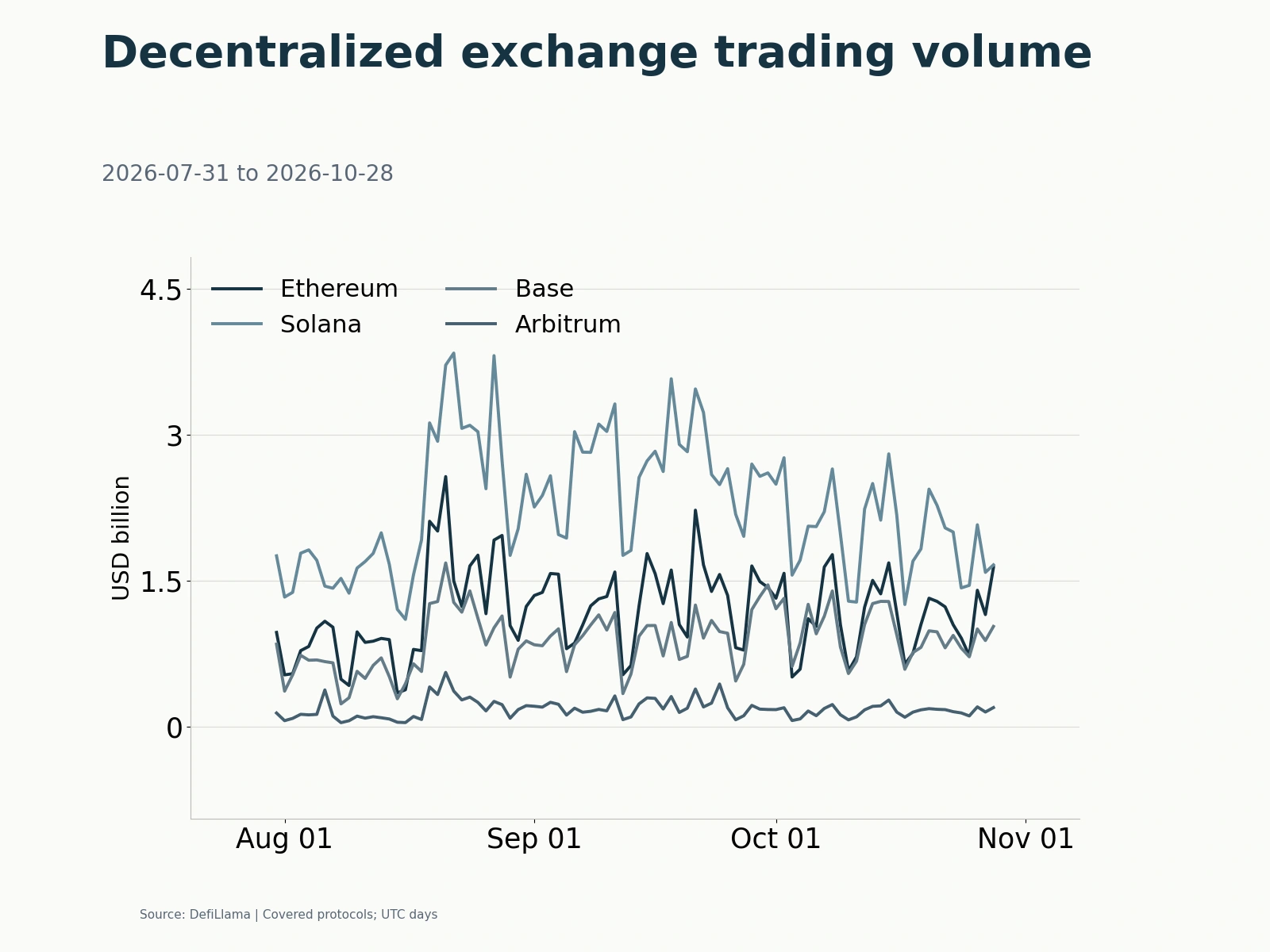
Turnover increased alongside the decline. Binance BTC/USDT spot turnover was 1.126 billion USDT, up 93.89% from the previous day; ETH/USDT was 707 million USDT, up 40.28%. The prior day was Sunday, so part of the increase reflected the return of weekday trading. Prices closing near their lows nevertheless indicated that selling pressure held the upper hand. Ethereum continued weakening against Bitcoin: the ratio of their USDT closes fell from 0.03028 to 0.02990, down about 1.27%.
Localized activity mainly reflected token-specific trading factors. CoinDesk observed that NEAR's early gains came with rising open interest, while LayerZero's strength was interpreted more as an oversold rebound. Research cited by the publication found that Bitcoin and Ethereum order-book depth had recovered to levels seen before the sharp volatility of October 2025, while liquidity in smaller tokens continued thinning. Thin order books let limited buying drive prices higher more easily, but also magnify the price impact of selling. Sustaining isolated rallies therefore depends more heavily on subsequent buying.
Bitmine holdings approach their target while ETF outflows continue
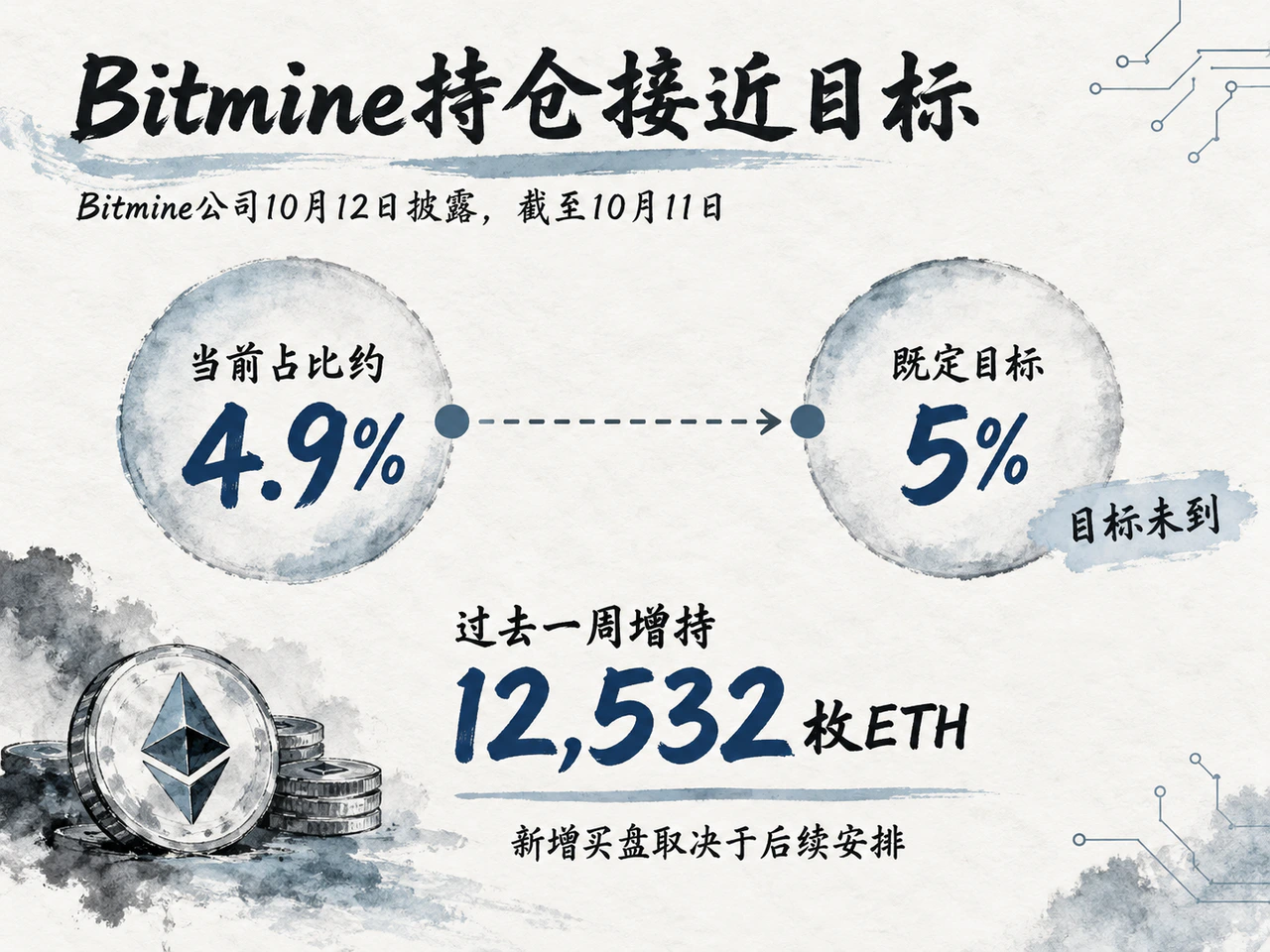
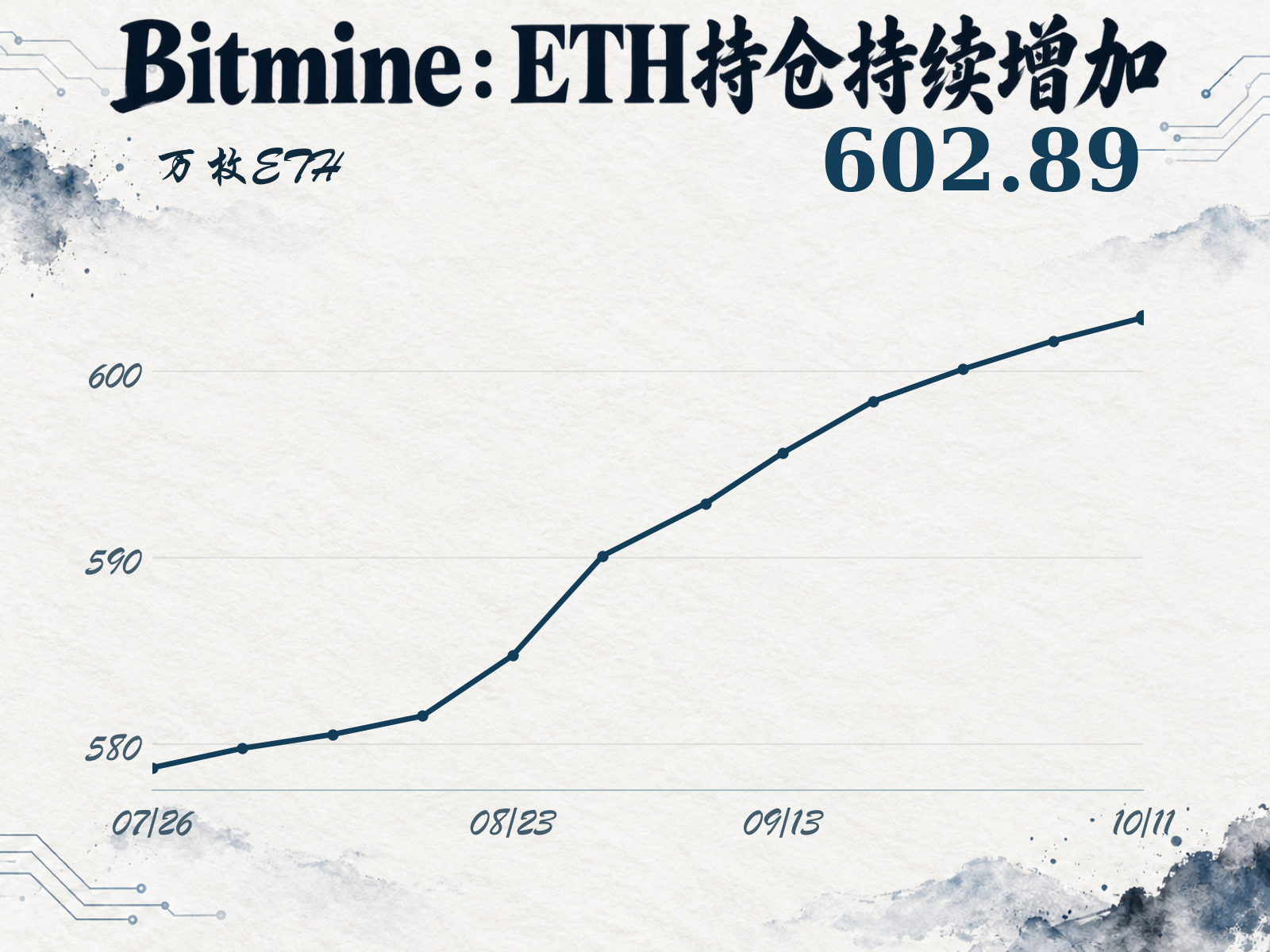
An important institutional Ethereum development that day came from Bitmine. On October 12, the company announced that it held 6,028,946 ETH as of October 11, having added 12,532 ETH over the past week, worth approximately $31.9 million at its stated valuation price. Management remained optimistic about long-term demand from tokenization, intergenerational wealth transfers and corporate token holdings.
Bitmine was also approaching its stated accumulation target. By the company's calculation, its holdings represented around 4.9% of Ethereum supply, close to its 5% target. Decrypt's reporting that day cited chairman Tom Lee's earlier explanation that the company was about 100,000 ETH short of its goal and would end this phase of accumulation after reaching it.
Continued purchases provide visible demand, but as the target nears, the durability of future buying depends on the next phase of financing, procurement and operating arrangements. Holdings of more than six million ETH affect circulating supply; incremental purchases directly determine how much daily selling the market can absorb. Ethereum still underperformed Bitcoin on the announcement day, showing that institutional long-term optimism was insufficient to offset current selling pressure.
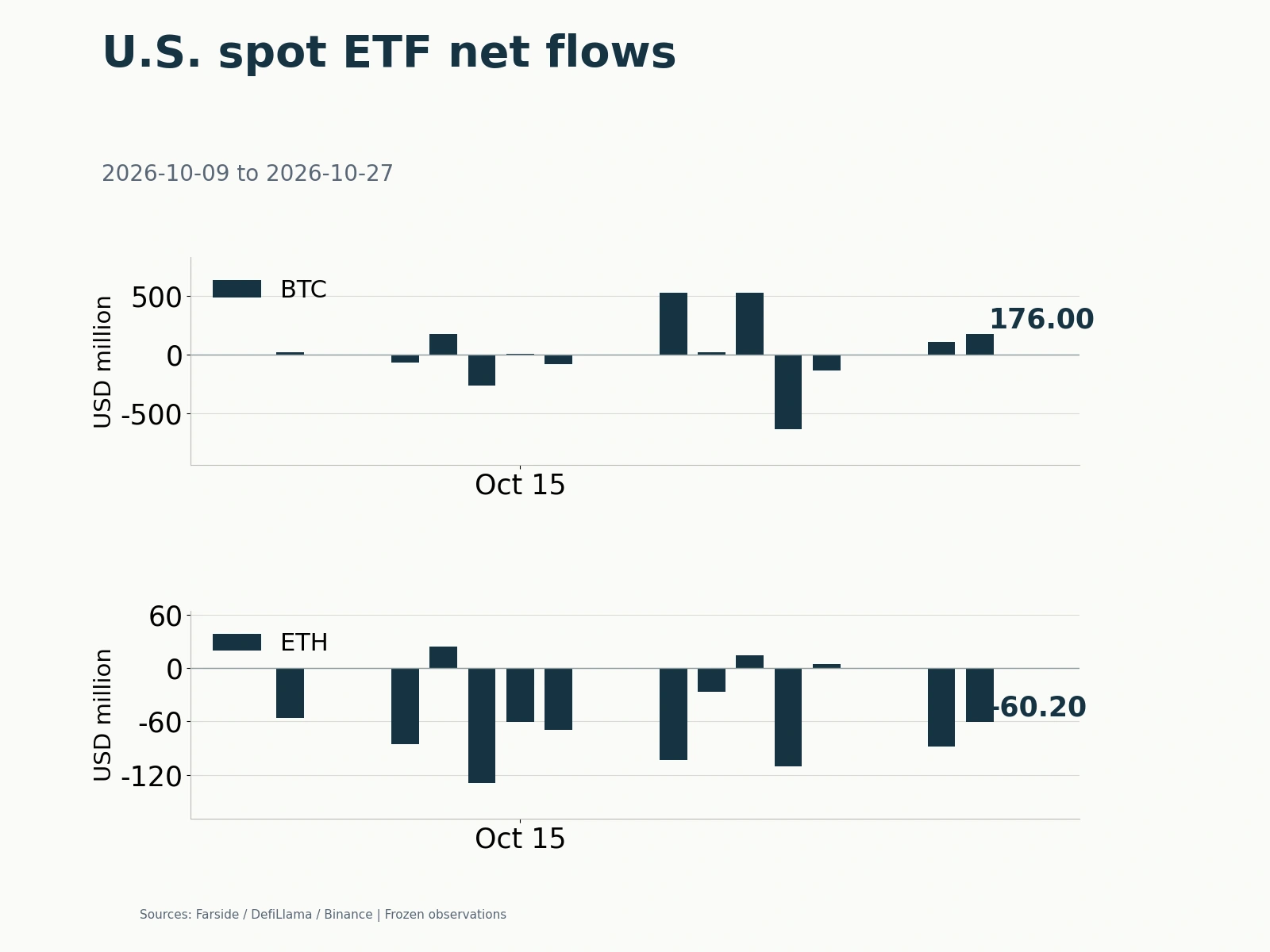
The ETF channel was also under pressure. Citing SoSoValue, CoinDesk reported approximately $681 million of net outflows from US spot Bitcoin ETFs during October 5–9, the largest since June. Companies continued buying tokens while ETF investors withdrew funds, demonstrating divergent institutional demand. Assessing subsequent price support still required watching whether these channels collectively returned to net buying.
At the macro level, the focus was forthcoming inflation data. The US Bureau of Labor Statistics calendar scheduled September CPI for October 14 and PPI for October 15. Citing trading firms that day, Yahoo Finance identified higher Treasury yields as a source of pressure on crypto. Greater interest income on safe assets increases the opportunity cost of holding assets without fixed cash flows and raises the required return on financed trades.
Above-consensus inflation could reinforce expectations of persistently high rates and further suppress buying; cooler data would help ease that constraint. The market had already turned defensive ahead of the releases. Signs of stabilization would include Bitcoin moving away from closes near its daily lows, improved Ethereum performance relative to Bitcoin, and allocation flows supporting recoveries in major coins. Broader and more persistent buying would help localized rotation develop into a wider market recovery.
Click 'Read original' for full details.