On October 12, Standard Chartered launched institutional custody for RLUSD, the dollar stablecoin on XRP Ledger, and announced plans with Ripple and LMAX Group to connect trading-collateral arrangements further. A TD Cowen research report that day estimated that a new CFTC framework might not be finalized until early 2028. Bank services were already operating, while the federal regulatory route for trading platforms remained under consultation. Institutional digital-asset adoption was advancing through different business stages, with progress determined separately by rulemaking, service permissions and system testing.
A proposed framework for US retail leveraged trading still has an uncertain finalization date
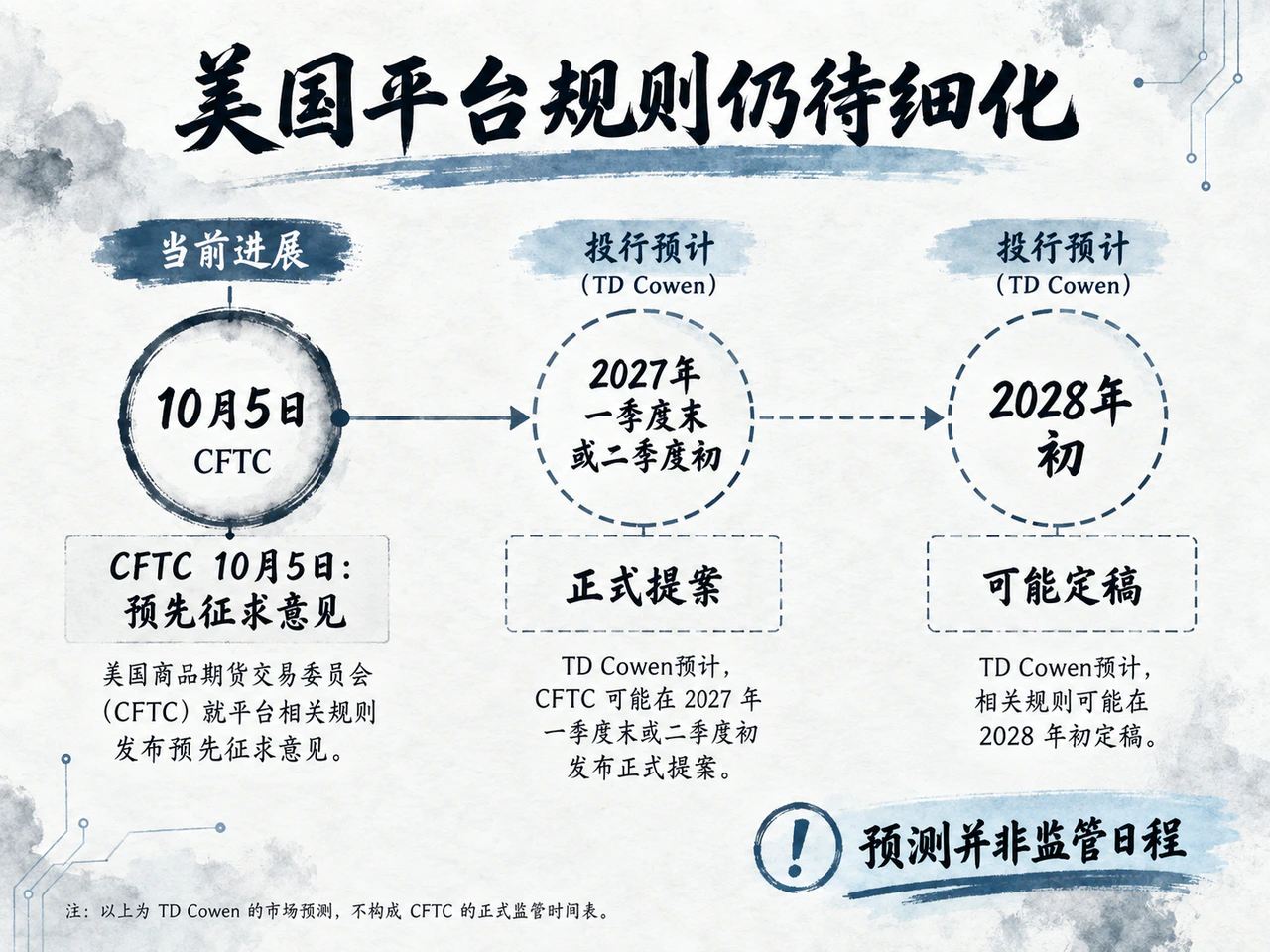
The Block reported on October 12 that TD Cowen Washington research head Jaret Seiberg expected the CFTC to propose formal rules no earlier than late first-quarter or early second-quarter 2027 and finalize them in early 2028. This was the investment bank's assessment of the time required for rulemaking and potential litigation; the regulator had not announced such a schedule. Seiberg argued that accelerating the process could increase judicial-challenge risk, while disputes might persist beyond 2028 even under a careful process.
The discussion began with the CFTC's October 5 advance notice of proposed rulemaking. Under the existing Commodity Exchange Act, it proposed dedicated rules for crypto commodity transactions offered to retail customers with leverage, margin or financing, and was examining a platform category for such transactions under designated contract market registration. The current task was primarily gathering input for subsequent rulemaking, with comments open for 60 days after Federal Register publication.
For exchanges, the proposal could provide an appropriately tailored federal route for relevant retail leveraged business. CFTC chair Michael Selig said on October 5 that it would offer a choice for exchanges seeking unified federal market oversight. Requiring broader crypto spot trading to move onto CFTC-registered venues would still need congressional authorization.
Platforms therefore need to design products around customer type, financing and asset delivery. Ordinary fully paid spot trades, retail financed transactions and existing derivatives business still have different regulatory bases and operating requirements. The new registration route's appeal depends both on customer protection, surveillance and intermediary requirements and on whether compliance costs match revenue. TD Cowen also reminded institutions that implementation timing and resilience to legal challenges would affect business investment and product planning.
Standard Chartered already offers RLUSD custody; trading collateral remains in development
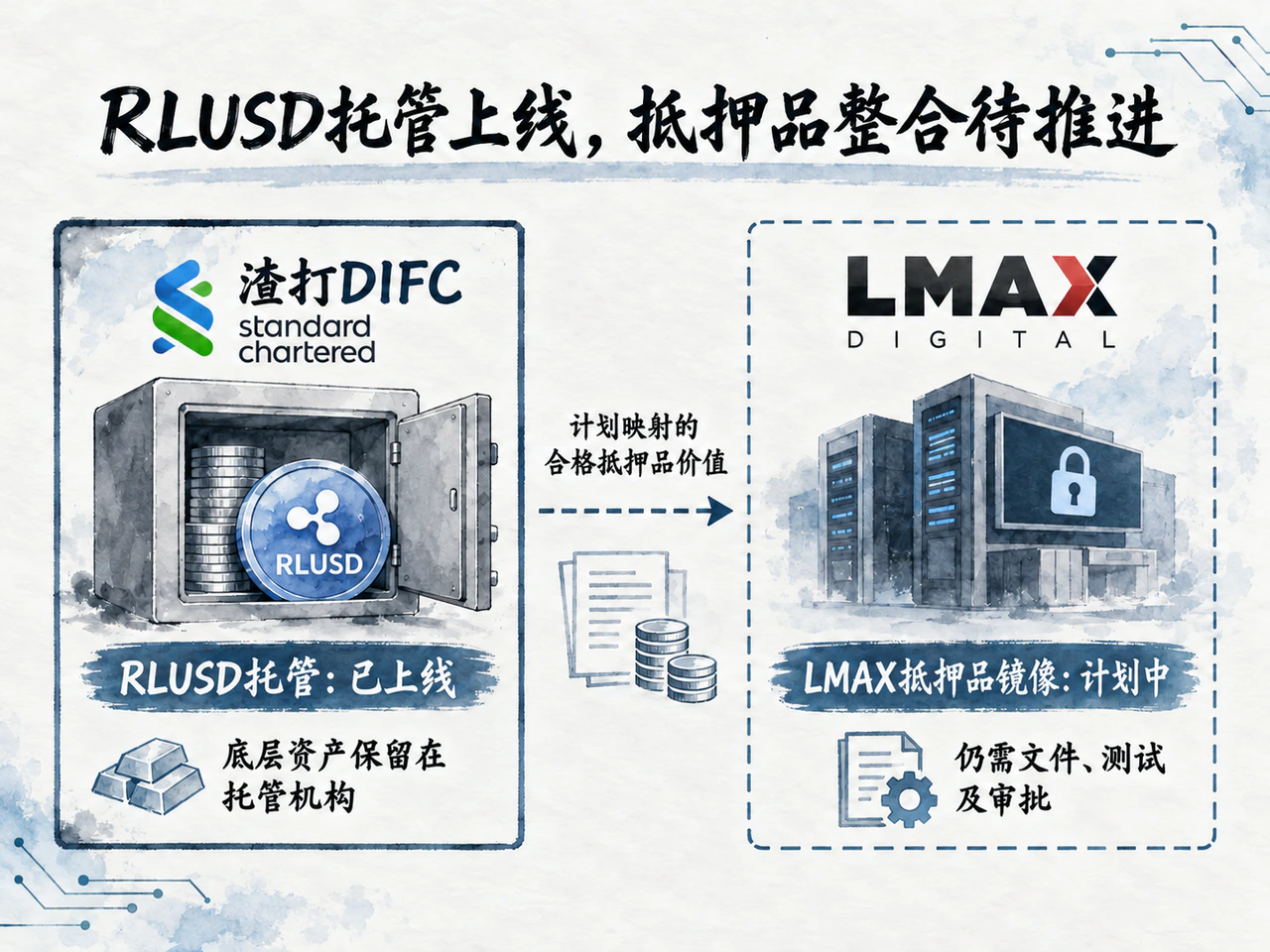
The service announced October 12 was already operational: eligible institutions could custody Ripple's RLUSD issued on XRP Ledger through Standard Chartered's Dubai International Financial Centre branch, regulated by the Dubai Financial Services Authority.
Bank custody gives institutions a route to hold and manage RLUSD. Next, Standard Chartered, Ripple and LMAX Group plan to make RLUSD eligible collateral for agreed trading products and solutions and extend the bank's collateral-mirroring model to LMAX. The announcement describes underlying RLUSD remaining with the custodian while its eligible collateral value is mirrored to the trading venue to support client trading.
This connects safekeeping with trading use. If implemented, institutions could allocate collateral through existing custody arrangements, reduce direct transfers to trading venues and optimize counterparty exposure. The bank safeguards assets, the issuer provides the stablecoin and the platform supports trading use. Clearer responsibilities could extend institutional stablecoin applications from holding and transfers into trading cash management.
Standard Chartered explicitly said further functionality remained subject to final documentation, successful testing, applicable laws and regulations, internal approvals and jurisdictional readiness. Custody was therefore live, while collateral integration remained in development. Commercial results would depend on final product coverage, client adoption and actual funding efficiency.
US regulatory discussions and Standard Chartered's custody launch advance trading and safekeeping respectively. Institutional adoption is shifting from policy expectations toward concrete operating arrangements: permitted products, asset custodians and collateral uses are increasingly the measures of implementation progress.
Click Read Original for full details.