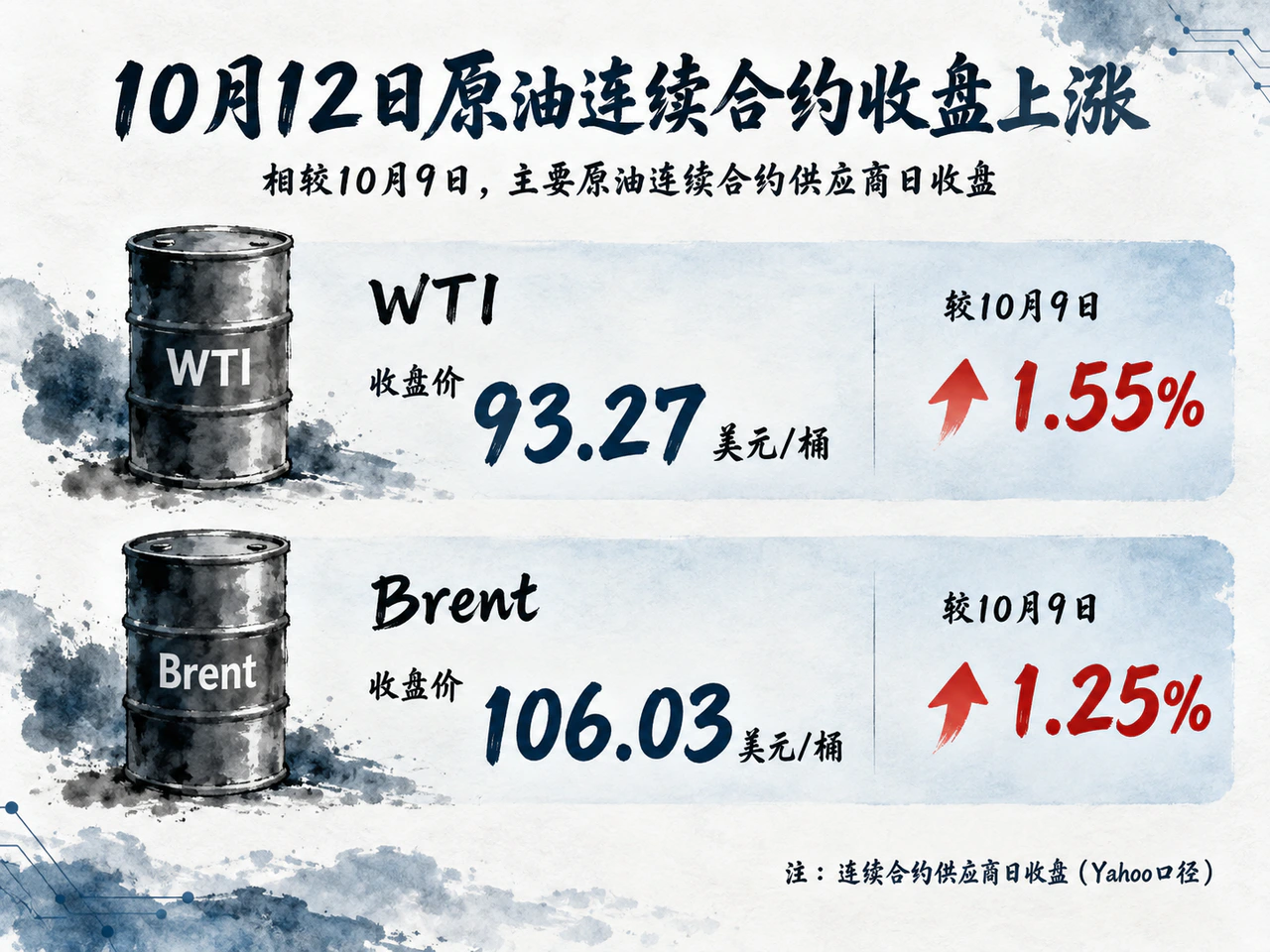
By the morning of October 13, Beijing time, international crude futures had recovered from an early Monday decline. Sharply increased transport risk in and around Hormuz quickly outweighed expectations of easier supply from additional Russian diesel and post-hurricane Gulf of Mexico restarts. At the October 12 close, using Yahoo's continuous-contract measure, WTI was $93.27 a barrel, up $1.42 or 1.55% from October 9; Brent was $106.03, up $1.31 or 1.25%. Upstream capacity was gradually recovering, but maritime logistics disruptions directly raised refiners' landed crude costs and near-term risk premiums.
Hormuz tanker attacks intensify transport constraints; Brent-WTI spread near $12.76
Early Monday, reports of a ceasefire covering Russian and Ukrainian energy infrastructure briefly eased European supply concerns. Anadolu recorded December Brent at $104.57 and November WTI at $91.44 at 06:40 GMT, both opening lower. Security conditions then deteriorated sharply; Reuters reported intraday rebounds of about 2% in both benchmarks, with Brent reaching its highest since September 29.
Shipping attacks were the direct catalyst. UKMTO confirmed a drone attack on a tanker near Sohar, Oman, and damage to another tanker crossing Hormuz. Combined with weekend attacks on Saudi airports, this renewed concern over Middle Eastern energy security and export routes, threatening the crude-export recovery that had only emerged in September.
Shipping risk can increase insurance and freight and lengthen deliveries. Even if crude remains available at Middle Eastern loading ports, high transport costs and uncertain landed supply force refiners to increase precautionary stocks. Brent, priced around offshore and seaborne supply, consequently traded about $12.76 above WTI, which relies more on inland pipelines. Goldman Sachs also identified high transatlantic transport costs between the US and Europe as a key constraint behind WTI's relative weakness.
Russian diesel additions and Gulf of Mexico restarts coincide; weaker products diverge from crude
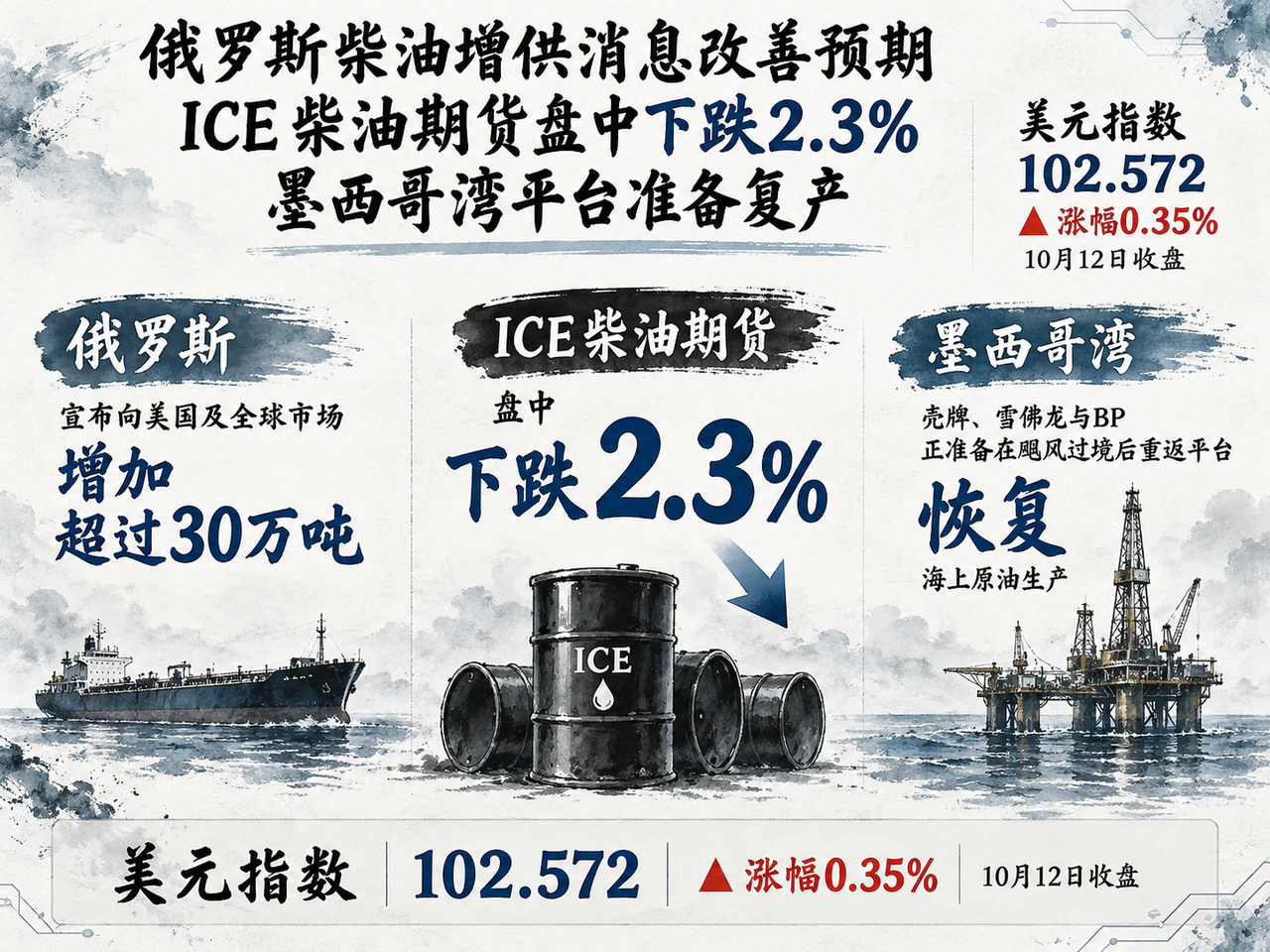
While near-term crude shipping was constrained, refined products and American supply showed signs of relief. Reuters reported that Trump had announced Russia would add more than 300,000 tonnes of diesel supply to the US and global markets; ICE diesel futures fell 2.3% intraday. Shell, Chevron and BP were also preparing to return to platforms after the hurricane and gradually restore offshore Gulf of Mexico crude production.
The combination produced structural divergence: diesel-supply news lowered futures and improved product-supply expectations, while Gulf platform restarts would directly replenish American crude. The clear pattern of stronger crude and weaker diesel showed investors trading Middle Eastern shipping risk and easier product supply separately. The dollar index also rose 0.35% to 102.572 without materially restraining crude buying, indicating geopolitical transport premiums had become the overwhelmingly dominant marginal pricing factor.
OPEC sharply cuts demand growth as EIA expects continued draws; medium-term declines depend on supply-chain repair
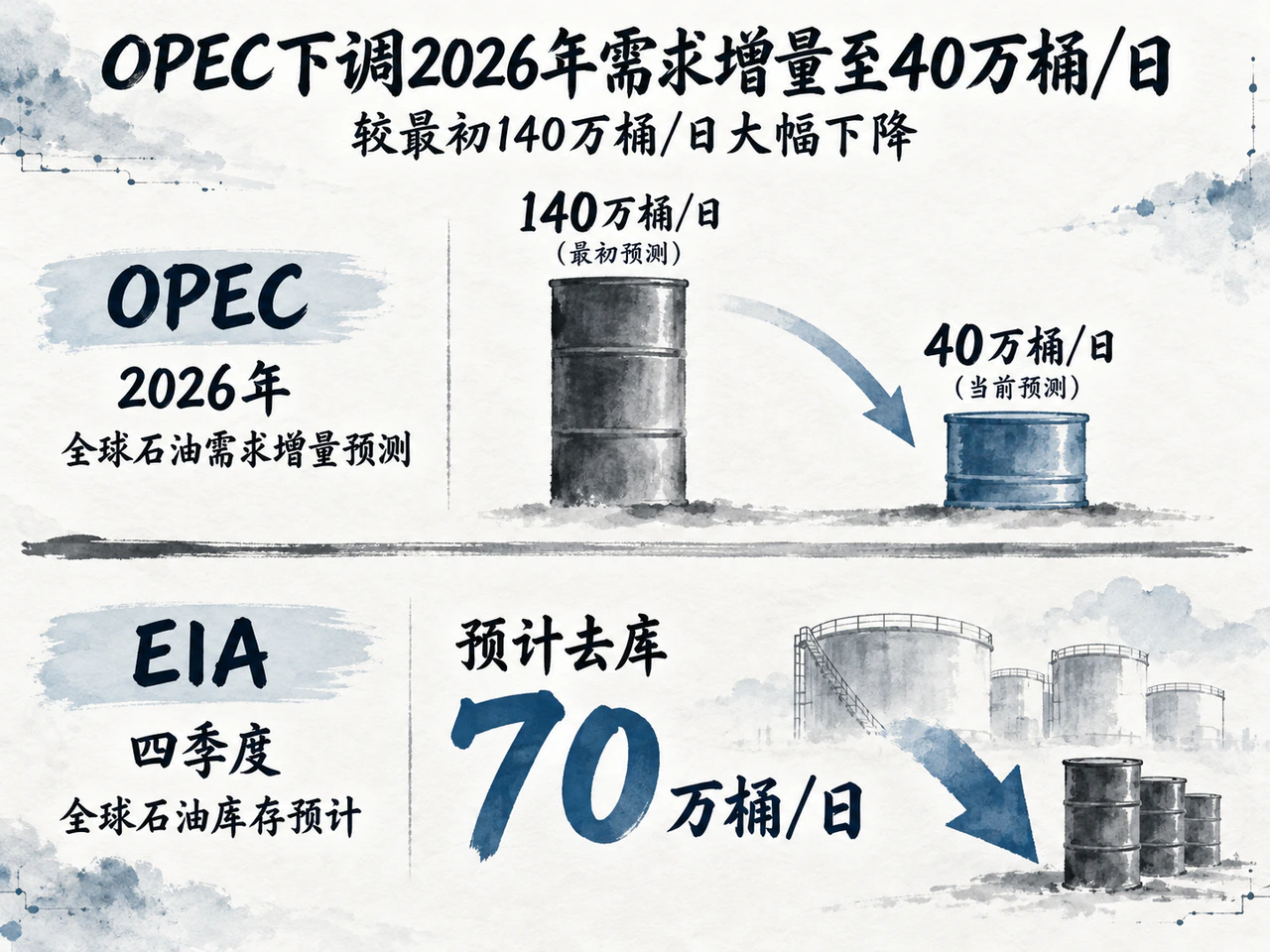
Medium-term expectations diverged from tight near-term logistics. OPEC secretary-general Haitham Al Ghais said in Riyadh on October 12 that global oil demand would grow only 400,000 barrels per day in 2026, sharply below the original 1.4 million forecast, with some deferred demand potentially arriving in 2027. Cooler final-consumption expectations logically limited how far high prices could transmit into the real economy.
Supply and inventories offered a medium-term rebalancing reference. The EIA's October 6 report, based on October 1 estimates, said conflict-related Middle Eastern shut-ins fell from 5.8 million barrels per day in August to 4.8 million in September, but around 4.5 million would remain constrained in the fourth quarter. After average global inventory draws of 1.9 million barrels per day in the third quarter, it expected continued draws of 700,000 in the fourth.
Assuming smooth export rerouting and gradual restarts of damaged capacity, the EIA projected average Brent spot prices falling from $105 a barrel in this year's fourth quarter to $74 in the fourth quarter of 2027. That path shows near-term premiums can coexist with medium-term supply recovery. A meaningful decline in the price center nevertheless requires cleared shipping obstacles, declining geopolitical outages and actual rebuilding of commercial stocks.
Four near-term tests matter: safe Hormuz passage and damaged-vessel conditions; stability of Saudi alternative pipelines and delivery routes; actual loading and fulfillment of Gulf platform and Russian diesel supply; and a turning point in global crude and distillate draws. If shipping remains restricted, near-term oil can stay highly resilient at elevated levels even as demand growth slows.