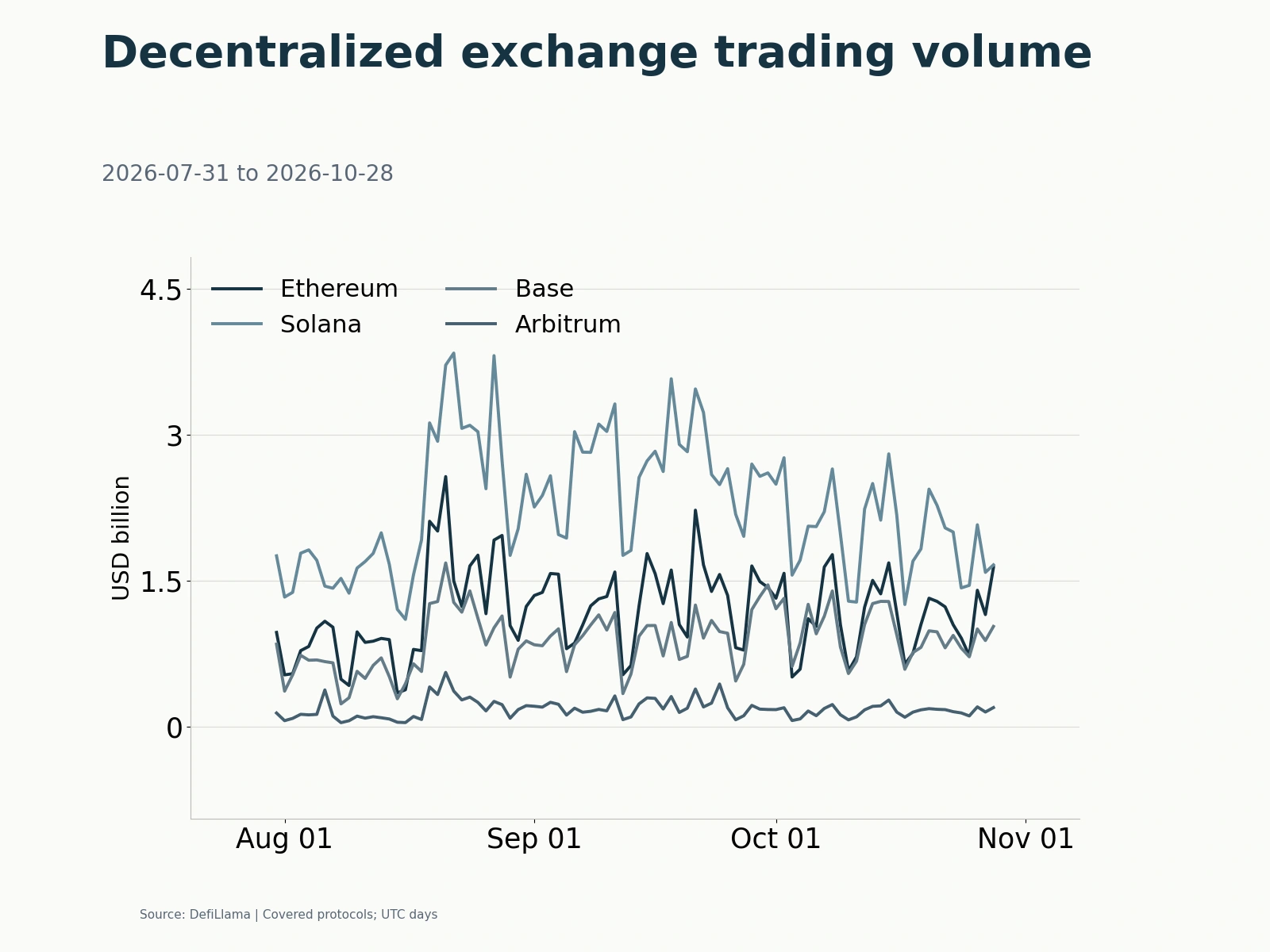
Aggregate decentralized-exchange (DEX) volume eased on October 14 as public chains diverged. Solana maintained substantial activity; Ethereum and Arbitrum each fell more than 12% on the day, while Base stood about 25% above its preceding 30-day average and approached Ethereum's volume. At the application level, Stellar mainnet integrated Chainlink market-data services, and Babylon proposed native Bitcoin collateral for Aave V4 lending. On-chain finance is extending beyond early asset issuance into real-time pricing, collateralized borrowing and cross-chain liquidation.
Daily DEX volume eases to $9.423 billion; Base approaches Ethereum while fees rise over 8%
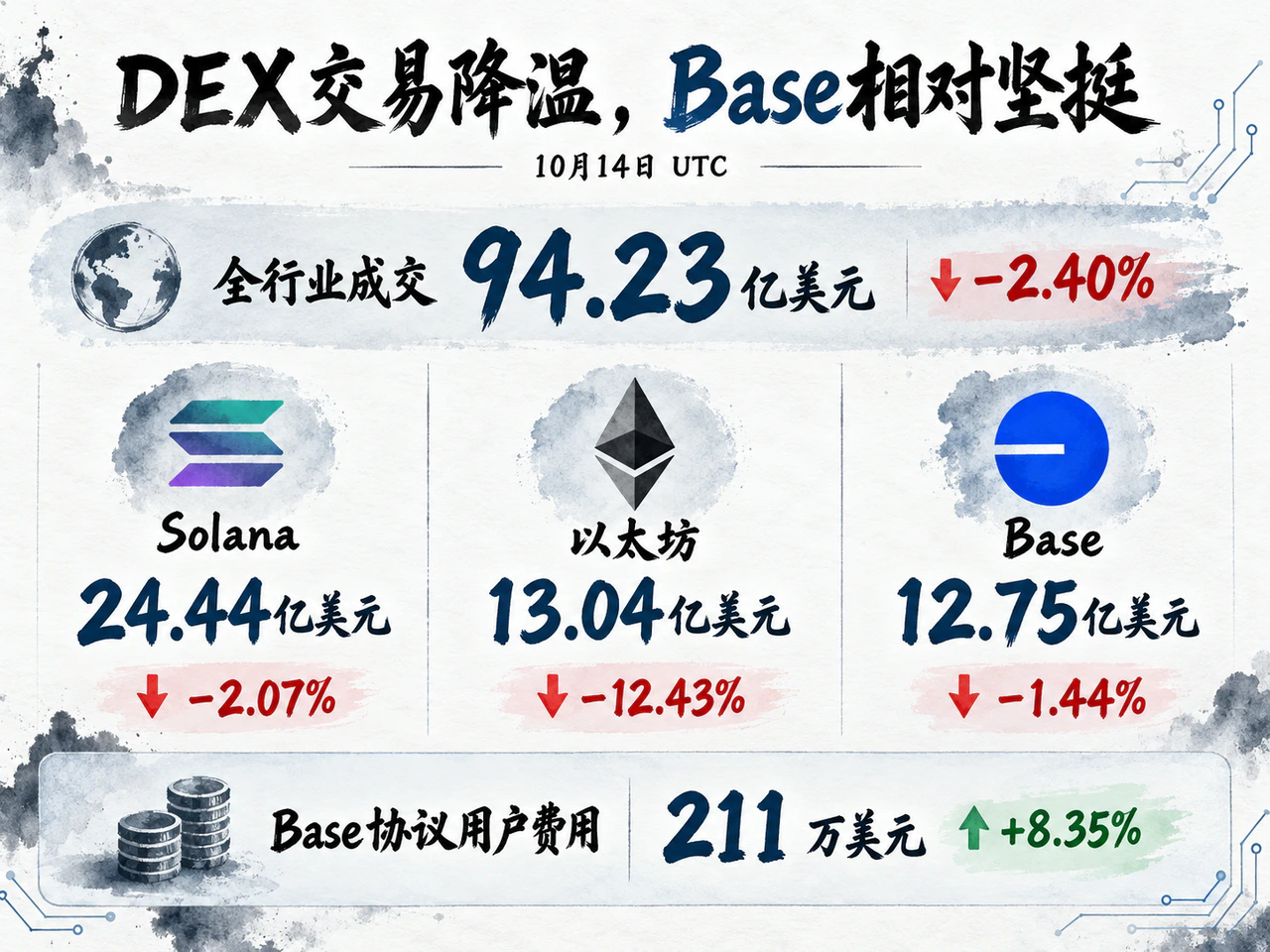
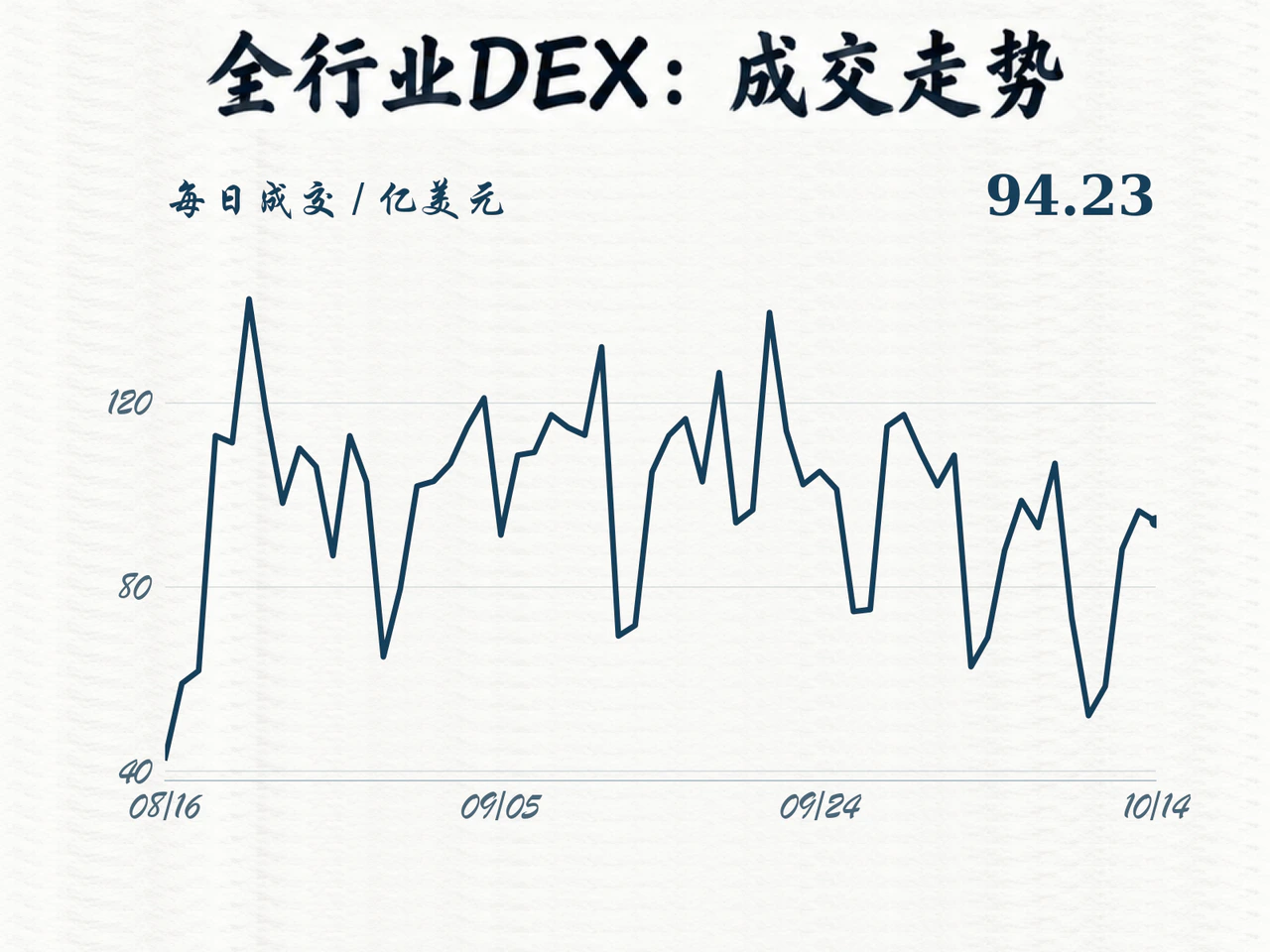
DefiLlama's UTC daily figures put total DEX volume on October 14 at $9.423 billion, down 2.40% from the previous day and slightly below the preceding 30 complete days' $9.685 billion daily average. With overall activity stable, order flow diverged further among networks.
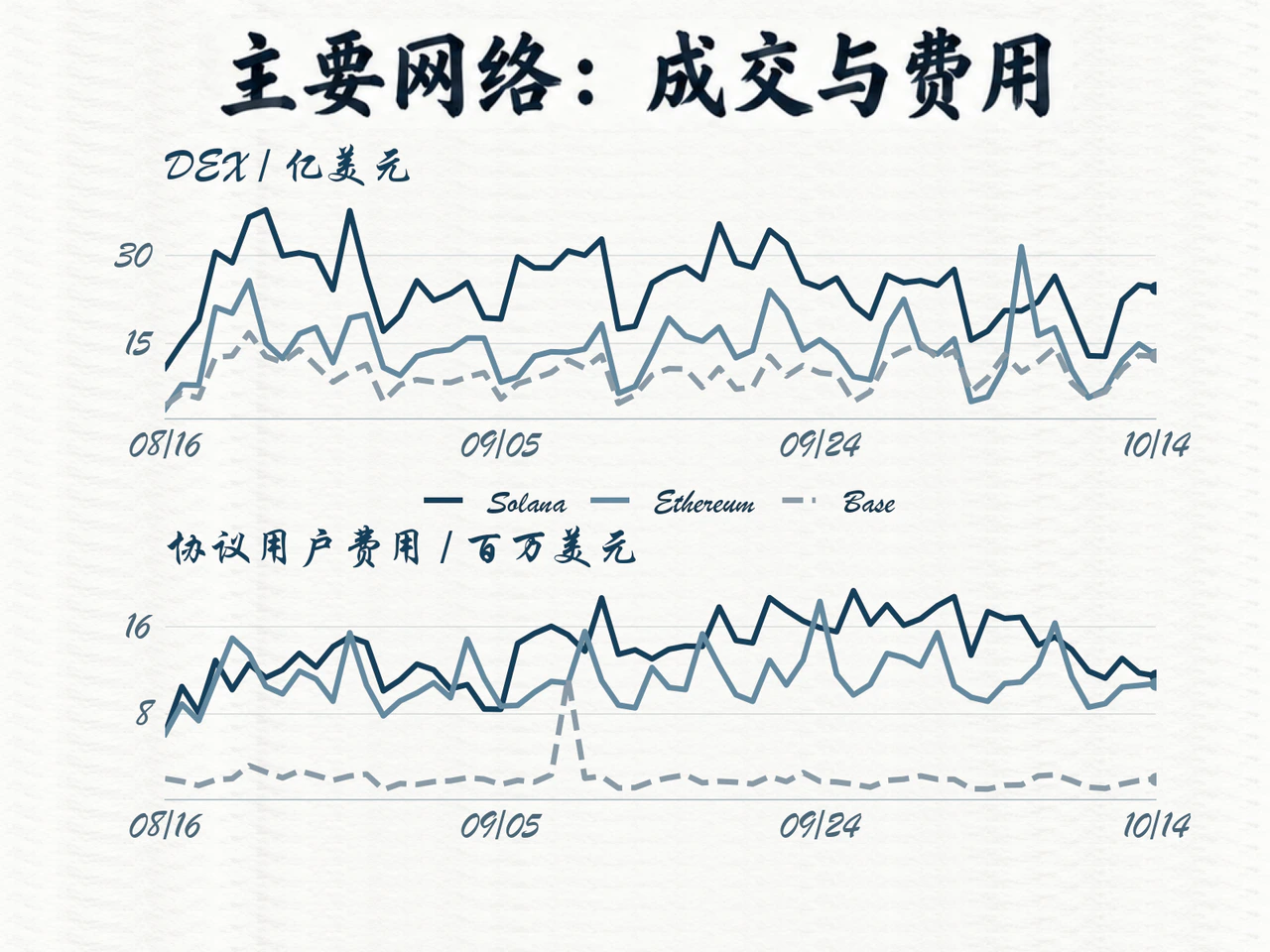
Among leading networks, Solana traded $2.444 billion, down 2.07%, broadly in line with its preceding 30-day average of $2.422 billion. Ethereum and Base converged further: Ethereum volume was $1.304 billion, down 12.43% and below its $1.449 billion 30-day average; Base traded $1.275 billion, down only 1.44% and about 25% above its $1.016 billion average. Among other major networks, BSC rose 1.71% to $876 million; Arbitrum fell 14.02% to $176 million; Polygon and Tron recorded $157 million and $56 million, respectively, both lower than the previous day.
Fees also diverged. DefiLlama's total user fees across covered protocols on each network include trading, lending and other activities and cannot be divided directly by DEX volume to derive a trading-fee rate. On October 14, Solana recorded approximately $11.51 million, down 2.28%; Ethereum approximately $10.80 million, up 1.59%; Base rose 8.35% to approximately $2.11 million.
For decentralized trading venues, liquidity depth, execution costs and application entry points jointly determine order flow. Base's increase in total protocol user fees alongside slightly lower DEX volume shows that these measures need not move together. User payments are only the starting point of monetization. Assessing the quality of network and protocol revenue also requires examining fee sources and the shares allocated to and retained by liquidity providers, protocols and token holders.
Stellar launches Chainlink data; Babylon's Aave proposal includes a cross-chain liquidation buffer
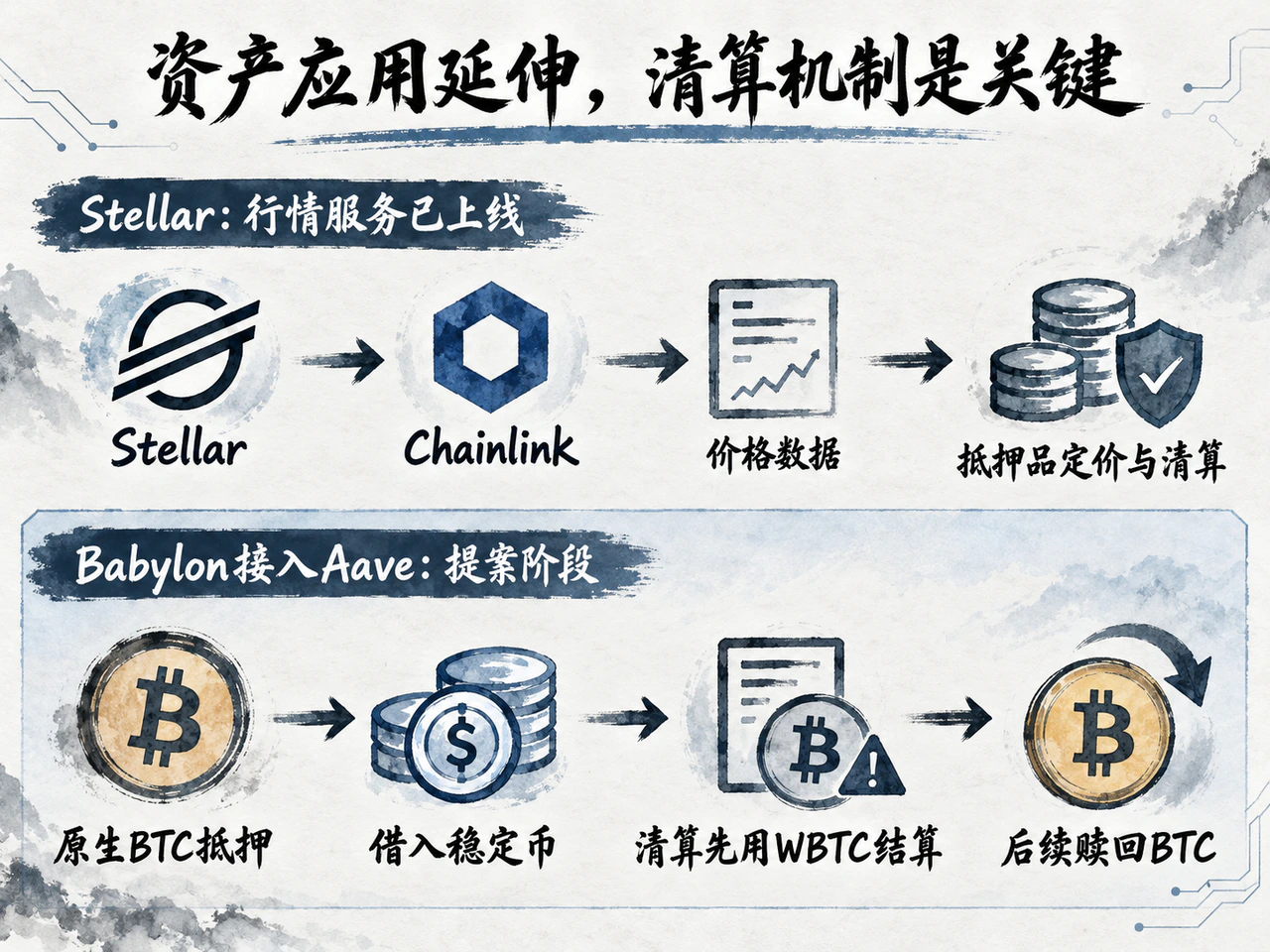
On October 14, the Stellar Development Foundation announced that Chainlink Data Feeds and Data Streams were live on mainnet. Data Feeds supply smart contracts with standard data such as prices, while Data Streams serve low-latency market-data needs. The foundation said ecosystem applications had begun using the infrastructure for collateral management, loan-to-value (LTV) calculations, automated liquidation and stablecoin reference exchange rates.
For on-chain real-world assets, issuance is only the beginning. To support collateralized lending, protocols must continuously track collateral valuations and dispose of collateral promptly when prices fall to recover loans. Reliable pricing connects these functions, giving the same asset financing utility beyond passive holding. Stellar's launch supplies the necessary data infrastructure for financial applications; its practical value still requires validation through lending volumes, trading activity and user fees.
The same day, Babylon Labs proposed on Aave's governance forum that Trustless Bitcoin Vaults bring native BTC into Aave V4 as collateral, initially for stablecoin borrowing. Under the design, underlying BTC is locked in Taproot outputs on Bitcoin, while Ethereum records the corresponding collateral relationships. The proposal remains under governance discussion, with specific risk parameters to be proposed by Aave's risk-service providers.
Cross-chain liquidation is central to the design. Bitcoin-side redemption requires a multiday challenge window, while lending risk often needs immediate resolution. To bridge these timescales, a dedicated liquidation-swap module is proposed: upon liquidation, the liquidator first receives wrapped Bitcoin; arbitrageurs with redemption rights then take over the BTC vault and complete Bitcoin-side settlement. The initial design would use WBTC, borrowed by the liquidation-swap module from Aave pools and repaid after arbitrageurs complete settlement.
If implemented, the mechanism would create two sources of demand: BTC holders borrowing stablecoins and WBTC liquidity used during liquidation. Both could generate interest for liquidity suppliers, but require adequate liquidity during cross-chain settlement delays and appropriate collateral ratios, borrowing caps and liquidation discounts. Whether collateral scale becomes sustainable protocol revenue ultimately depends on the pricing and liquidation mechanisms operating smoothly through market volatility.
October 14's developments show trading platforms competing for existing order flow and user access while financial infrastructure advances collateral use of accumulated assets. More informative follow-up indicators than issuance alone are actual collateral utilization, resulting borrowing demand and revenue retained by protocols after distributions to all participants.
Click Read Original for further details.