As of the morning of October 15 Beijing time, the oil market's most striking tension was that Gulf crude loadings and exports had recovered substantially, yet onshore inventories immediately available to end users were still being depleted. The International Energy Agency's October 14 monthly report showed a significant September recovery in global oil supply, but onshore stocks still fell 113 million barrels in one month and diesel shortages could persist into 2027. The upstream crude deficit was narrowing, while shipping risks and refining bottlenecks continued to constrain fuel deliveries to end markets.
According to Yahoo Finance's continuous-contract daily closes, WTI finished October 14 at $94.84 a barrel, up $0.70, or 0.74%, from the previous session. Brent closed at $105.64, down $0.05, or 0.05%. The dollar index rose 0.34% and the S&P 500 fell 1.11%. WTI's gain despite a stronger dollar and weaker risk appetite indicated that support from physical supply conditions had not faded.
Gulf crude exports recover by 4.4 million barrels a day, but attacks on the strait and facilities still constrain delivery
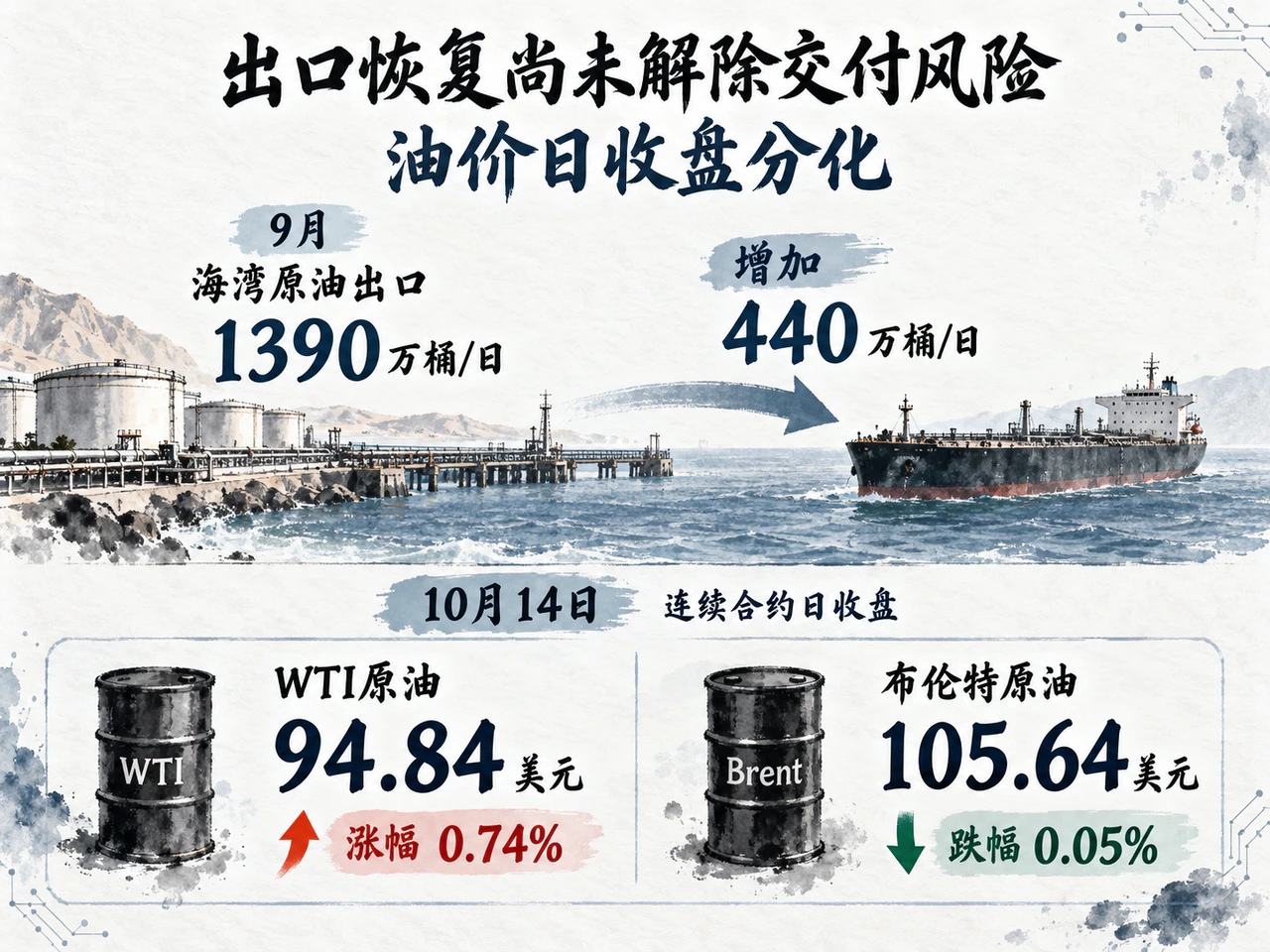
The IEA estimated that global oil supply rose by 2.5 million barrels a day in September to 102.3 million, mainly from Gulf producers. Gulf crude exports increased by 4.4 million barrels a day to 13.9 million, more than three-quarters of their prewar level. Flows through Hormuz rose by 3.7 million barrels a day to 10.9 million, while bypass-route exports increased by about 970,000 barrels a day to 5.6 million.
Seven OPEC+ countries decided on October 4 to keep November output at the required September level. With quota policy stable, further recovery in effective near-term supply depended chiefly on normal operation of production facilities, pipelines and shipping routes. Local attacks were still raising logistical risk, however. Reuters reported on October 14 that Saudi Arabia's Energy Ministry said an attack on an Aramco administrative building in Dhahran caused a limited fire. UK Maritime Trade Operations (UKMTO) had reported the previous day that a container ship and a tanker in Hormuz were hit by unidentified projectiles. Navigation hazards and the associated high insurance and freight costs continued to disrupt smooth cargo delivery.
September onshore stocks fall 113 million barrels to their lowest since 2016; physical premiums reveal prompt tightness
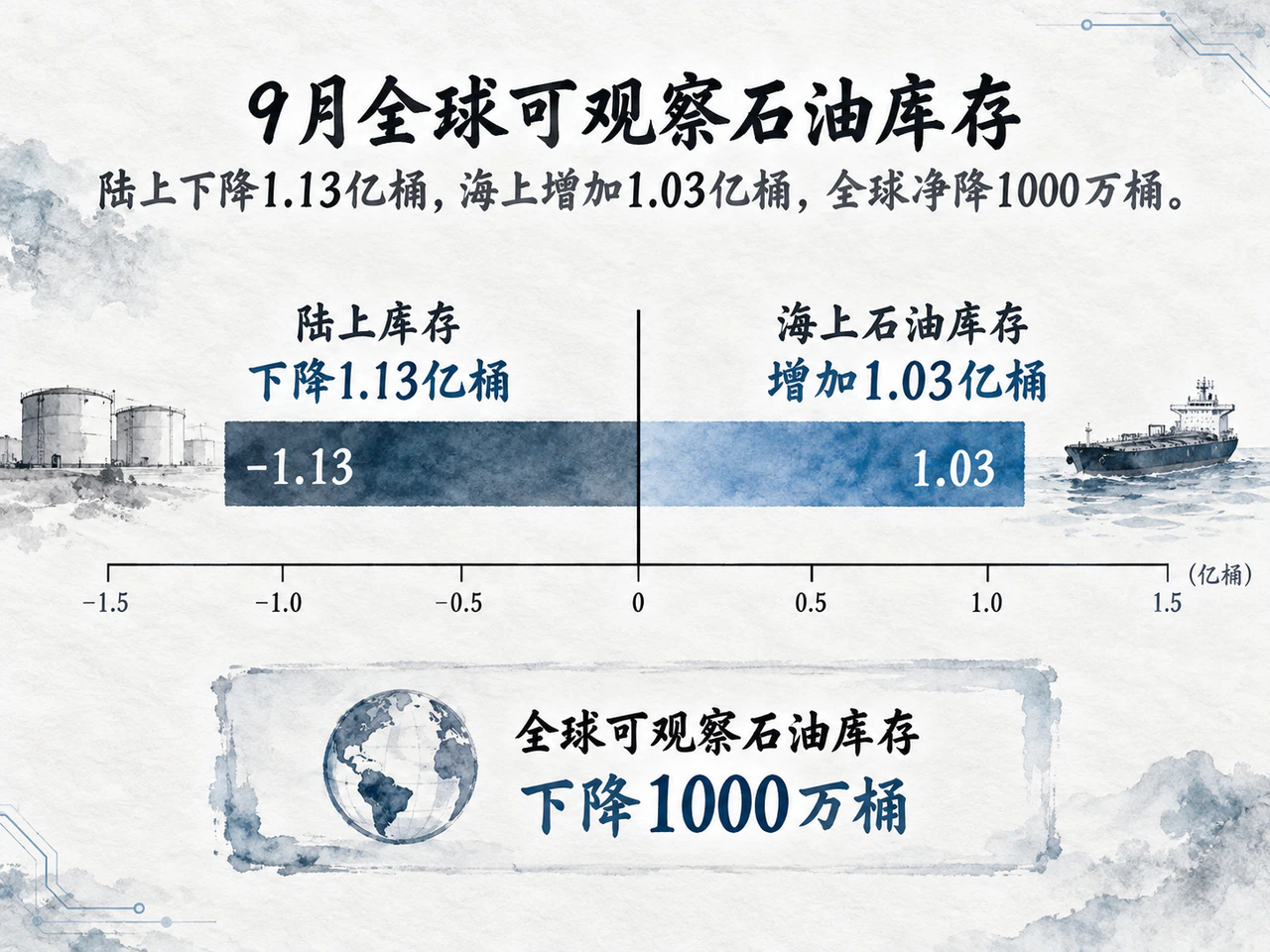
The export recovery had largely remained at the maritime transport stage, without becoming an onshore buffer. Global observed oil stocks appeared to decline only modestly, by 10 million barrels in September, but their composition diverged sharply. As Gulf exports recovered, oil in transit surged by 103 million barrels, masking an onshore draw of 113 million barrels. By the end of September, global observed stocks had fallen a cumulative 509 million barrels from the end of February. Onshore inventories directly available to refiners and end markets had reached their lowest since at least 2016.
High fuel costs and a weaker economic outlook were restraining consumption. The IEA expected global oil demand to fall by 2.6 million barrels a day year on year that year, but the contraction was insufficient to offset supply losses, leaving a projected global deficit through year-end.
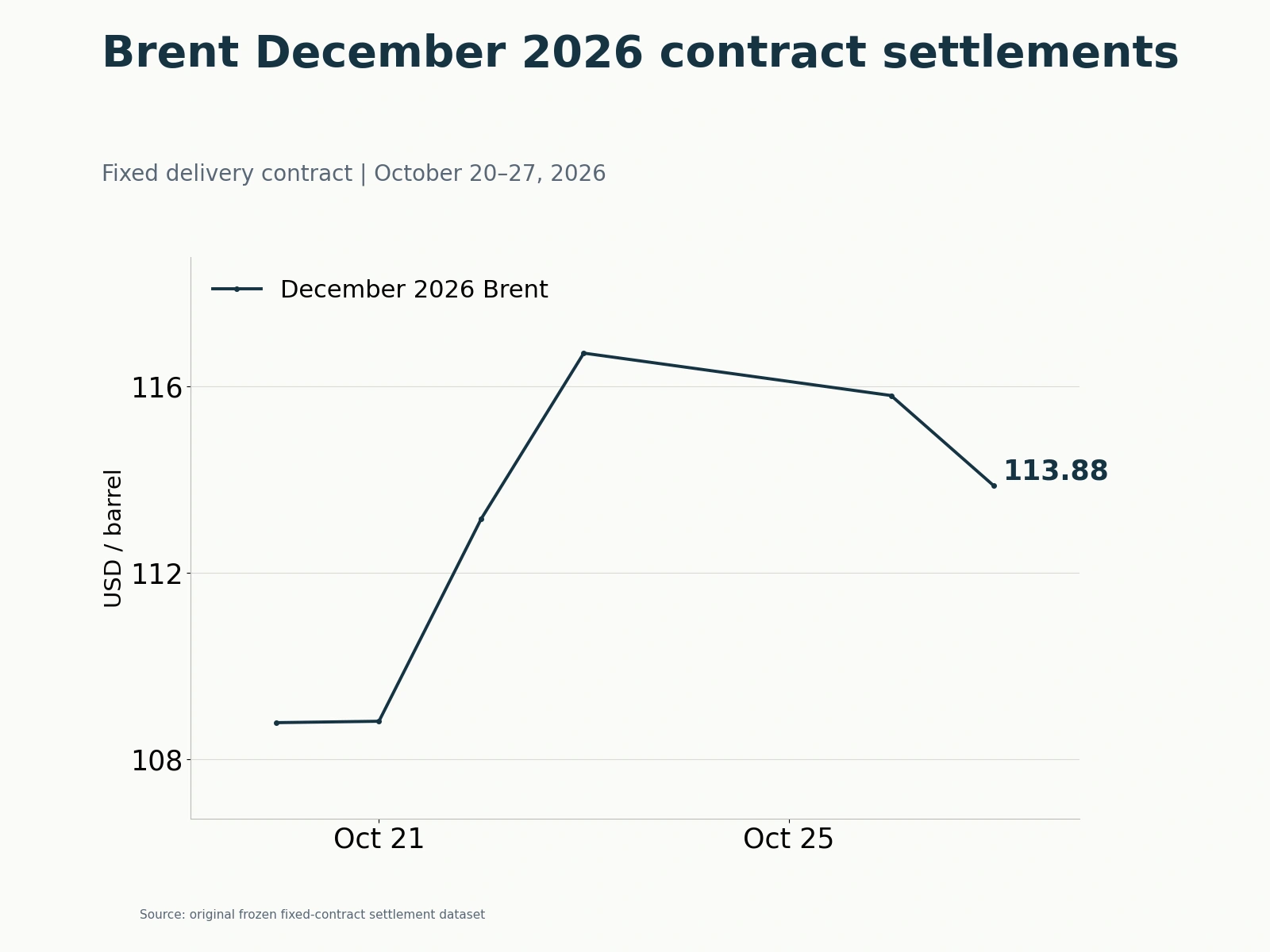
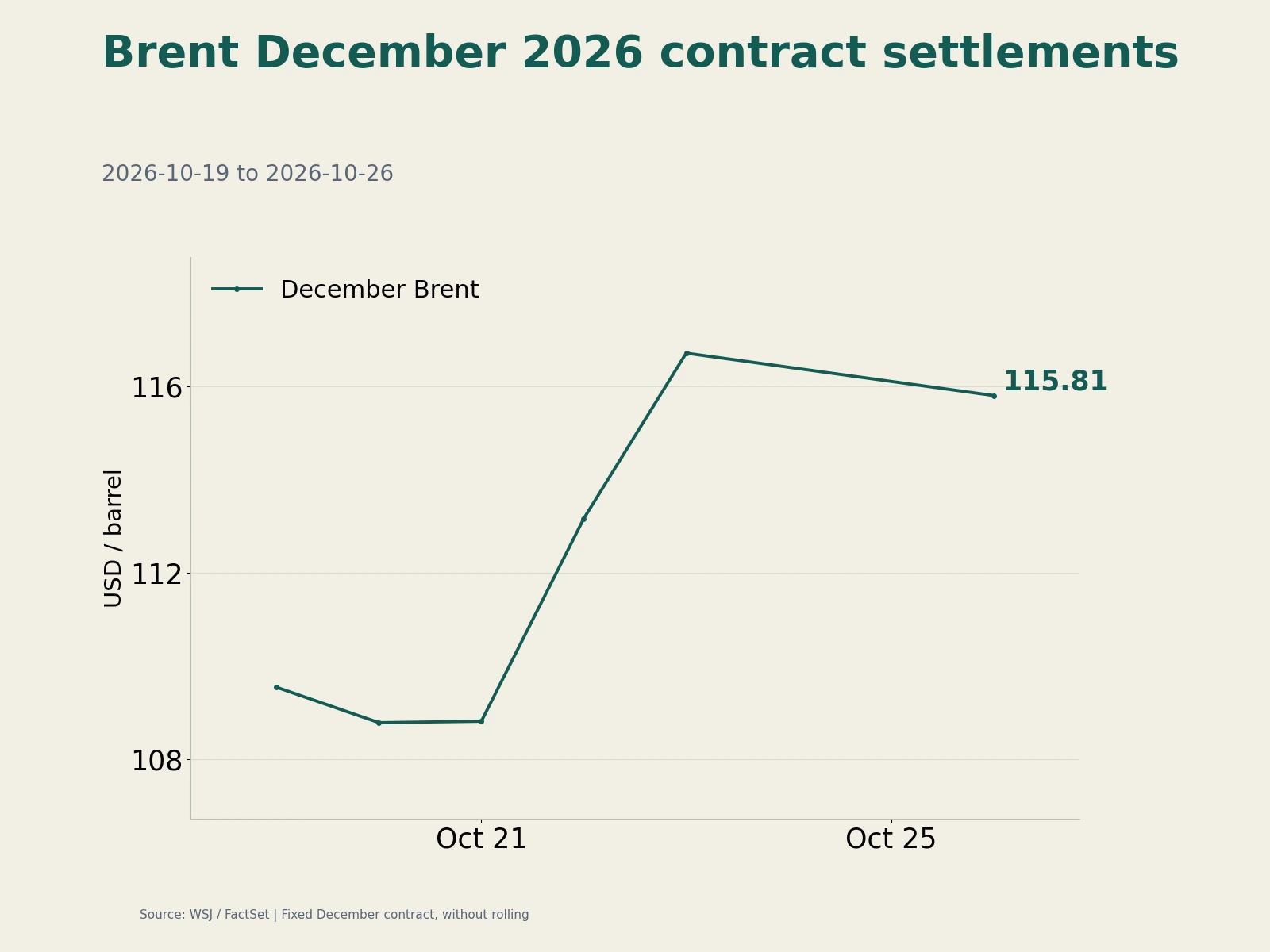
The substantial physical–futures spread also confirmed tight immediate delivery. When the IEA wrote its report, North Sea Dated crude, which is more sensitive to physical supply and transport conditions, was around $134 a barrel, about $27 above Brent futures near $107. High freight and delivered-crude costs continued squeezing European and Asian refining margins, obstructing transmission from recovering crude supply to greater refined-product output.
Global September diesel exports fall 700,000 barrels a day year on year; near-term relief depends on reserve-release timing

Shortages in refined products, particularly diesel, are harder to fill quickly than those in crude. The IEA estimated that global diesel exports fell about 700,000 barrels a day year on year in September. Combined Russian and Middle Eastern exports fell by 1.3 million barrels a day, only partly offset by increases elsewhere. Global refinery runs were expected to reach a seasonal low of 81.3 million barrels a day in October before gradually recovering.
Tight immediate availability widened diesel's prompt premium over deferred delivery. The IEA expected global diesel supply and demand to move into surplus in the first quarter of 2027 as refinery runs recovered, but repairing the inventory deficit accumulated in 2026 would take longer.
Among possible sources of relief, markets expected more Russian diesel exports, but the IEA said Russia's real constraint was operable refining capacity. Whether looser export restrictions would work still depended on recovering refinery output. European fuel-reserve releases could replenish supply faster. Reuters reported that the scale and pace of releases were central to the October 15 IEA meeting: a hypothetical 50 million barrels of diesel released over 30 days would add about 1.67 million barrels a day, compared with only about 400,000 barrels a day if spread over four months. The effects on prompt prices would differ dramatically.
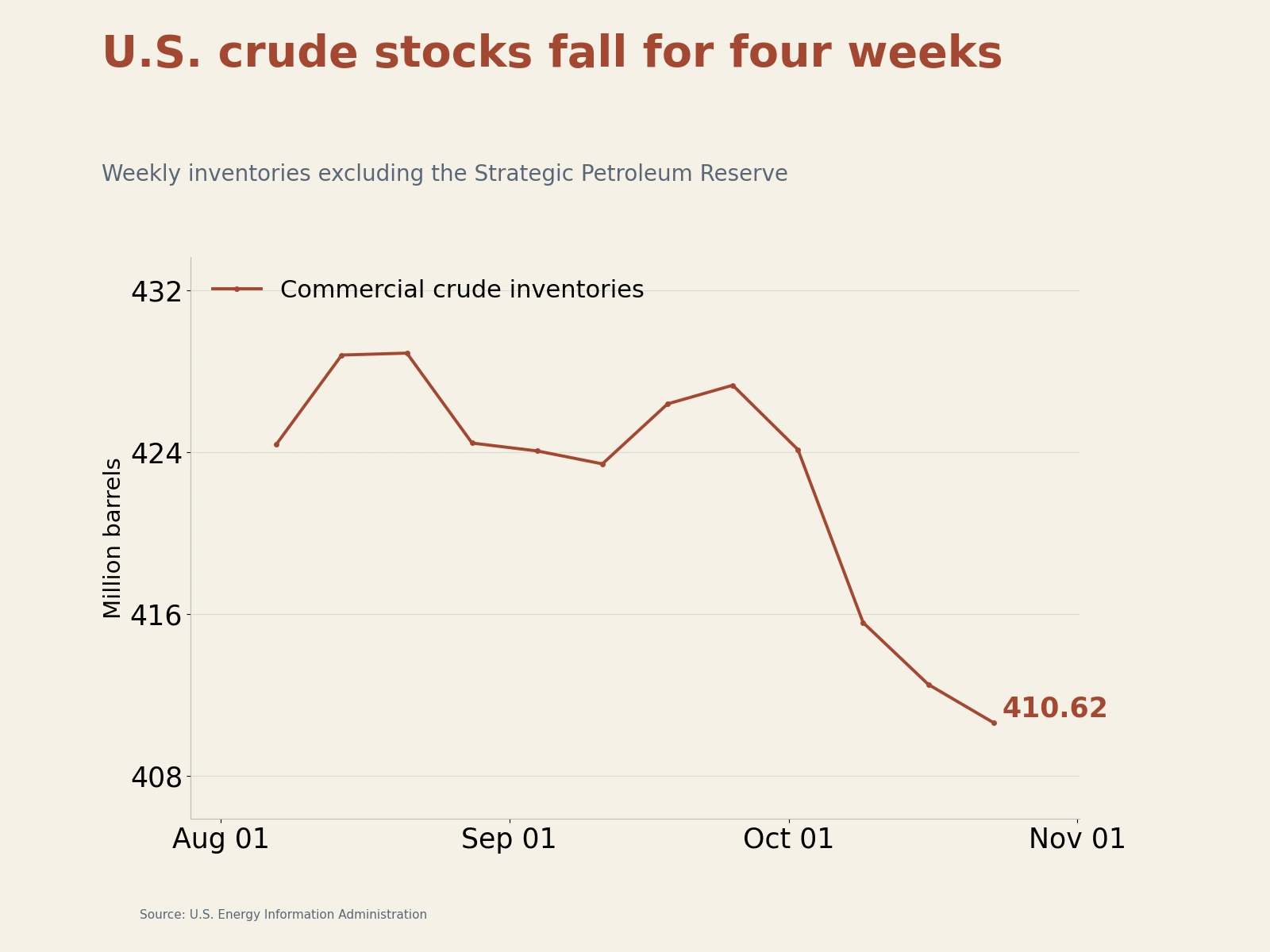
A material easing of the tight oil balance depends on four links: whether Gulf cargoes in transit arrive smoothly and reverse the onshore draw; whether the October 15 IEA meeting produces concentrated European diesel-reserve releases; whether Russian refinery throughput and diesel exports recover together; and whether the official U.S. inventory report for the week ended October 9, scheduled for noon Eastern time on October 15, shows simultaneous improvement in crude stocks, distillates and refinery runs. If recovery stops at upstream loading, immediate-delivery and diesel shortages will continue supporting prompt prices. Only coordinated improvement across the chain would give supply-risk premiums a basis for sustained decline.