By the morning of October 16 Beijing time, digital asset regulation in the US and Australia pointed toward the same core principle: those who actually control trading and hold customer assets bear the corresponding compliance responsibilities. On October 15, the US market continued debating the regulatory boundary between public-chain infrastructure and trading operators. Australia launched consultation on standards accompanying its new digital asset legislation, translating regulatory requirements into operational details such as licensing, custody and capital requirements.
United States: White House Crypto Adviser Departs as the Market Explores Public-Chain Infrastructure with Licensed Platforms
CoinDesk reported on October 15 that White House digital asset adviser Patrick Witt had confirmed his departure, with no successor announced. A White House official said the same day that crypto assets and the Digital Asset Market Clarity Act (CLARITY Act) remained presidential priorities. With the bill previously unable to advance in the Senate, the vacant White House policy-coordination position increased attention on who would lead subsequent legislative negotiations and on policy continuity.
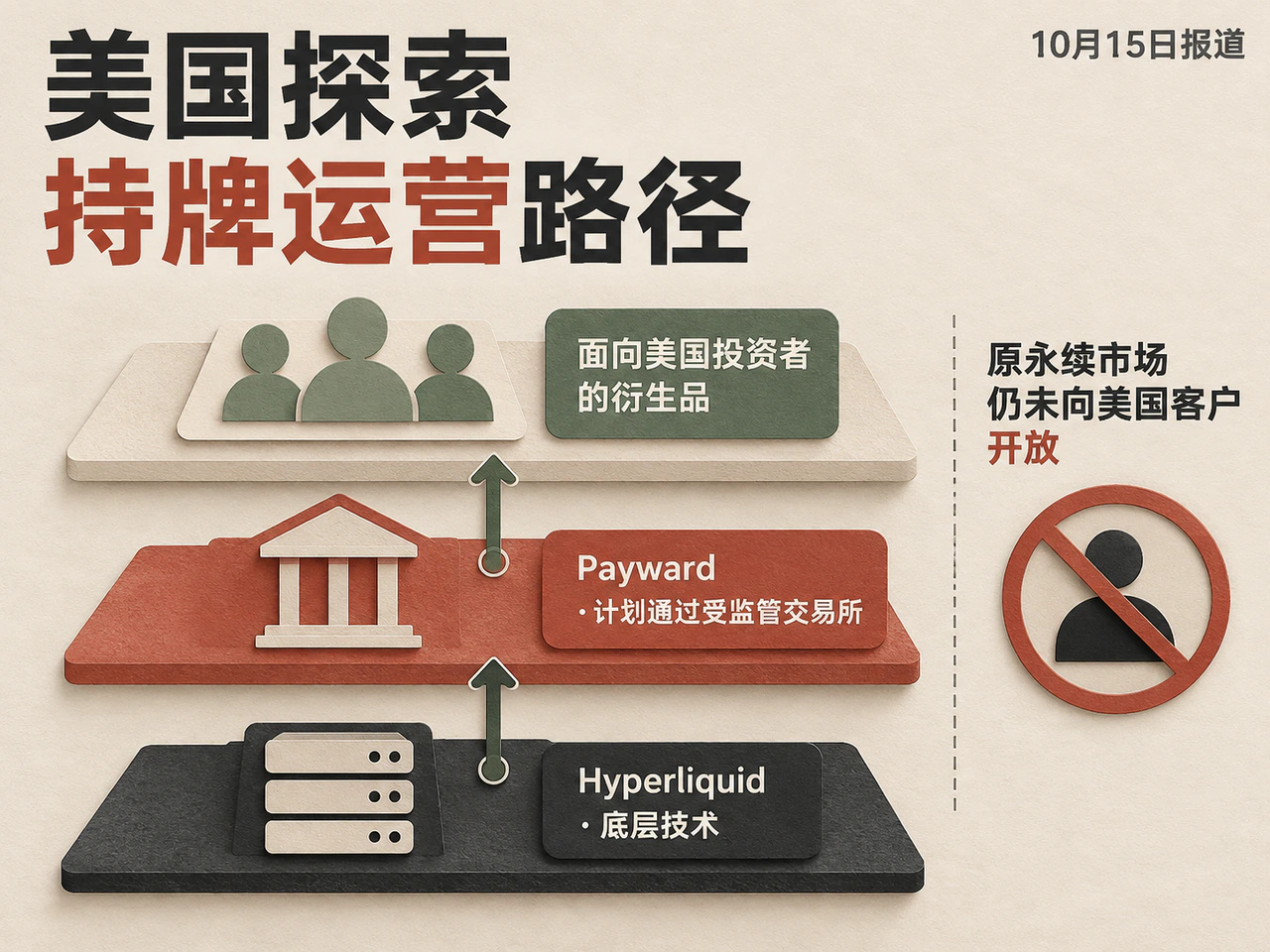
With federal legislation still awaiting a breakthrough, market participants are trying to create compliant operating models by separating underlying technology from customer-facing businesses. In a Bloomberg interview on October 15, Hyperliquid founder Jeff Yan argued that regulation should target companies deploying and operating financial businesses on a blockchain with actual control, rather than treating the entire underlying network as a regulated exchange.
Commercial efforts reflecting this separation of general-purpose technology infrastructure from specific financial services have already emerged. CoinDesk reported that Kraken parent Payward planned to use Hyperliquid technology to offer derivatives to US investors through a regulated exchange, while Hyperliquid's existing perpetual market remained closed to US customers. Under such a structure, traditional or licensed financial institutions can adopt public-chain trading technology while retaining regulated customer relationships and business control. Because the customer access points, operating entities and compliance duties are independent, adoption of the underlying technology does not grant access to the existing trading market. Whether this model remains viable depends on implementation of the specific business plans, the products and customers permitted by the licenses, and the compliance responsibilities the operator actually assumes.
Australia: ASIC Seeks Views on Digital Asset and Custody Rules after More Than 140 Applications
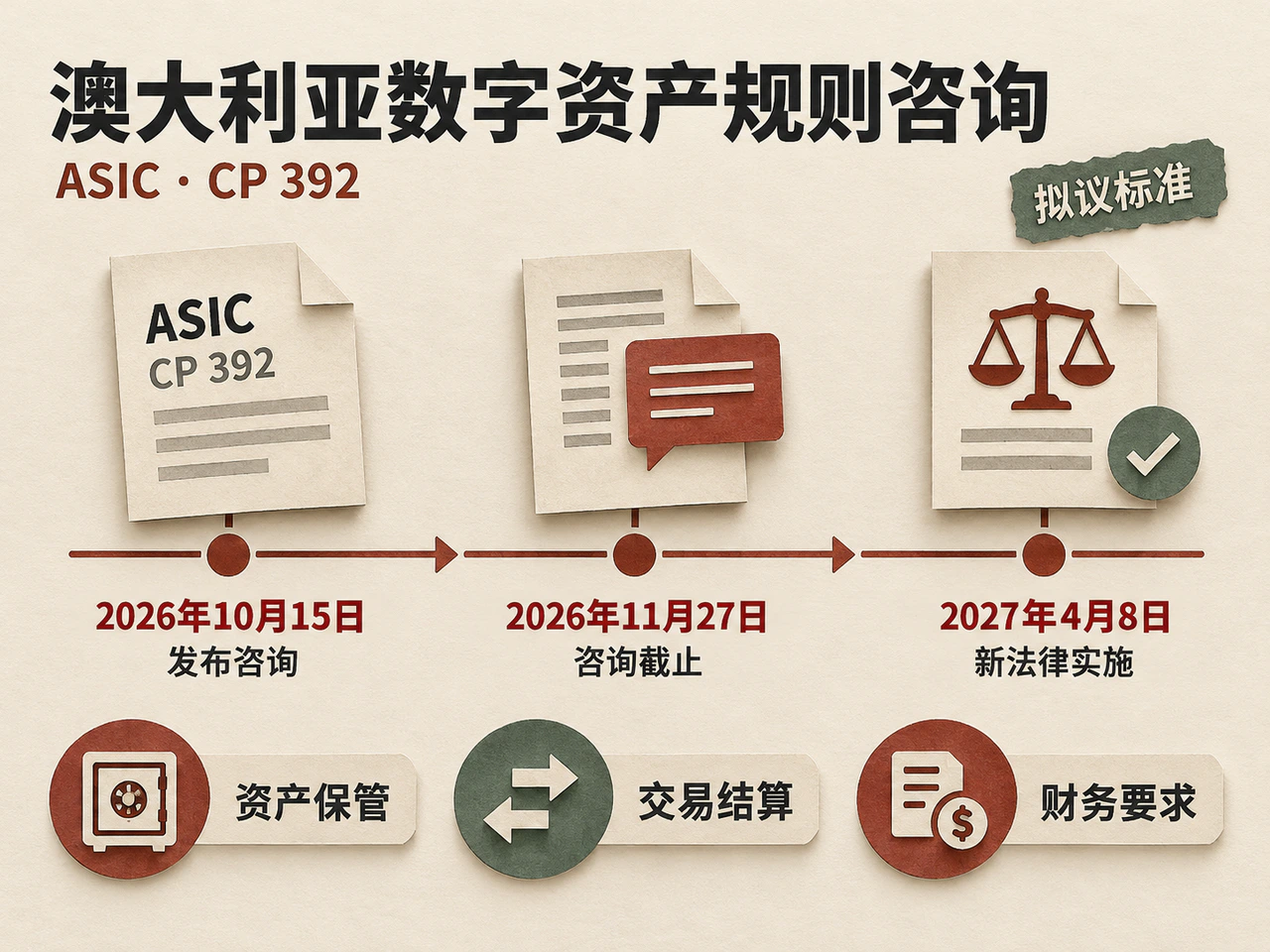
The Australian Securities and Investments Commission (ASIC) released consultation paper CP 392 on October 15, proposing guidance and standards for digital asset platforms and tokenized custody platforms. The new legislation is scheduled to take effect on April 8, 2027, and the consultation closes on November 27, 2026.
Under the proposed definitions, digital asset platforms hold digital tokens on customers' behalf and provide related platform services; tokenized custody platforms record underlying assets held for customers as digital tokens. ASIC proposes requiring relevant firms to obtain or vary an Australian financial services license, provide customer disclosure documents and platform rules, and, where applicable, satisfy custody, trade settlement and net tangible asset requirements. Existing financial services licensees, market participants and payment providers using digital assets in their businesses also fall within the guidance. This brings regulation into institutions' balance sheets and daily operations: beyond processing trades, platforms must protect customer assets, complete settlement and withstand operating risk. Custodians conducting tokenized business must ensure the connection between customers' digital records and the underlying physical or financial assets.
Industry participants are entering the compliance transition in large numbers. ASIC said it had received more than 140 digital asset-related financial services applications, including more than 110 submitted in response to earlier guidance during the industry no-action arrangement from October 2025 to September 30, 2026. To reduce duplication during the transition, the regulator also proposes simplifying licensing arrangements for some existing licensees and firms that have already applied.
Taken together, US and Australian developments show that competition in institutional adoption of digital asset technology is shifting toward the combined development of licensing access, custody, settlement and capital protection. The pace of business expansion will increasingly depend on whether these compliance and operational capabilities are ready alongside product launches.
Click Read Original for full details.