Data released on October 15 showed that the U.S. final-demand producer price index rose a seasonally adjusted 1.3% month on month in September, accelerating markedly from 0.5% in August and 0.2% in July. The unadjusted annual increase was 6.3%. Renewed gains in energy prices, alongside still-rapid increases in non-energy costs, make it difficult for discussion of further Federal Reserve rate increases to subside.
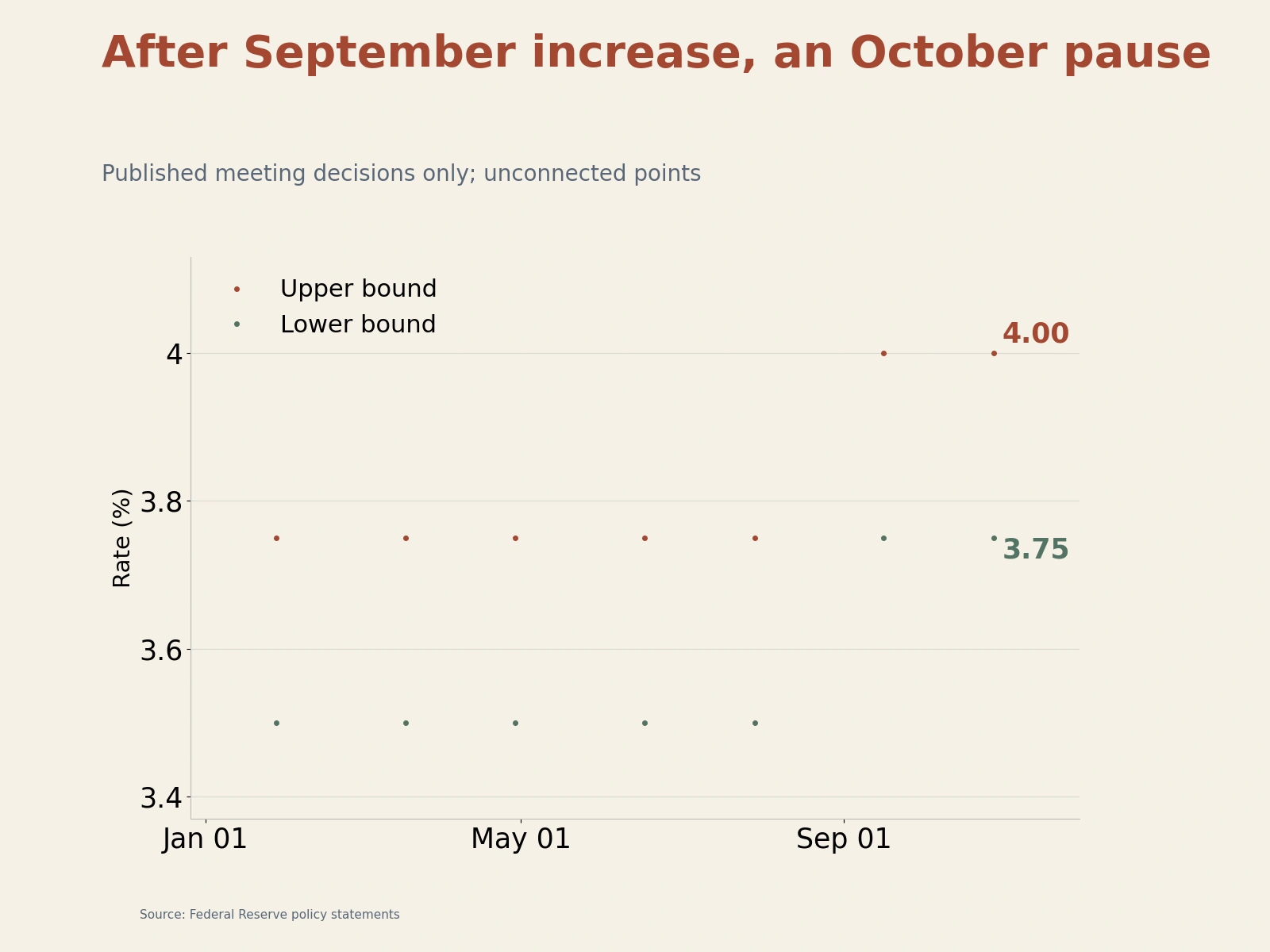
The Fed had already raised rates by 25 basis points on September 16, bringing the federal funds target range to 3.75%–4.00%. By the morning of October 16 Beijing time, the latest price data provided additional reasons to maintain restrictive policy. The central questions for markets and policymakers are now how long this cost shock will last and how much firms can pass through to final consumers.
Energy's 10.8% monthly jump lifts the headline reading; underlying costs still rise 5.0% year on year
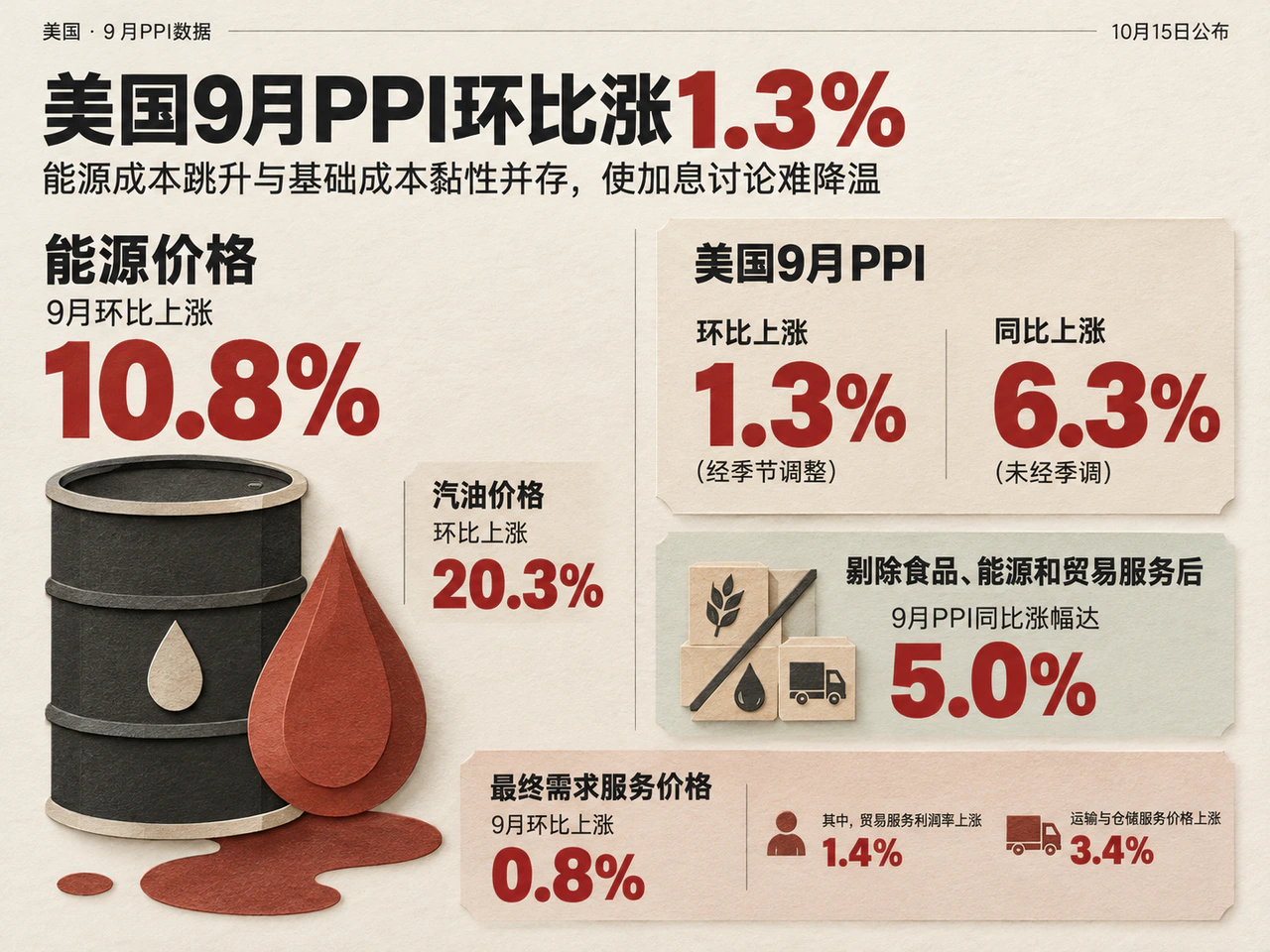
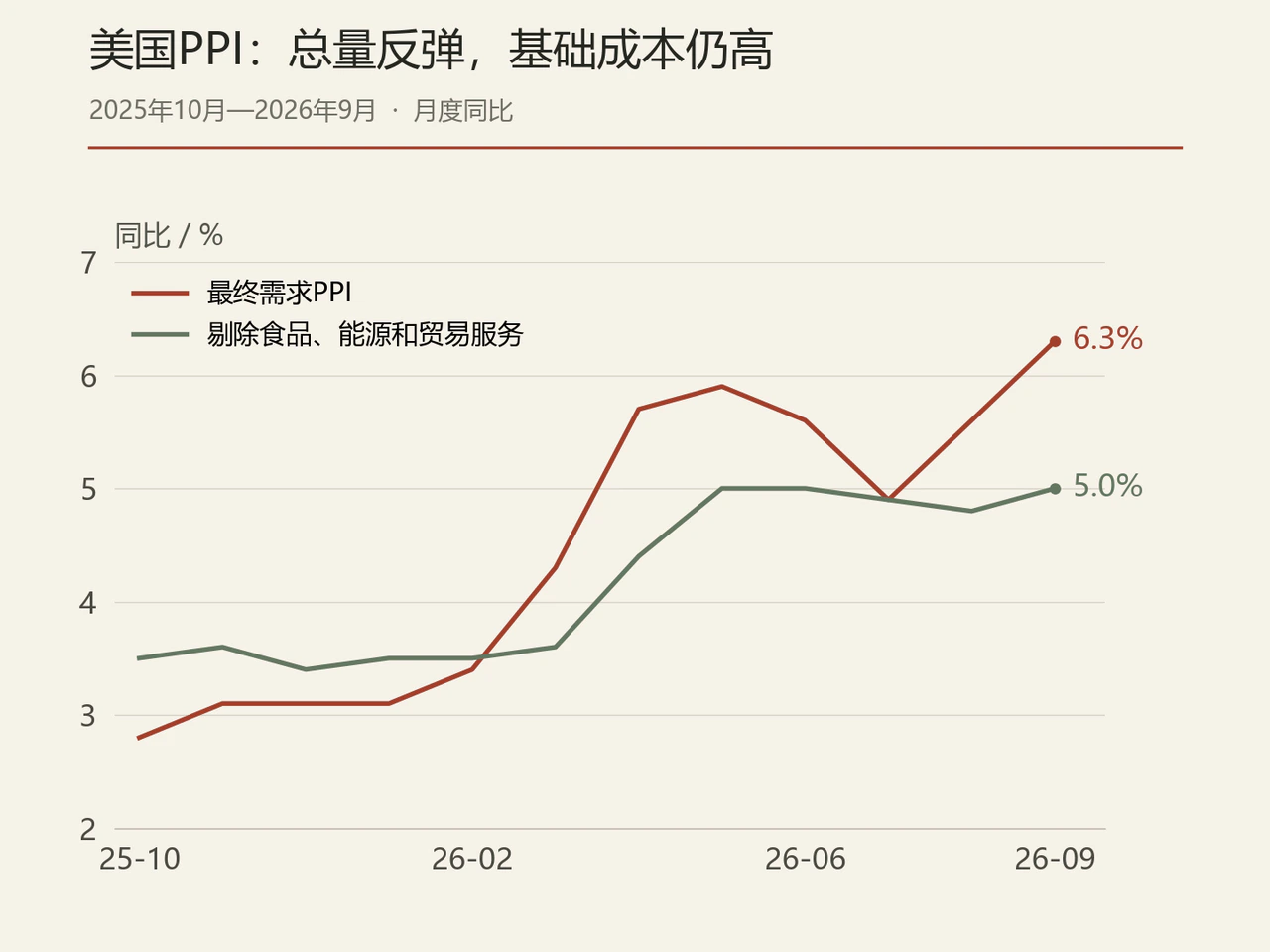
By component, energy was the main driver of September's PPI increase. Final-demand goods prices rose 2.6% month on month, with a 10.8% increase in energy prices accounting for more than 80% of the goods-price gain. Gasoline prices, up 20.3% month on month, were the principal force behind it. Service-sector cost pressures also appeared in transport and distribution: final-demand services prices rose 0.8% in September, including a 1.4% increase in trade-services margins and a 3.4% rise in transportation and warehousing services prices.
As annual headline PPI inflation rebounded from 4.9% in July to 6.3% in September, underlying costs also proved sticky. Excluding food, energy and trade services, September PPI still rose 0.5% month on month, above August's 0.3%, and 5.0% year on year. Annual inflation on the same measure climbed from 3.5% last October to 5.0% this May and remained near 5% in subsequent months. Energy explains September's sharp jump, while persistently elevated underlying costs make disinflation more dependent on subsequent changes in demand and corporate pricing.
These data strengthen the need for restrictive monetary policy. In transmission terms, higher energy prices first erode corporate profits and households' real purchasing power. Whether they then become more persistent consumer-price pressure depends on firms' ability to pass on costs and the resilience of final demand. If price pressures continue spreading to other goods and services, the cost of waiting will rise for the Fed.
San Francisco Fed sees inflation returning to 2% at end-2028; markets focus on Warsh's discussion and October's policy meeting
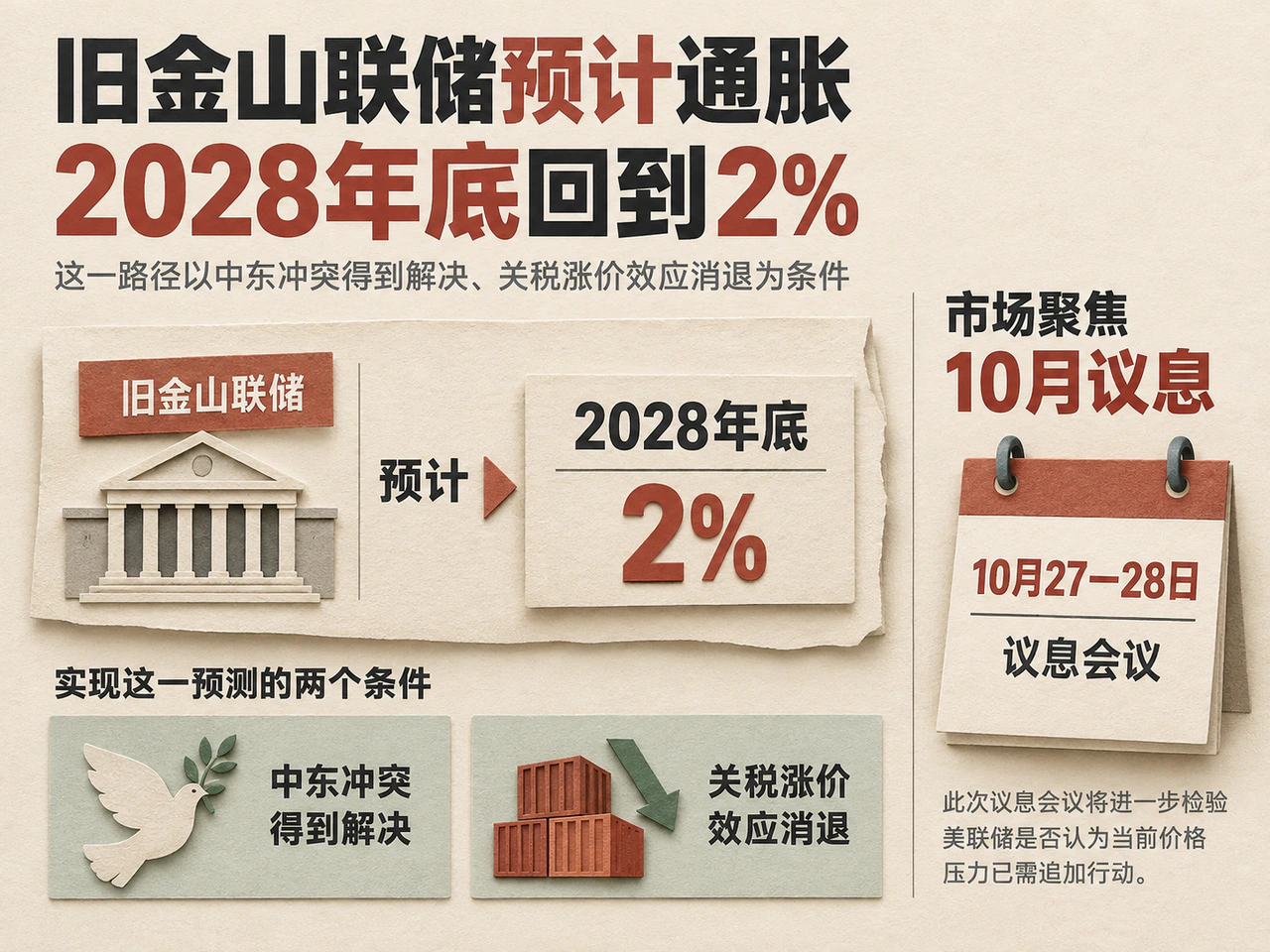
Obstacles to disinflation are also evident in the Fed's latest internal research. In an economic outlook published on October 15, San Francisco Fed Research Director Sylvain Leduc projected that inflation would return to 2% only by the end of 2028. That path is conditional on resolution of the Middle East conflict and the fading of tariff-related price effects; sticky services inflation is also slowing the decline. A prolonged conflict would push the inflation path higher.
Upward price shocks and offsetting forces are interacting. The report noted that the labor market remained broadly balanced and wage growth was slowing. Equipment demand associated with AI construction had lifted related prices, but information-processing equipment contributed directly only about 0.2 percentage points to August's annual headline PCE inflation. Overall, energy and goods shocks remain central to explaining elevated inflation, while easing wage pressure supports its eventual decline. Together, these forces will determine how quickly and forcefully further rate increases are needed.
The next policy communication event is at 11:30 a.m. Beijing time on October 16, when Fed Chair Warsh will hold a discussion in Bangkok with the managing director of the International Monetary Fund. Markets will watch how he interprets the new inflation data and policy choices after the earlier rate increase. The October 27–28 policy meeting will then further test whether the Fed believes current price pressures require additional action. September's cost data strengthen the case for continued tightening, while the persistence of the energy shock and the spread of non-energy price pressures will determine the Fed's actual pace.