As of the morning of October 16, Beijing time, the two major international crude benchmarks had diverged. US crude strengthened on a sharp draw in commercial stocks, while Brent edged lower on prospects for more tanker capacity and lower freight rates. With Middle Eastern supply disruptions continuing, pricing was shifting toward the realization of logistics improvements: whether crude could be loaded, shipped and delivered to consuming regions, and at what freight cost, was becoming central to the divergence between benchmarks.
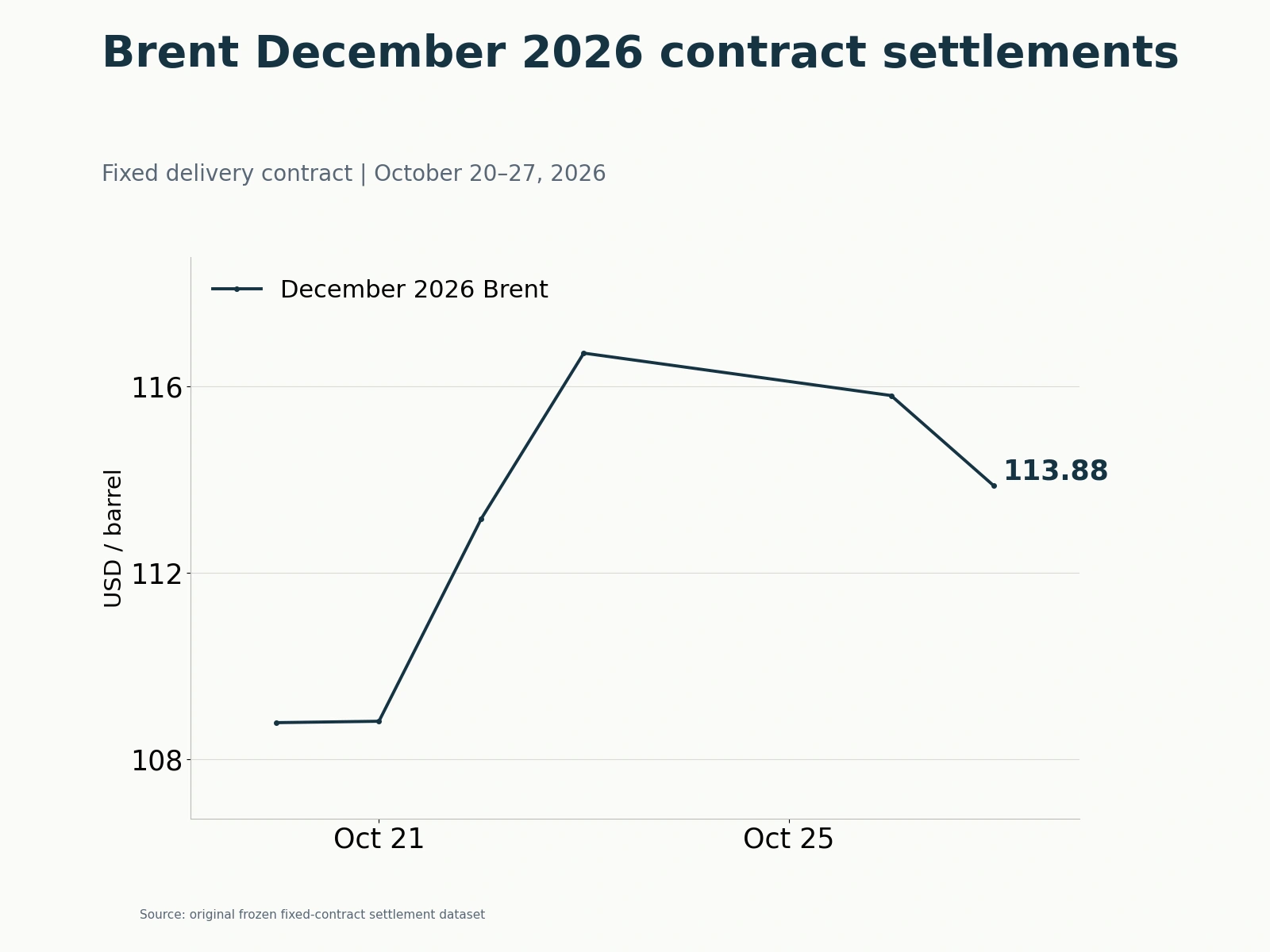
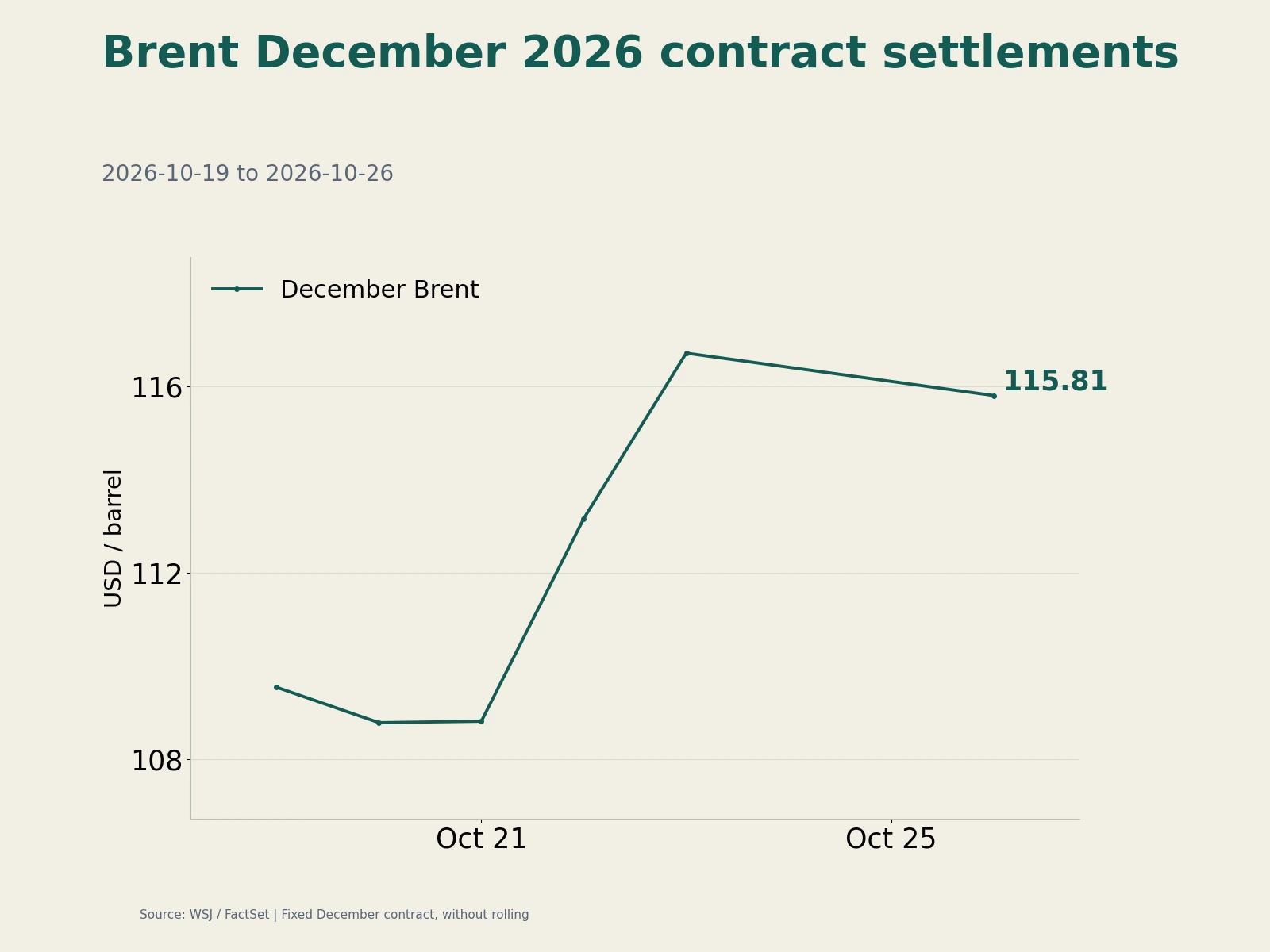
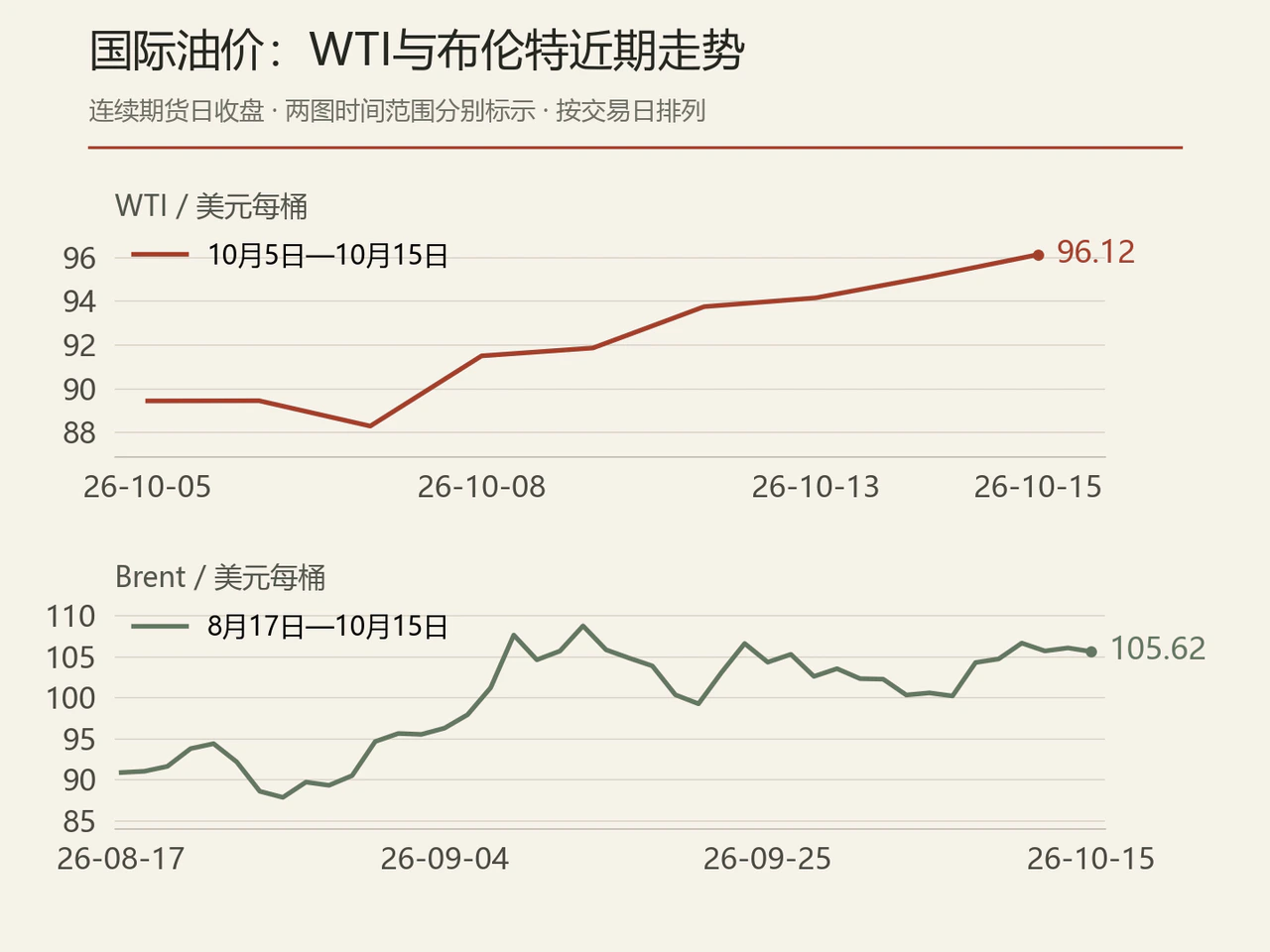
On Yahoo's supplier daily-close basis for continuous futures, WTI stood at $96.12 a barrel on October 15, up 1.08% from the previous session, while Brent was $105.62, down 0.41%. On the same basis, WTI had recovered steadily from $88.28 on October 7, whereas Brent remained below its October 12 level of $106.65. US crude's faster catch-up reflected simultaneous pressure from US inventory depletion and a retreat in the international seaborne premium.
Hurricane production cuts and lower imports drive an 8.6 million-barrel US commercial crude draw, supporting the front end
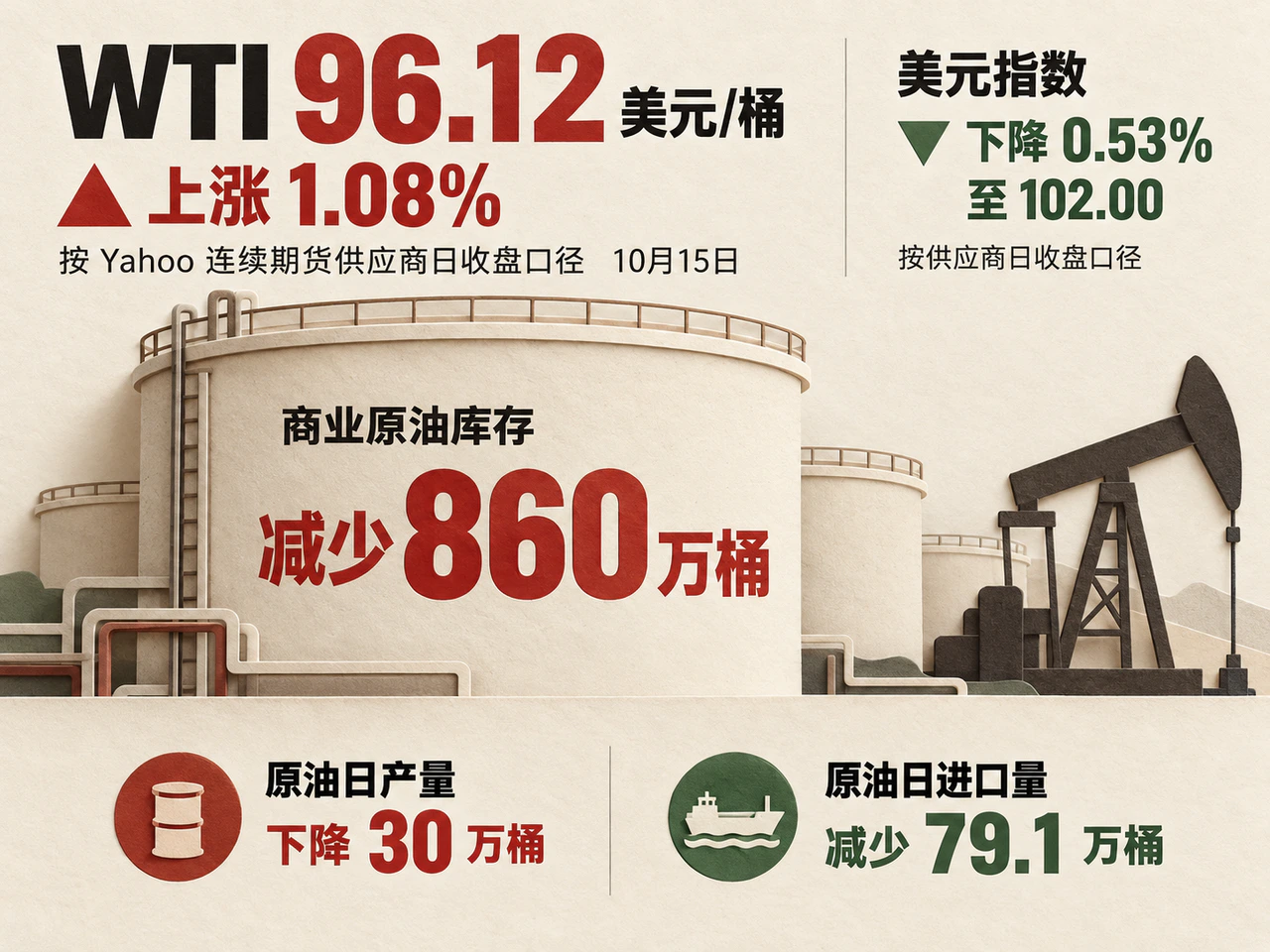
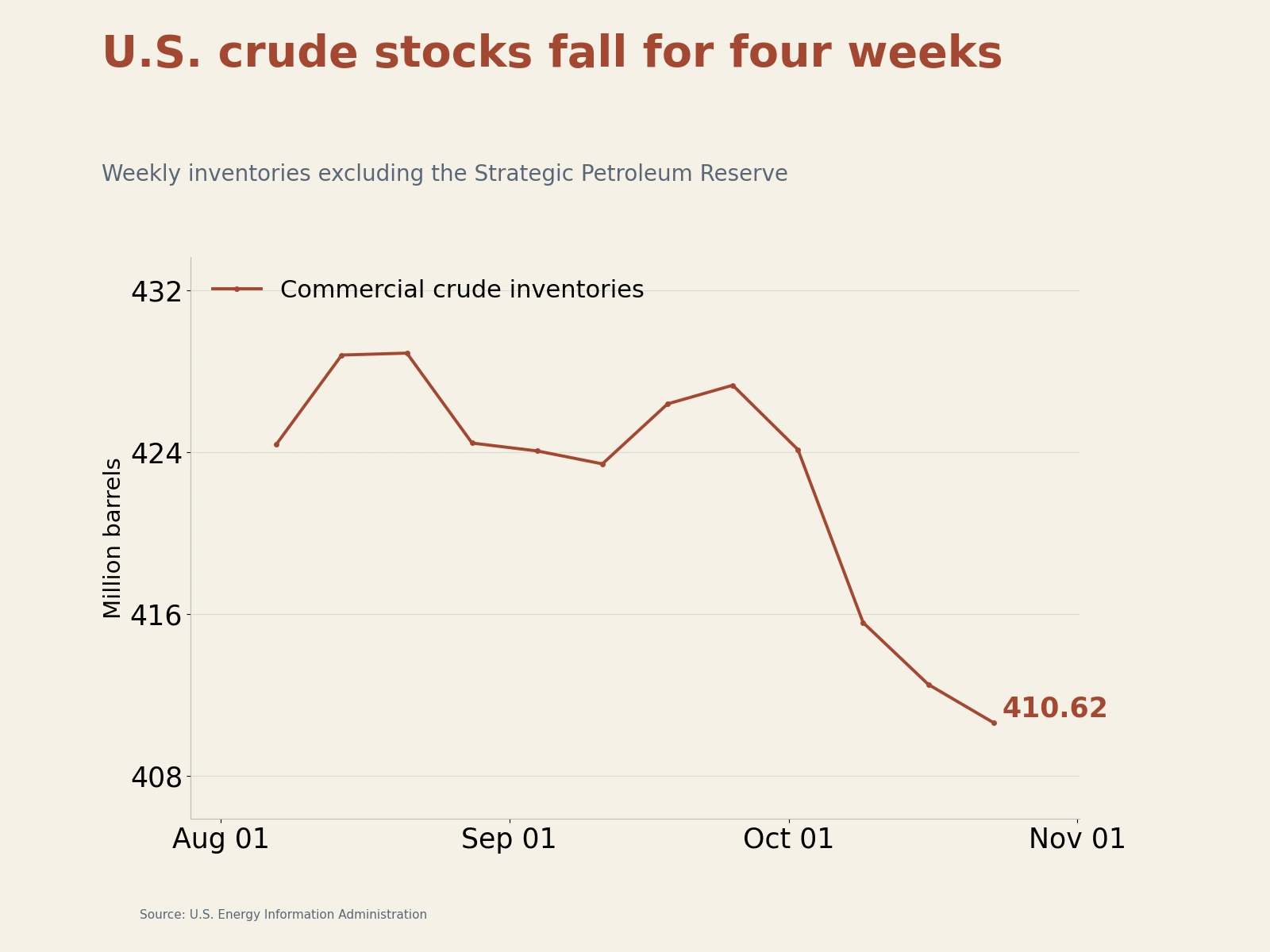
According to Dow Jones on October 15, the US Energy Information Administration (EIA) reported an 8.6 million-barrel decline in the previous week's commercial crude stocks, a marked departure from analysts' expectations for a small build. Supply contracted on both fronts: US crude production fell 300,000 barrels a day and daily crude imports fell 791,000 barrels. Hurricane Isaias, which halted some offshore Gulf of Mexico production, was an important backdrop.
Lower domestic production and imports forced refineries to draw commercial stocks to meet feedstock needs, directly raising the value of near-term physical reserves. Ritterbusch nevertheless noted that the draw was concentrated along the US Gulf Coast and could contain a substantial one-off weather effect. The pace of offshore production restarts and the recovery in imports would directly determine whether the drawdown continued.
Exchange rates also provided a more supportive pricing backdrop. Over the same period, the dollar index fell 0.53% to 102.00 on the supplier's daily-close basis, reducing the relative cost of dollar-denominated crude for buyers using other currencies. Yet the two benchmarks moved in opposite directions despite the weaker dollar, indicating that regional inventories, supply locations and freight differences remained the main drivers of that day's divergence.
Hopes of eased shadow-fleet sanctions reduce Brent's premium; Hormuz shipping risks persist
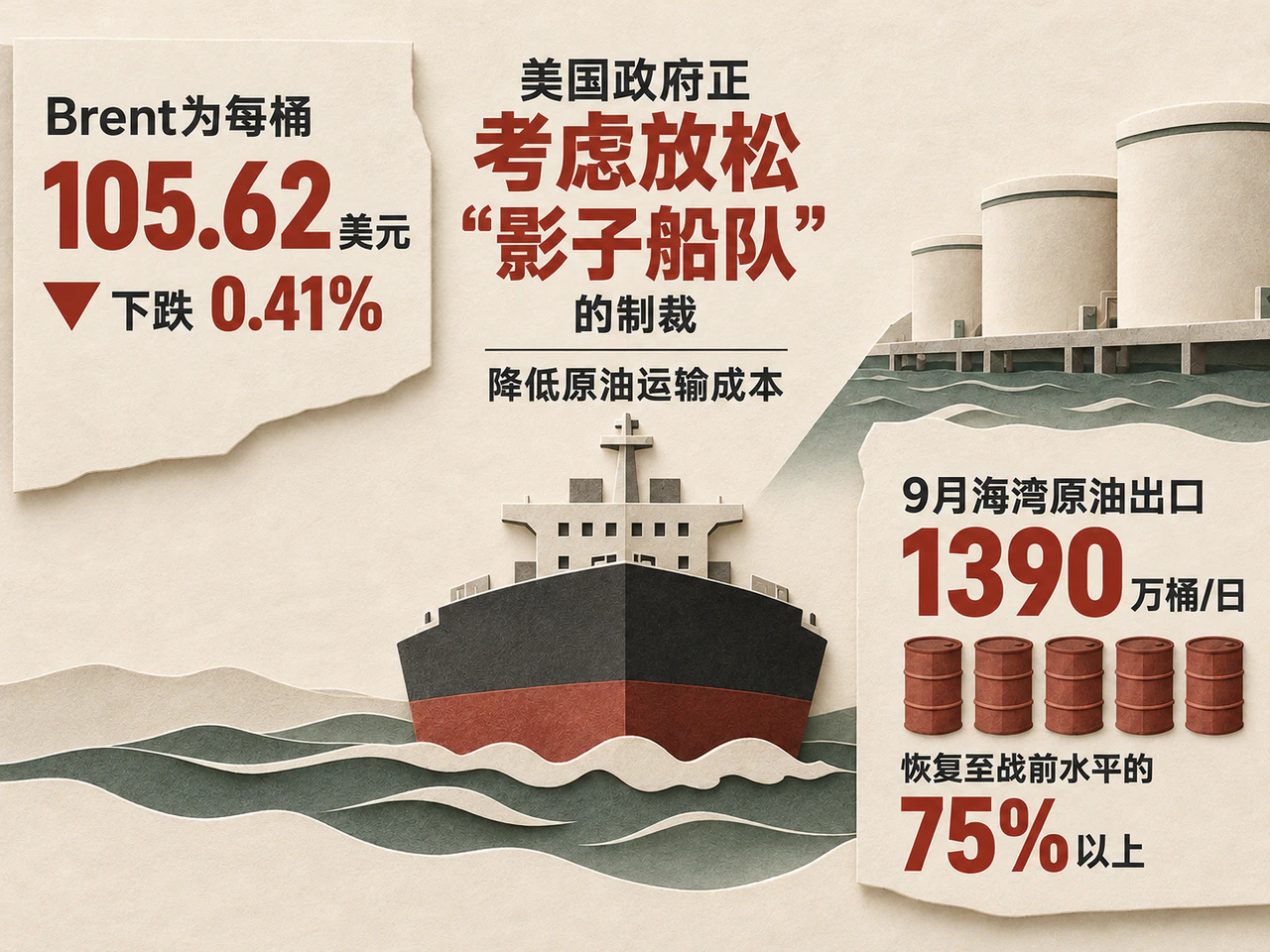
Changing expectations for shipping-capacity policy drove Brent's retreat. Dow Jones reported that the US government was considering easing some sanctions on the 'shadow fleet' to expand tanker supply and reduce crude transportation costs. Price Futures Group analyst Phil Flynn said high freight rates had been an important reason for Brent's wide premium, making such potential changes more of a headwind for Brent than WTI. The policy was still under consideration; markets were trading ahead of it on the possibility of improved shipping conditions.
Lower freight rates could reduce refiners' landed costs and make previously uneconomic long-haul crude shipments viable again. Sustained logistical improvement from greater tanker supply would, however, also require safe shipping lanes. Citing maritime-security agencies and the UK Maritime Trade Operations office, reports described renewed attacks on merchant vessels and sinkings near the Strait of Hormuz. More available tankers and safer key routes therefore remained two separate conditions still to be fulfilled.
The IEA's October 14 monthly report also showed Gulf supply recovery coexisting with shipping risks. September Gulf crude exports rose 4.4 million barrels a day month on month to 13.9 million, more than 75% of the prewar level. Global oil supply increased 2.5 million barrels a day to 102.3 million. Gulf production and exports had clearly recovered, but fresh attacks left that recovery path unstable.
Global onshore stocks plunge 113 million barrels in September as diesel shortages coexist with contracting fourth-quarter demand
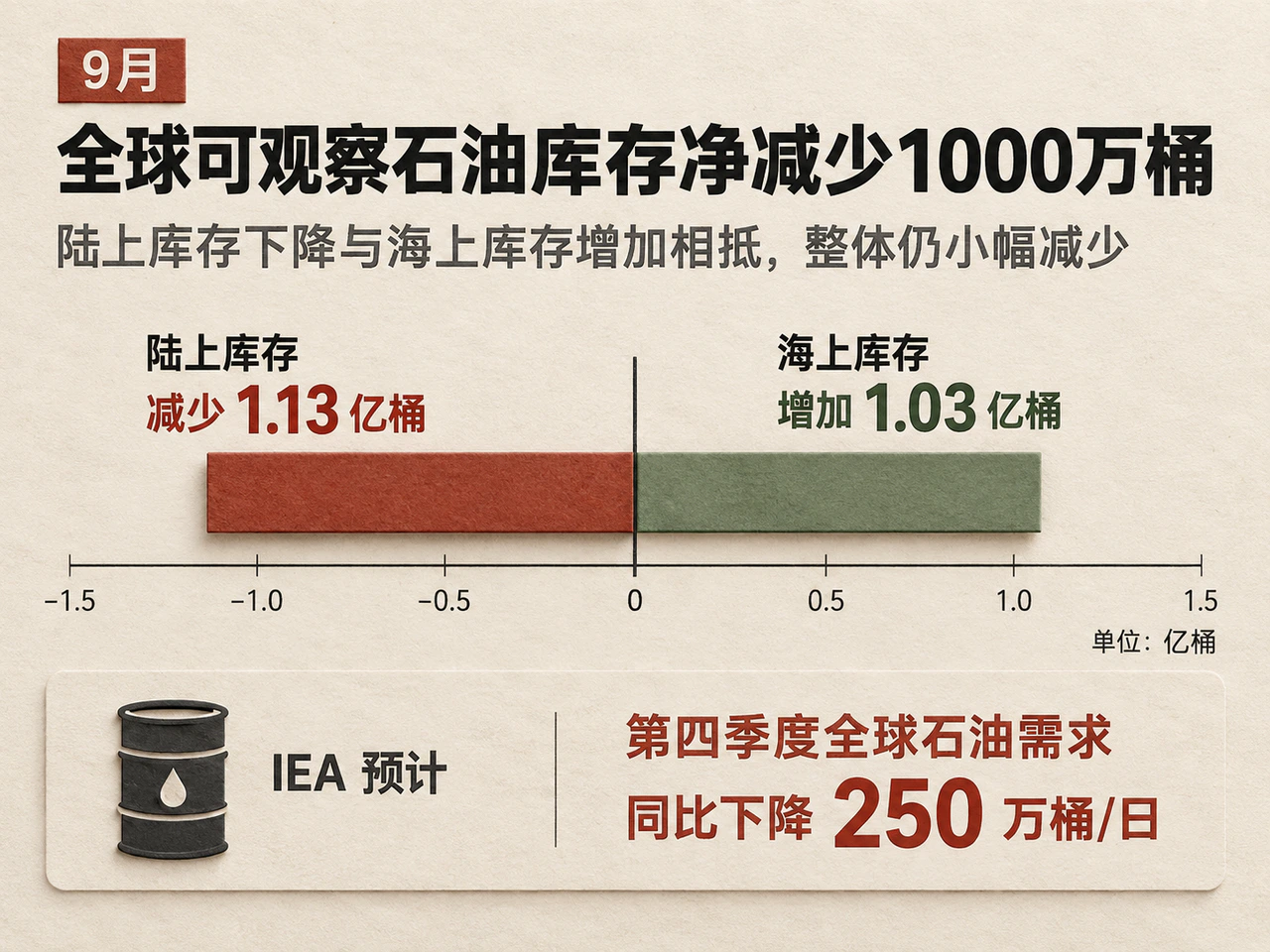
Recovering global supply had not yet replenished onshore inventories. The IEA estimated that observable global oil stocks fell by a net 10 million barrels in September, with a striking divergence: onshore stocks declined 113 million barrels while oil on water increased 103 million. With large quantities of crude at sea, timely arrivals and refinery deliveries had a more direct bearing on immediate supply than the overall volume of oil on water.
Physical tightness was especially acute in refined products. The IEA said global diesel exports were down 700,000 barrels a day year on year in September. Russia and the Middle East together supplied 1.3 million barrels a day less, only partly offset by increases elsewhere. Falling diesel inventories, wider crack spreads and deeper nearby premiums over deferred delivery all pointed to pressure on near-term physical supply. At the same time, high fuel costs were eroding real incomes and economic activity, in turn weakening demand.
Reflecting high oil prices' suppression of consumption, the IEA forecast global oil demand to fall 2.5 million barrels a day year on year in the fourth quarter and 2.6 million for the full year, while still expecting a supply-demand shortfall during the year. Simultaneous supply losses and demand contraction produced a market in which low inventories supported the front end, while recovering supply and weaker consumption jointly constrained longer-term prices.
Four indicators deserve particular attention for oil prices and benchmark spreads: whether US commercial crude stocks keep falling once offshore production and imports recover; whether tanker-sanctions policy materially changes available capacity and freight rates; whether increased Gulf exports translate smoothly into replenished onshore stocks; and whether diesel's nearby premium and crack spreads ease. The first two will determine whether US and international crude prices continue converging; the latter two are central to judging whether global supply tightness has begun to recede materially.