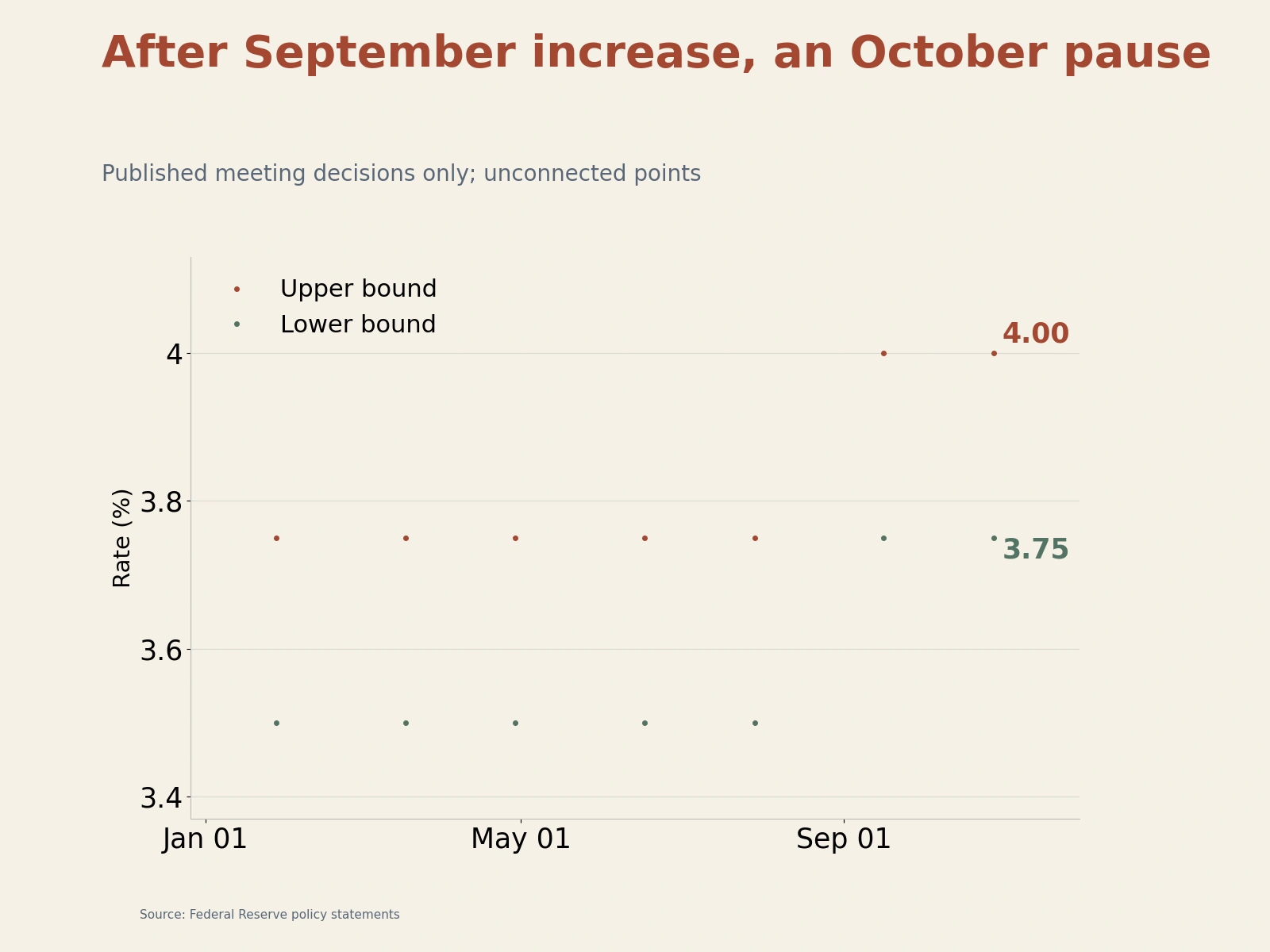
By the morning of October 17, Beijing time, newly released US September import-price and industrial-production data sent mixed signals. External price pressure was spreading beyond energy, while real production continued growing but manufacturing expansion remained limited. The Fed had raised the federal funds target range by 25 basis points to 3.75%–4.00% in September. As the October 27–28 meeting approached, policy differences increasingly centered on the pace of subsequent hikes.
Nonfuel monthly import-price gains accelerate from June to September as cost pressure broadens
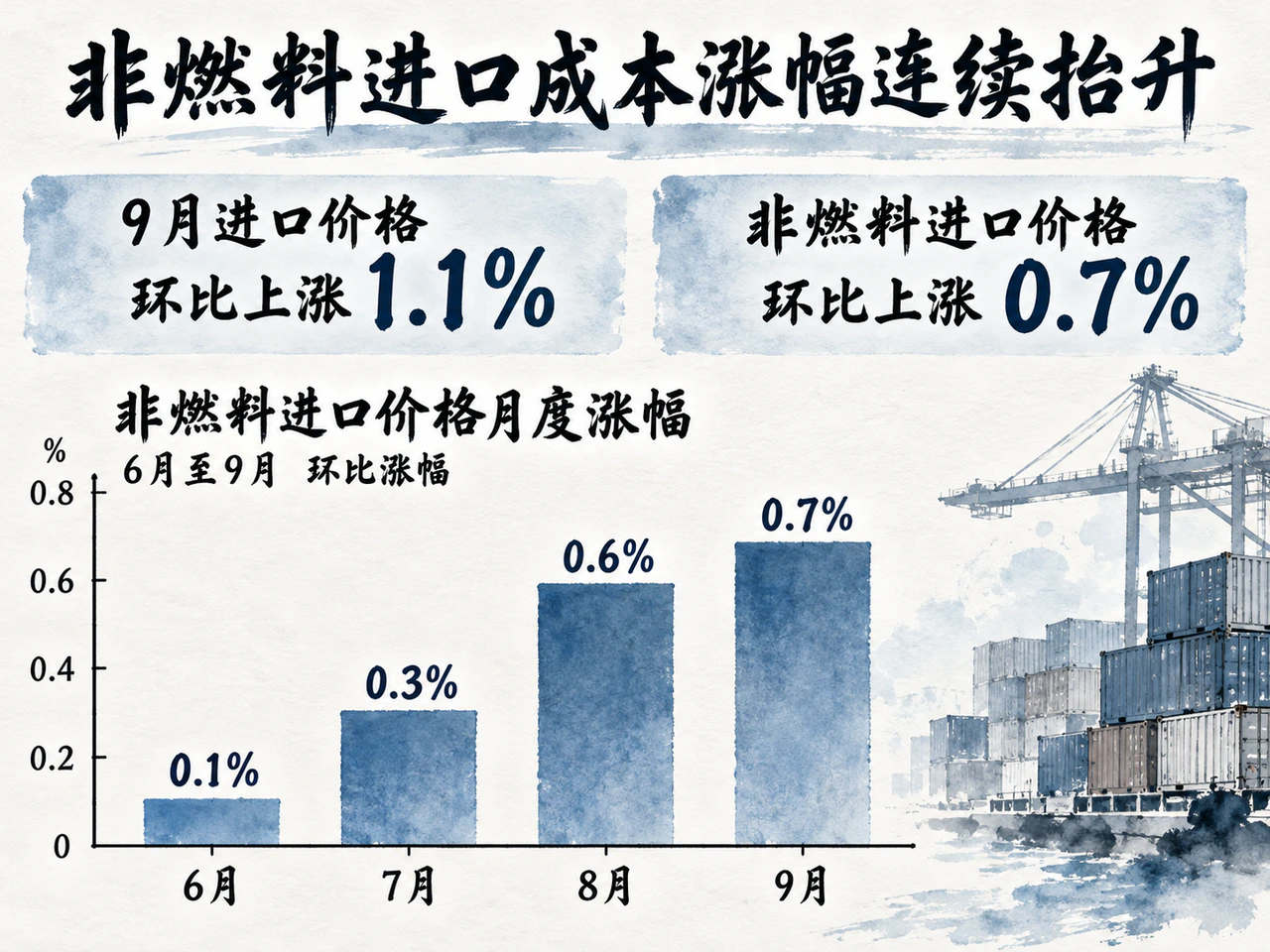
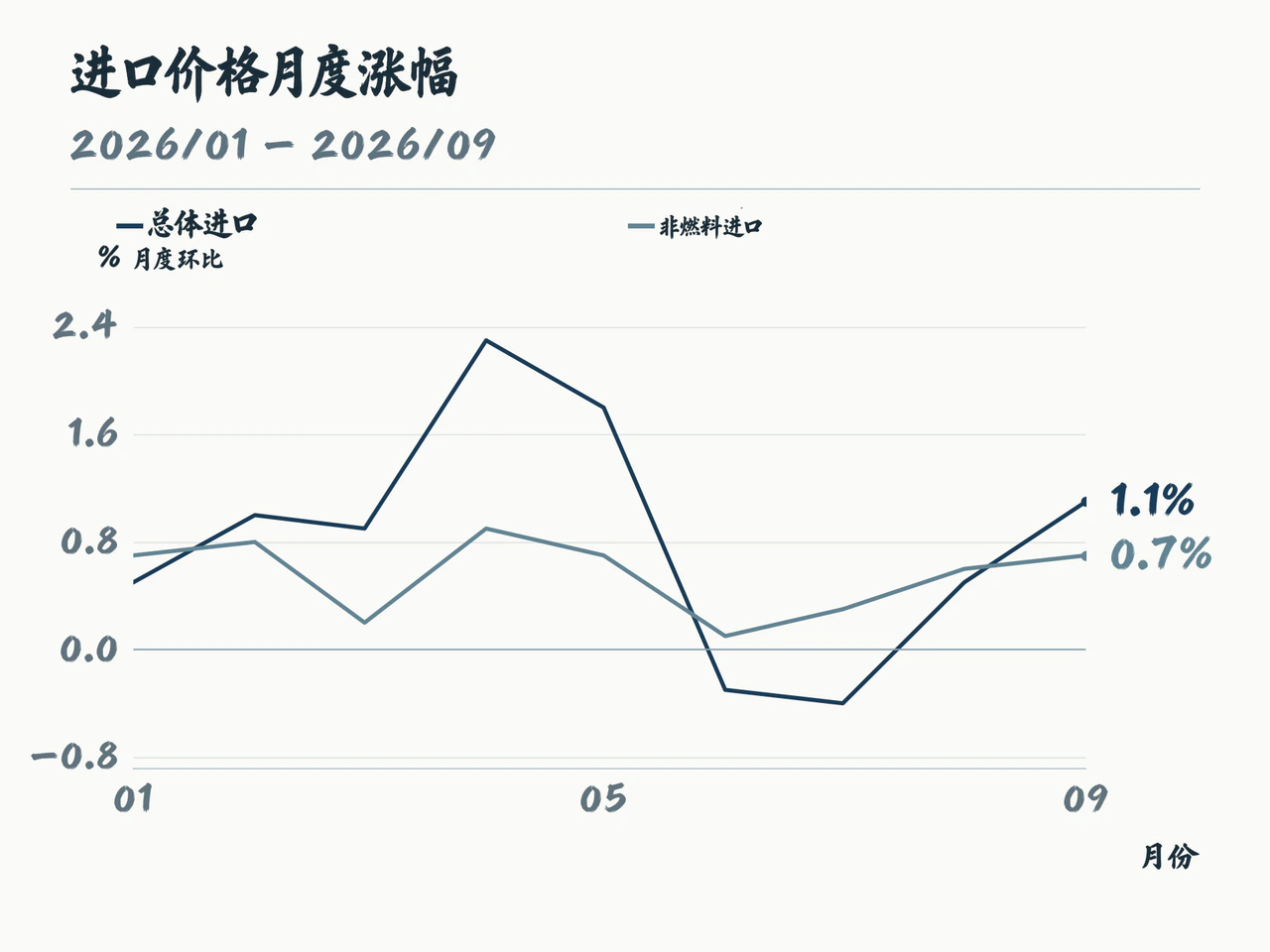
US Bureau of Labor Statistics data released October 16 showed September import prices up 1.1% month on month, versus 0.5% in August, and up 8.1% year on year, the largest increase since July 2022. Fuel import prices rose 4.8% in September, reversing three consecutive monthly declines, but price pressure extended beyond energy.
Excluding fuel, import prices rose 0.7% month on month and 6.0% year on year, with no monthly decline since August 2025. Monthly gains accelerated successively from 0.1% in June to 0.3% in July, 0.6% in August and 0.7% in September. Capital-goods prices rose 0.9% for a second consecutive month, with increases in computers, peripheral equipment and semiconductors, and industrial and service-industry machinery. Nonautomotive consumer-goods prices rose 0.4%. Persistent acceleration in nonfuel import prices deserves greater attention than a single month's energy rebound.
These figures indicate broadly rising import procurement costs. More expensive capital goods increase investment costs, while consumer-goods inflation intensifies pressure for retail pass-through. Although the ultimate effect depends on companies' ability to absorb costs in margins and on final demand, continued nonfuel import-price gains make it harder for the Fed to attribute inflation entirely to temporary oil-price disturbances.
Manufacturing improves modestly with spare capacity; October meeting focuses on the path ahead
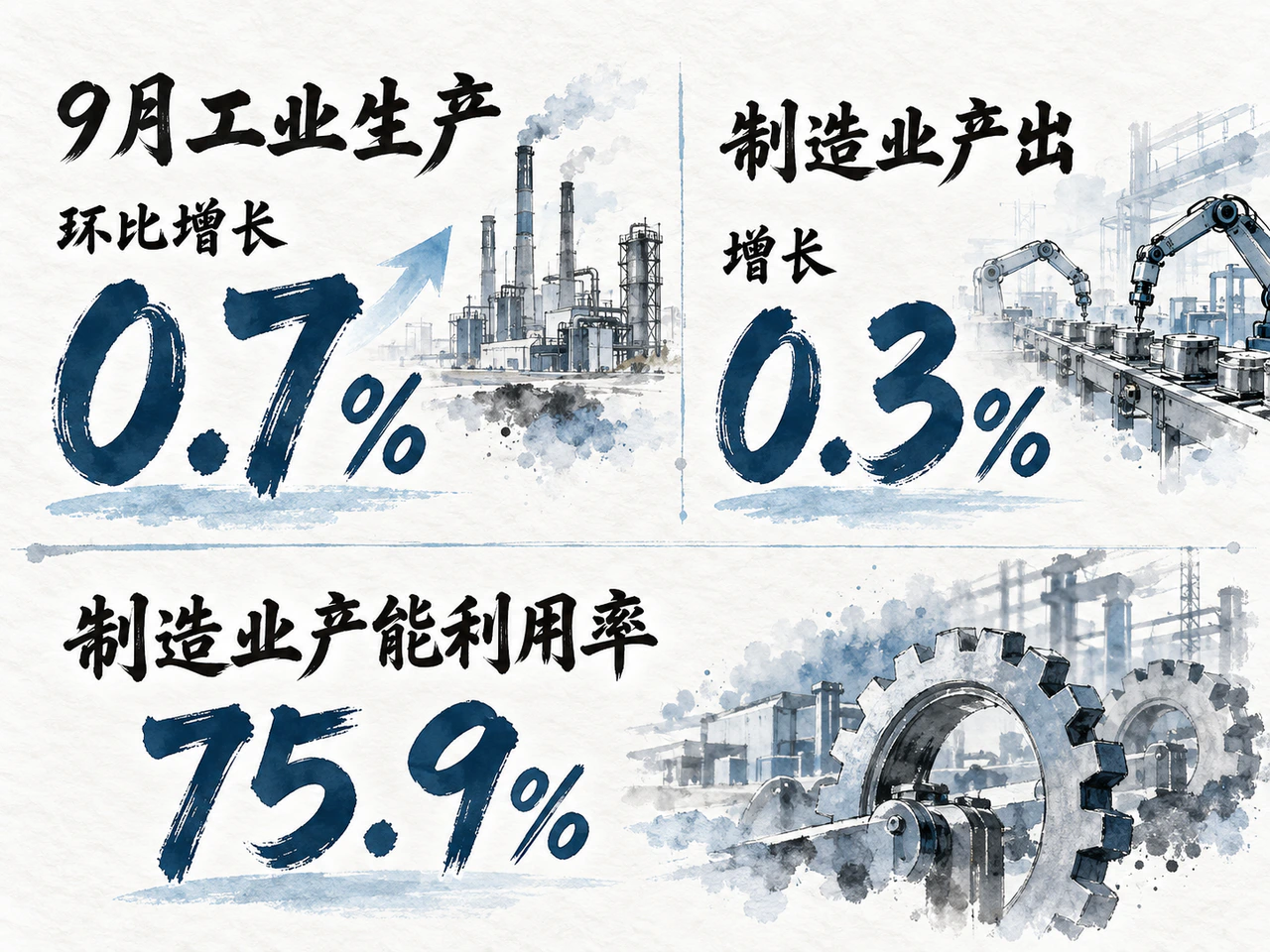
Fed data released the same day showed September industrial production up 0.7% month on month, well above August's 0.1%. Part of the headline rebound came from a strong 3.5% increase in utilities output; manufacturing rose only 0.3%, a more moderate improvement. Manufacturing output grew at an annualized 0.7% in the third quarter, while September manufacturing capacity utilization was 75.9%, still 2.3 percentage points below its long-run average.
Growing output alongside idle capacity suggests neither a sharp industrial contraction nor broad overheating. The former allows the Fed to remain focused on price stability; the latter supports continued observation of September's rate-hike transmission without treating one month's industrial-production rebound as evidence of generalized demand overheating.
According to CNBC, futures pricing on the morning of October 16, US Eastern time, indicated an approximately 15% chance of an October hike, with traders generally favoring a pause. Yet that day's import-price data strengthened the evidence that sticky inflation remained. Whether to pause in October and whether further hikes are still needed this year are distinct judgments.
The next policy checkpoint is the October 28 rate decision and subsequent press conference. Beyond the binary hold-or-hike decision, the committee's assessment of persistent nonfuel price increases and manufacturing's remaining spare capacity will more clearly reveal the subsequent policy path.