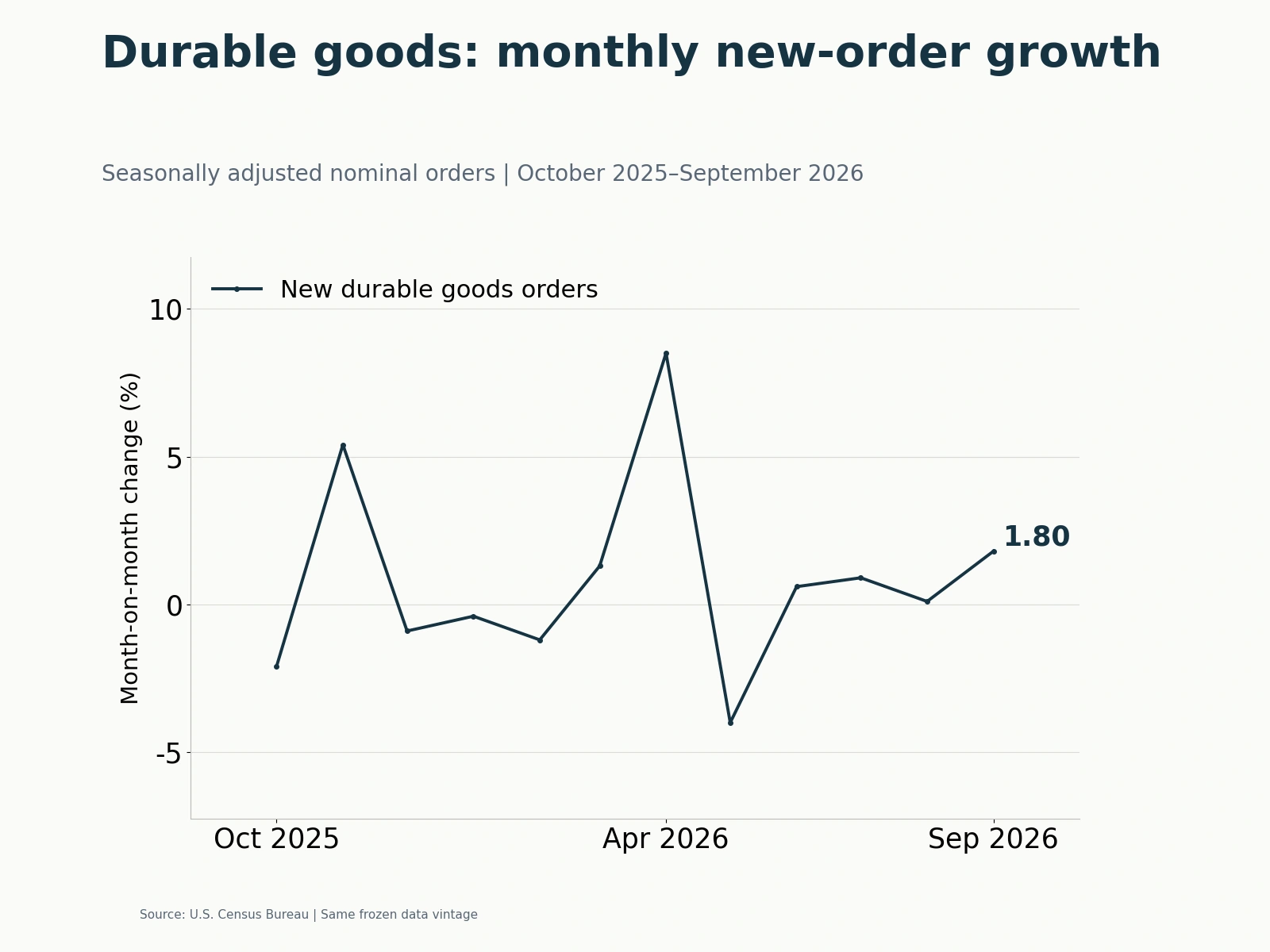
By the morning of October 19, Beijing time, a review of October 12–18 showed more persistent inflation and still-resilient economic fundamentals forming the backdrop to Fed policy debate. US September consumer and producer price data released midweek both rose, increasing the urgency of another rate hike, but officials remained divided on the pace of further tightening. Rates markets initially increased bets on an October hike after CPI, then returned to a wait-and-see stance near the weekend.
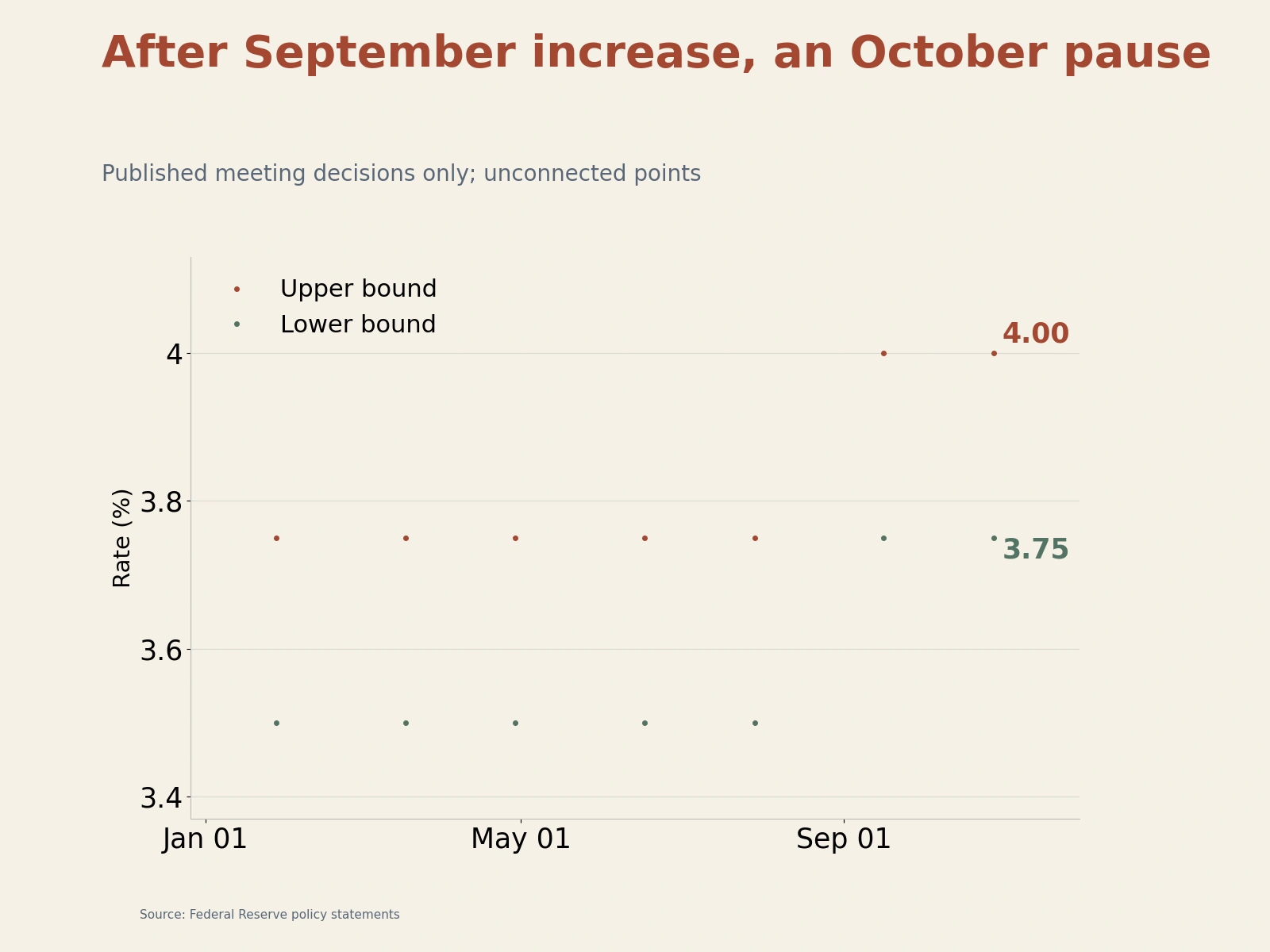
The current federal funds target range is 3.75%–4%, following the FOMC's unanimous September 16 decision to raise rates 25 basis points. Policy discussion now focuses on whether that move is sufficient to contain renewed price pressure and whether the next hike should come in October or December.
September CPI reaches 3.7%, core inflation rebounds and oil costs transmit through supply chains
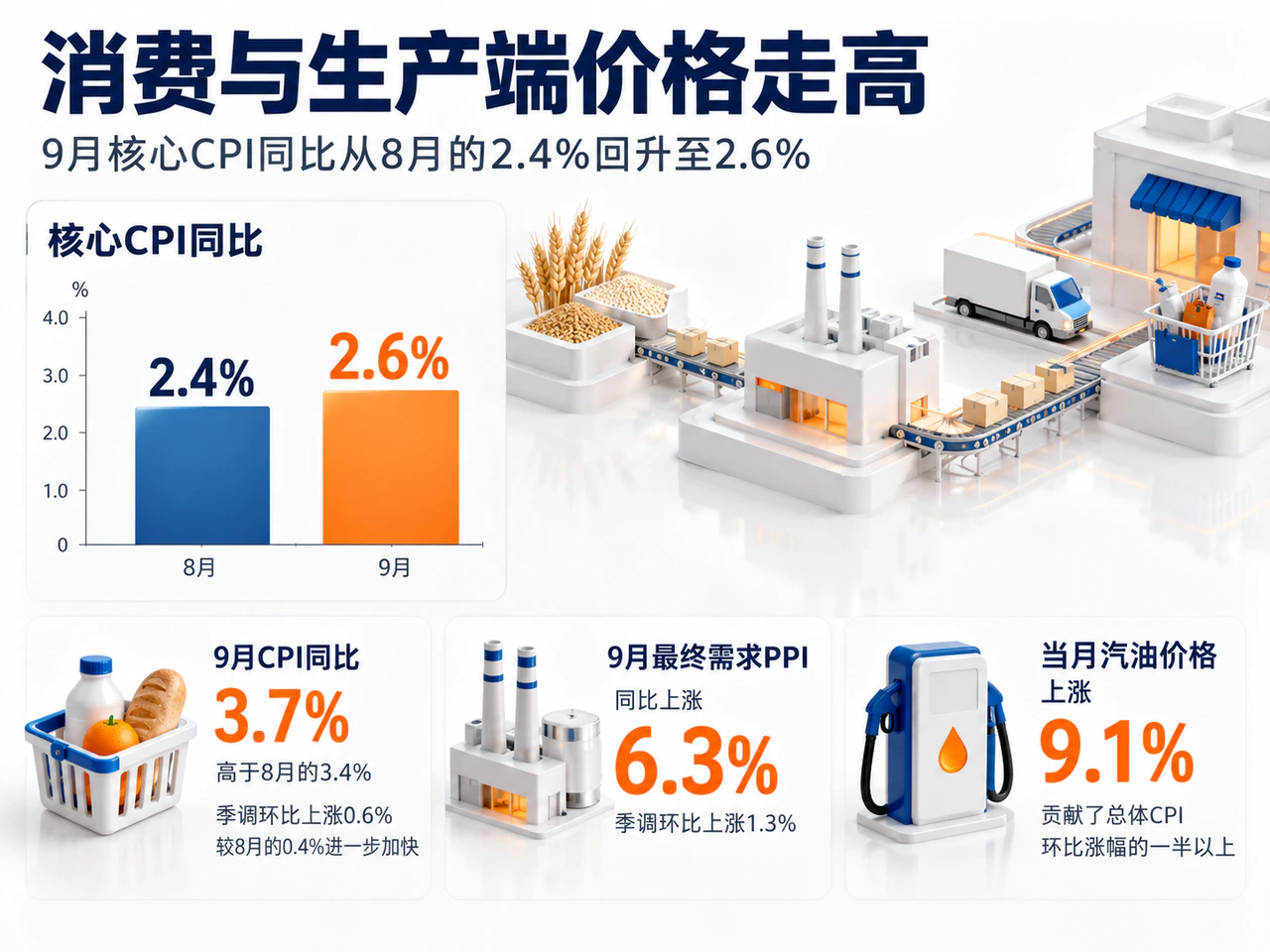
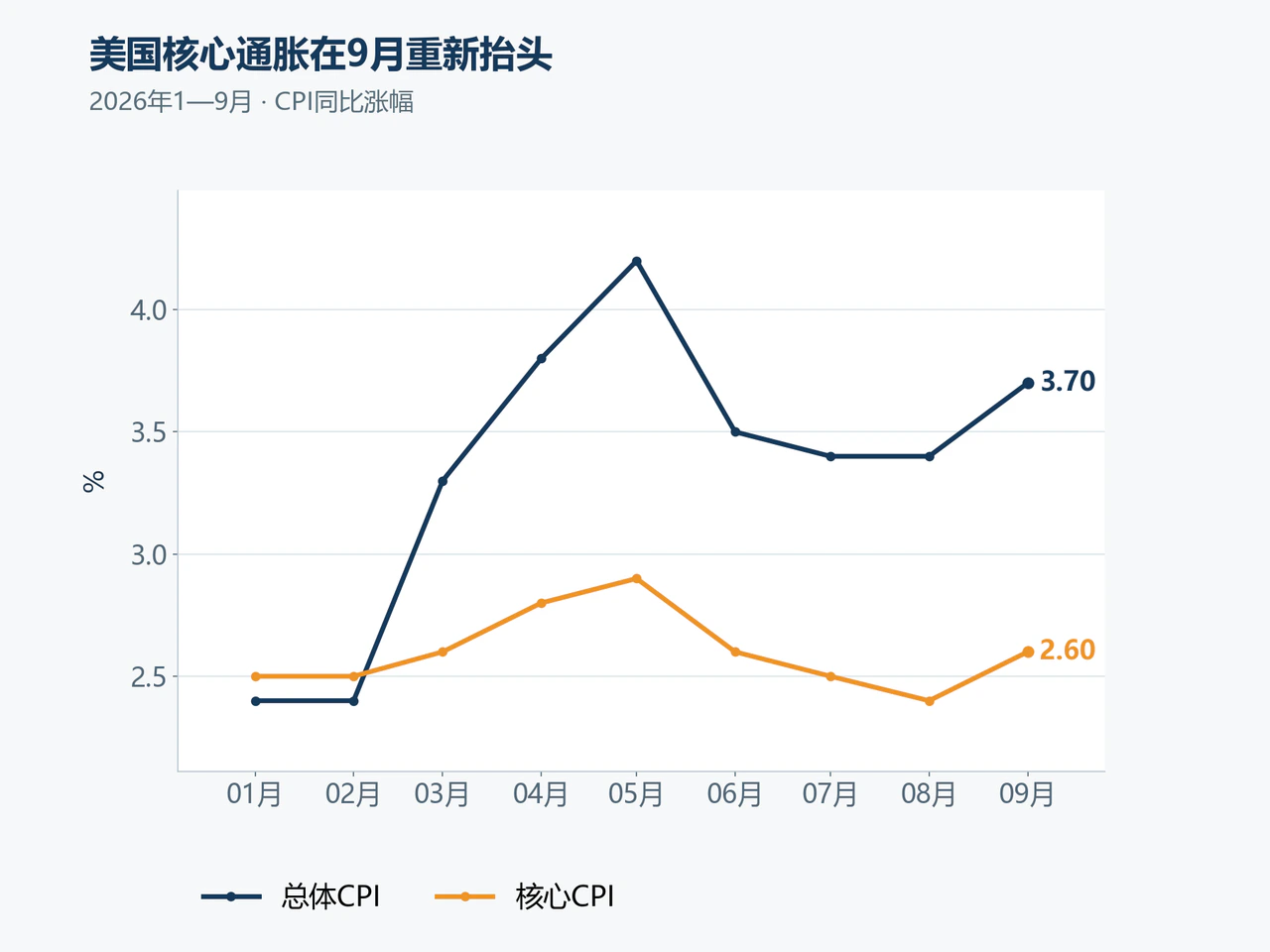
Bureau of Labor Statistics data released October 14 showed September CPI up 3.7% year on year, from 3.4% in August. The seasonally adjusted monthly increase accelerated from 0.4% to 0.6%. Gasoline rose 9.1% that month and accounted for more than half of the overall monthly CPI increase.
Core prices excluding food and energy also constrained policy. September core CPI rose from 2.4% year on year in August to 2.6%, while the seasonally adjusted monthly increase was 0.3% for a second month. Shelter rose 0.4% and used vehicles 0.7% month on month; recreation, education and airfares also increased. Core annual inflation had declined steadily after reaching 2.9% in May, falling to 2.4% in August. September's rebound put that improvement to a fresh test.
September final-demand PPI, released October 15, also increased, rising 1.3% month on month seasonally adjusted and 6.3% year on year. Energy drove goods-price increases, while service prices rose 0.8% monthly. Final-demand PPI excluding food, energy and trade services rose 0.5% month on month. Simultaneous increases in corporate costs and consumer prices complicated the Fed's assessment of inflation persistence.
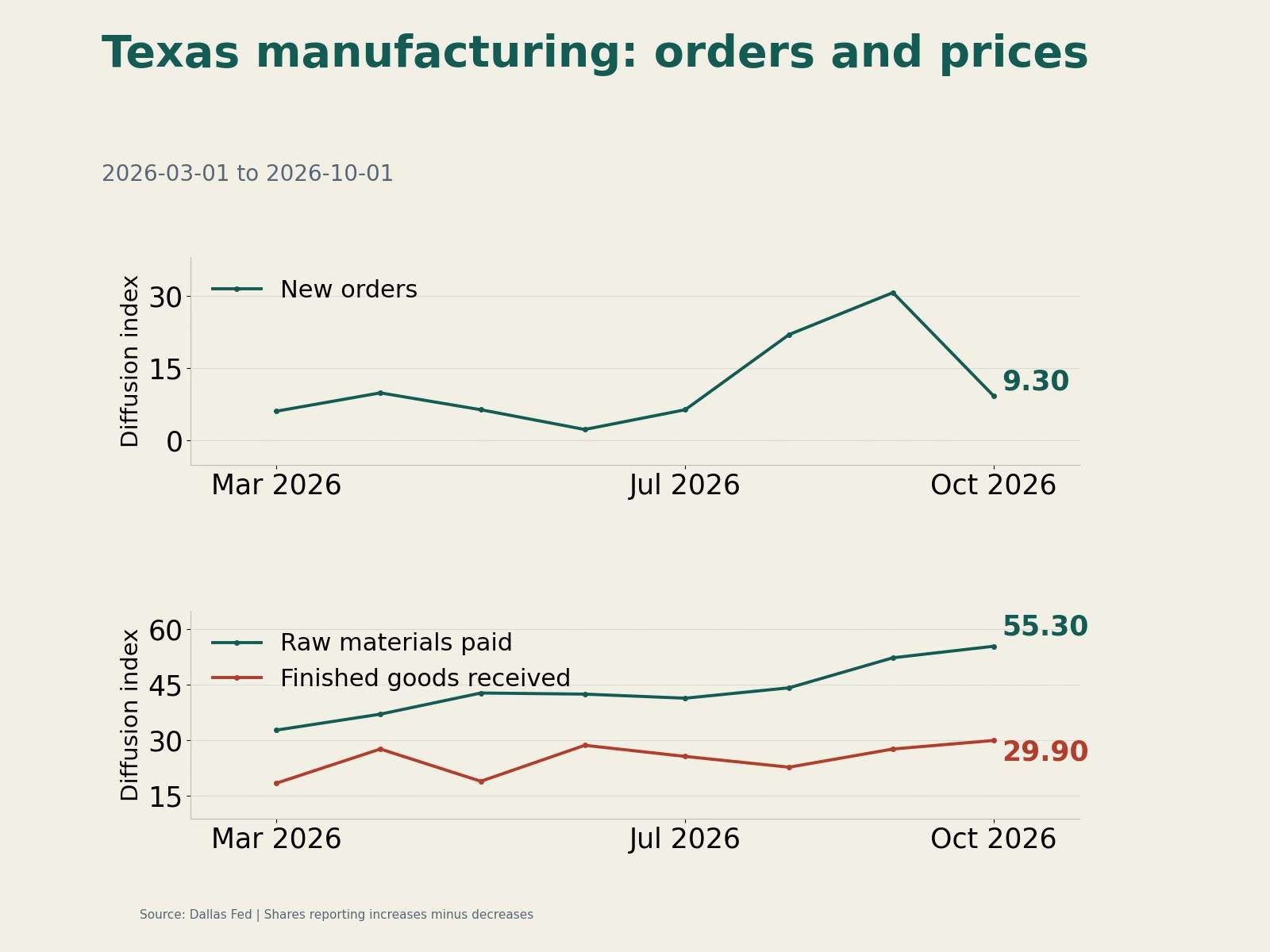
The Beige Book released October 14 provided further details of pass-through. Based on interviews conducted on or before October 5, it reported higher oil prices in all districts, fuel surcharges moving downstream through supply chains, and some businesses expecting further increases when contracts expired and were renegotiated. Consumer spending was little changed in most districts, however. Consumer-facing firms remained constrained by customers' price sensitivity, raising prices selectively while cutting costs. Final demand and corporate margins continued to obstruct full upstream cost pass-through to some extent.
Officials generally favor further hikes this year, but differ on pace and productivity

Officials speaking this week generally agreed that rising inflation required more tightening before year-end, but differed on the speed of action and sources of economic growth.
At the National Association for Business Economics annual meeting in Cleveland on October 12, Cleveland Fed president Hammack said tariffs, energy and demand pressure from AI construction were jointly raising costs, while a stable labor market gave monetary policy room to address inflation. She favored taking smaller rate steps sooner to reduce the risk of larger forced action after an inflationary mindset became entrenched.
Boston Fed president Collins likewise told a regional and community bankers' conference on October 13 that she expected modest further hikes before year-end, but offered a more benign view of growth's sources. Improved productivity was expanding supply, she argued, allowing faster growth to coexist with a broadly balanced labor market. The risk was that AI investment and wealth effects could stimulate demand beyond the additional supply provided by productivity. She also noted that August core PCE inflation was about 2% on a three-month annualized basis, showing earlier short-term improvement, but energy and data-center costs could disrupt it.
Also on October 13, New York Fed president Williams told Bloomberg he still considered one further hike this year appropriate, but did not then see a need for additional hikes in 2027. This indicated further tightening this year while leaving room to await more information.
Different interpretations of growth and pass-through determine tolerance for waiting. If growth mainly reflects greater productive capacity, policy can observe another round of data. If energy shocks combine with persistent investment demand and spread into wages and services prices, waiting becomes more costly.
Warsh avoids prejudging October; hike odds retreat after reaching 43.7%
In a Bangkok fireside discussion with the IMF managing director on October 16, Fed chair Warsh did not indicate an October policy preference. He emphasized that he would not prejudge the meeting, acknowledged US economic resilience and said AI could raise productivity, although the transition would be uneven and its near-term employment effects remained uncertain.
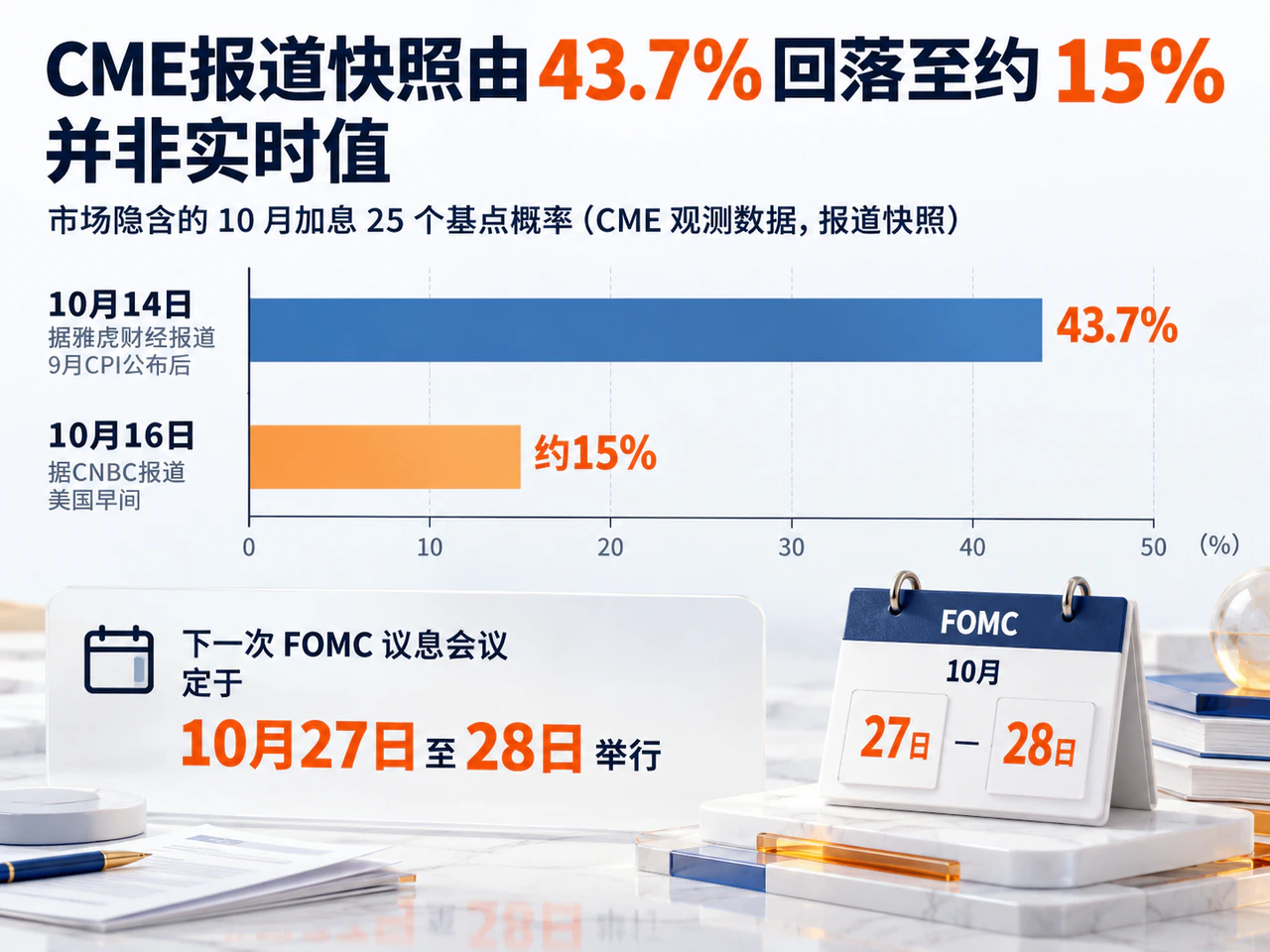
Without a clear near-term action signal from the chair, markets repeatedly weighed inflation against official comments. CME observations reported by Yahoo Finance on October 14 showed implied odds of a 25-basis-point October hike rising from about 20% before September CPI to 43.7% afterward. CNBC reported on the US morning of October 16 that the probability had fallen to about 15%, reflecting markets' continuing adjustment to a new communication style and search for policy clues.
After Warsh spoke, Goldman Sachs economists still expected an October pause and December hike, chiefly because other officials had shown some willingness to wait. Warsh himself made no such commitment. With price indicators rising again, pausing one meeting and ending the tightening cycle remained different judgments.
The next FOMC meeting is scheduled for October 27–28. The BEA calendar places preliminary third-quarter GDP and the September personal income and outlays report, including PCE prices, on October 29. The next formal PCE report will thus follow the October decision. The committee must first assess inflation using CPI, PPI and other information, then test that judgment afterward. The pace through year-end will depend on whether spreading price pressures abate and whether productivity gains keep offsetting stronger demand.