Further weakness in the US housing market is adding a practical constraint to the Federal Reserve's continuing fight against inflation. Released on October 19 local time, the National Association of Home Builders (NAHB)/Wells Fargo Housing Market Index fell from 32 in September to 29 in October, its lowest since June 2012. By the morning of October 20 Beijing time, the structural tension in the transmission of rate hikes had become more pronounced: credit-dependent homebuyers and builders were the first to bear the pressure of higher financing costs, while demand driven by AI investment remained resilient. The cost of further rate increases was becoming more concentrated in traditional industries.
Builder Confidence Hits Its Lowest Since Mid-2012; Price Cuts by 43% of Respondents Fail to Offset High Costs
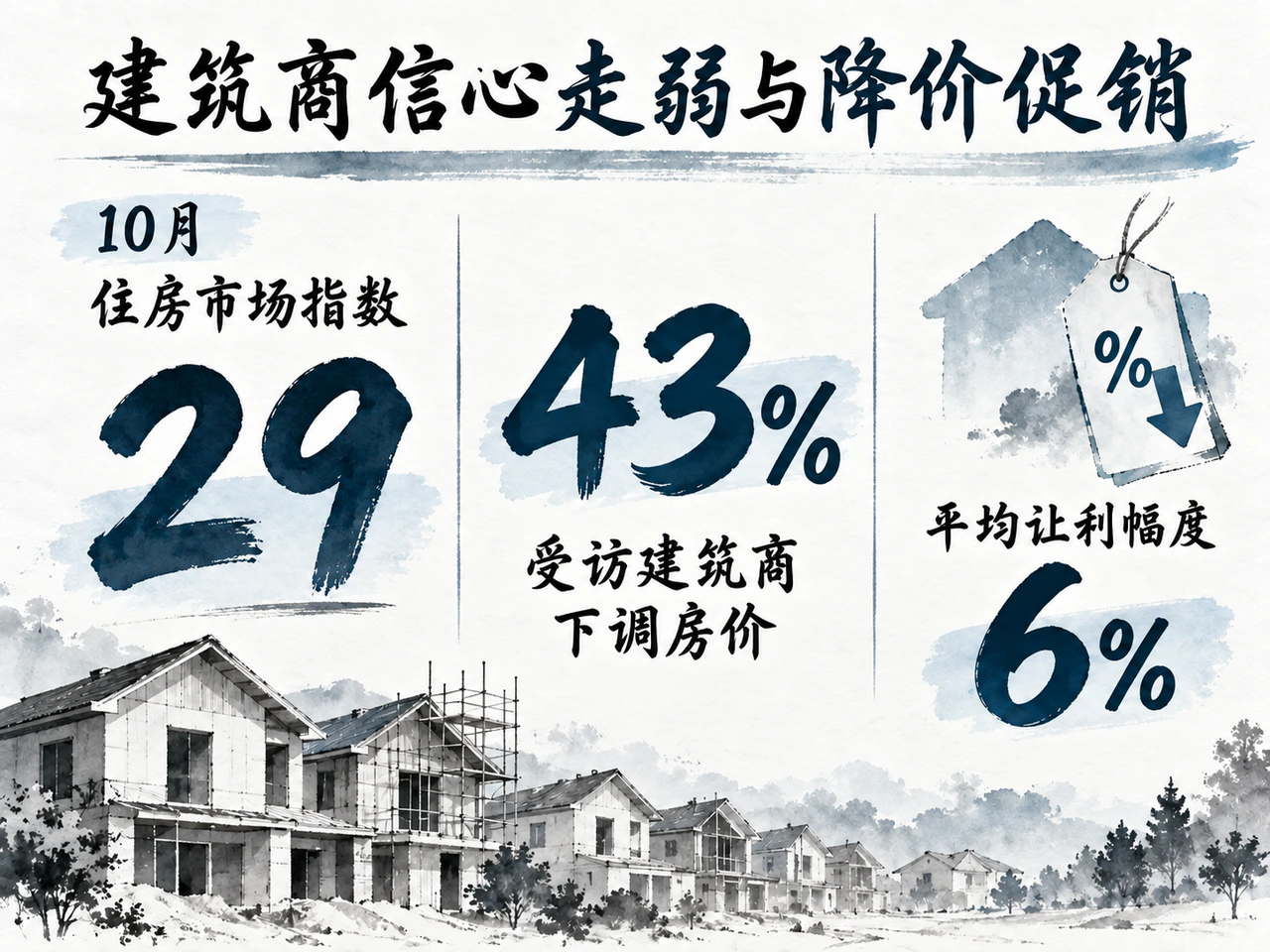
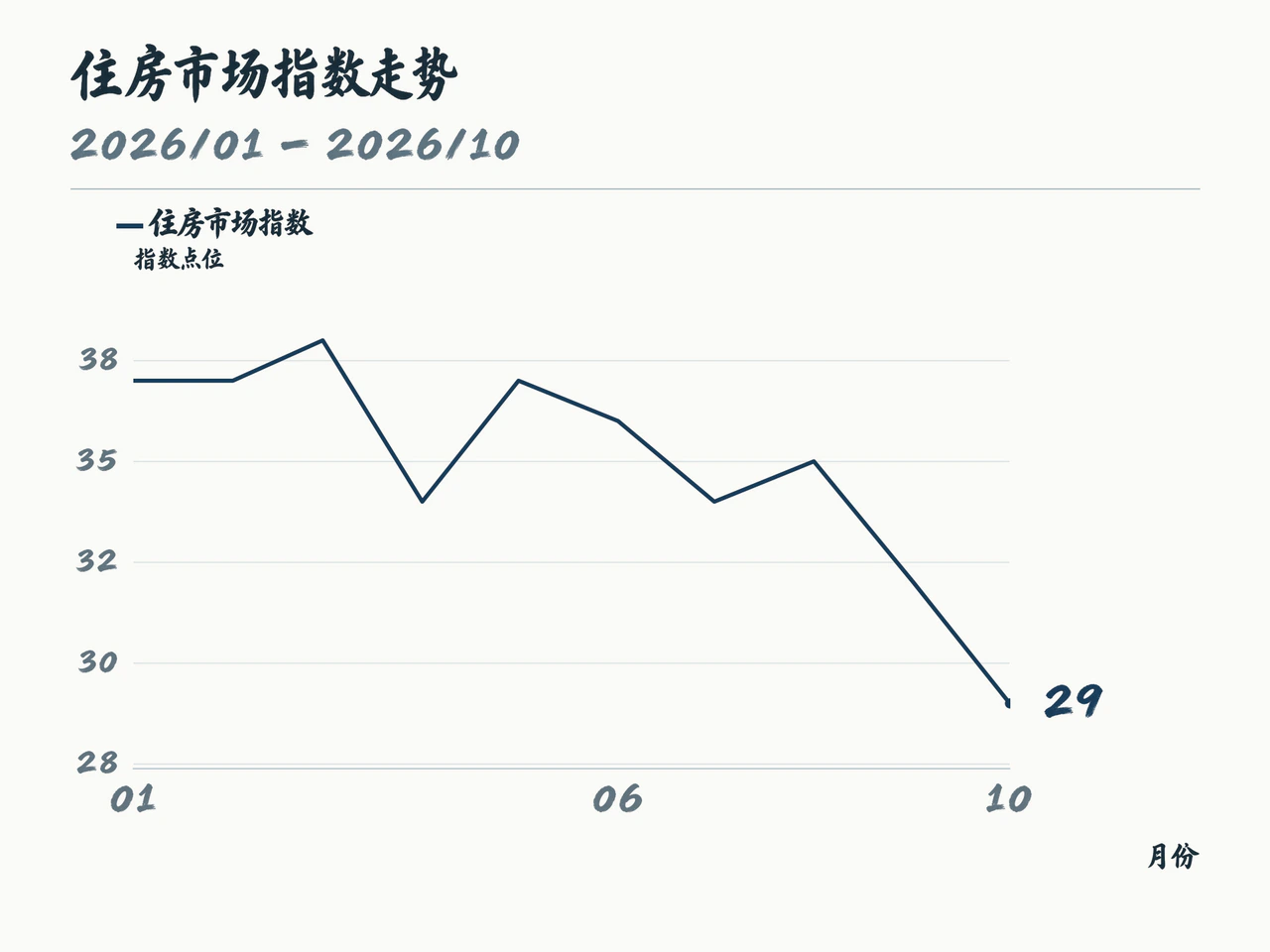
The NAHB survey covers builders of newly constructed single-family homes. In October's components, the current sales conditions index fell to 33, expected sales over the next six months to 32, and prospective buyer traffic to 18. The overall confidence index was 37 in January and 35 in August, before falling to 32 in September and 29 in October, deepening its recent downward trend.
Facing cooling demand, 43% of surveyed builders cut home prices in October, the highest share since 2020, while the average reduction among those cutting prices remained 6%. NAHB identified the main pressures as higher mortgage rates, rising building-material and energy costs, and deteriorating labor supply and land conditions. Higher rates weaken household affordability while also increasing developers' construction financing costs. The combination of weaker end demand and high supply-side costs makes it difficult to revive home sales through price cuts alone.
Widespread discounts by developers do not mean that overall inflation pressure has faded. But simultaneous declines in sales expectations and buyer traffic suggest that if monetary policy further compresses aggregate demand, residential construction, related employment and durable-goods consumption will be hit first.
AI Investment Expands While Credit-Sensitive Sectors Contract; Fed Expected to Pause Hikes in October
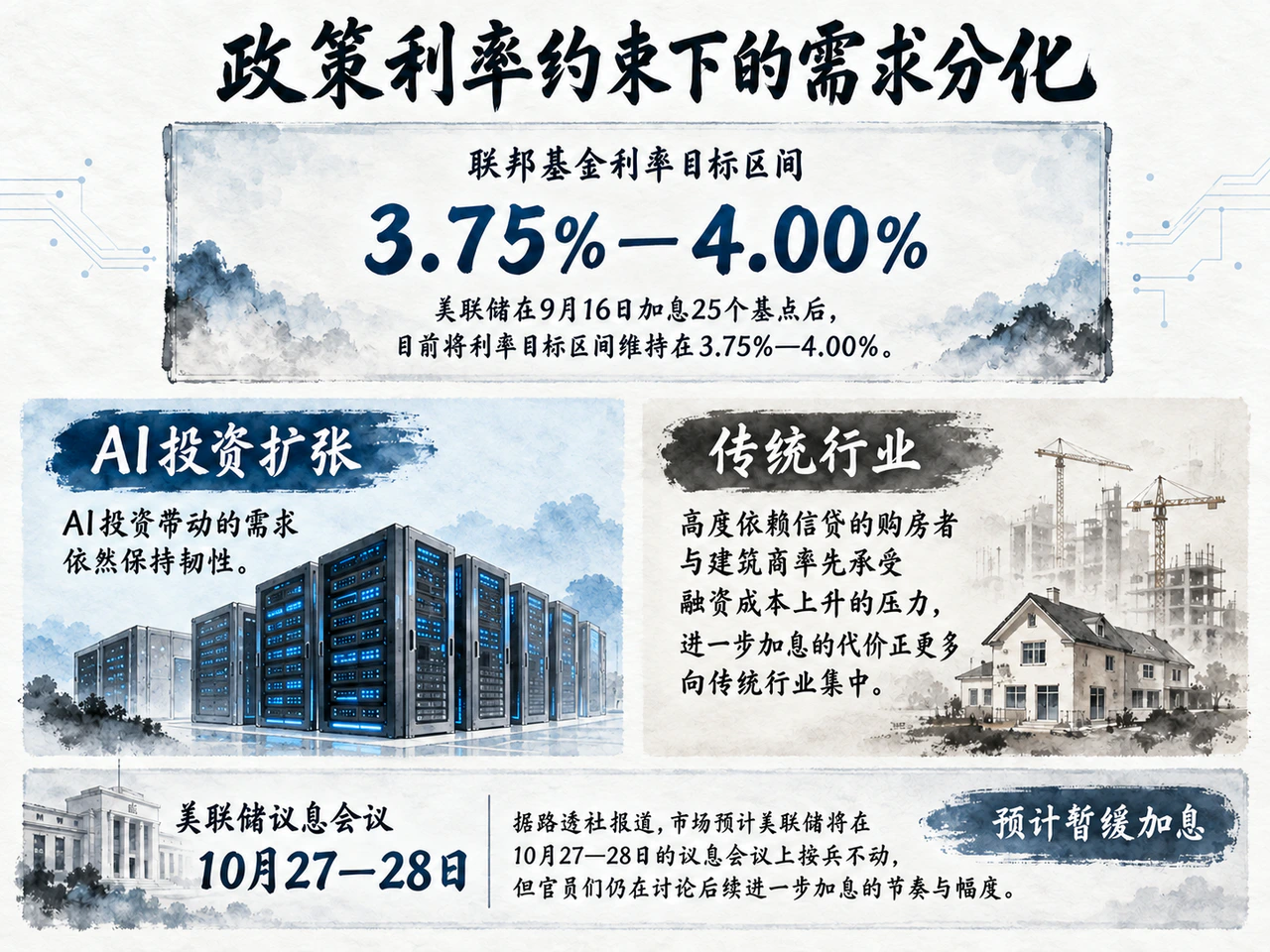
Reuters' October 19 report placed the property slowdown in the wider context of expanding AI investment. In an October 12 Reuters interview, Cleveland Fed President Hammack said high rates could ease price pressure at the margin by slowing economic activity outside the AI boom and restraining stock-market gains. ADP Chief Economist Richardson noted that small businesses dependent on bank loans and households relying on borrowing to sustain consumption were more vulnerable to rate hikes.
These differences in transmission directly affect the pace of monetary policy. Companies with ready access to financing and an urgent desire to invest continue to expand, while traditional rate-sensitive industries are already contracting under high borrowing costs. This uneven cooling of aggregate demand requires the Fed to assess whether overall inflation pressure is fading while also weighing whether the costs of tightening are falling too heavily on a few sectors.
Following a 25-basis-point increase on September 16, the Fed currently holds the federal funds target range at 3.75%–4.00%. Reuters reported that markets expected the Fed to hold steady at its October 27–28 meeting, although officials continued to discuss the pace and size of subsequent rate hikes. Fed officials including Barkin and Musalem argued that credible anti-inflation action could stabilize wage and pricing expectations, reducing the economic growth cost of bringing inflation down. That policy logic and the deepening financing pressure on traditional industries form the two sides of the current trade-off.
The central question for the October meeting is how the Fed characterizes the coexistence of a cooling housing market and resilient investment demand, and what changes in the data it would need to justify continued waiting or renewed tightening. Pausing for one meeting would give policymakers time to observe the cumulative effects of earlier tightening. Whether rates rise further will still depend on a substantive easing of overall inflation pressure amid divergent demand.


