By the morning of October 20 Beijing time, Hong Kong was returning from the holiday following the Chung Yeung Festival; October 16 remained the latest complete trading day for local shares, stock options and Hang Seng Index options. During the closure, an overseas options-market change directly relevant to Chinese equity holdings took effect. From October 19, selected U.S. stock and ETF options gained premarket and postmarket sessions, including Alibaba American depositary share (ADS) options. Meanwhile, Hang Seng options volume had surged before the Hong Kong closure, with growth in the busiest call contract's volume far exceeding growth in open interest. Longer cross-market adjustment windows and the repricing of preholiday positions became key issues for the reopening.
Alibaba and other U.S. options add 130 premarket and postmarket minutes, bringing cross-market adjustments forward

In its premarket announcement on October 19, the New York Stock Exchange confirmed that NYSE American Options' extended hours began that day, adding a morning session from 7:30 to 9:25 a.m. Eastern time and an after-hours session from 4:00 to 4:15 p.m. Cboe's previously announced equivalent arrangements also took effect October 19, covering options on Alibaba, TSMC, Nvidia and other stocks, as well as ETFs including SPY and QQQ.
With U.S. daylight saving time in October, the new premarket session corresponds to 19:30–21:25 Beijing time, leaving a 5-minute gap before the regular U.S. opening. The additional after-hours session is 04:00–04:15 the following day Beijing time. Relative to regular trading starting at 9:30 a.m. Eastern, the relevant stock options gain 115 premarket minutes and 15 postmarket minutes, extending total daily trading by 130 minutes.
The change directly broadens the options-hedging window for unexpected news. TradeStation's global head of market strategy David Russell noted that analyst reports, corporate results and economic data often arrive before the U.S. opening, when previously only underlying stocks and ETFs traded actively. Extended hours allow investors to adjust calls and puts directly before regular trading. Capacity nevertheless depends on order-book depth and bid-ask spreads. TradeStation's rules permit only limit orders during extended hours and warn of lower liquidity and wider spreads. Longer trading hours do not necessarily reduce execution costs.
For investors holding both Alibaba's Hong Kong shares and ADSs, the 19:30 Beijing-time opening remains after Hong Kong's close but brings forward the U.S. options risk-adjustment window by almost two hours. Especially on days when Hong Kong is closed and the U.S. is open, news can be repriced earlier through U.S. options and feed into local stock and options quotes when Hong Kong reopens. Hong Kong stock options and ADS options differ in currency, contract size and settlement arrangements, so cross-market hedges must be converted using actual underlying exposure and options price sensitivities.
Fresh fundamental information was also entering prices. TMTPost's October 19 report on AliExpress's annual summit said overseas warehouse inventory had risen 146% year on year. The overseas Singles' Day campaign would begin warming up on October 29, with sales running November 1–18. A large inventory expansion directly affects fulfillment capacity, stock levels and working-capital use during the promotion; the eventual profit contribution still depends on sales conversion and promotional cost control. Longer U.S. options hours allow such operating developments to enter options prices earlier.
Hang Seng options volume jumps 50.6% before holiday; 24,600 calls show high turnover and little retention
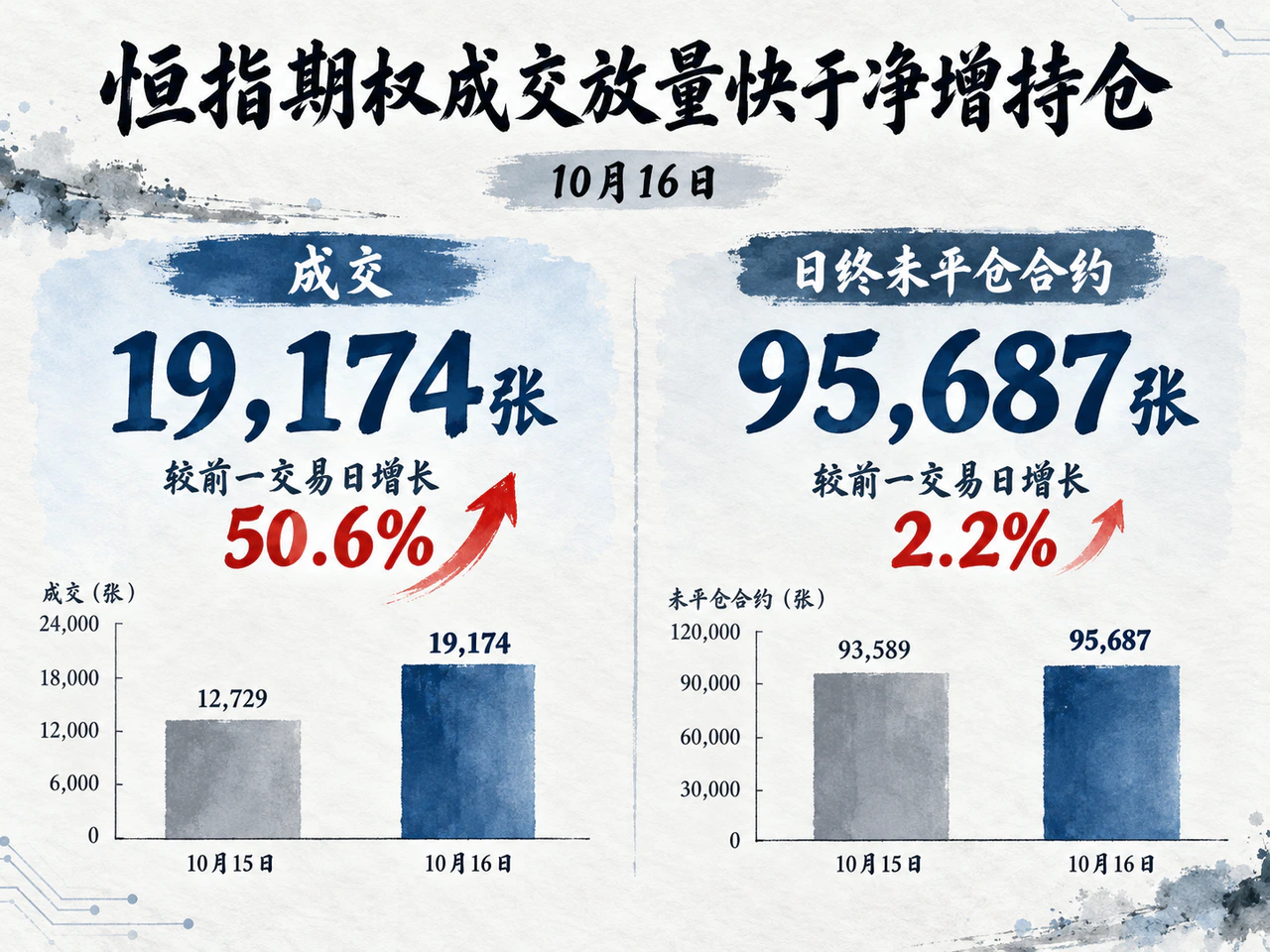
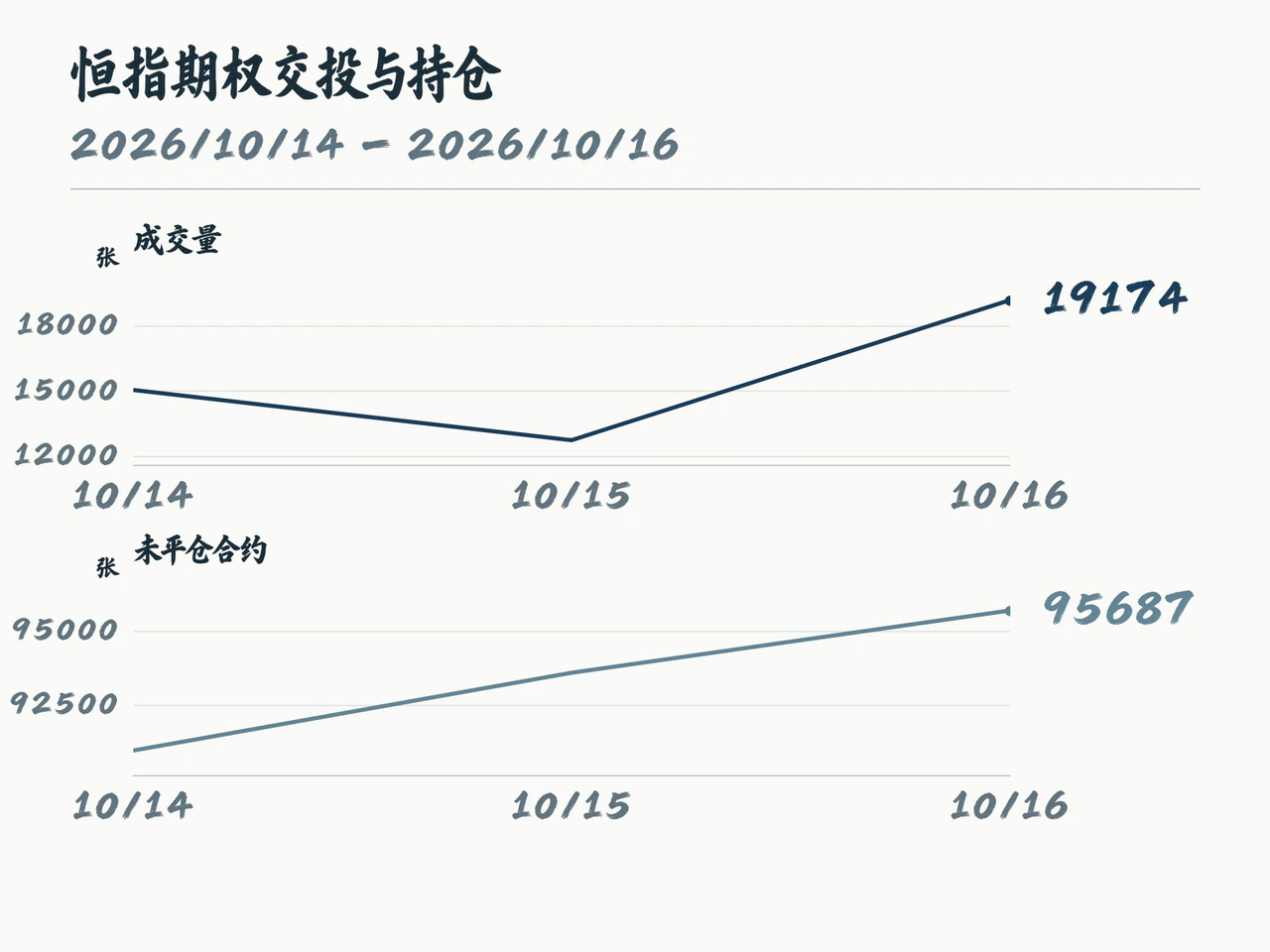
Preholiday options trading outlined investors' positioning. HKEX's final Hang Seng options daily report, combining the previous trading day's night session shown in the report with the current day session, recorded 19,174 contracts for October 16, about 50.6% above October 15's 12,729. End-of-day open interest rose from 93,589 to 95,687 contracts, an increase of 2,098, or about 2.2%. October 14 volume and open interest were 15,042 and 90,970, respectively. Volume grew over 50% while open interest rose only modestly, indicating that frequent intraday turnover drove much of the surge and that limited new positions were retained through the holiday.
This was especially evident in October-expiry calls with a 24,600 strike. Their October 16 volume of 1,919 contracts was the highest among Hang Seng options that day, following substantial increases from 663 on October 14 and 841 on October 15. Yet open interest on October 16 rose only 14 contracts from 979 to 993. The official quotation fell from 188 points on October 14 to 109 on October 15 and then edged up 3 points to 112 on October 16. HKEX's integer-reported implied volatility was 15%, 16% and 15% over October 14–16. Almost 2,000 contracts of daily volume barely translated into end-of-day positions, while premiums and implied volatility failed to rise in tandem: trading around the 24,600 strike showed high turnover and little net accumulation.
On the downside, positions rose while prices fell. The official quotation for October-expiry 24,000 puts declined from 283 points the previous day to 216 on October 16, and reported integer implied volatility fell from 16% to 15%. Open interest nevertheless grew from 922 to 1,070 contracts. With both the official quote and implied volatility falling, retained put positions increased by a net 148 contracts: lower put prices coexisted with a larger position base.
October 23 and 29 expiries approach; reopening focuses on position retention and volatility pricing
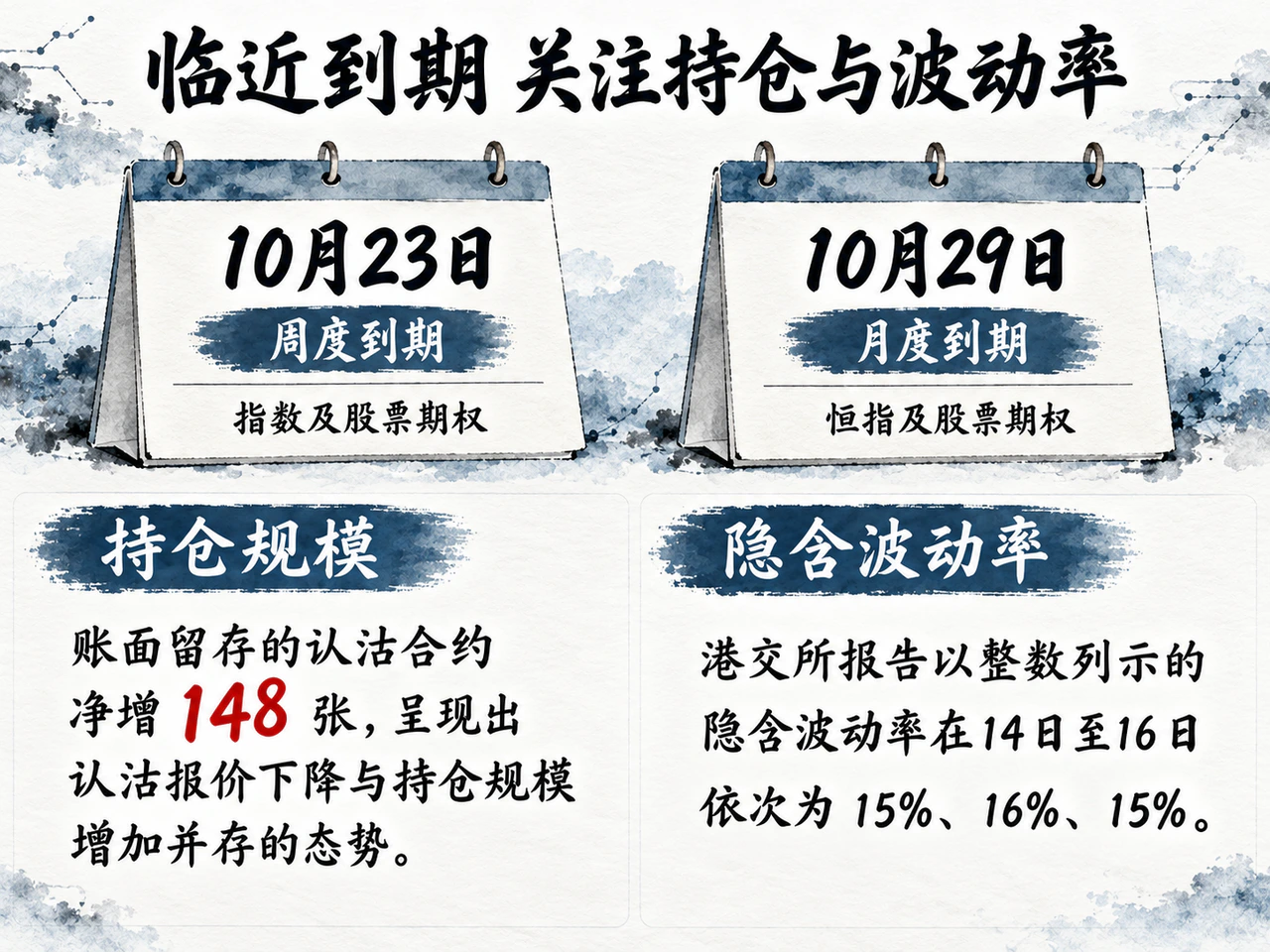
As the holiday ended, time decay became more prominent in short-dated options pricing. HKEX's calendar showed weekly index and stock options expiring October 23, and October monthly Hang Seng and stock options expiring October 29. Near-expiry contracts have much less time left for adjustments; the same underlying move can therefore produce very different price impacts across strikes and maturities. Premarket ADS-option prices help assess single-company risk at reopening, but Hang Seng options must also absorb financial and internet sector weights and their links with overseas technology shares and macro risk appetite.
Three indicators deserve continued attention after Hong Kong reopens: whether high volume in 24,600 calls becomes substantive open-interest growth; whether the additional positions in 24,000 puts persist; and whether implied volatility for same-maturity contracts moves away from the low 15% level. If volume keeps expanding while open interest barely changes, short-term turnover still dominates. Position changes directly show whether more risk exposure is being retained in options books; changes in implied volatility show how the market prices future fluctuations. In the U.S., the new premarket session will also face a practical test of whether quote depth can support actual position adjustments when the relevant Chinese and technology stocks encounter sudden news.