On October 28, 2026, Hong Kong stocks rebounded modestly, led by technology. The Hang Seng Tech Index rose 1.40% and the Hang Seng Index edged up 0.23%. Yet the official quotation for the October-expiry Hang Seng 23,200 call fell from 70 points to 42 points, a 40% daily decline. For option buyers, the day's clearest feature was the divergence between the underlying market's direction and option returns. The index rose too slowly to offset the loss of time value near expiry.
At the same time, options on technology hardware names such as Lenovo and Hua Hong became much more active. Attention was shifting from the broad index toward individual companies with earnings expectations and industry catalysts. Falling prices in near-month Hang Seng contracts and selective increases in hardware-stock option turnover formed the day's two main derivatives themes.
Hardware leads technology; heavyweight divergence limits the Hang Seng gain to 0.23%
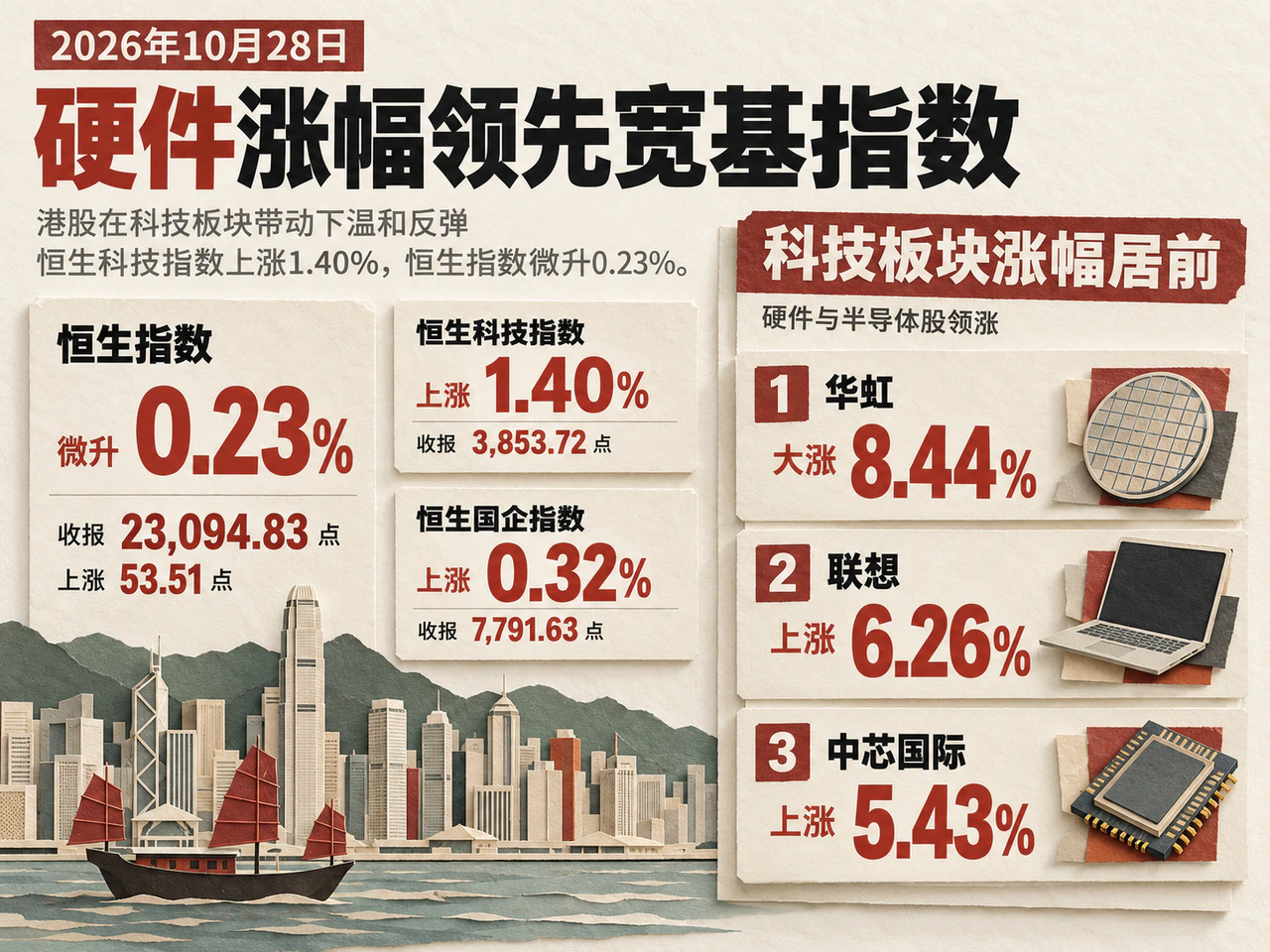
According to Zhitong Finance's closing report, the Hang Seng Index finished at 23,094.83, up 53.51 points, with main-board turnover of HK$181.428 billion. The Hang Seng China Enterprises Index rose 0.32% to 7,791.63, and the Hang Seng Tech Index closed at 3,853.72. Technology substantially outperformed, led by hardware and semiconductors. Hua Hong rose 8.44%, Lenovo 6.26% and SMIC 5.43%. Heavyweight internet stocks were more subdued: Alibaba gained 1.96% and Tencent 0.62%.
Société Générale's October 28 derivatives daily still described Tencent as trading in a narrow range around HK$385 and Alibaba as consolidating below HK$100. The previous closes cited in that report were HK$385.2 and HK$97, respectively. Both recovered by the day's close, but their gains were far smaller than those of some hardware stocks.
Specific earnings signals and macro conditions underpinned this divergence. Zhitong Finance cited CITIC Securities' preview of Lenovo's second quarter of fiscal 2026/27, which pointed to strong demand for conventional and AI servers and a favorable outlook for its infrastructure solutions business. Haitong International's Zhang Yidong linked the conditions for a near-term rebound to Asian deleveraging, large technology companies' earnings and overseas events over the next two weeks. The interaction of company earnings prospects and the macro event calendar helps explain investors' selective approach to the rebound.
Divergent cash-equity performance fed directly into option pricing. Offsetting moves among constituents limited the broad index's near-term rate of ascent. Individual shares were more likely to move sharply on earnings expectations and industry news. Betting on improved profits at a few hardware companies and betting on a rapid Hang Seng advance therefore offered very different option risk-and-return profiles.
Time decay and lower implied volatility cut the October 23,200 call by 40%
HKEX's October 28 Hang Seng options report, combining the previous trading day's night session and the current day session, showed the most active contracts were the October 23,400 call, October 23,200 call and October 23,000 put. Their combined-session volumes were 1,761, 1,715 and 1,490 contracts, respectively.
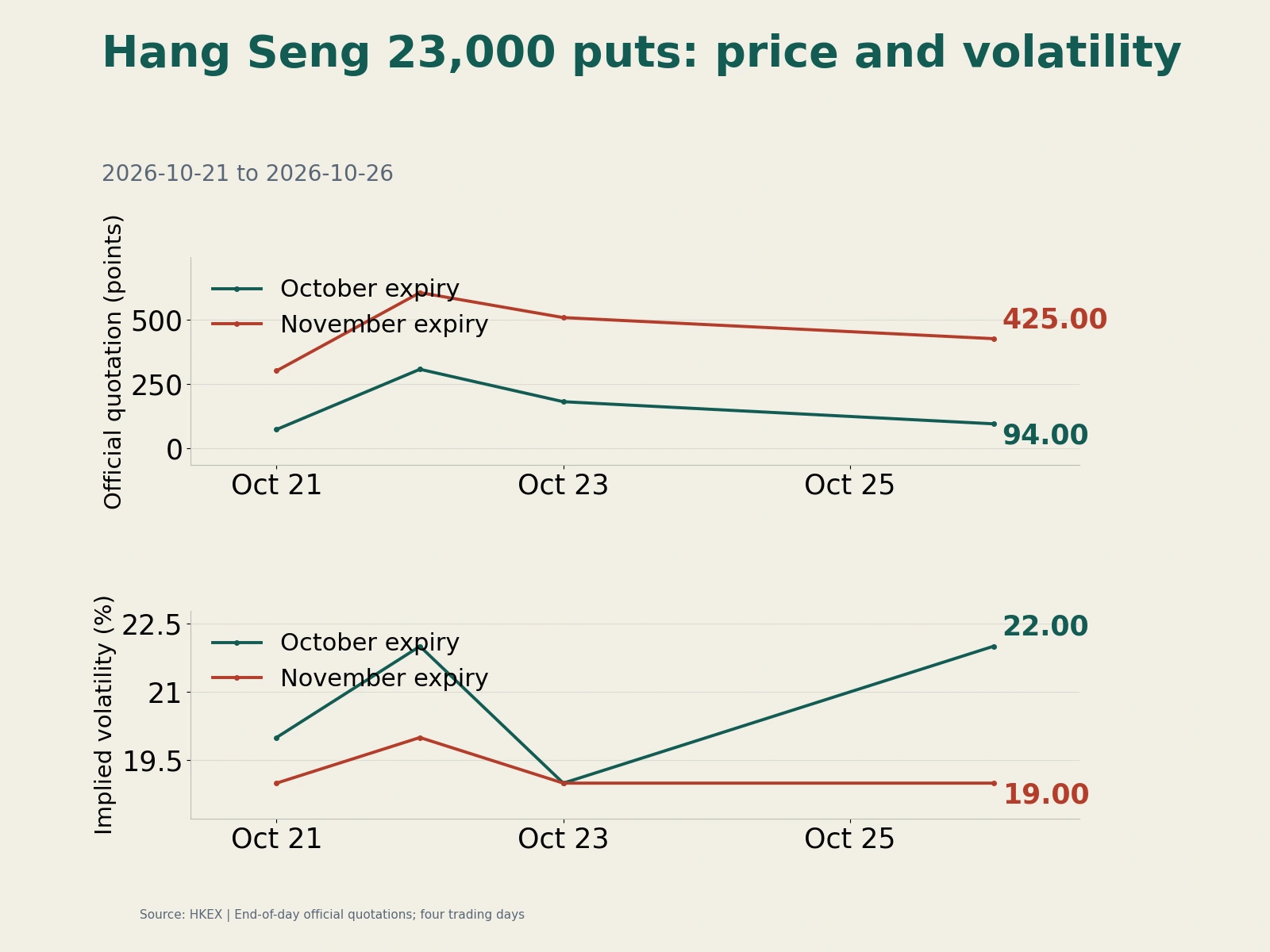
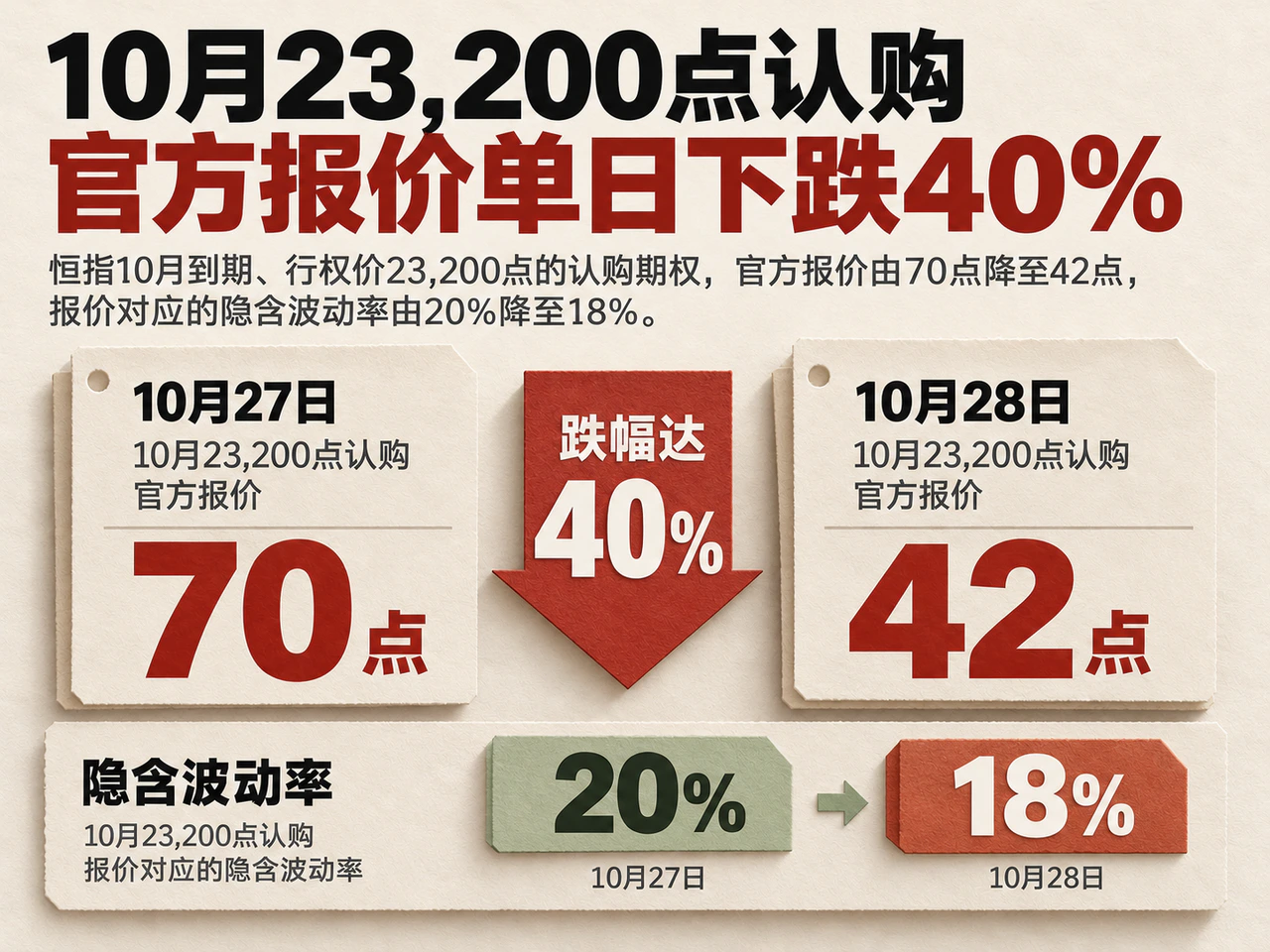
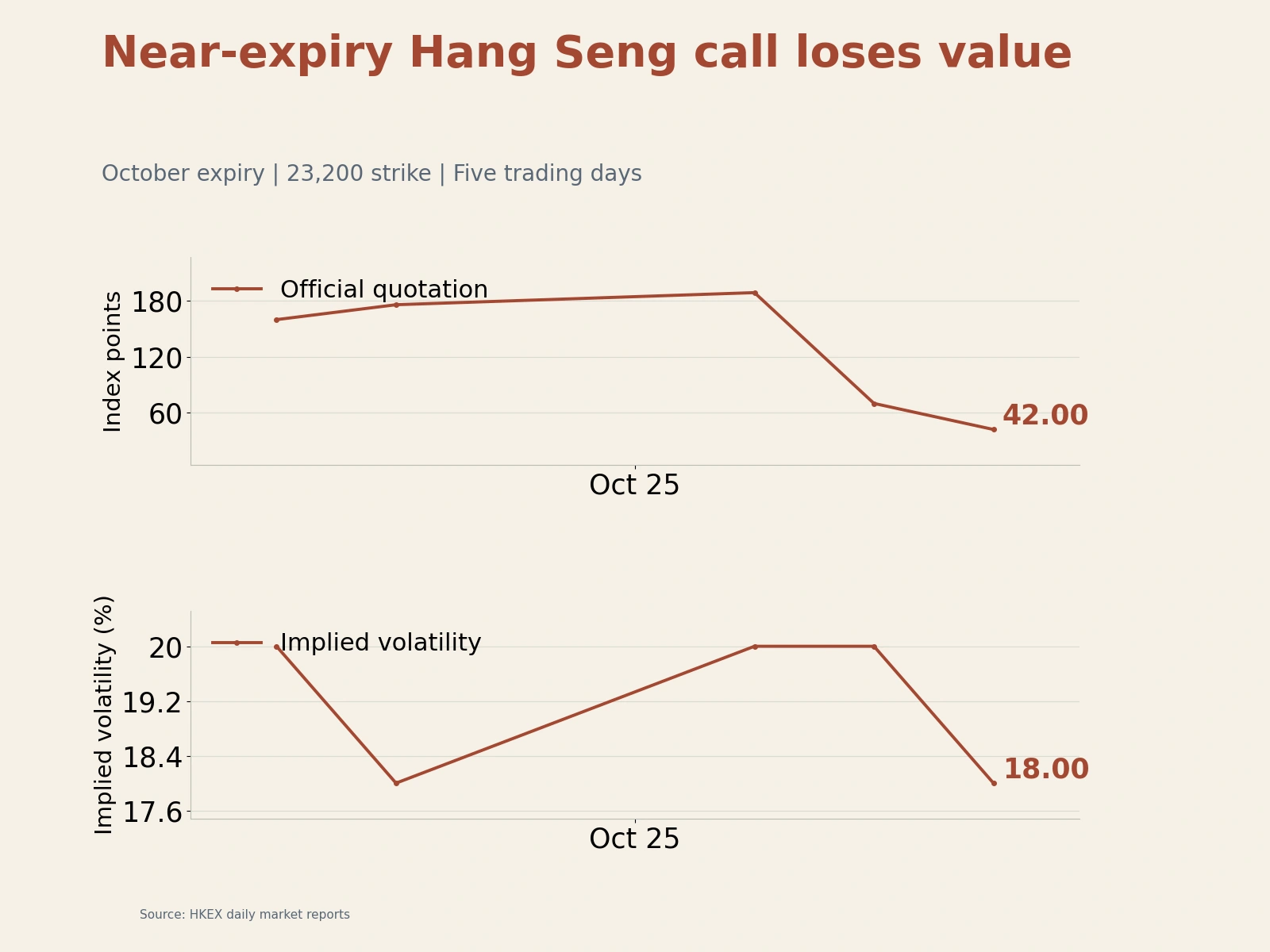
Despite the index's 53.51-point rebound, the October 23,200 call's official quotation fell from 70 to 42 points, while the corresponding implied volatility declined from 20% to 18%. At the close, the index remained about 105 points below the strike, leaving the contract out of the money. A buyer needed a further increase before expiry to obtain intrinsic value. The limited daily advance closed only part of the gap to the strike, while elapsed time and lower implied volatility both compressed the option price. At the Hang Seng option multiplier of HK$50 per point, the value implied by the official quotation fell from HK$3,500 to HK$2,100, a decline of HK$1,400. This compares official quotations on two days; actual trading profit or loss also depends on the bid–ask spread and execution time.
Other active near-month contracts also lost substantial value. The further out-of-the-money October 23,400 call fell from 23 to 8 points, down approximately 65.2%. The October 23,000 put fell from 122 to 58 points, down about 52.5%. Calls and puts declined together, reflecting broad compression of near-month time value. Close to expiry, a view on the next day's underlying direction alone is insufficient to assess a short-dated option's potential return.
Price changes were much milder at longer maturities. At the same 23,000 strike, the October call's official quotation fell from 166 to 149 points. The November call edged down from 510 to 507 points, and the November put declined from 489 to 451 points. Implied volatility for both November options stayed at 18%. Because expiries retain different amounts of time value, their prices can respond very differently to the same day's underlying move.
Lenovo and Hua Hong turnover rises; stock-option open interest reveals position adjustments
As near-month index options fell in price, stock-option activity concentrated on stronger hardware names. Higher turnover did not, however, translate uniformly into larger outstanding positions.
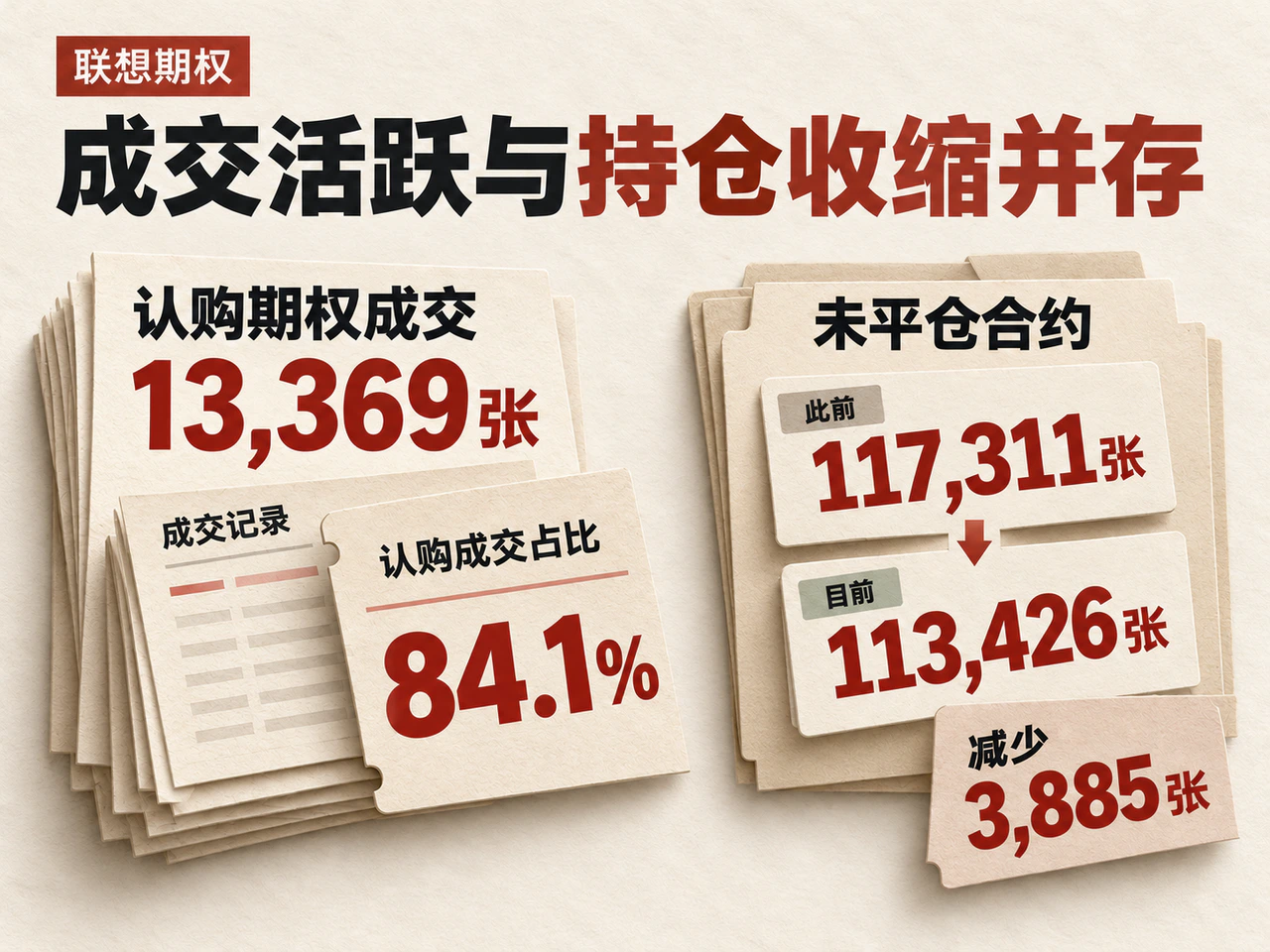
HKEX data showed 15,906 Lenovo option contracts traded on October 28, up about 6.9% from 14,885 on October 27. Calls accounted for 13,369 contracts, or 84.1% of daily volume, echoing the server supply chain's equity rebound. Open interest told a different story: Lenovo call open interest fell by 3,885 contracts, from 117,311 to 113,426, while total option open interest fell from 214,833 to 211,270. Active call trading alongside shrinking positions indicates substantial adjustments. The call share of turnover alone cannot identify the proportions attributable to new bullish positions, profit-taking closures or call writing.
Within semiconductors, Hua Hong option volume rose from 1,295 to 3,097 contracts, up approximately 139.2%, alongside an 8.44% stock gain. Total open interest increased only slightly, from 41,897 to 42,034. SMIC volume rose from 7,591 to 12,218 contracts, while total open interest increased from 134,245 to 137,948. Both saw higher turnover, but different degrees of position growth point to different option-trading structures behind the market's favored names.
Large internet companies still had a much bigger trading base. Alibaba options recorded 134,553 contracts of volume and approximately 2.06 million contracts of open interest. Tencent recorded 88,352 contracts and around 2.23 million, respectively. Differences in contract size and premiums mean contract counts should not be converted directly into cross-stock capital allocations. The comparison nevertheless clearly distinguishes routine activity in mature option markets from a short-term pickup in event-driven names.
Hang Seng turnover falls while open interest stays high; protection and directional trades coexist
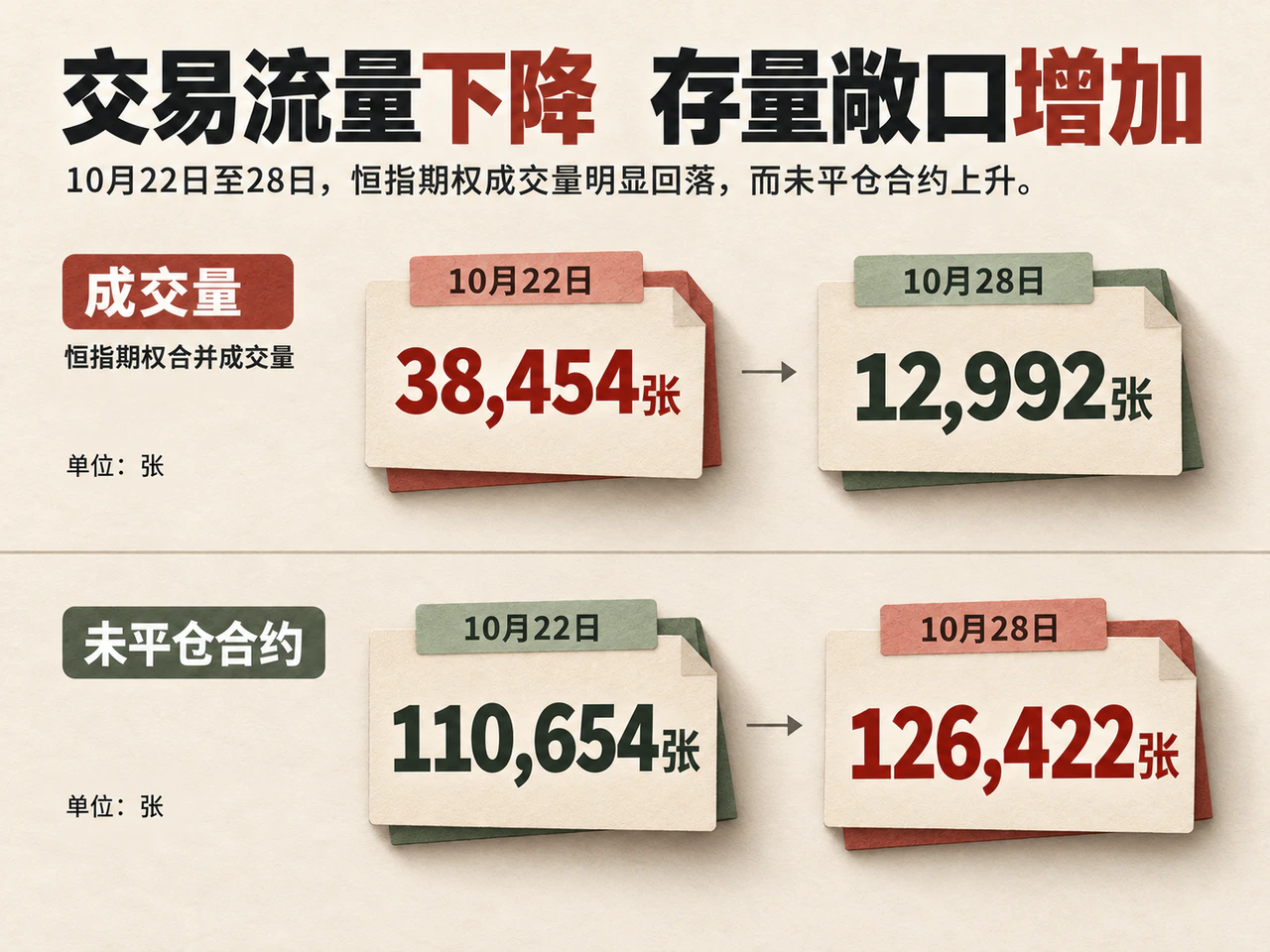
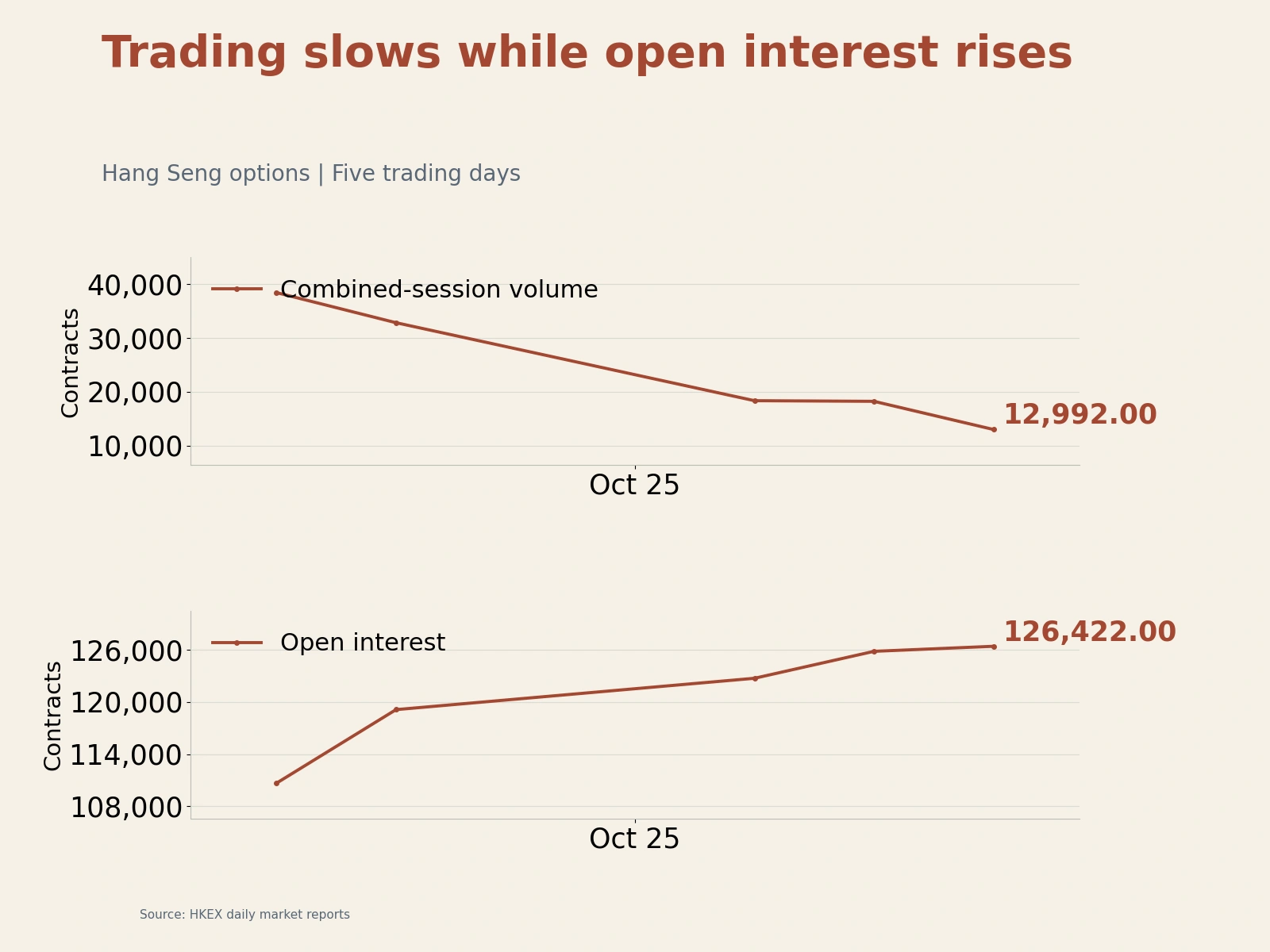
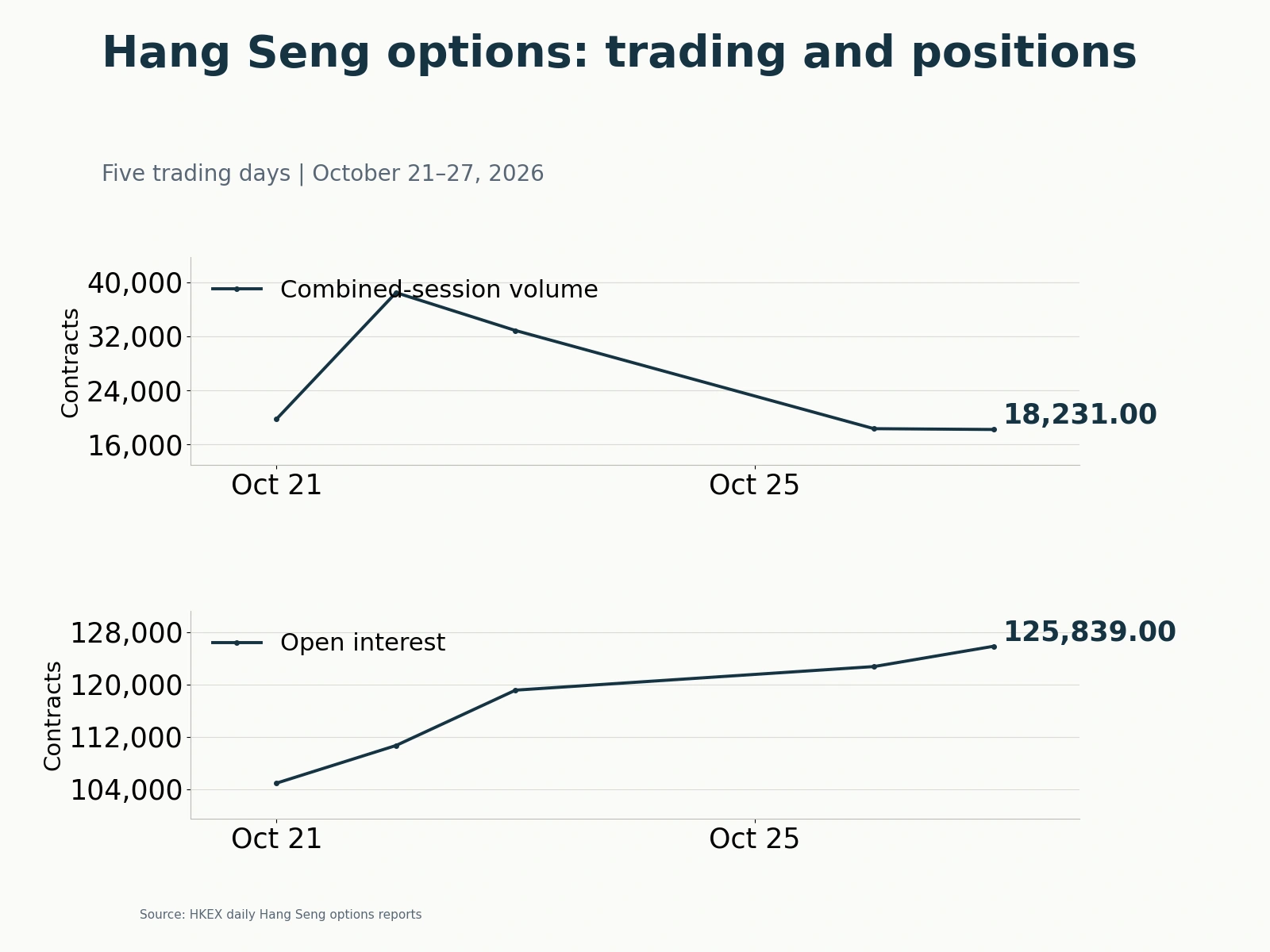
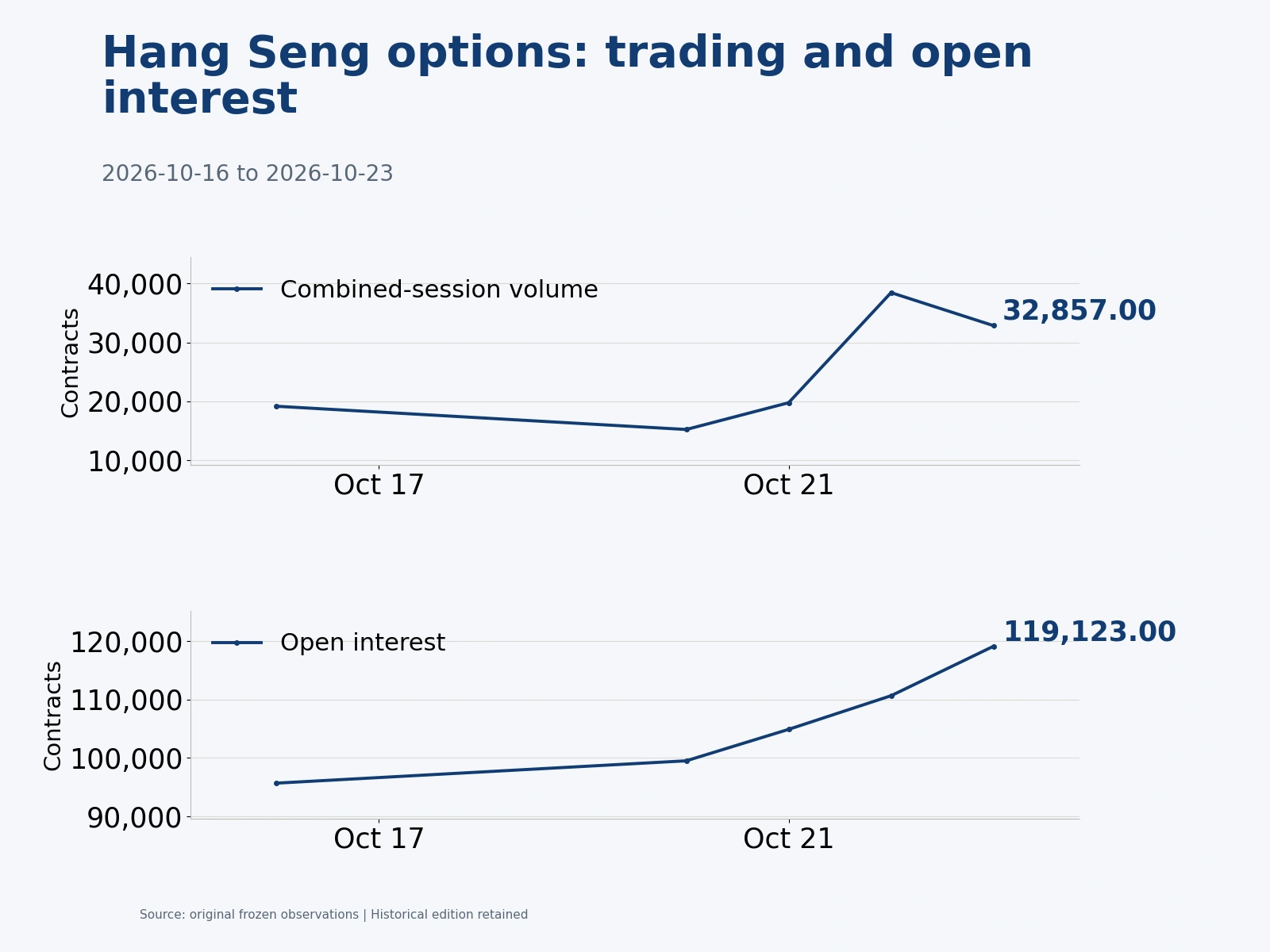
Across the five trading days from October 22 to October 28, combined-session Hang Seng option volume was 38,454, 32,857, 18,350, 18,231 and 12,992 contracts. October 28 volume fell another approximately 28.7% from the previous day. Open interest rose from 110,654 to 126,422 contracts over the same period, with a further net increase of 583 contracts on October 28. The volume put/call ratio fell from 1.66 to 0.75.
Lower turnover, a smaller put share and declining official quotations for active near-month contracts show changes in both short-term trading composition and the price of protection. Yet open interest remained above its October 22 level, leaving substantial outstanding risk exposure that subsequent news will continue to affect.
Hang Seng Tech Index options also retained positions extending into the next month. The most active contract on October 28 was the November 3,850 put, with volume of 1,052 contracts and an official quotation of 121 points. Next was the October 3,900 call, with 859 contracts and a quotation of 6 points. Protection extending into November coexisted with short-term directional trading even as favored sectors rebounded.
The most informative next signals are whether technology earnings can broaden the rally beyond a few hardware stocks into the wider index, and whether new trading activity develops into sustained open interest. Short-dated option returns must be assessed jointly with the underlying direction, distance to the strike, remaining time and volatility changes. Longer-dated contracts allow more time for company earnings delivery and overseas events to be reflected in prices.