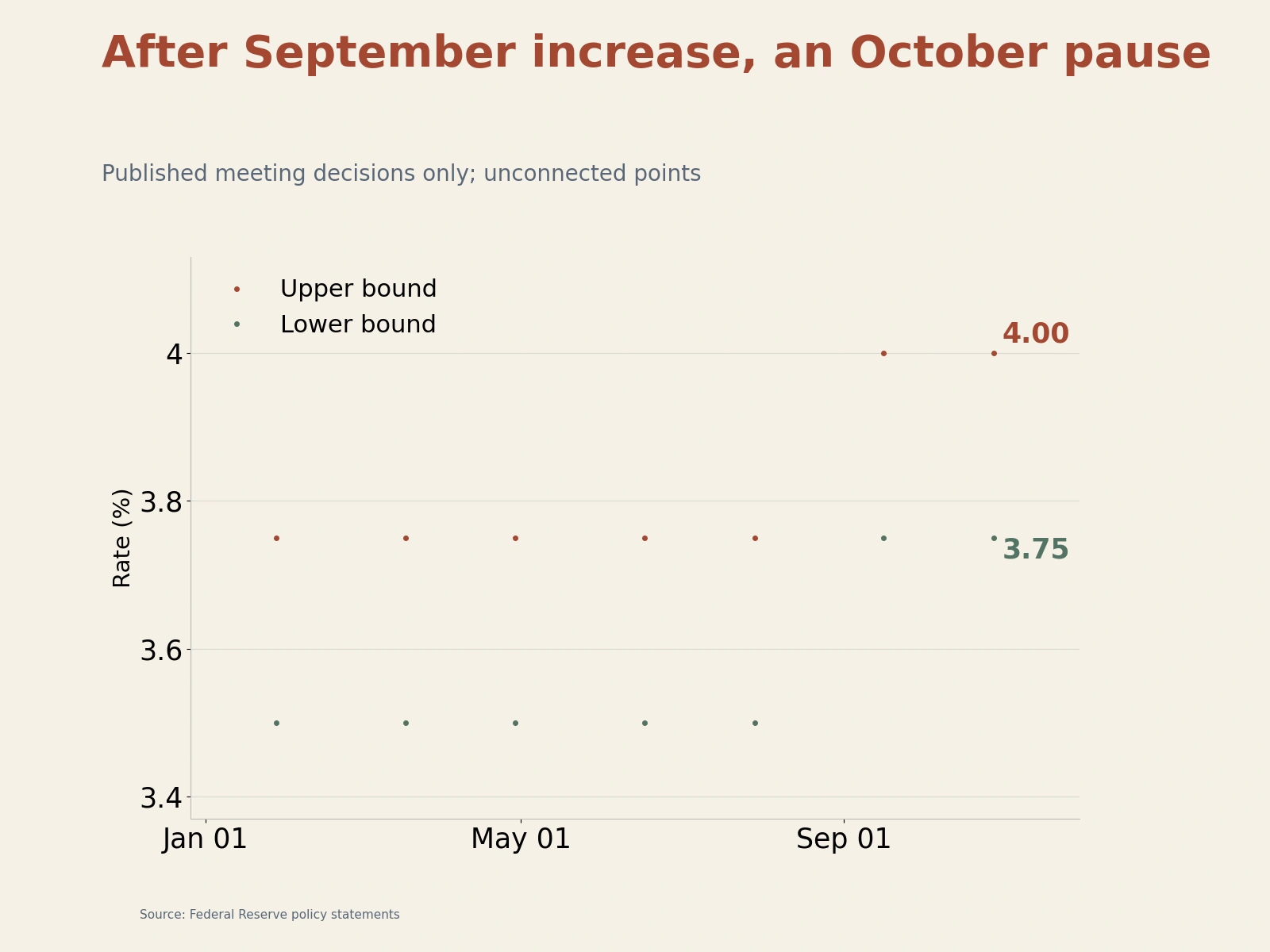
By the morning of October 21, Beijing time, Reuters' latest poll showed strong consensus among economists that the Fed would raise rates again this year, although most expected a pause in October. In September the Fed raised rates 25 basis points, bringing the federal funds target range to 3.75%–4.00%. In the poll conducted October 16–20 and published October 20, all 100 economists expected a December hike, versus fewer than half in the previous month's poll. Meanwhile, 94 expected unchanged rates at the October meeting. Market discussion is shifting toward the subsequent pace of this tightening cycle and the terminal rate.
About 41% expect at least two further hikes; PCE inflation unlikely to reach 2% before 2028

Expectations are converging on December for the next hike, while a significantly larger share of respondents believes one increase will not finish the cycle. Of 92 economists answering the question on the final rate level, 38 expected at least two more hikes, or approximately 41%, sharply above roughly one-fifth in September's poll. Most others expected the policy rate to peak at 4.00%–4.25%.
Slow disinflation relative to the policy target and resilient economic growth underpin expectations of further hikes. The poll projected US PCE inflation remaining above 3% over the next several quarters and not reaching the 2% target until at least 2028. Morgan Stanley chief US economist Michael Gapen said in the report that risks to both the US economy and inflation were tilted upward, and the Fed might ultimately need to raise rates more than his baseline forecast envisaged. Against that backdrop, the expected October hold would primarily allow observation of earlier policy transmission, rather than confirm that inflation pressure had disappeared.
Research published by TD Economics the same day focused on persistently high energy costs. Businesses can generally absorb short-lived cost shocks, but prolonged elevated energy costs strengthen the incentive to pass them through to consumers. However, TD also noted that evidence of this transmission in current core PCE data remained limited. The key subsequent policy risk is therefore whether energy-price pressure spreads to a broader range of consumer prices, rather than simply oil's absolute price level.
September single-family starts and permits both fall; cooling housing constrains near-term tightening

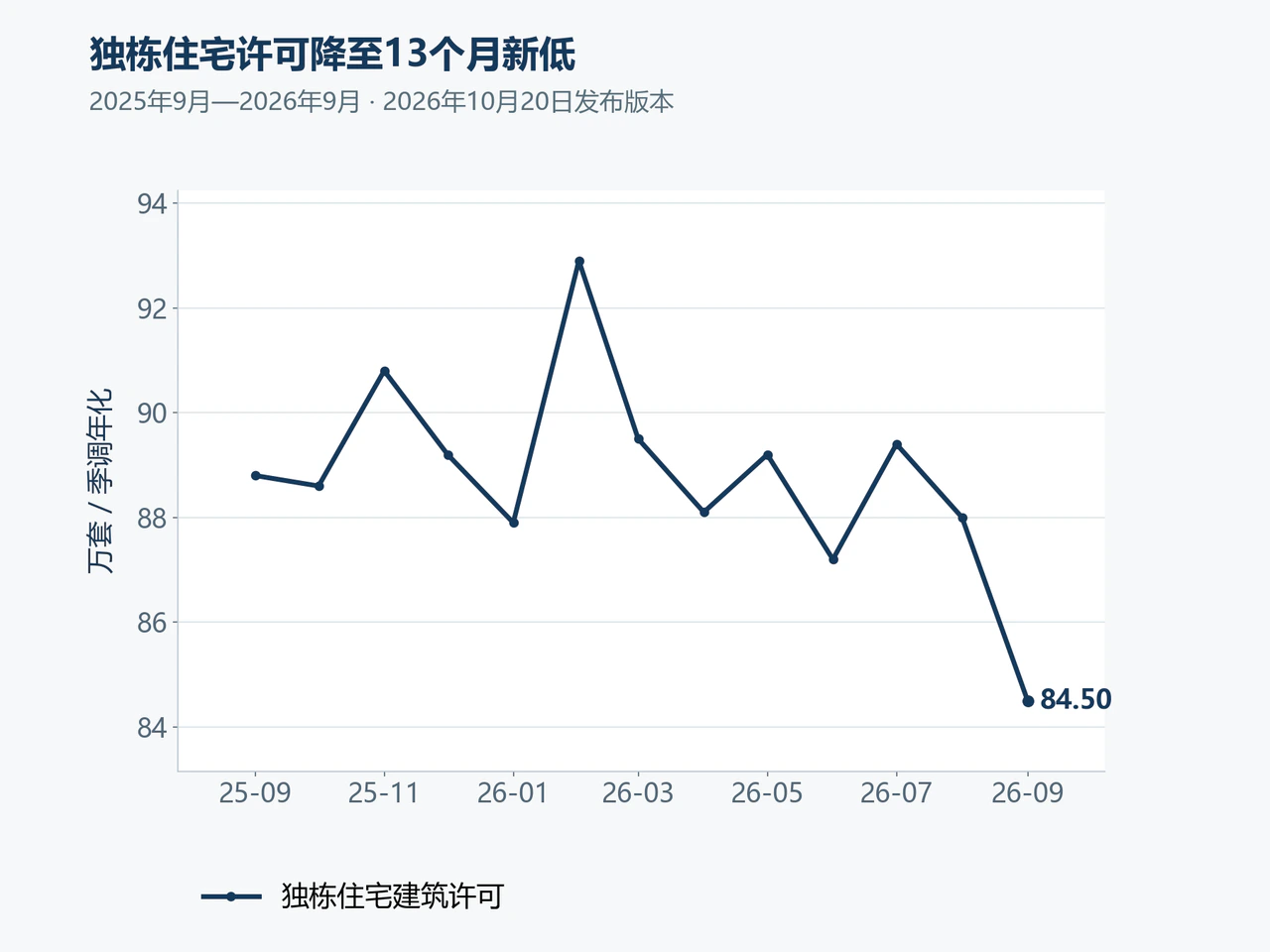
Balancing upside inflation risks, US housing data released October 20 showed high rates restraining the real economy. Reuters, citing the US Census Bureau, reported September single-family housing starts down 4.6% month on month to a seasonally adjusted annual rate of 859,000 units; single-family permits fell 4.0% to 845,000. Simultaneous declines in starts and permits indicate that higher financing costs are already suppressing housing demand and reducing developers' willingness to proceed with future projects.
Overall, pressure on rate-sensitive sectors such as housing gives the Fed a practical reason to pause in October and assess the lagged effects of earlier policy. Yet resilient aggregate demand and potential energy-cost pass-through make it difficult for markets to conclude that the hiking cycle has ended. With localized cooling and inflation risks coexisting, the Fed must weigh the need for additional tightening against the delayed effects of measures already taken.
The next policy checkpoint is the October 27–28 FOMC meeting. If rates remain unchanged as expected, the statement and press conference's assessment of inflation, demand and policy transmission will determine whether expectations of a December hike endure. The December meeting itself will directly test the hiking consensus established by this poll.