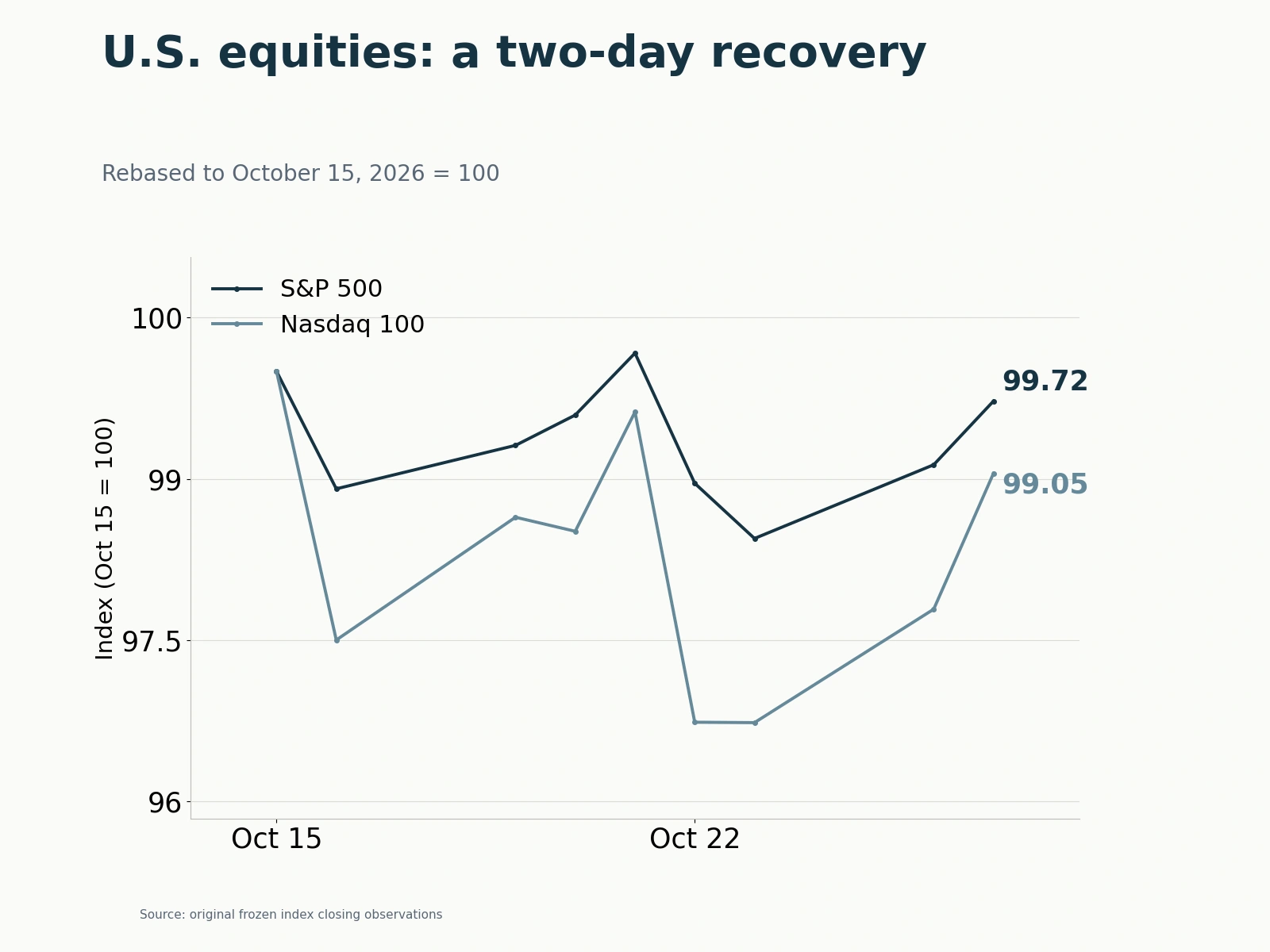
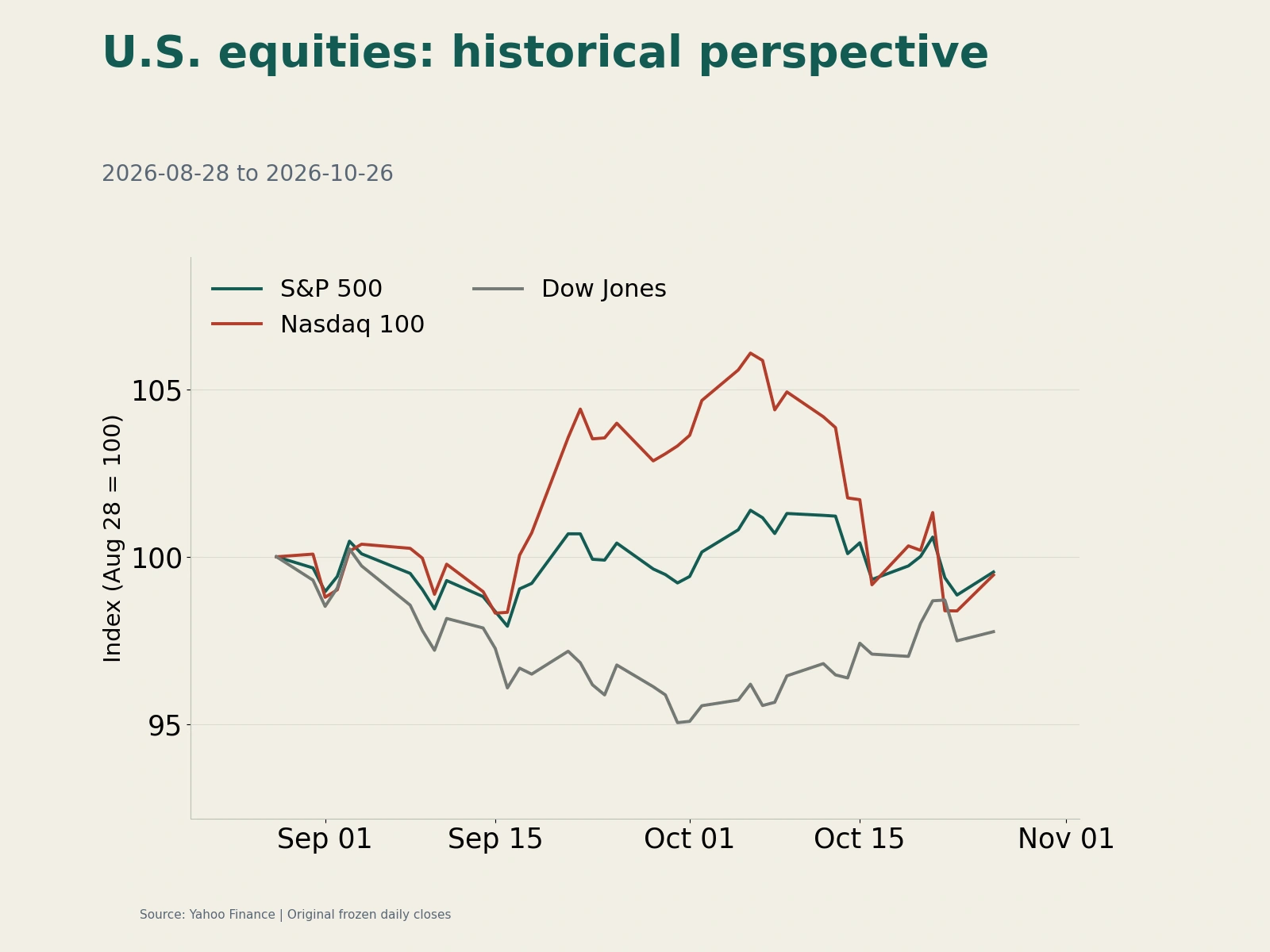
On October 20, 2026, global financial markets staged an uneven recovery: long-term US Treasury yields declined, the Dow Jones Industrial Average and small-cap stocks significantly outperformed large technology shares, and international oil prices retreated from intraday highs. Yet the two-year Treasury yield continued to rise and financing pressure in AI infrastructure persisted. Slowing US residential investment tested long-term growth expectations, while third-quarter corporate earnings led investors to place greater emphasis on realized profits and cash recovery. With funding costs high, fundamental differences among assets and individual stocks were more revealing than broad index moves.
By the morning of October 21 Beijing time, the S&P 500 had closed at 7,712.57, up 0.28% from the previous session. The Dow rose 1.02% to 52,495.88, the Russell 2000 gained 1.65%, and the Nasdaq 100 slipped 0.13% to 29,490.28. Support for the US equity rebound was broadening from large technology companies to traditional industries and smaller stocks.
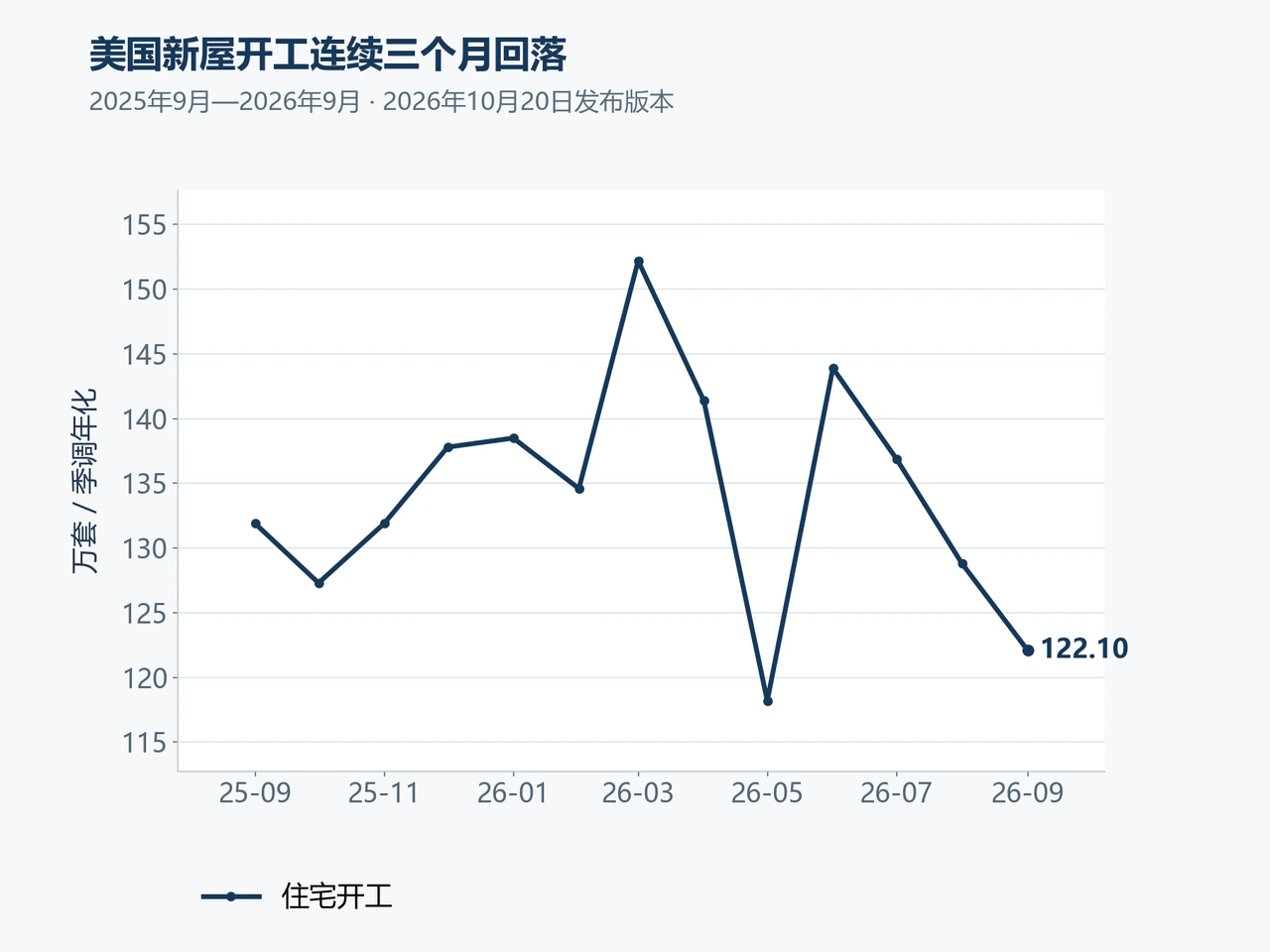
Long-term Treasury yields fall while the two-year edges up; September housing starts drop to 1.221 million

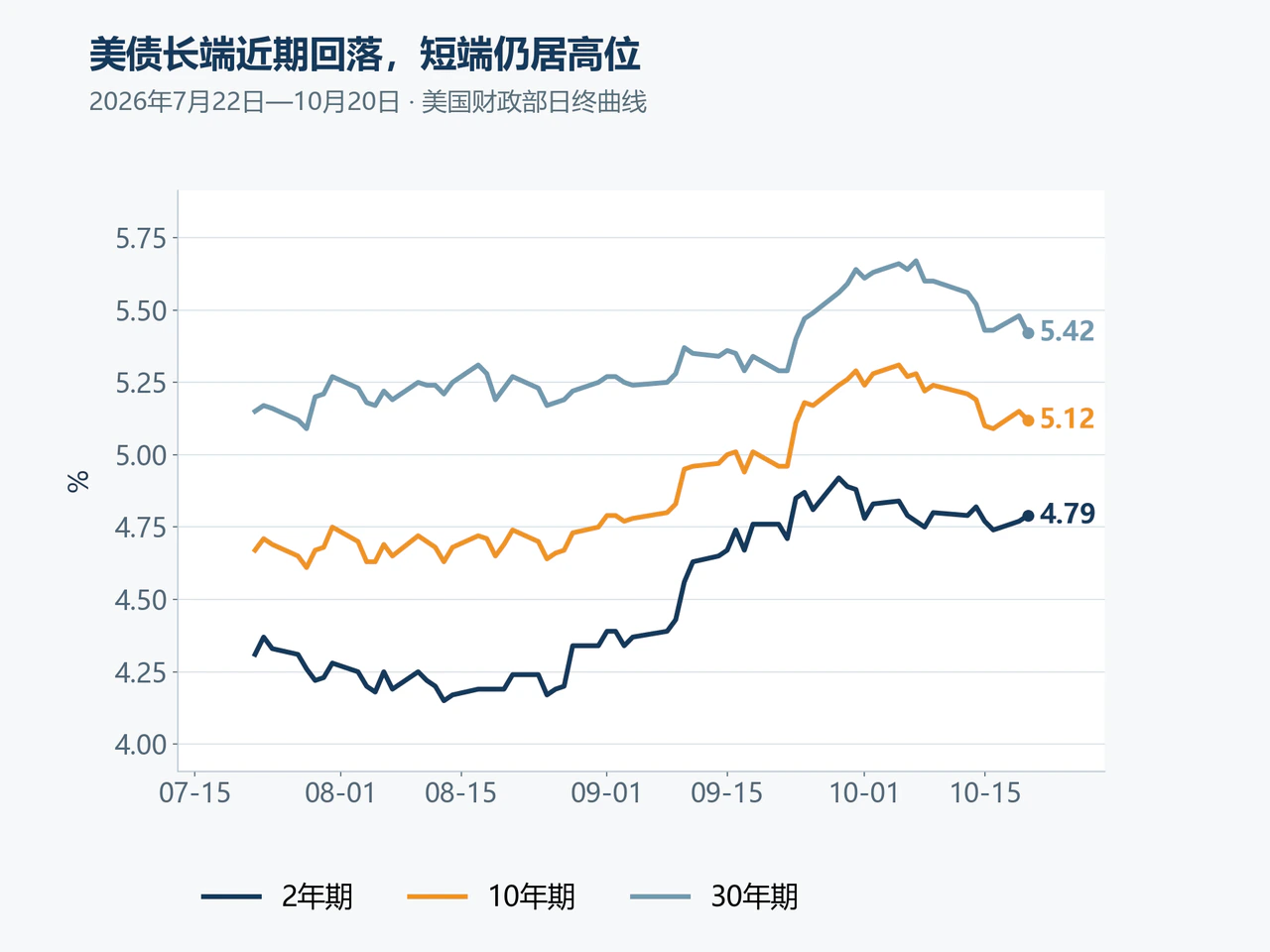
The US Treasury's October 20 closing yield curve showed the two-year yield up 2 basis points to 4.79%, the five-year unchanged at 4.94%, the 10-year down 3 basis points to 5.12%, and the 30-year down 6 basis points to 5.42%. The 10-year/two-year spread narrowed from 38 to 33 basis points. Rising long-bond prices alongside higher short-term yields reflected a divergence between assessments of long-run growth and inflation and expectations for near-term monetary policy.
The move extended the curve flattening seen since the beginning of October. From October 1 through 20, the two-year yield rose by just 1 basis point, while the 10- and 30-year yields fell 12 and 19 basis points respectively. Buying gradually supported long-duration assets, while short-term dollar financing costs remained firm. Trading Economics attributed the October 20 long-end Treasury rally to falling international oil prices and weaker US housing data.
Housing data corroborated a slowdown in domestic economic momentum. The Census Bureau and the Department of Housing and Urban Development reported on the 20th that September private housing starts ran at a seasonally adjusted annual rate of 1.221 million, down 5.2% from revised August figures and below the 1.3 million expected in a Wall Street Journal survey. Starts had fallen for three consecutive months from June's 1.439 million. The more forward-looking single-family building permits fell 4.0% month on month to 845,000, the lowest in the 13-month series presented in the release. A recovery in apartment permits limited the decline in total permits to 0.2%. Contraction pressure in residential investment was concentrated in single-family projects and would gradually feed through to subsequent construction and home-related consumption.
Funding-cost constraints on the real economy remained tight. The Federal Reserve's H.15 release on October 20 put the October 19 10-year real Treasury yield at 2.80%, up 6 basis points from the 16th. Credit risk premiums also recovered only partially: the ICE BofA US High Yield option-adjusted spread (OAS) was 329 basis points on the 19th, 2 basis points narrower than on the 16th but still 13 basis points wider than on the 13th. In dollar debt markets, lower long-term risk-free yields can ease valuation pressure on long-duration assets. With real rates high, however, issuers' ability to generate reliable cash and navigate refinancing peaks remained the central variable for credit spreads.
Industrial and defense earnings lift traditional sectors; CoreWeave CDS surge highlights AI financing pressure
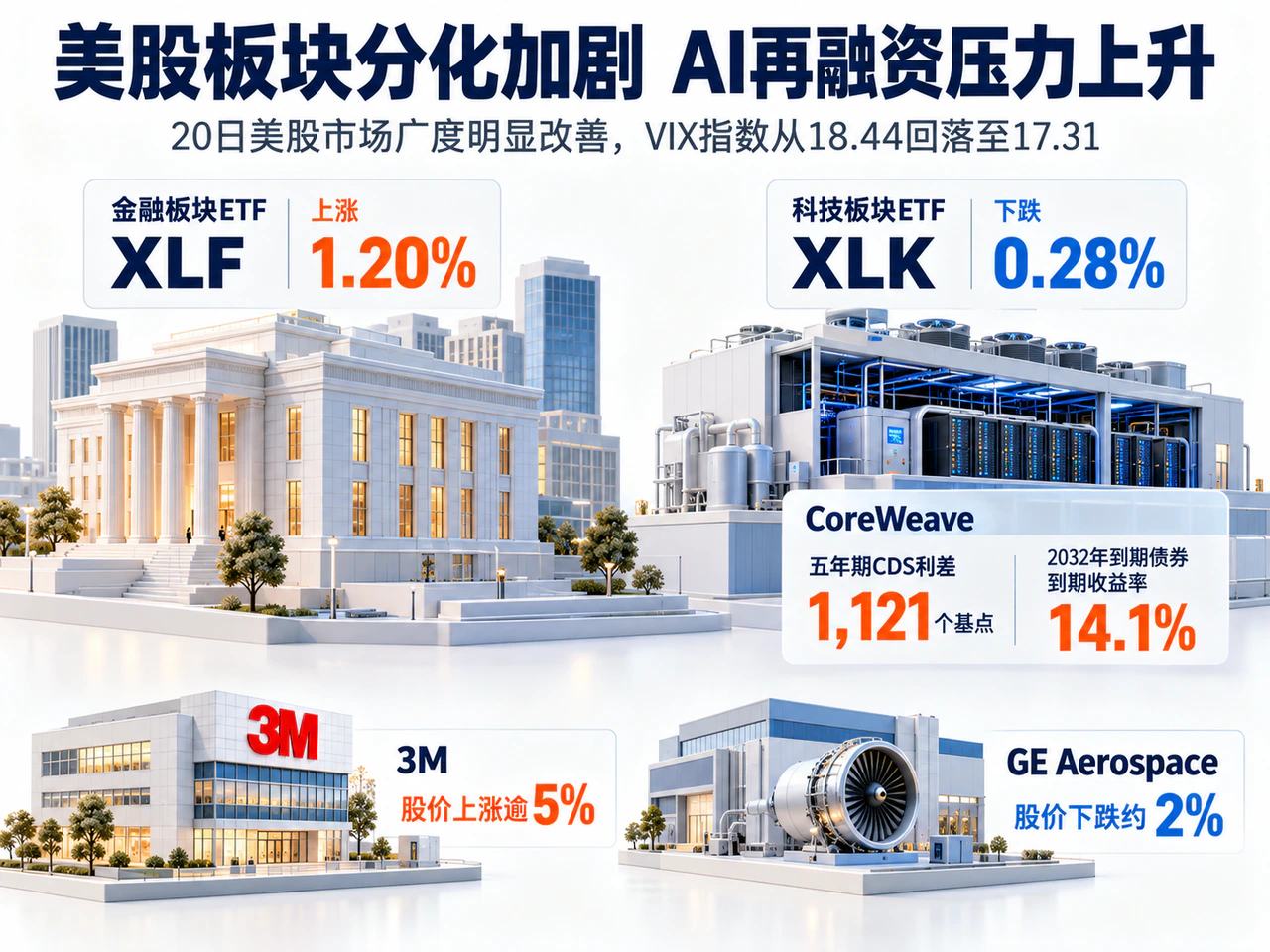
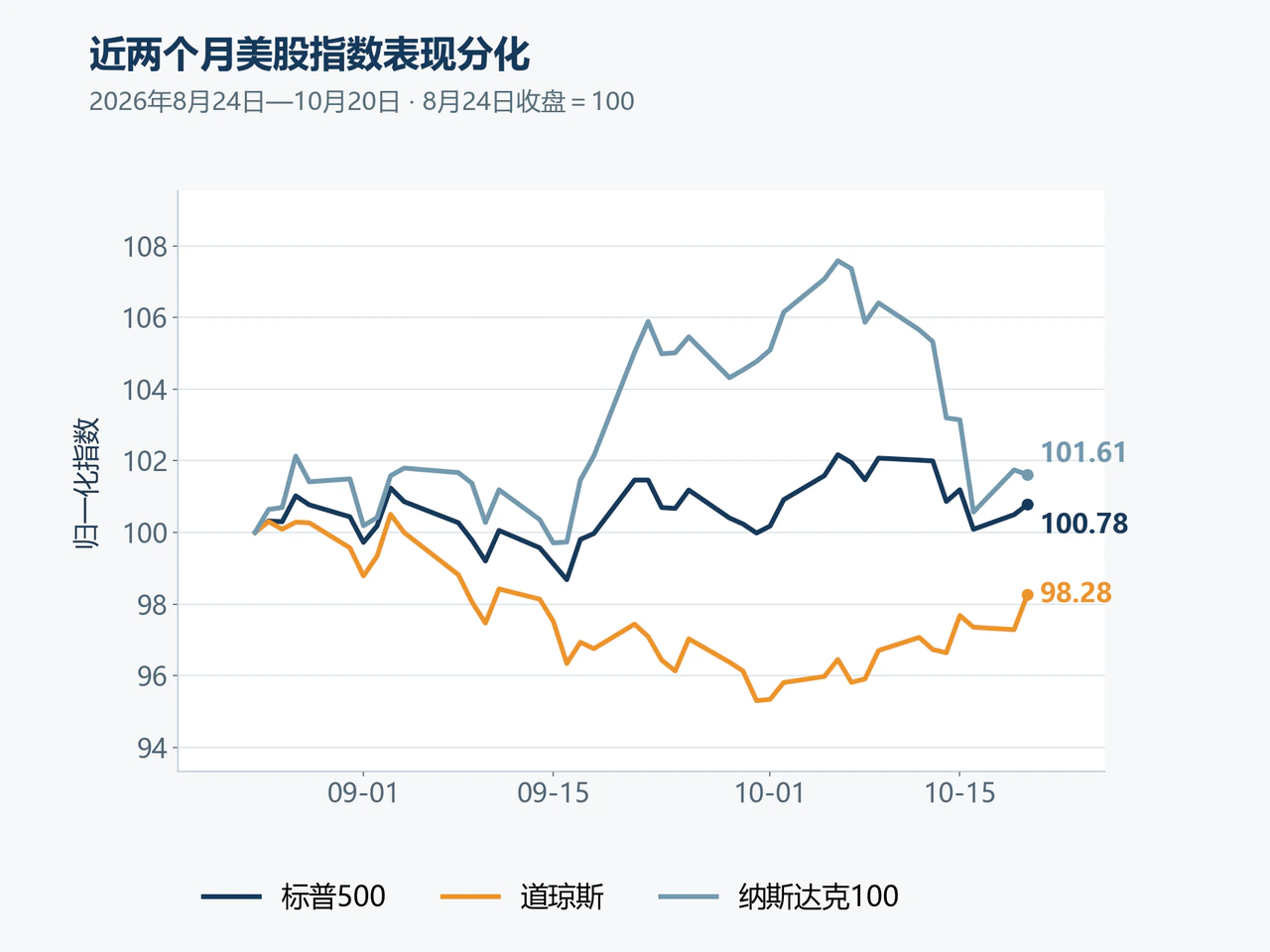
US equity market breadth improved markedly on the 20th. The VIX fell from 18.44 to 17.31, the Financial Select Sector SPDR ETF (XLF) rose 1.20%, and the Technology Select Sector SPDR ETF (XLK) fell 0.28%. CNBC reported that at 3:20 p.m. US Eastern time, 414 S&P 500 constituents were advancing and 89 declining, led by health care, real estate and utilities.
Third-quarter earnings provided fundamental support for rotation into traditional industries, but investors were assessing current profits, the cost outlook and cash recovery together. An earnings beat alone was no longer enough to support a share price. 3M posted adjusted third-quarter earnings per share of $2.50 against expectations of $2.38 and raised its full-year guidance, sending shares up more than 5%. Northrop Grumman also beat earnings-per-share expectations and gained more than 4%. General Motors, by contrast, delivered better-than-expected quarterly profit and announced a new $20 billion share repurchase program, yet its shares plunged 6.8% as higher raw-material costs weighed on the profit outlook. GE Aerospace's adjusted earnings per share beat forecasts, but free cash flow of $2.04 billion fell short of the expected $2.2 billion, and its stock fell about 2% during the session.
Capital-intensive AI infrastructure faced an even tougher test of financing costs and returns. CNBC reported that compute-services provider CoreWeave's five-year credit default swap (CDS) spread rose to approximately 1,121 basis points during the 20th's session, more than 17% wider than a week earlier. BondbloX reported the same day that the company's 8.5% coupon bonds due in 2032 traded around 78.5, implying a yield to maturity of approximately 14.1%. Elevated debt financing costs mean that additional compute capital expenditure must deliver stronger cash-flow returns to cover expensive funding.
Although end demand for computing capacity and power equipment remained strong, investors disagreed over how quickly orders would become cash flow. Power and automation equipment giant ABB's third-quarter orders rose 40% to $12 billion, with data-center orders growing at a triple-digit rate, yet its shares fell about 6% that day. According to BondbloX, Goldman Sachs believed CoreWeave's project returns could remain attractive even if its average borrowing cost rose another 100–200 basis points. JPMorgan emphasized the support from long-term customer contracts and compute demand, but also expected the company to depend on external financing until 2030. The debate centered on how quickly large order books could become free cash flow, and the timing mismatch between upfront construction spending and access to external financing.
Parts of the technology supply chain recovered in the latter half of the US session: Western Digital gained more than 3%, Seagate more than 2%, and CoreWeave and Marvell each more than 1%. After-hours earnings nevertheless again illustrated investors' scrutiny of growth quality. Netflix beat quarterly earnings-per-share expectations, but its fourth-quarter revenue-growth guidance of 11.5% was below the approximately 12.2% expected, putting pressure on the stock after hours.
Brent retreats from nearly $112; inflation and rate expectations send gold lower for a second day
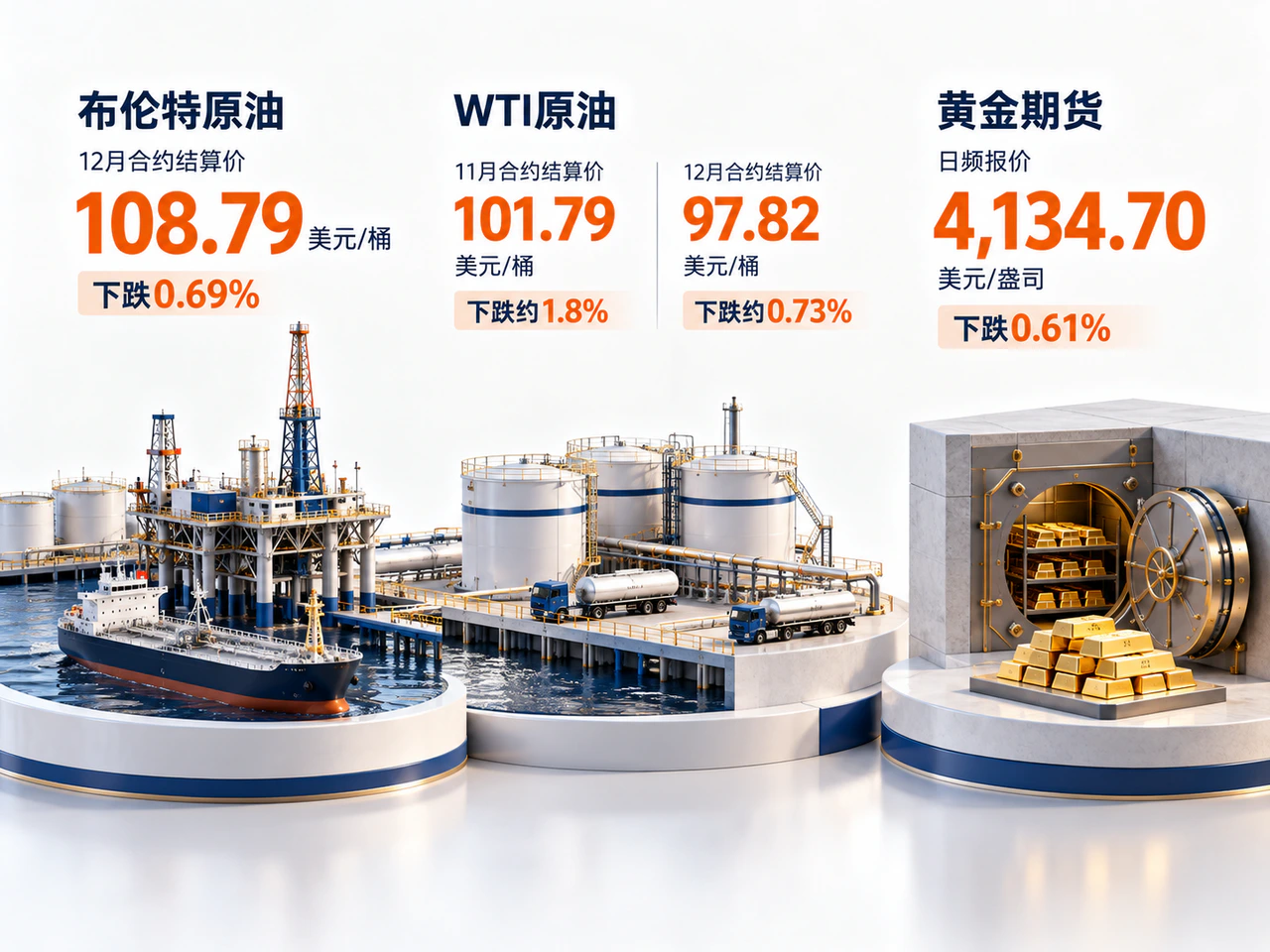
International oil prices rose and then retreated on the 20th. Reuters reported that Brent crude futures touched $111.99 a barrel intraday before settling at $108.79, down 0.69%. Mediation talks between Iran and Pakistan reduced the geopolitical risk premium, but Gulf shipping-security risks kept energy prices elevated. WTI's November contract expired that day, settling at $101.79, down approximately 1.8%. The more actively traded December contract settled at $97.82, about 0.73% below the previous day's same-month contract. The $3.97 settlement spread between the nearby and next-month contracts reflected a substantial nearby premium. Yahoo's daily continuous quotations showed Brent at $109.29 and WTI at $98.33; the continuous WTI series had already switched to December, crossing the roll point from the previous day's November quote.
Policy-level supply buffers were increasing. IEA Executive Director Fatih Birol said on the 20th that the agency was prepared to coordinate further emergency oil-stock releases if member countries deemed them necessary. The IEA had already arranged to accelerate outstanding releases and seek the early delivery of more than 20 million barrels of diesel, with individual members deciding implementation. Reuters also reported that Russian diesel cargoes had resumed heading to traditional export destinations after the United States suspended relevant sanctions and Russia lifted its export ban. Additional supply measures could ease global fuel shortages; their delivery pace, together with Middle East transport risks, would shape oil prices.
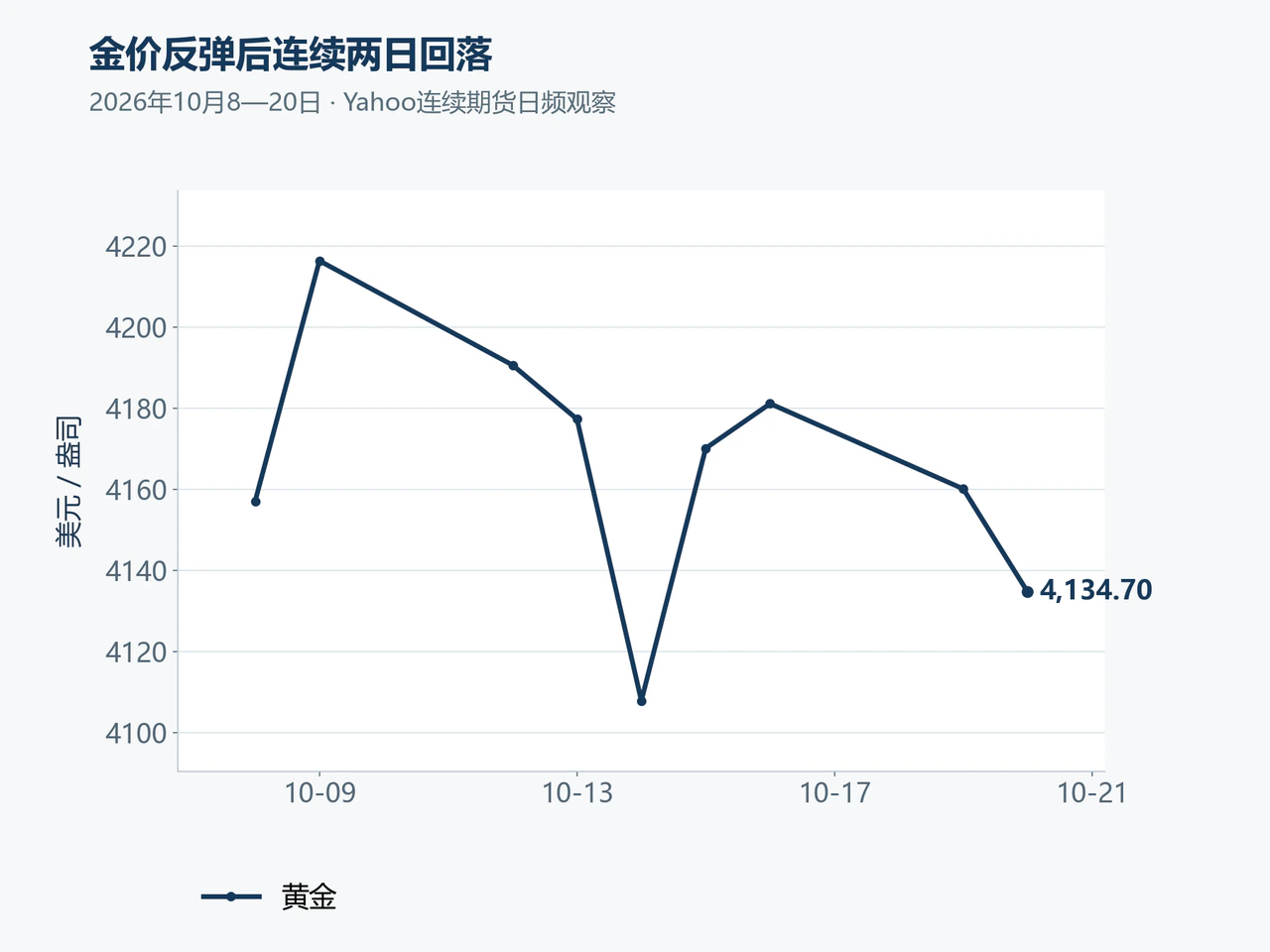
Gold failed to benefit from a weaker dollar. On the same Yahoo daily quotation basis, the dollar index fell 0.25 points to 101.73 on the 20th, while gold futures declined 0.61% to $4,134.70 an ounce. Gold had fallen for two consecutive trading sessions after rebounding to $4,181.10 on October 16. An ActivTrades analyst interviewed by Reuters said high energy prices were intensifying inflation pressure and expectations of future monetary tightening, weighing on gold. Although the energy-price shock generated some safe-haven demand, it also prolonged expectations of high rates and raised the opportunity cost of holding non-interest-bearing gold. The two forces continued to compete.
Korean shares fall 3.73% on chip weakness; China's third-quarter GDP grows 4.5% and LPRs remain unchanged
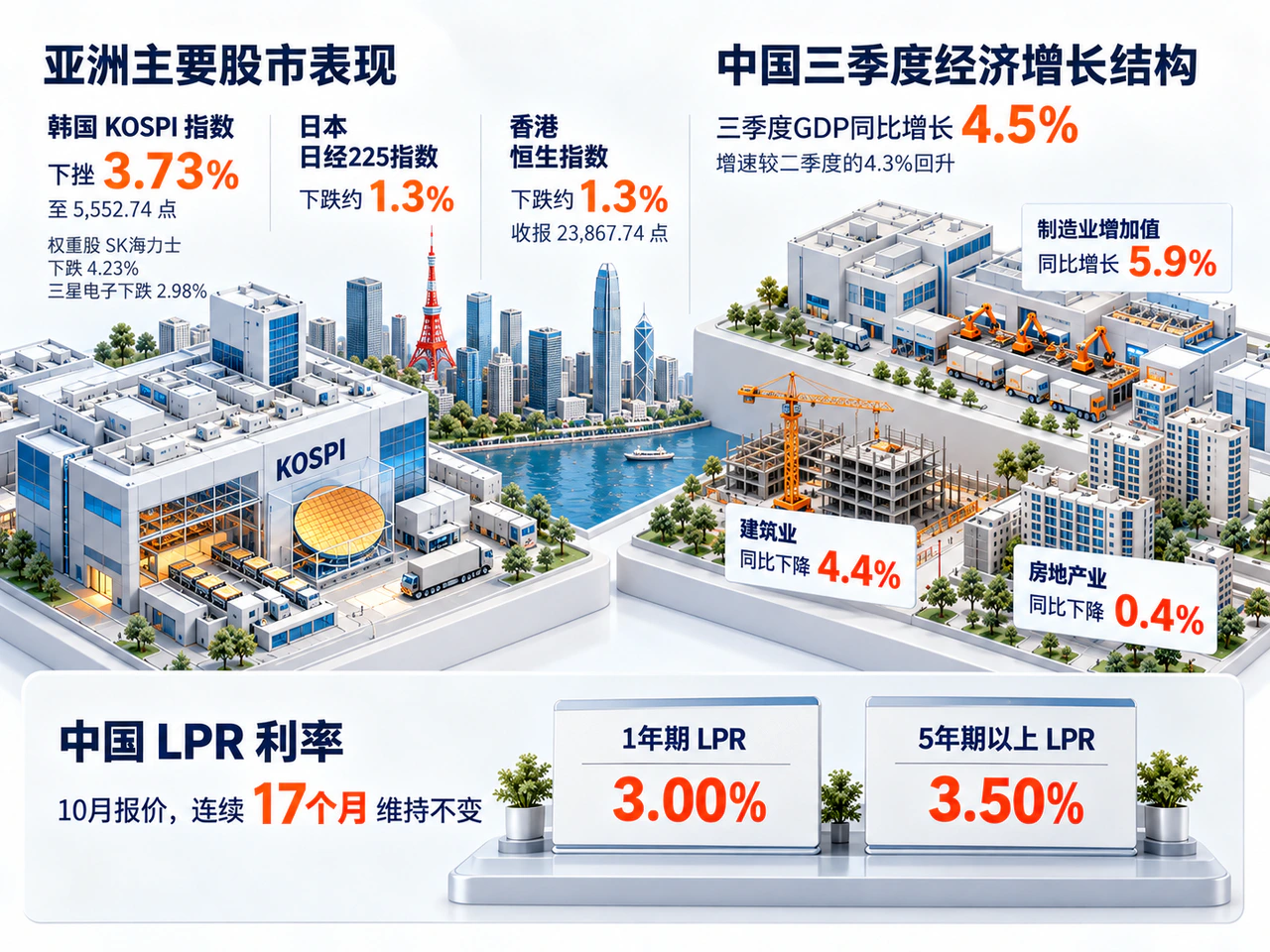
The Asia-Pacific technology supply chain came under pressure before the US cash market opened on the 20th. South Korea's KOSPI fell 3.73% to 5,552.74, with heavyweights SK Hynix and Samsung Electronics down 4.23% and 2.98%, respectively. Japan's Nikkei 225 and Hong Kong's Hang Seng both fell about 1.3%; the Hang Seng closed at 23,867.74. Although strength in traditional US industries and a late recovery in memory-chip stocks offered some relief to sentiment, Japanese and Korean semiconductor shares and Hong Kong technology stocks remained more directly exposed to tighter global AI financing conditions and reassessments of investment returns.
China's macroeconomic performance also showed sectoral divergence. The National Bureau of Statistics' third-quarter GDP breakdown, released on the 20th, showed year-on-year GDP growth of 4.5%, up from 4.3% in the second quarter. Manufacturing value added rose 5.9%, and information transmission, software and information-technology services grew 9.8%, while construction and real estate declined 4.4% and 0.4%, respectively. Manufacturing and modern information services continued to expand, while construction and property-related industries remained a drag on aggregate demand.
Monetary and fiscal policy attention was shifting toward implementing existing instruments and transmitting support to domestic demand. China's October one-year loan prime rate (LPR) was 3.00% and its over-five-year LPR 3.50%, unchanged for a 17th consecutive month. Without a fresh broad-based rate cut, policy effectiveness depended more on execution of existing tools and an improvement in real-economy financing demand. The National Development and Reform Commission said on the 20th that it would strengthen broadly accessible policies reaching consumers directly, appropriately increase public services' share of fiscal spending, and accelerate the deployment and use of new policy-based financial instruments. The efficiency with which recovering household spending power, project disbursements and actual construction connect would determine whether growth could broaden from a few strong industries to wider domestic-demand sectors.
France–Germany spread widens to 150 basis points; US–Mexico talks and Canadian tariff litigation shape North American trade expectations
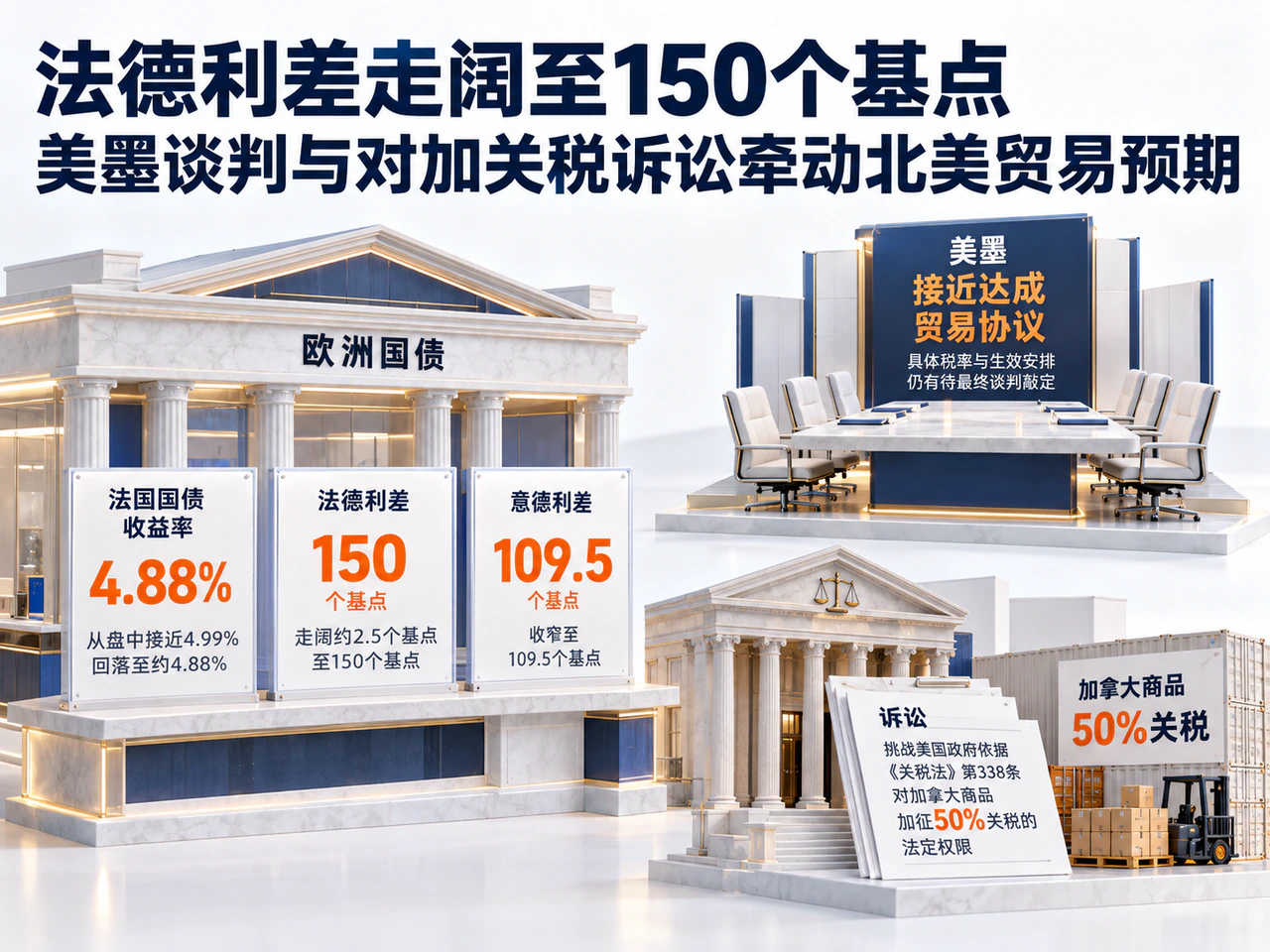
Falling global long-term yields did not remove sovereign credit risks in specific markets. Reuters reported in the European afternoon on the 20th that French government bond yields followed the broader market down from an intraday high near 4.99% to around 4.88%, but the spread over Germany widened about 2.5 basis points to 150 basis points. Italy's corresponding spread narrowed to 109.5 basis points. Resistance to implementing fiscal consolidation kept the risk compensation required on French sovereign debt above that of other major euro-area economies. ING viewed recent cost-of-living protests as evidence of the practical obstacles to structural reform and fiscal spending cuts. Goldman Sachs judged that the protests' direct economic impact might be limited, but prolonged social disruption would intensify tighter financial conditions, political uncertainty and fiscal-austerity pressure.
North American trade policy developed on both the negotiating and legal fronts. Trump said on the evening of the 19th that the United States and Mexico were very close to a trade agreement, although specific tariff rates and implementation arrangements still required final negotiations. Lower bilateral trade barriers would improve cost expectations for autos, parts and cross-border manufacturing. Meanwhile, an Associated Press report updated after the US close on the 20th said food importer Gellert Global Group had filed suit that day challenging the government's statutory authority under Section 338 of the Tariff Act to impose an additional 50% tariff on approximately $20 billion of Canadian goods. The White House said it would defend the measure. The suit had not immediately changed existing tariff burdens; subsequent court rulings or administrative adjustments would materially affect import costs and supply-chain sourcing.
Overall, lower long-term Treasury yields gave risk-asset valuations some breathing room, while solid third-quarter earnings in traditional industries helped risk appetite recover at the margin. Whether that recovery lasts still depends on whether lower risk-free rates translate into materially better cash flow for businesses and households, and whether industries with heavy capital spending can turn strong orders into realizable cash returns before financing costs rise further.