By the morning of October 22, Beijing time, newly released third-quarter U.S. earnings data showed that median weekly earnings for full-time employees had grown more slowly than prices, reducing real purchasing power. Households' diminished ability to expand consumption through wage growth meant the Federal Reserve also needed to assess more carefully how further tightening would affect demand as it tackled high inflation.
Real weekly earnings fall both year on year and quarter on quarter

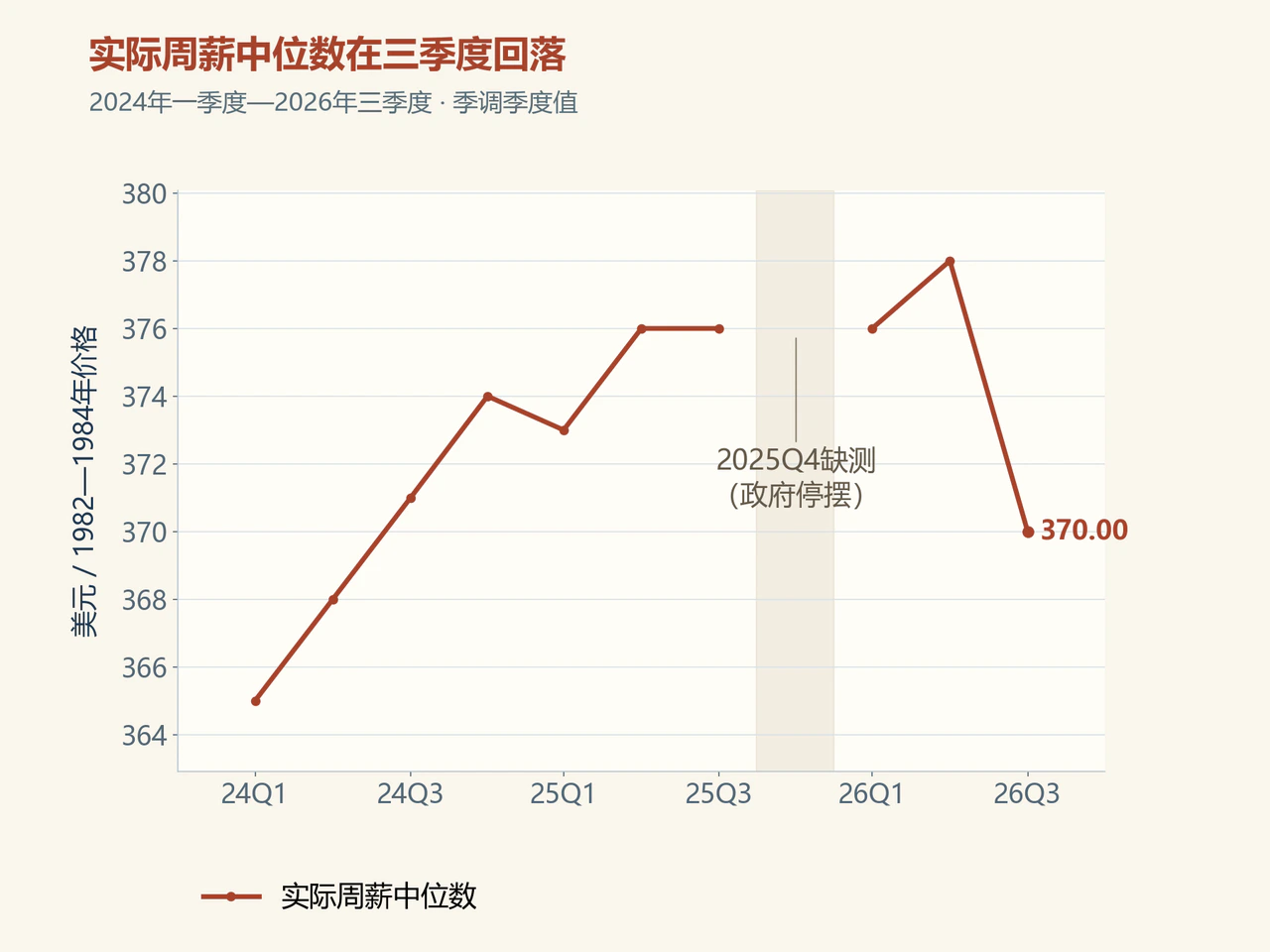
The U.S. Bureau of Labor Statistics reported on the morning of October 21, Eastern time, that median usual weekly earnings of full-time wage and salary workers were $1,232 in the third quarter of 2026, not seasonally adjusted, up 1.5% year on year. Over the same period, the Consumer Price Index for All Urban Consumers, CPI-U, rose 3.5%. Weekly earnings growth lagged prices by 2 percentage points, leaving full-time employees at the middle of the income distribution with less weekly purchasing power than a year earlier.
Seasonally adjusted data also showed weaker income. Median nominal weekly earnings fell from $1,258 in the second quarter to $1,239 in the third. Real weekly earnings in 1982-1984 dollars fell from $378 to $370, also below the $376 recorded a year earlier. Nominal weekly earnings had previously climbed gradually from $1,185 at the end of 2024, but declined in the latest quarter. Together with the fall in real income, this reduced wage growth's support for consumption.
This household-survey measure captures median usual pretax weekly labor earnings for full-time employees and is also affected by changes in the composition of employment. Assessing household purchasing power and assessing companies' wage costs therefore require different indicators. Weekly earnings show changes in the income distribution and purchasing power; the direction of employer labor costs must be assessed using cost measures that control for employment-composition effects.
High inflation and declining purchasing power make policy tradeoffs more difficult

On September 16, the Fed raised its federal funds target range by 25 basis points to 3.75%-4.00%, citing still-elevated inflation and the need to bring it back to the 2% target more promptly. The earnings data now weakened the case that demand was overheating because labor income remained consistently strong. Falling real income squeezes discretionary consumption and limits businesses' ability to keep passing costs on to consumers.
Wages trailing prices also mean inflation is still eroding household income. If price pressures persist while labor income fails to keep up, households face both living-cost and financing-cost burdens. The Fed now needs to watch more closely how its previous rate increase affects demand and whether price pressures continue to spread. Weaker purchasing power adds to concerns about further tightening, while persistent inflation still constrains room for rate cuts.
Three upcoming events would help clarify this tradeoff. The October 27-28 policy meeting would deliver the Fed's assessment. The September personal income and outlays report, due October 29, would further test real consumption and PCE inflation. The third-quarter Employment Cost Index, due October 30, would help distinguish employment-composition changes from wage-cost changes in explaining weekly earnings. Whether wage purchasing power, consumption resilience and employer labor costs provide consistent signals would determine how this income weakness affects the subsequent interest-rate path.


