On October 22, a full UTC trading day observed through the morning of October 23 Beijing time, on-chain spot trading cooled. Decentralized exchanges (DEXs) tracked by DefiLlama recorded about $8.144 billion in daily volume, down 8.15% from the previous day. Meanwhile, public-chain infrastructure upgrades and the expansion of institutional assets across chains continued: Solana introduced a new consensus mechanism to shorten settlement times, and J.P. Morgan Asset Management extended its tokenized money market funds to Solana. The short-term decline in trading activity has not slowed work on underlying settlement and asset services, although converting technical upgrades and broader product access into actual on-chain revenue will take time.
Base daily volume falls nearly 30%; third-quarter lending expands and application revenue outpaces base-layer networks

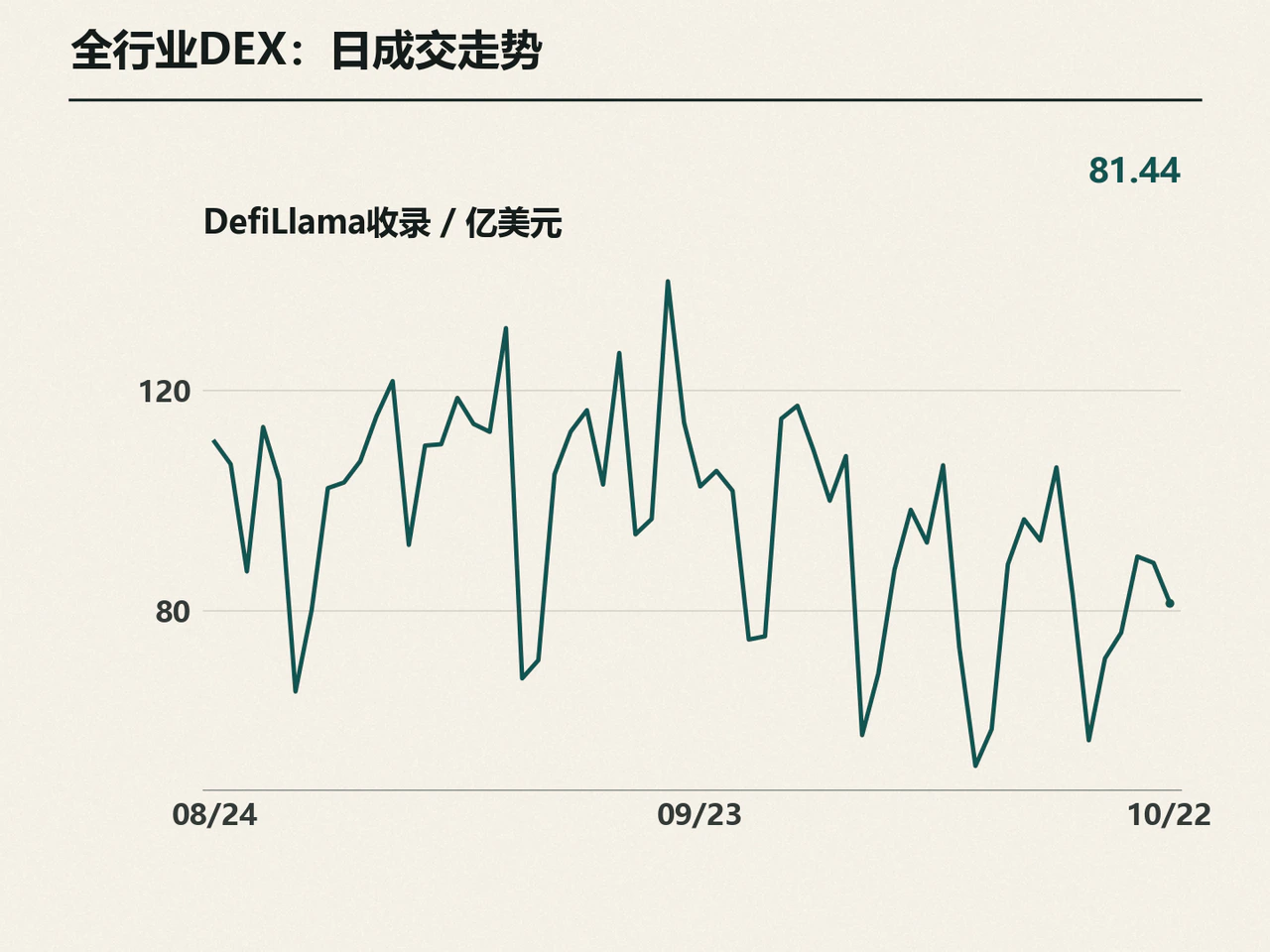
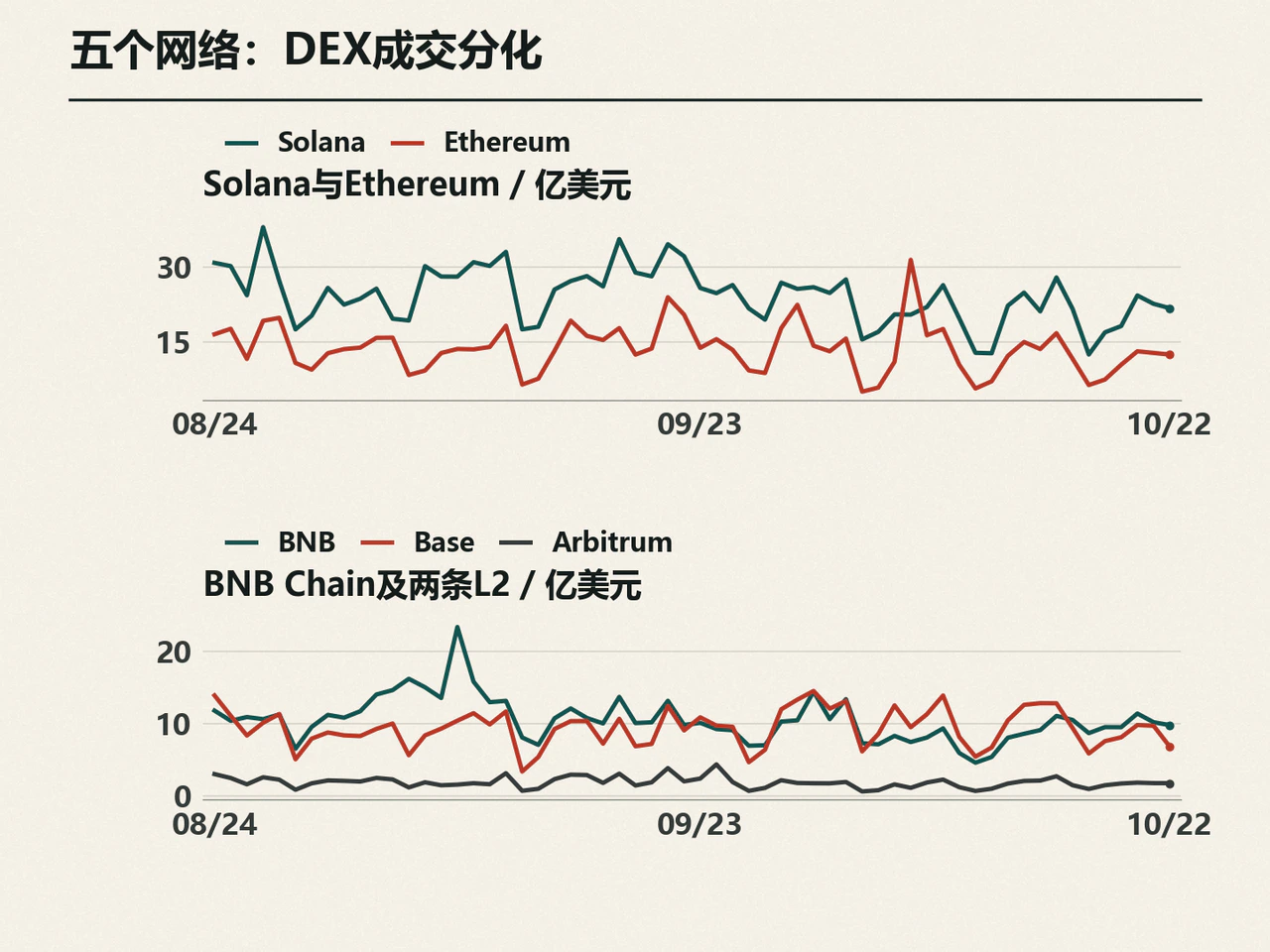
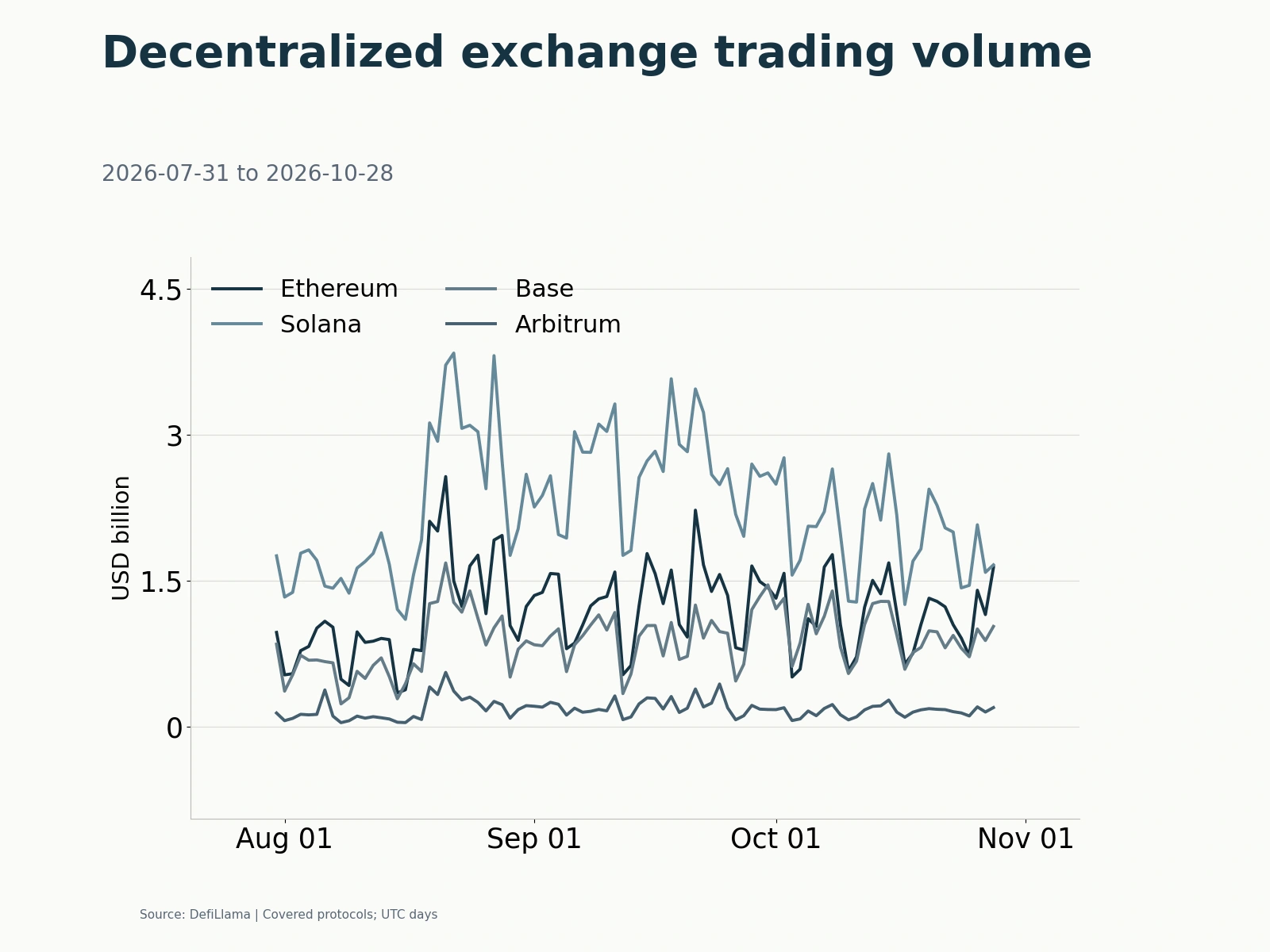
Total DEX volume of $8.144 billion was below the 30-day average of $8.779 billion, with the decline concentrated in certain layer-2 networks. Major layer-1 networks moved moderately: Solana volume fell 3.88% day on day to $2.182 billion, still close to its $2.174 billion 30-day average. Ethereum and BNB Chain recorded $1.251 billion and $981 million, down 2.58% and 3.93%, respectively. Layer-2 networks diverged more markedly. Arbitrum volume edged down 0.40% to $175 million, while Base fell 29.79% to $682 million, well below its $983 million 30-day average. A one-day change in volume shares, however, reflects fluctuations in trading activity and is insufficient to establish that existing capital has migrated between chains. Bridge flows and stablecoin balances will also be needed to assess that.
Over a longer horizon, spot trading is only one measure of on-chain business conditions; lending and payment settlement reveal different network specializations. According to ARK's recently published third-quarter DeFi report, deposits at the lending protocols it covers rose about 51% quarter on quarter to $81 billion, while outstanding loans increased about 41% to $29 billion. With deposit supply recovering faster than borrowing demand, utilization declined from about 38% to 36%. Lending platforms' ability to generate interest income still depends on whether sufficient borrowing demand can absorb the new funds. Growth in total value locked on Base and Tron during the reporting period was also driven by lending expansion at businesses such as Morpho and JustLend.
Network concentration was more pronounced in payment settlement. Under ARK's updated filtering methodology, adjusted stablecoin transfers totaled about $781 billion in the third quarter, of which Tron processed approximately $576 billion. Although these transfers serve various purposes, their network distribution differs sharply from DEX spot-volume rankings, indicating that high-frequency trading, interest-bearing lending and large transfers each have their own core networks.
These differences in business specialization also appear in revenue allocation. ARK estimates third-quarter on-chain application revenue at about $529 million, above the approximately $349 million earned by underlying public-chain networks. Among the base-layer networks, Ethereum revenue declined, while Solana and BNB Chain grew. Application distribution, asset offerings and service-fee structures together determine where revenue accrues. Infrastructure upgrades still need real applications to turn them into sustainable economic returns.
Solana's new consensus targets 150-millisecond finality as two JPMorgan money funds expand on-chain
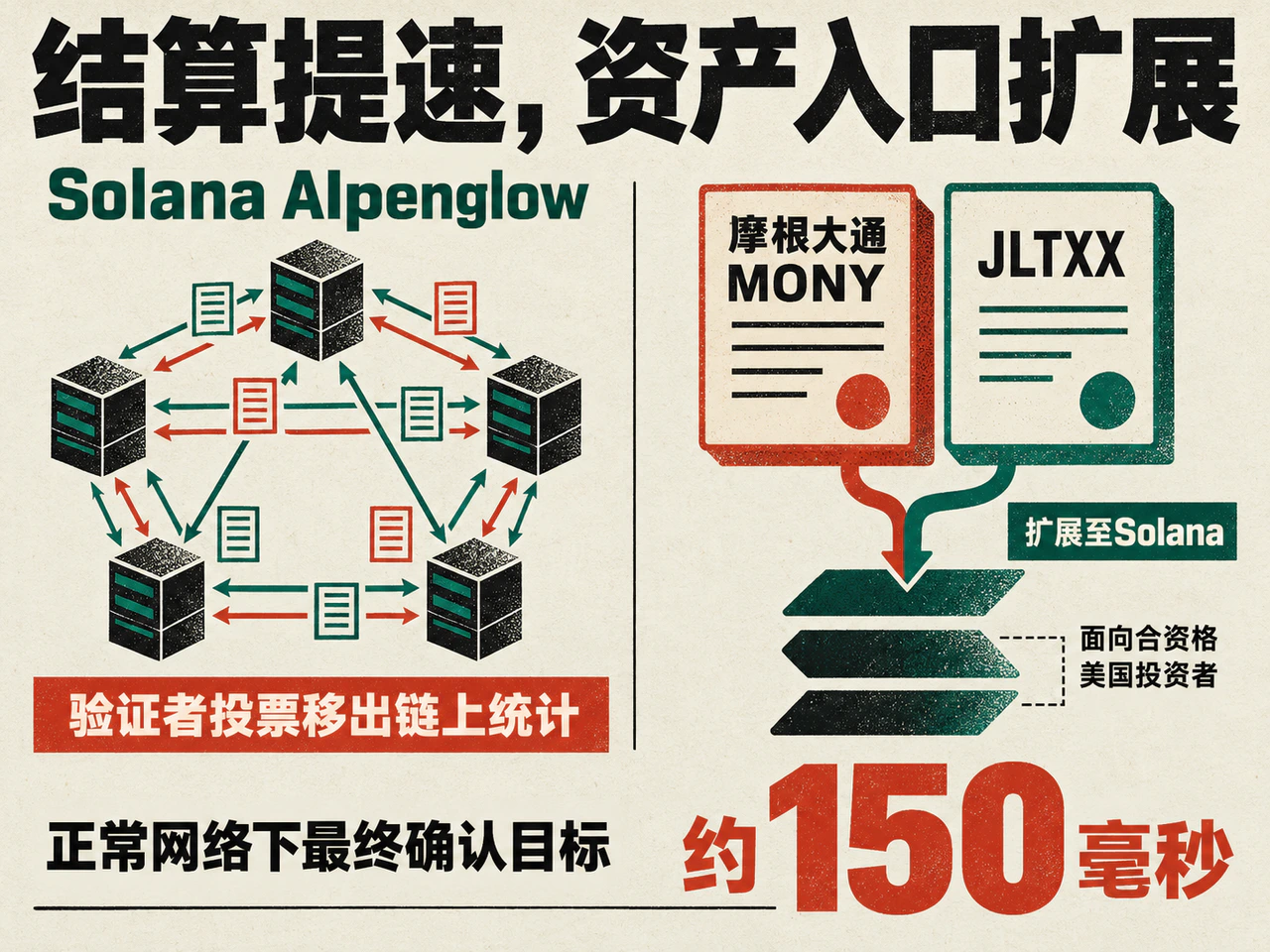
CoinDesk reported on October 22 that Solana had activated its Alpenglow upgrade on Wednesday. The new consensus mechanism allows validators to exchange votes directly and combine them into certificates, targeting transaction finality of about 150 milliseconds under normal network conditions. Faster finality lets applications treat transactions as settled sooner, with practical implications for confirming exchange deposits, merchant receipts and releasing assets after delivery. The upgrade does not directly change existing wallet and application interactions or user fees, however. The 150 milliseconds is a target under normal conditions, rather than a fixed guarantee for each payment, and the speed at which service providers receive confirmation still affects the end-user experience.
The upgrade also changes on-chain statistics: validator votes are no longer recorded as on-chain transactions. Dashboards that previously included votes in total transactions may therefore show a decline in transaction counts. Assessing real demand before and after the upgrade requires consistently defined user transaction counts, transfer values and trading volume, so that a streamlined consensus process is not mistaken for contracting business.
Solana Compass reported the same day that J.P. Morgan Asset Management's two tokenized money market funds, MONY and JLTXX, had expanded to Solana. Eligible U.S. investors can subscribe and redeem through Morgan Money. The funds initially launched on Ethereum; adding Solana provides institutions operating across several chains with the same type of on-chain cash-management tool.
Faster underlying settlement and the arrival of institutional assets connect at the operational level. Stablecoin issuers and institutions holding operating funds on Solana can allocate to the relevant money fund units on the same network, reducing the steps involved in moving assets between chains. Both funds nevertheless retain their existing eligibility requirements and subscription and redemption procedures. Adding a supported network cannot directly be counted as incremental capital inflows, and the announcements did not disclose the funds' actual assets on Solana.
Overall, Solana's modest decline in DEX volume alongside the market reflects short-term changes in trading demand, while the settlement upgrade and money fund expansion improve medium- and long-term operating conditions. With technical capabilities and product access advancing, the key tests of commercial delivery are whether genuine user transactions excluding votes grow, whether institutional capital actually enters, and how applications translate faster settlement into recurring service revenue.
Click Read Original for full details.