By the morning of October 23, Beijing time, the latest US employment and manufacturing data showed two divergences: layoffs remained low while hiring was still weak, and business costs were rising faster while companies' ability to raise customer prices was constrained. This gave the Federal Reserve room to continue observing prices, while making its next policy move more dependent on cost transmission and unemployed workers' ability to find new jobs.
Initial claims at or below 200,000 for six consecutive weeks; continuing claims rise

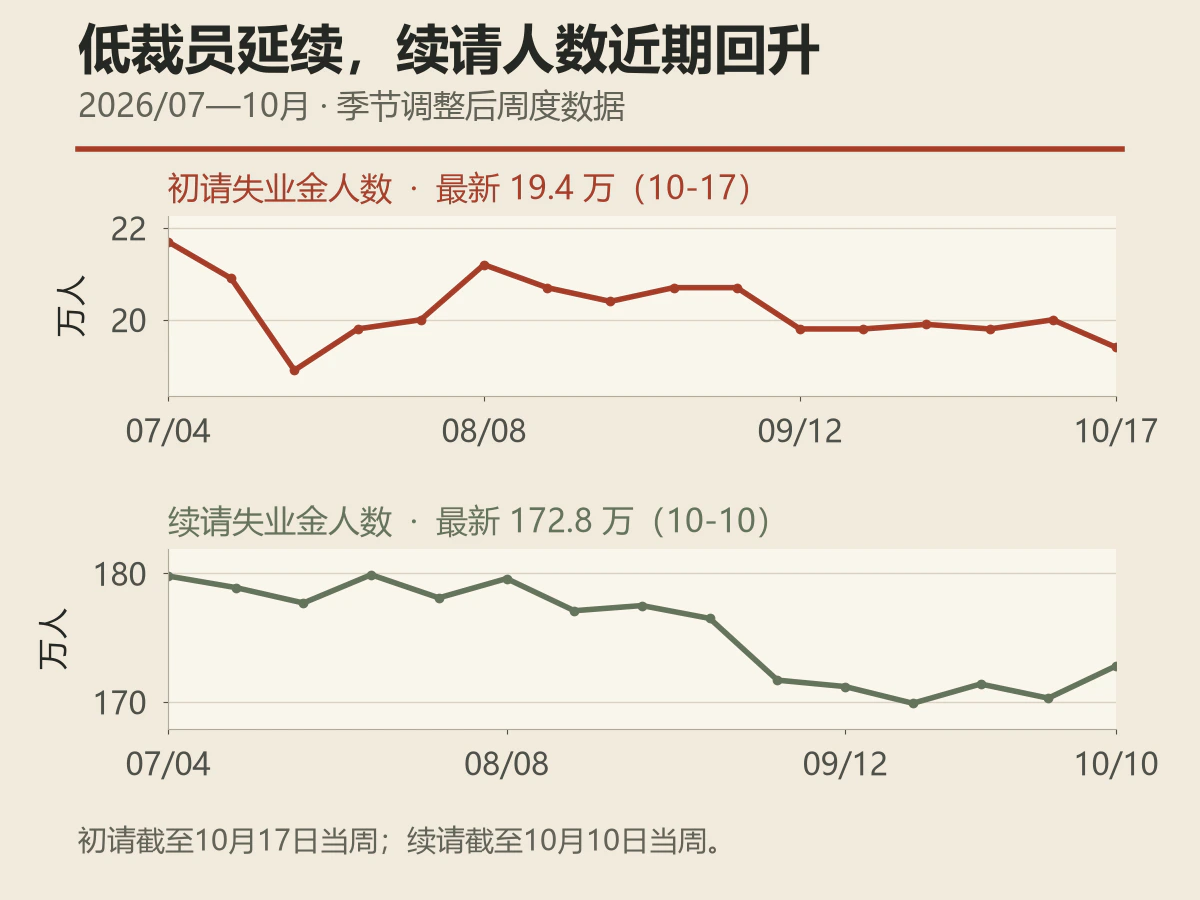
The Labor Department reported on October 22 that seasonally adjusted initial jobless claims were 194,000 in the week ending October 17, down 6,000 from the previous week's revised 200,000. The four-week average fell to 197,750. The historical series in the same report showed initial claims at or below 200,000 for six consecutive weeks, indicating continued low layoffs.
Meanwhile, continuing claims increased 25,000 to 1,728,000 in the week ending October 10, and their four-week average rose to 1,711,000. Initial claims measure new entrants to the unemployment-benefit system, while continuing claims more closely reflect the stock of unemployed people still receiving benefits. The divergence shows that relatively stable existing jobs can coexist with difficulty finding work after unemployment.
CNBC reported that day that September nonfarm payrolls increased by just 29,000, with unemployment at 4.2%. Low layoffs support existing workers' income and spending, but weak hiring limits opportunities for new labor-market entrants. The Fed still has room to observe prices; if continuing claims keep rising, however, the employment costs to weigh before further tightening will also increase.
Manufacturing costs rise while companies' ability to increase prices is constrained
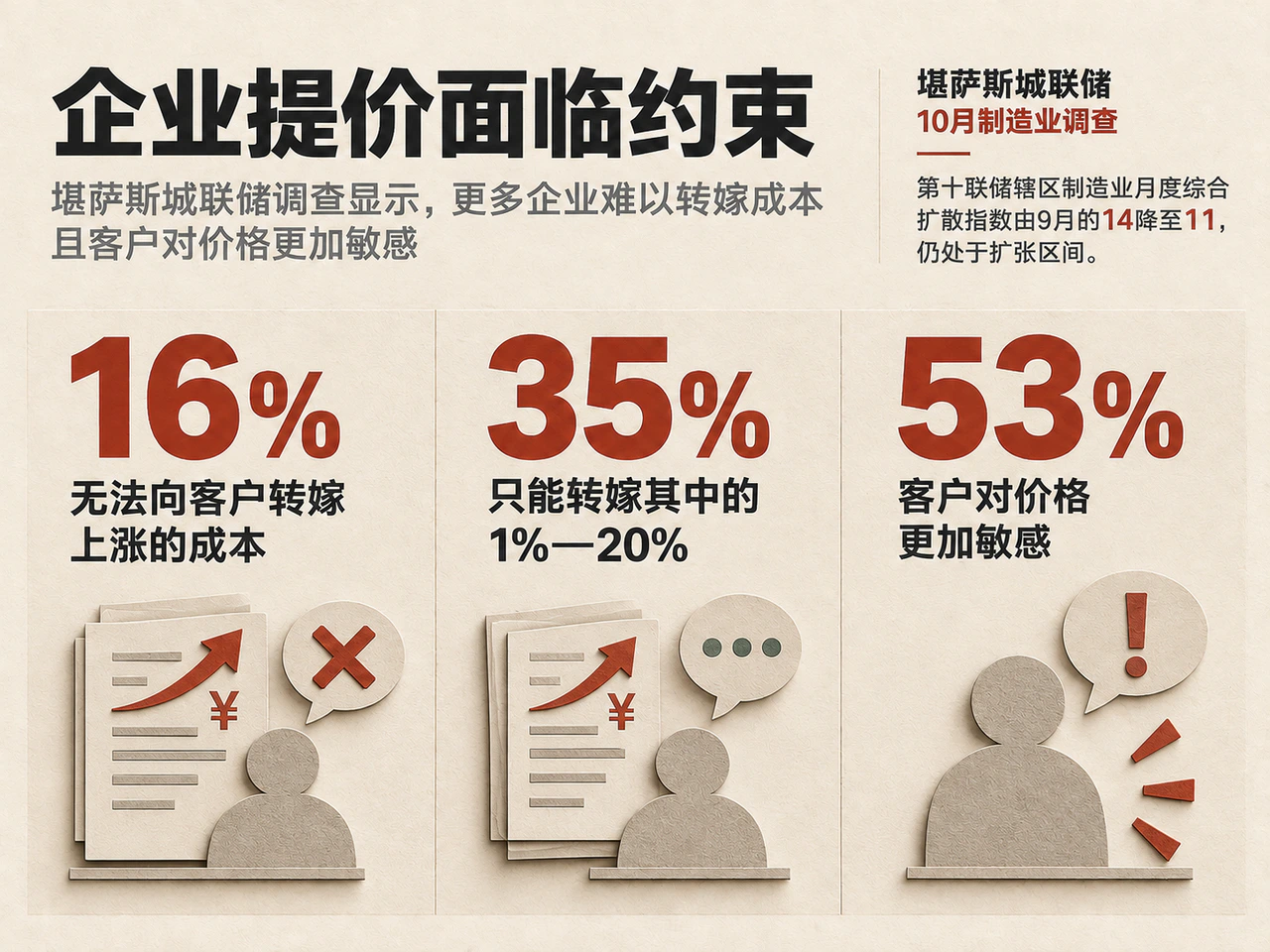
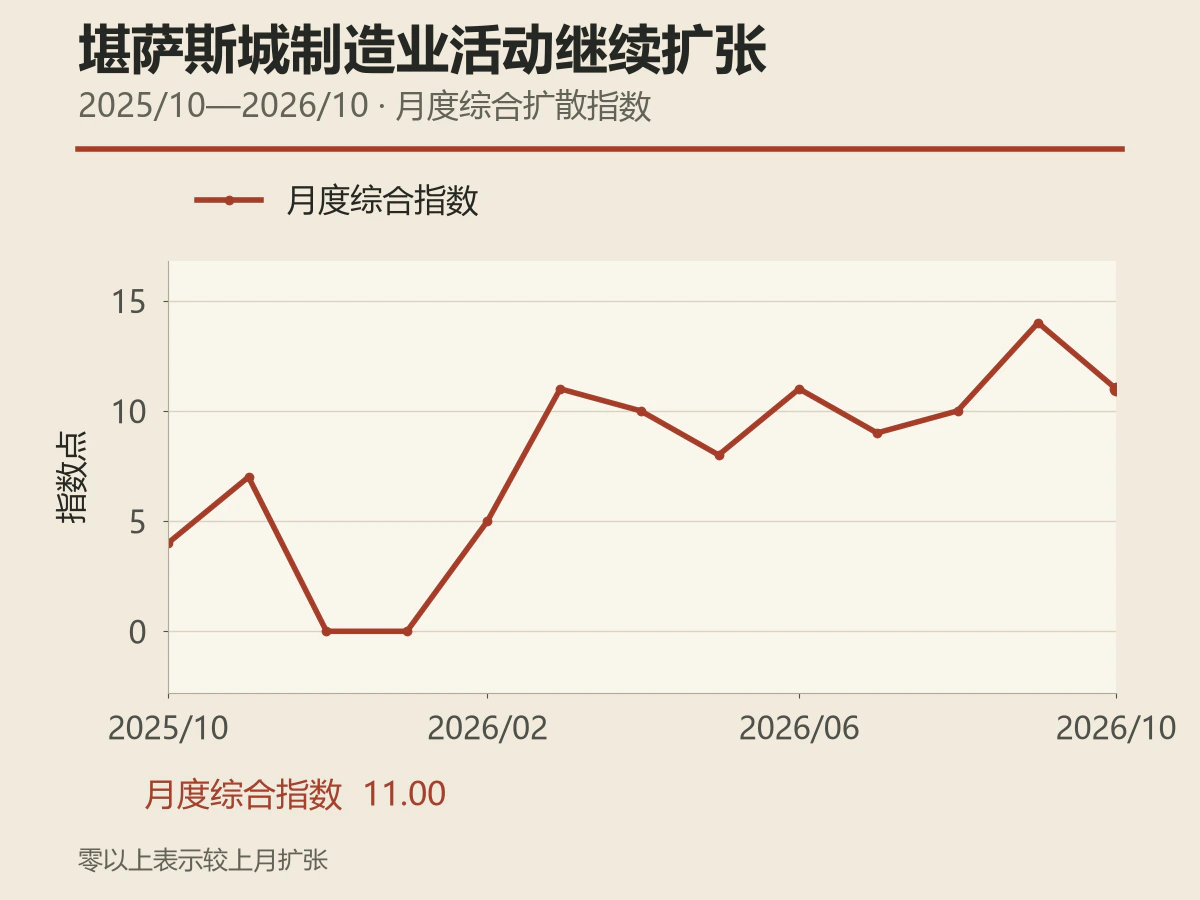
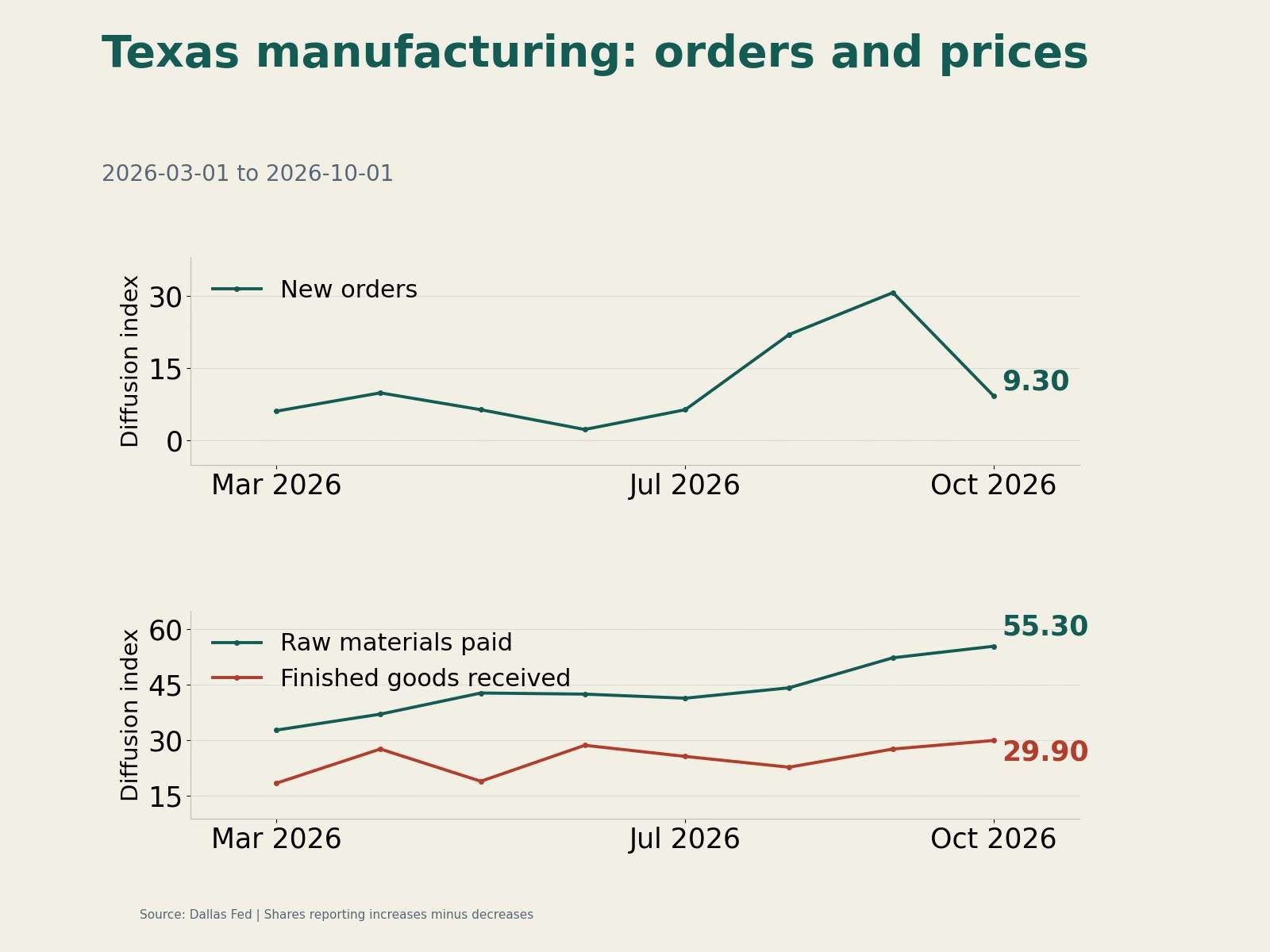
The Kansas City Fed's October manufacturing survey, released the same day, showed the Tenth District's monthly composite diffusion index falling from 14 in September to 11, still indicating expansion. Raw-material purchase prices rose faster, while increases in finished-goods selling prices slowed.
Company responses helped explain the divergence. Of respondents, 16% said they could pass none of their rising costs to customers, while 35% could pass through only 1%–20%. Another 53% said customers were more price-sensitive than six months earlier. Some firms could impose fuel surcharges; others faced both rising costs and competitive pressure to cut prices.
Higher costs may therefore affect the economy through two channels: price increases add to final-price pressure, while an inability to raise prices may first compress profits and then affect hiring and investment. The regional survey points to two things to watch: whether firms can raise selling prices and whether consumers accept those increases. Together they will shape the transmission of cost pressure to national inflation and the extent of demand cooling.
October's policy meeting faces a dual employment-and-prices trade-off
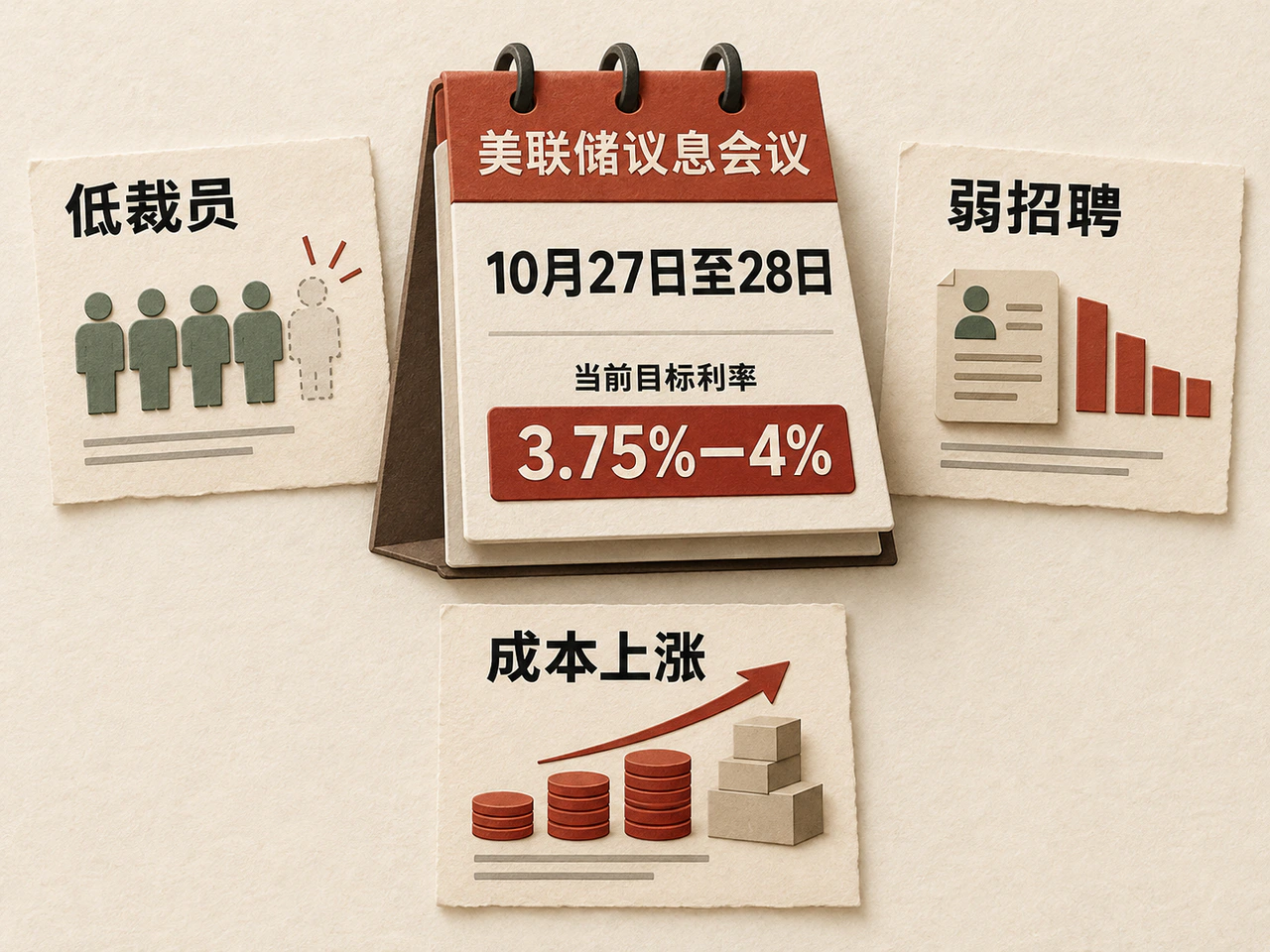
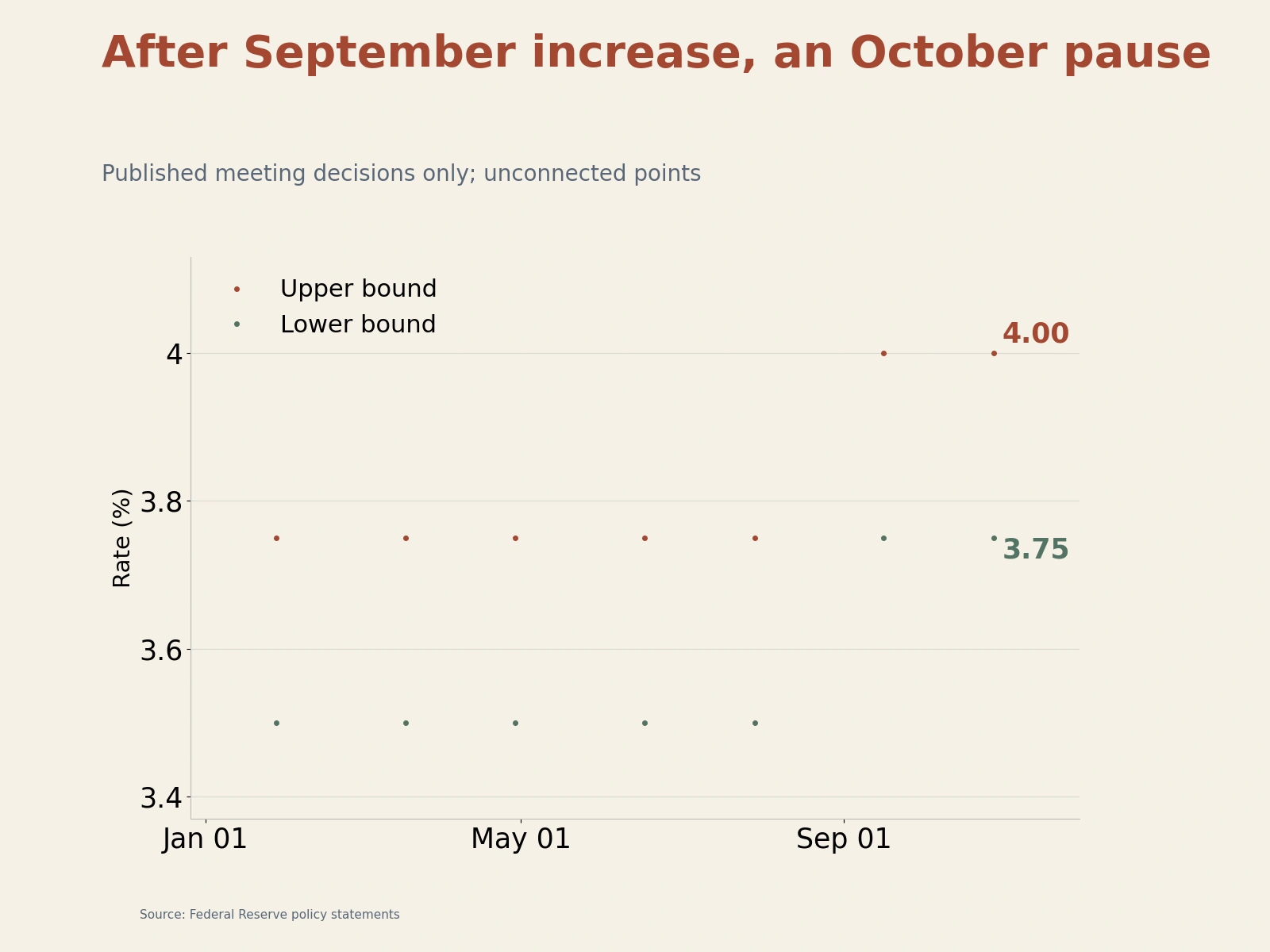
The Fed's latest effective decision was its September 16 increase of 25 basis points, taking the federal funds target range to 3.75%–4%. The October 27–28 meeting will test policymakers' balance of low layoffs, weak hiring and rising costs.
Low initial claims reduce the urgency of a sudden employment deterioration and support further observation. Rising continuing claims and constrained pricing power, however, indicate that policy must still consider job-search and operating pressures. The October jobs report due November 6 will provide another test of whether low initial claims coincide with better hiring. The subsequent policy path will continue to depend on price transmission and labor-market flows.