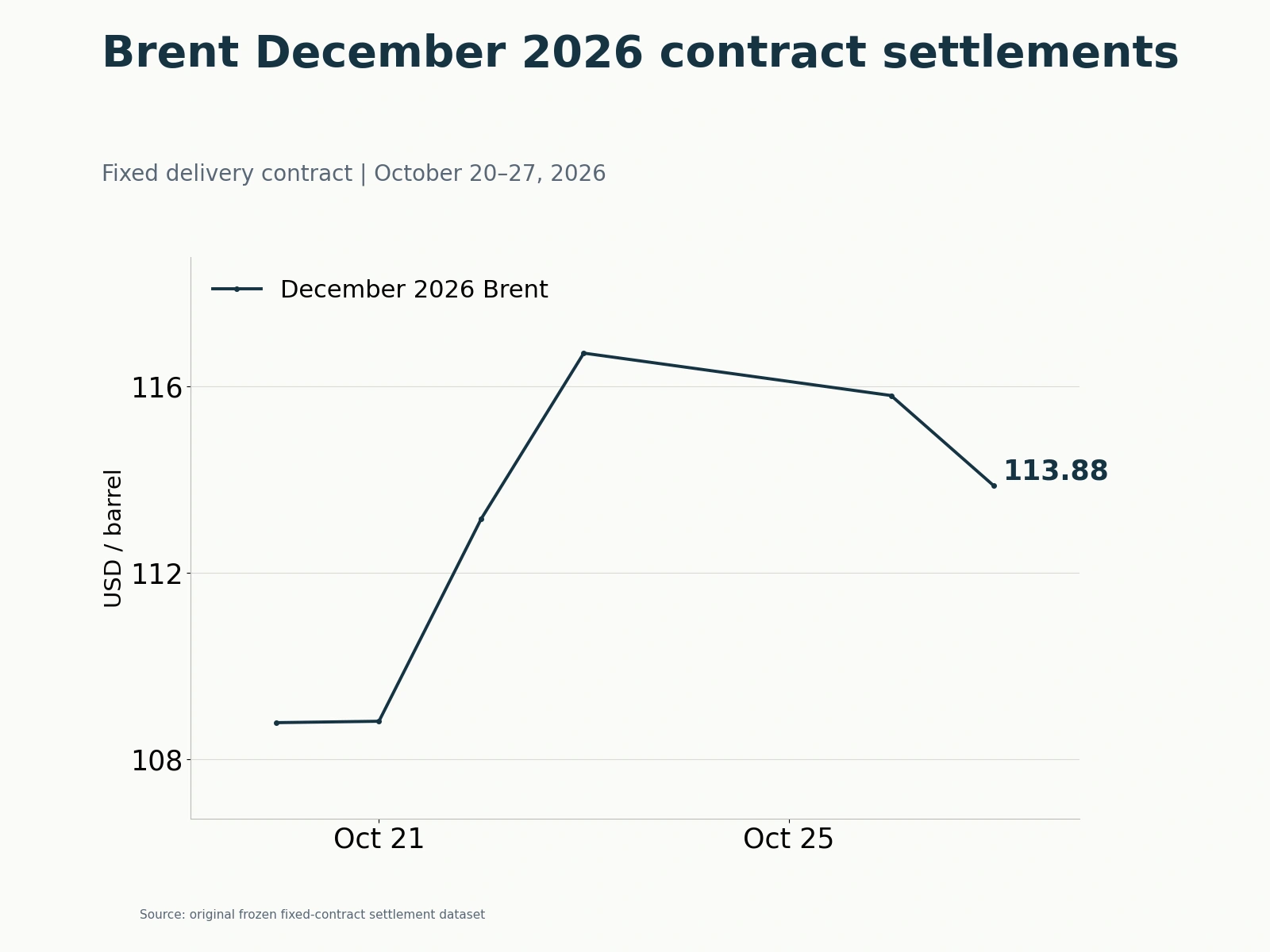
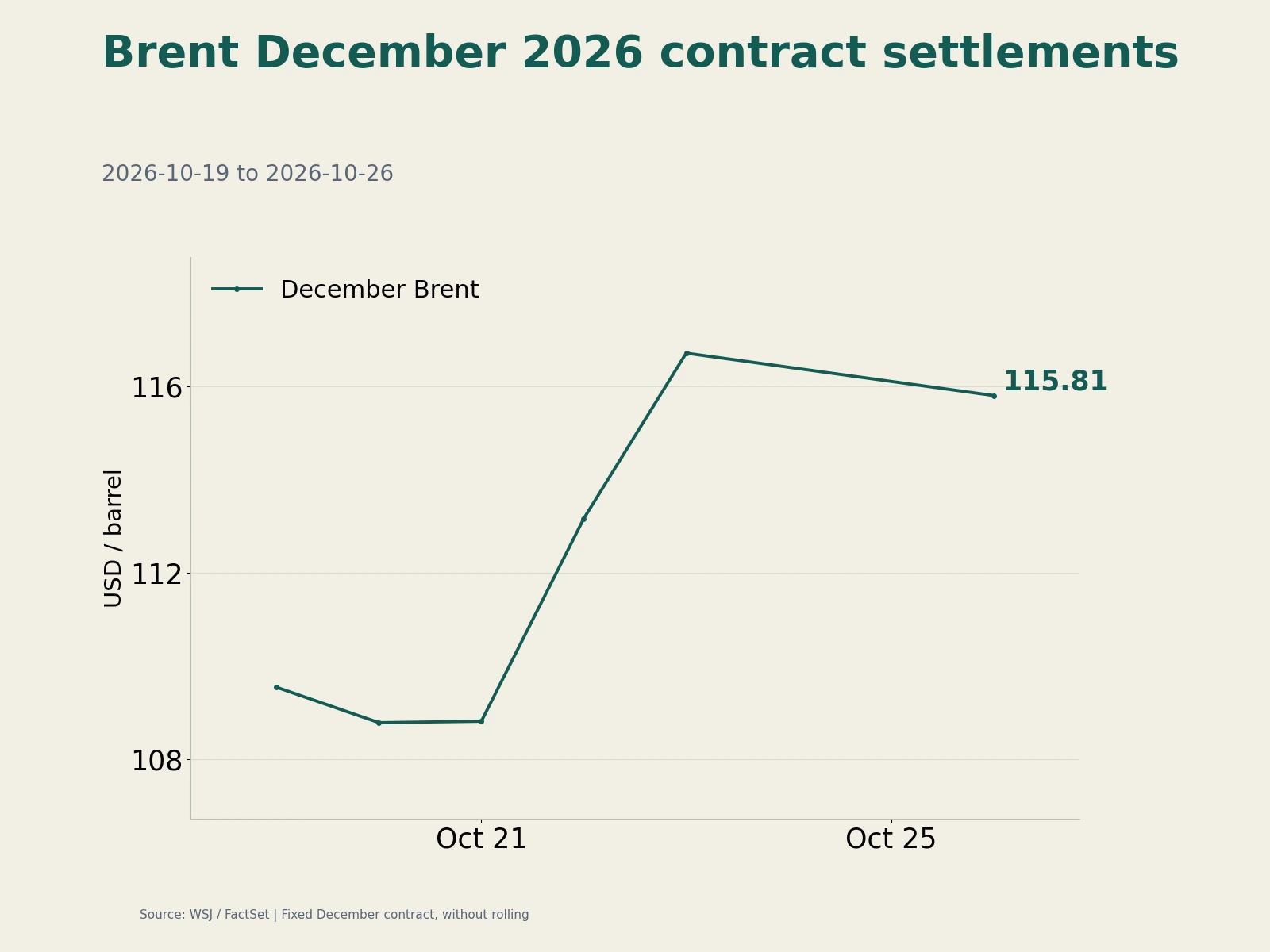
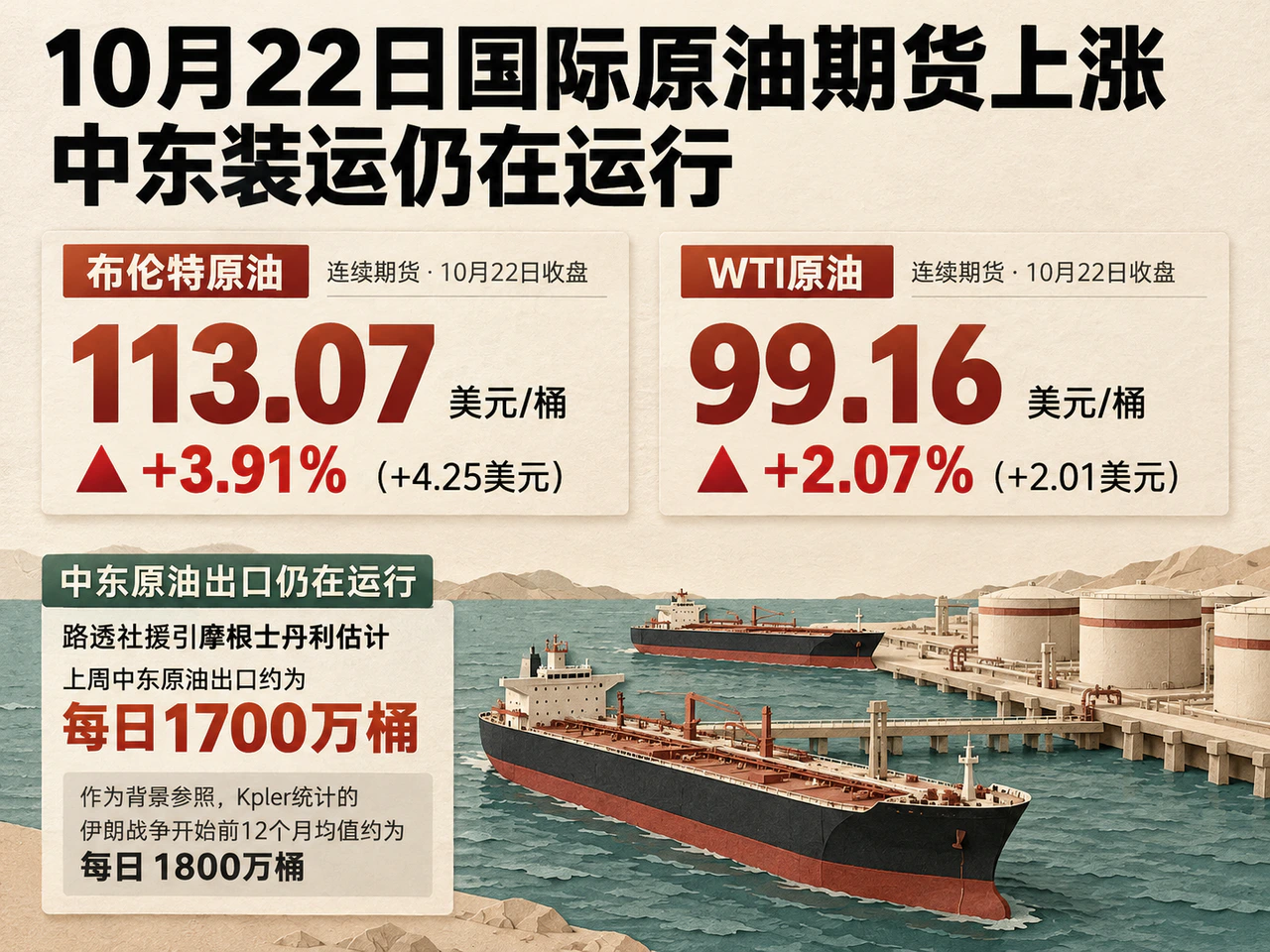
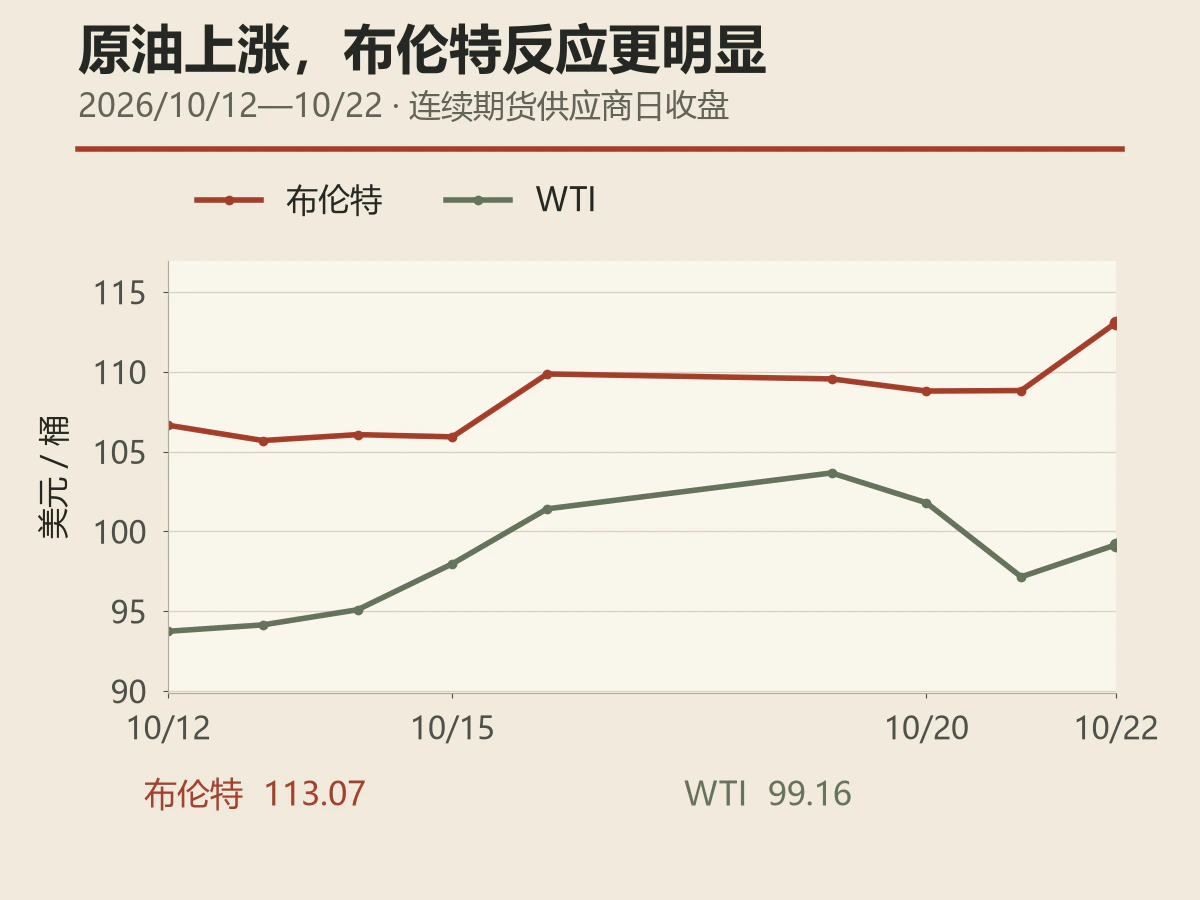
As of the morning of October 23 Beijing time, renewed risks to Middle Eastern energy facilities and shipping security had pushed oil prices higher. On Yahoo's daily closing series for continuous crude futures, Brent finished October 22 at $113.07 a barrel, up $4.25, or 3.91%, from the previous session. WTI closed at $99.16, up $2.01, or 2.07%. With risks concentrated in Middle Eastern exports and seaborne supply, Brent reacted more strongly.
Repeated declines in U.S. commercial crude inventories further reduced the market's buffer against supply disruptions. Middle Eastern exports were still operating, however, and some refined-product inventories had begun to recover. Whether oil can retain its gains depends on how far transport threats translate into actual supply losses and whether inventories can rebuild.
Saudi facilities and tanker security face pressure, but exports continue
Reuters reported on October 22 that escalating conflict between Saudi Arabia and Yemen's Houthis had prompted Saudi Aramco to ask employees to evacuate its headquarters in Dhahran. The United States had earlier ordered some diplomatic staff and their families to leave Saudi Arabia. As security risks spread to energy-company operations, crude buyers also needed to reassess sailing schedules, insurance and deliverable supplies.
Threats to shipping were expanding as well. The National, citing Kpler data, reported at least 18 attacks on shipping over the preceding two weeks. LSEG analysts said threats to tankers had extended into the Gulf of Oman, potentially affecting Gulf crude loadings and the ship-to-ship transfers that support regional exports. Timely arrivals directly affect refiners' procurement and inventory requirements.
Despite worsening security, the Middle East continued to export substantial volumes of crude. Reuters cited Morgan Stanley's estimate of about 17 million barrels a day in Middle Eastern crude exports the previous week. For context, Kpler's average for the 12 months before the Iran war began was about 18 million barrels a day. The figures come from different institutions, and actual shipments still need monitoring. If export flows hold up and schedules improve, the risk premium could recede; sustained loading suspensions or diversions following attacks would intensify buyers' competition for alternative supplies.
Other producing regions also faced disruptions. The same day, the head of Libya's National Oil Corporation told Reuters that the closure of a pipeline valve linking the Hamada and Tahara fields to Zawiya port had reduced output at both fields. Regional supply losses compounded Middle Eastern transport risks, making alternative supplies harder to arrange.
U.S. crude stocks fall by 14.8 million barrels in three weeks
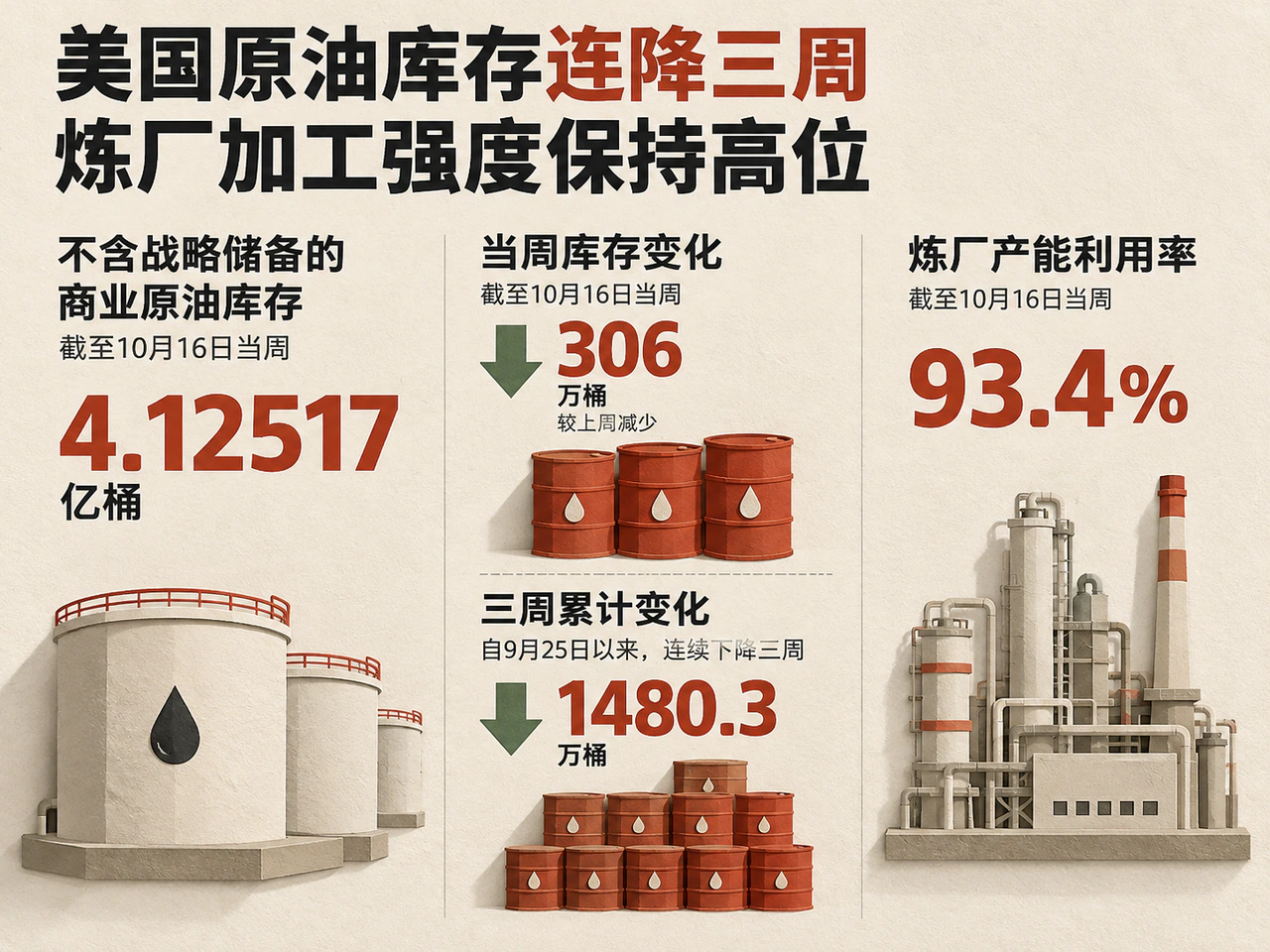
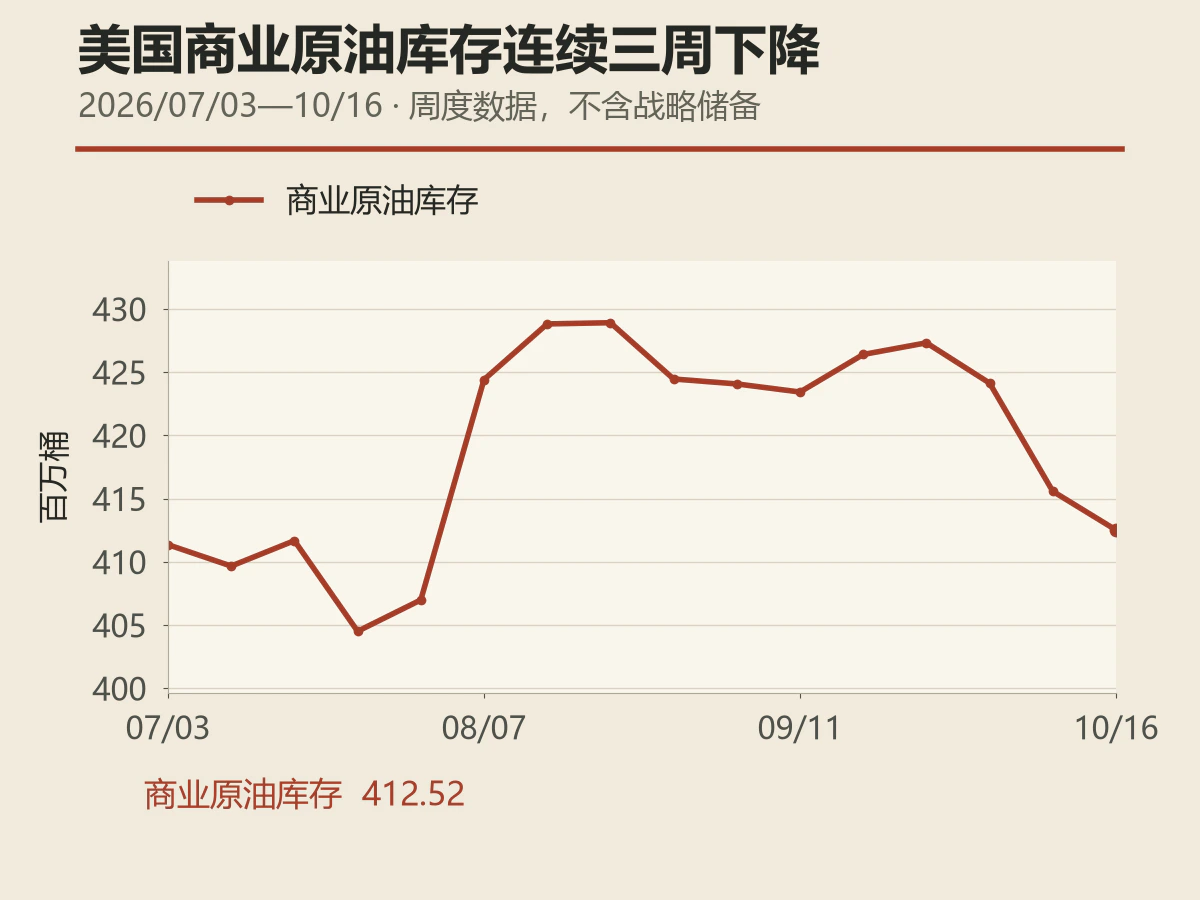
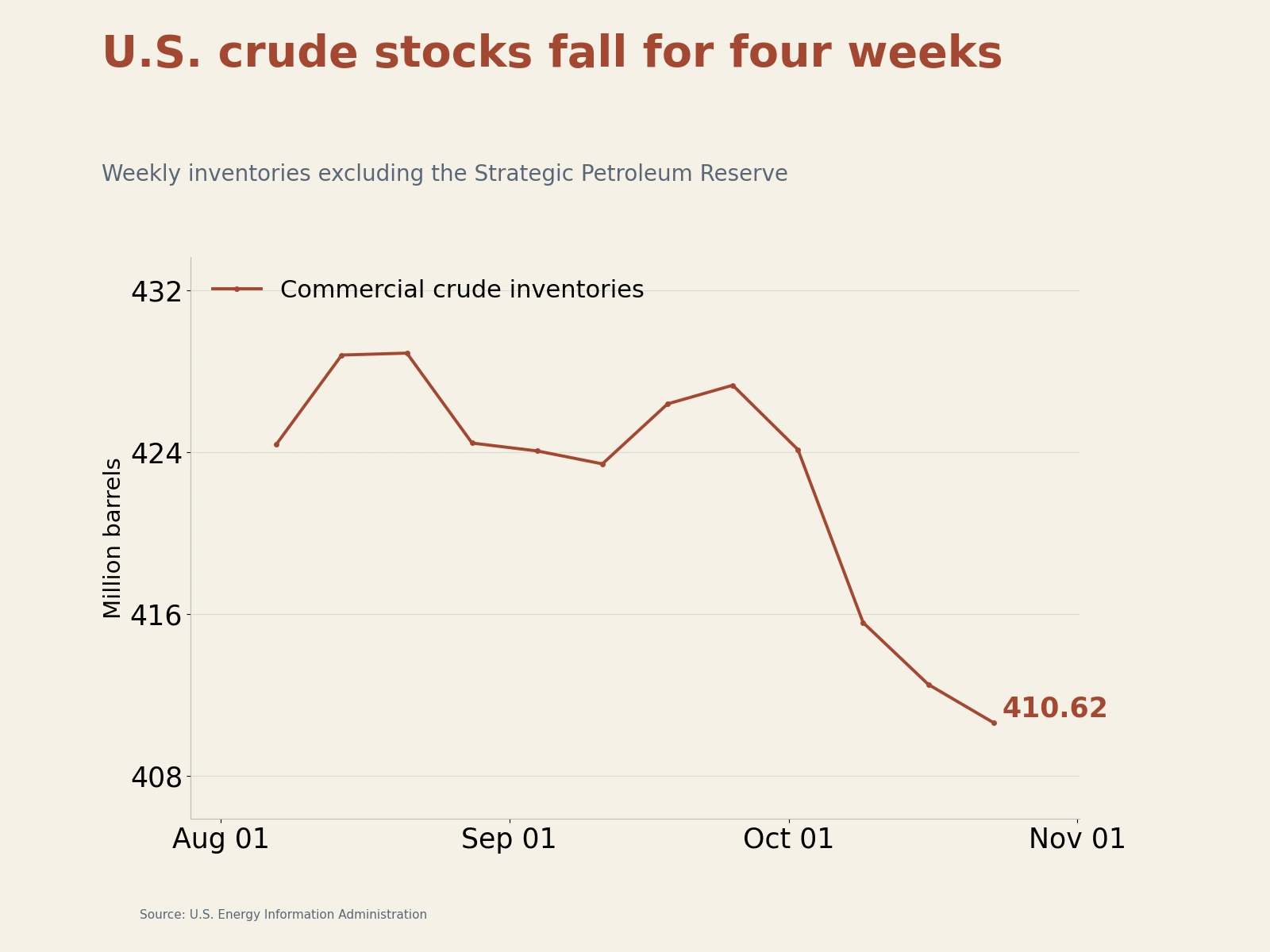
The U.S. Energy Information Administration's weekly report released October 21 showed that commercial crude inventories excluding strategic reserves fell by 3.06 million barrels in the week ended October 16 to 412.517 million barrels. The official historical series showed three consecutive weekly declines from 427.32 million barrels on September 25, totaling 14.803 million barrels. A smaller inventory buffer makes new supply disruptions more readily transmit to prices.
Lower production and imports were important drivers of this draw. Dow Jones reported that U.S. crude production fell by about 410,000 barrels a day from the previous week, still affected by hurricane shutdowns, while imports fell by roughly 290,000 barrels a day. Refinery runs rose slightly to 16.6 million barrels a day, with utilization at 93.4%. With refiners maintaining high throughput, the pace of recovery in output and imports will influence whether inventory draws continue.
Refined-product stocks diverged. Gasoline inventories fell by about 3 million barrels to 205.3 million barrels, while distillate stocks rose by about 1.7 million barrels to 104.3 million barrels. Distillate inventories remained around 9% below their seasonal five-year average, but the weekly build and a decline in the demand indicator showed that changes in consumption and higher refinery output had begun easing supply pressure.
The U.S. government was also drawing on emergency reserves. On October 21, it announced plans to lend nearly one-third of the Northeast's 1 million-barrel emergency heating-oil reserve to ease tight diesel and heating-oil supplies.
Prompt supply remains tight; further gains depend on shipments and inventories

The futures curve showed that the market was still willing to pay a premium for earlier crude delivery. Commodity Context's October 16 weekly report said that Brent and Dubai prompt premiums narrowed in the first part of that week while WTI's strengthened; by Friday, prompt premiums had strengthened across the markets. Meanwhile, Dated Brent prices fell significantly. This divergence between physical and futures prices made actual transactions and shipments a key focus.
OPEC+ had previously decided to leave its November output targets unchanged, with its next meeting scheduled for November 1. Additional supply now depended more on existing capacity operating normally and on crude being loaded and shipped smoothly. On the vendor's daily closing series, the dollar index fell about 0.07% on October 22, far less than oil's percentage gain. Maritime security and supply risks remained the more direct explanation for the rise.
Whether Saudi facilities can keep operating, whether Middle Eastern loadings and tanker traffic decline, and whether U.S. production and inventories recover as hurricane effects fade will jointly determine the tightness of near-term crude supply. For refined products, attention should focus on whether distillate rebuilding continues and compresses refining margins, affecting the sustainability of high refinery runs. Better shipments and recovering stocks would put the risk premium at risk of reversal; renewed disruptions would elicit an amplified price response from low inventories.