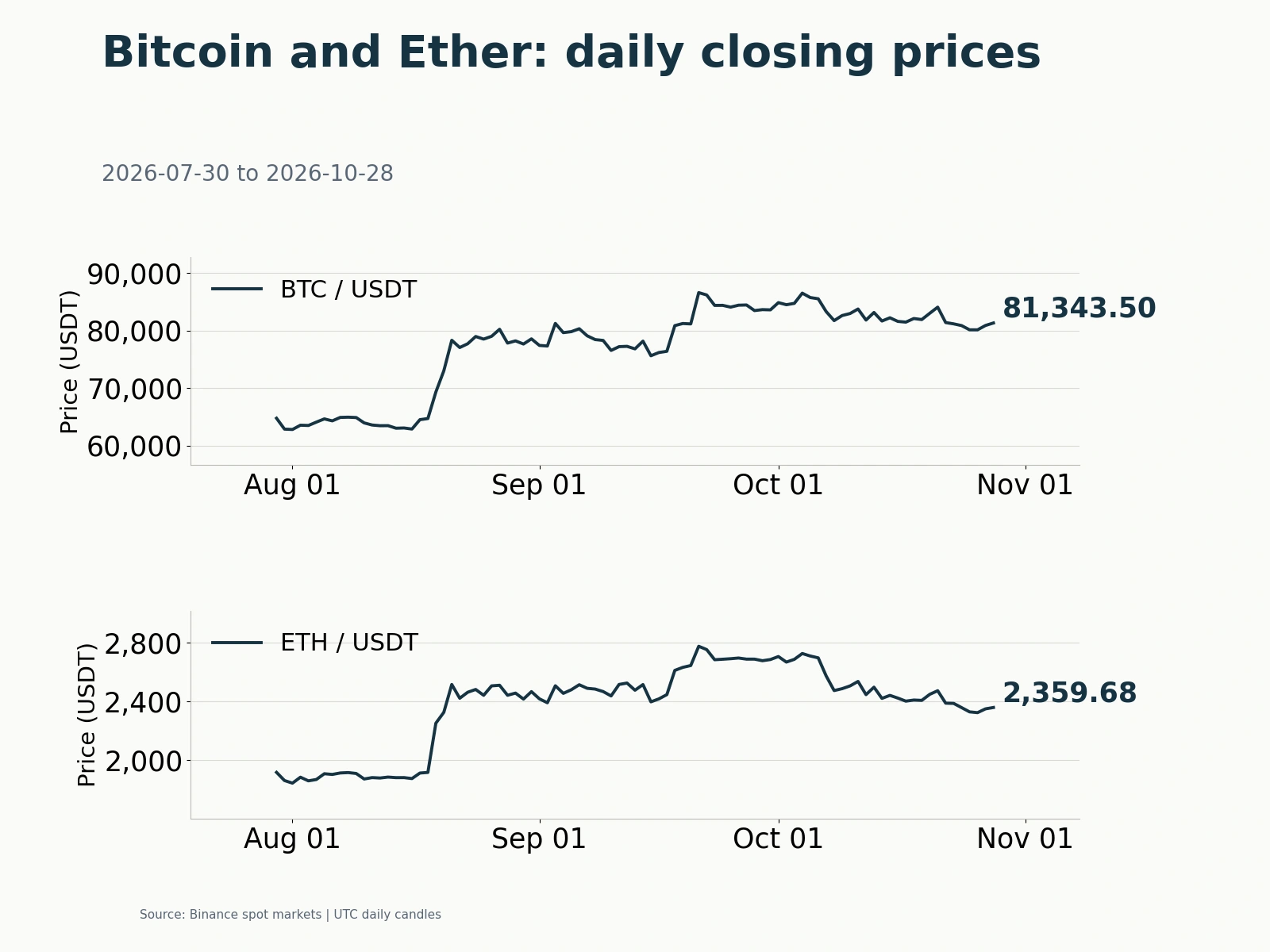
After concentrated early-week inflows, U.S. spot Bitcoin ETFs experienced large redemptions on Thursday and Friday, reversing more than 70% of their initial gains. Circulating dollar stablecoin supply also contracted on-chain. Meanwhile, Bitcoin perpetual futures open interest recovered on Saturday, October 24, but funding rates continued to fall. By the morning of October 25 Beijing time, spot allocation demand lacked persistence. Derivatives positions were being rebuilt, yet longs remained restrained about chasing higher prices.
Bitcoin ETFs reverse 70% of early-week inflows as on-chain stablecoin supply also contracts
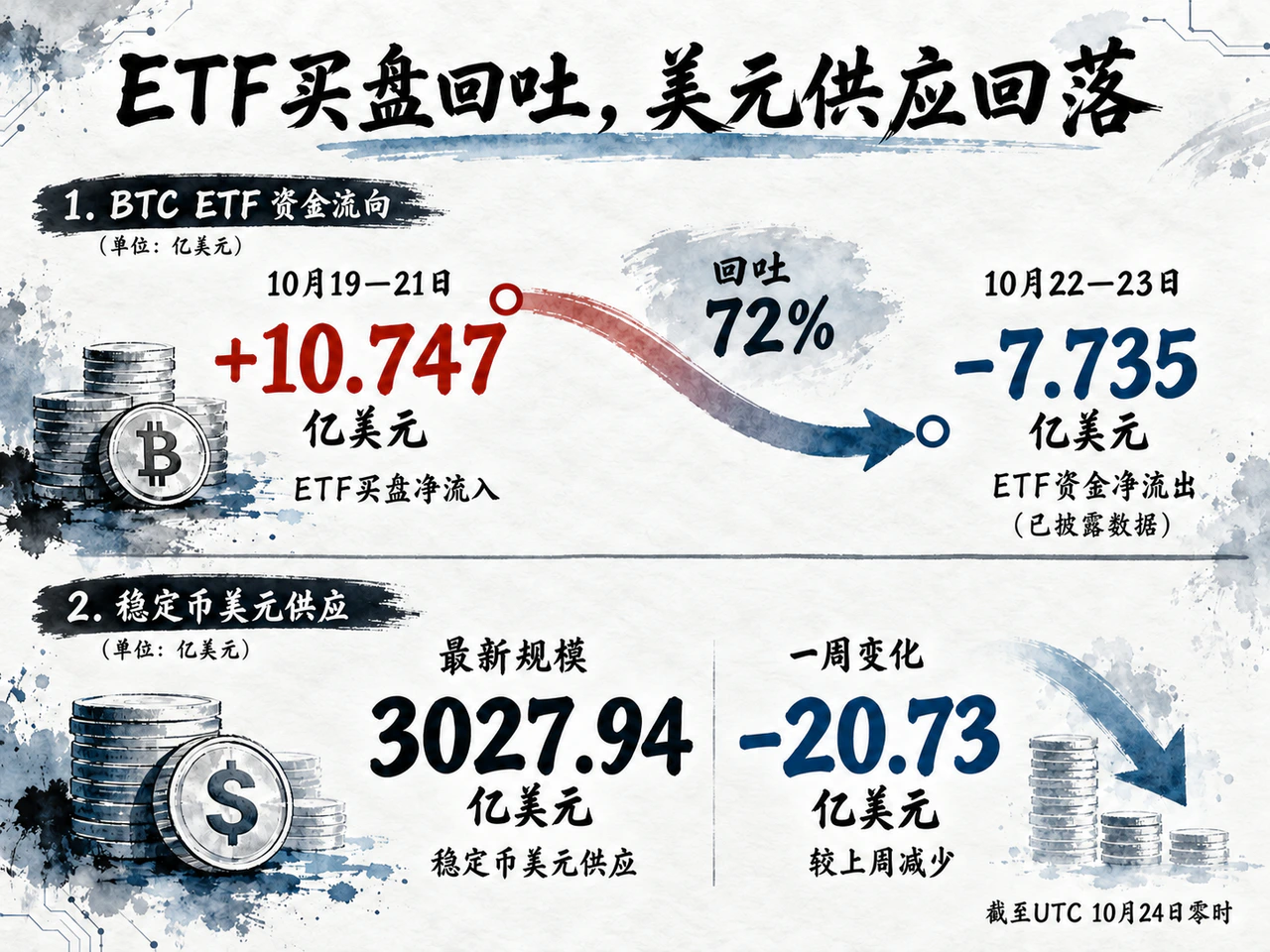
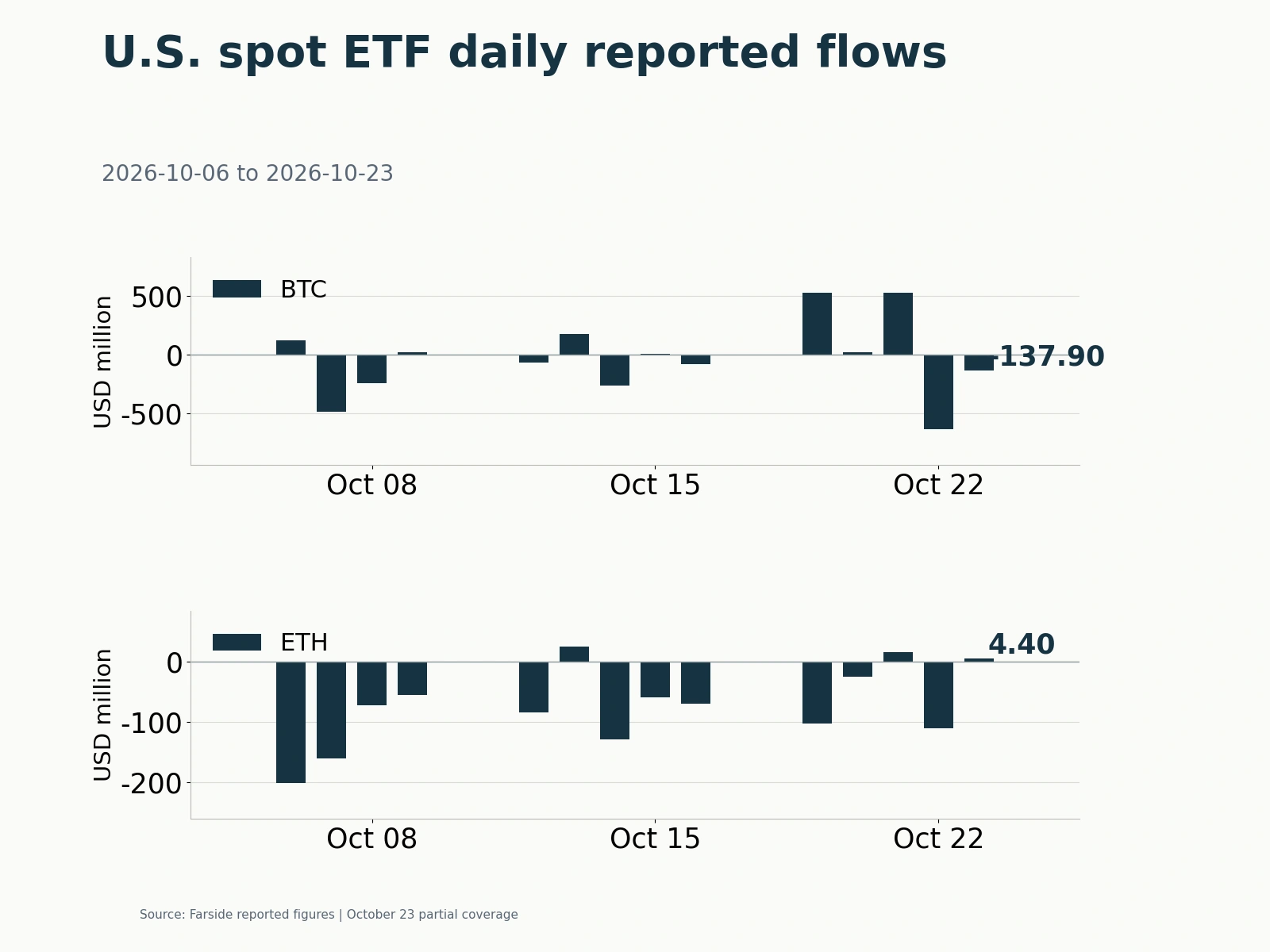
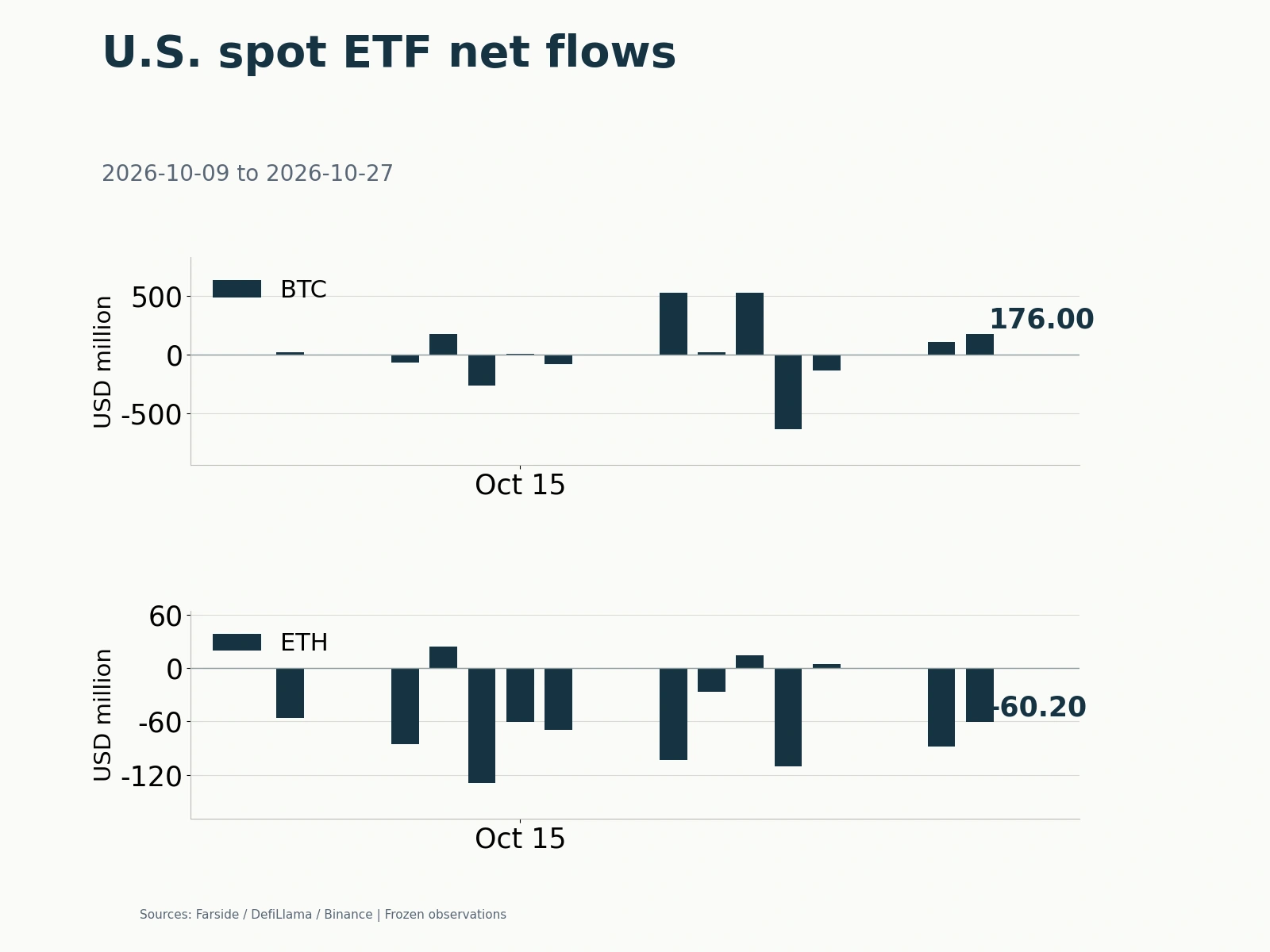
Farside data showed U.S. spot Bitcoin ETFs attracting US$1.0747 billion over October 19–21, concentrated on October 19, at US$526.7 million, and October 21, at US$524.8 million. Flows were divided across products from the start: BlackRock’s IBIT alone received US$665.2 million on October 19, while Fidelity’s FBTC and Grayscale’s GBTC lost US$83.6 million and US$54.9 million, respectively.
Flows reversed on Thursday, October 22, with US$635.6 million leaving Bitcoin ETFs. IBIT and FBTC lost US$254.1 million and US$217.5 million, turning early-week inflow leaders into the main sources of redemptions. Reported products lost a further US$137.9 million on Friday, October 23, with HODL not yet fully reported. The two days’ disclosed outflows totaled US$773.5 million, reversing 72% of the preceding three days’ inflows. Reported October 19–23 data still showed a net US$301.2 million inflow, but leading products shifted from large subscriptions to concentrated redemptions within days. Traditional securities-account allocation demand remained unsettled, and its incremental support for spot markets had weakened considerably before the weekend closure.
Spot Ether ETFs were weaker. Reported U.S. Ether ETF data for October 19–23 showed net outflows of US$220.7 million. October 22 saw US$110.6 million leave, while products reporting for October 23 recorded only a small US$4.4 million net inflow, with ETHV still outstanding. Compared with Bitcoin’s remaining weekly net inflow, traditional-channel appetite for Ether allocations continued to face pressure.
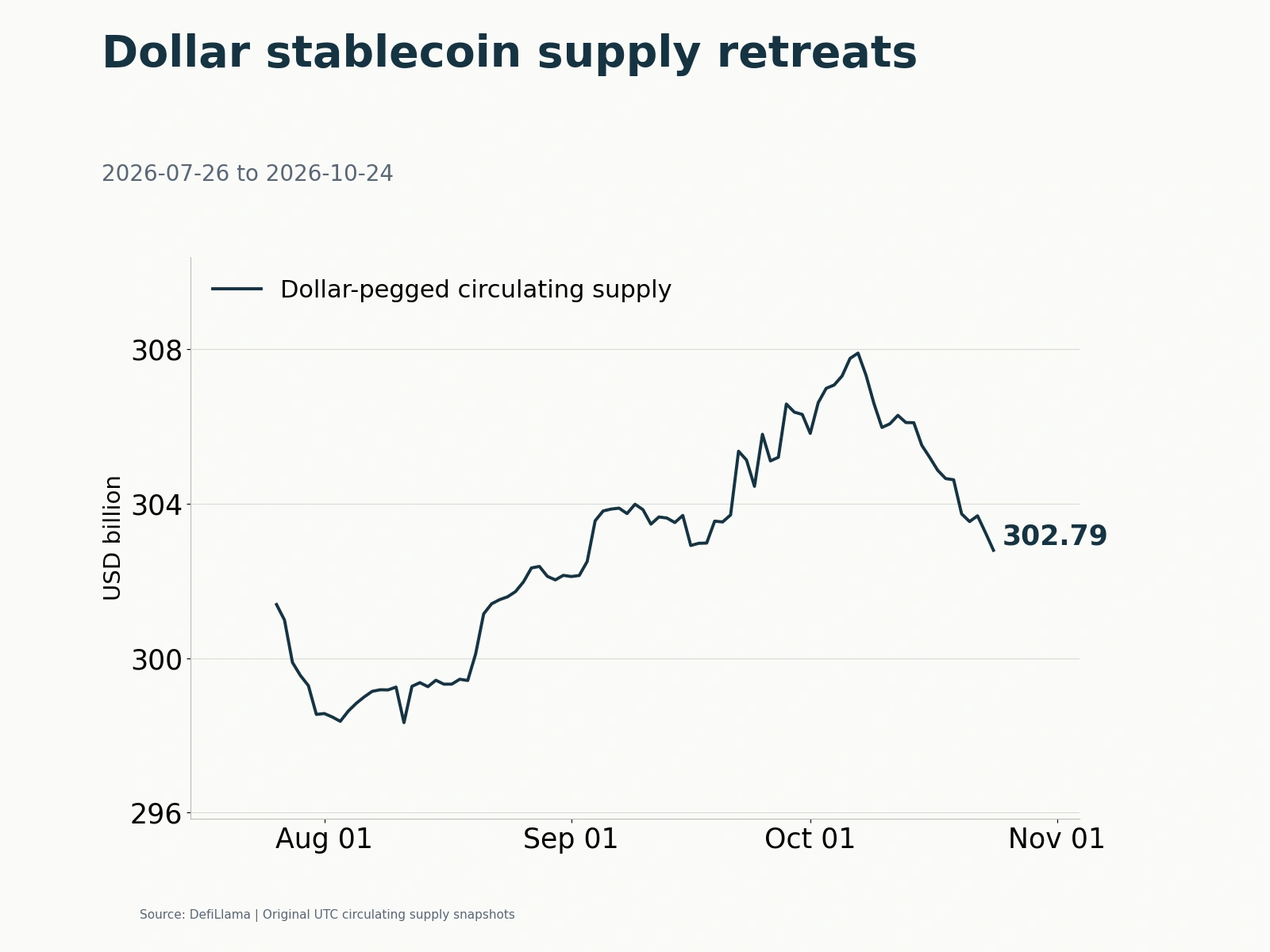
On-chain dollar liquidity also shifted from expansion to decline. DefiLlama data at 00:00 UTC on October 24 put the face value of circulating dollar-pegged stablecoins at approximately US$302.794 billion. That was US$2.073 billion, or 0.68%, below a week earlier and US$1.657 billion, or 0.54%, below September 24, reversing the expansion reflected in a roughly US$1.405 billion net increase over the preceding 90 days. Since stablecoins are the main settlement and collateral medium in crypto, a smaller supply weakened the on-chain dollar funding base. Near-term buying depended more heavily on turnover of existing funds and shifts in positioning.
Binance BTC open interest recovers 2% as long funding rates fall sharply
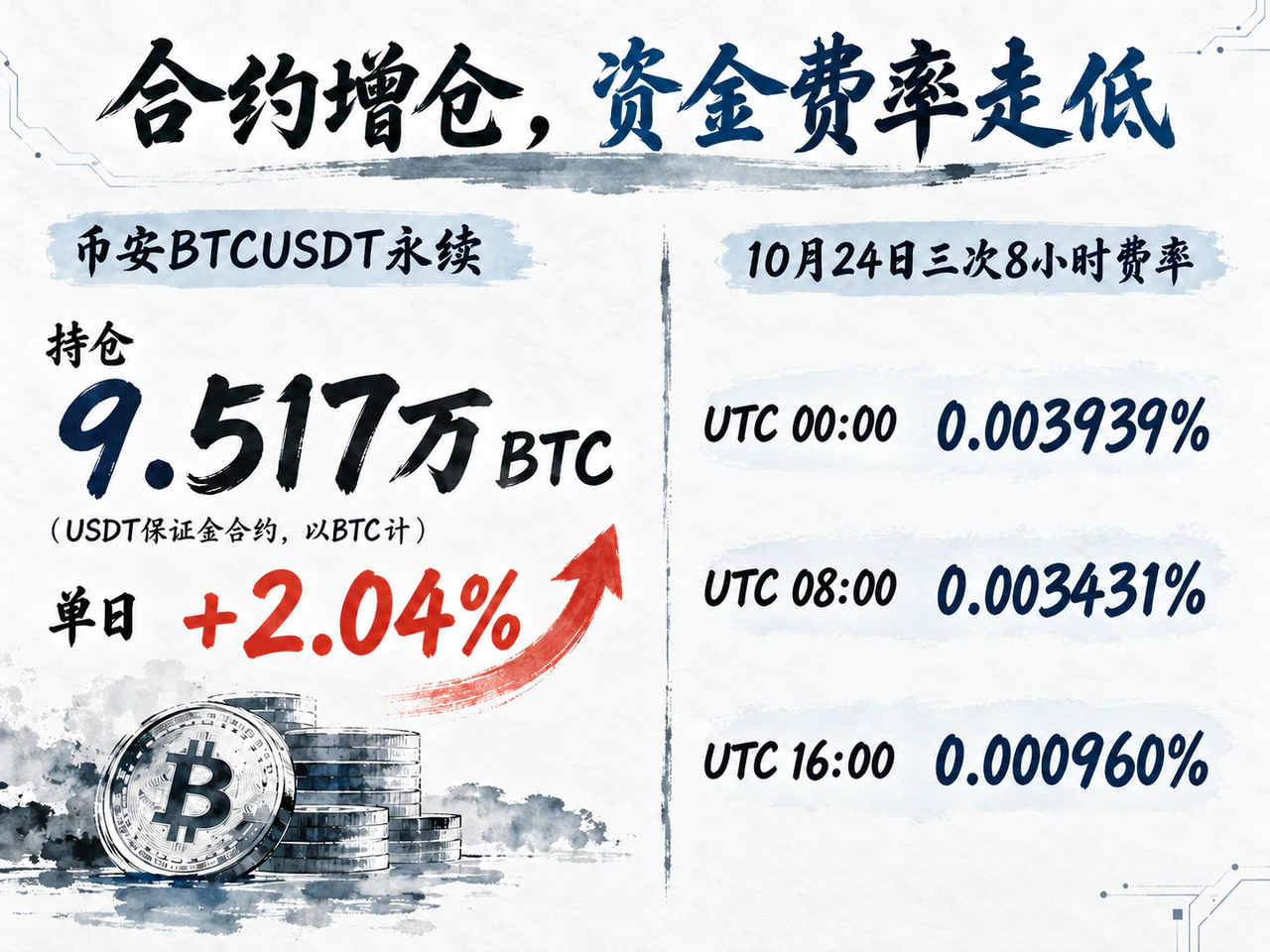
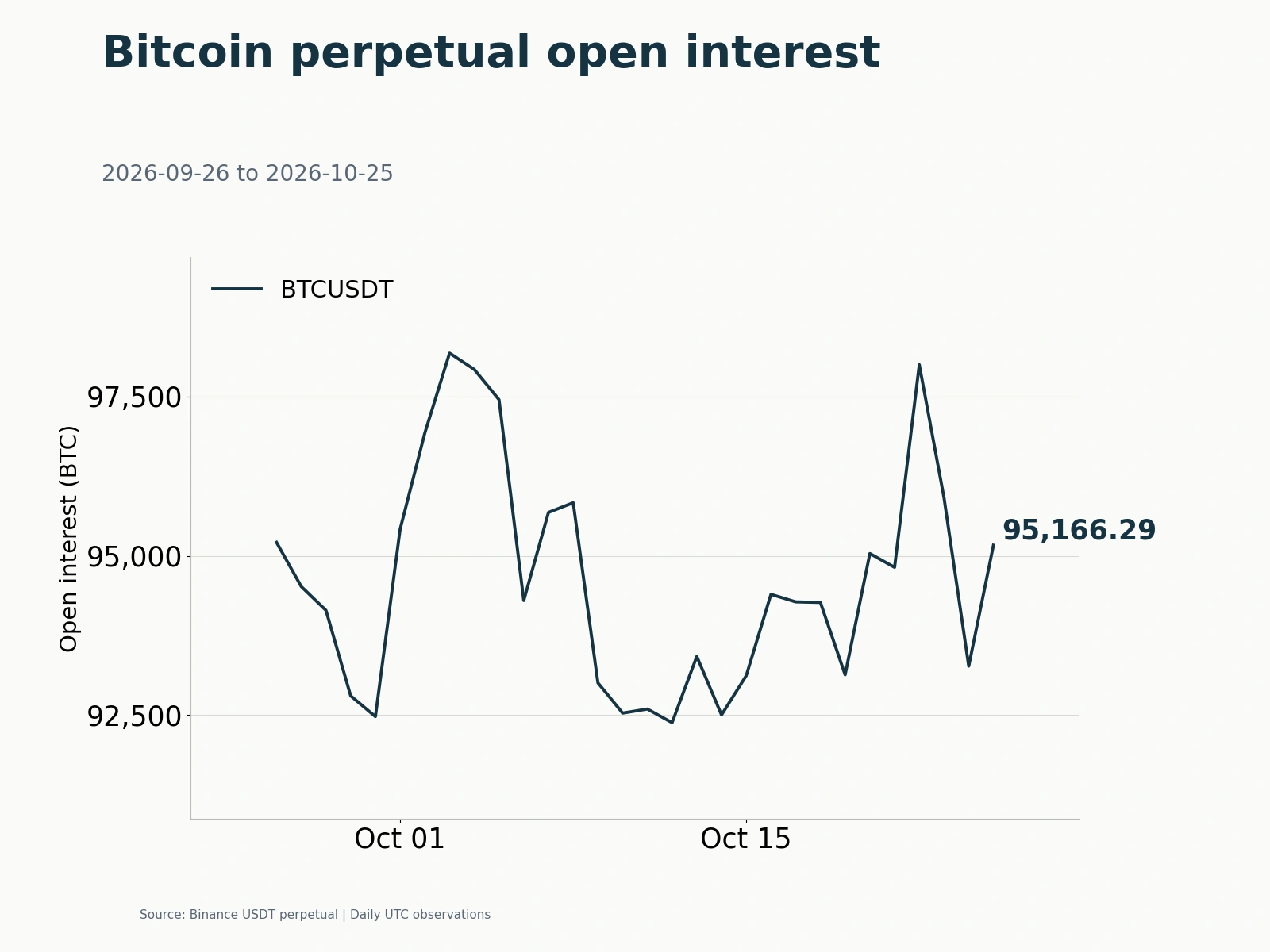
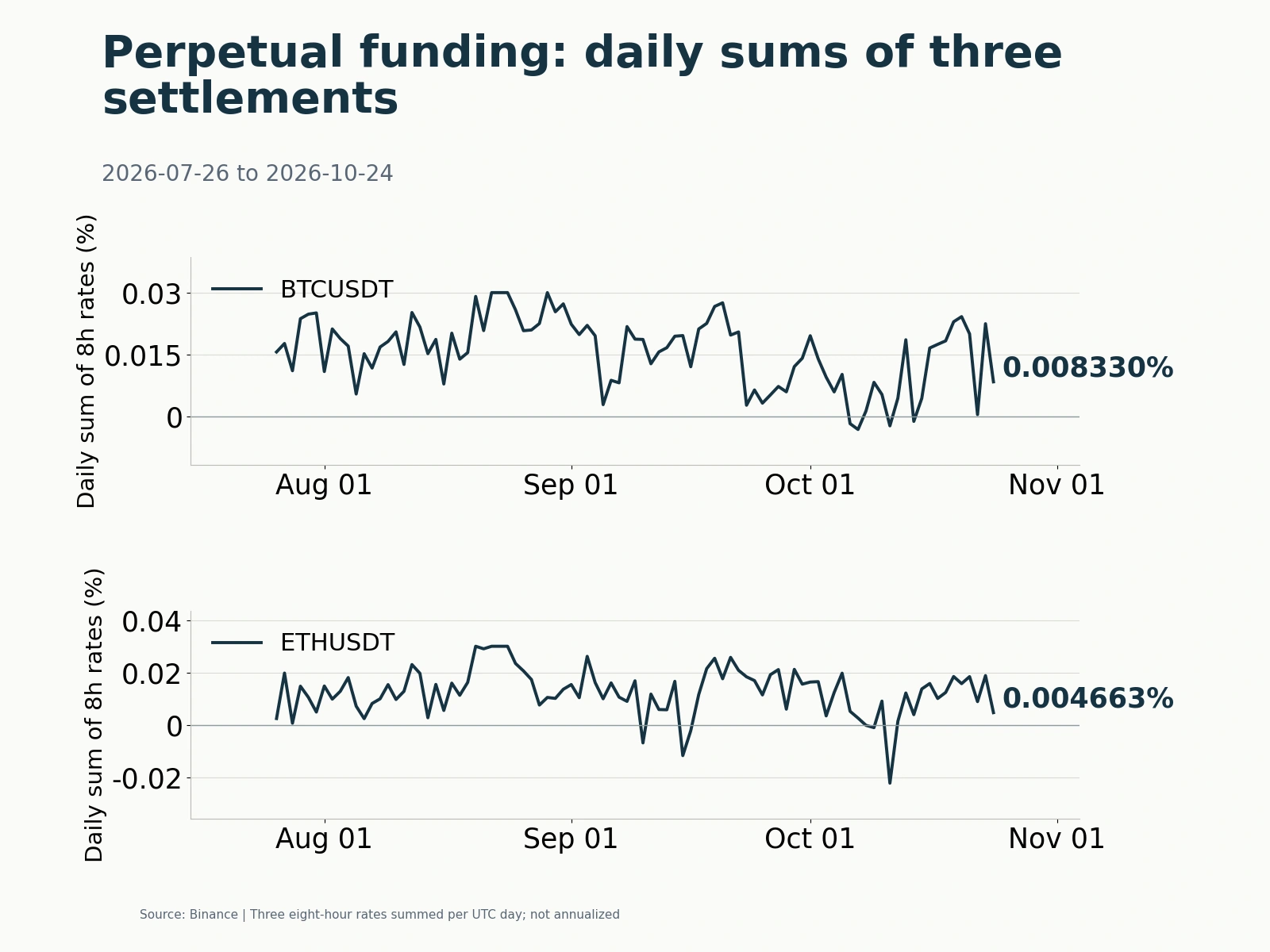
Derivatives positions increased on Saturday without a matching rise in bullish sentiment. From 00:00 UTC on October 24 to 00:00 on October 25, corresponding to 08:00 Beijing time on those dates, Binance BTCUSDT perpetual open interest rose 2.04%, from approximately 93,270 BTC to 95,170 BTC. Its notional value increased 1.64%, from 7.569 billion to 7.694 billion USDT. Coin-denominated open interest grew faster than notional value, showing that traders added positions as Bitcoin’s price edged lower.
Rebuilding positions did not raise the cost of holding longs. Bitcoin perpetual funding rates at the three eight-hour settlements on October 24 were 0.003939%, 0.003431% and 0.000960%, falling sequentially. The final rate was well below the preceding 30-day per-settlement average of approximately 0.003224%. Ether perpetual funding rates over the same settlements were 0.001569%, 0.003433% and −0.000339%. The final rate became slightly negative, changing the direction of payment from longs paying shorts to shorts paying longs.
Rising Bitcoin open interest alongside funding approaching zero suggested a relatively balanced supply and demand between longs and shorts in the added positions, potentially including hedges or arbitrage. Traders actively pursuing longs were unwilling to pay a higher premium. Ether’s final negative funding rate was consistent with continued ETF redemptions, illustrating different risk appetites toward the two major assets.
Improvement in funding conditions required spot allocation flows and derivatives pricing to recover together. Sustained ETF inflows and renewed stablecoin supply growth would be needed to establish a stronger spot buying base. If futures positions expanded without incremental spot funding, trading would remain constrained by the redistribution of existing capital, and price moves would more readily trigger leverage adjustments.
Read the original article for full details.