Digital-asset regulatory developments in the United States and Hong Kong on October 24 highlighted two practical boundaries: how stablecoins could provide holders with returns through third parties, and how crypto platforms could conduct offline business before receiving regulatory licenses. The U.S. Bank Policy Institute (BPI) questioned the transparency of reviews of third-party stablecoin yield arrangements in its weekly policy report. The South China Morning Post reported the same day that a crypto platform already on regulatory warning lists had opened a physical Hong Kong office and conducted promotion. The first issue concerned competition for funds between commercial-bank deposits and on-chain payment instruments; the second tested whether market participants distinguished company registration and an office from a financial-services license.
By the morning of October 25 Beijing time, as earlier regulatory legislation moved into implementation preparations, the interaction between markets and supervisors was increasingly focused on compliance boundaries within specific business structures.
United States: OCC shifts third-party stablecoin yield to case-by-case review; BPI questions opaque standards

On October 21, the Office of the Comptroller of the Currency (OCC) issued its final rule implementing the GENIUS Act, scheduled to take effect on January 18, 2027. It established compliance requirements for payment stablecoin issuers within OCC jurisdiction covering reserve assets, redemption, risk management, custody, capital, reporting and registration applications. Anti-money-laundering and sanctions rules were to be developed separately. The rule set a timetable for issuers to build their business and compliance systems.
After the rule was issued, BPI, which represents U.S. commercial-bank interests, focused its October 24 weekly report on yield arrangements between issuers and third parties. It said the OCC had removed a presumption of violation for certain arrangements in the proposed version and replaced it with case-by-case review. From its concern about bank-deposit outflows, BPI argued that without a public, transparent determination process, markets would struggle to know which third-party payment arrangements crossed the prohibition on issuers paying interest or yield. In implementation, individual review would put contracts between stablecoin issuers and distribution platforms, funding sources and actual payment paths at the center of supervisory scrutiny.
Commercially, stablecoin customer acquisition depended not only on efficient payments and transfers but also heavily on rewards available while users held the tokens. If distributor incentives became a central competitive tool, regulators would pay greater attention to how stablecoin issuers, trading platforms and commercial banks competed over retained funds and shared benefits. Product structures and marketing promises would have to rest on verifiable compliance details.
BPI also reviewed Ramp’s application to the OCC for a national trust bank charter. Citing the company’s explanation, it said the proposed trust bank would provide fiduciary investment management and digital-asset custody, without taking deposits or making commercial loans. This positioning reflected a particular licensing route into digital-asset infrastructure. The application remained subject to regulatory approval, with authorized operations and actual revenue still some way off.
Hong Kong: warned platform Polar Tensor opens an office; a physical presence does not confer licensed access
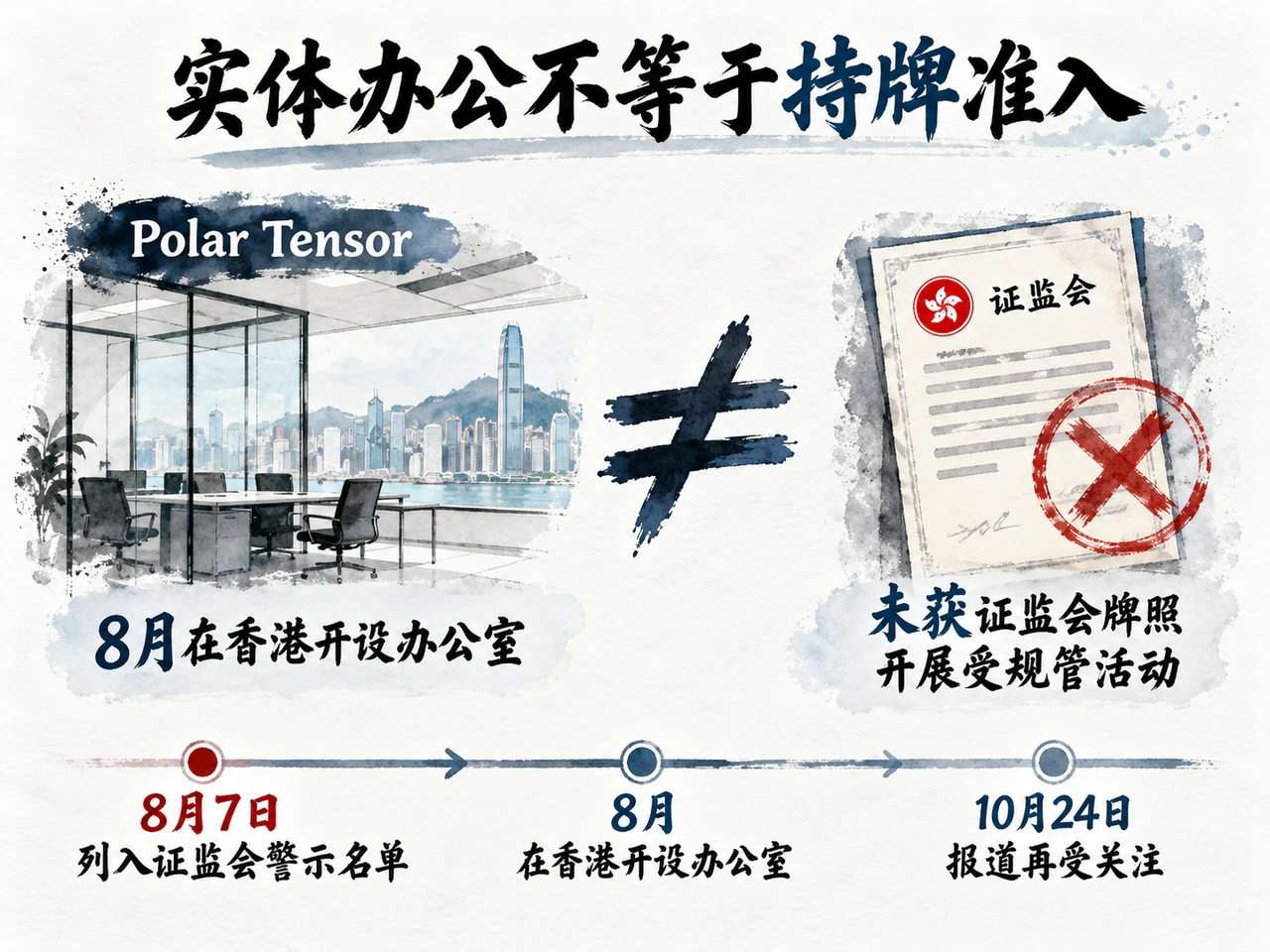
Offline offices and promotion by unlicensed platforms attracted attention in Hong Kong. The South China Morning Post reported on October 24 that Polar Tensor, a crypto platform on warning lists maintained by Hong Kong and Canadian regulators, had opened a physical office in Causeway Bay in August. Its Hong Kong business and marketing activities became a focus of scrutiny.
Public Securities and Futures Commission (SFC) records showed that Polar Tensor had been added to its suspicious virtual asset trading platforms list on August 7. The entry explicitly said neither the platform nor its associated webpages had an SFC license to conduct regulated activity in Hong Kong. Experts quoted in the report said inclusion on a warning list did not by itself establish that an offense had been committed, but supervisors should scrutinize the marketing of regulated financial products more closely.
The case highlighted the gap between offline visibility and substantive regulatory authorization. Renting an office, registering a company or expanding internationally could help a business reach prospective customers, but who held client assets, which products could be sold to which investors, and which body had jurisdiction over disputes ultimately depended on specific financial licenses and legal business relationships. For institutional and individual customers, due diligence should begin by verifying the service entity and its authorized scope, rather than relying solely on branding or a physical address to assess compliance.
Together, the U.S. and Hong Kong developments showed digital-asset compliance moving toward implementation details across issuance, custody, distribution and marketing. Whether institutional expansion became sustainable operating income depended on products and business arrangements functioning within regulatory boundaries. Formal license approval, clarity over permitted activities and the actual launch of compliant services remained the more substantive milestones to watch.
Read the original article for full details.