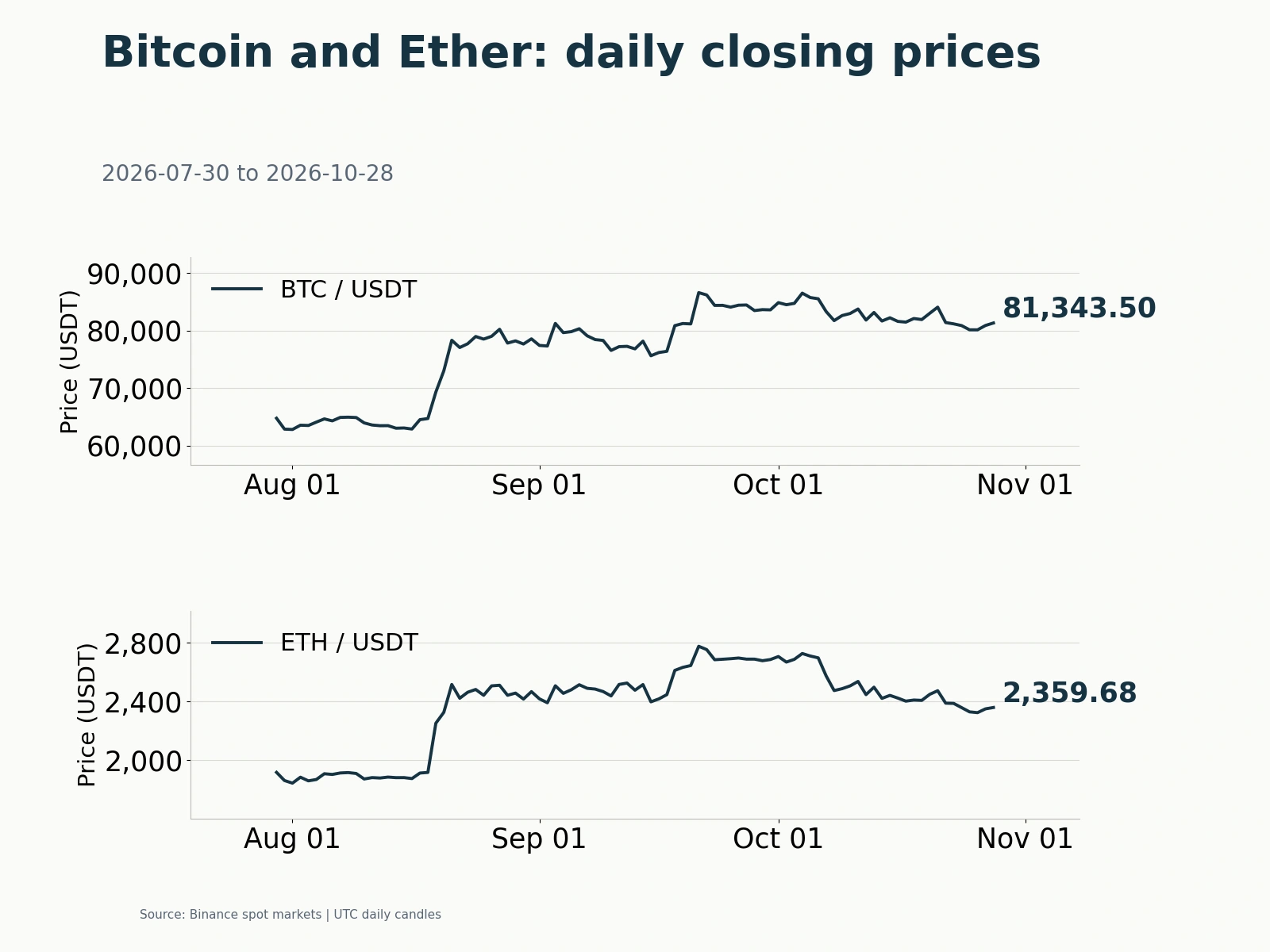
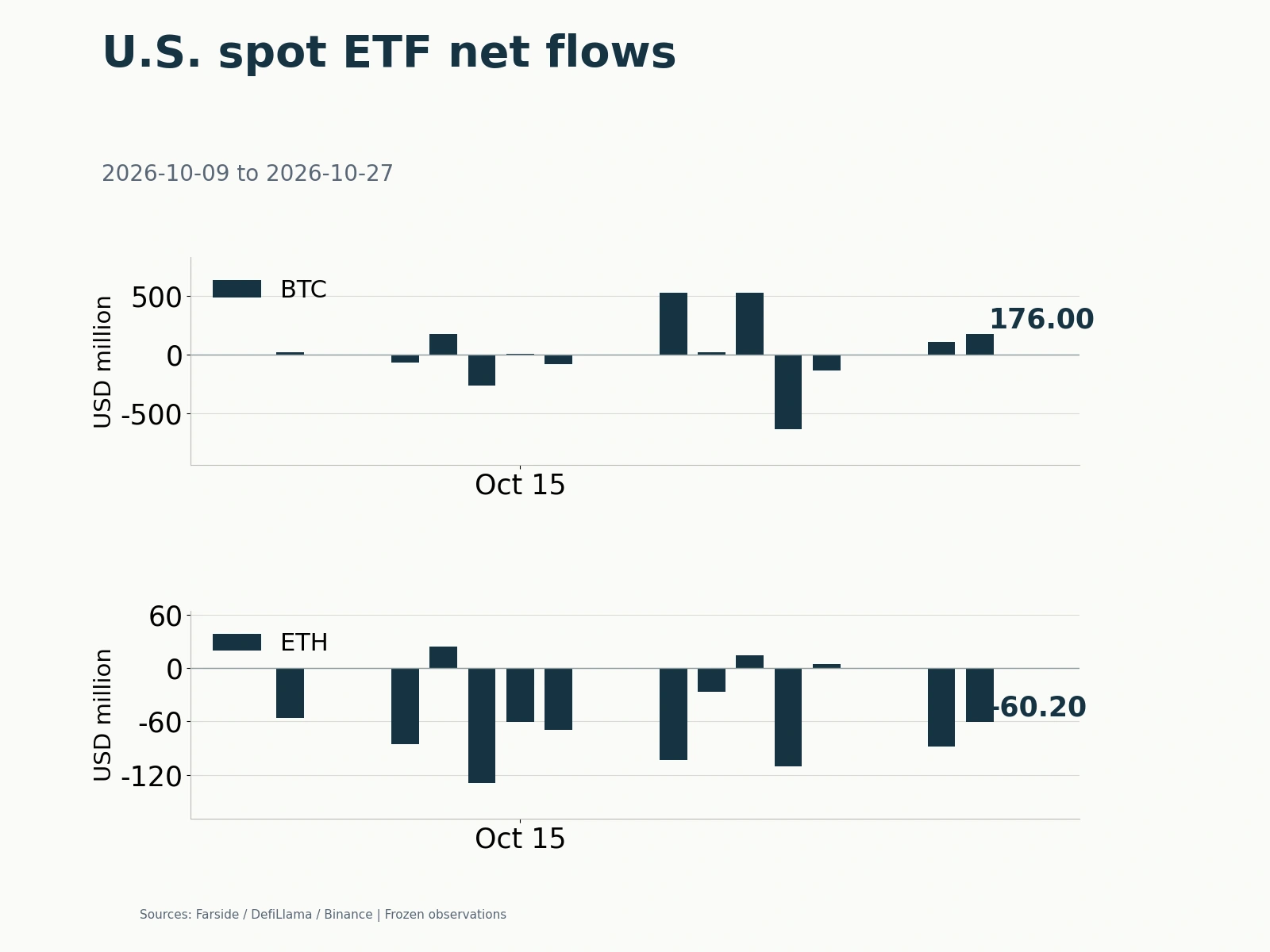
During October 19–25, new capital entering crypto surged and then retreated. U.S. spot Bitcoin ETFs attracted more than US$1 billion over the first three trading days, then gave back over 70% during the final two. Spot Ether ETFs continued to lose funds, and total dollar stablecoin supply contracted further. Perpetual funding rates and coin-denominated open interest rose from the preceding week, but slower spot allocations and shrinking on-chain stablecoin supply left increasing leverage without sustained spot buying support.
Bitcoin ETFs lose US$774 million in the final two days; weekly stablecoin supply falls over US$2 billion
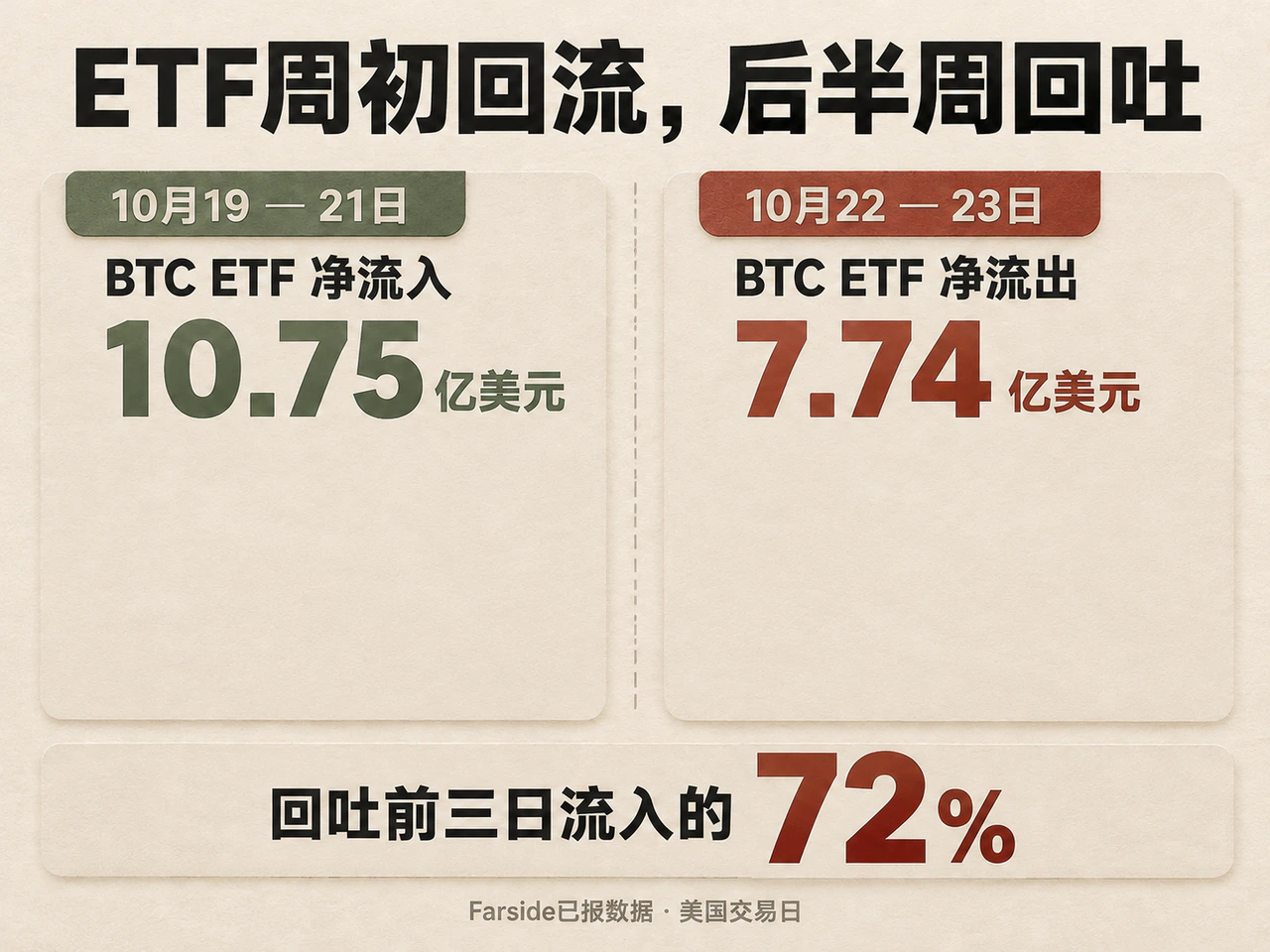

Farside data reported by the morning of October 26 Beijing time showed approximately US$301 million of net inflows into U.S. spot Bitcoin ETFs over the five U.S. trading days from October 19 through October 23, but flows reversed sharply within the week. The first three days attracted US$1.075 billion, including US$527 million on Monday and US$525 million on Wednesday. Thursday and Friday then saw US$636 million and US$138 million of outflows, respectively. Their combined US$774 million reversed 72% of the first three days’ inflows.
Early-week purchases were highly concentrated in BlackRock’s IBIT, while later redemptions spread across several leading funds. Monday’s US$665 million IBIT inflow offset US$83.6 million leaving Fidelity’s FBTC and US$54.9 million leaving Grayscale’s GBTC. By Thursday, IBIT, FBTC and ARKB were all losing funds, with daily outflows of US$254 million, US$218 million and US$109 million. On the data reported so far, spot Bitcoin ETFs still had approximately US$314 million of net October outflows, leaving the month’s direction negative.
Spot Ether ETF redemptions were more persistent. Reported outflows over the week’s five sessions were approximately US$221 million, narrower than US$320 million in the preceding week. Only Wednesday, at US$14.9 million, and Friday, at US$4.4 million, saw small inflows; Monday and Thursday each lost more than US$100 million. The divergence showed that even the temporary early-week return of external allocation capital was concentrated in Bitcoin and had yet to extend to other major coins.
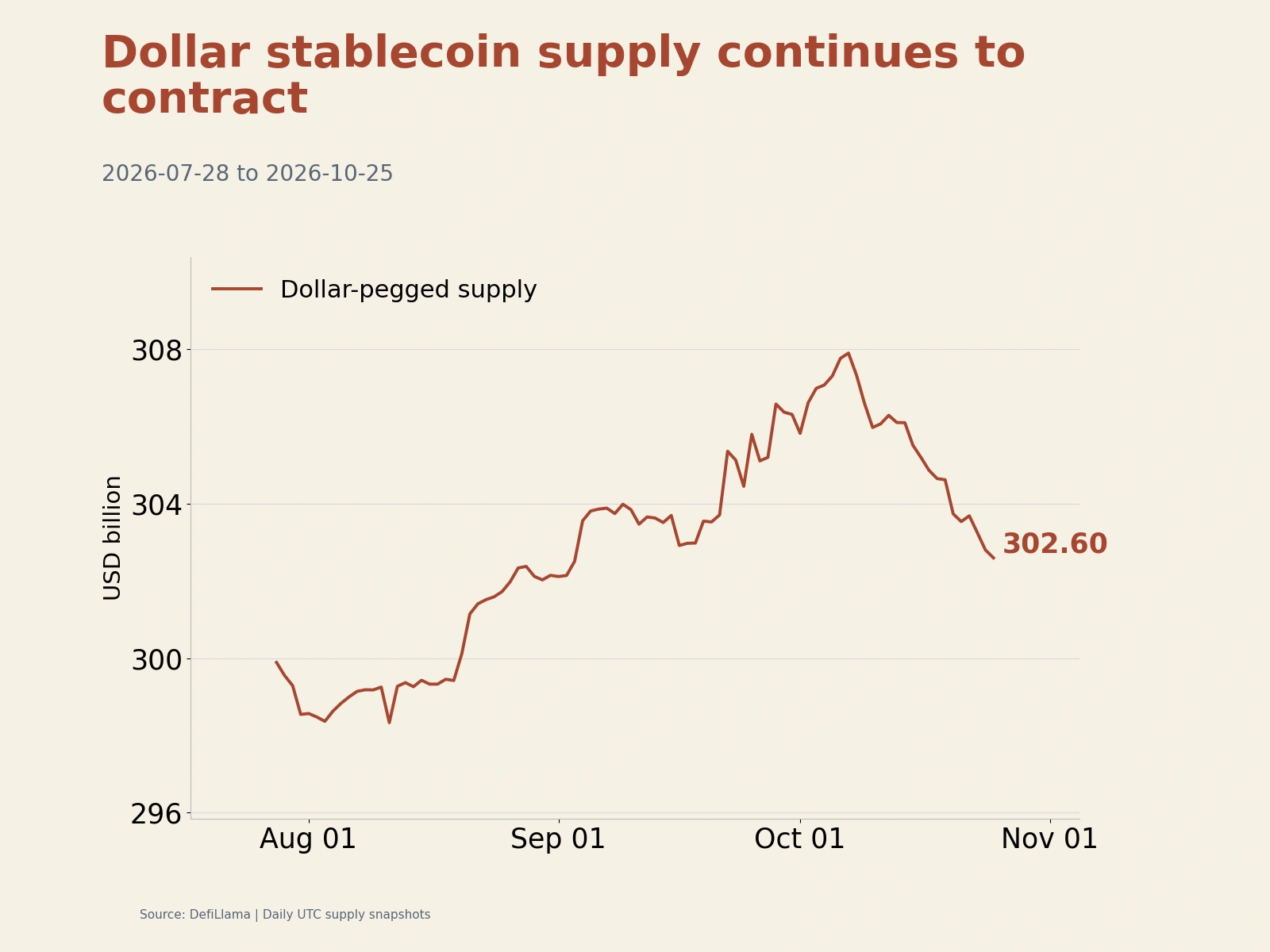
Stablecoin supply was also contracting. DefiLlama’s October 25 UTC daily snapshot estimated total dollar-pegged supply at approximately US$302.598 billion, down US$2.055 billion, or about 0.67%, from October 18 and US$3.204 billion below September 25. Stablecoins provide a common funding pool for trading settlement, lending collateral and payments. Their continued contraction, combined with large ETF redemptions in the latter half of the week, showed that neither of the two main visible channels for incremental spot-market funds maintained expansion. A market recovery still relied on reallocating existing capital.
Perpetual rates and coin-denominated positions rise; Ether put premiums exceed Bitcoin’s
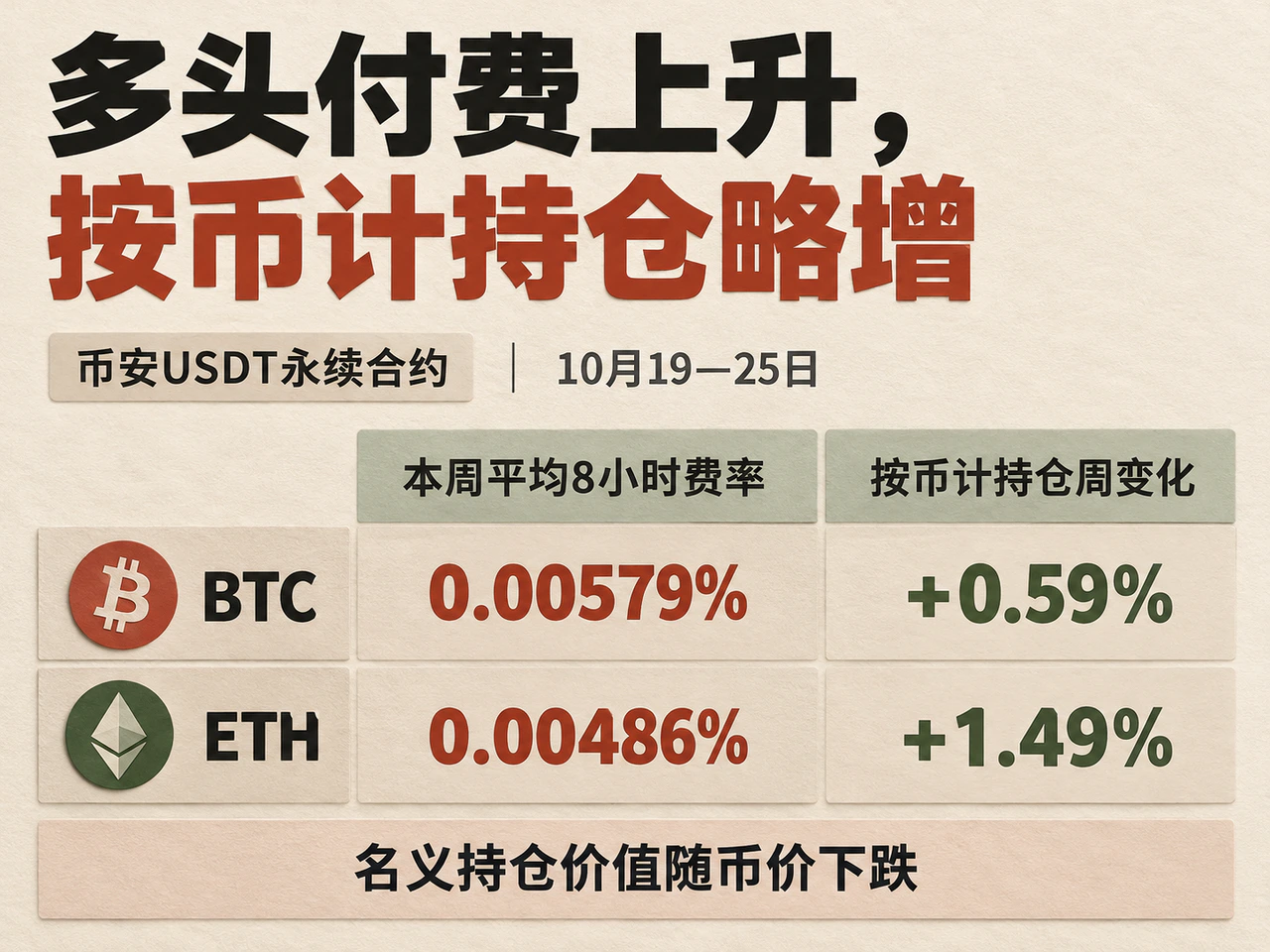
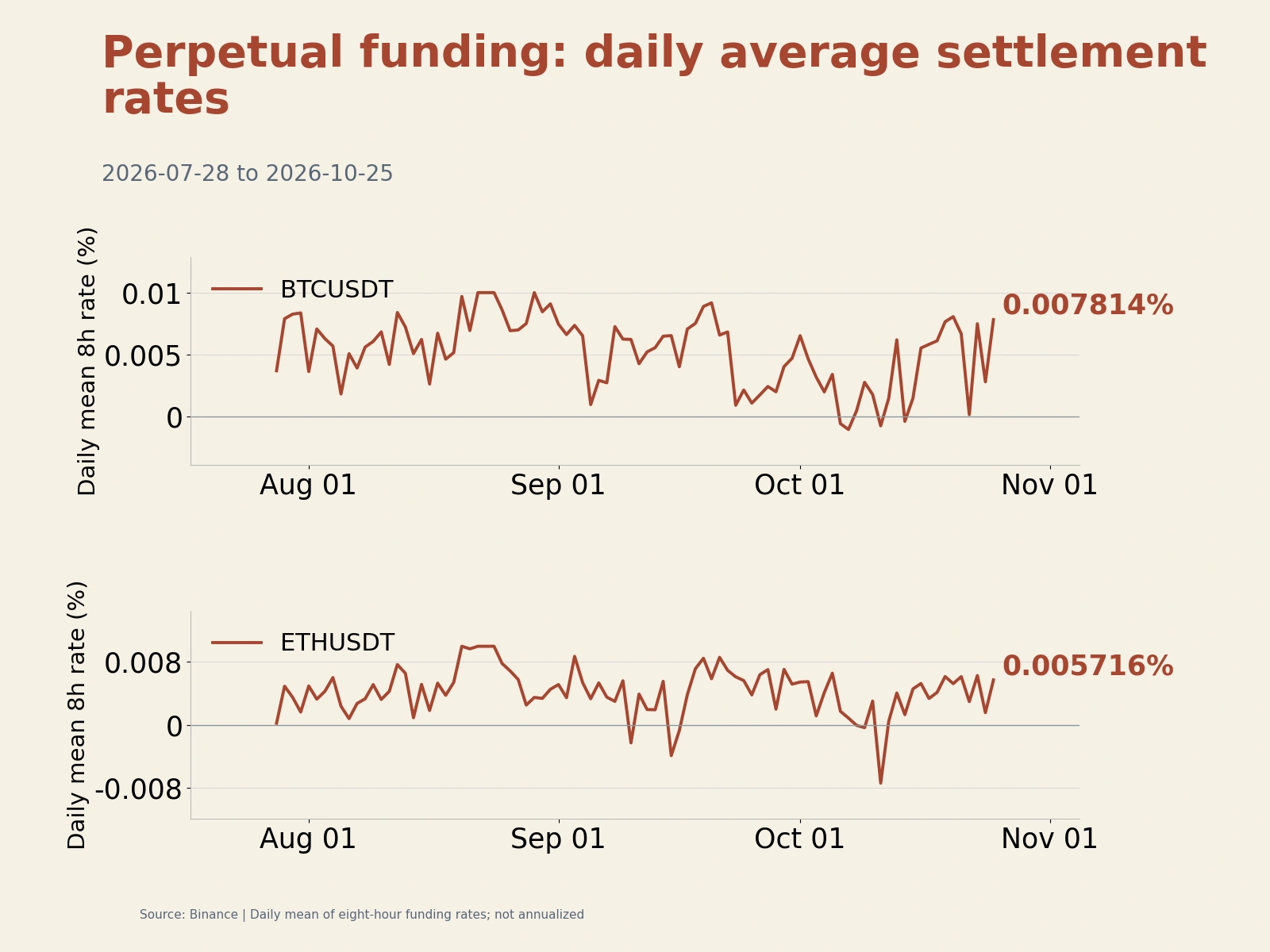
Unlike the retreat in spot funding channels, willingness to pay for long exposure increased in derivatives. Across the week’s 21 eight-hour settlements, average funding on Binance BTCUSDT perpetuals rose from 0.00372% in the preceding week to 0.00579%, while ETHUSDT rose from 0.00330% to 0.00486%. A higher positive funding-rate average meant longs paid more to shorts to hold positions. Without subsequent spot buying, higher long-side costs could accumulate into pressure to close positions over time.
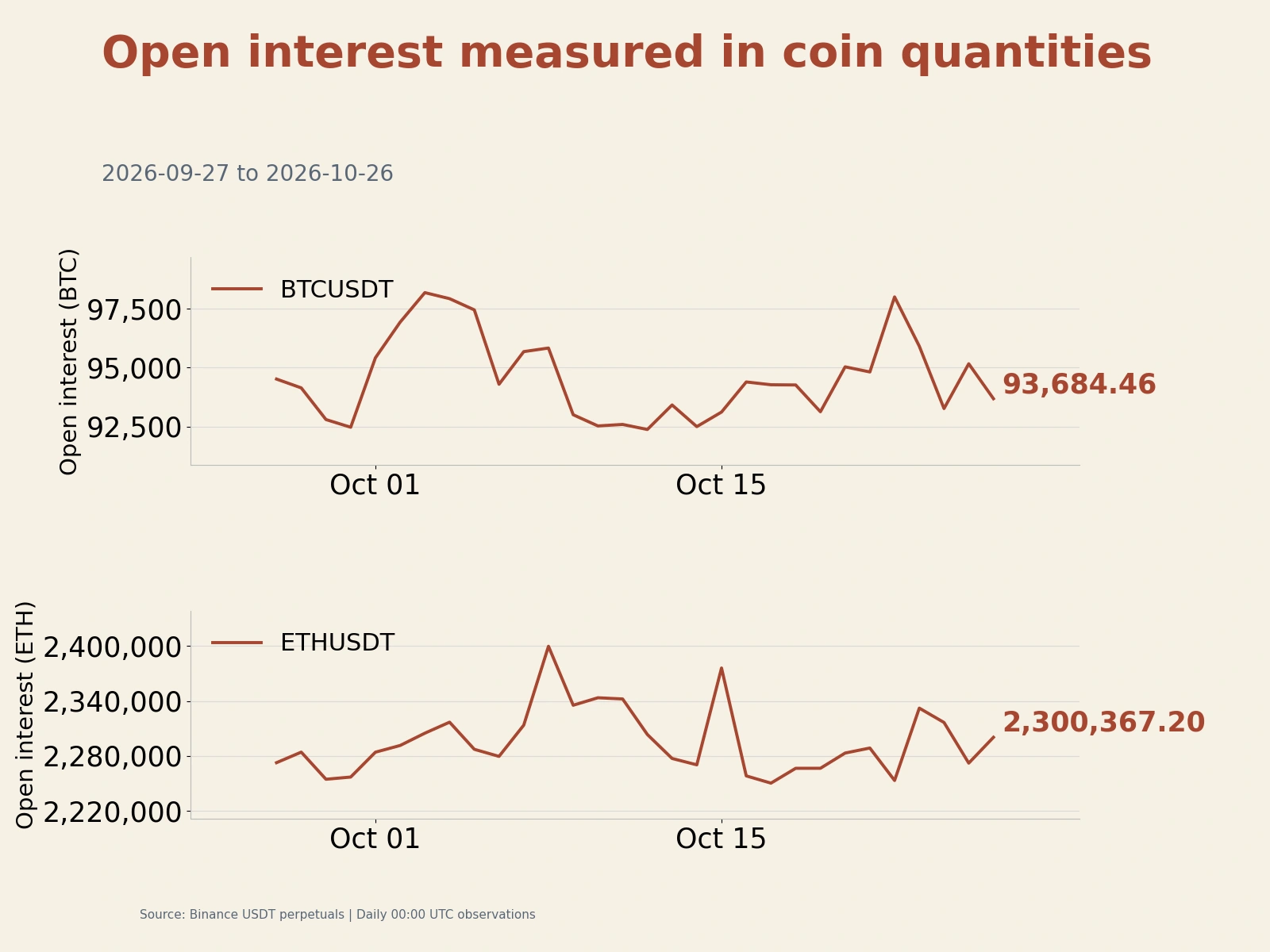
Open interest quantity and notional value diverged, reflecting additional positions as coin prices fell. From 00:00 UTC on October 19 to 00:00 UTC on October 26, BTC represented by Binance BTCUSDT open interest increased from approximately 93,100 to 93,700, or 0.59%. Its USDT notional value nevertheless fell from 7.645 billion to 7.505 billion as prices declined. ETHUSDT quantities rose from 2.2666 million ETH to 2.3004 million, or 1.49%, while USDT notional value fell from 5.461 billion to 5.358 billion.
Derivatives risk appetite also fluctuated within the week, with distinctly different demand for downside protection across assets. CoinDesk observed on October 23 that, following heavy liquidations the preceding day, rolling 24-hour volume fell 19%, liquidation amounts declined 23% and open interest recovered slightly. Options pricing diverged particularly clearly. Ether’s one-week 25-delta put-implied-volatility premium over calls was about 13 percentage points, consistent with continued spot ETF outflows. Bitcoin’s equivalent premium had eased from approximately 14 percentage points in mid-month to about 4.
Geopolitical risk disturbed prices again over the weekend. With traditional ETF allocation channels closed, continuously traded spot and derivatives markets absorbed the fluctuations. Binance Bitcoin contract open interest rose on Saturday and declined on Sunday, while Ether moved in the opposite direction, leaving position adjustments without a common direction. A substantive improvement in funding still required persistent ETF inflows to return and stablecoin supply to stop falling, providing more stable spot support for growing derivatives positions.
Follow the original-article link for further details.