Over the past week, both on-chain spot trading and protocol fees declined, while uses for traditional financial assets on-chain continued to expand. J.P. Morgan tokenized money-market funds extended to Solana, and technology-stock tokens on Base connected with looping lending through Pendle and Aave. As existing trading activity cooled, new assets were moving beyond passive holdings into financing and settlement. Whether they generated sustainable protocol revenue depended on real demand retained after subsidies faded.
Weekly DEX volume falls 10.87% to US$52.989 billion; blockchain TVL diverges
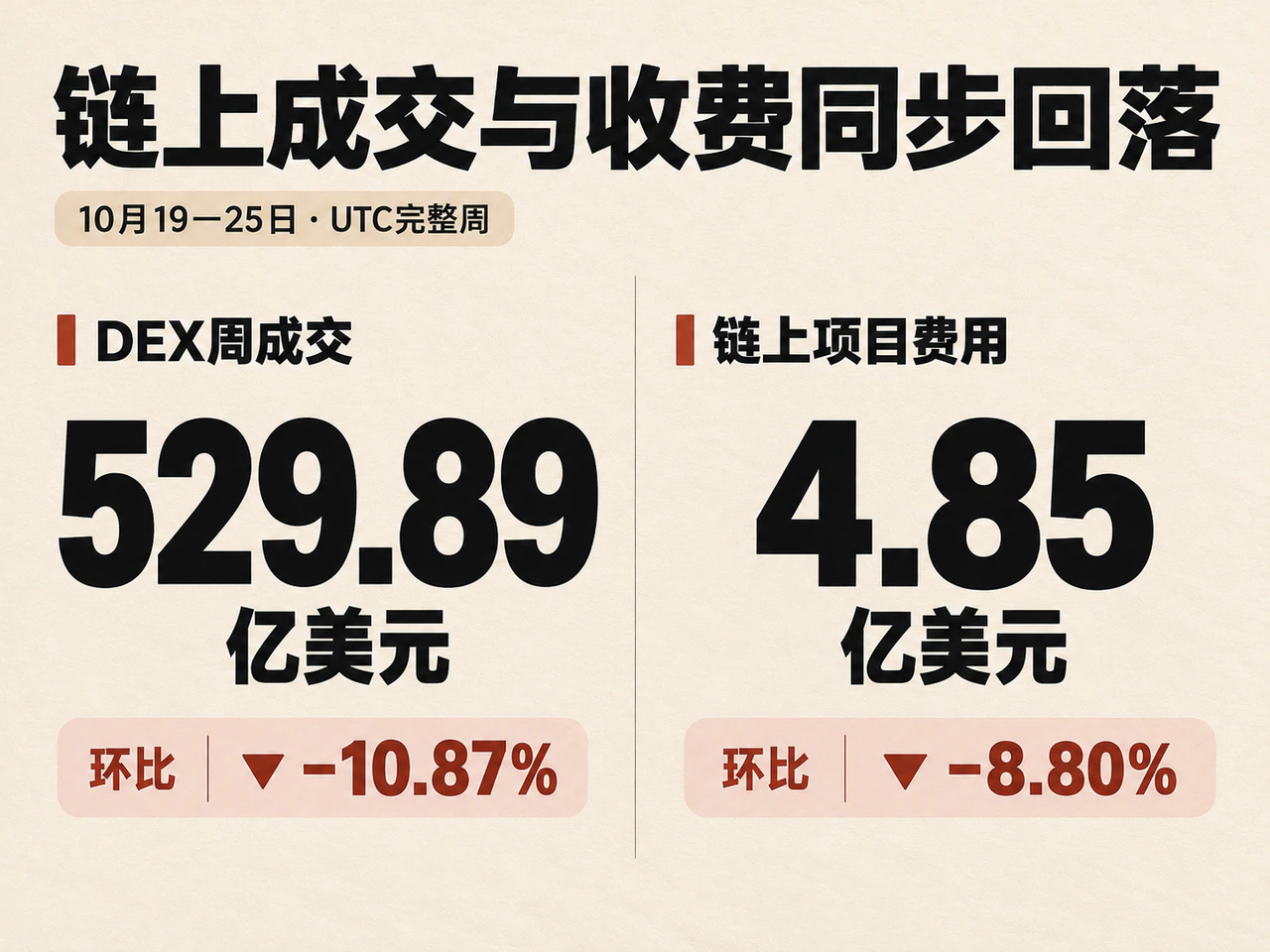
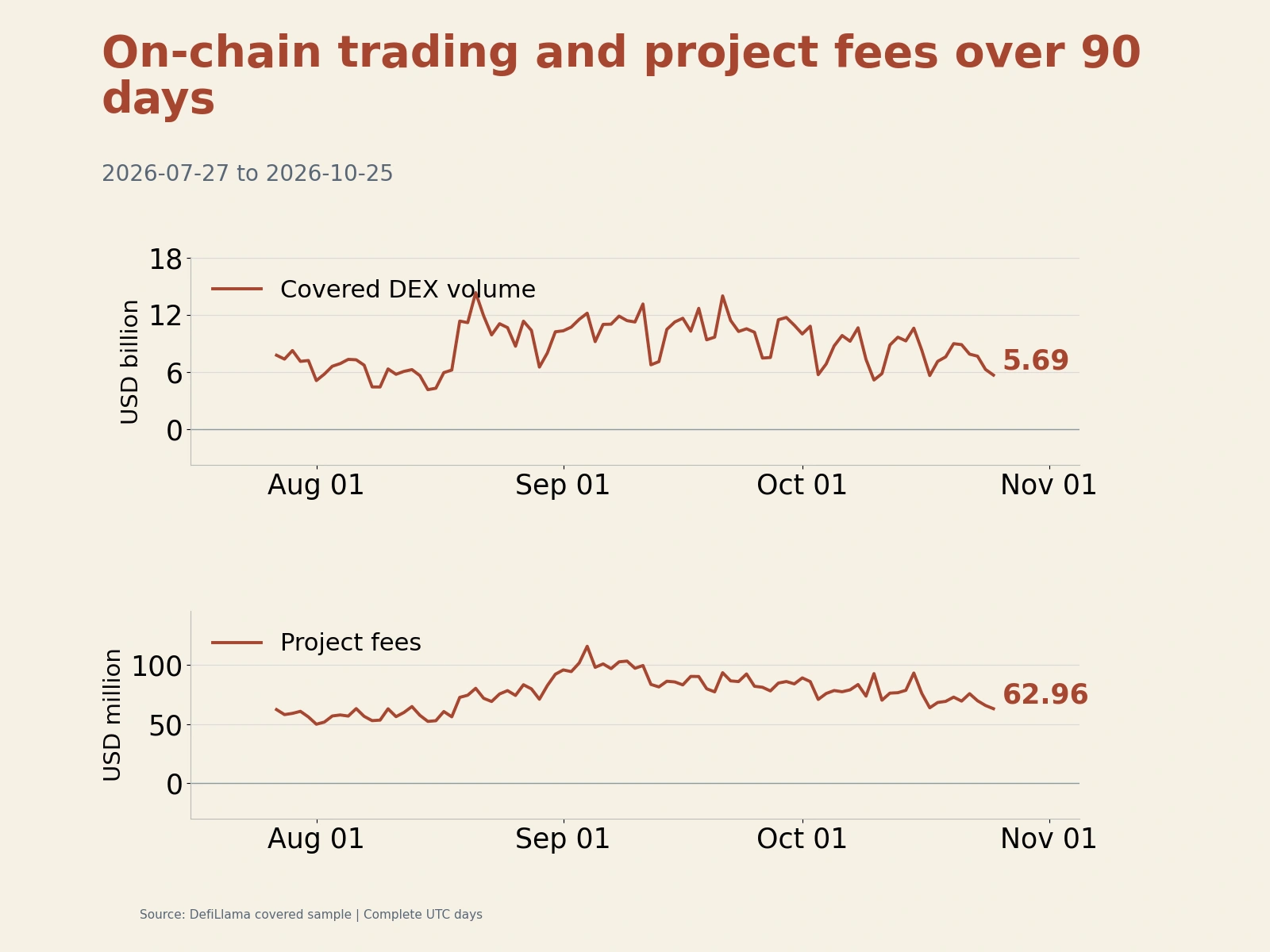
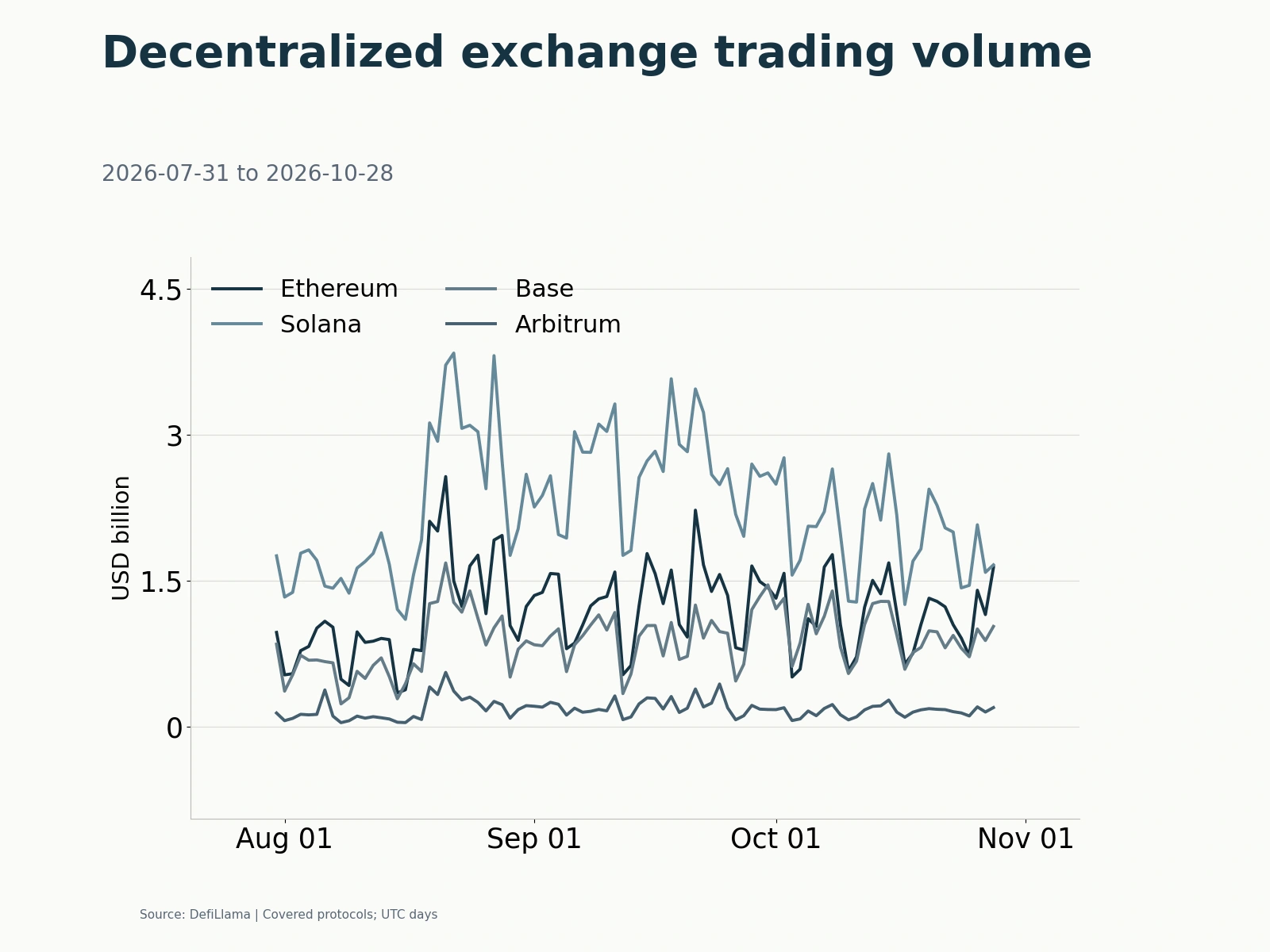
DefiLlama’s UTC daily data showed US$52.989 billion of decentralized exchange (DEX) spot volume over the seven complete days from October 19 through October 25, down 10.87% from the preceding week. Daily volume averaged approximately US$7.570 billion, below the US$8.393 billion average over the latest 30 complete days, whose total volume was US$251.782 billion. Sunday, October 25 volume fell to US$5.690 billion, leaving weekend activity below the monthly average. Covered on-chain projects collected US$485 million in fees over the same week, down 8.80%. Total fees include shares paid to liquidity providers and other participants, so the revenue retained by protocols or token holders still depends on distribution rules. Simultaneous contraction in volume and fees nevertheless indicated slower overall on-chain business activity that week.
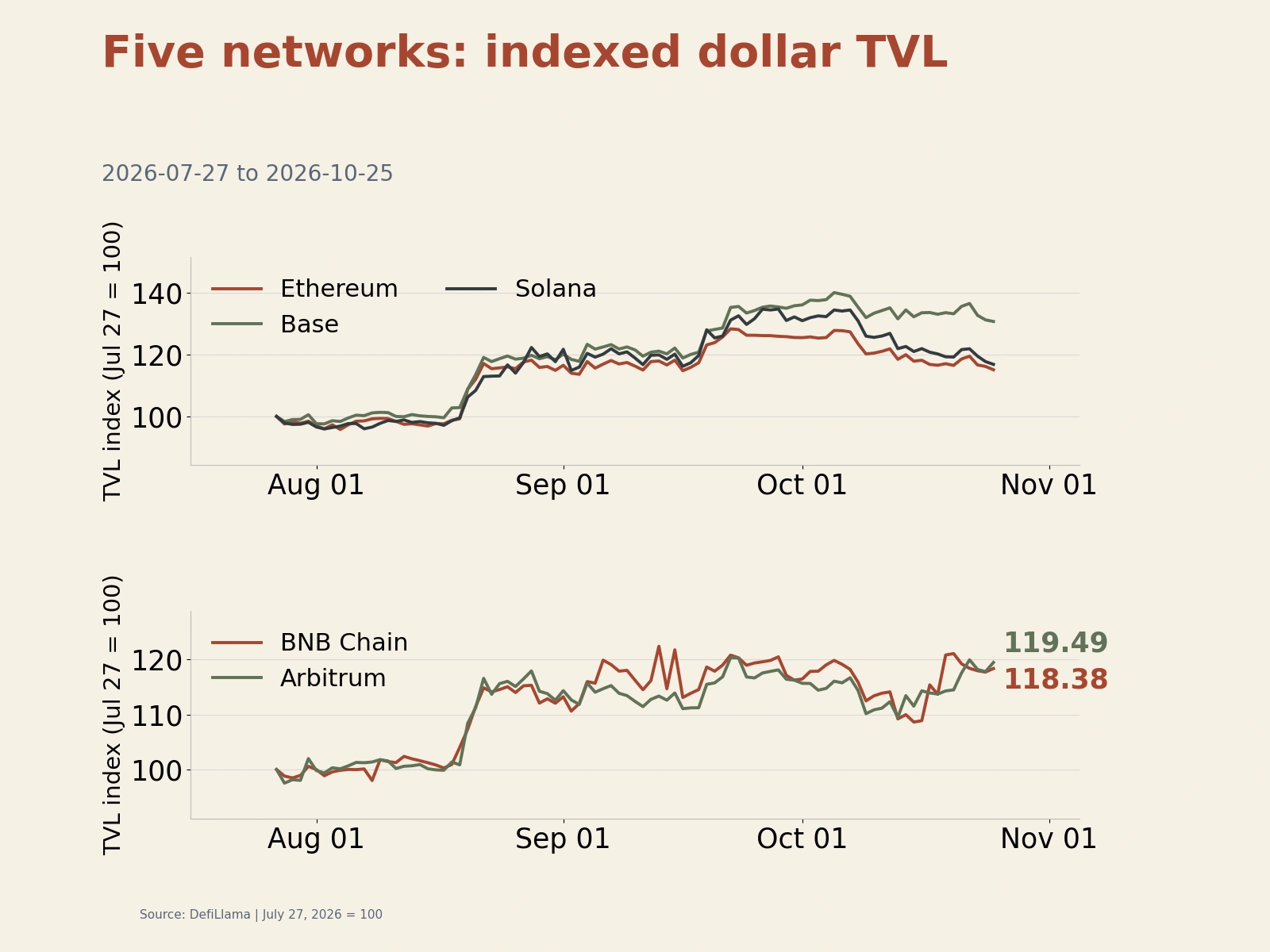
U.S. dollar-denominated total value locked (TVL) diverged across major chains as underlying asset prices and fund movements both changed. Comparing October 25 with October 18, Ethereum, Base and Solana TVL fell 1.27%, 1.76% and 2.80%, respectively, ending the week at approximately US$48.736 billion, US$6.038 billion and US$5.731 billion. BNB Smart Chain, at approximately US$5.801 billion, and Arbitrum instead rose 4.12% and 5.07%. All five remained above their levels 90 days earlier, but only Arbitrum retained positive growth over the latest 30 days. After a 30.75% rise over 90 days, Base declined 2.63% over 30 days, while Solana fell 11.23%. New applications coexisted with short-term fund adjustments, and isolated business expansion had yet to strengthen funding across all chains together.
Traditional financial institutions continued deploying on-chain despite cooler secondary-market trading. Solana Compass reported that on October 22 J.P. Morgan Asset Management extended the MONY and JLTXX tokenized money-market funds to Solana. Eligible U.S. investors could subscribe and redeem through Morgan Money. The arrangement allowed institutional cash-management products to operate on the same network as some stablecoin services, while the amount of funds actually retained still awaited subsequent holdings and usage data.
Assessing the commercial substance of stablecoin payments likewise required removing noncommercial transfers. In statistical guidance released that week, Allium excluded minting and burning, cross-chain representations, internal exchange transfers and automated circular trading from potential payment volume. On-chain funds can move repeatedly across networks. Identifying merchant receipts and genuine settlement needs separately is therefore necessary to judge whether stablecoin payment growth can become a revenue source independent of trading conditions.
Pendle launches tokenized-stock looping with Aave market support; retention after subsidies remains untested
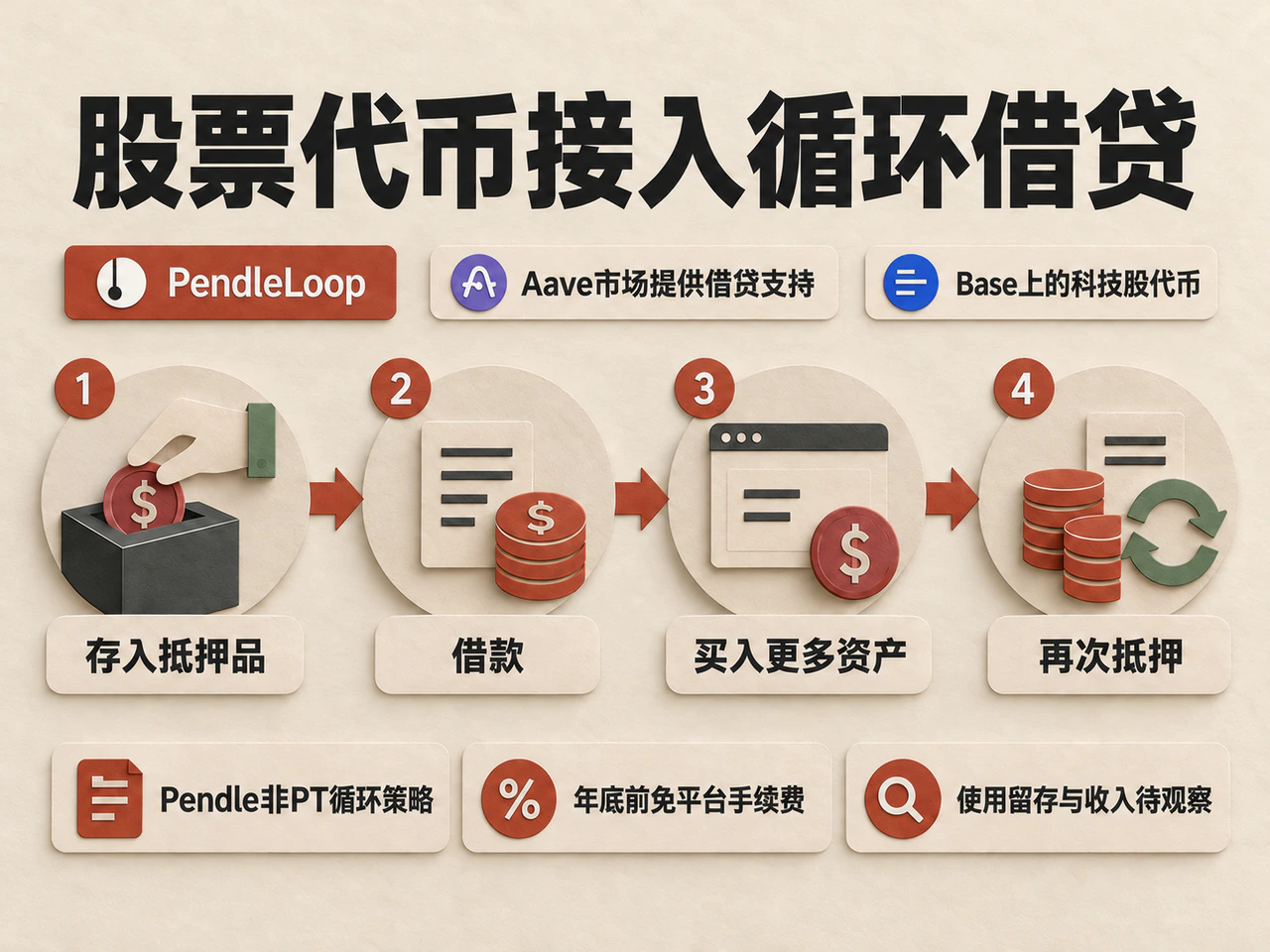
At the application layer, on-chain securities were extending from holding and trading into financing. Pendle launched an expanded PendleLoop on October 22, broadening looping from yield assets into additional underlyings including BTC, ETH and seven major technology-stock tokens on Base. An official October 23 announcement added that lending for leveraged long positions in Base tokenized stocks was supported by Aave markets.
Looping combines depositing collateral, borrowing, buying more assets and pledging them again in one sequence, reducing the execution barrier for complex leverage strategies. Securities tokens become financeable collateral rather than static balances. Revenue accrues to different stages: lending markets receive borrowing interest, trading platforms capture turnover and fees when borrowed funds are reinvested, and the underlying network collects execution fees.
The business initially included fee waivers and external subsidies. Pendle announced no platform fees on non-principal-token looping strategies through year-end, and stock looping offered incentives claimable through Merkl. Increased participation could generate borrowing interest and trading fees, but Pendle’s own corresponding service charges remained in a promotional period. Waivers lowered the barrier to trying the product; position retention and genuine borrowing demand after subsidies ended would provide a better test of commercial sustainability.
Looping also multiplies the assets and liabilities supported by the same initial funds. Falling collateral prices or higher borrowing costs can rapidly reduce users’ safety margins. Concentrated deleveraging can then transmit selling pressure back to spot pools. As securities tokens connect with more protocols, coordination among oracle prices, collateralization settings and liquidation liquidity will directly determine the stability of the financing chain.
The week showed an on-chain economy expanding uses for traditional assets while overall trading declined. Assessing these businesses requires following new asset volumes, genuine borrowing demand, retained trading and settlement use, and protocol fee distribution in sequence. New products provide an entry point for expansion; sustained use and revenue conversion after subsidies recede determine whether they become a source of the next stage of growth.
Follow the original-article link for further details.