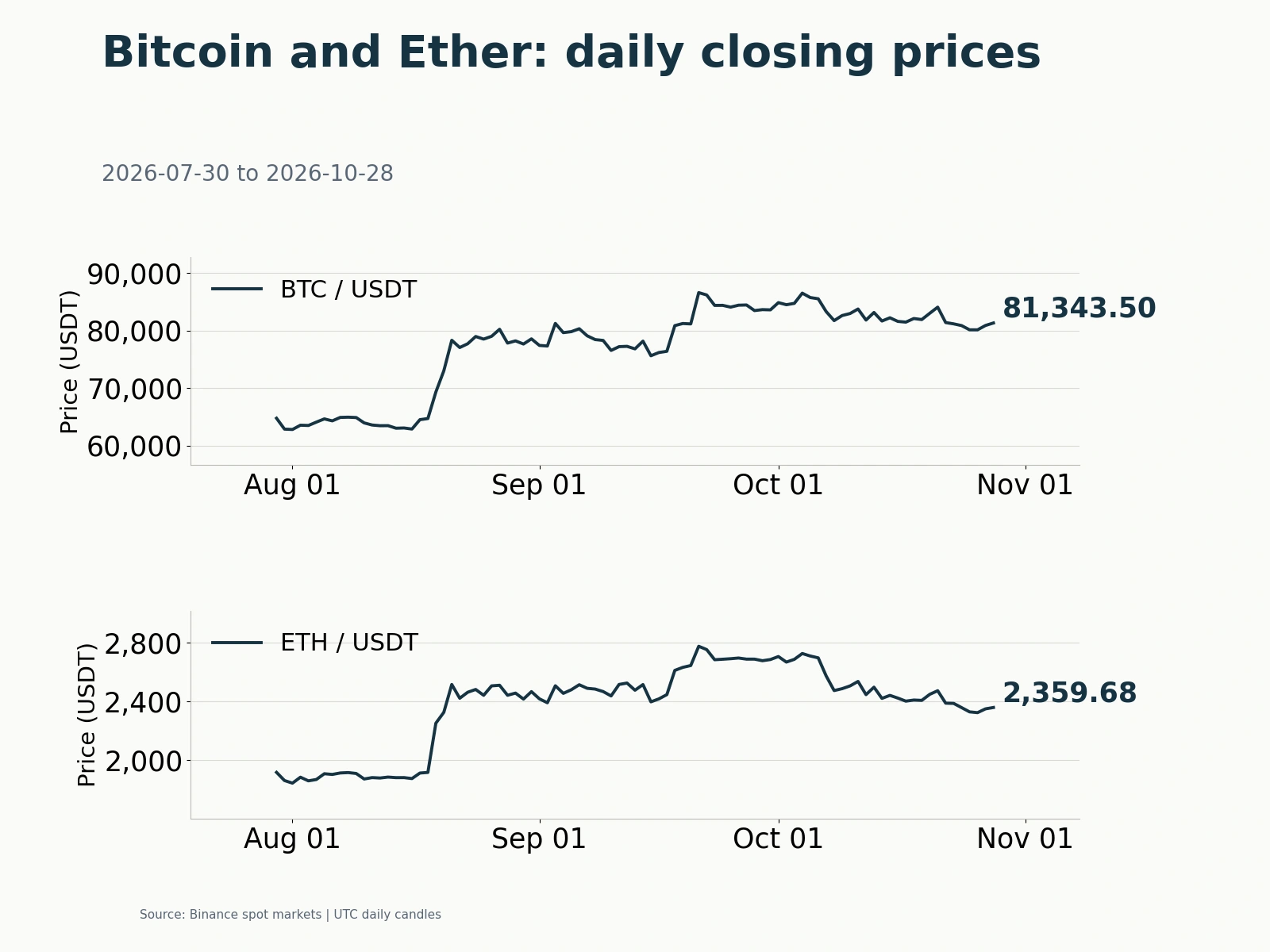
On October 26, open interest in crypto derivatives continued to rise while prices barely moved. Binance spot UTC daily candles, quoted in USDT and closing at 08:00 Beijing time on October 27, put Bitcoin at 80,150.56, virtually unchanged from the preceding day, and Ether at 2,324.55, down 0.23%. During the same trading day, the quantities of open interest in Binance’s BTC and ETH USDT contracts increased 1.95% and 2.28%, respectively.
The expansion in positions had yet to be matched by sustained spot buying. Bitcoin ETFs returned to net inflows the previous week but had already given back a substantial part before the weekend. Ether ETFs remained in net outflow, and the circulating stock of dollar-pegged stablecoins had also contracted. Stabilizing Bitcoin around 80,000 USDT still required more consistent capital inflows. Otherwise, additional positions could amplify volatility when prices broke out of their range.
Bitcoin ETFs give back about 70% of early-week inflows; stablecoins shrink US$2.182 billion in a week
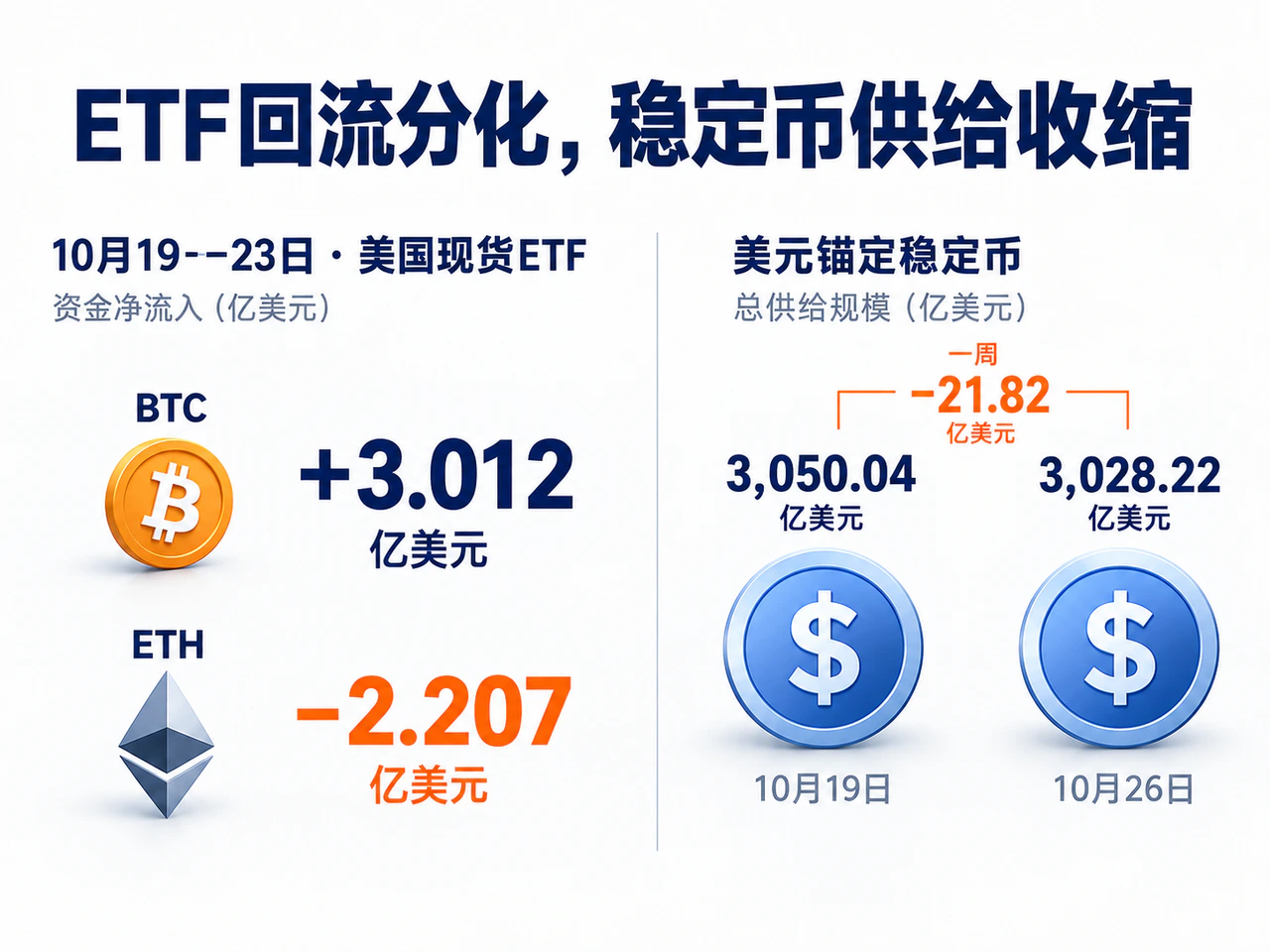
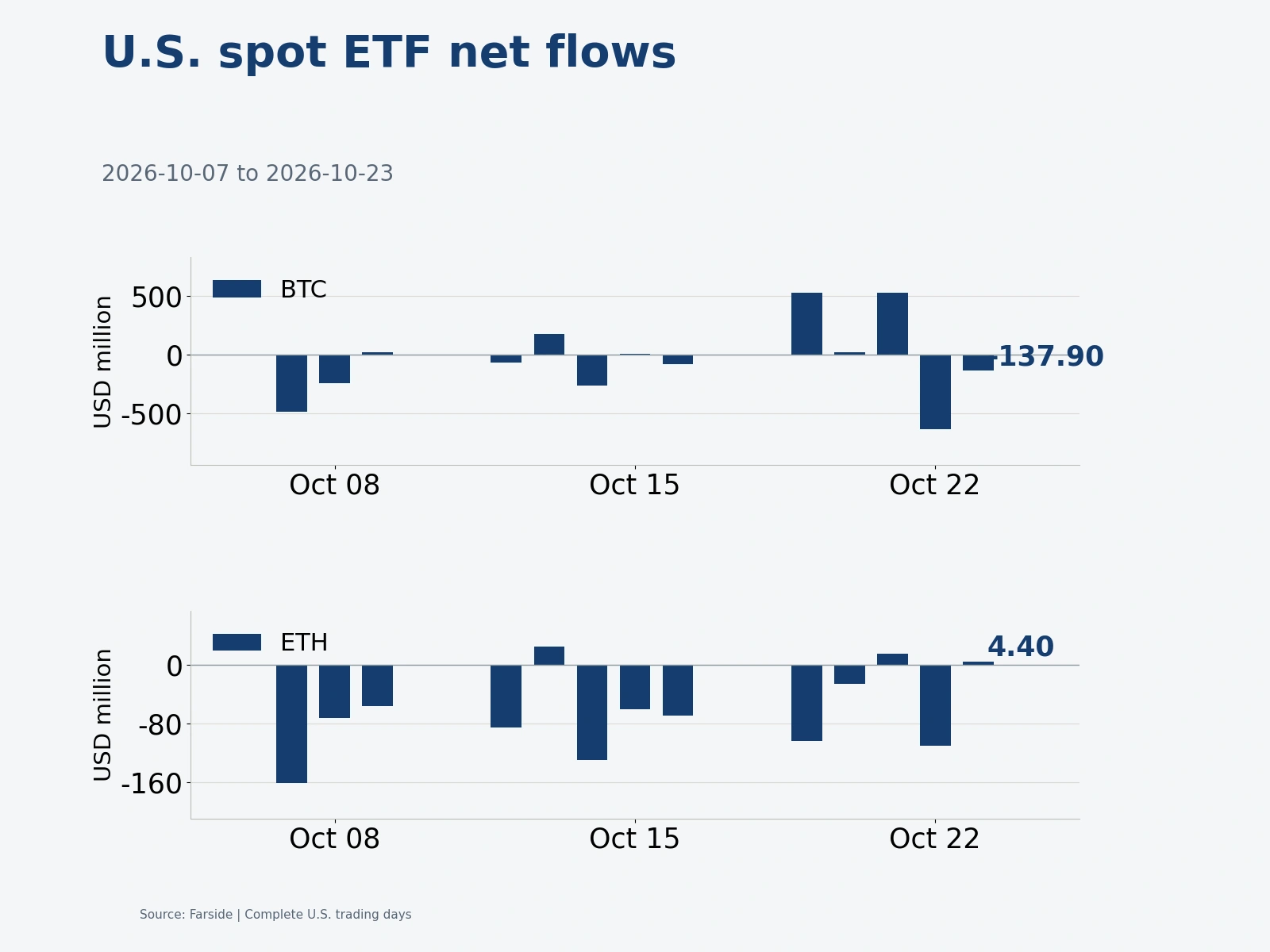
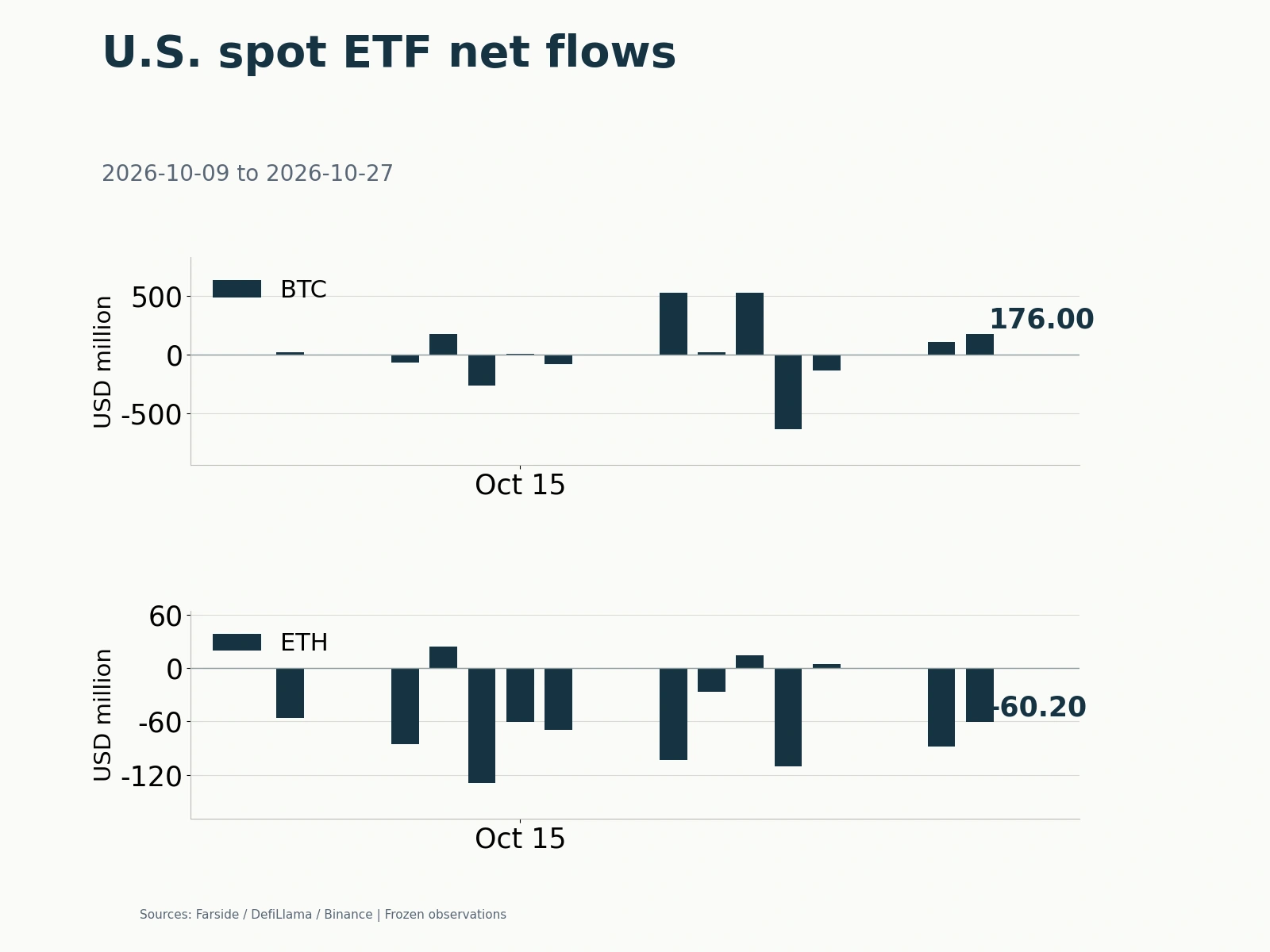
Farside data showed aggregate net inflows of US$301.2 million into spot Bitcoin ETFs over the five U.S. trading days from October 19 through October 23. Monday through Wednesday brought US$1.0747 billion, followed by US$773.5 million of outflows over the next two days, reversing approximately 72% of those earlier inflows. Thursday alone lost US$635.6 million, followed by another US$137.9 million on Friday. Although the week’s total had turned positive, early-week purchases did not persist through the end of the week.
Funding pressure on Ether ETFs was more persistent. They lost a net US$220.7 million over the same week, with only small inflows on Wednesday and Friday. Friday’s US$4.4 million inflow provided limited replenishment against Thursday’s US$110.6 million outflow. The different subscription and redemption patterns reflected a split in allocation capital: Bitcoin received a temporary return of funds, while Ether continued to face net withdrawals.
Consistent subscriptions are needed to provide more stable price support. Large inflows on a few trading days can improve that day’s balance of buying and selling, while subsequent concentrated redemptions bring supply back. Bitcoin ETFs’ current weekly net inflow therefore still needed a more stable pace of subscriptions to consolidate it.
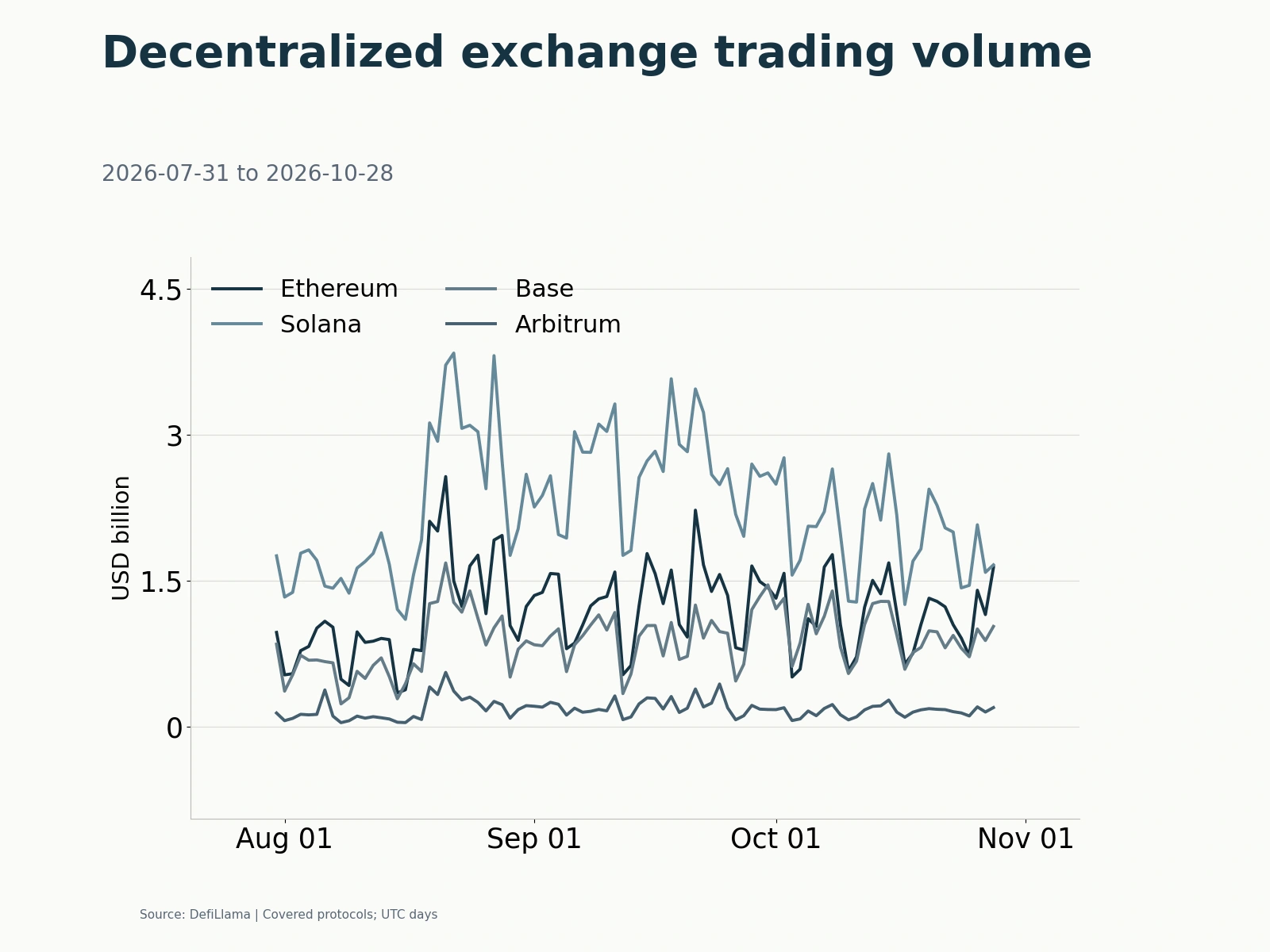
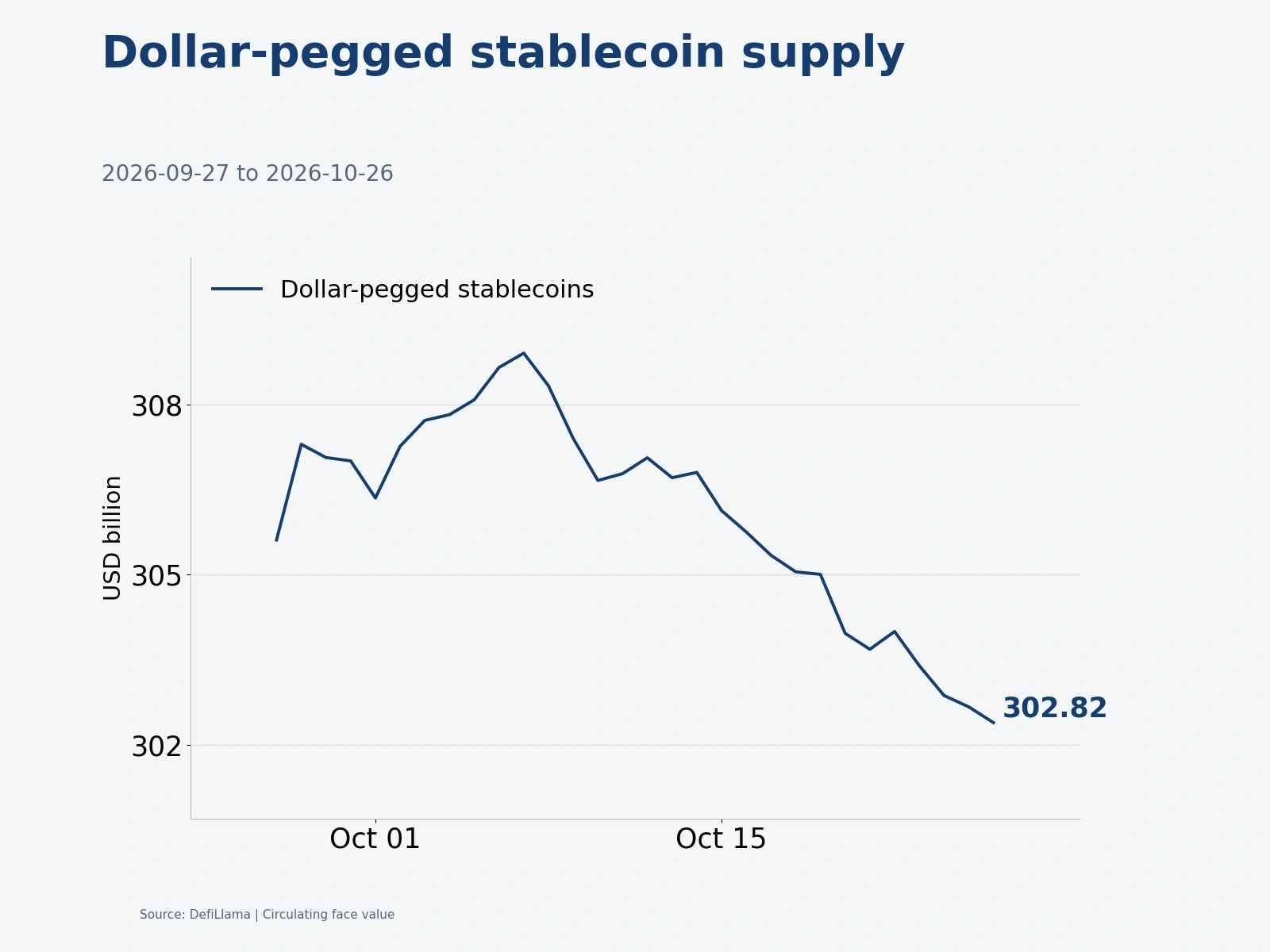
Stablecoin supply was also declining. DefiLlama recorded approximately US$302.822 billion in circulating face value of dollar-pegged stablecoins on October 26, down US$2.182 billion, or 0.72%, from US$305.004 billion on October 19. Supply was also about US$232 million below October 25. Over the latest week, the stock of stablecoins available for on-chain trading, collateral and settlement had contracted.
How stablecoin balances translate into buying depends on holders’ uses and willingness to trade. From the supply side, however, lower balances and ETF inflows that subsequently partly reversed both showed unstable replenishment. Stablecoin supply stabilizing and ETFs receiving sustained subscriptions would give a price recovery a firmer funding basis.
BTC and ETH contracts both add positions; option volatility eases slightly
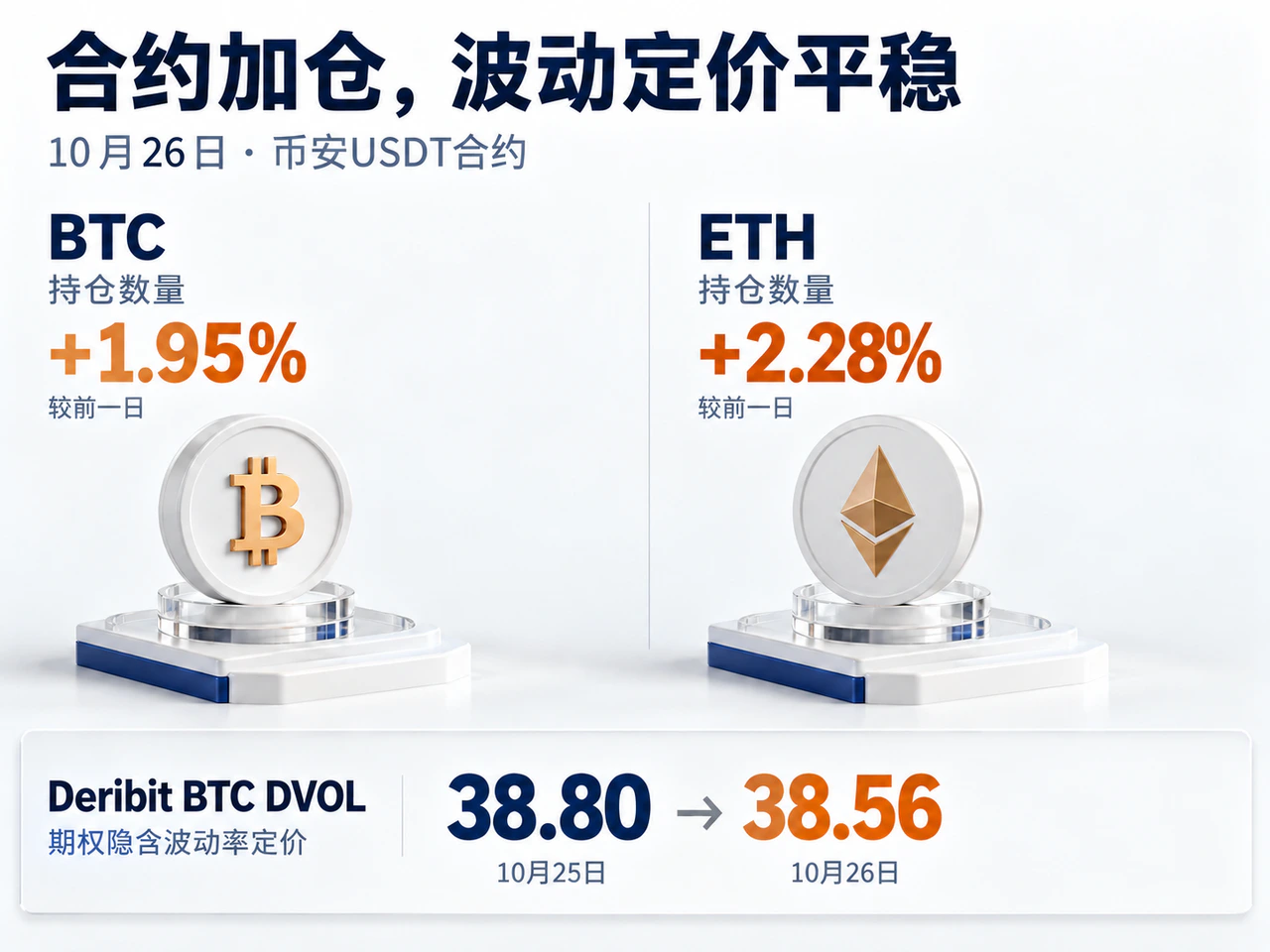
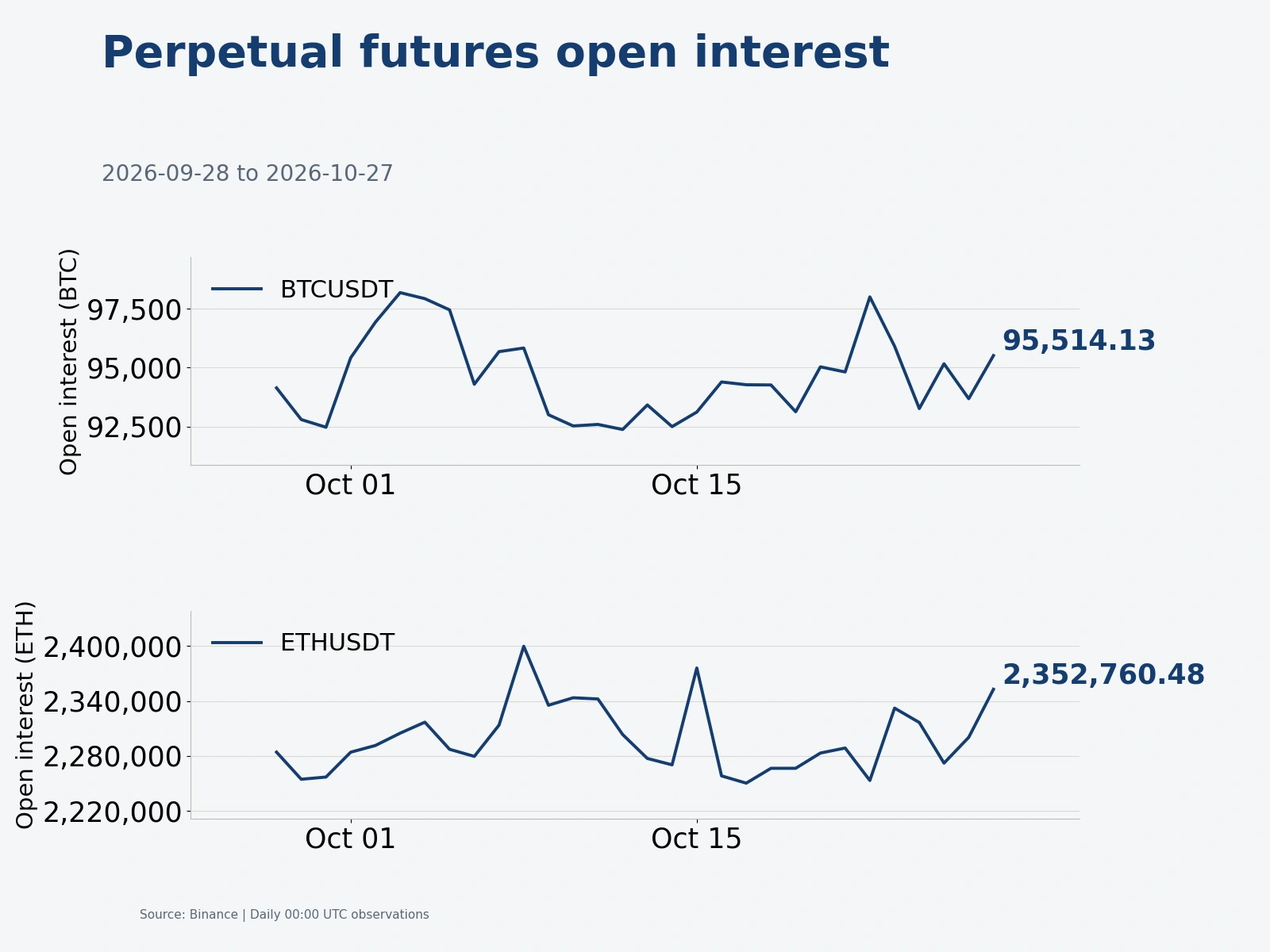
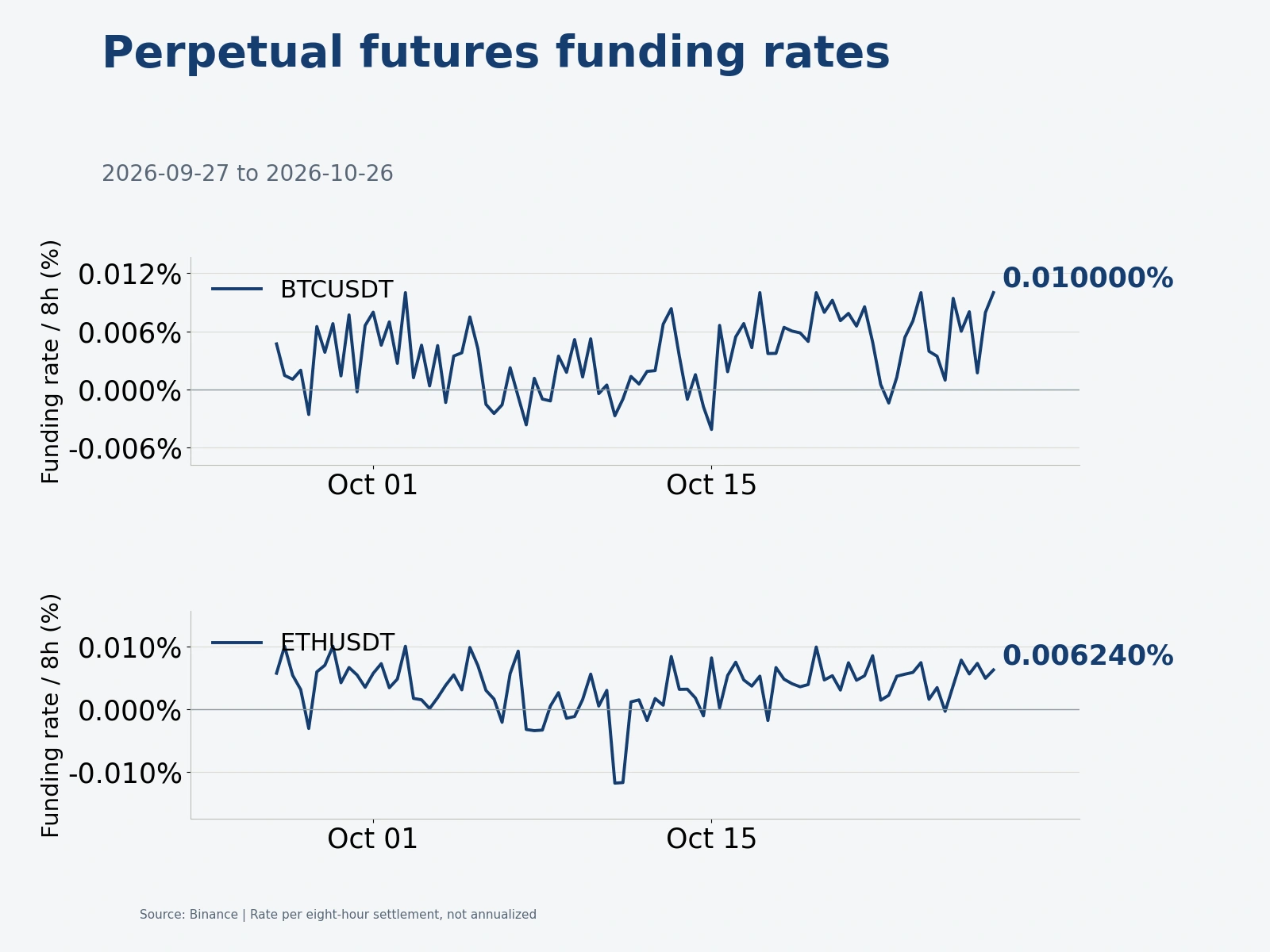
Position growth was clearer in derivatives. From 00:00 UTC on October 26 to 00:00 UTC on October 27, Binance BTCUSDT contract open interest rose from 93,684.46 BTC to 95,514.13 BTC, an increase of approximately 1,830 BTC. ETHUSDT open interest rose from 2.3004 million ETH to 2.3528 million ETH, adding approximately 52,400 ETH. These increases in coin quantities directly reflected additional positions.
Funding rates remained positive, with longs continuing to pay shorts to hold positions. At 00:00, 08:00 and 16:00 UTC on October 26, the three BTCUSDT funding rates were 0.001713%, 0.007945% and 0.010000%, respectively. ETHUSDT rates were 0.007280%, 0.004911% and 0.006240%. BTC’s latter two rates rose progressively, indicating stronger demand for long exposure later in the day.
Daily holding-cost changes nevertheless diverged. Across the three settlements, BTC funding totaled 0.019658%, below the preceding day’s 0.023441%. ETH totaled 0.018431%, slightly above the preceding day’s 0.017147%. Broadly rising positions were not accompanied by a simultaneous increase in holding costs for both contracts.
More open contracts mean new longs and new shorts are established together. Expanding positions against broadly sideways prices reflected accumulated disagreement and risk exposure. Once prices broke out of the range, positions on the losing side could amplify the move through stop-losses or liquidation. Rapid rebuilding after liquidation could also cause volatility risk to accumulate again.
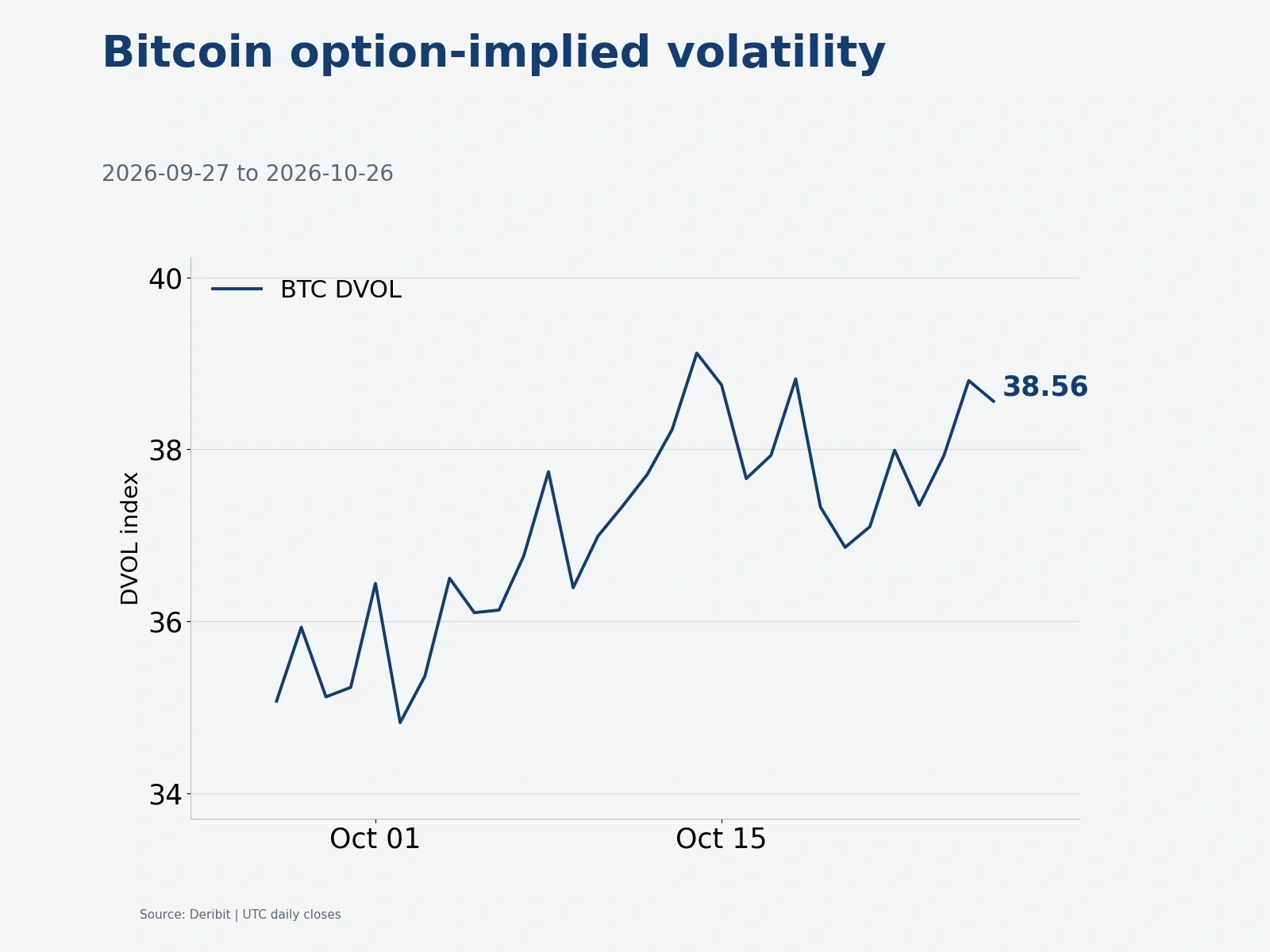
Options markets had not materially raised expected volatility. Deribit’s Bitcoin volatility index, DVOL, closed October 26 at 38.56, slightly below 38.80 on the preceding day and 39.12 on October 14. Rising contract open interest alongside slightly lower implied volatility indicated expanding trading exposure while options’ pricing of overall volatility remained relatively steady.
Whether spot funding could catch up was the key to judging whether the increase in positions could support a price recovery. Persistent subscriptions would help absorb additional risk exposure. If ETFs again faced concentrated redemptions and stablecoin supply continued to shrink, new derivatives positions would be more likely to become closing pressure during price swings. The recovery in positions was already clear; improvement in funding still lacked continuity.
Follow the original-article link for further details.